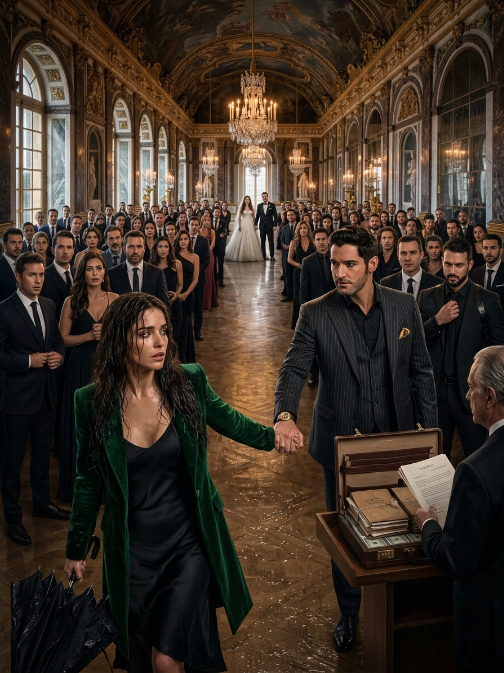
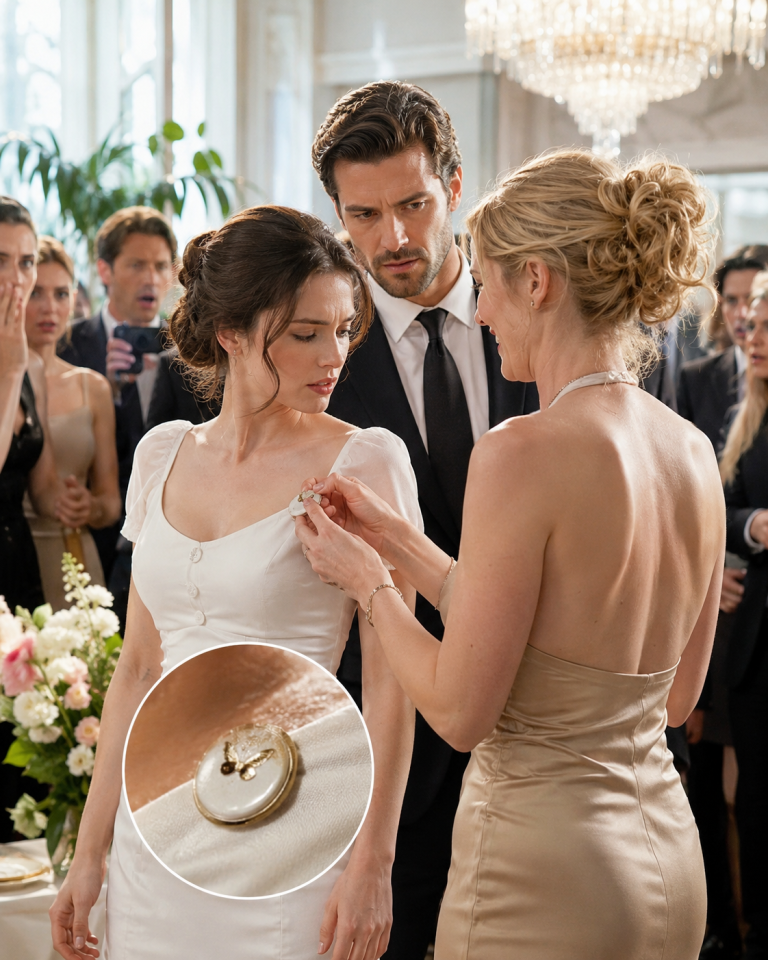
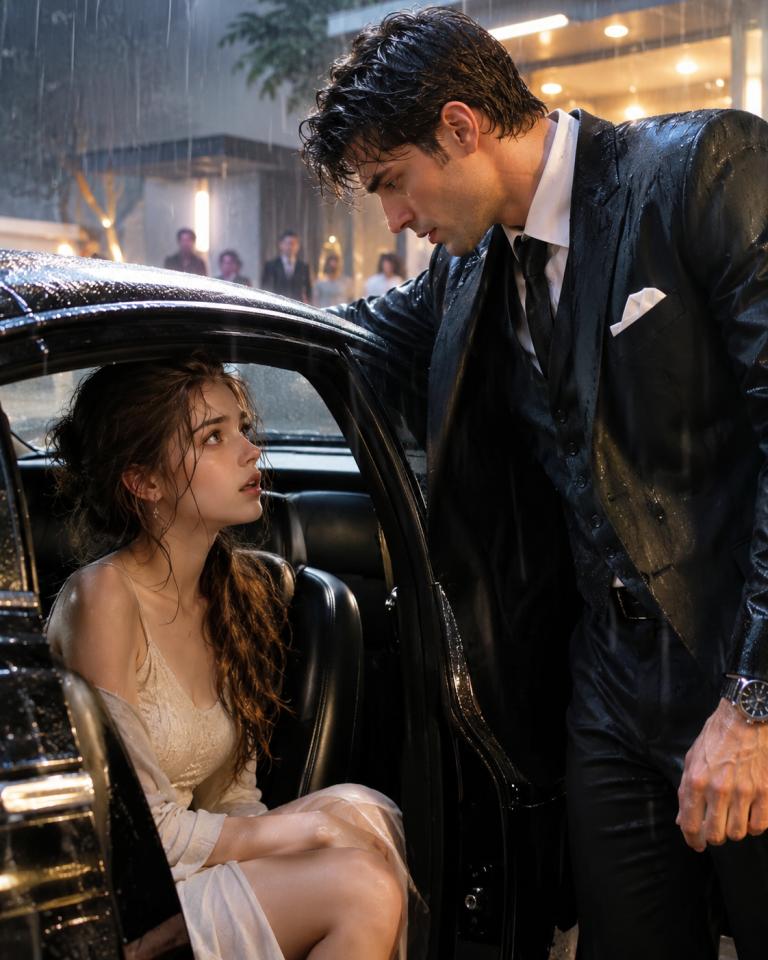
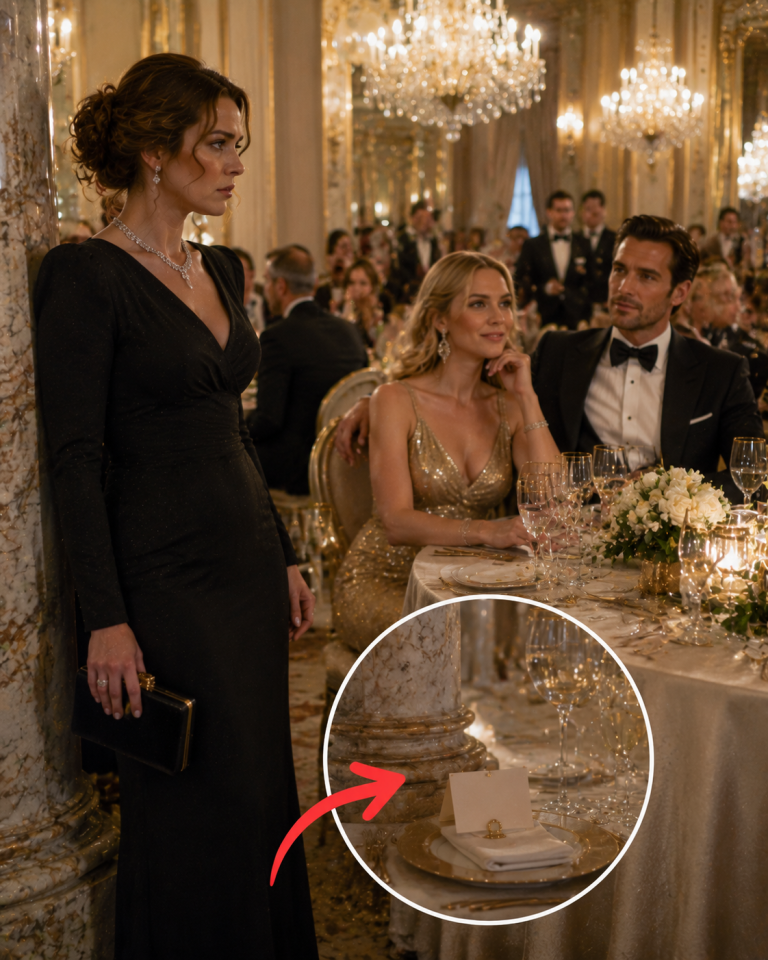
A Lonely Rancher Paid Her Heartless Parents for Her Freedom — Then She Learned He’d Loved Her in Silence for Seven Years

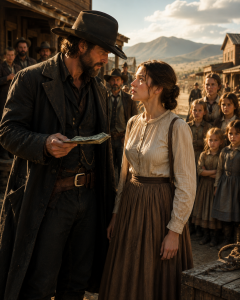
PART 1
The morning started wrong. Evelyn knew it the moment she woke to silence instead of her stepmother’s usual banging on the bedroom door. The house felt too still, the air before a tornado touches down. She dressed quickly in the near-dark and made her way downstairs, where her father’s study door sat closed on low, unfamiliar, male voices.
“Evelyn.” Margaret Mercer stood at the base of the stairs, arms folded, face blank as a winter field. “Come here. Your father needs you.”
Something in her tone made Evelyn’s stomach drop. She’d lived in this house long enough to recognize the specific quality of her stepmother’s cruelty — the kind that came wrapped in calm, reasonable words.
The study door opened before she reached it. Her father stood there, gray-faced and hollow-eyed, looking ten years older than yesterday. Behind him, at the desk, sat a man she’d never seen — tall, maybe thirty, dark-haired, serious, clothes that said money without shouting it.
“Sit down,” her father said, voice hoarse.
“I’ll stand.”
The stranger looked up. Gray eyes, not cold exactly, but measuring. Evelyn lifted her chin and stared back.
“This is Caleb Grayson,” her father said.
“I know who he is.” Everyone in three counties knew Grayson — half the cattle in the territory, a ranch built from nothing after the land run, money that made even the railroad men nervous. “What’s he doing in our house?”
Her father flinched like she’d struck him.
Grayson spoke, quieter than she expected, flat and deliberate. “Your father owes me money.”
“My father owes everyone money.”
“Twelve thousand dollars,” Grayson continued, ignoring the interruption. “Plus interest, accumulated over eight months. I’ve been patient. That patience has run out.”
The number stole her breath. She’d known it was bad. That kind of money was farm-destroying, life-destroying.
“We don’t have it,” she said flatly.
“Obviously.” Grayson’s eyes hadn’t left her face. “You don’t.”
Margaret made an irritated sound. “Just get on with it, Joseph.”
Her father wouldn’t look at her, and that was when real fear started crawling up her spine. “There’s a solution,” he said to the floor. “Mr. Grayson has agreed to settle the debt under alternative terms.”
“What terms, Papa?”
Grayson stood, taller than she’d realized, and came around the desk — not close, keeping a careful distance, like approaching a spooked horse. “You,” he said simply. “The debt is forgiven. In exchange, you come to my ranch.”
The words didn’t make sense at first. Her brain tried several interpretations before landing on the only one that fit. “You’re buying me.”
“No. I’m offering you a place. Employment, if you want to call it that. Room, board, safety. Your father’s debt disappears. You get out of this house.”
“And what do I have to do to earn this generous offer?”
Something flickered across his face — surprise, maybe, or annoyance. “Nothing you don’t agree to.”
“Forgive me if I don’t find that reassuring.”
Her father made a broken sound. “Eevee, please. It’s this or—” He stopped.
“Or what?” She rounded on him. “What’s the alternative you’re not mentioning?”
Margaret answered instead, voice sharp as January wind. “Harold Beckman offered to clear the debt last week. Your father was considering it before Mr. Grayson arrived.”
Evelyn’s blood went cold. Harold Beckman was sixty-three, had buried two wives already, and had a reputation that made decent women cross the street. She’d seen the way he looked at her in church, like she was already naked. “You were going to sell me to Harold Beckman.”
“It wouldn’t be selling,” her father said weakly. “He mentioned marriage.”
“He mentioned owning me. Just like you’re doing right now.”
“I’m trying to save your life.” Her father’s composure finally shattered. “You think Beckman would have asked permission? Waited for paperwork? He was coming here tomorrow, Evelyn. With a preacher or without one. I couldn’t have stopped him. At least this way—” he gestured desperately at Grayson— “at least he’s decent.”
“You don’t know that.”
“I do.” Her father met her eyes for the first time. “Harold would have broken you inside a month. Grayson is offering you a chance.”
Evelyn looked at the stranger who’d apparently been fighting over her like a poker pot. His expression hadn’t changed — still calm, still measuring, still frustratingly unreadable.
“Why?” she asked him directly. “You could have anyone. Why buy a woman who doesn’t want to be bought?”
“I’m not buying you.”
“Then what do you call this?”
“A rescue.” He said it plainly, like it was obvious. “Whether you believe that or not is your choice. I’m leaving in an hour, and I’m asking you to come with me. Your father’s debt gets settled either way. I already paid it. This morning, before you came downstairs. You’re not part of the transaction.” His gray eyes locked on hers. “You can stay here if you want. Wait for Beckman, or whoever your father owes money to next week. Or you can take the horse I brought for you and ride out of here with a choice nobody else is offering.”
Evelyn’s hands were shaking. She pressed them against her skirt, trying to think through the panic. “I don’t understand.”
“You don’t have to. Not yet.” He picked up his hat from the desk. “One hour. Pack light. If you’re not ready, I leave alone.”
He walked out without looking back. Evelyn stood in the wreckage of her father’s study, everything she thought she knew breaking apart, and understood, with a clarity that terrified her, that in exactly one hour she was going to have to decide what her own life was worth.
PART 2
Her father sagged into his chair like someone had cut his strings. Margaret’s face showed nothing — not relief, not guilt, just that same terrible blankness. “You should pack,” she said eventually.
“Should I?”
“Better than the alternative.”
Evelyn laughed, sharp and bitter. “Which one? There seem to be so many.”
Upstairs, her stepsister Violet found her packing — perfectly dressed, blonde, delicate, everything Evelyn wasn’t, but with wet eyes. “I didn’t know about Beckman until this morning,” Violet said. “Evelyn, please, take Grayson’s offer. Get out of this house.” When Evelyn accused her of sudden concern, Violet’s jaw set. “We both survived the only way we knew how. But this is your chance to stop surviving and actually live. Don’t waste it because you’re too proud to accept help.”
“It’s not help,” Evelyn said. “It’s ownership with better manners.”
“Maybe. Or maybe it’s exactly what he said. A rescue. Either way, it’s better than waiting here to die.”
Forty-five minutes later, Evelyn stood on the porch with her carpet bag and her mother’s shawl, storm clouds rolling in from the west. Grayson waited at the end of the path with a second horse, a pretty sorrel — he’d kept his word about the hour, hadn’t rushed her.
Her father appeared behind her. “Eevee, don’t—” She didn’t turn around. “I loved your mother,” he said. “I failed her. And I failed you. I know that.” “Goodbye, Papa,” she said, and walked down the path without looking back.
Grayson dismounted, secured her bag with efficient, practiced movements. Up close she noticed the scar along his jawline, calluses on his hands, the weight of a man used to being responsible for everything. “You can still change your mind,” he said quietly. “The debt’s paid. You’re free to choose.”
“Free,” she repeated. The word felt foreign in her mouth.
“It’ll take some getting used to.”
“What will?”
“Believing it.”
He helped her mount, hands careful and impersonal, and swung onto his own horse. Thunder rumbled in the distance. Evelyn took one last look at the only home she’d ever known — the place that never wanted her — then touched her heels to the sorrel’s sides and followed the stranger into the storm.
They rode hard trying to outrun the weather and lost. Rain caught them at dusk, and Grayson led them to a rock outcropping for minimal shelter. As he tended the horses, Evelyn asked the question that had been eating at her. “Why’d you really pay off the debt?”
He told her the truth wasn’t kind: Harold Beckman was a vicious man who hurt women for sport, and her father was going to hand her over tomorrow. And then, rain dripping off his hat, he told her about his wife — how she’d volunteered at the church helping women who’d escaped Beckman’s house, and how three years ago Beckman’s men had run her carriage off the road while she was helping one of them get free. She’d died in the wreck.
“I’m sorry,” Evelyn said.
“It was three years ago. Doesn’t make it hurt less.”
They ate jerky and hardtack in the rain, and Evelyn, despite everything, found she believed him — or wanted to. When they finally reached the ranch two days later, a woman named Mrs. Chen met them at the door, sharp-eyed and capable, and led Evelyn up to a simple, clean bedroom. On the nightstand, half-hidden in shadow, sat a worn novel — a romance about a girl who ran west to find freedom. Evelyn’s own initials were penciled inside the cover, dated seven years ago, from a ten-minute conversation with a stranger at a market stall she barely remembered.
Someone downstairs had been carrying that book — and the memory of her — for seven years. And Evelyn stood frozen in that borrowed room, holding it with shaking hands, understanding that whatever silence lived around Caleb Grayson, it had just stopped feeling ordinary. It felt personal. Dangerous. And she had no idea yet what that was going to cost her.
PART 3
She found her voice before her hands stopped shaking. She carried the book downstairs like evidence, set it on the kitchen table between them, and asked him outright.
Caleb looked at it for a long moment before he answered. “You remember a lot of things you probably shouldn’t.”
“That’s not an answer.”
“No, it’s not.” He met her gaze steadily. “You want the truth? I think I’ve earned it.”
“You talked about that book like it mattered,” he said. “Like the story meant something to you. Most people I met back then only cared about money or land or getting ahead. You cared about whether the ending was honest — whether the girl actually got to be free, or if the author cheated and gave her a husband instead. I’d never heard anyone talk about a book like that.” He paused, his jaw working. “Your father showed up drunk while we were talking. Started yelling at you in the middle of the market. Called you worthless. Said you were a burden he couldn’t wait to be rid of.” His voice went flat. “You stood there and took it. Didn’t cry. Didn’t fight back. Just waited until he finished and walked away like nothing happened.”
Evelyn’s throat closed. She remembered that day now — the humiliation of it, the way she’d folded herself small in front of strangers because folding small was the only defense she’d ever learned.
“That’s when I knew,” Caleb said, “that you were strong enough to survive anything. But you shouldn’t have to. No one should have to endure that kind of cruelty and just accept it as normal.” He looked down at the worn cover. “So yes, I remembered you. I bought the book the next week. Read it cover to cover, wanting to see what you saw in it. And you were right — the ending was honest. She didn’t need saving. She saved herself.” He looked up. “My wife died six months after that market day. When I was building this place, trying not to drink myself to death, that book sat on my nightstand and reminded me there were still people in the world who believed freedom mattered more than security. Reminded me of you.”
“You didn’t know me.”
“No. But I knew you existed. Somehow that was enough.”
The fireplace popped, sending sparks up the chimney, and Evelyn felt the floor tilt gently beneath her chair. “When you heard about the debt,” she said slowly. “About Beckman. You came because of a ten-minute conversation seven years ago?”
“I came because letting you go to that bastard felt wrong. The conversation just meant I knew exactly who I was trying to protect.”
“You could have sent money. Paid the debt anonymously.”
“Your father would have gambled it away and sold you to the next bidder.”
“So you bought me instead.”
“I gave you a choice.” He leaned forward. “I know how this looks, Miss Mercer. Rich man swoops in, pays off the debt, brings the girl to his isolated ranch. Every story you’ve ever heard says I’m the villain. Maybe I am. But I’m asking you to wait before deciding. Give it time. See if my actions match my words.”
She wanted to argue, wanted to find the lie hiding behind his earnest gray eyes. She couldn’t quite manage it. “The lock on my door,” she said instead. “Does it actually work?”
“Yes.”
“Do you have a key?”
“No. Just you.” He pulled a brass key from his pocket and set it on the table. “That’s the only one. I had it made in Guthrie before we left.”
She closed her fist around the warm metal. “Okay. I’ll wait. I’ll watch. And if you’re lying to me, Caleb Grayson, I’ll burn this whole ranch down on my way out.”
For the first time, something that might have been a full smile crossed his face. “Fair enough.”
The days that followed blurred into a rhythm she’d never had anywhere else. She woke to a rooster’s outrage, drank real coffee with Mrs. Chen, spent mornings reading or learning to knead bread, and in the afternoons Caleb would appear and offer to teach her something new — how to tell good pasture from bad, how to check a horse’s hooves, how to read the smell of coming rain. He never pushed, never demanded. He offered, and waited to see if she’d accept. Slowly, carefully, she started to.
She learned the ranch hands’ names — Jack, the foreman who’d been there since the beginning; Miguel and his brother Carlos, who handled the cattle; young Tommy, who asked too many questions. No one made assumptions about her. She was just Evelyn, the woman staying at the main house, and that was enough to let her breathe for the first time in years. She learned, too, that Mrs. Chen was Sarah’s mother — Caleb’s dead wife’s mother — still working the land her daughter had loved, still calling him a stubborn fool with obvious affection.
“Does it bother you that I’m here?” Evelyn asked her once.
“Why would it? I know my son-in-law. He doesn’t do anything without thinking it through six ways to Sunday. If he brought you to this ranch, he had a damn good reason. And since you’re sitting in my kitchen drinking coffee instead of locked in a room somewhere, I’d say his reason was decent.”
That was when Violet arrived.
Evelyn was hanging laundry in the side yard when she heard the wagon — expensive, out of place on the rough frontier track. Violet stepped down in traveling clothes that cost more than Evelyn had owned in her life, smiling like they were old friends meeting for tea. “There you are. I’ve been worried sick about you.”
“I find that hard to believe.”
They talked in the kitchen, five minutes Evelyn allowed grudgingly, and Violet slid a folded document across the table. “The debt agreement is flawed, Evelyn. Our lawyer looked at it. Territorial law requires two witnesses for debt transfers involving people. The document Papa signed only has one. Technically, the agreement is invalid. You need to come home before this becomes a legal mess.”
“You’re lying.”
“I’m trying to help you.”
“No, you’re trying to fix Papa’s mess again.” Evelyn leaned forward. “Tell me the truth. What does he owe now? Who’s threatening him? He gambled again, didn’t he? Lost money he didn’t have. And now you’re here trying to drag me back to sell me to whoever’s holding the debt this time.”
Violet’s composure cracked. “You don’t understand the position he’s in.”
“I understand perfectly. He’s weak and selfish, and he’ll sacrifice anyone to save himself. Including me. Including you, eventually.” Evelyn stood. “I’m not coming back, Violet. Find another way to save him.”
At the door, Violet turned back, and whatever kindness had been in her face was gone, replaced by something colder and more desperate. “He hasn’t told you why he really wanted you here. Ask him about the market, Evelyn. Ask him what else happened that day. Ask him why he really remembers you.” Then she was gone, climbing into her hired wagon, disappearing down the road in a cloud of dust.
Caleb found Evelyn in the kitchen minutes later, her carefully built trust already crumbling. “What did she mean?” she demanded. “What aren’t you telling me?”
“I need to check the north fence,” he said instead. “Storm’s coming. We’ll talk when I get back.”
He was gone before she could argue, and doubt ate through her like acid for the rest of the afternoon. The storm hit an hour later, fierce and sudden, and when three hours passed with no sign of him and his horse still stood unsaddled in the barn, Evelyn pulled on a coat and went looking, over Mrs. Chen’s objections. She found him twenty minutes later at the collapsed section of fence, soaked through, working to prop up a broken post with his bare hands, bleeding from a cut on his forehead.
“What the hell are you doing out here?” she demanded, splashing through the mud to his side.
“What are you doing out here?”
“Coming to find your stubborn ass before you got yourself killed. You’re bleeding.” She pulled the scarf from her neck and pressed it against the cut. “Hold this.”
He obeyed, watching her with something like wonder. “You came looking for me.”
“You didn’t come back. I was worried.”
They walked back to the house together, shoulders brushing, his hand finding hers somewhere along the way — not possessive, just steadying — and she didn’t pull away. That night, with Mrs. Chen cleaning his cut at the kitchen table, Caleb finally told her the rest of what Violet had meant: the drunken scene at the market, her father screaming that she was worthless, and how Caleb had watched her stand there and take it without breaking, and known in that moment exactly what kind of man her father was and exactly what kind of woman she’d become in spite of him.
“Why didn’t you tell me?” Evelyn whispered.
“Because it makes me sound like exactly what Violet’s trying to convince you I am. Some stranger who got obsessed with a woman he barely knew. Maybe that’s what I am. I don’t know anymore. But everything else I told you is true. The debt’s paid. You’re free. And I’ll keep my word even if you decide to leave tomorrow.”
“I don’t want to leave,” Evelyn said. “I’m terrified of staying. Terrified of trusting you. Terrified of what it means that I’m starting to—” She stopped, unable to finish.
“Starting to what?”
“Care,” she said, barely audible. “About whether you come back alive from stupid fence repairs. About this place.”
He stood slowly, careful not to spook her. “Evelyn—”
“Don’t say anything. I need time to figure out what this is.” He nodded, respect and something that might have been hope crossing his face. “Take all the time you need.”
She thought, that night, that maybe the worst was over. She was wrong.
Beckman struck back within the week — cattle driven toward the property line, fences cut in three places, a written ultimatum nailed to a tree in rough block letters: *The girl or the ranch. You don’t get both.* Caleb tore it in half in front of her and refused, flatly, to choose. He doubled the guards, taught her to shoot properly in the afternoons — how to breathe, how to aim, how to reload under pressure — until her hands stopped shaking on the rifle and started hitting what she aimed at.
“You’re a natural,” he told her on the fourth day.
“My father taught me the basics.”
“I’m teaching you the rest.” He stepped closer. “Do you regret it? Me bringing you here?”
“No,” she said immediately. “Not for a second.”
“Even though it might cost you everything?”
“You’re part of everything now,” he said simply, like it was obvious. “Losing you would cost more than losing the ranch.”
The attack came before dawn a few days later — fire at the barn, screaming horses, chaos. Mrs. Chen pressed a rifle into Evelyn’s hands and ordered her to the window while everyone else fought the flames. Three men crept toward the house in the confusion. Evelyn fired through the door before the first could turn the handle, and the men fled into the trees, dragging their wounded companion with them. Her hands shook afterward in a way they never had at target practice — she had never shot at a person before — but this was her home now, and she’d defend it.
The barn survived, badly damaged. So did everyone else, though Miguel took a knife to the arm and Jack a blow to the head. In the second attack a week later, Evelyn came face to face with one of Beckman’s men trying to light the main house on fire and shot him in the leg before he could finish. They tied him up, and when the territorial marshal finally arrived, the wounded man talked — Beckman had paid them to terrorize the ranch until Caleb handed over the woman or the land. Beckman was arrested that afternoon.
“It’s over,” Caleb told her in the kitchen, and Evelyn should have felt only relief. Instead she felt shaky, hollowed out, all the fear she’d been holding finding nowhere left to go. “I shot someone,” she said. “I pointed a gun at a man and pulled the trigger, and I didn’t even hesitate.”
“You protected your home. That’s not something to be ashamed of.”
“I’m not ashamed. I’m just—” She looked at him. “I’m different than I was when I got here.”
“That’s good,” he said gently. “You’re stronger. Braver. You’ve stopped waiting for permission to exist.”
The peace lasted three weeks. Then Violet returned, less put together this time, shadows under her eyes that her powder couldn’t hide. Their father was in jail — the debt Caleb had paid was only one of many, and the others had come due with consequences. Their mother and Violet had lost the house, were living in two rooms with an aunt in Guthrie. And an Eastern lawyer named Whitmore, courting Violet as part of a deal to clear their father’s remaining debts, had seen the original transfer papers while visiting the jail and spotted his opening: if Joseph Mercer had been in debt himself when he signed Evelyn over, the transfer might be void under territorial law. He’d filed with the court. There would be a hearing in two weeks.
“He’s not doing this out of legal principle,” Violet said. “He wants leverage. If he can prove the transfer was illegal, he can force Mr. Grayson to pay him to make the problem disappear. And if Grayson refuses, he gets me back as collateral, and you back under Papa’s authority.”
“I’m sorry,” Evelyn found herself saying, and meant it — for all of it, for the sister who’d never been the enemy, only another girl trying to survive the same house in a different way. “Thank you for warning me. For choosing better than Papa did.”
Caleb’s lawyer, a sharp-eyed man named Morrison, laid out their options plainly in his Guthrie office: fight it in court with maybe sixty percent odds, or eliminate the question entirely through marriage, which would strip her father’s claim of any legal ground at all. Caleb refused the second option outright, not because he didn’t want it, but because he wouldn’t let her mistake a proposal born of legal necessity for something real. “Not while you’re backed into a corner by lawyers,” he told her. “Not while you could think it’s just more manipulation.” Instead, they built the harder case — Evelyn formally added to the ranch payroll, documented wages, testimony gathered from Mrs. Chen and Jack and, eventually, from Violet herself, who agreed without hesitation to appear.
The night before the hearing, neither of them could sleep. Caleb came to her door near midnight, and this time she let him in, and they sat on the edge of her bed in the dark, admitting to each other exactly how frightened they were. “If we lose,” he said, “we run. I’ve got money saved, contacts in California. We disappear if we have to.”
“You’d give up everything you built.”
“None of it matters if you’re not here.” His voice went rough. “I love you, Evelyn. I’ve loved you since you stood in my kitchen and threatened to burn down my ranch. Maybe longer. Whatever that judge decides tomorrow, it doesn’t change how I feel.”
“I don’t know how to be loved,” she whispered. “I don’t know how to believe it’s real.”
“Then let me prove it. Every day for as long as you’ll let me.”
“I love you too,” she said finally, the words both terrifying and right. “I think I have for weeks. I was just too afraid to admit it.”
The hearing was everything Morrison had warned them it would be. Whitmore paraded her father, hollow-eyed and thinner than she remembered, claiming he’d been pressured into the papers and regretted losing his daughter — lies that made Evelyn’s hands clench under the table. Margaret testified that Evelyn had always been difficult and easily led. A doctor spoke gravely about women’s delicate constitutions. Then Mrs. Chen and Jack testified to her work and her clear independence, and Violet took the stand and, without flinching, told the truth about their mother’s cruelty, their father’s weakness, and the monster named Beckman that Caleb had saved her sister from. “She’s not a child or an incompetent,” Violet told the judge. “She’s a grown woman who’s been making her own decisions for months. The fact that we’re all sitting here debating her capacity to do so is insulting.”
Then it was Evelyn’s turn. She described the locked room, the key that was hers alone, every promise Caleb had kept without exception. Whitmore pressed her hard, insinuating impropriety, questioning the timing of her wages, and finally asked the question meant to break her: if the court ordered her back into her father’s custody, would she comply?
The courtroom went silent.
“No,” Evelyn said clearly, looking past the lawyer to the man who’d fought for her for months. “I won’t. I’d refuse to be property. I’m twenty-two years old. I’ve been supporting myself, making my own decisions, living independently for months. If this court decides I’m too incompetent to do that — if you rule I need to be handed back to a man who gambled me away like a poker chip — then no, I won’t comply. I’ll leave Oklahoma territory before I let that happen.”
“That’s contempt of court, Miss Mercer.”
“That’s survival, your honor. And I’m done choosing compliance over survival.”
Asked in redirect why she wanted to stay at the ranch, she gave up the rehearsed answer entirely. “Because it’s the first place I’ve ever felt like a person instead of a burden. Because Caleb Grayson sees me as someone worth protecting without demanding I diminish myself in return. Because I’ve built a life there that’s mine. And because I love him, and he loves me, and we deserve the chance to figure out what that means without lawyers and judges and extortionists deciding our future for us.”
The courtroom erupted. Judge Hammond called for order, took the case under advisement, and adjourned until morning.
Evelyn barely slept that night either, back at the hotel with Caleb holding her fully clothed on top of the covers, both of them running through every version of what tomorrow might bring. When they finally returned to the crowded courthouse, Hammond wasted no time. She dismissed Whitmore’s case outright, ruled the original debt transfer legal under the circumstances, and confirmed that Evelyn had been living independently by choice, not coercion. Then, before the room could fully celebrate, she turned a hard eye on Joseph Mercer. “Women being traded for debts, regardless of outcome, is unconscionable, Mr. Mercer. You should be ashamed. That Mr. Grayson turned out to be decent doesn’t excuse your actions.” She turned the same fire on Whitmore, calling his maneuver extortion dressed up in legal language, and warned him he was fortunate not to be held in contempt.
“Miss Mercer,” Hammond said finally, her expression softening. “You showed considerable courage yesterday. I hope you use it to build the life you described wanting. You’ve earned the right to choose your own path. Don’t waste it.”
“I won’t, your honor. Thank you.”
The gavel came down, and the courtroom dissolved into noise — Mrs. Chen crushing her in a hug, Jack clapping Caleb on the back, Violet crying openly. Caleb pulled her into a quiet corner. “We won,” Evelyn said, half laughing, half in disbelief. “We actually won. I’m free.”
“So,” he said, cupping her face in his hands, “what do you choose?”
“You,” she said without hesitation. “I choose you. I choose the ranch. I choose the life we’re building together.”
They left Guthrie that afternoon amid a flurry of well-wishes, Violet promising to visit and meaning it this time, Morrison handing over his card and telling her to call if she ever needed anything. The ride home was quiet and golden, the Oklahoma sky stretching endless above them, and something in Evelyn’s chest unfurled that had never had room to before. Hope, maybe. Or simply the absence of constant fear.
That night, after the whole ranch had celebrated with a loud, overflowing dinner, Evelyn found Caleb on the back porch and he handed her a folded deed — half the ranch, made out in her name, drawn up weeks earlier and held back until the case was settled. “This is insane,” she said. “You barely know me.” “I know enough,” he said. “I know you’re brave and stubborn and you’d rather fight than run. I know you shot a man to protect this place. I know you stood up in court and told a judge you’d defy her before you’d let anyone control you again. And I know I love you, and I want to spend the rest of my life proving it.”
Evelyn looked at the deed, looked at him, and felt the last wall around her heart finally give way. “On one condition,” she said. “Marry me.”
He stared, then laughed, full of joy and disbelief. “You’re serious?”
“Completely. I’m not pressured anymore. I’m free. I can choose whatever I want. And I choose this. I choose you. So I’m asking you, Caleb Grayson — will you marry me?”
“Yes,” he said, pulling her into his lap. “Yes to everything.”
They married three weeks later in the ranch parlor, with everyone who mattered in attendance. Mrs. Chen cried through the entire ceremony. Jack gave her away since her father remained in jail and she wouldn’t have asked him regardless. Violet stood as her only attendant and didn’t say a single word about the wildflowers they’d picked that morning or the simplicity of Evelyn’s dress, only squeezed her hand before the vows and told her she looked happy. Morrison, freshly and specifically ordained for the occasion, presided. When Evelyn said *I do*, she meant it with everything she had, and Caleb kissed her like a man who’d been waiting his whole life for permission.
Violet left for the East the next morning, determined to build something of her own instead of managing her father’s disasters, and true to her word, the letters came every month after that.
The year that followed was not without its hard days — mornings Evelyn woke convinced it was all still temporary, days the old habit of making herself smaller crept back in before she caught it. But Caleb never pushed her through those days, only stayed close until she found her footing again. “You don’t have to be perfect,” he told her once. “You just have to be here.” She learned the ranch’s ledgers and its cattle contracts, negotiated with buyers who underestimated her exactly once, and slowly, without quite noticing the moment it happened, stopped checking that her bedroom door was locked out of habit rather than need.
A year to the day after the wedding, Evelyn stood with Caleb on the rise overlooking the valley, watching the sky burn gold and then purple and then deep blue over land that was half hers. The ranch had grown — they’d bought out a neighboring spread, survived a drought and a hard winter and three separate attempts by rival ranchers to buy them out — and built something real enough to last.
“You ever regret it?” Caleb asked. “Choosing this life?”
Evelyn considered the question with the seriousness it deserved, and found she already knew the answer with total certainty. “No. Not for a second.” She turned to look at him. “You regret it?”
“The best thing that ever happened to me? Not likely.” He smiled. “Though I do regret not finding you sooner. Seven years is a long time to wait.”
“You found me when I needed finding,” she said. “That’s what matters.”
That night, lying beside her husband, Evelyn thought again about the worn novel that had started everything — the girl who ran west and found freedom, an ending she’d always felt was somehow incomplete, as though the author had left something unsaid. She understood it now. Freedom had been the whole ending in the book, and freedom, on its own, was enough. But there was a chapter past it that the book had never written — love that made you braver instead of smaller, chosen freely, only after nothing in the world obligated you to choose it. She had been sold to pay a debt. She had fought for her freedom in a courtroom and won it outright, with nothing owed to anyone. And only then, with nothing left to prove and nowhere left she had to be, had she chosen — deliberately, completely — to share the hard-won life she’d built with a quiet, stubborn man who had carried the memory of a ten-minute conversation for seven years, because even then, he had believed she deserved better than what the world had planned for her.
Evelyn Grayson, no longer Mercer, had started as a debt payment. She ended, at last, exactly what she had always deserved to be: free, loved, and finally, completely, home.
THE END