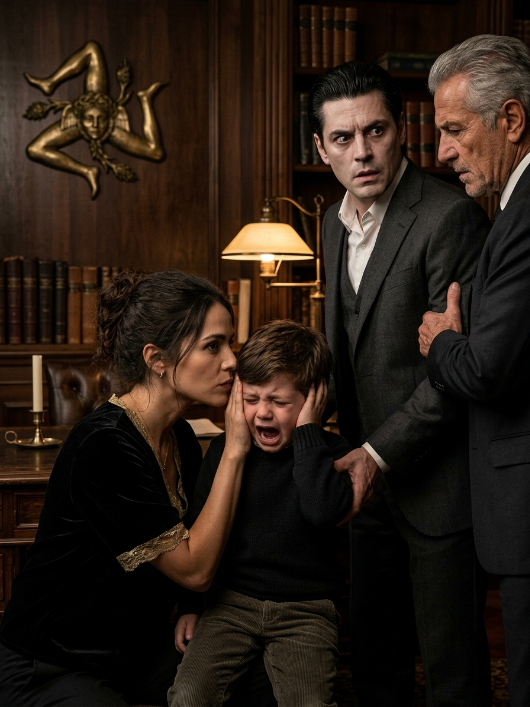
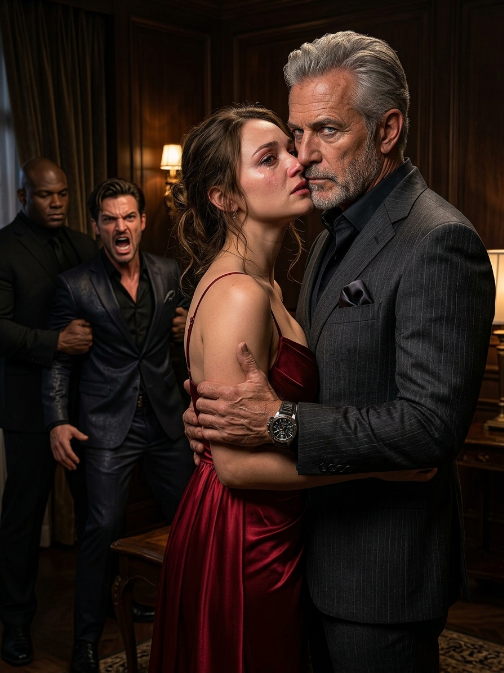
The Room That Survived — When Love and Lies Collide in the Heart of Manhattan*

**Part 1: The Silence Before the Storm**
The moment Brielle Sutter stepped into my sanctuary felt like the quiet before a hurricane. Her voice, soft yet unwavering, laced with a strange politeness, whispered an ominous declaration: “This room belongs to my baby now.” Her words floated in the air, almost like a delicate question, as if she were asking permission to borrow a silk scarf, not claiming what was mine.
I was six months pregnant, standing barefoot on the heated marble of the penthouse I had envisioned as our sanctuary. Outside, rain-dappled Manhattan shimmered like a thousand diamonds scattered in black velvet. Inside, the nursery exuded calm—faint scents of French lavender, fresh paint, and the cedar rocking chair my father had lovingly restored before his passing. Every detail was a testament to hope, a promise I had made to myself and to the child I was carrying.
Brielle’s gaze lingered on the handcrafted mobile above the crib—crystal, delicate, and filled with tiny moons and stars. Her manicured finger traced the edge of the crib, her expression calm, almost reverent. Her name was Brielle Sutter, twenty-seven, blonde, exuding an effortless polished aura that women like her mastered—knowing exactly which angles rendered men powerless. She wore a cream cashmere coat, her hand resting on her stomach as if crowned by her own pregnancy.
Behind her, Graham Whitaker, my husband, leaned casually against the wall, dressed in a charcoal suit that probably cost more than my first car. His tired eyes, however, betrayed no guilt or fear—only a quiet, inconvenient annoyance.
“Don’t make this harder than it has to be,” he said, voice smooth, dismissive.
That phrase—simple, cold—hit me like a blow I didn’t see coming. Something in my chest froze, yet I remained silent. I didn’t scream. I didn’t slap him. I didn’t grab Brielle’s perfect hair and wrest her away from the crib where my son was supposed to sleep. I merely lifted my phone, my hand trembling but steady enough to capture a single photo: Brielle’s hand on the crib, Graham in the background, the wall mural with “Theo” painted in gold above the changing table. My proof, my silent rebellion.
Graham’s eyes darkened. “Eleanor,” he said, using my full name—the tone of warning, control. I lowered the phone, a cold smile curling on my lips—not warm, but sharp enough to cut.
“You’re right,” I said. “We shouldn’t make this harder than it has to be.”
In that moment, Brielle’s facade flickered—just once. She didn’t realize yet that her carefully crafted calm had cracked. Men like Graham always choose women who know how to command a room but not how to read one. That photo, that declaration, and the timeline of my pregnancy marked the beginning of a battle he never expected.
But the nursery was only where the war started.
—
**Part 2: The Hidden War**
The walls of the penthouse, once filled with laughter and whispered promises, now held secrets that threatened to shatter everything. When Graham and I married, he was a man on the rise—handsome, ambitious, with the kind of charm that made old money nervous. His family owned Whitaker-Hale, a powerful investment firm that had weathered every storm—until now.
I was Eleanor Vance, raised in Connecticut among museums, estates, and quiet dignity. Our marriage was a quiet union of two worlds—my modest world of books and fireplaces, his glittering empire of wealth and influence. For years, we danced a delicate ballet of appearances—benefits, summers in Nantucket, winter trips to Aspen. But behind the scenes, grief had been carving a silent scar.
Three miscarriages in two years battered us into silence. The first, blood on white sheets. The second, a heartbeat that vanished. The third, a fragile flicker snuffed out days before my birthday. I learned to hide my joy, folding it away like a fragile letter I dared not read.
Then came Theo. A miracle, or so I thought. Graham cried—real tears—pressing his face to my stomach, whispering “Finally.” But I now realize that his tears were always more for himself than for the life growing inside me. His attentiveness returned, flowers were sent, appointments scheduled. I chose everything for Theo’s nursery—pale dove-gray walls, embroidered curtains, a name painted in gold. Every detail told a story of hope, of love, of a future I desperately wanted.
Until Brielle appeared. One Tuesday, she walked into my life like a storm. Perfume jasmine and metallic sharpness. Her coat, a Max Mara masterpiece. Her hand on my crib, her voice honeyed with praise.
“It’s beautiful,” she said, touching the crib with almost reverence. “Graham said you’d love it.”
My stomach clenched. My voice, trembling, called Graham’s name. He didn’t move toward me. That was the first crack in our fragile veneer.
She smiled, rehearsed and calm. “I know this must be uncomfortable,” she said, her eyes flickering with something I couldn’t decipher.
“Why is she here?” I asked, voice barely a whisper.
Graham exhaled impatiently. “We need to discuss logistics.”
“Logistics?”
Brielle’s smile dimmed, but her composure remained. “The babies are due very close together.”
My world narrowed. “How close?”
He avoided my gaze. “I’m due February second.”
My due date was February eighteenth. Sixteen days. Sixteen days between our miracles and his mistake. But no—less than that. A mistake, a secret, a woman confident enough to touch my crib.
I swallowed hard. “How long?”
Graham’s hand ran through his hair. “Eleanor—”
“Tell me.”
Brielle answered softly, almost pleased. “About a year.”
A year. During my miscarriages, my treatments, my silent grief. During injections in the bathroom, while Graham told me he had late meetings. During nights I apologized for being difficult. During everything I thought was ours.
Something inside cracked—but I didn’t fall.
My grandmother’s lessons echoed: a crack can still be priceless.
Graham’s voice finally broke through the silence, soft but dangerous. “I didn’t want you to find out like this.”
I laughed—a cold, hard sound. “How did you want me to find out? In a handwritten note? On heavy stationery?”
His jaw clenched. “We’re trying to be adults.”
I looked at Brielle, who touched her stomach with a rehearsed softness. “Remove your hand,” I commanded.
Her eyebrows lifted. “Eleanor—”
“Remove your hand from my son’s crib,” I said, voice steel.
She withdrew, slow but deliberate. Not from fear, but to perform restraint. Graham’s eyes flickered with something darker—an acknowledgment of her mistake.
He opened the leather folder on the rocking chair. My rocking chair. My heart sank.
“We’ve had counsel draft a temporary arrangement,” he said, placing a document on the changing table.
I didn’t move.
He pressed it closer. “This isn’t personal,” he said, a lie too familiar.
I looked down at the paper. “TEMPORARY RESIDENCE AND PROPERTY USE AGREEMENT.” My eyes ran over the lines. My stomach twisted. Graham wanted me out of the penthouse before Theo arrived—offered to “relocate” me to Greenwich until divorce, leaving the nursery intact for his new baby. His baby. Not ours.
Then I saw it. The clause. The nursery, already prepared, was to remain for his child with Brielle. Not Theo. His.
My hand instinctively pressed my stomach. Theo shifted, a soft roll, reminding me he was still there.
Graham’s voice, gentle but lethal, advised, “You’d be more comfortable in Greenwich. Less stress.”
“My mother is in Litchfield,” I whispered.
“Close enough,” he said.
Brielle’s hand on the crib again. “This room belongs to my baby now,” she said softly, almost a whisper.
That’s when my heart turned to ice.
The room, once filled with hope, now silent. Rain against glass paused. I lifted my phone and clicked the photo.
Graham’s face changed instantly.
“Delete that,” he demanded.
“No,” I replied, voice cold as steel.
“Eleanor, please—”
“Not this time.”
Her confidence faltered. “It’s just a photo.”
I pocketed my phone. “Yes. It is.”
His step toward me was met with a steely stare. “Don’t be dramatic.”
That was his second big mistake.
Dramatic women document. Calm women take pictures.
“I want both of you out,” I said.
Brielle looked at Graham, waiting to see how he’d handle me.
He lowered his voice. “Don’t make this harder than it has to be.”
I looked at him—at the man I married, the father of my child, the man who forged my signature, who let Brielle into my nursery, who turned my grief into a negotiation.
Then I smiled. Not warm. Not kind. The kind my grandmother called “Sunday silver.”
“You’re right,” I said softly. “We shouldn’t make this harder.”
I turned, grabbed his folder, and tucked it under my arm. Graham reached for it. I didn’t let go.
“It’s mine,” I said.
He stared, speechless.
I left the nursery, locked my door, and sat trembling on the edge of my bed. I wanted to call my mother, vomit, crawl into darkness. Instead, I opened my phone and sent one message: *Celeste Monroe. I need you. Now.*
Twelve seconds later, she answered. “What happened?”
I couldn’t speak. Just tears and silence.
“Ellie,” she said softly, “are you safe?”
I looked at the door. Graham’s voice, Brielle’s murmurs, the elevator chime. “For now.”
“Stay put. Send me everything. Don’t argue. Don’t sign anything. Stay where you are.”
I whispered, “The nursery. She said it belongs to her baby now.”
Silence.
When Celeste spoke again, her tone was velvet-soft. “Oh, Eleanor.”
I sent the photo. She opened it. Her breath left her body.
“Beautiful,” she said.
I almost laughed. “That’s not the word I’d use.”
“No. Legally, it’s perfect.”
I looked down at my belly. Theo stirred again.
Celeste’s voice sharpened. “I’m coming. Pack a bag. Don’t move out. Gather essentials—passport, medical records, prenatal files, jewelry receipts, trust documents, all messages with Graham. Quietly.”
“Celeste, I think he’s going to take my baby.”
“Not if I breathe first,” she promised.
Twenty minutes later, Graham knocked.
“Eleanor, we need to talk.”
I didn’t answer.
He tried again. “This isn’t healthy for the baby.”
I pressed record on my phone. Placed it on the nightstand.
“Open the door,” he said. “You’re acting irrational.”
I stared at the red heartbeat line. When he left, I sent the recording.
Graham’s knocking resumed. I didn’t answer. Then, the intercom buzzed. My blood chilled.
Graham stood in the elevator vestibule, snow in his hair, face flushed. Credentials in hand. Access granted, despite Celeste’s restrictions.
I called the doorman. “Please document this. No access.”
Another buzzer. His voice through the door: “Eleanor, open up.”
I stood trembling.
Theo kicked. Graham’s voice, gentle now: “Ellie. Please.”
My head against the wall. “Remember Nantucket? The storm? We lost power. You made grilled cheese by candlelight.”
I remembered—his burned toast, my laugh, the shelter in our love.
His voice cracked: “I miss us.”
For a moment, I wanted to open the door.
Then my phone buzzed—Celeste: *Do not engage. Police. Documentation. Stay away.*
Graham knocked again. “She doesn’t mean anything.”
And just like that, the spell broke. Brielle’s words echoed: “It belongs to my baby now.” The nursery, the court file, the love that once was.
I stepped back.
When security escorted him away, I watched on camera. He looked up—into the lens. I felt nothing.
That’s what terrified me most.
—
**Part 3: The Quiet Victory**
The next morning, Brielle posted a black-and-white selfie, tear-streaked, captioned: *Pregnancy should be sacred. Please be kind.* The internet exploded—hashtags, trending topics, speculations. Some called me cold. Others called her brave. Some called Graham a villain. The world loved a scandal, and I stayed silent.
Graham’s merger partners noticed. An emergency settlement was requested. I received a mysterious, unmarked package—a flash drive labeled *For the Crib.* No note. No explanation.
I didn’t open it right away. Instead, I called Celeste. She sent Priya Singh, a forensic expert, to examine the drive. It was video—interior security footage, audio included. From my penthouse. The dates matched my medical visits. Brielle entering the building on days I’d been at appointments. The truth was unspooling.
The footage revealed Graham’s plans—encouraging staff to “make her look unstable,” preparing to reassign the nursery, and most damning—discussing how to “manage” me during pregnancy, including forged signatures on trust documents. The evidence was damning.
In a secret boardroom at Whitaker-Hale, I watched Graham’s empire crumble. The vote was swift—he was removed from control, stripped of signing authority, and placed under investigation. I entered that room not as a wife betrayed but as a woman reclaiming her power.
Walking out into the snow, I saw Graham’s face—pale, defeated. I whispered, “We can tell the truth now.” Cameras flashed. Reporters clamored. I looked into the lens, voice steady: “The nursery was never just a room. It was a promise. A shield. A home. And no matter what they say, a woman’s silence is never her weakness.”
Brielle’s baby girl, Lila Grace, was born—name chosen with quiet intention. She moved away, began working for a women’s shelter. I chose to focus on Theo—his tiny fingers, his innocent eyes—building a future where truth could breathe freely.
On Theo’s first birthday, I posted a simple photo—his hand gripping the carved moons, bathed in morning light. The caption was a quiet rebellion: *The mistress claimed the nursery. The wife claimed protection.*
The world watched. Some misunderstood. Some learned. But I knew: real revenge isn’t in the courtroom, the headlines, the court papers. It’s in the quiet, unbreakable certainty that a woman’s true home is in her truth—and no betrayal can ever take that away.
And every night, when Theo sleeps safe in his room—my proof—the stars above turn slowly, whispering: love, resilience, and the power to rebuild from the ashes.
—
**The End.**