She Married the Poorest Mountain Man Everyone Mocked — Then He Led Her to a Hidden Mountain Estate

PART 2
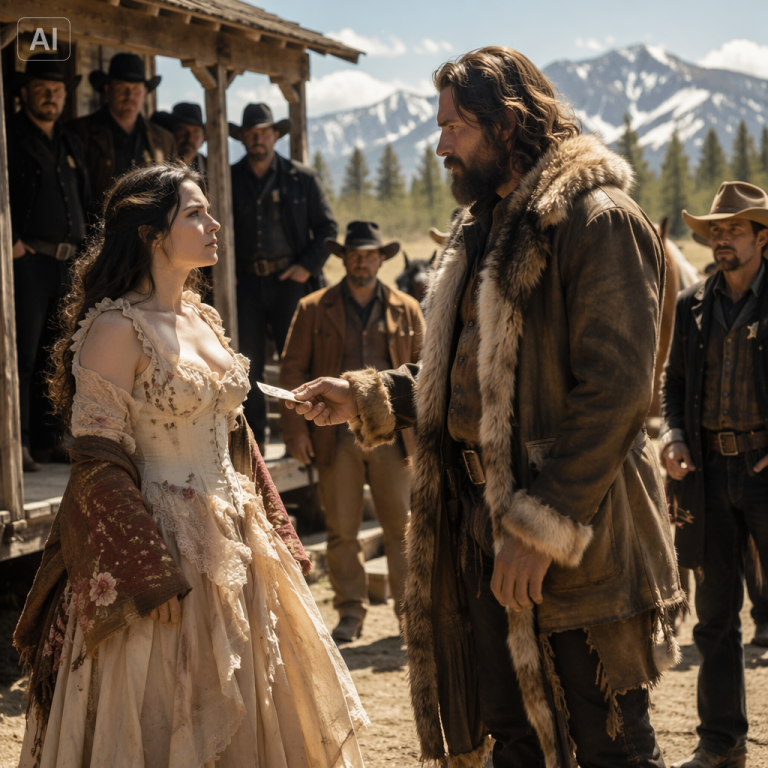
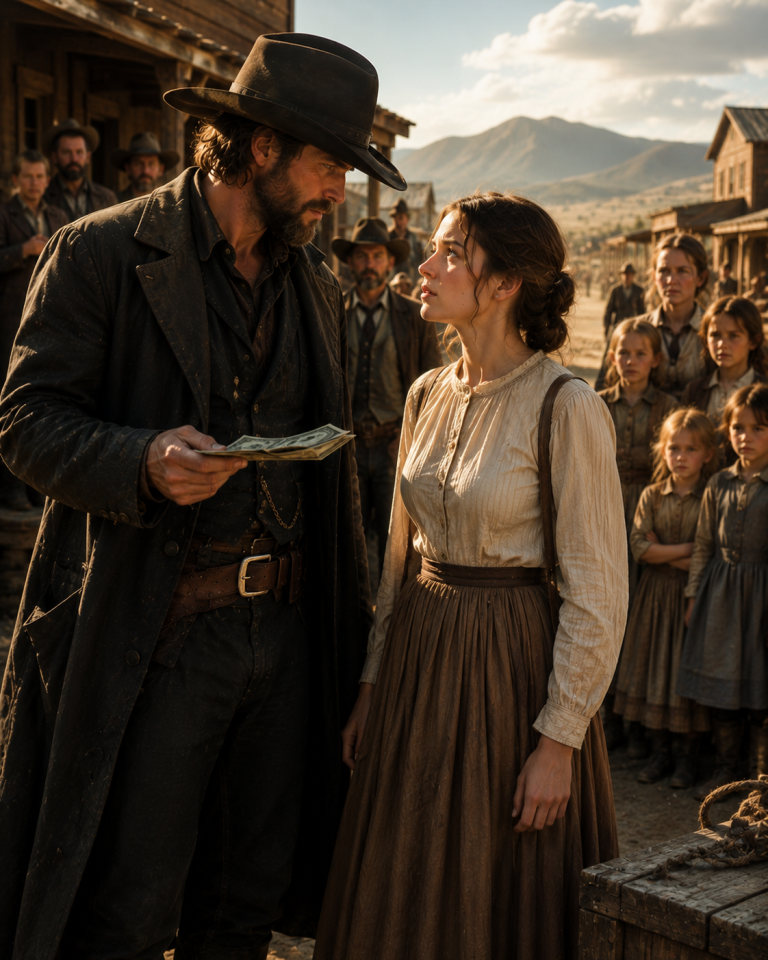
The ceremony took ten minutes, no flowers, no guests but the judge’s half-asleep clerk. Luke produced a simple gold band, worn smooth, and Clara didn’t ask where it came from. “I now pronounce you man and wife,” Judge Morrison said. “May you have better luck than most.”
They left three days later at dawn, Clara saying goodbye to her father one last time. “If it’s bad,” Thomas whispered, “if he’s not what he seems, you run. Don’t stay out of pride or duty. You run.”
The ride north was brutal — hours in the saddle, cold severe enough to numb her hands even through good gloves. Luke set a punishing pace and said little beyond warnings about the trail. That night, over stew and a flask of whiskey passed between them, she asked how long he’d lived alone.
“Five years, give or take.”
“What happened five years ago?”
“My wife died.” The words hit her like a blow. “You were married before?” “Yes.” “And you didn’t think to mention this?” “Would it have changed your answer?” He met her eyes. “You married me because you had no choice. My past didn’t factor into your decision.” He was right, but she still felt blindsided.
“What was her name?”
“Sarah. She got sick. Winter fever. Died three days before the doctor could make it through the snow.”
“The ring you’re wearing was hers,” he said, when Clara looked down at the gold band, suddenly heavier than before. “Why are you telling me this now?” “Because you asked. And because you should know what you’re walking into. Sarah loved the mountains. She died anyway, because loving something doesn’t protect you from it. You stay aware and prepared, or you don’t survive.”
The third day was the hardest, the trail a knife’s edge with sheer drops on one side, snow falling thick and blinding. Clara gave her horse its head completely, trusting the animal over her own useless sense of direction. Then, suddenly, the trail widened. The snow thinned. The valley opened before them.
She’d expected wilderness — a rough cabin Luke had built himself. What she saw instead was impossible. A wide green valley protected by mountains on all sides, a river cutting through it, a sawmill with smoke rising from its chimney, long bunkhouses, a massive barn, and at the far end, commanding the valley like a fortress, an estate — three stories of timber and stone with a wraparound porch.
“What the hell is this?” Clara’s voice came out flat.
Luke looked at the valley with an expression she couldn’t read. “Home,” he said. “Welcome to Winter Ridge.”
Clara turned to him slowly. “You’re not a poor mountain man.”
“No.”
“You’re not a drifter living hand to mouth.”
“No. I own this valley. The timber rights, the mill, contracts with three railroads. I employ forty men year-round.” He paused. “I’m what people in Denver would call wealthy.”
Clara’s hands tightened on the reins. “You lied to me.”
“I omitted details. I needed to know you’d marry me for the right reasons — not the money, not the estate. I buried one wife who married me for love and couldn’t handle the isolation. I won’t bury another.” He rode forward without looking back, leaving Clara frozen on the trail above the valley, staring at the fortune she’d apparently just married into, and every choice that had led her here.
—