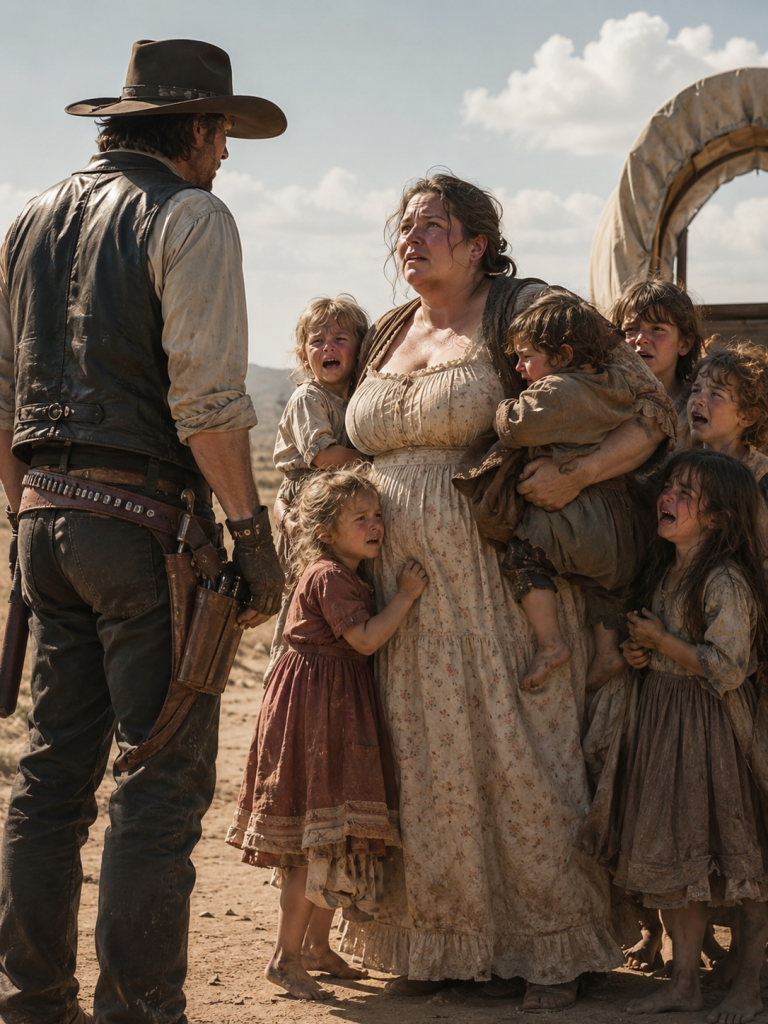
She Married the Poorest Mountain Man Everyone Mocked — Then He Led Her to a Hidden Mountain Estate

Eleanor did not surrender easily. Weeks after they returned to Winter Ridge, she triggered a formal shareholder audit, a fishing expedition for any irregularity to justify a mismanagement claim. Two auditors arrived from a Denver firm with the joyless demeanor of people who’d spent their lives looking for other people’s mistakes. Clara and Luke spent a month reorganizing five years of ledgers, and Clara discovered a genuine talent for finding the story hidden in numbers — how every expense that looked inflated to a hostile auditor was actually evidence of worker-focused, sustainability-minded leadership: wages fifteen percent above standard, safety equipment other operations considered unnecessary, larger reserves than most companies kept.
“Your safety equipment costs are quite high,” the lead auditor noted, his tone suggesting accusation.
“Yes,” Clara agreed. “Because we value our workers’ lives more than we value cutting corners. Every piece of equipment has documentation showing how it prevented injuries or deaths. Would you like to review those records as well?”
Ten days into the audit, Peterson the foreman arrived at the house with news that changed everything. A cable had snapped during a haul at the North Timber site — could have killed three men. “The safety harnesses you insisted we buy last month caught them,” Peterson said. “They’ve got bruises, and Thompson might have a cracked rib, but they’re alive.” Clara looked at the auditors, who’d been listening. “The harnesses that cost eight hundred dollars and showed up in your review as questionable expenses just saved three lives.” The lead auditor had the grace to look uncomfortable. The audit closed two days later, finding no irregularity at all — the high expenses justified by documented safety improvements and long-term sustainability practices.
Eleanor’s final gambit — a buyout offer with the valuation rigged to bankrupt Luke if he refused her expansion plan — collapsed when Clara caught the trap in the fine print. Luke declined publicly. By August, Eleanor sold her shares to a consortium of smaller investors impressed by Clara’s performance in Denver, and finally accepted defeat, writing a brief, graceless letter agreeing not to interfere again.
In the middle of that fight, a letter arrived from Red Hollow: Clara’s father had died peacefully in his sleep, the Denver doctor present, no pain at the end, Mrs. Chen holding his hand. He’d asked her to say he was proud, that she should live the life she’d chosen without looking back. Clara read the letter twice, then walked out to the valley overlook and grieved as the sun set, and Luke found her as darkness fell, wrapping his coat around her shoulders and saying nothing, just staying.
“He got to die in his own home,” Clara said finally, “because of what we did. Because I married you. That matters.”
“It matters,” Luke agreed. “But I didn’t get to say goodbye.” “No. And that’s going to hurt a long time.” He pulled her closer. “But he knew you loved him. He died knowing you were safe and building something good. That’s not nothing.”
“I want to do something for him,” Clara said. “Something that matters.”
The idea came to her two weeks later, reviewing contracts with Peterson — the worker bunkhouses were functional but grim, bare walls, narrow bunks, no privacy, men living there for months at a time with nothing personal, nothing comfortable. “What if we rebuilt them,” she asked Luke that evening, “made them actually livable? Individual rooms, windows, real furniture. Give the men dignity instead of just shelter.” “That’s expensive,” Luke said. “Probably ten thousand dollars.” “We have the reserves. And your father was a carpenter. This would honor that.” They broke ground that spring; Clara worked alongside the hired carpenters, learning enough from men who’d known her father’s reputation to understand quality work when she saw it.
The new bunkhouses rose over the summer — individual rooms with real beds and windows, common areas, a separate bathhouse that wasn’t just a freezing shed by the river. Workers began requesting transfers from other timber companies, wanting to work for the outfit that treated men like human beings. An old logger named Hansen, thirty years in timber camps, found her afterward with rough hands and rougher words: “I never thought I’d see an operation that actually gave a damn about the men doing the work. Your husband built something special here. But you made it human.” Clara couldn’t speak past the lump in her throat. She just nodded, and Hansen gripped her shoulder once before walking away.
That Christmas, Luke gave her a silver pin shaped like a pine tree — his mother’s, commissioned by his father when they’d first moved to the valley to mark a new beginning. “You’ve given me a new beginning too,” he said. “You’re not Sarah’s replacement. You’re my partner, my equal, and the reason I believe this valley has a future. I love you, Clara. Not because you’re useful or brave or good at business. Just because you’re you.”
“I love you too,” she said, “even though you’re still terrible at romantic speeches.”
“I’m working on it.”
“Don’t. Your awkwardness is part of your charm.”