Mafia Boss Found His Waitress Tied Up in the Snow—What He Did Next Shook the City

PART 1
The pain was the first thing that made sense.
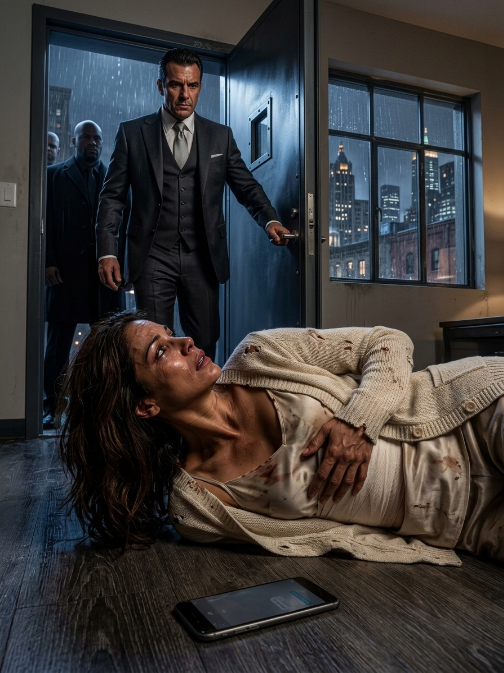
Everything before that was noise — blurred impressions of cold and dark, the chemical smell still faint at the back of her throat, the specific weight of a body that had been unmoving for too long and was only now beginning to protest it. Wren Calloway catalogued it the way she catalogued everything: methodically, from the outside in. Cheek against wet concrete. Left side locked up hard where the ribs had taken something. Wrists behind her back. The cold had moved past feeling into the particular emptiness that meant it had been working for a while.
She was in an alley.
It was still dark. Snow was falling, quiet and indifferent, settling on her hair and the backs of her hands.
She was alive, which was apparently a variable someone had not fully secured.
Wren had been working overnight shifts at The Lockwood for four years — the kind of restaurant that kept two identities, one for the food critics and one for the clientele who came after midnight and ordered the same drinks in the same booths with the specific body language of people whose conversations never happened. She had learned early how to be efficient and invisible at the same time. She had learned that the best waitresses in rooms like that were the ones who saw everything and registered nothing on their faces.
She had also learned, over four years, that the difference between a routine conversation and a dangerous one was tone, not content. Not the words. The air underneath the words.
Six weeks ago, the air in Booth Nine had changed.
She had not understood what she was hearing. That was the honest version. She had catalogued it — the way the man named Kellner had started coming in with different company, the specific tension that entered the booth, the names and numbers she had absorbed without meaning to the way you absorb a song playing in a room you’re not paying attention to — but she had not understood its shape until she was lying in an alley with her wrists bound and the cold cataloguing her from the feet up.
Now she understood.
Now was, unfortunately, too late for understanding to be useful.
She tried to call out.
What left her mouth was not a word.
She tried again, and got closer, and then heard footsteps.
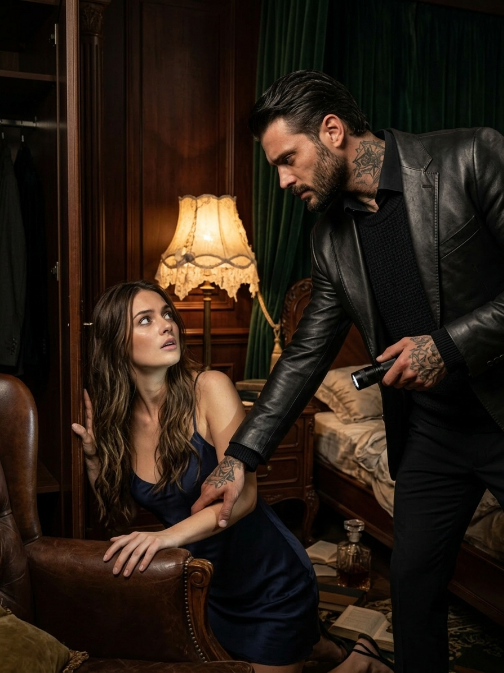
One person. Even pace. Not searching — moving directly. The flashlight beam came around the dumpster with the confident arc of someone who knew roughly where to look.
The light found her.
The footsteps stopped.
Silence.
Then, low and even: “Who did this.”
Not *are you okay.* Not *oh god.* Just: who did this, the way you ask a question when the answer is coming regardless and you are simply establishing the starting point.
Wren turned her face toward the light.
She had worked four years in a restaurant that catered to people of a specific kind, and she had developed the ability to read the quality of a presence the way you read the quality of light — not by looking directly, but by the effect it had on everything around it. The way conversations lowered. The way certain men became careful about where they set their glasses and what they said while doing it.
She knew his name before he spoke it.
Most people in the Lockwood’s orbit did.
Callum Vance owned the building, the restaurant, and approximately forty percent of the warehouse and freight infrastructure along the eastern waterfront. His name appeared on permit applications and industry boards and the annual fundraiser guestlists that the city’s better newspapers photographed. In another register — the quieter register of the late-night clientele — his name was the kind you used with awareness of where you were standing when you said it.
He crouched.
He looked at the restraints on her wrists. Something moved in his expression — a specific settling, like a mechanism engaging.
“How long have you been here,” he said.
“Don’t know.” Her voice had the quality of a voice coming back from somewhere — thin, not quite hers yet. “Closed my shift. Then I was here.”
He examined the rope without touching it differently than necessary.
“This is a particular knot,” he said. Not to her — to himself. Then, to her: “Can you stand?”
She tried.
He did not let her try for long. He made a brief phone call — clipped, specific, no wasted words — and then crouched again, and she felt his hands at the restraints, not cutting yet, assessing.
“The rope,” she said.
“Later,” he said. “We need to move you first.”
“The rope has a tag,” she said. She had noticed it when the flashlight beam caught it, the small rectangle of inventory paper still attached near the cut end. “Industrial.”
He was quiet.
“I know,” he said.
“It’s yours,” she said.
A pause that meant yes.
“I know that too,” he said.
He lifted her when she couldn’t manage it herself, and she was too cold and too focused on staying conscious to argue the logistics. She was aware of wool, warmth, the specific quality of someone who moved through difficult situations without broadcasting the difficulty of them.
She woke in a room that was a room rather than a hospital — she checked that first, the way she checked booths for dynamics, the way she had learned to read the shape of a space from its details. A space heater working in the corner. Real curtains. The ceiling of a building that had been someone’s building for a long time.
A woman was at her bedside doing something competent with her pulse.
Across the room, Callum Vance sat in a chair near the window holding a short length of cut rope with the specific concentration of someone who was building an argument.
He looked up when she moved.
“Dr. Lund,” he said.
The woman said, without inflection, “Two cracked ribs. Mild hypothermia. Contusion, right temple. Rope burns consistent with professional-grade cord, approximately four to six hours’ exposure.” She paused. “She needs food and warmth and she should not be left alone until tomorrow.”
“Understood,” he said.
The doctor left.
The door clicked.
Wren looked at the rope in his hands.
“Inventory tag,” she said.
“North pier warehouse,” he said. “Missing from a supply count six days ago.”
“Who has access,” she said.
He set the rope on the windowsill.
“That,” he said, “is the conversation I need to have with you.”
She told him in order, because that was how she organized things and because she had learned that imprecision in difficult conversations cost more than it saved.
She told him about six weeks of changed air in Booth Nine. The regular named Kellner, who had been coming in for two years and whose baseline she understood, who had started arriving with company that was new and whose body language had shifted from transaction-comfortable to planning-careful. The conversations she had absorbed without attending: routes, timelines, window of opportunity. The phrase *clean books* used in a way that meant the opposite. A name — Alden — spoken twice, with the specific weight of a name that was both an asset and a liability. And the phrase she had not understood at the time: *the problem is that someone heard too much.*
Callum Vance was very still while she spoke.
“Kellner,” he said.
“Marcus Kellner. He’s been a regular for two years, always Booth Nine, three or four nights a week.”
“I know who he is,” he said.
Something in how he said it.
“He works for you,” she said.
“He is my head of freight operations at the north pier,” he said. “Has been for eight years.”
The room was specific in its quiet.
“And Alden,” she said. “The name they used.”
He held her gaze.
“Dorothea Alden,” he said. “She is the senior attorney at the firm that has handled my legal documentation for fifteen years. She was my father’s attorney before she was mine.”
Wren absorbed this.
She thought about six weeks of background noise in a late-night booth and what it meant that two of the names in it were people this man had trusted for the better part of a decade.
“The rope,” she said. “They used your rope from your warehouse.”
“Yes,” he said.
“That’s either careless or a message,” she said.
He held her gaze.
“Kellner knew you’d find out,” she said. “He knows how you operate. If he wanted to disappear me without any connection to him, he would have used materials that had no path back.” She held his gaze. “He used yours because he wanted you to know. He’s trying to make you react in a specific way.”
Callum looked at the windowsill.
Then he looked at her.
“What way,” he said.
“The wrong way,” she said. “The way that confirms whatever narrative he’s building.”
He held her gaze for a moment.
“You’ve been a waitress at The Lockwood for four years,” he said.
“Yes,” she said.
“And in four years,” he said, “nobody in that restaurant told you how to read a setup.”
“In four years,” she said, “I learned to read everything else. Setup wasn’t difficult.”
He held her gaze.
Then he said: “The conversation in Booth Nine. They mentioned a date.”
“December third,” she said. “Kellner said the window closed on the third. He said by then the access route would be different.”
“The third is our annual pier inventory audit,” he said.
“Then they’re not stealing from you,” she said. “They’re arranging the books before someone officially reads them.”
“Yes,” he said.
“And they moved on me because—”
“Because the audit creates a record,” he said. “And a record is only clean if there are no witnesses to the version that precedes it.”
She looked at her bandaged wrists.
She said: “How many days until the third.”
“Seven,” he said.
“Then we have seven days,” she said.
He held her gaze.
“We,” he said.
“You need what I heard,” she said. “I need to understand what I’m in the middle of so I can decide what to do about it. That’s a working arrangement, not a favor.”
He was quiet.
“What are your terms,” he said.
“My terms,” she said, “are that this goes through proper channels. Whatever we find, whatever the shape of it — it goes to someone with legal authority to do something with it. Not to a basement. Not to a private resolution. A record that exists outside your hands and mine.”
He held her gaze.
“You don’t trust me,” he said.
“I don’t know you,” she said. “Those are different things.”
He held her gaze for another moment.
Then he said: “I have a federal contact. I’ve been feeding her information on a specific insurance fraud pattern for two years. She’s been waiting for the evidentiary chain to connect.”
“You think this connects it,” she said.
“I think you might be the piece she’s been missing,” he said.
Wren looked at the rope on the windowsill.
She thought about six weeks of background noise and how it had arrived here, at this room, at this conversation.
She said: “Tell me the shape of what they’re building. All of it. Then I’ll tell you what I remember.”
He pulled a chair close.
He told her.
—
PART 2
The shape of it was worse than she had guessed, which was saying something because she had spent the past hour lying in a hospital-adjacent room revising her estimate upward.
Kellner had been running freight diversions through the north pier for close to a year — product listed in manifests that did not match product physically moved, the discrepancy small enough in each individual transaction to fall within acceptable variance thresholds, the aggregate over twelve months significant enough to fund whatever came next. But the freight operation was the mechanism, not the objective. The objective was the audit.
“There’s a cargo insurance review,” Callum said. “Annual, third-party. The firm that conducts it has a secondary relationship with Alden’s legal office.”
“Meaning she controls what they see,” Wren said.
“Meaning she controls the documentation chain they use to verify the inventory,” he said. “If the physical audit on the third shows a discrepancy, and the documentation chain Alden has prepared explains that discrepancy in a particular way—”
“The insurance claim that follows looks legitimate,” she said.
“And the investigation that follows the claim,” he said, “looks at whoever the documentation chain points at.”
“Which is you,” she said.
“Which is me,” he said.
She was quiet for a moment.
“How much,” she said.
“The north pier inventory is assessed at approximately nine million dollars,” he said.
“And Kellner is going to all this trouble for what,” she said. “A third of it? A quarter?”
“Kellner has been with me for eight years,” he said. “Alden for fifteen.” He looked at the windowsill. “People who build things slowly have patience for the return.”
Wren thought about this.
She thought about eight years of access and fifteen years of legal documentation and the specific patience of a plan that had been constructed over months, incrementally, so gradually that no single step looked like anything other than ordinary business.
She said: “There’s a second date.”
He looked at her.
“In the booth,” she said. “Kellner said December third and then he said something else. He said ‘before the renewal on the nineteenth.’ I didn’t know what it meant at the time.”
Callum was very still.
“The cargo insurance policy renews on December nineteenth,” he said.
“So the audit on the third creates the evidentiary record,” she said. “The insurance claim is filed in the window between the third and the nineteenth, while the current policy covers it. The renewal either happens with the fraudulent claim already processed—”
“Or it doesn’t happen at all,” he said, “because the company that holds the policy has already paid out and is looking at me for fraud.”
She looked at him.
“They’re not just framing you for covering up theft,” she said. “They’re engineering a federal case.”
“Yes,” he said.
“Because Alden has your files,” she said.
“Everything filed and a great deal that isn’t,” he said.
“She can construct a paper version of you that supports whatever story the audit establishes,” she said.
“Yes,” he said.
She was quiet.
She thought about a phone number she had memorized from the emergency contact form she had filled out on her first day at The Lockwood, four years ago. The name beside the number was her brother, who was a federal public defender in Baltimore and had spent the last six years explaining to her that the law was a system and systems had entry points.
She thought about entry points.
She said: “Your federal contact. What’s her focus area.”
“Insurance fraud and documentary manipulation,” he said. “She’s been building a pattern case across four incidents in three cities. Each time, the chain led back to a secondary legal firm with a connection to Alden’s office.”
Wren looked at him.
“Each time,” she said, “but not enough to move on.”
“The evidentiary chain kept going cold before she could establish the connection cleanly,” he said.
“Because Alden cleaned it,” she said.
“I assume so,” he said.
“And this time,” she said, “Kellner made a mistake. He left a witness.”
“He thought he hadn’t,” he said.
“Right,” she said. “Which means they haven’t adjusted for it. Their timeline assumes I’m either dead or inaccessible.”
“Yes,” he said.
“So we have seven days in which they believe their plan is intact,” she said.
“Yes,” he said.
“Call her tonight,” she said. “Your federal contact. Tonight. Before anything moves, before Kellner has reason to believe something has changed.”
He held her gaze.
“If I call her tonight,” he said, “the investigation opens formally. That means you testify.”
“I know,” she said.
“On the record,” he said. “Formally. In a proceeding.”
“I know what testifying means,” she said.
He held her gaze.
He said: “You’re certain.”
“I’m the person they left in an alley,” she said. “They made that decision for me. I’m making this one for myself.”
He held her gaze for a long moment.
Something shifted in his expression — not relief, which would have been the easy version. Something more specific. The particular quality of someone who has been making difficult decisions alone for a long time and has just found out they are not alone in this one.
He reached for his phone.
He dialed.
She listened to him speak to someone called Reyes — clipped, factual, no performance in it — and she watched the shape of it: a man who was reporting something that cost him, who was doing it cleanly anyway.
Reyes said something that made him go still.
He said: “How long have you known.”
Whatever she said was short.
He said: “I see.”
He ended the call.
He looked at Wren.
“Reyes has had Alden’s secondary firm under preliminary surveillance for three weeks,” he said. “She was waiting for a witness who could establish the booth conversations.”
Wren held his gaze.
“Then she already knew,” she said.
“She knew the shape,” he said. “She didn’t have someone who had been in the room.”
“I was in the room for six weeks,” she said.
“Yes,” he said.
She looked at the snow against the window.
She thought about six weeks of background noise becoming the center of something.
She thought about the specific cost of being useful without knowing you were being used.
She said: “She’s coming here.”
“Tomorrow morning,” he said.
Wren looked at the window.
She said: “Good.”
Then she said: “There’s one more thing. From the booth.”
He waited.
“The woman on the phone,” she said. “The night the plan changed quality. Someone called in — speakerphone, bad connection, Kellner kept turning the volume up. She was reading numbers from something. Container codes. She knew the specific inventory numbers, which means she had documentation in front of her that she wasn’t at the pier to access physically.”
“Alden’s office,” he said.
“She’s running the documentation from somewhere else,” she said. “Which means on the day of the audit, she won’t be physically present. She’ll be remote.”
He was very still.
“If Reyes can establish where the call originated—” he started.
“She has access to the records,” Wren said. “If you can give her the date and approximate time of the call—”
“I can give her the specific nights Kellner was in the booth,” he said.
“Then she can triangulate the location,” she said. “And if the location is Alden’s secondary office in—” She stopped. “Where is the secondary office.”
He held her gaze.
“Schaumburg,” he said.
“Then she can put Alden on-site at the secondary office on the nights the documentation was being prepared,” she said, “which establishes the chain.”
He held her gaze.
He said: “You said you were a waitress.”
“I said I was good at it,” she said. “I didn’t say it was the whole picture.”
He held her gaze.
He said: “What’s the rest of the picture.”
She said: “My brother is a federal public defender. I grew up understanding how evidentiary chains work. And I have been sitting in rooms with dangerous conversations for four years without once being caught listening, which suggests I’m good at gathering information without advertising it.”
He held her gaze.
She said: “Call Reyes back. Tell her we have the dates and the location.”
—
PART 3
Reyes arrived at nine the following morning, which meant she had driven through the night from wherever she had been, which told Wren something about how long this case had been sitting unresolved and what it meant to the person carrying it.
She was compact, precise, with the quality of attention that belonged to people who had spent years building arguments from evidence and knew exactly how much each piece weighed.
She sat across from Wren at the table in the main room and asked questions with the specificity of someone who was not fishing — who was confirming, comparing, establishing the shape of something she could already partly see.
Wren answered clearly and in sequence.
She gave the dates: six specific nights over six weeks, the evenings Kellner had come in with the new company, the evenings the conversation had changed quality. She gave the names she had heard: Kellner’s direct, Alden’s twice, a third name — Pruett — that she had caught once and which Reyes wrote down with the expression of someone finding a piece they had been missing.
She gave the speakerphone call.
She gave the date, the approximate time, the content — the container codes, the documentation numbers, the specific phrase *the chain will read consistent by the second* spoken in the particular voice of someone reading from a physical document rather than recalling it from memory.
Reyes made notes.
She did not react to individual pieces. She waited for the architecture to emerge.
When Wren finished, Reyes set down her pen.
She looked at Callum, who had been sitting at the far end of the table throughout.
She said: “You have the counter-records.”
“Six days of parallel inventory counts,” he said. “Undocumented, internal, kept by my operations assistant separately from the official system. The inventory is intact.”
“So when the audit on the third produces a discrepancy—”
“The physical reality will contradict Alden’s documentation chain,” he said. “Both records will exist. One showing a pattern of loss. One showing no loss.”
“And the documentation chain will point at you as the explanation,” Reyes said.
“Yes,” he said.
“Except,” she said, “that the documentation chain was created by the attorney who controls your legal files, with assistance from a freight operations manager who had access to the physical inventory, and a secondary firm with a three-year pattern of appearing in similar cases in three other cities.”
“Yes,” he said.
Reyes looked at Wren.
“You’ll testify formally,” she said. “This isn’t a question — you’ve already agreed. But I want to be clear about what formally means: deposition, federal proceeding, your name in the public record.”
“Yes,” Wren said.
“People will know you were in that restaurant.”
“People already know I worked there,” Wren said. “They don’t know I was listening.”
“After the case, they will,” Reyes said.
“Then after the case,” Wren said, “I’ll be someone who listened carefully and told the truth about it. I can live with that.”
Reyes held her gaze.
Then she nodded.
She made one call from the room — brief, contained — and then she stood.
“Kellner will be picked up Thursday,” she said. “That’s four days before the audit. Pruett is already under surveillance. Alden—” She paused. “Alden is more careful. I need the location on the speakerphone call before I move on her.”
“I can get you the phone records from the booth,” Callum said. “The restaurant’s landline, Booth Nine specifically, on the dates Wren identified.”
“Do it today,” Reyes said.
She looked between them.
“One more thing,” she said. “When Kellner is picked up, the other parties will know the investigation is moving. You understand what that means for your position.”
“They’ll run,” he said.
“Alden will run,” Reyes said. “Kellner is eight years in — he has some loyalty calculation to make. Alden has been doing this across four cities. She has an exit plan.”
“Does she have a destination,” he said.
“She has a pattern,” Reyes said. “I’ve been watching the pattern for three years. I know where the pattern goes.”
She put on her coat.
“I’ll be in touch by tomorrow,” she said. “In the meantime — both of you stay off any system that touches the warehouse or the legal files. Don’t give them a reason to accelerate.”
She left.
The room was quiet.
Wren looked at the table.
She said: “You knew Reyes for two years.”
“Yes,” he said.
“And you’ve been feeding her the pattern for two years,” she said.
“Yes,” he said.
“But you couldn’t give her the piece that connected Alden directly,” she said.
“No,” he said.
“Because Alden was careful,” she said.
“Because Alden was careful,” he said.
Wren looked at the window.
She thought about fifteen years of trust and the specific patience of a plan that had been built inside that trust, carefully, incrementally, using the access that trust created.
She thought about what it cost to understand that.
She said: “How are you.”
He held her gaze.
She said: “Not the operational version. The other version.”
He was quiet for a moment.
“Alden was my father’s attorney,” he said. “She wrote his will. She handled his estate. She called me when he died and she stood beside me at the service.” He held her gaze. “Eight years with Kellner. I introduced him to his wife. I went to his daughter’s christening.”
Wren held his gaze.
She said: “People who plan for a long time learn to build genuine things inside the plan. That’s what makes them able to sustain it.”
“I know,” he said.
“It doesn’t mean the genuine parts were false,” she said. “It means they were used.”
He held her gaze.
He said: “That’s either better or worse. I’m not certain which.”
“Both,” she said. “Usually both.”
He held her gaze.
She thought: I have been reading this room for three days.
She thought: the room keeps being what it seems to be, which is the rarest thing.
—
Thursday arrived gray and cold.
Kellner was picked up at his office at seven-forty a.m. by two federal agents with a warrant that had been prepared the day before. He did not resist. He made one call, to a number Reyes had already flagged.
The phone records from Booth Nine placed three calls to Alden’s secondary office in Schaumburg on the nights Wren had identified.
Reyes had a warrant for the office records by four in the afternoon.
Alden was at an airport.
She was not at O’Hare. She was at a private terminal on the city’s south side, and she had filed a flight plan under a name that was adjacent to hers in a way that was not accidental.
Reyes had been watching the pattern for three years.
She knew where the pattern went.
Alden was stopped at the gate.
The audit proceeded on the third.
The inventory documentation Alden had prepared showed a pattern of loss across fourteen months.
Callum’s counter-records showed no loss.
Both sets of documents entered the federal case as exhibits.
The explanation for the discrepancy was not a mystery.
Pruett, the third name Wren had caught once in the booth, turned out to be a secondary operator at the cargo insurance firm — someone who had been Alden’s contact on the institutional side, who had been preparing the receiving end of the claim. He cooperated within a week of Kellner’s arrest and provided documentation going back to the first of the four cases Reyes had been tracking.
The case closed four months later.
Kellner entered a guilty plea.
Alden was convicted on seven counts including documentary fraud and conspiracy.
Pruett’s cooperation resulted in reduced charges and a federal sentence that Reyes described, when she called Wren to tell her, as *appropriate given the circumstances.*
Wren testified twice.
Once in deposition, in a conference room with Callum’s attorney present and Reyes across the table and the specific quality of light that makes every surface look like evidence.
Once in formal proceedings, in front of a judge, with Alden’s defense attorney doing her best to suggest that a waitress who had spent four years in a restaurant with Callum Vance’s name on the deed was not a neutral witness.
“You worked for the defendant’s company for four years,” the attorney said.
“I worked for the restaurant,” Wren said. “The restaurant is one of several hundred businesses Mr. Vance owns. I had no relationship with him prior to the night he found me in an alley.”
“And yet you went with him willingly.”
“I went with him because I was hypothermic and had two cracked ribs and the alternative was waiting in the snow for someone to call an ambulance that would have connected back to the investigation before the investigation was ready to move.” Wren looked at the attorney directly. “I made a calculated decision with the information I had. That’s different from loyalty.”
The attorney’s next question went somewhere less productive.
Alden looked at Wren once from the defense table, across the proceedings, with the specific expression of someone calculating what went wrong.
Wren looked back.
She thought: you assumed I was furniture.
She thought: four years of background noise was exactly what you needed me to be.
She thought: that was your mistake.
—
The restaurant that opened six months later in the space the Lockwood had occupied was called Meridian.
It was not a late-night arrangement. It was a dinner restaurant, seven until eleven, with a kitchen that was serious about the food and a front-of-house that ran on the logic of someone who understood that the quality of a dining room was not the furniture or the lighting but the people who moved through it and understood what was happening in it.
Wren Calloway managed the floor.
She walked the pre-service check on the evening of the first week: tables, sight lines, the weight of the room before the room had been tested by use. She stopped at one point and moved a table four inches — the sight line from the host stand to the back section was wrong, a server’s pathway interrupted, a small inefficiency that would compound over hundreds of covers.
She was noting the result when she heard the front door open behind her.
Callum came in through the main entrance, which he almost never did.
She looked at him.
He looked at the room.
“Table three,” he said.
“The sight line from the host stand was wrong,” she said. “I moved it.”
“It’s better,” he said.
“I know,” she said.
He held her gaze.
He had the quality she had been learning over six months — the version that existed without the pressure of a federal investigation running under it. Less contained. Not looser. Just more of the same thing, with more surface area.
She had been learning the difference between controlled and closed, and Callum Vance was the former.
She said: “Reyes called.”
“I know,” he said. “She called me too.”
“The case documentation is being used as a template,” she said. “She said the secondary firm pattern is going to be flagged across the insurance regulatory system. Future cases will have a faster evidentiary path.”
“Good,” he said.
“She also said my testimony was the clearest she’d worked with in the four cases,” she said.
“Also good,” he said.
“She asked if I’d considered federal work,” she said. “Witness advocacy or case consultation.”
He held her gaze.
“What did you tell her,” he said.
“I told her I had just taken a job I liked,” she said.
Something moved in his expression.
“She said the offer stands,” Wren added.
“It will keep standing,” he said. “For later.”
She looked at the room — the clean lines of it, the candles that would be lit in forty minutes, the tables she had placed with the logic of someone who understood that a room was a system and systems worked best when all the parts knew what they were doing.
She said: “I’ve been keeping parallel records.”
He looked at her.
“The inventory,” she said. “Separate from the official count. Same system you used before the audit. I started it on my second week.”
He held her gaze.
“I didn’t ask you to do that,” he said.
“No,” she said.
“Why,” he said.
She thought about this.
She said: “Because I am in a room that is mine now. In a room that is mine, I keep my own records. That’s not a reflection on you — it’s a reflection on me.”
He held her gaze.
He said: “Good.”
“It is,” she said.
He looked at the room again.
He said: “You moved the piano.”
“The piano was blocking the server station,” she said. “It’s better where it is now.”
“It is,” he said.
She picked up her clipboard.
She said: “Pre-service in thirty minutes.”
“I know,” he said.
“I have things to finish,” she said.
“I know,” he said.
“So do you,” she said.
He held her gaze.
He said: “Wren.”
“Yes,” she said.
He said: “When I found you in that alley—”
“I know,” she said.
He held her gaze.
“I mean that I understand what it cost you,” she said. “Finding me with your rope. Knowing what it meant about people you’d trusted for years. Calling Reyes before you’d resolved it yourself.” She held his gaze. “I know what that is. I watched you do it.”
He held her gaze.
He said: “You weren’t background noise.”
“No,” she said. “I told you that the first morning.”
“You told me your terms,” he said.
“Terms and the same thing,” she said.
He held her gaze.
He said: “I’d like to take you to dinner. Not here. Somewhere neither of us is responsible for the room.”
She looked at him.
She thought about four years of reading rooms for their danger and the specific quality of a room that was instead simply good.
She thought: I know this room.
She thought: I chose it.
She said: “Saturday. I’m off Saturday.”
He said: “Saturday.”
She picked up her clipboard and walked back to the pre-service check.
The room was ready.
Outside, the city moved through its ordinary evening — cold, specific, indifferent to the particular things that had resolved inside this space and the particular things that were beginning.
The candles would be lit in twenty-eight minutes.
The first cover would arrive at seven.
Wren walked the floor and catalogued what she saw: the tables, the light, the warm competence of a room that knew what it was.
Everything in order.
Everything chosen.
That was the whole of it, and it was enough, and she had earned the right to say so.