I Stitched the Mafia Boss in Secret—Hours Later, He Ordered Them to Find Me and Tried to Buy My Life

## PART 1
The man on my table had three bullet wounds and the calmest eyes I had ever seen.
Not calm like peace. Calm like someone who had already decided how everything would end—and was simply waiting for everyone else to catch up.
My name is Maya Reyes. Night shift RN, St. Dominic’s Trauma Center, Chicago. I work the hours nobody wants because the pay is slightly better and the questions are slightly fewer.
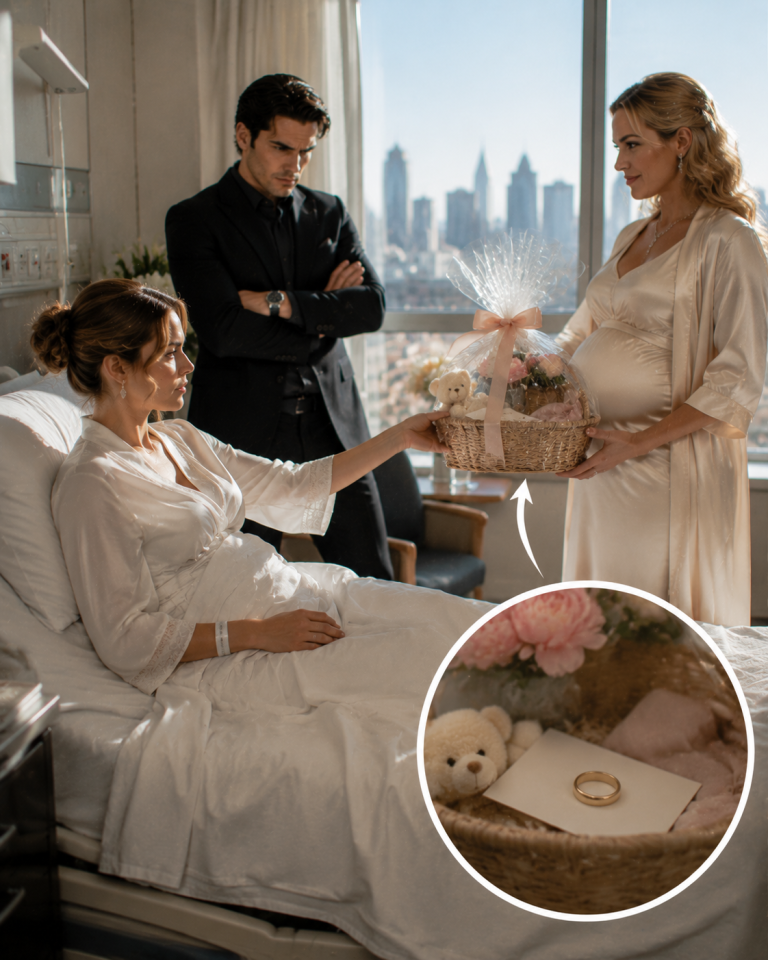
That night, two men carried him through the back entrance—not the ambulance bay, the back entrance, the one we used for supply deliveries—and the charge nurse didn’t stop them because apparently someone had already made a phone call I wasn’t part of.
They laid him on Bed 4 and left without a word.
No insurance card. No ID. No story.
Just blood and that stillness.
“What’s your name?” I asked, cutting away his shirt.
He looked at me the way people look at a window. Not through me. Just… at me, like I was part of the scenery he was quietly cataloging.
“Ethan,” he said. “Ethan Cross.”
I didn’t believe him. But I had three entry wounds to manage, so I let it go.
He didn’t flinch once. Not during the irrigation. Not during the sutures. Not when I told him two of the three rounds had passed clean through but the third was still sitting close to his fourth rib and he needed a surgeon, not a night-shift nurse doing battlefield triage in a trauma bay.
“You’ll do,” he said.
“I am not a surgeon.”
“You’ve done this before.”
It wasn’t a question.
I had. Once, in a field clinic in Guatemala during a medical mission that went sideways in ways I never talked about at dinner parties.
I didn’t ask how he knew that.
By 4 AM, he was stable. Borderline stable. The kind of stable that means alive for now and don’t get comfortable.
I charted what I could legally chart and left what I couldn’t in the space between words.
When my shift ended at six, I stopped by Bed 4 to check his vitals one last time.
He was sitting up.
He held a phone loosely in one hand—my name already pulled up on the screen. Not my work profile. My personal information. My address on Maple Court. My mother’s rehab facility in Cincinnati. The past-due notice from my student loan servicer that I hadn’t even opened yet.
He didn’t show me the screen to threaten me.
He showed it to me the way a chess player lifts a piece and sets it down somewhere new—quiet, deliberate, finished.
“You saved my life,” Ethan Cross said. “I repay my debts.”
“I was doing my job.”
“Yes.” He looked at me steadily. “And now I’d like to offer you a new one.”
I should have walked out.
I should have gone straight to my car, driven home, and reported the entire encounter to the attending on call.
I should have done a lot of things.
But then my phone buzzed.
A text from a number I didn’t recognize—a single photo attachment.
I opened it.
And everything I thought I understood about that night cracked straight down the middle.
## PART 2
The photo was of me.
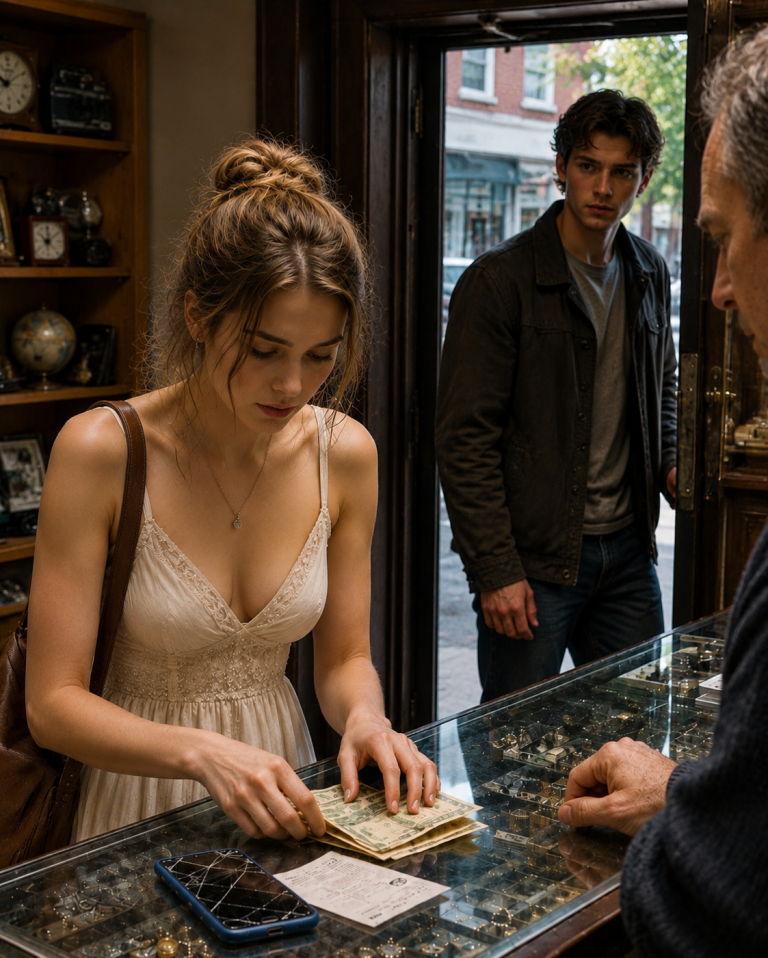
Not from tonight. From three weeks ago — a parking garage on the north side, fluorescent light, my scrubs still on. I was handing an envelope to a man I had never expected to see again: Dr. Callum Priest, whose license had been suspended two years prior, whose name appeared in a federal narcotics investigation that was still technically open.
I had given him cash. Four hundred dollars. And the address of a patient who had specifically requested anonymity.
I had done it because Callum told me the patient was his brother, estranged, and he just wanted to talk.
I had done it because I was tired and the shift had been brutal and I believed him.
The photo made it look like something entirely different.
I stared at the screen until the image blurred.
“That’s not what it looks like,” I said.
“I know,” Ethan Cross said. “I know exactly what it looks like. And I know exactly what it is.” He set the phone he was holding face-down on the mattress. “Which is why we need to talk about what happens next.”
Outside the trauma bay, the morning shift was beginning. I could hear the familiar sounds: carts, voices, the low hum of the building waking up. In forty-five minutes my replacement would formally take over and I would have no professional reason to still be standing here.
I had forty-five minutes to decide something I didn’t fully understand yet.
“Who sent that photo?” I said.
Ethan looked at me.
“The same people,” he said, “who put three bullets in me.”
—
## PART 3
He talked for eleven minutes.
I timed it without meaning to, watching the clock above the supply cabinet while he spoke in that same level voice he’d used all night — not low, not urgent, just very precise, the way a person speaks when they know the information matters more than how it’s delivered.
His name was not Ethan Cross. That much I had already assumed.
His actual name, he said, was not something I needed yet.
What I needed was this: four months ago, a trafficking operation that had been quietly dismantled began quietly reassembling, and the people behind the reassembly were moving cash through medical infrastructure — clinics, pharmacies, a handful of hospital accounts they had access to through individuals who had been, at various points, persuaded or coerced into cooperation.
Dr. Callum Priest was one of those individuals.
I was not.
But the photo suggested otherwise, and the photo had been taken deliberately, and whoever held the photo could hand it to the federal agents currently investigating the network and let the inference do the rest.
“You’d lose your license,” Ethan said. “Possibly face charges. Possibly not — but the investigation alone would be enough.”
“I know how it works,” I said.
“Then you know why you needed to know tonight.”
I looked at him. Stable, shirt gone, three wounds dressed by my hands, sitting up in a hospital bed he had no legal reason to be in, telling me my life had been altered without my knowledge by people I’d never met.
“The men who shot you,” I said. “They have the photo.”
“They have the original. The copy on your phone was sent to you by someone on my side — to make sure you understood the situation before you left the building.”
“That’s a hell of a way to say good morning.”
Something shifted briefly in his face. Not a smile, exactly. An acknowledgment.
“I need two things from you,” he said. “A name and a location. The name of whoever Callum Priest contacted after you gave him the address. And where you were told to direct any follow-up calls about that patient.”
“You already know this.”
“I know part of it. I need your version to confirm what I know and fill what I don’t.”
I set my phone down on the counter next to the sink.
The fluorescent light above Bed 4 hummed faintly. Someone in the hall laughed at something. Morning sounds. Normal sounds.
“And if I give you what you’re asking for,” I said, “what happens to the photo?”
“It stops existing.”
“And I’m supposed to take that on faith.”
“You’re supposed to take it on the evidence of what I do next,” he said. “Which is what people actually mean when they say faith.”
I had taken care of this man’s wounds for two hours. I had made decisions in that time that I couldn’t undo. That was already true regardless of what happened in this conversation.
I gave him the name.
—
His people moved fast. I had no way of tracking it in real time — I drove home, slept four hours, woke to rain and the sound of my downstairs neighbor’s television, and tried to determine from the ceiling of my bedroom whether I had just done something irreversible.
I had. The question was whether it was the wrong kind.
At six that evening, my phone buzzed. Unknown number. Text only: *Priest is in custody. Federal. The photo is gone from their files. Your name was never in them.*
Nothing else.
I read it twice and then went to make coffee.
The problem was that custody and *gone* were not the same as finished.
I had given a name and a location to a man I didn’t know, connected to an organization I knew nothing about, in a hospital room where he technically didn’t exist. He had taken that information somewhere and done something with it and the surface result looked like what he’d promised.
But surfaces were not the same as the thing beneath them.
I had been a trauma nurse for nine years. I understood the difference between a patient who was stable and a patient who was well.
—
Three days later, he came to the coffee shop on Kedzie where I went on days off.
I was already there when he walked in, which told me he knew my routine. That would have unsettled me more if I hadn’t already spent forty-eight hours assuming it.
He sat down across from me.
He looked different out of a hospital bed — not healthier, not taller, just more present. He wore a dark jacket and moved with the careful control of someone managing a healing ribcage, which I recognized because I’d wrapped it.
“You wanted to ask me something,” he said.
“How do you know that?”
“Because you’re here.”
I put both hands around my cup.
“Callum Priest,” I said. “What happens to him?”
“He cooperates or he doesn’t. Either way, he’s out of the operation. The federal case was already building — what I gave them accelerated it.”
“I gave you what you gave them.”
“Yes.”
“So my information put him there.”
“Your information confirmed what was already there,” he said. “The difference matters.”
It mattered somewhat. Less than I wanted it to.
“What was the patient?” I said. “The one Callum wanted the address for.”
Ethan Cross — whatever his name actually was — looked at me steadily.
“A witness,” he said.
I set the cup down.
“The address I gave Callum was a residential care facility,” I said. “The patient was sixty-three years old and had been admitted for—”
“I know who she was.”
“Is she—”
“She’s safe.” He said it without hesitation. “She was moved two days before Callum’s contact reached out. What you gave him was a forwarding address that led somewhere that wasn’t her.”
I absorbed this slowly.
“You already had it managed,” I said.
“We were watching Priest. We knew he’d make contact with someone at St. Dominic’s, we just didn’t know who until the photo showed us. By the time he used your information, the risk was already contained.”
I looked at him.
“So the photo, the custody, the text telling me his name was gone from the files —”
“All true,” he said. “And also: none of it required you to know the larger picture until you were already part of it.”
There it was.
Not a threat. Not exactly a lie. Something that sat in the complicated territory between being protected and being managed, and I wasn’t certain yet which side it came down on.
“You could have told me this in the hospital,” I said.
“You would have reported me to the attending on call.”
“Yes.”
“And the witness would have been in a different kind of danger, because your report would have moved through administrative channels that have a leak somewhere between intake and legal.” He said it flatly. “I needed you to understand enough to make a choice without understanding so much that the choice became compromised.”
Outside, rain was starting again. Light, the kind that couldn’t decide whether to continue.
I thought about Guatemala. About a field clinic and a decision made in three seconds with incomplete information that had turned out, on balance, to be the right one. About how you couldn’t always wait for the full picture. About how the people who waited for the full picture were often waiting long after the window had closed.
“What’s her name?” I said. “The witness.”
“Rosario Venn. She was a bookkeeper for the network for eleven years. She walked out with documentation that covers four cities and eighteen months of operations.” He paused. “She has a daughter in college and a sister in Tampa and she’d like to eventually be able to talk to both of them without a security protocol.”
I thought about Rosario Venn, who I had never met, whose address I had given to the wrong person, whose safety had apparently been arranged before I made the mistake that could have ended it.
I thought about what it meant that I was sitting here having this conversation instead of in an interview room somewhere, trying to explain a parking garage photograph to a federal investigator who had already made up his mind.
“The job you mentioned,” I said. “In the hospital. What is it, actually.”
He was quiet for a moment.
“Field medical support,” he said. “People in situations like mine. No records, no official channels, triage and stabilization and judgment calls at four in the morning.” He looked at me. “You’ve already done it once.”
“I’ve done it once without knowing what I was doing.”
“That’s not what I observed.”
I looked out the window at the rain.
The coffee shop around me was warm and ordinary: someone’s laptop, someone’s textbook, the sound of a grinder starting up behind the counter. The kind of place where nothing happened except the usual small movements of ordinary days.
I had worked nights for six years specifically because the questions were fewer.
“I need to know your actual name,” I said.
He told me.
It took me a moment to place it, and then it placed itself with the weight of a stone dropped into still water. I had heard it once, in a conversation I wasn’t supposed to have been close enough to overhear, between two people in a hospital corridor who’d gone quiet when they noticed me.
A name connected to a network that operated in the negative space between what was official and what was handled.
Not the network the federal investigation was tracking. The other kind.
“You’re not the crime lord in this story,” I said.
“No.”
“You’re the one dismantling him.”
“We prefer ‘restructuring.'” A pause. “It’s less dramatic.”
I turned my cup in my hands.
The full picture wasn’t available. It would probably never be fully available. That was the nature of the territory.
But I had gone to Guatemala with a medical bag and a two-day orientation, and I had made decisions under conditions that had no protocol covering them, and the people who needed care had received it.
That part I understood.
“The hours,” I said.
“Variable.”
“Pay.”
“Better than nights at St. Dominic’s.”
“Benefits.”
Something shifted in his face again. This time it was closer to an actual smile.
“Negotiable,” he said.
I drank the last of my coffee.
It was cold. I had let it go cold while we talked, which was something I almost never did.
“I have a shift tomorrow,” I said. “Night. I’ll finish out the month’s schedule.”
“Of course.”
“And I want to meet Rosario Venn.”
He didn’t answer immediately.
“Why?” he said.
“Because I gave her address to the wrong person and I want to look her in the eye.” I stood up and pulled on my jacket. “After that, we can talk about the job.”
—
I met Rosario Venn on a Thursday afternoon in a nondescript apartment on the west side, the kind of place that had been furnished to look lived-in without quite achieving it.
She was shorter than I’d imagined. Fifty-four, not sixty-three — I’d misread the chart, or the chart had been partially falsified as part of her protection protocol. She had reading glasses pushed up on her head and was eating crackers with a patience that suggested she’d been waiting in that apartment for a while.
She looked at me when I walked in.
“You’re the nurse,” she said.
“Yes.”
“They told me what happened.” She ate a cracker. “Not your fault. Priest would have found another way in.”
“Maybe.”
“Definitely. He was already inside the system. You were just the door that opened a little.” She looked at me with the direct gaze of a woman who had spent eleven years keeping books for people who would kill her if she made an error, and had developed an extremely precise sense for what was true. “You feel responsible.”
“Some.”
“That’s the right amount.” She pushed the crackers toward me. “Sit down. They said you wanted to talk.”
I sat down.
We talked for an hour. Not about the case, not about the network, not about what happened next. About the practicalities of her situation: what she needed, what she was worried about, what she hoped the other side of this looked like. She talked about her daughter with a matter-of-factness that didn’t hide anything.
When I stood to leave, she said: “The man who brought you here. You trust him?”
I thought about it honestly.
“Enough,” I said.
She nodded.
“That’s the right amount of that, too,” she said.
—
I finished out the month at St. Dominic’s.
My last night shift ended at six on a Tuesday morning, same as always. I turned in my badge at the desk, said goodbye to the charge nurse, and walked out through the ambulance bay — not the back entrance, the front — into the early light.
My car was in the lot across the street.
I drove north for twenty minutes, then pulled over and sat for a while with the engine idling, watching the city wake up. Delivery trucks. A woman walking two dogs that were interested in completely different directions. A man with a coffee cart setting up on the corner with the concentration of someone who had done it ten thousand times and was still doing it right.
Ordinary. All of it.
I pulled out my phone and sent a single text to the number I’d saved under *E. Cross, not his name.*
*I’m out. Where do I start?*
The reply came back in under a minute.
*There’s a bag in the trunk of your car. Read the first document.*
I looked in my rearview mirror at the back seat. Then I got out and opened the trunk.
A black medical bag, packed with precision — not mine, but organized the way I would have organized it. Next to it, a manila folder, unsealed.
I stood in the parking lot in the early morning light and read the first document.
A name. A location. A window of six hours.
Someone who needed help, in a situation where the official channels were unavailable, in a city I had been to once for a conference and remembered as having extremely good deep-dish pizza and an inexplicably small number of cab options near the airport.
I read it twice.
Then I put it back in the folder, put the folder in the bag, closed the trunk, and got in the car.
The GPS took a moment to load.
I let it load.
**THE END**