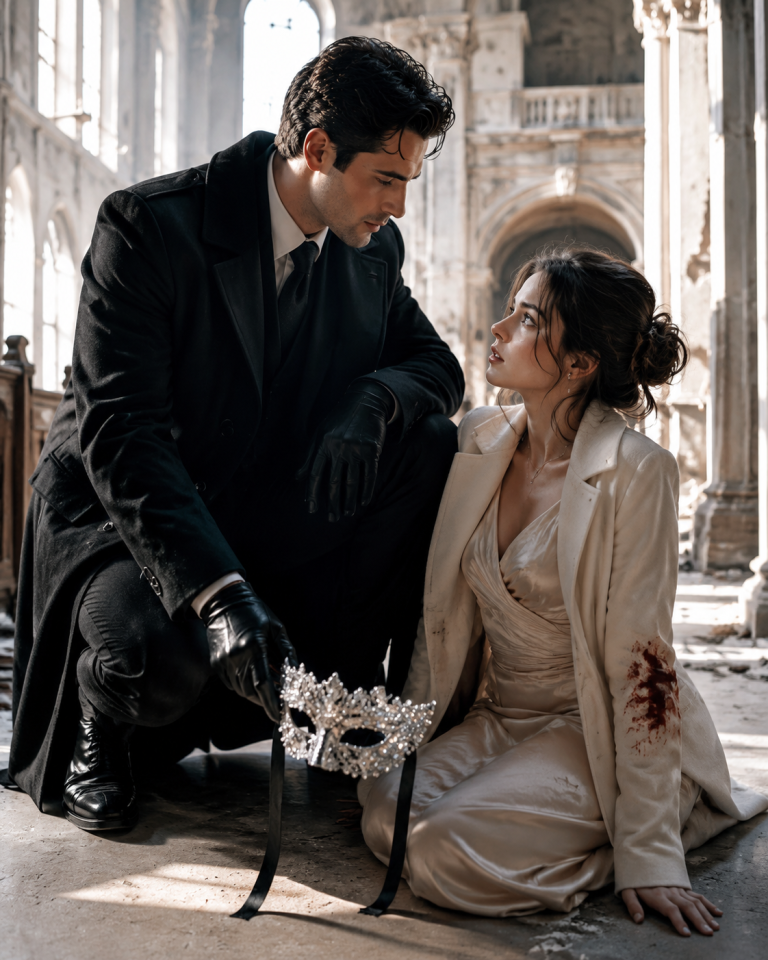
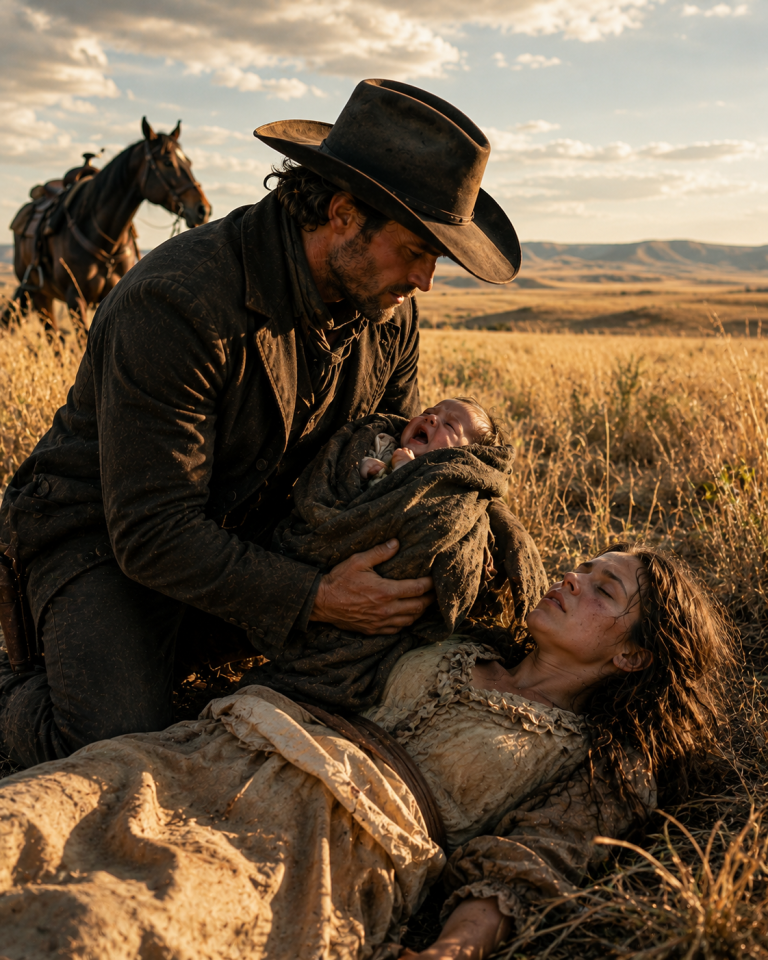
The Vet Tried to Hide Her Scar—Then the Mafia Boss Realized His Dead Wife Left a Final Witness

## PART 1
The scar was half an inch long and shaped like the letter it was meant to be.
Nora had learned to keep it covered so automatically that the motion had become part of dressing — sleeve down before leaving the bathroom, sleeve down before entering a room, sleeve down in summer when everyone else was bare-armed and she was the one in a cardigan at a rooftop party, sweating through the fabric and pretending she wasn’t.
Not because she was ashamed of it, exactly.
Because explaining it meant revisiting the place it came from, and the place had a name — Bellwood Children’s Home — and the name had a smell, and the smell was Pine-Sol and overcooked pasta and the particular staleness of underfunded buildings where children lived but adults did not.
The scar was a letter C.
Two of them, actually. Mirrored. Interlocking. Made with a safety pin and the grip of two twelve-year-olds in a bathroom at two in the morning, both crying, one of them about to be adopted and the other about to be left behind.
*CC,* Cecilia had said. *For Cecilia. For connected. For whatever comes after.*
Whatever came after had been fifteen years of silence.
Nora pressed her thumb over the scar in the way she did when she was tired, which was often, and ordered a second glass of wine she didn’t particularly want because the shelter had lost one of its overnight cats today and she had not been able to save him and she was not quite ready to go back to her apartment and sit with that.
The bar was called Sable. She had picked it because it was warm and had music low enough to think over and she had never been there before, which meant no one would recognize her. That was the other calculation she had learned early — always know which rooms require the most from you before you walk in.
A woman sat down beside her.
Not a pickup. Not conversation. Just proximity, the way people settled into adjacent barstools in a place with enough space for several other choices.
Then the woman leaned over and said something to the bartender.
Nora glanced sideways automatically.
Dark hair. A bone structure that suggested someone in her family history had been very beautiful and passed it down intact. An easy posture, the posture of someone who moved through rooms without calculating them.
And on her right forearm, exposed below a rolled cuff, the same scar.
Not similar.
Not coincidental.
The same interlocking double-C, same placement, same faded pink of a wound from fifteen years ago.
Nora’s wine glass touched her lips and stayed there.
“You’re staring,” the woman said.
“I’m sorry. Your—” Nora stopped.
The woman looked down at her own arm. Then at Nora’s, where the sleeve had been pushed slightly up in the warmth of the bar.
Silence.
The kind that happened when something was recognized.
The woman said, very carefully: “Where did you get that?”
“A children’s home,” Nora said. “Chicago. When I was twelve.”
The woman’s face changed in a way Nora couldn’t describe except to say that something came up from a long way down.
“Bellwood,” the woman said.
Nora’s breath stopped.
“Yes.”
The woman’s name was Irina Solis.
She was not crying, but her eyes were doing what eyes did when crying was a controlled choice rather than a reflex. She ordered two more glasses of whatever Nora had been drinking and she said, in a voice that was very even and therefore clearly costing her something, “I have been looking for the other one for eleven years.”
“Cecilia,” Nora said.
“I know where she is.”
The words hit in the wrong order.
“What?”
“She’s in New York. She has been for six years.” Irina set down her glass. “She’s my employer’s wife.”
Nora turned on her barstool to look at her fully.
“Your employer.”
“I work for a man named Marco Ferrara. He runs several financial interests. His wife’s name is Cecilia. She—” Irina stopped. “She died two years ago.”
The bar noise continued exactly as before.
Nora set her glass on the counter.
“What happened to her?”
“Officially, a robbery.”
“And unofficially?”
Irina looked at her.
“Mr. Ferrara doesn’t believe it was a robbery. He has spent two years trying to prove otherwise.” She paused. “He doesn’t know about you. He doesn’t know about the scar. He doesn’t know about Bellwood.”
“Because she never told him.”
“She didn’t tell him much about her childhood.”
Nora looked at the double-C on her wrist.
*For connected. For whatever comes after.*
“Why are you telling me this?” she said.
“Because three nights ago,” Irina said, “Mr. Ferrara’s people found a photograph of Cecilia as a child. In a filing that had been sealed. In a case connected to a charitable organization that ran placements through Bellwood and several other facilities in the 1990s.”
Nora’s skin went cold.
“And the organization?”
“Still operating,” Irina said. “Different name. Same structure. New funding.”
She reached into her bag and placed a folded paper on the bar.
A photograph, printed from what looked like a scanned file.
Two girls.
Bunk beds behind them.
Both approximately twelve.
One of them was Cecilia, whom Nora had not seen since the night they had made this promise, and who looked in the photograph exactly as Nora had kept her in memory — bright-eyed, sharp, already looking like someone who understood more than was comfortable.
The other girl was Nora.
Someone had been keeping records.
Someone had filed this photograph away in a sealed case connected to an organization that trafficked children through charitable platforms.
Someone had known their names.
—
## PART 2
Marco Ferrara’s building was the kind that required an appointment to enter and then a second appointment inside the elevator. His office on the twenty-second floor looked at the city in a way that communicated ownership — not of the buildings below but of the calculation of them, the knowledge of what they cost and what it meant to be above them.
He was not what Nora had expected.
She had expected someone who looked like the thing Irina worked for. Instead she found a man in his mid-forties wearing a shirt without a jacket, reading something on a tablet, who looked up when she entered and looked at her the way she had seen Irina look at her in the bar: with recognition reaching for something that couldn’t quite be named.
Irina had shown him the scar.
“Sit down,” he said.
“In a moment.” Nora stood where she was. “I need you to understand something before we talk.”
He waited.
“Cecilia was my friend before she was your wife. Whatever you’re looking for, I’m looking for it too. That makes us even, not you in charge.”
Marco Ferrara looked at her for five seconds.
“All right,” he said.
He told her what he knew.
Cecilia had been investigating the Alden Foundation — a charitable organization that funded foster care initiatives, adoption services, and children’s welfare programs — for nine months before her death. She had begun by discovering financial irregularities. She had ended by finding what she believed was the infrastructure of an ongoing trafficking network, still using the same placement pipelines that had been operational in the 1990s through facilities like Bellwood.
She had been planning to meet with a federal investigator.
She died six days before the meeting.
Her investigator contact died three months later. An accident.
“She didn’t tell you what she was doing,” Nora said.
“She told me it was sensitive. She said she needed more before she could share it.” His jaw worked. “I thought she was protecting a source. She was protecting me.”
“From what?”
Marco reached into his desk and removed a folder.
“From the fact that one of the people on the Alden Foundation’s board is a man I have done legitimate business with for twelve years,” he said. “A man named Gerald Holt.”
He placed a photograph on the desk.
Nora looked at it.
The man in the photograph was older than the one in her memory. Heavier. Distinguished now in the way money and time distinguished certain men who should not be distinguished.
But the eyes were the same.
The director of Bellwood Children’s Home had the same eyes at sixty that he’d had at forty-five.
“You know him,” Marco said.
“He ran Bellwood,” Nora said. Her voice was very flat. “He’s the reason those files exist.”
Marco’s expression changed.
He picked up his phone.
It rang once before someone answered.
“I need all available surveillance on Gerald Holt. Tonight.”
He set the phone down.
The office was quiet.
“There’s something else,” Nora said.
He looked at her.
“Cecilia had a sister. A biological sister. Separated from her when they were very young. The placement was illegal.” She watched his face. “Did she ever tell you?”
Marco’s silence lasted long enough to confirm she hadn’t.
“Her name is Marta,” Nora said. “She’s been living in Belgium for twenty-three years. She’s a librarian. She doesn’t know.”
Marco sat back.
“How do you know that?”
“Because Cecilia told me, the night before I was adopted, that she was going to find her.” Nora looked at the scar on her wrist. “She told me that if she ever found her, she’d send me word. She never did. Which means she looked and didn’t find her, or she found her and couldn’t reach out safely.”
“Or she found her and was killed before she could act.”
“Yes,” Nora said. “That.”
Marco stood. Crossed to the window. Stood with his back to her for a long moment.
“She kept the necklace,” he said.
Nora had worn her half of the pendant since she was twelve. She touched it now without thinking.
“I know,” she said. “Irina told me.”
“She never explained it to me. Every time I asked she said it was from someone she’d lost track of and hoped to find again.” He was quiet. “She was still looking for you.”
Nora didn’t trust her voice for a moment.
“And you,” she said. “Did you love her?”
“Yes.”
“Then help me finish what she started.”
He turned.
“That was my plan the moment Irina called me from the bar.”
—
## PART 3
The investigation had been ongoing for two years before Nora arrived in it.
Marco had people — the kind of people who did not have specific job titles and who moved through certain information spaces with the particular fluency of those who had learned not to leave traces. He had connections. He had resources. What he had lacked, until now, was the witness who had been inside Bellwood when it was operational.
Nora gave him that.
She gave him her memory with the precision of someone who had spent fifteen years telling herself it didn’t matter and had therefore preserved it unchanged, the way things preserved themselves when you refused to process them. The smell of the administrative office. The system of interviews. The children who disappeared in the night with no farewell, no packed bags, no announcement.
The man named Holt who had smiled at visitors and whose eyes, when the visitors were gone, had the quality of something that calculated rather than felt.
She gave them names she remembered.
Four of them. Children she had known. Two who had been taken in ways that, once she understood the word for it, became retroactively clear.
She gave them the record she had never known she was carrying.
In return, Marco gave her Cecilia.
Not the woman — he could not give her that. But the room in his home where Cecilia had worked, the files she had organized, the careful construction of evidence that two years of grief had prevented him from knowing how to use.
Nora spent three days in that room.
Cecilia had been thorough.
The Alden Foundation was the public face. Below it were six feeder organizations, all with philanthropic purposes, all moving money in ways that were auditable only if you already knew what you were looking for. Placement fees billed to overseas accounts. Expedited adoption processing through jurisdictions with minimal oversight. A network of facilitators who operated below the threshold of formal investigation.
And at the center of it, Gerald Holt.
Holt who had been running Bellwood in the 1990s.
Holt who had transitioned seamlessly into the charitable sector when the home closed.
Holt who had spent twenty-three years giving speeches about child welfare and sitting on boards and accepting awards and telling stories about the children he had helped.
Nora sat in the chair in Cecilia’s room and looked at a photograph of Holt receiving a commendation from a state governor and felt a rage so cold it was almost analytical.
She had seen that smile.
She had been eight years old the first time she saw it and had not understood then what it meant to see a man smile at the person who held the money and not at the children in the room.
She understood now.
—
The operation that preceded the arrest was not elegant.
Marco had wanted to use Nora’s presence at an Alden Foundation fundraiser to draw Holt out — to replicate the dynamic that had worked for Cecilia in identifying his fear response.
Nora said no.
“Cecilia did it that way,” she said. “Cecilia is dead.”
Marco’s expression flickered.
“Then what do you want to do?”
“I want the FBI to get the files directly from the sealed archive,” she said. “Cecilia’s files. Plus whatever else your people have built in two years. I don’t want to be bait. I want to be a witness.”
“That’s slower.”
“It’s safer. And it’s right.”
He looked at her.
“Cecilia would have done it the faster way,” he said.
“Cecilia was braver than me,” Nora said. “She was also braver than was safe. I think about that.”
Marco was quiet for a long moment.
“All right,” he said. “We do it your way.”
The federal contact was an investigator named Renata Vance, who had been building a case against the Alden network for three years and was, upon receiving Cecilia’s files through Marco’s lawyers, both professionally restrained and visibly moved.
“This is the center of it,” she said.
“Yes,” Marco said.
“Where did it come from?”
“My wife.”
Renata looked at the files.
“She died before—”
“Yes.”
A pause.
“I’m sorry,” Renata said.
“I know.”
Nora added her testimony over two sessions. She was careful with what she offered and clear about what she remembered versus what she had inferred, and Renata, who had the efficiency of someone who had done this long enough to know the difference, did not push past the line.
At the end of the second session, Renata set down her pen.
“You know that some of the adoptions we identify may have been made in good faith,” she said. “Some families may not have known.”
“I know,” Nora said.
“Separating them from the ones who did will take time.”
“I know.”
“And some of the children who were placed — some of them may not want to be found.”
“I know that too,” Nora said. “What I want is for the ones who are looking to have the chance to look honestly. Not through sealed files. Not through records that can be burned.”
Renata studied her.
“And the sister?”
“Marta.” Nora had found her through a combination of Cecilia’s own notes and Marco’s researchers. A woman of thirty-five in Liège, Belgium. A librarian. Educated. By all accounts a person living a full life into which an enormous disruption was about to arrive. “She should be told by someone who is not a federal agent or a lawyer. Someone she can decide whether to trust.”
“You?” Renata asked.
“I’m the only person Cecilia would have trusted to do it.”
—
The train from Brussels to Liège took forty-two minutes.
It was raining, which felt appropriate, the kind of October rain that Europe did better than anywhere else — not dramatic, just present, making everything slightly blurred at the edges.
Marco had offered to come.
Nora had said no.
She had said it because this was not his conversation and because some things required the absence of power to be done correctly, and Marco was not a person who could be absent from a room even when he was trying.
She found Marta in the library where she worked — a medium-sized public library with good light and the organized comfort of a place maintained by someone who believed in the purpose of it. She was reshelving books in the history section, and she looked up when Nora approached with the same slight wariness of a person who was good at her job and experienced at telling visitors where things were.
“I’m sorry to do this here,” Nora said in French. “But I didn’t know how to do it another way.”
Marta looked at her.
“Do what?”
Nora placed the photograph on the shelf beside the books Marta was holding.
The same photograph from the file. The one that showed two girls in a children’s home in Chicago.
Marta looked at it.
Then at Nora.
“I don’t understand,” she said, in French, though her expression had already shifted into something that suggested she was beginning to.
“Your name was Cecilia at birth,” Nora said. “Your sister’s name was also Cecilia. You were separated when you were both very young, from a home in Chicago called Bellwood. Your placement in Belgium was arranged through an organization that was not operating legally.” She stopped. “Your sister spent the last year of her life trying to find you. She found your name in sealed records two months before she died.”
Marta’s hands had gone still on the books.
“She’s dead,” Marta said. Not a question. The way people said things when they understood why someone was delivering information in person rather than through a phone call.
“Yes. Two years ago. Her name was Cecilia Ferrara.”
Marta sat down on the floor between the shelves.
She did not cry. She was the kind of person who went very still when something large arrived, who needed the shock to move through her before she could respond to it.
Nora sat beside her on the floor.
They stayed there for a long time.
Eventually Marta asked questions.
Nora answered the ones she could.
She told her about the home, about the system of placements, about the years of separated lives that a network of people had profited from. She told her about Cecilia as she had been at twelve — too observant, too determined, already the kind of person who noticed things adults hoped children would overlook.
“She was like that until the end,” Nora said. “I didn’t know her as an adult. But the files she left behind — the way she built the case — it was exactly the same.”
Marta looked at the photograph.
“She was still looking,” she said.
“Yes.”
“She found my name.”
“Yes.”
“And then she died.”
“Yes.”
Marta closed her eyes.
Opened them.
“What happens now? To the people responsible?”
“There will be arrests,” Nora said. “The federal investigation is already in progress. It will take time. These things always take time.”
“Will it be enough?”
Nora thought about Holt. About the smile. About the records and the files and the children reduced to amounts beside their names.
“I don’t know,” she said honestly. “I don’t think justice is usually enough. But it’s the thing that can be done, and Cecilia died trying to do it, so it matters.”
Marta was quiet.
Then she said, “Tell me something she loved.”
Nora thought about a bathroom at two in the morning. A safety pin and a washcloth and two girls sitting on the cold tile floor. The way Cecilia had held her hands while they did it and told her she was the bravest person she’d ever met.
“Bread,” Nora said. “She used to hide bread from the dining hall and distribute it at night to the kids who were still hungry. She thought no one knew. Everyone knew. She kept doing it anyway.”
Marta’s face changed.
“That’s exactly what she would have done,” she said.
“Yes,” Nora said. “It is.”
—
The arrests began in November.
Gerald Holt was taken outside a fundraising event in midtown Manhattan with the specific absence of elegance that characterized federal operations: agents in plain clothes, a quiet word, a brief and undignified moment in full view of the people he had spent decades impressing.
Nora watched the footage on Marco’s computer at eleven in the morning.
She had expected satisfaction to arrive like a wave.
It arrived like something smaller. A pressure releasing. A door that had been jammed for fifteen years finally moved by its mechanism rather than by force.
“That’s it?” Marco said.
“That’s not nothing,” Nora said. “But it’s the beginning, not the ending.”
He nodded.
They had not spoken much about Cecilia since the work had begun. The work had its own grammar that didn’t require talking about the person at its center. But now, with Holt on the screen and the immediate emergency resolved, the absence of her was different — less like emergency and more like the particular shape a room had when it was missing furniture that had always been there.
“She would have had a great deal to say about all of this,” Marco said.
“She always did.”
“I mean about you specifically.”
Nora looked at him.
“She liked people who didn’t perform fear,” he said. “She found it very rare. She would have found you annoying in exactly the way she found things endearing.”
Nora laughed.
Marco almost smiled.
—
Hope Connections opened its offices in March.
Not a large organization. Not a well-funded one, at the start. A small office in the East Village with two staff members, a filing system, and a mission that could be stated simply: to help people separated through illegal placement channels find information about their origins, with informed consent at every stage and no promises made about outcomes.
Nora remained a shelter veterinarian.
She volunteered at Hope Connections on Thursdays and the second Saturday of every month.
Marco was the foundation’s largest donor and attended the monthly board meetings without speaking unless spoken to, which was not his natural inclination and which Nora had told him directly was a condition of her continued involvement.
He complied, imperfectly, with reasonable consistency.
That was the first boundary he crossed and then uncrossed.
There were others.
He was a man who had built a certain life and a certain posture toward the world and he learned, in the way that people learned when someone was willing to tell them the truth at regular intervals, that some of those postures were protective and some were just habits that happened to look like strength.
Nora was very good at telling the difference.
He was, slowly, not terrible at accepting the distinction.
They were neither of them easy.
That turned out to be fine.
—
Marta came to New York in April.
She spent four days at a hotel a block from the East Village office, which was not intentional but which turned out to be useful when she wandered in on a Thursday afternoon while Nora was reorganizing intake files and stood in the doorway looking at the small room and the two staff members and the bulletin board covered with photographs of people who were looking for someone.
“I want to know more about the network,” she said. “How it worked. What happened to the others.”
“That information is being processed as part of the federal case,” Nora said.
“I know. I’ve spoken with the investigators.” Marta looked at the board. “I meant I want to understand it from the inside. From someone who was there.”
Nora looked at her.
“You want to volunteer.”
“I want to help.”
“You live in Belgium.”
“There are flights.”
Nora studied her.
Marta had Cecilia’s eyes, which made it difficult to be objective, but Nora had learned over the past several months that objectivity was less useful than she’d been taught and what was useful was honesty, which was different.
“Why?” she asked.
“Because my sister died trying to fix something,” Marta said simply. “The least I can do is show up.”
It was, Nora reflected, exactly the kind of thing Cecilia would have said.
“Every other month,” Nora said. “We’ll work out the schedule.”
Marta nodded.
She did not hug Nora.
She picked up a box of unfiled folders and said, “Where does this go?”
“Stack on the left,” Nora said. “Until we build a better system.”
Marta set the folders down.
“We’ll build a better system,” she said.
—
The scar had not faded.
Nora had expected it to, year by year, the way injuries faded. Instead it had remained visible — paler than skin, more defined in certain lights, the double-C that two frightened twelve-year-olds had made in a cold bathroom at two in the morning because they were about to be separated and needed the world to know that that meant something.
She had stopped covering it the winter the foundation opened.
Not dramatically. Not as a statement. It had simply become one morning where she left the house without the cardigan and the habit had not reasserted itself.
People asked about it.
She told the truth.
She did not tell all of it. Not to everyone. But she told enough that the scar stopped being private and started being what it had always been: a connection. A promise. Evidence that two children who were given no reason to believe they mattered had decided to matter to each other anyway.
*For connected,* Cecilia had said.
*For whatever comes after.*
Whatever came after had included loss and silence and fifteen years and a bar called Sable and a woman with the same scar and a dead wife’s files and a trafficking investigation and a sister in Belgium and a foundation in the East Village and a man who was learning, slowly, that protection was not ownership.
It was not the whatever Nora had imagined at twelve.
It was bigger.
More complicated.
More real.
She pressed her thumb over the double-C the way she always had — not to hide it, not anymore, but because it was a motion that had become its own kind of prayer.
*For connected.*
Still.
—