The Mafia Boss’s Twins Turned Blue—Then the Waitress Who Saved Them Exposed the Man Beside Him

## PART 1
She had stopped counting the things she’d lost.
The license had gone first. Then the apartment. Then the ability to walk past a children’s hospital without her chest caving in. Cara Voss had spent eight months convincing herself that waitressing at Osteria Nera was temporary — a pause, not an ending — and she’d gotten pretty good at believing it between the hours of six and eleven p.m., when the work was loud enough to crowd out memory.
Tonight the restaurant was full. Private dining, east wing. A party of twelve that had reserved the room three weeks in advance under a name the maître d’ had written in the reservation book with noticeably careful penmanship.
Seta.
She’d carried four plates of veal out to the main floor and was halfway back to the kitchen when she heard the sound.
Not crying. Something worse than crying.
Silence where there should have been sound.
She pushed through the swing door into the service corridor and stopped. Through the frosted glass panel of the private dining room, she could see the shape of a man on his feet. Tall, dark-suited, broad across the shoulders. He was holding something against his chest. Two somethings.
The maître d’ appeared at her elbow, the color entirely gone from his face.
“The Seta babies,” he whispered. “They’re not—”
Cara was already moving.
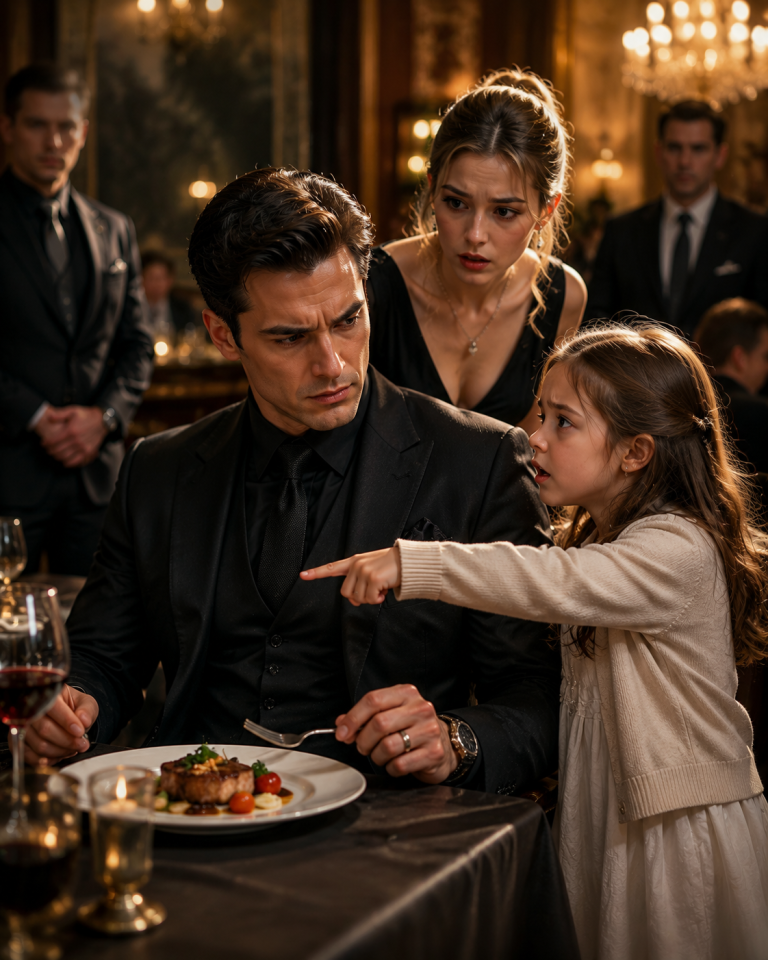
She didn’t ask permission to enter the private room. She didn’t announce herself. She came through the door and read the scene in three seconds flat: twelve guests frozen in place, crystal and tiramisu and burgundy untouched, a man standing at the head of the table holding twin infants whose lips had taken on a shade that had no business appearing on living faces.
Blue. Both of them.
Not cyanosis from choking — their airways were open, she could see the micro-movements of their chests. This was something else. Neurological. Systemic. The kind of shutdown that happened when a very small, very fragile nervous system simply could not process the room it had been placed in anymore.
Chandeliers blazing. Twelve different colognes. The clatter of silverware and the ambient roar of adult conversation. A violinist stationed six feet from the table, playing something fast and bright. And under all of it, the particular shimmer of anxiety that filled a room whenever Roman Seta entered one — because Roman Seta was not a man people felt neutral about.
She knew his name the way all of Boston knew it: carefully, and only when necessary.
“Lights,” Cara said.
Nobody moved.
She looked at the nearest guard. “Dim the chandelier. Now.”
The guard looked at Roman Seta.
Roman Seta looked at Cara.
She did not look away.
Something passed across his face — a recalibration, quick and almost invisible — and he nodded once. The guard moved.
The room darkened by half.
Cara crossed to the violinist. “Stop playing.” He stopped. She turned back to the room. “Everyone sit down and stop talking. I mean completely.”
The silence that followed was total. The kind you could feel pressing against your eardrums.
Cara opened her hand and let her knuckle rest against the linen tablecloth, tapping.
One. Two. Three.
A resting waltz pulse. Slow enough that the body wanted to follow it. Steady enough that even a panicked nervous system could locate it in the noise.
One. Two. Three.
She moved her other hand, fingers tracing slow arcs in the air — not magic, not theater, just something visual for a frightened infant’s eyes to anchor to. She’d done this a hundred times in a NICU follow-up ward. She’d done it for preemies and for toddlers with early developmental trauma and for a little girl named Sophie who had loved yellow maracas and whose face still appeared sometimes in the space between waking and sleep.
One. Two. Three.
Both babies turned toward her hands.
The trembling in the first infant changed. Still there, but organizing. Finding edges. His small fists, which had been jerking outward with that terrible purposeless energy, began to slow. His breathing — the fast, stuttering panting of a system in overload — found the gap between her beats and widened into it.
His brother followed twenty seconds later.
“Hold them upright,” Cara said. “Firm against your chest. Not tight — firm. Let them feel your ribcage move.”
Roman Seta looked at her as if she had just spoken in a frequency he hadn’t known existed. Then he adjusted his grip, drawing both infants in exactly the way she’d said, and Cara watched his chest expand with a slow deliberate breath he hadn’t taken for himself.
“Breathe slower,” she said. “Their bodies are borrowing yours because theirs can’t find the rhythm on their own.”
The first baby cried.
Real crying. Loud, furious, offended-to-be-alive crying. The most beautiful sound in the room.
The second baby followed, and the room exhaled as one.
Roman Seta stared at Cara over his sons’ heads. She’d expected relief. She’d expected anger, even — men like him often converted fear into something more manageable. What she hadn’t expected was what she actually saw.
Raw, unguarded terror, still receding. The kind that doesn’t come from threats or enemies or consequences. The kind that only comes from love.
“What just happened?” he asked.
“Sensory overload,” she said. “Their nervous systems shut down trying to process the room. I gave them something predictable to follow.”
His eyes didn’t leave hers. “Who are you?”
She realized she was still wearing her apron.
“Cara Voss,” she said. “I work here.”
The private doctor arrived seven minutes later, breathless and apologetic. By then the babies were pink again, exhausted but stable, and Cara had kept the rhythm going softly against the tablecloth, not because they needed it anymore but because stopping felt like a risk she didn’t want to take.
The doctor confirmed what she already knew: no hospital required, oxygen holding, no neurological damage. He used the careful language of a professional accustomed to delivering news to men who did not receive it well.
Then he looked at Cara, and looked away, because the conclusion was unavoidable.
She had gotten there first.
“Clear the room,” Roman said.
Twenty minutes later, Osteria Nera was empty except for the two of them, the sleeping infants in their travel bassinet, and a table covered in food no one had eaten.
Roman Seta slid something across the linen toward her.
A card. Black. Matte. No logo.
“Sit,” he said.
She sat — not because he told her to, but because her legs had been shaking for the last ten minutes and she was tired of pretending otherwise.
“Tell me what you are,” he said.
It was not what she expected him to ask.
“I was a neurologic music therapist,” she said. “Pediatric. NICU follow-up, sensory processing, developmental trauma.”
“Was.”
One word. A door.
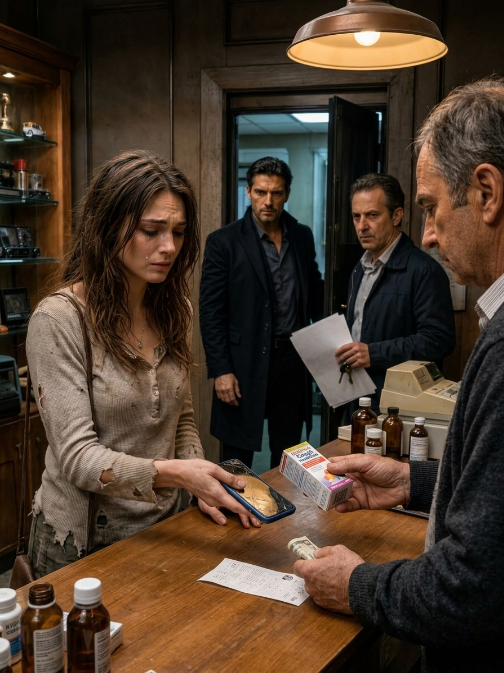
She thought of Sophie. Of a hospital room with clouds painted on the walls. Of a palliative care file that had been misread in an audit, of prescriptions written for a dying child’s comfort that had been attached to Cara’s name in a way that had taken eighteen months and every cent she had to partially correct. Partially.
“Life got difficult,” she said.
He watched her for a long moment in the way of someone accustomed to hearing what people chose not to say.
“I have a proposition,” he said. “Come work for my sons.”
“I have a job.”
“Not like this one.” He turned his phone and placed it face-up on the table.
The number on the screen made her blink.
“Move into my home,” he said. “Help them. Teach me what you know.”
“No.”
The temperature of the room didn’t change, but something in it did.
“No?” he repeated.
“I don’t move into men’s houses because they point a number at me,” she said. “Not even numbers that size.”
“Then what would it take?”
Cara looked at his sons sleeping in the bassinet, their small chests rising and falling in the steady borrowed rhythm she’d given them, and she thought about the eviction notice in her coat pocket, and about Sophie’s mother, and about all the things that could not be taken back.
“Conditions,” she said.
His eyes sharpened with something that might, on another man’s face, have been respect.
“Name them.”
—
## PART 2
The conditions were simple: full authority over the nursery environment, no weapons near the boys, no staff changes without notice, and a guarantee that her presence there was her own choice rather than a purchase. Roman Seta agreed to all of them without negotiating, which told her more about the state of his desperation than any number would have.
The penthouse was exactly what she’d expected and nothing she’d been prepared for.
Top four floors of a tower above the harbor, elevator access requiring three separate authentications, rooms full of expensive darkness and the particular silence of a place that had been built to keep things out rather than hold anything in. Art worth more than small countries. No shoes by any door. No photographs. No evidence of children except for a faint sound of crying somewhere past the third security checkpoint.
The nursery was white.
Not warm white. Not nursery white. The white of a procedure room. Bulletproof windows. Cameras on the cribs. Medical monitors casting red light into the dark. No mobiles, no soft edges, no color that wasn’t clinical.
“This is why they’re struggling,” Cara said.
Roman’s jaw set. “This room is safe.”
“This room is a sensory void with a steel door. Babies don’t understand bulletproof glass. They understand texture, warmth, rhythm, and whether the person holding them believes they’re going to be okay.” She pressed her palm to the cold paint. “They’ve been screaming because everything in here tells their bodies that something is wrong.”
He was quiet for a moment.
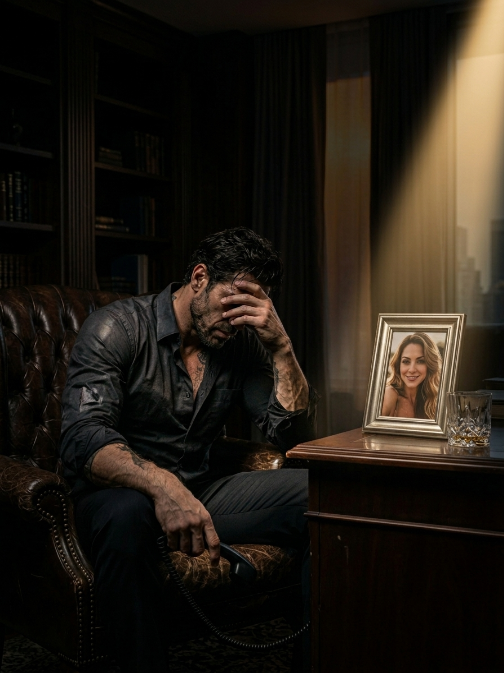
“Their mother died four months ago,” he said. His voice changed on it — not breaking, exactly, but developing a fault line. “Overdose, officially. People talk because it’s safer than asking me questions.”
Cara didn’t fill the silence.
“They were born dependent,” he continued. “They shake. They arch. They stop breathing right. Every specialist tells me what’s wrong. No one tells me how to be with them without making it worse.”
“You can learn,” she said.
“Can I.”
“Yes. But first I need blue paint and a rocking chair that doesn’t look like it belongs in a federal building.”
Something shifted in his expression. Just fractionally. Like a man who had been clenching a fist for so long he’d forgotten he was doing it.
“Buy what you need,” he said.
She did. By midnight she’d ordered half a nursery, argued with a security consultant about whether textured blankets were a weapons risk, and established a sleep protocol that two of Roman’s guards regarded with open suspicion and followed anyway.
At three in the morning, Matteo woke screaming.
Cara found Roman already in the corridor outside the nursery, fully dressed, both hands braced against the opposite wall like a man holding himself back from something.
“You’re not going in,” she said. Not a question.
“I make it worse.” His voice was rough with a tiredness that had nothing to do with the hour. “Every time I pick them up, they scream harder.”
“They feel what you feel.”
“I know.”
“No,” she said. “You know it as a fact. You haven’t learned it in your body yet.” She opened the nursery door. “Come in. I’ll show you.”
She lifted Matteo, tucked him firmly against her shoulder, began the rhythm with her free hand against his back.
One-two. One-two. Sixty beats per minute.
A resting heart. Not a panicked one.
Matteo’s cries thinned, then organized, then softened into the hitching breath of a child winding down from the edge.
“Here,” she said, and transferred him to Roman.
Roman went rigid. She’d expected it.
“Relax your arms,” she said.
“They are relaxed.”
“They’re not. You’re holding him like he’s evidence of something terrible.”
His jaw tightened. But beneath the tension she could see the truth: he was terrified. Not of the baby. Of himself. Of the conviction, carved deep into him by months of screaming and failure, that his hands were the wrong kind of hands for this.
Cara placed her hand over his and set the rhythm for him.
One-two. One-two.
Uneven at first. Too hard. Then adjusting. Then something she hadn’t expected — a steadiness that came not from technique but from the particular quality of someone who wanted this more than almost anything and was finally being shown how to reach it.
Matteo sighed against him.
Roman stopped breathing.
“He’s asleep,” she said.
“I know.” His voice was barely sound. “I didn’t think he could.”
“He can.” She started to withdraw her hand.
His fingers closed over hers. Gently. Not trapping. Just — asking.
“His mother,” he said. “She told me once that they could sense danger in me. That they screamed because they knew what kind of man I was.”
“That’s not how infants work.”
“Isn’t it?”
“No. Infants know breath, warmth, and rhythm. They know who comes back.” She looked at Matteo’s sleeping face. “You keep coming back.”
Roman turned his head. They were very close in the dark — closer than was sensible — and she could see the exhaustion carved under his eyes, the grief he was managing with the same iron discipline he applied to everything.
“Then why was she afraid?” he said.
Cara frowned. “What?”
“Mara. Before she died. She’d been — afraid. Not of me. Of something I couldn’t identify.” His voice was careful now, measuring each word. “I thought it was the pregnancy, then the withdrawal complications. But in the last month—” He stopped.
“What?”
Roman looked at Luca in the second crib. “She tried to take them and leave. I found out afterward. She’d contacted someone — a federal contact, someone she trusted. She was building toward something.” He shook his head. “Then she died.”
The room felt colder than it had a moment ago.
“Roman,” Cara said slowly. “Who knew she was planning to leave?”
He was quiet for a long, measured moment.
“Only the people I trusted completely,” he said.
And in the silence that followed, she heard it — the shape of the thing they were both not yet saying.
—
## PART 3
She found out three weeks in. Not from Roman. Not from asking.
From a lullaby.
The nursery had transformed by then. Blue walls — a soft, specific blue that Cara had tested against the morning light before approving. Curtains that softened the harbor view without eliminating it. A rocking chair with a proper ottoman. Woven blankets in textures the boys had learned to seek out with their hands, pulling the fabric toward their faces with the focused determination of small scientists conducting research.
Matteo and Luca still startled at sudden sounds. They still needed the rhythm when storms came in off the water. But their trembling had organized into something less desperate, and twice in the last week Cara had watched Roman walk into their room and seen both of them turn their heads and reach — actually reach — toward him.
He’d stood completely still both times, as if sudden movement might break the spell.
Stefan Vanek was Roman’s underboss. He came and went from the penthouse with the easy confidence of a man who had spent eleven years building a home inside someone else’s authority. He was pleasant to Cara in the careful way of someone who had calculated the precise level of politeness that cost nothing. He never raised his voice. He never looked at the babies with warmth.
And one evening, while she was warming a bottle in the kitchen near midnight, she heard his voice through the cracked door of Roman’s office.
“— can’t keep that schedule if the commission meeting holds. Saturday in Newton. Cameras go to maintenance at nine. The Zharkov crew knows the service entrance.”
Cara’s hand stopped on the bottle.
“The boys,” another voice said.
“Seta won’t pursue the Zharkovs while they’re here,” Stefan said. His voice had a quality she hadn’t heard from him before — unhurried, almost academic. “If they take the twins, he goes to war. We consolidate the port, remove the Zharkovs, and remind the North Shore what the Seta name means.”
“And after?”
A pause.
“Mara’s sons were born damaged,” Stefan said. “If they survive, Roman grieves and stabilizes. If they don’t, grief makes him useful in a different way.”
Cara pressed the back of her hand over her mouth.
The floorboard under her foot — old building, nineteenth-century bones — let out a single soft groan.
The voices went silent.
She ran.
She reached the nursery and locked the door and stood over the bassinets in the dark, listening to both boys breathe. Her mind moved fast and badly — too many impossible angles. Call the police and say what? That she’d overheard a conversation through a door? Roman would hear the accusation and weigh it against eleven years of loyalty.
She was here three weeks.
Still, morning came. Fear is a luxury that only holds up in the dark.
She found Roman in the music room she’d had assembled on the second floor, where she ran the boys’ sessions each morning. He was sitting at the small upright piano she’d requisitioned, not playing, just resting one hand on the closed fallboard as if the instrument were a conversation partner he wasn’t yet sure how to address.
“I need to tell you something,” she said.
He turned immediately. Whatever he saw in her face made him straighten.
She told him everything. Saturday. The Newton meeting. The camera maintenance window. The Zharkov crew and the service entrance. The boys.
Roman went very still.
The kind of still that isn’t calm. The kind that happens when someone is deciding how many things to destroy.
“Stefan,” he said. Just the name. Like a stone placed down.
“Yes.”
“He has been beside me since I was twenty-four years old.” His voice was flat, precise. “He carried my father’s casket. He took a knife intended for me in Charlestown. He knows every lock in this building.”
“I know what I heard.”
“You were outside my office at midnight.”
“Getting a bottle ready for Luca, who had been awake since ten.” She met his eyes. “I’m telling you now.”
Roman stood and walked to the window. Below, the harbor caught the morning light and scattered it. He was quiet for a very long time.
“If you’re wrong,” he said, “you lose this job and you leave tonight.”
“I know.”
“And if you’re right—”
“Then we have four days.”
He turned and looked at her with an expression she couldn’t fully read — part calculation, part something older and more complicated.
“How do you know you’re right?” he asked.
Cara opened her mouth — and stopped.
Because the answer had just arrived, fully formed, from a direction she hadn’t expected.
“The lullaby,” she said slowly.
He frowned. “What?”
“The first time I told you about Mara’s songs for the boys — the ones that helped them in the first month. You mentioned she used to hum the same melody to help them settle. The one in three-four time, the old Italian one.” She looked at him. “I never told Stefan that. I never mentioned it to any of the staff. But last week, when Luca was fussing during the shift change, Stefan came to the nursery door and hummed it. Exactly.” She paused. “Not approximately. Exactly. Down to the specific interval in the second phrase.”
Roman’s face changed.
“The only way Stefan would know that melody,” she said, “is if he was in the room when Mara sang it.”
“She was alone when she died,” Roman said.
“That’s what the official report said.”
The silence between them had weight now. She watched him build the conclusion the same way she’d built it — slowly, with the particular suffering of someone discovering that the structure they trusted has been built on something false.
“He knew she was going to run,” Roman said. Not a question.
“Yes.”
“He killed her.” The words came out very quiet. Flattened. The most dangerous kind.
“I think so.”
He said nothing for a long time.
Then: “Stefan comes on Saturday night to review nursery security. I told him this morning.” His jaw was set. “I’m canceling Newton. I want him here when the cameras are scheduled to go down.”
“He’ll know something shifted.”
Roman’s expression had changed completely — cleaned of ambivalence, down to something very bare and very cold.
“I know,” he said. “Let him.”
She spent Saturday in the music room with the boys, which had been quietly reinforced over the past four days by a contractor Roman trusted enough to deploy without explanation. Padded floor, acoustic walls, a secondary lock wired to the security panel, and behind the built-in shelving unit, a recessed service corridor that Stefan had almost certainly forgotten about.
That was the problem with men who built the house. They remembered all the doors.
At nine-seventeen p.m., the lights went red.
Emergency power. Backup systems.
The penthouse, which had been quiet, was suddenly a different place — men moving in corridors, radios going live. Roman appeared in the music room doorway with a gun in one hand and a phone in the other.
“Stefan took three guards off the roster,” he said. “Service elevator is active from inside. Zharkov crew is in the building.”
Cara held Matteo against her shoulder without shifting. “How many?”
“Enough.”
He pressed his phone into her hand. “Speed dial two. A woman named Iris. Tell her the word *harbor* and she’ll have you and the boys out of the city in forty minutes. She owes me more than this.”
“Roman—”
He touched her face. Brief, complete — the press of his palm against her cheek, his thumb at the corner of her jaw, as if he was placing something there to find later.
“Keep them quiet,” he said. “Whatever you hear.”
The lock turned.
She sat on the padded floor with Matteo against her chest and Luca in the crook of her arm and she tapped the rhythm against both of them with her fingers.
One-two. One-two.
She hummed against the top of Matteo’s head, the vibration of it moving through her sternum and into his.
Gunfire happened in another part of the building and then came closer and then moved away again.
Something hit the wall outside with enough force to shake the prints off the shelf.
One-two. One-two.
Luca whimpered. She adjusted her grip, pressed her lips to his temple, kept the rhythm without breaking.
A voice outside the door said something she didn’t catch, followed by two sharp sounds, followed by Roman’s voice saying *clear*.
Her hands kept moving.
The bookshelf behind her shifted.
She turned.
Stefan Vanek came through the service corridor with a gun at his side and the expression of a man who had arrived somewhere he’d fully planned to arrive, only to find it slightly different than expected.
He looked at her. Then at the boys.
“All this,” he said, “for two children who’ve been fighting to die since before they were born.”
“They’re not fighting to die,” Cara said. “You are.”
He tilted his head. Almost amused. “I built this family. I kept it standing through three wars and two succession crises and a federal investigation that would’ve buried anyone with less nerve than me.”
“And Mara?”
His expression smoothed.
“She was going to burn it all down for a plane ticket and a federal handler who would’ve turned Roman inside out within eighteen months.” His voice had the particular calm of a man describing something he’d already finished mourning. “I kept the family alive.”
“By killing the mother of his children.”
“By removing a variable that would’ve destroyed everything.”
Cara looked at the phone in her right hand. Open. Connected. She’d pressed it the moment she heard the corridor click.
Stefan followed her gaze to the phone.
He understood in the same second she saw it land.
He raised the gun.
She moved — not away, *toward*, because the boys were behind her and there was nowhere else the direction could go — and knocked his wrist with the flat of the tuning fork she’d kept in her apron pocket since the first week, a habit from years of clinical work, and the gun discharged into the acoustic ceiling tile and then Roman came through the music room door.
The two men looked at each other for a moment that felt longer than it was.
Eleven years. A casket carried together. A knife taken in someone else’s place.
“You heard him,” Roman said. Not to Stefan. To the phone.
A woman’s voice answered from the speaker. “All of it.”
Stefan’s face did something complex — resignation and anger and, underneath both, something that might have been grief. The grief of a man who had genuinely believed his calculation was correct.
Roman didn’t shoot him.
Cara had half-expected him to. She understood why he didn’t.
The boys were awake, both of them, watching the adults with the solemn attention of infants who have learned that what the room holds matters.
Roman crossed to her first. He checked her hands, her arms, the side of her face where she’d hit the shelf on the way down — businesslike, thorough, his touch the same careful steadiness she’d been teaching him for weeks in a different context.
“I’m fine,” she said.
“You’re bleeding.” He pressed a cloth to her palm. “That’s not fine.”
“It’s minor.”
“Let me decide.”
She let him decide. Behind them, Stefan was being secured by two guards who had come in through the main door and were treating the task with the efficient silence of professionals who understood the gravity of what they were looking at.
The federal prosecutor on the phone — Iris, it turned out, was her name — had a voice like a closing argument. She had questions. Roman answered them.
He answered all of them.
It took three months for the legal architecture to resolve. The confession on the line, combined with forensic evidence from Mara’s case that Stefan’s arrest had finally unlocked, moved through federal channels with the momentum of something that had been waiting for a key.
Roman negotiated, and the negotiation was the most difficult thing Cara watched him do — harder than anything in that penthouse on Saturday night — because it required him to place the parts of his world that could not be defended onto a table and let people he’d spent his adult life treating as enemies decide what came next.
He came home from the third meeting and sat in the music room for a long time without speaking. Cara didn’t ask him to. She ran the boys’ session around him, and at some point during the closing exercises — the soft percussion sequence, both twins tracking the sound with delighted concentration — Roman picked up a pair of finger drums she’d left on the floor and began to tap.
One-two. One-two.
Luca looked at his father and grinned.
Six months after the night at Osteria Nera, they were in a house north of Boston. Not a fortress. A house with a porch and a yard and windows that opened to let actual air in. The nursery had been designed by Cara from scratch — warm gold walls, a ceiling painted with slow-moving patterns she’d specified for visual tracking development, a music corner stocked with instruments sized for small hands.
The boys were sitting up on their own. Matteo had discovered that if you dropped a wooden block on a hardwood floor, the sound was magnificent and the adults around you made extremely satisfying faces. Luca found this hilarious and had begun engineering opportunities for his brother to demonstrate this.
Roman came in from the porch with two cups of coffee and the expression he wore now with increasing frequency — not quite relaxed, not quite guarded, something that lived between them and was becoming its own thing.
He handed her a folder.
Inside: the deed to the house, held in a trust structured for the boys. A document retiring her medical debt. And a letter from the licensing board, dated the previous week, formally restoring her neurologic music therapy credentials in light of the audited record correction and the supporting statements filed by three senior clinicians who had reviewed her caseload.
She stared at the letter for a long time.
“I didn’t ask you to do this,” she said.
“You didn’t have to.”
“Roman—”
“No contracts,” he said. “No salary contingent on staying. No arrangement that makes you owe me something.” He sat beside her. “Whatever you decide, it shouldn’t come from obligation.”
She looked at him — at the scar she’d stopped noticing, the tiredness that had changed quality over these months from something depleting to something human, the careful deliberateness with which he now moved around his sons.
“I want to stay,” she said. “Not because of any of that.” She gestured at the folder. “Because of them.” She glanced at Matteo and Luca, who were currently engaged in a collaborative project involving a board book, a xylophone mallet, and what appeared to be a philosophical disagreement. “And because of you. You’re different than you were.”
“Better?”
“More honest,” she said. “With yourself. Which turns out to be the harder thing.”
He reached into his jacket and took out a small box.
She went still.
“I practiced a speech,” he said. “Three different versions. Matteo ate the index cards.”
She laughed before she could stop it.
“So I’ll just say it.” He opened the box. “You walked into a room full of men who’d have had you removed if you’d hesitated for one second, and you didn’t hesitate. You told me the truth when it was more dangerous than lying. You put yourself between my sons and something that would’ve killed them — twice, in very different ways.” He paused. “I don’t have a name for what that makes you, except that I don’t want to imagine the next twenty years without it.”
The ring was simple. Clean line of platinum, one diamond that caught the morning light coming through the open window.
From the rug, Matteo banged the xylophone mallet against the floor.
One-two.
Luca slapped both palms down in response.
One-two.
Cara looked at Roman. At the boys. At the open window and the yard beyond it.
“Yes,” she said.
He slid the ring onto her finger with a steadiness that only broke slightly at the end — just enough that she noticed, and loved him more for it.
She leaned her head against his shoulder.
On the rug, the rhythm continued, small hands finding it without being taught — the way bodies always find rhythm when they’re no longer afraid. Not a rescue signal. Not a therapy tool. Not a desperate improvisation in a darkened room.
Just the sound of a family learning, slowly, how to breathe together.
Steady.
And unhurried.
And theirs.