The Mafia Boss Was Forced to Marry the “Hideous” Moretti Girl—Then Her Veil Revealed a Deadly Secret

## PART 1
The night before his wedding, Rafaelo Conti stood at his office window and tried to remember the last time he had been afraid.
He couldn’t.
Fear had been the first thing his father burned out of him, back when Rafaelo was still young enough that burning hurt. His father had been thorough about it — the way only men who understood fear’s uses could be. By thirty, Rafaelo had rebuilt the Conti empire from the ruins his father left behind, and he had done it the way a surgeon repairs a wound: precisely, coldly, without sentiment.
He was not afraid.
He was something worse.
He was about to marry a woman he had never seen, and the city was laughing about it.
Across the room, his consigliere Emilio sat in the leather chair he occupied for every difficult conversation, his face carved into its usual expression of controlled displeasure.
“The men are talking,” Emilio said.
“Men always talk.”
“They say Giuliano offered you his family’s shame wrapped in a veil.”
Rafaelo did not turn from the window. Below him, Milan spread in amber light, beautiful and merciless. He had fought for this city in ways that never made newspapers. He had bled for it in ways that left no visible scars.
“Say what you mean, Emilio.”
The old man shifted. “Elena Giuliano. The niece. They say she was burned as a child. That Giuliano keeps her hidden in the east wing because the sight of her disturbs him. Some say she hasn’t spoken in years. Others say her mind is gone. Others—” He stopped.
“Others say what?”
“That she screams at night.”
Rafaelo picked up his glass. Set it down without drinking.
For ten years, the Conti and Giuliano families had turned northern Italy’s underworld into a charnel house. Ports. Supply routes. Union contracts. Politicians. Every form of power that could be named had been contested between them, and the contest had consumed sons, fathers, warehouses, three federal investigations, and enough unmarked graves that the geography of certain hillsides had permanently changed.
The commission had finally intervened.
A marriage.
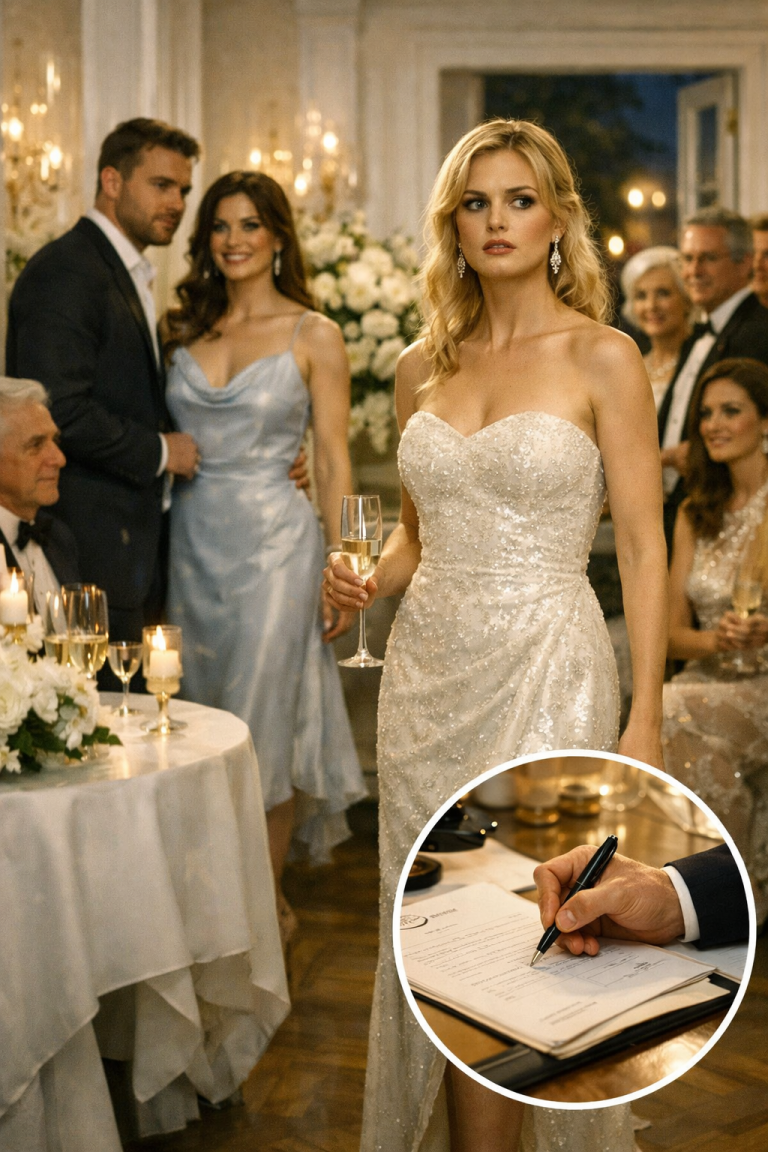
Rafaelo Conti would take Elena Giuliano as his wife. In return, Giuliano would cede the Adriatic routes, withdraw his men from disputed territories, and sign documents that would survive even his eventual death.
On paper: diplomacy.
In practice: Giuliano had sent his ruined niece instead of his daughter because he did not love his niece enough to mourn her.
“The territory is what matters,” Rafaelo said.
“The men will say he sent his garbage.”
Rafaelo’s voice was quiet. “The men will say whatever they are permitted to say.”
Emilio was silent for a moment. “If the rumors are true—”
“If they are, she will have private rooms and staff and whatever quiet requires.” Rafaelo moved to his desk, where the marriage contract waited. “I am not marrying her for beauty. I am marrying her for the Adriatic.”
“And if she expects a husband?”
Rafaelo looked at the contract. At her name written in black ink beside his.
Elena Giuliano.
“She was raised in that man’s house,” he said. “I doubt she expects kindness from anyone.”
The words stayed with him longer than they should have.
—
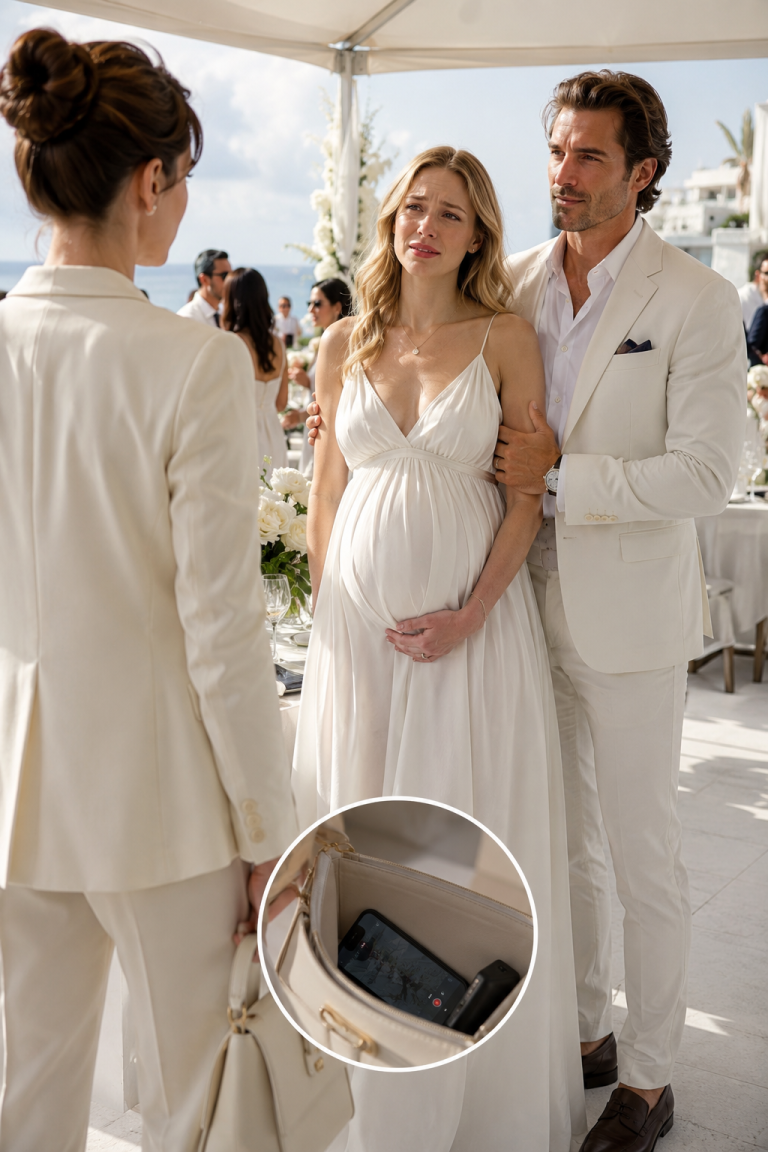
The cathedral in Milan was old and enormous, the kind of building that understood human suffering because it had witnessed so much of it. White roses banked the aisles in fragrant walls. Stained glass saints bled color across ancient stone. Two hundred enemies and allies dressed in silk and armor sat watching the altar where Rafaelo stood in black, motionless, expression unreadable.
His cousin Marco stood too close with a smile that meant nothing good.
Marco was Rafaelo’s underboss by blood and his adversary by temperament. He was the kind of man who mistook cruelty for authority and had spent twenty years waiting for Rafaelo’s composure to crack.
“Ready to meet the beast?” Marco had murmured in the sacristy.
Rafaelo had straightened his cufflinks. “She is my wife. Choose your next words accordingly.”
Now Marco lounged in the front pew, ostentatiously bored.
Giuliano sat opposite, gray and satisfied, his daughter Vittoria beside him in sapphire silk and too many diamonds.
No one sat where Elena’s parents should have been.
Rafaelo noticed.
Then the organ swelled, and the doors opened, and the whispering began before she took her first step.
She walked in covered.
Not just veiled — armored in fabric. Antique lace, heavy and pale, long-sleeved, high-throated, falling from a jeweled crown to the floor. The veil itself was so thick it rendered her not just faceless but formless. She moved slowly, head bowed, bouquet of white roses trembling at her gloved fingertips.
She walked alone.
“God have mercy.”
“Look at how she holds herself.”
“Giuliano must find this hilarious.”
“Poor woman.”
“Poor him.”
The whispers were a kind of violence. Rafaelo heard each one and said nothing, his face its usual stone.
Elena reached the altar.
He extended his hand.
She stopped.
One heartbeat.
Two.
Then her gloved fingers closed around his. Cold. And trembling.
He told himself it was fear.
Good. Fear kept things orderly.
The vows were exchanged in the cathedral’s vast, echoing throat. Rafaelo’s voice was steady. Elena’s was barely audible.
“I do.”
No kiss. He had made this clear. He would not perform intimacy for a room full of wolves.
He offered his arm.
She took it.
Together they processed back down the aisle while the old world disguised as wedding guests pretended to celebrate the peace neither side intended to keep.
—
The Conti estate stood outside the city in hills that had watched three centuries of the same story told in different suits. Stone. Black glass. Iron gates. Old trees. The kind of place that became beautiful only once you understood it had never been safe.
The master suite smelled of fresh roses and old ambition.
Rafaelo removed his jacket. Poured bourbon. Kept his back to her.
“You will have the adjoining suite,” he said. “Staff. Access to the gardens, the library, the chapel. Your letters will be screened. Within those limits, your life here is your own.”
Silence.
“We will live separately. I will not interfere with yours if you do not interfere with mine.”
More silence.
His patience thinned.
“Caterina.” He turned.
Her name came out wrong, not her name at all — he meant Elena, and the slip was small, but something about the moment had felt like the beginning of a different story.
“Elena.”
He turned.
And the woman he had prepared himself to pity was gone.
She stood in the center of the rug with her veil in her hands, unpinned, fallen away, and everything the world had told him to expect was simply —
Not there.
No scarring. No ruin. No vacancy in the eyes.
Her face was extraordinary. Sharp-boned, ivory-skinned, dark-haired, full-mouthed. The kind of beauty that looked like it had been assembled by something more deliberate than accident.
But it was her eyes that stopped him cold.
Silver-gray. Brilliant. Carrying in them the particular quality of fury that has been disciplined for so long it has become intelligence.
She did not look afraid.
She looked like a weapon deciding whether to introduce itself.
“You expected worse,” she said.
Her voice was low and unhurried, velvet over iron.
Rafaelo said nothing.
“Everyone did,” she said.
“The rumors—”
“Are mine.” She set the veil on the chair beside her as though setting down a tool she no longer needed. “My mother began them before she died. I maintained them after.”
He studied her.
“Why?”
“Because a ruined girl has no value to men like my uncle. She cannot be offered, leveraged, or displayed. She becomes inconvenient, which is the closest thing to invisible that such men tolerate.”
“You made yourself invisible to survive him.”
“I made myself monstrous,” she corrected. “There is a difference. Invisible disappears. Monstrous gets put away.”
Rafaelo stood very still.
“And yet here you stand in my bedroom as my wife.”
“Yes.” Her gaze was steady. “I needed a door. You were the only one that opened.”
From within the folds of her gown, her right hand emerged.
Holding a blade.
Slim. Silver. The kind of thing that could end a conversation or a life with equal efficiency.
Rafaelo’s hand moved by instinct toward the gun beneath the sideboard.
Elena did not lunge.
She turned the blade against her own palm and cut.
Blood rose quiet and dark across her skin.
She held the wound out between them.
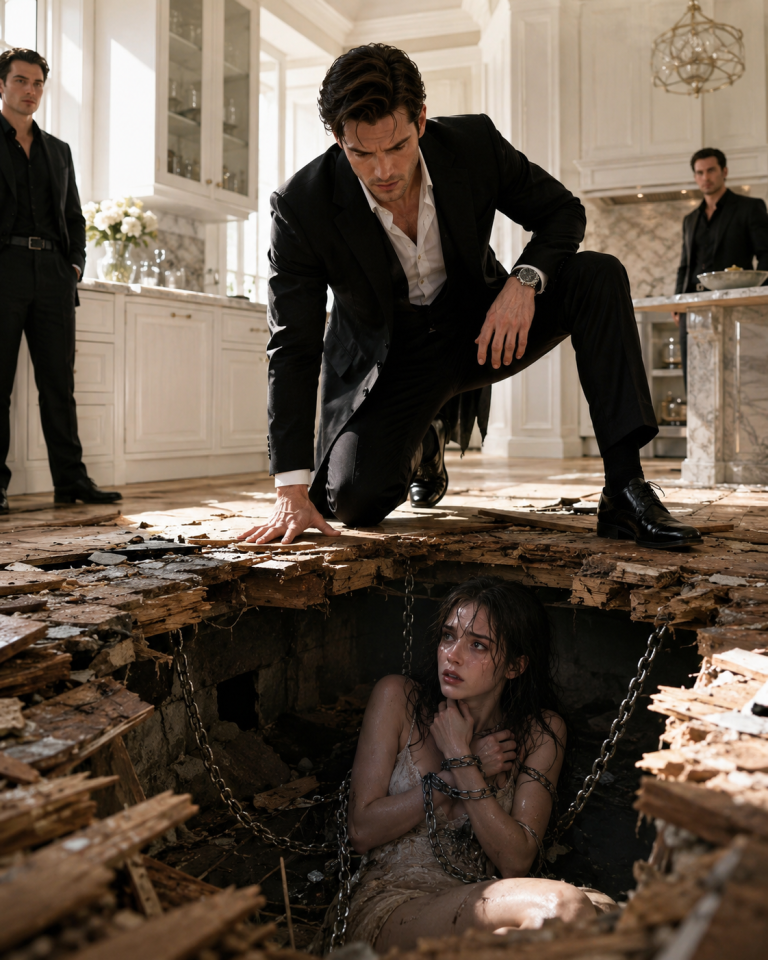
“My uncle killed my father to take the Giuliano seat,” she said. “He poisoned my mother when she began remembering inconvenient things. He locked me in a wing of his house and let the world invent horrors to keep me there, because a dead niece raises questions, but a ruined niece is simply forgotten.” She held his gaze without flinching. “For nine years I listened. Read every ledger he thought hidden. Memorized every name, route, bribe, debt, and secret he believed safe. I have been waiting for a door out.”
Rafaelo’s voice dropped. “And I am that door.”
“You are a weapon,” she said.
He should have found it insulting.
He found it, instead, the most honest thing anyone had said to him in years.
“You bargain boldly for a woman alone in my house.”
“I have been alone since I was eighteen.”
Something in the room changed.
She pressed on. “You want the Adriatic routes. I can give you more — his entire operation. Every corrupt magistrate. Every customs official. Every shell company. Every lieutenant loyal to money rather than to him.” Her bleeding hand remained extended. “In exchange: you do not command me as property. You do not confine me under a different roof and call it protection. And—”
Her eyes sharpened.
“When the time comes—”
She did not finish the sentence.
She didn’t have to.
Rafaelo looked at her hand.
The blood. The steadiness. The years of patience compressed into this one room, this one night, this one offer.
He took the blade from her fingers.
She tensed but did not pull away.
He pressed the edge to his own palm.
He cut.
He clasped her bleeding hand in his.
“Deal,” he said.
For the first time, Elena Giuliano smiled.
It was not warm.
It was magnificent.
—
## PART 2
She was already at the table when the men arrived for breakfast.
No veil. No gloves. No trembling.
Elena sat at the long dining room table in a suit the color of dark wine, hair pinned at the nape of her neck, bandaged hand wrapped in white. She poured her own coffee. She waited.
The men came in and stopped.
One by one, they looked at her face — the face the city had turned into a horror story — and found nothing monstrous there except perhaps their own expectations.
Marco recovered fastest.
“The veil comes off,” he said pleasantly, seating himself across from her, “and suddenly we have a dinner guest.”
Elena looked at him over her cup. “You mistake me for a guest.”
“Then what are you?”
“A correction.”
Rafaelo entered last, read the room, and said nothing. He sat at the head. He watched.
Marco spread his hands. “Giuliano sent a wolf in bridal silk. How romantic.”
“Giuliano sent a tool,” Elena said. “He did not know what was in the handle.”
Some of the men looked down. One cleared his throat. Marco’s expression sharpened.
“You have information,” he said, tone shifting from mock-charming to mock-respectful. “Lovely. So do I. So does everyone at this table.”
“Not like this.” Elena set down her cup. She named a number. Then a name. Then a location. Then a customs official and an account number and a date three weeks prior when a Giuliano shipment had moved through a route the Conti surveillance teams believed was dead.
She spoke for ninety seconds.
By the end, Emilio had removed his glasses.
Marco’s pleasant expression had gone somewhere unpleasant.
Rafaelo looked at his consigliere. “Verify.”
Emilio left the room immediately.
He came back twenty minutes later. He stood in the doorway and looked at Elena the way a man looks at fire after thinking it was decorative.
“Accurate,” he said.
The table was quiet.
Marco turned to Rafaelo, low and precise. “You are going to sit here and accept intelligence from a Giuliano woman as though—”
“As though she is correct,” Rafaelo said. “Yes.”
Marco leaned back. His eyes moved to Elena.
They held something she had seen before.
Not rage.
Calculation.
The particular kind that did not announce itself.
Elena recognized it from nine years of living inside a house full of men who smiled over decisions they had already made without you.
She filed it away.
She said nothing.
After breakfast, as the other men dispersed, Elena walked to the window at the far end of the room and looked out at the grounds. The hills beyond the iron gates were pale in the morning light.
She heard Rafaelo stop behind her.
“You saw it,” he said quietly. “In Marco.”
Not a question.
“Yes,” she said.
“What did you see?”
She turned.
“The same thing I watched my uncle do to my father,” she said, “the week before my father stopped breathing.”
The hall outside fell silent.
Somewhere in the estate, a clock marked the hour.
And somewhere in the structure Rafaelo had spent a decade building, something had already begun to crack.
—
## PART 3
Trust did not arrive in the Conti estate like sunlight through opened curtains.
It arrived the way most things worth having arrived in their world: slowly, under pressure, in the middle of the night, while someone was trying to prevent disaster.
The first three weeks were war in miniature.
The men resisted Elena’s presence in the strategy room with the practiced silence of people who had decided contempt was more dignified than protest. They listened to her, sometimes. They implemented her suggestions, occasionally. They repeated her analysis as their own, regularly. Marco did it twice. The second time, Elena waited until he finished before completing the paragraph he had cut short.
Six men looked at the table.
Two looked at Rafaelo.
One looked at Elena with something that might, in better light, become respect.
Marco looked at her with the smile of a man sharpening a knife.
At night, the estate was different.
Quieter. More honest.
Rafaelo worked late, which she had expected. What she had not expected was that he sometimes worked until midnight and then sat in the chapel with no candles lit, not praying, just — still. As though stillness were the only luxury he allowed himself.
She found him there one evening during a rainstorm.
She sat beside him.
Neither spoke for a long time.
Then he said: “A soldier sold information to a minor crew today.”
She waited.
“I let him leave west. His children are young.”
She looked at his profile in the dim light — the sharp jaw, the careful mouth, the quality of a man holding something very heavy very precisely so it did not damage anyone standing nearby.
“My father once said mercy in private was worth more than justice in public,” she said. “My uncle heard him say it and called him sentimental.”
Rafaelo was quiet.
“Is that how he justified what came after?”
“Men who cannot afford mercy always find a word for it that makes restraint sound like failure.” She looked toward the altar. “My uncle’s word was ‘weakness.’ It excused everything.”
Rafaelo turned his head.
In the chapel’s near-darkness, his expression was stripped of its usual precision. She could see, briefly, the version of him that had existed before ten years of running the Conti empire had made him synonymous with it.
“Why did you stay?” he asked. “Nine years. You had intelligence. Resources. Contacts inside the commission. Why not use them to escape before now?”
Elena considered the question with the seriousness it deserved.
“Because escape required someone who wanted me free more than they feared the consequences of freeing me.” She looked at her bandaged hand. “Everyone in my uncle’s world wanted the information I carried. No one wanted me.”
Rafaelo said nothing.
She continued. “And the outside world only saw the monster. Men either wanted to pity me from a distance or prove the rumors false. Neither of those was freedom.”
“I didn’t pity you.”
“No.” She almost smiled. “You wanted the Adriatic routes.”
“Yes.”
“That was more useful.”
He looked at her directly. “I want more than the routes now.”
The rain tapped against the chapel’s old glass.
Elena held his gaze.
“I know,” she said.
“Does that concern you?”
“Everything about this concerns me,” she said. “That does not mean I want it to stop.”
He breathed in slowly, like a man remembering how.
“Tell me something,” he said.
“That depends on what you ask.”
“Tell me about your mother.”
She looked away.
For a moment the request sat between them in the dark, too tender to approach directly.
Then she said: “She played the piano badly and knew it and played anyway because she said music that apologizes for itself is no music at all.” A pause. “She had a laugh that sounded like it surprised her every time. She kept a jasmine plant on the windowsill of her room that my uncle called a weed, and she moved it to the ledge where he couldn’t reach it.” A pause. “She was the first person who taught me that stubbornness was a form of love.”
Rafaelo looked at her.
“She sounds formidable.”
“She was the most formidable person I have ever known.” Elena’s voice remained steady but it cost her something. “Which is why I never understood how a woman like her died without anyone doing anything.”
The chapel was very quiet.
Rafaelo reached over and placed his hand over hers on the pew.
He did not speak.
He did not explain or comfort or fix.
He simply held.
And that, Elena realized, was the first time in nine years someone had offered her presence instead of solution.
She did not pull away.
—
Marco moved when he was ready, which was to say he moved when he believed Rafaelo was too far invested to see clearly.
The intelligence came through Emilio’s most trusted source: a weapons transfer, large enough to be decisive, moving through an abandoned industrial complex on the city’s eastern edge after midnight. Enough materiel to arm Giuliano for a campaign that would break the truce publicly and humiliatingly.
The war room crackled to life.
Elena stood at the map table and felt cold.
“It is a designed opportunity,” she said.
Rafaelo looked at her.
“Giuliano does not move that kind of inventory through visible channels unless he wants visible channels to exist,” she said. “This is architecture. Something built to look like intelligence.”
Marco’s voice was smooth. “The source has been reliable for years.”
“Sources can be acquired.”
“You’re telling us not to move on the largest weapons transfer in three years.”
“I’m telling you to think about why you received this information tonight.”
Marco turned to the room. “She protects her uncle.”
Several heads moved.
Elena kept her eyes on the map. “When did my uncle ever need protection?”
“When he knows his niece is in the enemy’s war room.”
“Then he would use me to destroy Rafaelo.” She looked up. “Not to protect himself. There is a difference.” She looked at Rafaelo. “Someone in this room told Giuliano exactly what you were watching, and exactly what would make you move. The source is already compromised.”
Marco laughed. “She walks in here two weeks after marrying you and now she’s accusing your men—”
“I’m going with you,” Elena said to Rafaelo.
“No.”
“Yes. I know the complex. My uncle stored shipments there six years ago during a commission dispute. The building has three elevated positions on the west face, a drainage access beneath the main loading platform, and four blind angles on the approach that make a kill box trivially simple.”
Rafaelo stared at her. “Then you have just described exactly why you stay behind.”
“You will need someone who knows where to look.”
“I will need you alive.”
The words landed harder than he intended.
The room heard them.
Marco heard them.
Elena looked at Rafaelo with an expression he would think about later — something briefly unguarded, quickly sealed.
“Armed,” Rafaelo said finally. “Behind me. If I tell you down, you go down.”
“If the ground is the tactically inferior position, I will inform you.”
“Elena.”
She held his gaze for three seconds.
“Agreed,” she said.
—
The industrial complex was exactly what she had described and worse.
It sprawled in the city’s eastern darkness, a skeleton of old infrastructure, shadows within shadows, every structure a potential position. The rain that had followed them from the estate continued here, steady and cold, turning gravel into mud and visibility into a guessing game.
Rafaelo moved with fifteen men. Elena moved at his shoulder, pistol in a two-handed grip, eyes tracking the elevated angles she had named in the war room.
Marco walked three paces behind.
Elena could feel it. The specific quality of his presence. Men gave off a particular frequency when they had already made a decision about you.
She had spent nine years learning to read it.
The container at the center of the complex was marked per the intelligence. Marco approached it with bolt cutters, moving fast, wanting the doors open before anyone could reconsider.
Elena said, “Rafaelo.”
He turned.
Her eyes were on the darkness above the west wall.
“Too still,” she said. “There are no birds. The rain should have flushed something.”
The bolt cutters snapped.
Marco threw the container doors open.
Empty.
Elena had already moved.
She grabbed Rafaelo’s arm and pulled him left as the floodlights blazed on from above, white and absolute, turning the kill box into a stage. Gunfire tore the air apart. Two Conti soldiers went down in the first seconds. Men scattered. Marco dove behind the container with a speed that had been practiced.
Rafaelo fired toward the elevated positions as Elena pushed him behind a concrete pillar.
“Catwalk, northeast corner,” she said, very quietly, over the noise. “Sniper. He’s been on you since the lights came up.”
She didn’t wait for him to find it.
She moved into the open.
Rafaelo’s heart stopped.
“Elena—”
She was already in position, one knee down on rain-slick concrete, both hands steady on the pistol, face calm in the chaos with a calm that was not the absence of fear but the mastery of it.
She fired.
Missed.
The sniper tracked toward her.
She fired again.
The shot landed.
The sniper went over the catwalk railing and hit the ground in a sound she would hear for years.
Rafaelo threw the smoke canister with everything he had and grabbed her vest and they ran — smoke billowing gray through the floodlights, gunfire still cracking, men calling out positions, Marco somewhere behind them shouting orders in a voice that was two tones too confident for a man taking fire.
They fought out in pieces.
Two Conti soldiers lost.
Six of Giuliano’s.
Elena put a bullet in a man’s shoulder when he came around a signal box.
Rafaelo took a graze to his arm and did not stop moving.
When they finally reached the vehicles on the road outside the complex perimeter, Rafaelo shoved Elena into the passenger seat, took the wheel, and drove without speaking for three kilometers.
Then he pulled onto a dead industrial street, killed the engine, and sat in the sudden silence of rain on the roof.
His hands were still shaking.
She watched them.
He turned to her.
“What you just did—”
“You were marked,” she said. “The sniper was adjusting. You had approximately two seconds.”
“You stepped into open fire.”
“Yes.”
“You could have—” He stopped. Started again. “Elena.”
Her name the way he said it.
Not an address.
Not a command.
Something raw, stripped of all the architecture he maintained.
She looked at him.
“Why?” he asked. “Tell me honestly.”
She could have said: *because you are strategically vital.*
She could have said: *because you are the only exit from a nine-year cage.*
She could have said: *because I protect what is mine* — which was true, but not the whole truth.
Instead, she said: “Because when you stood at that altar and gave me your hand without knowing who I was, you did not flinch.”
He stared at her.
“Everyone else in my life has flinched,” she said. “My uncle. His men. The servants. The commission representatives who came to the estate and refused to be in the same room as the ruined girl.” Her voice was level. “You extended your hand and you waited.”
“I thought you were afraid.”
“I know.”
“Were you?”
“Yes.” A pause. “But not of you.”
He reached for her face with both hands. Rain-cold fingers, slight tremor he didn’t try to hide.
She went still.
His thumbs moved across her cheekbones.
“I have not been gentle in years,” he said.
“You have been,” she said. “You are simply afraid it will make you legible.”
Something in his eyes fractured.
He leaned forward until his forehead touched hers.
Neither of them moved.
“The sniper,” he finally said.
“You’re welcome.”
A breath of a laugh. Then: “Marco.”
She pulled back enough to look at him.
“I know,” she said.
“I need proof.”
“I have proof.”
He waited.
She reached into her tactical vest and placed a small recorder in his hand.
“I suspected the information was manufactured,” she said. “I also suspected the person who manufactured it was closer than Giuliano. I placed a listening device on Marco ten days ago, when he was occupied calling me a liability during a meeting he didn’t know I could hear.”
He looked at the recorder.
“You moved first.”
“I have been moving first since I was eighteen. I simply allowed you to think I was still.”
He pressed play.
The rain came down outside.
Marco’s voice filled the car.
*”Container opens, lights trigger. You want her first or Rafaelo?”*
A second voice — Giuliano, unmistakable. *”Her. He needs to survive long enough to understand what he married.”*
*”And after?”*
*”After he is broken, he will be manageable. He has always been emotional under the control. The woman found the crack. We use the crack.”*
The recording ended.
Rafaelo sat with it in his hand.
He said nothing for a long time.
Elena watched the thing move through him — not the rage, which was immediate and visible in the set of his jaw, but the thing beneath the rage, which was grief. Complicated, specific, deeply private grief of the kind that came from realizing the betrayal had been designed to use love as a lever.
“He did not want me dead,” Rafaelo said finally.
“He wanted you destroyed.”
“Because I changed.”
She was quiet.
“Because of you,” he said.
“Because of yourself,” she corrected. “I was the occasion. You made the choice.”
He closed his hand around the recorder.
Outside, the city continued its enormous indifferent life.
“Tell me what you need,” he said.
He meant for the next step. The counterplay. The strategy.
But Elena answered the broader version.
“I need my uncle to stand in a room where his lies cannot protect him,” she said. “I need the men who obeyed him to see what he built and understand it is over. I need the architecture of the past nine years to be visible — not in a file, not in a lawyer’s office — visible, in front of witnesses who cannot pretend they did not see it.”
“And Marco?”
“Marco needs to watch it happen having believed until the last moment that he had won.”
Rafaelo looked at her.
“You have been planning this for a while.”
“Since the chapel,” she said. “The first night.”
“When you cut your hand.”
“When I understood you would hold mine.”
—
What followed was not elegant.
It was precise.
Rafaelo called Giuliano the next afternoon with a voice carefully constructed to sound like a man who had been damaged but not broken. He wanted a meeting. He wanted Elena returned. He wanted the truce renegotiated on terms that gave Giuliano everything and humiliated the Conti name in front of the commission.
Giuliano laughed so warmly that Rafaelo had to set the phone down for a moment.
The meeting was arranged for a private theater on neutral ground — the same theater Giuliano had used for commission meetings during the worst years of the war, because he believed familiar locations gave him comfort and gave others vulnerability.
Marco was given visible command of security.
He accepted with the ease of a man who had already rehearsed the role.
Emilio — who had listened to the recording in silence, then sat in his chair for four minutes without speaking — moved twenty loyalists into the theater’s infrastructure the night before.
Elena wore no veil.
She stood on the stage with her wrists bound in a restraint that looked real and released at a single movement.
Rafaelo stood beside her looking defeated.
Marco stood behind them looking satisfied.
Giuliano entered with eleven men and the expression of a man arriving to collect on a very long investment.
He found his niece’s face first.
His satisfaction dimmed, almost imperceptibly.
“Elena,” he said.
“Uncle,” she replied.
He walked down the aisle of the dead theater, footsteps swallowed by old carpet, the smell of dust and mold and the specific sadness of places where grandeur used to be.
“You fought very hard,” he said, “for a woman who was always going to end up here.”
“I fought very carefully,” she corrected, “for a woman who was always going to end up exactly here.”
He paused.
Something in her tone.
Then Marco spoke from behind: “Now.”
But nothing happened.
Marco turned.
Rafaelo looked at him.
“Now,” Marco said again, louder.
The theater lights shifted.
From the balcony above, twenty men emerged from shadow. Laser sights scattered across the chests of Giuliano’s guards like red snow.
Giuliano went very still.
Marco went still a different way — the stillness of someone whose script has ended mid-sentence.
Emilio stepped into view at the balcony rail with the cane and pistol he had carried for thirty years and said, to no one in particular: “No one moves.”
No one moved.
Rafaelo descended from the stage.
He walked to Marco.
He played the recording.
The theater’s old acoustics carried Marco’s voice beautifully.
*”Her first or Rafaelo?”*
Marco looked at the recorder. Then at Rafaelo. Something complicated moved through his face — calculation abandoning itself, arriving briefly at the shore of something that might have been regret, deciding against it.
“You let a woman ruin you,” Marco said.
“No,” Rafaelo said. “A woman showed me what was already ruined.” He put the recorder away. “You will stand before the commission with this evidence, the witness statements, and every man in this room who heard you plan to sell your own blood. You will live. Not because you deserve it, but because your death would make you useful to men who are no longer useful to me.”
Marco said nothing.
Then Rafaelo turned to Giuliano.
Giuliano had not moved.
He was looking at his niece.
Elena had come down from the stage.
She crossed the theater floor without hurrying, and when she stopped before him, the distance between them was exactly what it had always been — the distance of nine years, two deaths, one lie maintained so long it had become a life.
“You look like your father,” Giuliano said.
“You murdered my father.”
“Your father was a complication.”
“He was your brother.”
“He was a liability with sentiment.” Giuliano’s eyes moved over her face — the face the world had called monstrous, that he had called ruined, that had been neither. “I always wondered what you looked like.”
“I know,” she said. “You preferred not knowing.”
“It made things cleaner.”
“Yes.” She studied him. “That was your mistake. Clean is for men who have something to hide. I had nothing left to hide.”
Giuliano glanced at Rafaelo. At the balcony. At the men who were no longer his men. He was calculating, even now, and the calculation was landing in the same place calculations like his always did: too late.
“What do you want?” he said.
“I want what you took from me,” Elena said. “I want my father’s name cleared of the accusations you invented when you took his seat. I want my mother’s death investigated by people you cannot buy. I want every account connected to your operation handed to federal authorities, which they will be, because I spent nine years memorizing them.” She paused. “I want you to stand in this room and understand that the weapon you kept locked in your east wing for nine years was never a threat to contain.”
He stared at her.
“It was a debt you kept accruing,” she said. “And tonight it came due.”
Giuliano looked, for a moment, old.
Not powerful. Not calculating. Not the architect of other people’s ruin.
Just old, and diminished, and finally visible in a room full of witnesses.
He did not fight when the men came.
He was not brave enough to.
Elena watched them take him out through the theater’s side door, into the cold Milan night, toward a reckoning she had been waiting nine years to deliver.
Then she turned.
Rafaelo was there.
He didn’t speak. He opened his arms.
She walked into them the way a person walks through a door they were not certain would hold their weight.
It held.
—
The reconstruction of the Conti empire took three years, and none of it was clean.
Men left. Some fought. Some brokered their own arrangements that had to be ended in ways that left marks. The commission required demonstrations of good faith that cost real money. Federal cooperation required disclosures that cost more. There were months when Rafaelo sat in his office until two in the morning and Elena sat across from him with coffee and her particular quality of presence — not reassuring, not performing hope, just *there*, which was what he needed more than reassurance.
There were months when he woke from dreams of things he had done and she placed her hand on his chest and waited.
There were months when she woke from dreams of her mother, and he held her without asking what she’d seen.
They were not gentle people, exactly. But they were honest ones, which turned out to matter more.
The Adriatic routes became legal shipping lanes.
The shell companies were dissolved or restructured.
The warehouses became warehouses.
The contacts were either legitimized or cut.
Elena established a foundation in her parents’ names — not named after her, because she said monuments to the living made people lazy. It funded legal defense for families caught in organized crime prosecutions they had not chosen and could not afford to fight. It was the most subversive thing she had ever done, and she found she enjoyed it.
Rafaelo spoke at the opening event with a prepared speech that was, as Elena told him afterward, technically adequate and emotionally cowardly.
“You kept apologizing,” she said, “for things the foundation is supposed to fix.”
“I felt I should acknowledge—”
“Acknowledge by doing. Apologize by changing. The speech was neither.” She looked at him with the expression she reserved for things she intended him to remember. “You are not that man anymore. Stop giving him the podium.”
He stared at her.
She picked up a file from the desk.
“Also,” she said, “I want to repaint the chapel.”
He blinked. “What?”
“It is too dark in there. You have been using it as a punishment room. It should be a room for other things.”
“Such as?”
She looked up.
The expression she gave him was, for perhaps the first time in his knowledge of her, entirely unguarded.
Not strategic.
Not disciplined.
Just Elena, in a late afternoon full of ordinary light, telling him that some rooms deserved to be remade.
“Such as living in,” she said.
Rafaelo stood.
He crossed to her.
He put his arms around her and she leaned back against him and they looked out the window at the hills beyond the iron gates — green in spring, properly green, the color of something alive.
“You saved my life twice,” he said. “At the complex. And here.”
“You made the choices. I presented options.”
“You are insufferably precise.”
“You love that about me.”
He pressed his mouth to her hair.
“Yes,” he said. “I do.”
She turned in his arms.
“Say it again.”
“I love you.”
She studied him with silver-gray eyes that had catalogued every version of him — the cold one, the calculating one, the one afraid his mercy would make him small — and had chosen to stay for all of them.
“Good,” she said. “I love you also. Don’t make me say it often. I prefer to show it through strategic excellence.”
He laughed, and she kissed him, and outside the Milan hills held the last light of the afternoon like something borrowed and returned.
—
Months later, in the chapel — repainted now, cream and gold, the windows cleaned so the light came through — Elena knelt beside the old stone font. Not praying, exactly. Thinking in the way some rooms made possible.
Rafaelo came in and sat beside her.
On the stone between them, she placed two things.
The silver blade from their wedding night, cleaned and worn smooth.
And a small photograph she had kept folded in the lining of every garment she had owned since she was eighteen.
Her parents. Standing in a garden he did not recognize. Her father had his arm around her mother’s shoulders. Her mother was laughing with her whole face.
Rafaelo looked at the photograph for a long time.
Then he looked at Elena.
She was watching him with the expression she used when she was calculating something she already knew the answer to, but wanted to observe his arrival.
“Tell me,” he said.
“She would have hated you at first,” Elena said. “She had a gift for identifying men who needed to be tested.”
“And after?”
“After she would have revised her opinion.” A pause. “She revised all her opinions eventually. She said certainty was for people who had stopped paying attention.”
He looked at the photograph again.
“She sounds like someone I would have wanted to know.”
“Yes.” Elena picked up the photograph and folded it with the same care she brought to everything that mattered. “She would have liked that you held my hand in the cathedral. She used to say that a man who could tolerate uncertainty without flinching was worth the trouble.”
Rafaelo put his arm around her.
The chapel was warm. The light through the cleaned windows was golden and horizontal and the kind of light that made things look exactly as they were, which was, it turned out, enough.
They were not innocent.
They were not untouched.
They were not absolved by love of the weight of everything they had been.
But they were free, which was the thing they had both stopped believing possible.
And in the chapel where the light came through and the photograph was folded safely and the blade rested quiet on the stone, that was enough.
More than enough.
It was the beginning of something that did not yet have a name.
—