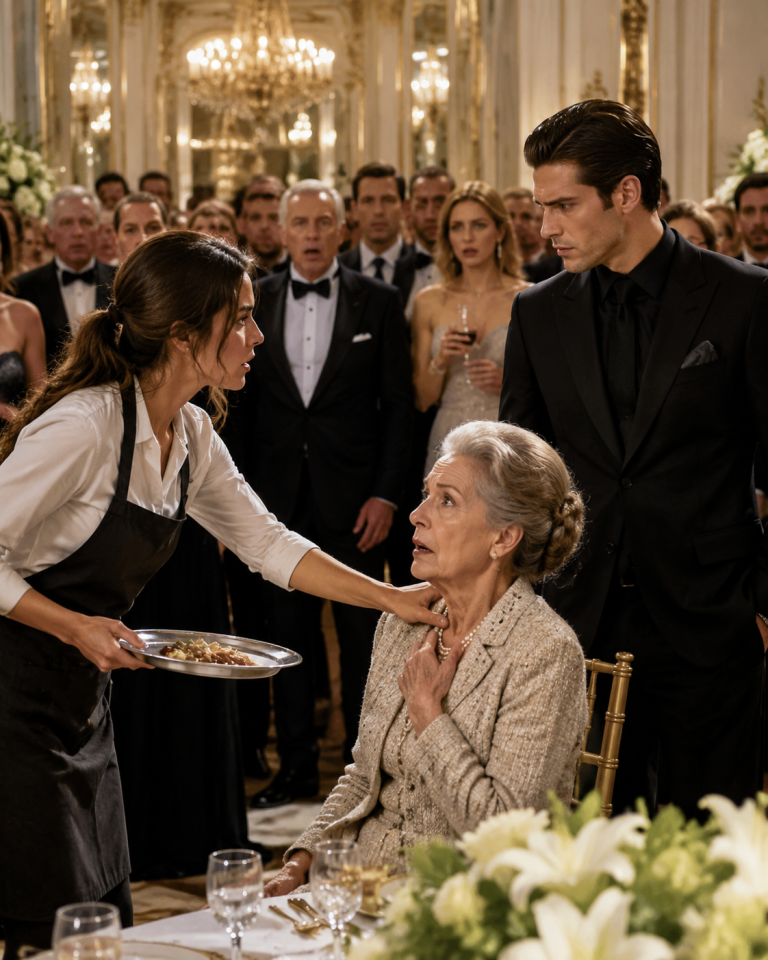
SHE ASKED ME TO APOLOGIZE FOR MAKING HER AFFAIR FEEL DIRTY — SHE DIDN’T KNOW WHO OWNED THE BUILDING

## PART 1
There is a very specific kind of silence that settles over a woman the moment she understands her marriage has already ended without her permission. It doesn’t arrive with shouting. It arrives with orchids.
I had learned that silence three years earlier, in a recovery room on the fourth floor of a private hospital, when a nurse told me my husband had “just stepped out” and I lay there counting ceiling tiles until morning, understanding with total clarity that I had lost more than the child.
I thought about that ceiling now, standing in the Windermere Hotel’s private donor lounge, holding a glass of champagne I had no intention of drinking, while my husband’s mistress dabbed at dry eyes with a napkin monogrammed with my grandmother’s initials.
“You don’t know how difficult this has been for me,” Camille Rousseau said, loud enough for every trustee’s wife in the room to hear it as a performance rather than a confession.
She was twenty-six. Golden. Certain. And carrying a pregnancy she wore like an argument nobody was permitted to lose.
My husband, Julian Vance, stood close enough beside her that his hand rested naturally against the small of her back — a gesture so practiced it had clearly been rehearsed somewhere other than this room.
Not once, in eleven years, had his hand ever found mine that easily.
“Julian,” his mother murmured from somewhere near the fireplace, not from embarrassment, but from the particular anxiety of a woman calculating how much damage control a scandal like this would require before Sunday brunch.
Corinne Vance had spent four decades married into a name people mistook for old money. She understood, better than anyone, that reputations could be managed the way you managed staff — quietly, expensively, and without ever admitting there had been a problem to begin with.
“I just think,” Camille went on, folding both palms delicately over her stomach in a gesture I suspected she’d practiced in a mirror, “an apology would help everyone move forward.”
I set my glass down without a sound.
The string quartet near the terrace doors seemed to lower itself out of instinct.
I leaned in close enough to smell her perfume, jasmine layered over something sharper underneath it — ambition, probably, or the particular arrogance of a woman who has never once had to survive a room she didn’t control.
“You’ll get gentleness from whoever he marries after me,” I told her.
Then I looked at my husband, at the man who had once stood in the snow outside my family’s home in Newport and told me he wanted a life built on honesty.
“I’m not here for an apology,” I said. “I’m here for what comes after one.”
Julian’s expression shifted before anyone else in the room caught it — a small, telling crack in the composure he wore like a suit that had always fit him too well. For one unguarded second, he wasn’t looking at a wounded wife anymore.
He was looking at a locked door, realizing, far too late, that he no longer held the key.
“This isn’t the place, Evelyn,” he said quietly, in the low warning tone men use when they’ve already decided you’re the one being unreasonable.
I smiled at that, because men like Julian always assumed *place* belonged to them — the room, the hotel, the marriage, the ending. They never once thought to check whose name sat quietly beneath the deed.
Camille’s chin lifted, mistaking my calm for surrender.
“Grant told me you were cold,” she said — and a few women near the bar actually inhaled, delighted, the way people get delighted watching a house catch fire from a safe distance.
“I’m sure he did,” I said.
I let my gaze drift, deliberately, to the oil portrait hanging above the fireplace — my grandmother, Margaux Lockhart, painted forty years earlier in this exact room, watching over the hotel she had built with a patience nobody in the Vance family had ever bothered to study.
I looked back at Corinne.
“Your son brought his mistress into my grandmother’s hotel,” I said, “and asked me to bless the pregnancy in front of her donors.”
The color left Corinne’s face in one visible wave.
Several heads turned toward the portrait, then back toward me, doing arithmetic they didn’t yet have all the numbers for.
Julian knew the Windermere had once belonged to my family.
He did not know — had never once bothered to find out — that it still did.
I picked up my clutch.
“Enjoy the party,” I said, and started for the door.
Julian caught my wrist. Not hard enough to bruise. Hard enough for the room to see it.
“Don’t walk away from me.”
I looked down at his hand on my skin, then up at the man attached to it.
“You should have let me walk away,” I said, “back when it was still free.”
He let go. Nobody in that lounge made a sound as I crossed it.
At the doors, I paused, and looked back once more — not at Julian, but at Camille, whose eyes had brightened, certain my hesitation meant she’d won something.
“One more thing,” I said. “The Windermere doesn’t allow unregistered guests in the private donor rooms.”
The doors opened behind me. Two members of hotel security stepped through them, and the entire lounge watched Camille Rousseau’s mouth fall open as she finally understood — one full beat too late — exactly whose building she was standing in.
—
## PART 2
By the time I reached the lobby, my phone had already begun buzzing with the first messages. By midnight, someone’s blurry video of the confrontation had crossed two million views. By morning, the caption writing itself across every gossip account in Manhattan read the same way: *Vance heir’s pregnant mistress removed from charity gala after confrontation with wife.*
Nobody in that footage knew the smallest part of the truth.
They didn’t know that four years earlier, while Julian was building an empire out of his father’s collapsing investment firm, I had quietly poured forty-two million dollars of my own family’s money into it through a private vehicle called Northgate Capital — sixty-two percent voting control, a permanent board seat, and an enforcement clause that activated automatically the moment any executive misused company funds for personal misconduct.
Julian believed Northgate belonged to an aging financier named Walter Pruitt, a man who had, in fact, worked for my grandmother for thirty years and still sent me handwritten cards on my birthday.
I hadn’t hidden that ownership to trap my husband.
I’d hidden it because I wanted to see, without my name attached to any leverage, exactly who Julian would become once he assumed my power ended at my last name.
He became exactly who he was.
Late nights that turned into missed anniversaries. A miscarriage he learned about from a nurse instead of from me, because he’d stepped out to take a call from his new “communications consultant.” A corporate card quietly funding an apartment in Tribeca listed on the books as *brand strategy housing*. Flowers delivered every Tuesday to a woman who wasn’t his wife, from a florist owned by a rival society daughter who despised Camille enough to forward me every single receipt.
For seven months, I let a spreadsheet fill itself in instead of confronting him. Not because I was weak. Because timing, used correctly, is the only mercy a man like Julian never sees coming.
At 8:03 the next morning, my phone lit up with his name.
I let it ring twice before answering, just long enough to remind him whose patience he was borrowing.
“You humiliated a pregnant woman,” he said, voice tight with something that wasn’t quite guilt.
“No,” I said. “I introduced her to consequences.”
Three days later, an invitation arrived on thick cream cardstock — a baby shower at Ravenscliff, the Vance family estate in Connecticut, hosted by Corinne herself, celebrating *new beginnings* for Camille and *Baby Vance.*
I stared at that card in my foyer for a long time.
Ravenscliff had white columns, imported roses, and enough ancestral portraits to make guilt look decorative. Corinne spoke about that house as though her own bones had gone into its foundation.
She never mentioned that Desmond had mortgaged it during the federal inquiry that nearly buried the family firm four years earlier.
She never mentioned that Northgate Capital had quietly purchased that note after the default.
She had no idea, standing beneath those chandeliers planning her son’s mistress’s celebration, that the deed to the house she was about to fill with blue hydrangeas and cake had already changed hands — and that I intended to walk through her front door and watch exactly how far a family could perform ownership inside a house they no longer owned.
—
## PART 3
Ravenscliff smelled like gardenias and old money trying not to panic. I arrived in ivory — not bridal ivory, the other kind, the kind that says a woman has already grieved and now owns the cemetery — and walked through a lawn lined with imported hydrangeas while the valet stared at me like I’d stepped out of a will he hadn’t read yet.
Inside, my wedding portrait had been removed from the mantel. In its place sat a silver frame of Julian kissing Camille’s temple, her hand cradling her stomach like a crown she’d been given rather than one she’d taken.
“You shouldn’t be here,” Julian said, appearing from the archway in navy, looking tired in the specific way public humiliation ages a man faster than guilt ever manages to.
“I was invited,” I said.
“That was my mother’s mistake.”
“Your family makes a great many of those.”
I found Desmond in the library with two attorneys and a glass of bourbon he was holding like a life raft.
“You look well,” he said, the way men say it to women they’ve decided are dangerous.
“So do people right before the exhibits come out,” I said, and watched one of his lawyers actually stop breathing.
When Corinne tapped a spoon against a champagne flute and began her toast about storms and blessings, the whole room turned expectantly toward me, waiting for the moment I was supposed to bleed politely into the silk. I let them wait exactly long enough.
Then I lifted one hand, and my attorney, Renata Cole, walked through the ballroom doors with two associates and four leather folders.
Divorce. Breach of the prenuptial agreement. Corporate enforcement. And a fourth folder, delivered directly into Camille’s trembling hands, informing the entire Vance family that Ravenscliff belonged, as of that morning, to a holding company controlled by the Lockhart Family Trust — and that they had thirty days to vacate a house they’d spent the afternoon decorating with someone else’s flowers.
“You bought Ravenscliff?” Julian whispered.
“I bought the debt,” I said.
It was Camille, cornered and furious and pregnant with a truth none of us yet understood, who reached for the only weapon she had left.
“You’re doing this,” she said, voice carrying across the frozen ballroom, “because you couldn’t give him a child.”
The room went silent in the particular way rooms go silent right before someone gets destroyed.
I turned back slowly.
“You’re right,” I said, and watched her triumph curdle into confusion. “I couldn’t carry the child I lost while my husband was in a hotel room with you.” I let that land before I finished it. “The difference between us is that I never turned my grief into a weapon against another woman.”
Then I walked out beneath my grandmother’s chandeliers, through the front door of a house I now legally owned, and left the party to collapse behind me without any music left to hide the silence.
—
The divorce hearing landed on a gray, sideways-raining Thursday. Julian arrived through the front entrance with Camille on his arm, pausing on the courthouse steps for photographers the way failing men pause for anything that might still love them back. I came in through the side door with Renata, because power rarely needs the front entrance when it already owns the building next to it.
Julian’s attorney, a smooth, expensive man named Preston Lowe, opened by describing the marriage as “emotionally dissolved” long before Camille arrived, and accused me of using my resources to punish a family for the crime of moving on.
Judge Diane Sorrell looked at him over her glasses with the patience of a woman who had spent thirty years watching wealthy men mistake consequences for persecution.
“I’d advise against arguing social media in my courtroom,” she said, “unless you intend to call TikTok as a witness.”
Renata didn’t perform. She simply opened the first folder.
Hotel invoices. Corporate card statements funding an apartment neither of us was supposed to know about. A recorded voicemail of Camille demanding “a real announcement, not some dirty little side thing.” My own voice from the gala, calm and even, filling the courtroom: *I’m not here for an apology. I’m here for what comes after one.*
Then came the prenuptial agreement Julian himself had insisted on — the one Desmond had ordered drafted years earlier to protect his son from marrying beneath his fortune, never imagining it would one day be turned against him with surgical precision. A public humiliation clause. An infidelity clause. A provision voiding every protection if corporate funds had financed the affair.
Julian’s initials sat on every page, in blue ink, beside the wreckage of his own certainty.
Then Renata called Walter Pruitt to the stand, and the color drained entirely out of Julian’s face as Walter calmly confirmed that Northgate Capital — the “old financier” who had quietly saved Vance Capital from federal collapse — had been controlled, from the very beginning, by a trust with my name on it.
“You were Northgate?” Julian said, so quietly it barely reached me.
“I was the reason your father didn’t go to prison,” I said.
The final blow came sealed, and neither Julian nor Preston Lowe saw it coming. Renata explained, without flourish, that Camille’s repeated public claims about the pregnancy — used to justify housing demands, trust protections, and reputational leverage — had prompted a subpoenaed paternity test.
The child was not Julian’s.
The father was Marcus Vance — Julian’s own cousin, the chief financial officer of the very company Julian was about to lose, the man who had stood beside him at our wedding and toasted loyalty until his aunt wept into her champagne.
“It was one time,” Camille whispered, the oldest, emptiest excuse in existence, as if betrayal were measured by frequency instead of damage.
Julian didn’t look at her again for the rest of the hearing.
By the following morning, the board of Vance Capital Holdings voted, in twelve efficient minutes, to remove Julian as chief executive under the enforcement rights Northgate had held all along. Men who had toasted him at private clubs raised their hands without meeting his eyes. His portrait came down from the lobby before lunch, on the facilities manager’s own initiative, without my ever having asked.
He found me by the windows overlooking Madison Avenue afterward, smaller in daylight than I remembered him ever looking.
“I know I don’t deserve anything,” he said.
“That’s true.”
“I was angry at you,” he admitted. “You always seemed so composed. After the miscarriage, you disappeared into yourself, and I didn’t know how to reach you.”
“You didn’t reach, Julian,” I said. “You left.”
“She made me feel needed.”
“No,” I said. “She made you feel innocent.”
He asked, at the very end, if I had ever loved him. It was the kind of question that might once have broken something in me. Now it only sounded like a man searching through ash for jewelry that had already been sold.
“Yes,” I told him honestly. “That was the problem.”
I left him standing in the hallway of a company he no longer ran, and did not look back.
—
A year later, the Windermere Foundation opened a new neonatal recovery wing, renovated from the very room where I had once woken up alone and asked a nurse where my husband had gone. We named it after my grandmother’s mother, a woman who had survived three losses of her own before building a life too large for grief to finish. No lilies were allowed anywhere near the wing. I made certain of that myself.
Ravenscliff, too, became something else — not a symbol of what the Vance family had lost, but a residence for women leaving powerful men who’d once mistaken silence for surrender. Not a shelter. A residence, with keys that were theirs to keep. The first family to move in included a boy who asked, wide-eyed, if the chandelier in the front hall was real, and if he was allowed to touch the piano in the library.
I told him yes to both.
His mother cried quietly in the doorway, not from sadness, but from the particular relief of finally being handed a lock that worked.
Julian moved to Chicago eventually, took a job at a firm that didn’t put his name on the door, and, from what little I heard, learned to live a smaller, quieter life than the one he’d once photographed so beautifully beside. I hoped, without irony, that the quiet eventually taught him something useful. Camille gave one uncomfortable interview to a podcast about “misunderstood women,” and the internet, as it does, declined to be gentle with her either.
On the anniversary of that first gala, the Windermere hosted another charity evening in the very same lounge — white orchids, glittering champagne towers, my grandmother’s portrait watching over the fireplace with the same unforgiving eyes she’d always had. Near the end of the night, a woman who had once watched my collapse like dessert leaned in with a nervous little smile.
“You handled all of it with such grace,” she said.
I looked around the room my family had built — at the donors laughing beneath chandeliers that were mine, at the space where a woman had once demanded an apology for the crime of naming her own affair accurately — and I smiled back at her, without any leash in it at all.
“No,” I said. “I handled it with ownership.”
That was the thing Julian never understood in time. He believed betrayal was a door he could open and close entirely from his own side of the marriage. He believed shame would make me smaller, that grief would keep me quiet, that love meant I would go on protecting him from the plain, unglamorous consequences of being fully known.
He brought his mistress into my grandmother’s hotel and asked me, in front of a room full of witnesses, to make her guilt feel lighter.
He forgot the first rule anyone should learn before humiliating a woman inside a room: check who owns the building before you decide how the story ends.
I had already bought the pen.