The Mafia Boss Rescued a Bound Nurse From an Abandoned Warehouse — Then His Dog Exposed the One Betrayer Nobody Suspected

## CHAPTER 2
At two in the morning, the black car stopped a block from the workshop, and Rook walked the rest of the way through fog so thick the streetlights only hung, not shone. Every house on the street was dark, every curtain closed with a uniformity that made him slow his stride. People didn’t do that unless they’d learned how.
He studied the wooden bar jammed through the door handle — crude, temporary, the kind of thing left by people who intended to come back through that same door. On the sidewalk he found a curl of spruce shaving, fresh, pale, fine-grained, and pocketed it without knowing why yet. The dog beside him turned his head toward the door and held it there, utterly still.
Rook broke the bar with one turn of his wrist and stepped inside. The smell hit him before the dark did — cold, hide glue, rubbing alcohol. She sat bound to the chair, breathing. He saw that first. Her stethoscope lay tipped on the concrete at her feet, and he looked at it longer than he looked at her.
He knelt, pressed the warm back of his hand against the tape at her mouth until the adhesive gave, and peeled it away slowly, the way someone does who has done it before. She coughed in one long breath.
“Have you signed?”
It took her a moment to understand the question, and then she understood she hadn’t misheard it. “No,” she said, and something around his eyes loosened by half a millimeter, then was gone.
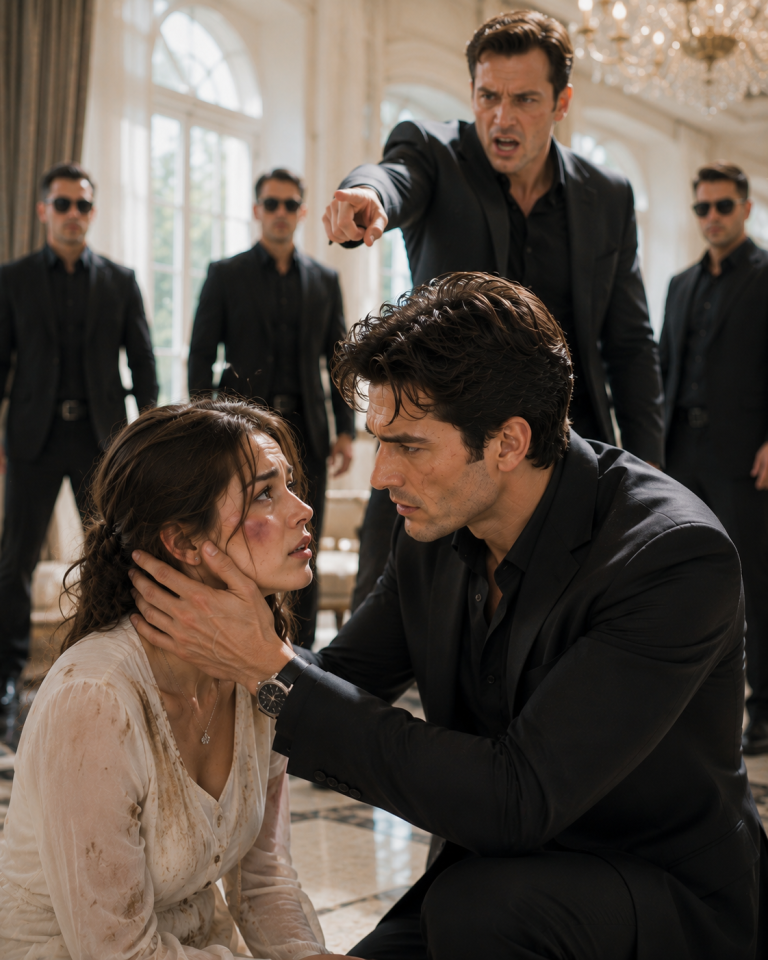
He removed his coat and laid it over her shoulders before he cut the ropes — dealing with the cold first, when everyone else always freed the hands first. Two cuts of the knife, and he caught her arm before it struck the chair. Two fingers found her pulse without pressing too hard.
“Seventy-six,” she said, hoarse. “I already counted.”
His hand stopped on her wrist. He’d heard lies and pleading and names sold cheap in every room he’d ever stood in. He had no answer for this.
She tried to stand and fell, crawling instead toward the workbench, toward the scattered pieces of wood, not the door. He didn’t help her up. He turned his back and gave her the only thing a man like him could give a woman like this — privacy — while behind him came one long breath that lasted far too long to be simple relief.
When she’d gathered herself, he lifted the stack of papers from the bench. “This debt is mine,” he said. “Dracott bought it without authorization. You owe him nothing.”
She looked up. “Then I owe you.”
He was silent one beat too long, and they both heard it.
“Yes,” he said.
—