The Mafia Boss Came Home Early—The Maid Whispered “Stay Quiet,” and the Reason Shocked Him

PART 1
The instinct that kept him alive had no name and no logic.
It wasn’t fear — fear was something Cassian Drago had metabolized into usefulness years ago. It was closer to a sound that existed beneath sound, a register beneath hearing, the specific wrongness of a room that looked correct but wasn’t. He had learned to trust it absolutely, and the cost of ignoring it once, a long time ago, had been thirty-seven stitches and two funerals.
Tonight the wrongness was in the handshakes.
The negotiations at the hotel in Boston had been running for nine hours, and they had been running smoothly — too smoothly, with the kind of frictionless agreement that made him think of floors polished over a crack. His counterparts across the table were men he had known for years. Men who should have pushed back on the eastern corridor terms. Men who hadn’t.
At eleven-fifteen, he excused himself to take a phone call and kept walking.
His driver, Ren, had the car ready inside four minutes. They were on the road to the private airfield before anyone at the hotel understood what had happened.
“No contact,” Cassian told him. “No calls in, no calls out. We don’t tell anyone we’re coming.”
Ren, who had driven Cassian Drago for six years and survived the experience by understanding that certain instructions were not invitations to discussion, said nothing and drove.
The flight home was an hour and twenty minutes of Cassian staring at the darkness outside the window and running calculations. He arrived at the estate’s back access at half past one in the morning, let himself in through the service entrance with a code he had never shared with anyone, and stood in his own kitchen in the dark.
The house was wrong.
He heard it in the same register.
Nothing visible. The kitchen was empty, the lights off, the storm outside throwing occasional silver through the windows. But the wrongness was unmistakable — a quality in the air that meant the house had been occupied recently in a way that didn’t match the schedule.
His hand moved to the weapon at his back.
He moved toward the main corridor.
A shape came out of the shadows between the pantry and the service stairs, and the weapon was in his hand and raised before he had consciously decided to raise it.
She froze.
Not the way people usually froze in front of him — not with the specific quality of someone whose survival instinct had simply overwhelmed everything else. She froze with her eyes open and her breathing controlled, as if she had expected this exact moment and had been deciding how to handle it.
Nadia.
He had hired her two years ago through the agency that staffed his household. She was efficient, thorough, and spoke less than anyone else on the staff. In two years, he had probably spoken to her directly on fewer than a dozen occasions, and most of those were functionally acknowledgment rather than conversation.
She was not in her uniform.
She was in the clothes of someone who had been in the process of leaving — lightweight jacket, bag over one shoulder, her dark hair loose — and she was standing at the edge of the pantry with her hand pressed flat against the wall as if the house itself needed steadying.
“What are you doing here,” he said. His voice was barely above a whisper.
She did not answer immediately.
What she did instead was raise one finger to her lips.
Then, very slowly, she pointed toward the corridor that led to the main wing of the house.
He kept the weapon on her.
She took one step toward him.
“You’re dead,” she breathed. The words were so quiet that the rain nearly took them. “As of forty-five minutes ago, the official story is you went down with the charter.”
His mind processed this in the specific rapid way it processed information that reorganized everything.
“There is no charter,” he said.
“There was. Your head of operations filed a flight plan three days ago. A plane matching the tail number went down over water two hours ago.” Her eyes were steady on his. “Everyone in that house knows it. They’re celebrating.”
In that house.
His house.
The weapon didn’t move.
“Nadia,” he said.
She held his gaze.
“Why are you still here,” he said.
She pressed her lips together.
“I came back,” she said. “I left at ten. I came back because I forgot something, and when I came back—” A pause. “I heard them. And I couldn’t leave.”
“Couldn’t or didn’t.”
She said nothing for a moment.
“Didn’t,” she said.
He looked at her.
The weapon stayed up.
Then he heard it — from the main wing, through the walls, the sound of a bottle being opened. Crystal. Champagne. He knew the sound of his own cellar.
And beneath it, the low specific register of his wife’s laughter, which he had heard thousands of times and which had never sounded precisely like this.
He took a step toward the corridor.
Nadia moved in front of him.
“Don’t,” she said. Her voice was barely sound. “He has men at every entrance. If you walk through that door alive, you walk straight into a room that has every reason to make sure you don’t walk out again.”
He looked at her.
“Move,” he said.
“He has eight men,” she said. “I counted them when I was serving the coffee.”
He went still.
“You served them coffee.”
“Before I understood what I was hearing,” she said. “And then I understood, and I couldn’t—” She stopped. “Please. Just listen. One minute. Just listen.”
From the main wing, muffled by walls and distance but unmistakably audible to someone who knew the acoustics of the house:
His wife’s voice, clear and satisfied.
And then a man’s voice he recognized the way you recognized the sound of your own name — the voice of Renzo, who had been his underboss for eight years, who had stood at his right side at forty different tables in thirty different cities, who was the only person outside this house that Cassian had ever permitted into the parts of his life that were supposed to be unreachable.
The voice said: “They’ll confirm the wreckage by morning.”
And his wife said: “To us.”
Cassian stood with the weapon in his hand and felt the specific cold that came not from fear but from certainty — the cold of a world being accurately understood.
He let Nadia pull him back.
Into the dark.
Away from the door.
—
PART 2
The service stairs were cold stone, unlit, and they moved down them in silence with her hand on his sleeve to tell him where to put his feet.
In the basement, she stopped.
She let go.
He turned to face her.
“You were going to leave,” he said.
“Yes.”
“And you came back for a book.”
She looked at him.
“For a book,” she said. “And when I heard what they were saying, I waited. To warn you, if you came home, or to—” She stopped.
“Or to mourn me,” he said.
She didn’t deny it.
Something moved through him that he didn’t name.
“The tunnel,” she said. “The one in the east basement. I know where it goes.”
He looked at her.
“How.”
“The mold reports,” she said. “When the estate manager had the east foundation inspected last year, I filed the paperwork. The tunnel goes to the boathouse. The schematics were in the filing.”
He watched her.
“Nadia,” he said.
She looked at him.
“What’s your real name.”
The question arrived from a different place than strategy — from the specific instinct that had saved his life repeatedly by refusing to be satisfied with the surface of things.
She was very still.
“You don’t know,” she said. Not a question.
“I’m asking,” he said.
She held his gaze for a long moment.
And then she said: “Natalia Farro.”
He knew the name the way he knew all names that had cost him something.
Three years ago. The Farro operation. The family that had been holding the northern shipping routes, whose patriarch had refused to negotiate, whose organization Cassian had dismantled in the specific efficient way he dismantled problems.
“Your father,” he said.
“Yes.”
“You came here.”
“Two years ago.”
“You came here to kill me.”
She didn’t flinch.
“Yes,” she said.
He raised the weapon again.
She looked at it.
She did not step back.
“I watched you,” she said, quietly. “For two years I watched you. And I watched Renzo. And I watched your wife. And what I found was that the man who gave the order to destroy my family — you didn’t know the whole story.”
He held the weapon on her.
“What story.”
“Renzo told you my father was moving against you. That he had made an arrangement with the eastern families to take the corridor routes by force.” She held his gaze. “My father was dying of cancer. He had six months. He was trying to arrange a quiet transfer of his routes that would protect his people. Renzo told you a different version because Renzo wanted those routes.”
“And you have proof.”
“In the boathouse,” she said. “I moved my things there three months ago when the mold in the service quarters became untenable. Under the floorboards in the loft. Everything I’ve spent two years documenting — the recordings, the communications, everything Renzo did and everything your wife helped him do.”
He looked at her.
She was standing in the dark basement of a house that believed him dead, in front of a man holding a weapon on her, telling him the specific thing she had come here to destroy him with — and directing him toward the evidence instead.
“If you have the proof,” he said. “Why are you telling me.”
She was quiet for a moment.
“Because I watched you walk through this house alone for two years,” she said. “And I stopped hating you. And that is—” She paused. “That is more inconvenient for me than it is for you.”
From above them, something heavy moved.
Both of them went still.
Footsteps on the floor above.
Someone was checking the perimeter.
Cassian made a decision.
He put the weapon in his waistband.
He said: “Show me the tunnel.”
—
PART 3
They moved through the service basement with her phone’s light low to the floor — she knew the space better than he did, which was a specific kind of irony that Cassian filed away for later.
The tunnel door was iron, old, and reluctant. Cassian put his shoulder into it and something in the joint he’d injured years ago registered its objection, but the wheel turned and the door opened onto stone-smelling dark.
They had been moving for four minutes when the basement lights came on behind them.
A shout.
Then a shot, flattening off the iron door they had just pulled closed.
“Go,” Cassian said.
She went.
The tunnel was low and ran slightly downhill toward the water, and it was exactly the kind of utilitarian infrastructure that got built into houses like his in a previous century and forgotten about until someone who filed paperwork needed them. Nadia moved with her hand on the wall and her phone angled down and she didn’t hesitate at turns, which meant she had been here before.
The boathouse smelled of winter and cold water and old wood. She went straight to the ladder at the far end, climbed to the loft, and was on her knees prying up a board before he had fully cleared the ladder.
Metal box. Combination lock.
She opened it in five seconds.
He crouched beside her.
The box contained a tablet, three USB drives, and a physical folder thick with printed documentation. She handed him the tablet. The screen was organized — date headers, audio files, document scans.
“The first folder,” she said.
He opened it.
An audio file. A conversation that he recognized immediately from the quality of the room — the echo of his own conference room in the east wing, a location that no one should have been recording.
Renzo’s voice. And another voice — a man from the eastern coalition who Cassian had believed was neutral.
He listened for forty seconds.
Then he stopped the file.
He understood, in the specific complete way he understood things when sufficient evidence had arrived, what had been constructed around him and over what period of time.
“How long,” he said.
“The documents go back four years,” Nadia said. “Before your marriage. Renzo and your wife knew each other before you were introduced. The introduction was arranged.”
He set the tablet down.
He stared at the wall of the boathouse.
“Your father,” he said.
She was quiet.
“I gave the order,” he said. “That’s real. Whatever Renzo told me, I made the decision.”
“Yes,” she said.
“I can’t undo it.”
“No.”
He looked at her.
“Then what do you want,” he said.
She met his gaze.
“I wanted to be the reason you understood what was done to my family,” she said. “I wanted it on the record — in the right rooms, in front of the right people — that my father was not what Renzo said he was.” A pause. “And I wanted Renzo to answer for it in front of people who matter. Not quietly. In the open.”
“In front of the families.”
“Yes.”
He was quiet.
From outside, across the water, he could see the lights of the estate still burning. His house. Full of people who had been pouring champagne over his death for the past two hours.
He pulled out his phone.
One bar.
He made a call.
It was answered in four rings by a man named Pavel Andreou, who was at this hour probably in his kitchen in the city and who had loathed Renzo Coletti for seven years with the specific patience of someone waiting for the right moment.
“Cassian?” Pavel’s voice carried the specific quality of a man who had been told someone was dead and was hearing their voice. “You’re—”
“I need the funeral to go forward,” Cassian said. “Tell no one I’ve called. I need six of your best people at the chapel on Sunday morning in positions that will not be visible until they need to be.”
A pause.
“Renzo?” Pavel said.
“Renzo,” Cassian confirmed.
“Sunday morning,” Pavel said. “Consider it done.”
He ended the call.
He looked at Nadia.
She had been listening.
“The funeral,” she said.
“Mine,” he confirmed.
Something moved through her expression — not quite amusement, not quite disbelief. “You’re going to your own funeral.”
“It seemed efficient.”
She pressed her lips together.
He watched her.
He said: “The files. I want copies to two separate locations before Sunday. My attorney in Zurich and a journalist who has been building a case on the northern route manipulation for two years. If Sunday goes wrong, the documentation exists regardless.”
She was already moving to the tablet.
“I can send them now,” she said.
“Do it.”
She worked quickly — the specific efficiency he had been watching for two years in a different context, applied now to something that mattered. He watched her hands. He watched her face in the screen-light.
He said: “You could leave. Take the files, go somewhere they can’t reach.”
She didn’t look up.
“I’m not leaving,” she said.
“Because of the files.”
“Because I want to see his face,” she said. “When you walk through the doors.”
She sent the files.
She looked at him.
“Also,” she said, “I want to be there when he has to answer for my father.”
He held her gaze.
“Then come Sunday,” he said. “But not as a maid. If you stand next to me in that room, you stand there as yourself.”
She was quiet for a moment.
“Natalia Farro is dead,” she said. “She died in 2021 when her father’s organization was dismantled.”
“Then who are you.”
She thought about this.
“I’m the person who waited,” she said. “I suppose that’s enough.”
—
Sunday was gray and cold, the kind of October morning that committed fully to the funeral aesthetic.
The chapel held two hundred of the most significant criminal figures in four states, along with their attorneys, their accountants, and an assortment of people who existed in the gray margin between legitimate business and the specific work of men like Cassian Drago. They had come to pay respects, to be seen paying respects, and to begin the quiet process of identifying which direction to align themselves in the aftermath.
Renzo sat in the front row.
He sat with the practiced solemnity of a man who had been rehearsing grief and was now performing it for an audience who mattered.
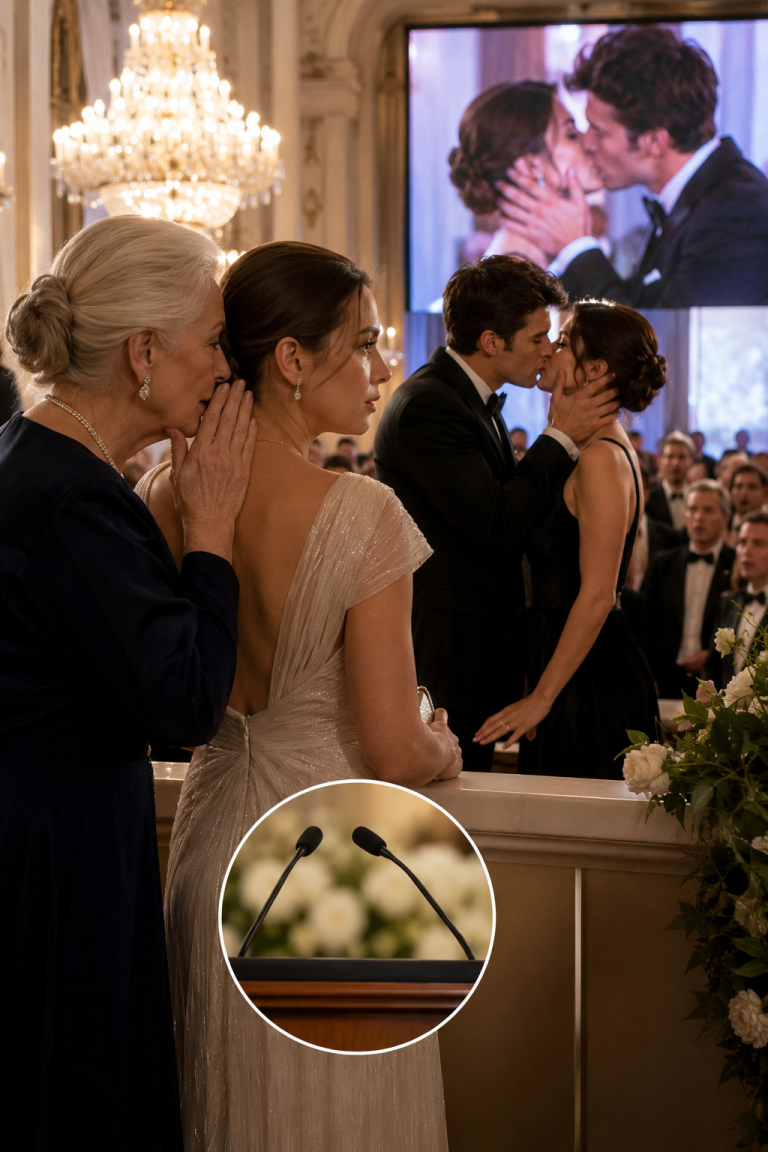
Cassian’s wife — Livia, who had married him seven years ago with the specific warmth of a woman who had been positioned to do exactly that — stood at the podium. She was in black. She was beautiful and composed and her voice, when she spoke, carried the exact note of grief that the occasion demanded.
“He was a man who carried this city,” she said. “Who carried all of us.”
Nadia, standing at the back of the chapel near the side door, watched her with an expression that was perfectly blank.
Renzo rose to speak.
He crossed to the podium with the gravity of a man taking the throne.
He said: “Cassian Drago was the only man I never doubted.”
A pause.
In the chapel, someone coughed.
Then the doors at the back opened.
Cassian walked in wearing the same black coat he had worn at the boathouse, because there had not been time for anything else and because it turned out that being visually recognizable was operationally useful in this context.
The chapel went through several phases simultaneously.
First: the specific silence of people who are receiving information that doesn’t fit their model of reality.
Then: a sound that was not quite a collective exhale but carried all the same energy.
Then: Livia’s face, from which every performed emotion drained at once, leaving something raw and unprocessed beneath it.
Then: Renzo’s hand, moving toward his jacket.
“Your men are gone,” Cassian said.
His voice carried easily.
He walked down the center aisle in the specific way he had always walked through rooms — with the quality of someone who understood that space organized itself around authority, and that authority was not performed but inhabited.
“Pavel’s people are in six positions,” he continued. “None of them are yours.”
Renzo’s hand stopped.
Cassian reached the front of the chapel.
He looked at Renzo.
He looked at Livia.
Then he turned to face the room.
“The USB drives that were distributed to my attorney and to a journalist three days ago contain documentation of eight years of coordinated manipulation,” he said. “Route sales to eastern buyers. Compromised court relationships. And the original fabrication that cost the Farro family their operation in 2021.”
He paused.
“Giancarlo Farro was dying,” he said. “He was not moving against me. He was arranging a transfer. I was given a different story.”
A sound moved through the room.
“The person who gave me that story,” Cassian said, “is standing in the front of this chapel.”
He looked at Renzo.
Renzo looked back.
In Renzo’s face was the specific quality of a man running calculations — exits, leverage, whether the gun was worth the outcome — and finding each of them insufficient.
“The documentation also includes communications,” Cassian said, “between my underboss and my wife, beginning four years before our marriage. She was introduced to me as part of a longer arrangement. The marriage was designed to provide access.”
Livia made a sound.
Cassian didn’t look at her.
“I’m not interested in theater,” he said. “The families can review the files. The appropriate conversations will happen through the appropriate channels. What I’m interested in is the question of the Farro record.”
He turned.
At the side door, Nadia had moved to stand in the entrance.
She was not in black. She was in the dark gray of a woman who had waited two years for this and had dressed for the version of it she had always intended — not grief, but reckoning.
“Her name is Natalia Farro,” Cassian said. “She came into this house to understand what happened to her family. She spent two years building the documentation that is now in the hands of people who can do something with it. And on the night I came home, she chose to stay and warn me rather than leave.”
The room watched her.
She walked forward.
Not to the podium. To the center of the aisle.
She looked at Renzo.
“My father spent twenty-three years building routes and relationships in this city,” she said. Her voice was even. “He was not perfect. But the war he was accused of planning was invented by the man standing in this room. The documentation proves it. The families will see it.”
Renzo’s face had moved through several configurations and had arrived at something that was not quite snarl and not quite despair.
“You’re dead,” he said. “The Farro girl is—”
“Standing in front of you,” she said.
Cassian signaled.
Pavel’s men moved.
Renzo reached for his weapon a second too late. The shot from the side of the room caught his shoulder, and he went down hard, and the weapon clattered out of reach on the stone floor.
Cassian looked at it.
“Don’t,” he said to no one in particular.
Livia was on her feet.
“Cassian.” Her voice had dropped the performance. What was left was something rawer — not love, not fear exactly, but the specific desperation of someone whose plan had just collapsed and who was hoping the history of the thing they had constructed around you still had weight. “We were married. We built—”
“We didn’t build anything,” he said. “You were placed.”
She opened her mouth.
He looked at her steadily.
She closed it.
“The financial matters will be handled through my attorney,” he said. “The civil process will take its course.” He looked at the room. “This is concluded.”
Pavel’s men escorted Renzo and Livia out of the chapel to separate vehicles.
The room exhaled.
—
In the library that evening, Cassian opened the 1942 brandy.
He poured two glasses.
He did not offer one to Nadia. He set it on the table between them.
She picked it up.
She sat across from him in the chair beside the window. Outside, the security perimeter was doubled and the gate was staffed by people who had been vetted personally, and the house was quiet for the first time in a long time with a quality of quiet that felt like it had earned itself.
“The families,” she said.
“They’ll align with the documentation,” he said. “They always align with whoever has the better information. We have the better information.”
“And Renzo.”
“Renzo has the rest of his life to answer for what he did to your father’s organization,” Cassian said. “The documentation is in the right hands. It will be thorough.”
She held the brandy.
“That’s not a trial,” she said.
“No,” he said. “But it’s the kind of accounting that lasts. The kind that follows a name into every room it enters for the rest of its life.”
She was quiet for a moment.
“You don’t owe me anything,” she said.
“I owe you the truth,” he said. “I gave an order based on fabricated intelligence and your family paid for it. I can’t undo that. What I can do is make sure the fabrication is documented and the person responsible for it faces what he’s owed.”
She looked at him.
“I came here to destroy you,” she said.
“I know.”
“I changed my mind.”
“I know that too.”
She turned the glass in her hands.
“What happens now,” she said.
He looked at her across the table.
He thought about the two years she had spent in this house, watching and waiting and building a case with the kind of patient discipline that most people who came to him with plans couldn’t sustain for two weeks.
He thought about the basement, and the tunnel, and the specific calm of a woman who stood in front of a raised weapon and didn’t flinch.
He thought about what she had said in the boathouse: *I stopped hating you, and that is more inconvenient for me than it is for you.*
He said: “The position of underboss is vacant.”
She looked at him.
“I’m not interested in a title,” she said.
“I’m not offering a title,” he said. “I’m offering a seat at the table where decisions are made. Equal weight to mine. Nothing gets decided without both of us agreeing.”
She studied him.
“The families will not accept a Farro.”
“The families saw you in that chapel today,” he said. “They know who you are and what you brought. Men in that room have respected less.”
“I won’t be leverage,” she said. “Not for you, not for anyone. If I sit at that table, I sit there because of what I can do and not because of what I used to be to you.”
“Yes,” he said.
“And I’ll tell you when you’re wrong.”
“I would expect nothing less.”
She held his gaze.
“You’ll disagree,” she said. “Often.”
“Probably.”
“And?”
“And we’ll argue about it until one of us is more right than the other,” he said. “That’s how the council works.”
She was quiet for a long moment.
The city outside was doing what cities did — indifferent and ongoing, the lights moving in their ordinary patterns far below the window.
She set the glass down.
She said: “One condition.”
“Name it.”
“The Farro documentation,” she said. “All of it. The full record of what Renzo fabricated and what was actually true about my father’s operation. Published — not in the criminal world, but publicly. A journalist, a record that exists outside this world.”
He had already sent the files.
“Done,” he said.
She looked at him.
Something in her expression shifted — not softening exactly, but settling. The specific quality of someone who has been carrying tension at a constant pitch for so long that the first moment it eases registers as physical.
“All right,” she said.
“All right,” he said.
She picked up the brandy again.
They sat in the library while the estate found its footing in its new configuration — the guards who answered to both of them, the phones that would ring differently tomorrow, the documentation that was already moving through the city toward the people who needed to see it.
Later, much later, she would tell him that she had almost left the house the night she heard them toasting his death. That she had been at the door with her hand on the knob and her bag over her shoulder and she had stood there for four minutes deciding.
He would ask what made her stay.
She would say: I wasn’t done yet.
He would ask: with what.
She would say: with finding out what kind of man you actually were.
He would say: and.
She would say: the jury is still deliberating.
He would say: I’ll wait.
She would say: you’d better.
But that was later.
That night, they sat with their brandy and the quiet of a house that had been given back to itself, and outside the window the city went on doing exactly what it always did, and the gate at the bottom of the estate drive was closed and locked and staffed by people who knew what they were protecting.
It had taken two years and a death that hadn’t happened and a tunnel under a boathouse to get here.
But the most dangerous person in the room, as it turned out, had never been the one giving orders.
It had been the one keeping them.
And now she had a seat at the table.
Which was, as anyone paying attention should have known all along, exactly where she had always belonged.