My husband kissed his mistress on a balcony during my parents’ memorial gala — and the camera crew never cut the feed

## PART 1: THE HOUSE THAT MOURNING BUILT
The gala was held at Ashgrove Hall outside Charleston, a white-columned estate that looked carved out of old rice money and river fog. My father used to say places like that made rich people feel charitable because marble echoed better than guilt.
That night, the ballroom held donors, city council members, hospital administrators, and a dozen people who had called my parents dear friends after ignoring their calls for a decade. White camellias filled every surface because my mother had loved them. Framed photographs lined the entrance table — my father shaking hands at the opening of the Bellamy Diagnostic Wing, my mother kneeling beside a child in a hospital gown, both of them laughing at something the camera hadn’t caught.
Beneath the largest photograph, a bronze plaque read: *Walter and Grace Bellamy — Built to Heal.*
I stood under those words for almost ten minutes before the first guest told me how strong I was. People love calling a grieving woman strong when what they mean is quiet.
My mother had been gone four years. My father had been buried twenty-three days. The gala had been scheduled before his heart failed him in his workshop, hunched over the prototype for a device he’d never see approved. He had insisted we keep the date anyway.
“Promise me, Jo,” he’d said, two weeks before he died, his hand wrapped around mine, ink-stained at the knuckle the way it always was after a long day at his desk. “People give more generously when they still remember what they owe the dead.”
I thought it was a joke. My father hid warnings inside humor the way some people hide medicine in applesauce.
My husband, Weston Kincaid, arrived forty minutes late and already irritated, handsome in the particular way expensive men learn to be — sharp jaw, tailored charcoal, a smile that only appeared when someone useful was watching. When we married nine years earlier, people said we were a perfect match. The Bellamy daughter and the Kincaid son. My family had new money, built loudly and honestly out of medical devices designed in my father’s garage. His family had old money, or the memory of it, wrapped in antiques they could no longer afford to insure.
For years I believed we balanced each other. I brought warmth. He brought polish. By the time I understood that polish was sometimes just debt wearing cufflinks, I was already Mrs. Weston Kincaid.
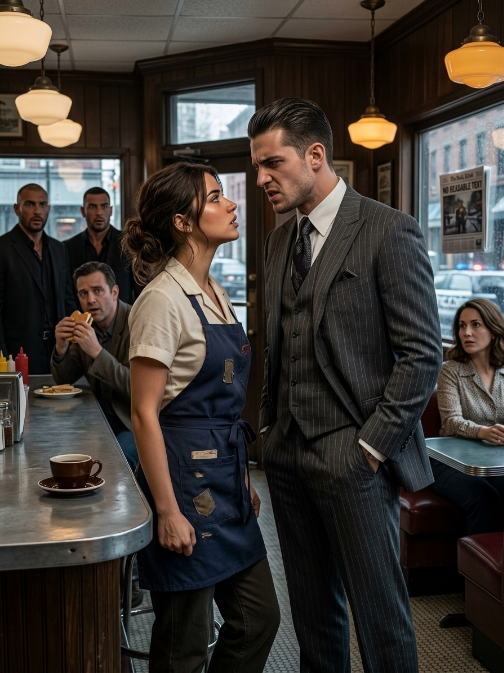
That night he barely touched my shoulder when he crossed the ballroom. “You’re standing too close to the donation table,” he murmured.
I looked at him. “Hello to you too.”
His eyes flicked toward the cameras near the stage. “Smile, Jo.”
I did — not because he told me to, but because my father’s photograph hung behind him, and I refused to let my face become one more thing Weston managed.
His mother, Adelaide Kincaid, arrived behind him in ink-blue satin and pearls the size of communion wafers. Adelaide never walked into a room. She arrived in it like a verdict.
“Darling,” she said, kissing the air beside my cheek. “You look exhausted.”
“My father died three weeks ago.”
“Yes,” she said, adjusting the brooch at her collar. “We were all inconvenienced by the timing.”
Weston shot her a small warning look. She ignored it, the way she’d been ignoring consequences for decades, because other people had usually been paid to receive them on her behalf.
Behind her stood Renata Cole — introduced, that night, as the communications director for the Kincaid Family Trust, though the trust had considerably more letterhead than funding. She was thirty-one, dark-haired, poised, wearing emerald silk cut low enough in the back that every wife in the room clocked it before their husbands pretended not to.
“Jo,” she said, hand briefly grazing Weston’s sleeve. “I’m so sorry for your loss.”
I looked at her fingers. Then at my husband. He didn’t move away.
Something in me went cold — not the loud, trembling kind of shock, but the quiet click of a door closing somewhere in a house after everyone else has gone to sleep. I’d suspected Renata for months. Perfume on his coat. A hotel folio from Savannah when he’d claimed to be in Columbia. A text that read only *still up?* before vanishing from his phone under a passcode he’d never needed before.
The old version of me would have asked. Would have tried to become prettier, easier, more grateful for crumbs. But grief had burned that version away. When you watch both your parents leave the world, you learn very quickly what deserves chasing. A man who lies is not on that list.
The program began at seven — speeches from doctors, a state senator who mispronounced my mother’s name twice before calling my father “a pioneer of compassionate engineering.” I sat at the front table between Weston and my father’s longtime attorney, Dinah Osei, who had known me since I was nine and terrified of the diving board, and who now had the kind of posture that made younger lawyers straighten their own spines by proximity.
She touched my wrist during the senator’s speech. “Breathe.”
“I am.”
“No, sweetheart,” she said. “You’re surviving. There’s a difference.”
At eight-fifteen, the emcee announced the tribute film. The lights dimmed. My father appeared on the screen above the podium, five years younger, standing in front of the diagnostic wing in a gray suit that had never quite fit him right. The room softened. A few people near me began to cry.
Then the feed stuttered.
Static, half a second, and the tribute film vanished. In its place: the live camera from the west terrace. A waiter crossed the frame carrying empty glasses. The marsh was dark beyond the balustrade.
Then Weston stepped into view. Renata followed. She laughed at something he said. He took her face in both hands.
He kissed her like he’d been waiting all evening to be seen doing it.
The ballroom fell into a silence I had never heard before. Not quiet — silent, with teeth.
Someone dropped a fork. Someone gasped, “Oh my God.” At my table, Dinah went very still.
Adelaide leaned toward me, gardenia perfume thick as syrup.
“Maybe now,” she whispered, “you’ll finally stop pretending.”
That was when I understood — not the affair, the *arrangement.* The stillness of Adelaide’s face. The way she showed no surprise at all. This was not an accident that had humiliated me.
This was a performance they believed they controlled.
—
## PART 2: THIRTY SECONDS
I stood. Every head turned.
The screen snapped back to the tribute film’s opening frame — someone in the AV booth must have panicked — and my father’s face filled the wall again, watching the room while the living forgot how to breathe.
Dinah didn’t tell me to sit. She only slid her chair back a few inches, clearing my path. That is the difference between people who love you and people who own you. Love makes room. Ownership grabs your wrist.
Weston came rushing in from the terrace doors before I reached the aisle, hair mussed, mouth red. “Jo. Let me explain.”
I walked past him. His hand caught my elbow.
I looked down at his fingers, then up at his face. “Let go.”
I didn’t raise my voice. That made it worse for him. A shouting woman can be dismissed. A quiet one must be heard.
He released me. Renata appeared behind him, one hand pressed delicately to her lips, attempting an expression of shame she wasn’t nearly practiced enough to sell.
I kept walking, past the black curtain at the rear of the ballroom, to where a young technician sat behind a wall of monitors, headset askew, the pale look of a man who had just accidentally detonated a marriage. His name tag said Micah.
“Mrs. Kincaid, I am so sorry, the tribute file lagged and Camera Two was still hot, I swear I didn’t mean—”
“Micah,” I said. He stopped. “Can you rewind the feed?”
Weston had followed. So had Adelaide. So had Renata, and half the front row, pretending they were only checking on me.
“That’s not necessary,” Weston said, his voice dropping into the smooth public register he used with bankers and traffic cops. “It was a private moment, caught by accident.”
I smiled at him — the first real smile I’d given him in months.
“Rewind thirty seconds,” I told Micah.
—
## PART 3: THE MAN WHO KEPT TALKING
Micah looked to Dinah. She nodded once, and his fingers moved across the console.
The screen changed. The west terrace reappeared, but this time Weston and Renata weren’t kissing yet — they stood close near the balustrade, and the speakers gave a burst of static before audio bled through. None of us had known there was audio. Neither, it turned out, had Weston.
Renata’s recorded voice came first. “Are you sure? It feels cruel tonight.”
That was the first honest thing I ever heard her say.
Weston laughed — low, amused, and something cold moved through the ballroom at the sound of it. “Cruel is the point.”
On the screen, Renata touched his lapel. “She just buried her father.”
“And she’s been untouchable ever since,” Weston said. “Grief made her useful for sympathy. Impossible to manage.”
Someone whispered my name behind me. I didn’t turn.
“Your mother thinks she’ll sign?” Renata asked.
“My mother knows she’ll sign,” Weston said. “Jo hates scenes.”
My hands stayed perfectly still. I remember noticing that, looking down at them as his voice filled the room, expecting to find them shaking and finding instead that they looked like my mother’s hands — calm, pale, ready.
“And after she signs the restructuring agreement?” Renata asked.
Weston smiled on-screen, an expression I had once mistaken, at our wedding, for tenderness. “Then she stops being a problem.”
Dinah stepped closer, her shoulder brushing mine, steady as a load-bearing wall.
“What about the foundation vote?” Renata’s recorded voice asked.
“Tonight helps,” Weston said. “If she breaks down in front of the board, Dinah won’t be able to argue she’s fit to chair anything.”
Weston lunged for the console. Micah shoved his chair back like he expected to be struck. Dinah set one hand flat on the table.
“Touch that system,” she said, “and I will have security remove you before the next sentence finishes.”
He stopped. The next sentence played.
“Your mic’s still hot,” Renata’s voice said.
On-screen, Weston glanced down at his own lapel and laughed. “It’s not feeding anywhere.”
It was feeding everywhere. The whole ballroom heard the soft rustle, the distant clink of a glass, and then my husband’s voice, unhurried, almost bored: “Wait until her father’s tribute starts.”
Micah stopped the playback without being asked. For a moment the only sound in Ashgrove Hall was the marsh wind moving through the live oaks outside.
—
Weston turned to face the room. He looked smaller than he had five minutes earlier — exposure doesn’t add ugliness, I learned that night, it simply removes height.
“Ladies and gentlemen,” he began. No one wanted to be his ladies and gentlemen.
“This is clearly being taken out of context,” he tried.
A woman near the back laughed, short and sharp and almost beautiful.
Adelaide stepped forward, chin lifted, still believing manners could rescue the room. “My son and daughter-in-law are experiencing a private marital difficulty during a season of grief. I ask that you all show the decency this family deserves.”
“Which family?” Dinah asked.
“The Kincaid family.”
Dinah’s smile was almost invisible. “That’s what I thought.”
She turned to Micah. “Please load the second file. Marked *W.B. final instructions.*”
The room’s mood shifted from scandal to confusion. Weston stared at her. “What is that?”
Dinah didn’t answer him. She looked at me instead.
My father appeared on the screen again — not the polished version from the tribute film, but older, thinner, sitting in the leather chair in his workshop office, the one he sat in when I was eleven and told him I’d failed geometry, the one where he’d taught me to read a contract twice before signing it because, he said, pretty girls were always handed pens by men who smiled.
“If this portion of the recording is being played,” he said, looking directly into the camera, “then something has gone wrong in a way I hoped it would not.”
A small sound escaped me. Dinah took my hand.
“Jo, my girl,” my father said. “I’m sorry. I wanted tonight to be about the work, not the wolves. But I’ve lived long enough to know that wolves prefer candlelight.”
No one in the room moved. Even the waiters along the walls stood frozen.
“For the last fourteen months, at my request, Ashworth & Reyes conducted a private audit of all entities connected to the Kincaid Family Trust, and any accounts into which Bellamy funds were invited, transferred, pledged, or borrowed against.”
“Turn it off,” Weston said.
No one did.
“That audit raised questions I did not want to believe,” my father went on. “Then it answered them.”
Adelaide’s pearls trembled faintly at her throat. It was the first time I ever saw her afraid rather than merely offended.
“Weston, if you’re hearing this in a room full of witnesses,” my father said, “it means you mistook my daughter’s kindness for weakness one time too many.”
“You vindictive old bastard,” Weston said, loud enough for the podium mic to catch it and carry it through the room.
My father’s recorded voice continued as if he’d anticipated the insult and forgiven himself in advance for enjoying it. “Upon my death, Jo became sole voting trustee of the Bellamy Family Health Fund, sole owner of the Charleston residence, the Isle of Palms property, and all family-controlled shares of Bellamy Diagnostics. However, because I suspected coercion, I also added several protective clauses.”
“No,” Weston whispered. I heard it anyway.
“When this recording plays,” my father said, “all pending access authorizations previously extended to Weston Kincaid, Adelaide Kincaid, or any entity under their control are revoked, effective five o’clock this evening. All lines of credit collateralized by Bellamy assets are frozen pending review. The temporary residence agreement for the Tradd Street house expires tonight.”
Adelaide made a sound — small, ugly, entirely human.
The Tradd Street house was the Kincaid family home, or so I’d been told for nine years: four stories of oil portraits and a ballroom no one could afford to heat. I’d hosted Thanksgiving there. Written checks for the roof there. Listened to Adelaide tell guests the Bellamys wouldn’t understand heritage if it introduced itself, there.
Dinah told me the truth later, in the car. My father had quietly purchased the mortgage six years earlier, after Weston’s father drank through what remained of the family’s money, and had let Adelaide live there rent-free only because I’d asked him not to embarrass Weston. It had not belonged to the Kincaids for six years.
It had belonged to me.
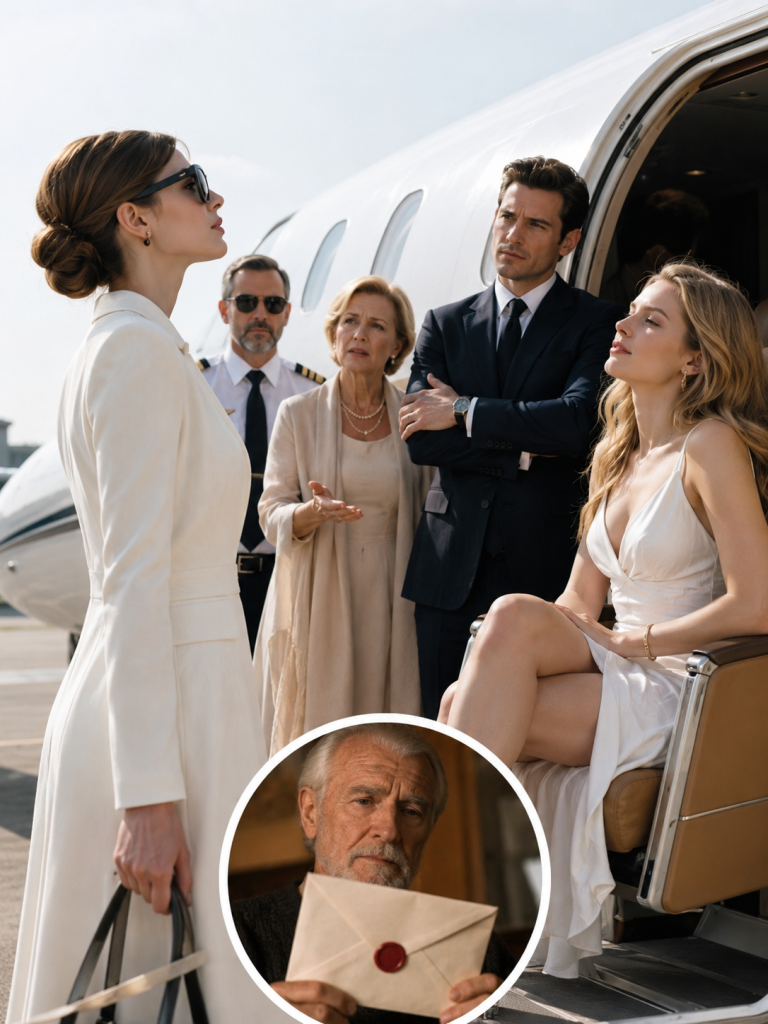
“I also leave instructions,” my father’s recording said, “that the sealed envelope taped beneath each trustee’s chair be opened now.”
People reached under their seats with the stunned obedience of children at a magic show. Dinah handed me mine. My name was on the front in my father’s handwriting, the same ink-stained hand I’d watched sign a thousand contracts across a thousand kitchen-table evenings.
Inside were three things: a letter, a flash drive, and the postnuptial agreement Weston had signed five years earlier, after his DUI outside Beaufort. I’d made myself forget most of that night because I’d spent all of it trying to protect him. My father hadn’t forgotten anything. He’d paid the other driver’s medical bills privately, and in exchange, Weston had signed an agreement waiving any claim to Bellamy assets in the event of infidelity, financial misconduct, or attempted coercion.
I remembered him signing something. I remembered him crying. I remembered forgiving him because I believed marriage meant saving each other from our worst nights.
My father, apparently, believed marriage also required witnesses.
—
Renata tried to leave first. That’s what people do when the stage lights move — they slip toward the nearest exit, clutch in hand, shoulders hunched under all that emerald silk.
She might have made it if my mother’s old research assistant hadn’t stood up from Table Nine.
Her name was Odessa Marsh. She’d worked alongside my mother for eleven years developing the diagnostic imaging patents that eventually funded half the hospital wing behind us, and after my mother died, she’d stayed close to my father the way family stays close, not staff.
Odessa stepped into Renata’s path. “Going somewhere, Miss Cole?”
“I don’t know you.”
“No, honey,” Odessa said. “But I know that pen.”
The room turned.
Renata’s hand went instinctively to the small clutch at her hip, where a slim black-and-gold fountain pen sat clipped to the strap, the one she’d used twenty minutes earlier, in full view of half the ballroom, to sign her name with a flourish on the evening’s largest pledge card — a hundred-thousand-dollar commitment made, everyone had assumed, on the Kincaid Trust’s behalf.
I had noticed the pen earlier, though grief had made my mind slow to place it. Black lacquer. A gold clip. A hairline scratch near the cap that no jeweler had ever managed to buff fully out, because my father had refused to let them try.
His pen. The one he’d used to sign the incorporation papers for Bellamy Diagnostics in a rented office in 1994. The one that was supposed to be locked in the top drawer of his workshop desk, the drawer Dinah and I had sealed the week after the funeral until the estate was settled.
My stomach turned, once.
Weston closed his eyes. That was how I knew.
Odessa pointed. “Walter let me borrow that pen exactly one time, the day we filed the first patent together, because he said it was good luck. He never let anyone else touch it. Not even Grace.” She looked at Renata. “So you’ll forgive me for wondering how it ended up clipped to your bag tonight.”
“For heaven’s sake,” Adelaide said, recovering faster than her son. “Pens look alike. It’s a common style.”
Dinah looked toward the security guard near the terrace doors. “Please ask Miss Cole to remain inside.”
The guard moved. Renata’s composure cracked.
“Weston,” she whispered. Not my name. His. That told the room everything it still needed to know.
Weston said nothing. The man who had pressed her against a stone balustrade in front of two hundred people twenty minutes earlier suddenly found her deeply inconvenient.
I walked toward her. The crowd parted. I stopped close enough to see the tremor in her lip, the smudge of Weston’s mouth still faintly visible at the corner of hers.
“Give it to me,” I said, holding out my hand.
She blinked. “I didn’t steal it. Weston gave it to me. He said it was his.”
“I didn’t ask for your autobiography.”
Someone gasped. Someone else laughed under their breath.
Very slowly, Renata unclipped the pen and set it in my palm. It was warm from her hand. That bothered me more than the kiss had. The kiss had touched my pride. The pen had touched my father.
Dinah stepped beside me and passed me the letter from my envelope. My father’s handwriting filled the first page. My hands stayed steady until I reached the first line.
*My darling girl, if you are reading this in public, forgive me.*
The room blurred for a heartbeat. Then I read on, silently. He had known about Renata. Known about the hotel folios, the transfers, the pressure Weston and Adelaide had been applying for months to fold several Bellamy-controlled assets into a new joint holding company. He’d known I refused to see it, because seeing it would have meant admitting I’d spent years watering a dead tree.
The final paragraph was the one that broke me — not visibly, but underneath, where it counted.
*You may want to protect him, Jo, because you have always believed love means standing between someone and consequence. But sometimes consequence is the only honest thing left in the room.*
I folded the letter. When I lifted my head, Weston was watching me with the desperate calculation of a man deciding whether tears would work. They had before.
He stepped closer. “Jo, I made mistakes.”
The word *mistakes* landed badly. A mistake is forgetting an anniversary. A mistake is burning the roast. A mistake is not orchestrating your wife’s public breakdown during a tribute to her dead father, using his own pen to sign a fraudulent pledge in front of the board that would decide her fitness to lead his foundation.
“You planned a breakdown,” I said.
“No.”
I turned to Micah. “Play it again.”
“No,” Weston snapped.
“I wouldn’t recommend interrupting her,” Dinah said.
Micah played it again. My husband’s recorded voice filled the room a second time — *if she breaks down in front of the board, Dinah won’t be able to argue she’s fit to chair anything* — and the words didn’t sound better for repetition. They sounded cleaner. Like a blade wiped and held to the light.
Adelaide tried once more. “Jo, you’re emotional.”
I laughed. It surprised even me.
“No, Adelaide,” I said. “I’m documented.”
The line traveled through the room like a match dropped into dry leaves. Dinah’s smile was almost invisible. By midnight it would be repeated in restrooms and group chats. By morning it would be captioned under shaky phone footage set to dramatic piano, and strangers on three continents would know my name. But in that moment, it belonged only to me.
—
The rest of the evening should have collapsed. It did not.
That was the part Weston never understood — he’d assumed he was the center of the room because he’d always been the center of his mother’s. But the gala had never been about him, or even really about me. It was about a diagnostic wing where my mother had spent Saturdays holding hands with terrified parents. It was about my father remembering every technician’s name. It was about grief being converted, patiently, into equipment and research and second chances.
So I walked to the podium. People stepped aside. My father’s paused face still filled the screen behind me. For one wild second I wanted to ask him what to do next. Then I remembered he already had.
“My parents believed dignity wasn’t something people could hand you,” I told the room. “They believed it was something you carried in with you, especially when others tried to take everything else.”
No one spoke.
“My father also believed in preparation.”
A soft ripple of laughter moved through the crowd. It saved me, just enough to keep going.
“The Bellamy Family Health Fund will continue exactly as planned tonight. The new imaging fellowship will be fully funded. The emergency housing program for out-of-town families will be doubled. And every pledge made tonight — the real ones — will be matched personally by me, in honor of Walter and Grace Bellamy.”
The applause that followed wasn’t polite. It was relieved. Human. It rolled over me, and for the first time all evening I nearly cried — not because of Weston, but because my parents were still there. Not in the room. In the work.
When it faded, I looked at my husband. “As for my marriage, I won’t discuss private legal matters at a charitable event.” His shoulders eased, certain I was protecting him again. “But I’ll say this. I will never again confuse silence with loyalty. Nor will I confuse cruelty with family.”
I looked at Renata. “And I will never mistake being chosen in secret for being loved.”
She flinched. Not because I hated her most — I didn’t. She wasn’t the architect. She was a room with an unlocked window. Weston was the one who’d climbed in, my father’s pen in his pocket the whole time, ready to hand it to whoever he needed to make look legitimate next.
“Please stay for dessert,” I told the room. A stunned laugh moved through it. “My mother chose the cake herself, years ago. She would haunt me if it went untouched.”
That broke the tension. People laughed. Some cried. Some did both. And then, unbelievably, the gala continued — not normally, nothing about that night would ever be normal again, but plates were served, checks were written, and a thirteen-year-old boy named Desmond came up to show me the scar on his chest and tell me my father used to sneak him model airplane kits during his infusions. His mother cried telling me my mother had quietly covered their rent for five months and made her promise never to say so publicly.
That was when I finally cried. Not loudly. Just a few tears I couldn’t stop before Desmond handed me a napkin and said, “Your dad was cool.”
“Yes,” I said, laughing through it. “He was.”
By ten-thirty, Dinah confirmed the credit lines were frozen. By ten-forty, Weston’s card declined at the valet stand. By eleven, Adelaide’s driver informed her, apologetically, that the account paying his salary had been suspended and he’d been advised not to transport her. I didn’t see that part. Dinah told me later.
I wish I could say I felt nothing. That would make me sound stronger than I was. I felt rage, grief, relief, shame that I hadn’t seen it sooner, then shame for shaming myself. Betrayal is strange that way — the person holding the knife cuts you once, and then your own mind spends months asking why you didn’t dodge faster.
Near the end of the night, Weston found me in the small gallery off the ballroom, moonlight silvering the marsh beyond the window. I saw his reflection behind mine and remembered our wedding day, the way he’d cried walking toward me — real tears, I’d thought then. Maybe they had been. Maybe men like Weston can love you for a season and still plan to ruin you for profit. Maybe that’s the cruelest kind of betrayal — not that everything was fake, but that enough of it was real to make the fake believable.
“Claire—” he started, then caught himself. “Jo. I need you to listen.”
“I listened on the terrace feed.”
“My mother pushed too hard,” he tried.
“Did she steal my father’s pen too?”
His mouth closed.
“I panicked when your father died,” he said finally.
“You panicked?”
“Yes. They were restructuring everything, and Dinah shut me out, and your father never trusted me.”
“My father paid your debts.”
“He humiliated me.”
“No,” I said. “He noticed you.”
That landed. His face hardened for a second before the grief-costume slid back into place. “Jo, please.”
I looked at the man I had defended to friends and accountants and my own instincts for nine years, remembered smoothing his reputation like a tablecloth over rot, remembered Adelaide telling me good wives understand discretion, remembered apologizing for asking questions that had always deserved honest answers.
“I loved you,” I said. His shoulders sagged with relief at the word *loved.* Then I finished the sentence. “But you trained me to survive without you.”
I removed my wedding ring — not dramatically, not dropped into champagne — and set it on the windowsill between us, a small circle of diamonds and wasted years. Then I closed my hand around my father’s pen, still warm in my palm, and walked past him. He didn’t try to stop me this time.
—
The divorce was final the following spring. The footage traveled farther than any of us expected — captions like *she didn’t yell once,* and *when rich men forget microphones exist,* and my personal favorite, *I am documented.* I didn’t give interviews. I let the filings speak where filings needed to.
In private, I let myself fall apart properly. That’s the part the clips never show — not the moment a woman turns to ice, but the mornings after, reaching across an empty bed out of habit and hating herself a little for missing the warmth of someone who’d burned her.
But it did become air again. Slowly. I changed the locks at the Charleston house. I moved my mother’s piano into the sunroom. I turned my father’s workshop office into a real office and kept his leather chair exactly where it had always been. Adelaide left Charleston before the first frost. The Tradd Street house sold to fund a new housing program for out-of-town families — twelve furnished apartments where a plaque in the lobby now reads: *The Grace Bellamy House, for Families Who Need Somewhere Gentle to Land.* It doesn’t mention the Kincaids at all.
Renata cooperated with the financial investigation and eventually moved to Arizona. I hope she found something kinder to build there. Not because she earned my blessing — because the world has enough women mistaking proximity to powerful men for power of their own.
As for Weston, he lost the things he’d actually loved most. Not me. I understand that now. He lost access. He lost rooms that used to open when he smiled. A year later he sent a handwritten letter on thick cream paper, full of apology and pressure and grief he claimed had twisted him into someone unrecognizable. I read it once, then fed it to the fire in my father’s office. It curled slowly, blue at the edges before it went black.
On the second anniversary of my father’s death, we held the gala again — not at Ashgrove Hall, but in the hospital courtyard, no chandeliers, no live screen large enough to ruin a life, just string lights and folding chairs and children chasing each other between tables under a white tent. Desmond came with a shoebox of model planes to show me. The first Bellamy Fellowship recipient spoke with her voice shaking, and mine did too when I hugged her afterward.
I keep my father’s pen in a glass case in the workshop office now, where every visitor sees the small scratch near the cap before they see anything else. I tell them it belonged to the man who built the company from a rented office and a stubborn refusal to give up, and that it signed every good year the company ever had, and that for one strange, ugly night, someone else tried to sign something false with it — and it didn’t take.
Some things aren’t damage.
Some things are proof you survived, pen still in your own hand, ready to write whatever came next.