The Mafia Billionaire Pretended To Be Her Husband At A Wedding — Then Her Ex Learned The Lie Was Becoming Real

The champagne bubbles in my glass looked happier than I felt. They rose in bright golden streams, sparkling beneath the ballroom chandeliers, matching the laughter around me so perfectly it almost felt cruel. Everywhere I looked, people were glowing. Couples spun across the dance floor. Children chased each other between tables. Bridesmaids posed for photographs with their bouquets lifted like trophies. My cousin Julia stood in the center of it all in white lace and impossible joy, her new husband holding her like the whole world had finally become simple.
I sat alone at table nineteen. The singles table. Tucked near the corner of the ballroom, close enough to see everyone, far enough to be forgotten unless someone needed an extra chair.
The white satin tablecloth felt cool beneath my fingers. I kept smoothing it because if my hands stayed busy, maybe they wouldn’t shake. The burgundy bridesmaid dress clung to my skin in the warm room, expensive enough to hurt and cheap enough to look like I’d tried too hard. It had cost me two weeks of tips from the diner — two weeks of smiling at rude customers, refilling coffee, pretending being called “sweetheart” by men twice my age didn’t make me want to disappear.
“You can do this, Nora,” I whispered to myself. It was only a wedding. Only one evening. Only a few hours of watching other people receive the life I thought I was going to have.
Three months ago, I would have been here with Trevor. My fiancé of two years. My almost-husband. The man who once told me he loved how I could make any cheap apartment feel like home. Then one rainy Tuesday, he packed his shirts into a suitcase and said, “I’m not ready for this life, Nora. I need someone more ambitious.”
*More ambitious.* As if love were a résumé. As if my double shifts, unfinished manuscript, student loans, and stubborn hope were evidence of some moral failure.
The diamond ring he’d put on my finger sat in a drawer at home, wrapped in a grocery receipt because I couldn’t bear to look at it and couldn’t bring myself to sell it. Not yet. Some wounds stay because we aren’t ready to learn what freedom is worth.
My phone buzzed in my clutch. Julia: *Where are you? Come dance. There are tons of single guys here.* I stared at the words until they blurred, then slipped the phone away without answering. The last thing I needed was my sweet, well-meaning cousin trying to save me with a groomsman who smelled like craft beer and used the phrase “crypto opportunity” within five minutes of meeting me.
The band shifted into a slow song. Couples moved toward each other like magnets. I took another sip of champagne and winced as it burned my throat.
The worst part wasn’t being alone. I’d been alone before. The worst part was being pitied. *Poor Nora. Poor thing. Trevor left so suddenly. Did you hear he moved to Milan? Did you hear his new girlfriend’s father knows people in fashion? Did you hear? Did you hear?*
Of course I heard. Humiliation has excellent acoustics.
I focused on the chandelier above me, watching fractured light scatter across the walls. For a moment I let the brightness blur until the room became soft and distant. Maybe if I made myself small enough, the night would pass over me.
Then the energy at the entrance shifted. Subtle at first — a pause in conversation, a waiter straightening too quickly, several men near the bar lowering their voices. I looked up.
Three men had entered the ballroom. The first two were clearly security, broad-shouldered and watchful, earpieces barely visible against their collars. But the man between them commanded attention without trying. Tall. Imposing. A tailored black suit that fit him like a threat. No tie. White shirt open at the throat, one button undone in a way that looked careless only because he was powerful enough to make carelessness elegant.
His dark hair was perfectly styled, his jaw sharp enough to cut glass, his face almost too controlled to be called handsome. Not pretty. Not charming. Something colder. Something carved.
But his eyes stopped me. Dark as midnight. Focused. Unhurried. They scanned the room with a precision that made me feel, absurdly, like every person there had become evidence. He moved with the quiet grace of a predator — not the kind of danger that announces itself, the kind that teaches a room to breathe differently.
I forced myself to look down. The last thing I needed was to be captivated by another man. Especially one who looked like trouble with money.
“Nora.” My cousin Priya appeared beside me, wearing the same burgundy dress and somehow making it look expensive instead of desperate. “Why are you hiding back here?”
“I’m not hiding,” I lied. “My heels are trying to murder me.”
Her gaze drifted past me. Her eyes widened. “Oh my God.”
“What?”
She leaned closer. “Do you know who just walked in?”
I pretended not to.
“That’s Nico Andretti,” she whispered. “*The* Nico Andretti.”
The name hit some newspaper-shaped memory. Andretti. Real estate. Nightclubs. Hospitality. Alleged ties. Never convicted. Always mentioned in articles with careful words and anonymous sources. A billionaire with shadows. A businessman people toasted in public and feared in private.
“I think his family owns the venue,” Priya continued. “They say he almost never attends events personally.”
“Lucky us,” I murmured.
“Don’t be sarcastic. That man is basically urban legend in a custom suit.”
Before I could answer, someone called Priya from across the room. She squeezed my shoulder. “Don’t disappear, okay? Promise you’ll dance once.” I nodded. She left.
Peace lasted eleven seconds. Then I saw Camille.
Trevor’s sister crossed the ballroom with purposeful steps, dragging a tall man behind her like a witness she’d hired for my humiliation. Camille had always smiled as if she’d learned kindness from a manual but skipped the empathy chapter. During my engagement she’d tolerated me with elegant little insults. After Trevor left, she looked at me like proof that her family had made a fortunate escape.
“Nora,” she said brightly. “What a surprise to see you here.”
I looked around the ballroom, at the bridal party table, at my matching dress. “I’m a bridesmaid.”
“Oh, that’s right. Julia is your cousin, isn’t she?” Her smile thinned. “Second cousin?”
“First.”
“Of course. This is Marcus. He’s a doctor.” The man beside her offered his hand with an apologetic expression. He looked trapped, which made two of us. I shook it briefly. “Nice to meet you.”
“Trevor was so sorry he couldn’t come,” Camille said. She knew exactly what she was doing. “He’s in Milan now. Did you know his new girlfriend’s family has connections in fashion? They’ve been so helpful with his career.”
Every word was polished and sharpened before she threw it. My throat tightened. I could feel heat climbing up my neck. I should have had a graceful answer. Instead, all I could think about was Trevor in our old kitchen, folding sweaters while I stood frozen by the sink. *I need someone more ambitious.*
“I should check if Julia needs—”
“Actually,” a deep voice said behind me, smooth as aged whiskey, “she’s waiting for me.”
A large hand settled gently on my bare shoulder. Warm. Steady. Possessive enough to shock me, but not painful. I didn’t need to turn to know who it was. The ballroom knew before I did.
The space around us changed. Camille’s mouth parted slightly.
Nico Andretti leaned down, his lips near my ear, his voice low enough for only me. “Pretend I’m your husband tonight.”
My heart stopped. Before I could process the words, he straightened and extended his hand to Camille. “Nico Andretti,” he said pleasantly. “Nora’s husband.”
The lie hung there. Outrageous. Impossible. Insane. I should have corrected him immediately. Instead, I sat frozen under the heat of his hand while Camille’s expression shifted from smug satisfaction to stunned disbelief.
“Husband?” she repeated.
Nico’s smile did not reach his eyes. “Recent,” he said. “Private. We wanted something meaningful.”
*We.* My brain short-circuited on that word.
Camille looked at me, then at him. “But Trevor said—”
“Perhaps Trevor doesn’t know everything about Nora’s life,” Nico interrupted smoothly. His hand moved to the small of my back as he pulled out my chair. “If you’ll excuse us, my wife promised me a dance.”
My legs worked because his hand guided me. Not forcefully. Effortlessly. As if he’d already calculated the exact pressure needed to keep me upright without making me feel carried.
When we reached the edge of the dance floor, I finally found my voice. “What are you doing?”
“Rescuing you, it seems.”
“From a wedding?”
“From a woman trying to carve you open with a butter knife smile.”
Despite everything, a laugh almost escaped me. “You don’t know me.”
“No,” he said. “But I know humiliation when I see it.”
The band moved into a slow, haunting melody. Nico turned to face me and offered his hand. “We should make this convincing.”
“This is insane.”
“Yes.”
“You admit that?”
“I rarely waste time denying obvious facts.”
I took his hand. That was my first mistake. Or maybe my first honest choice of the evening.
He pulled me gently into his arms, one hand settling at my waist, the other holding mine. The contact sent a jolt through me, sharp and clean, like touching a live wire. Up close, he was worse — the faint scar near his eyebrow, the impossible steadiness of his gaze, the smell of sandalwood and something darker, the sense that he could turn dangerous without changing his voice.
“I don’t even know you,” I said.
“That is the beauty of pretense, isn’t it?” His lips curved. “For one night, we can be whoever we want.”
“I don’t want to be married to a stranger.”
“Not even a very convincing one?”
I looked at him despite myself. He smiled then. Not the cold smile he’d given Camille. A real one, briefly warming his severe face. It was unfair. The man was already impossible enough.
“Why are you really helping me?” I asked.
He guided me across the floor with surprising grace. “Because I dislike people who prey on vulnerability.”
“That sounds noble.”
“It isn’t,” he said. “It is personal preference.”
“What do you get out of it?”
His gaze dropped to my mouth for half a second, then returned to my eyes. “The look on her face was a satisfying beginning.”
I should have felt used. Instead, for the first time all night, I felt seen. Not pitied. Not handled. Seen.
Across the room, Camille stood with her phone raised. My stomach tightened. “She’s taking pictures.”
“Let her.”
“If Trevor sees—”
“Then he will learn you are not waiting in a corner for him to regret his stupidity.”
I stared at him. “My ex was a fool,” Nico said.
“You don’t know that.”
“I know enough.”
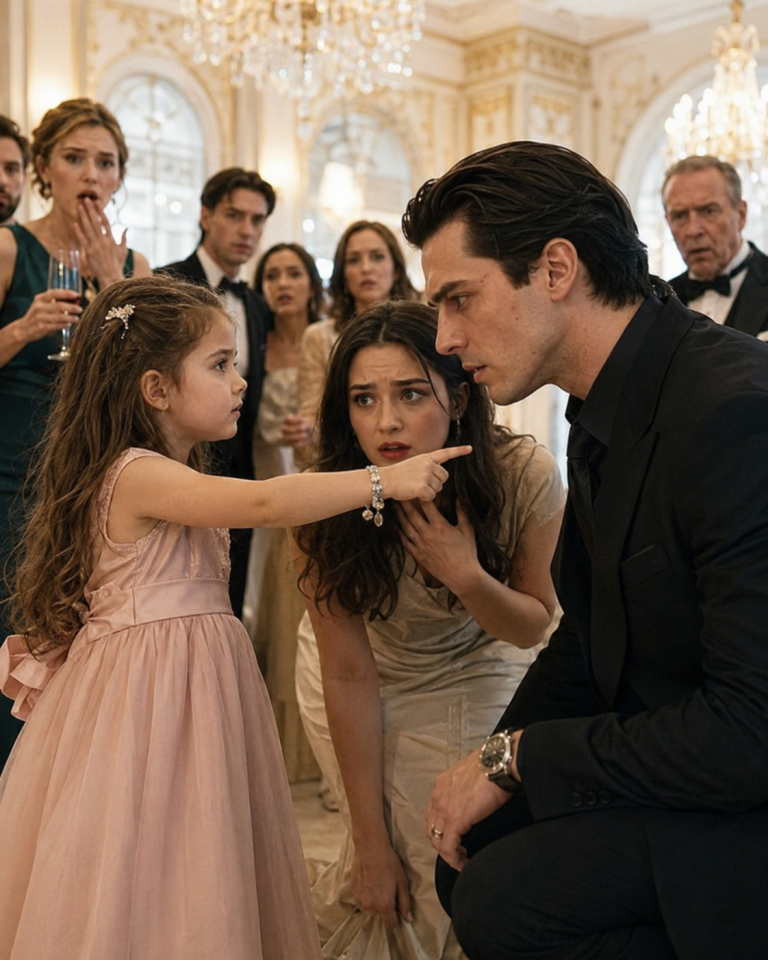
Before I could answer, he spun me elegantly, then dipped me low in front of the entire ballroom. Gasps and laughter rippled around us. His face hovered inches from mine.
“Give her something worth photographing,” he murmured. His eyes asked a question his words did not.
I could refuse. I could pull back. I could end the madness. Instead, I nodded. Barely.
His mouth met mine. The kiss was brief. Gentle. Devastating. Not a staged kiss, not entirely. Not enough for safety.
When he set me upright, the room seemed too bright. My heart was beating too fast. Nico glanced over my shoulder, satisfaction flickering across his face.
“Your photographer looks furious.”
“I should go.”
“That would be wise.”
“Then why are you looking at me like you don’t want me to?”
“Because I rarely want the wise thing.”
That should have been warning enough. It was not.
He gave me his card before he left. Cream stock. Black lettering. *Nico Andretti.* A number. No title. No company. A man who needed no explanation because everyone else was expected to know.
“When you change your mind, call me,” he said.
“I won’t.”
He lifted my hand to his lips and kissed my knuckles. “We’ll see.”
—
The next morning, I went to work at the diner and told myself the wedding had been temporary madness. A strange story. A private rescue. A kiss that meant nothing.
By noon, two of Nico’s men were sitting in booth seven. By three, a black Bentley waited across the street. The back window lowered.
Nico looked out at me like he had every right to be there. “Get in.”
“I don’t remember agreeing to see you again.”
“Yet here I am.”
“That is not how consent works.”
His mouth curved. “Fifteen minutes. If you still want me gone after that, I disappear.”
I should have kept walking. I crossed the street. The Bentley smelled of leather and expensive trouble.
“Your men came to my diner.”
“Salvo and Teo said the coffee was excellent.”
“They were watching me.”
“They were ensuring our little performance did not create problems.”
“Performance?”
He turned toward me. “Did Trevor contact you?”
I looked away. “He texted at two in the morning demanding to know who you were. I blocked him.”
Approval warmed his expression. “Good.”
The car moved through streets that became cleaner, quieter, richer. We stopped at a modern mansion hidden behind trees and iron gates. Glass, stone, silence. The kind of house that didn’t announce wealth because it assumed wealth was already understood.
“This is not fifteen minutes,” I said.
“This is my home.”
“I didn’t agree to come to your home.”
“You agreed to fifteen minutes. If you want to leave after them, my driver will take you anywhere.”
Curiosity is a dangerous thing when loneliness has weakened your survival instincts. I went inside.
His house was stunning and impersonal. Beautiful surfaces, dark wood, gray furniture, no photographs in the main hall, no shoes by the door, no little signs of ordinary living. A mansion that looked more curated than lived in.
In the kitchen, he poured wine at four in the afternoon. “Questionable decision,” I muttered.
“Unwise, perhaps. Not questionable.”
“Is there a difference?”
“Intent.”
I took the glass. “What exactly are your intentions, Mr. Andretti?”
He leaned against the counter and studied me with those dark, impossible eyes. “I want to know you, Nora Bennett. The real you. Not the woman playing small to survive heartbreak.”
Cold moved through me. “You investigated me.”
“Of course.”
“Normal people talk to someone before invading their life.”
“I’ve never claimed to be normal.”
“You know my age? My job? My ex?”
“Twenty-seven. Literature degree. Graduated with honors. Waitress because bills are less romantic than manuscripts. No living parents. One failed engagement to a man who confused ambition with status. Eyes that light up when challenged, just like now.”
I should have left. Instead, I whispered, “That is terrifying.”
“Yes,” he said.
“You admit that too?”
“I find honesty efficient.”
“Why me?” That was the question I’d been afraid to ask since the wedding.
He set down his wine. “Because you were sitting at that table trying so hard to look unbroken. And failing beautifully.”
My throat tightened. “I am not some mystery.”
“No.”
“I’m not special.”
“That is where you are wrong.” He tucked a strand of hair behind my ear with startling gentleness. “Most people are content to exist. You are not. You are waiting to live, and you resent yourself for waiting.”
His words found places Trevor had bruised and pressed carefully until I could feel them again. Before Trevor, I’d had dreams. A novel. Travel. Teaching maybe. A life made of books, cities, conversations, and courage. Then rent and disappointment and someone else’s expectations had taught me to shrink.
“And you think you’re the one to help me live?”
“No,” Nico said. “I think I am the one who sees you. The living is yours to do.”
Fifteen minutes became forty-three. He did not touch me again. He did not ask for more than dinner. That, somehow, was what made me say yes.
—
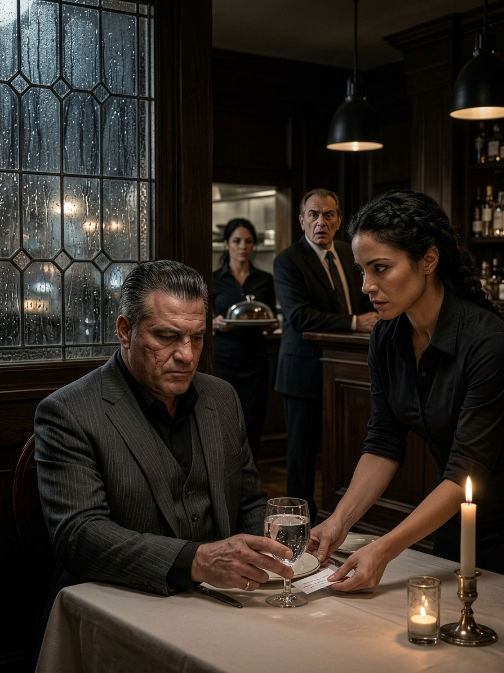
The next night he took me to Lucciola, the most exclusive Italian restaurant in the city. Private dining room. Candlelight. Food from his grandmother’s recipes. Conversation that did not stay politely shallow.
He asked why I loved literature. I told him words had power. That books made loneliness bearable. That I wanted to write something that mattered.
“What stopped you?”
“Reality.”
“Trevor?”
I didn’t answer. He understood. “Men who truly love do not stifle passion,” Nico said, jaw tight. “They fuel it.”
No one had ever said that to me before. Not Trevor. Not my family. Not even my professors, who liked my writing but reminded me gently that publishing was difficult, bills were real, dreams required backup plans. Nico listened as if my abandoned manuscript mattered. As if I mattered.
After dinner, we walked beneath city lights while his security followed at a distance. I asked if he was tired of being watched. “Power creates enemies,” he said. “One adapts.”
“That sounds exhausting.”
“It is.”
For the first time, I saw it — the weariness beneath the control, the constant calculation, the loneliness that comes when everyone either fears you, needs you, or wants something from you.
“Then why not walk away?” I asked. “You have enough money.”
He stopped. “Would you walk away from something your father built with sacrifice?”
The question struck deep. My father had been a literature professor. He’d carried first editions like holy objects and believed a sentence could rescue a person if it found them at the right time. When he died, his books were the only inheritance I truly wanted.
“No,” I said softly. “I wouldn’t.”
Nico’s fingers traced my cheek. “You understand legacy more than you realize.”
The moment stretched. Too intimate. Too fast. Then his phone rang. His expression hardened as he answered in Italian. When he returned, everything had changed.
“I need to handle something.”
The soft man from dinner vanished. The boss remained. A dismissal, even gently delivered, can still cut.
“Of course,” I said, stepping back. “Thank you for dinner.”
He caught my arm. “Nora. This is not a dismissal.”
“You don’t owe me explanations.”
“No,” he said, eyes darkening. “But I want to give them.”
“Then why aren’t you?”
“Because some truths become dangerous when spoken in the open.”
That should have ended it. Instead, he pulled me to him and kissed me with none of the gentleness from the wedding. This kiss was real. Fierce. A statement. A warning. A promise he had no business making.
When he released me, we were both breathing hard. “That was not just dinner,” he said. “And this is not over.”
He was right. It was not.
—
The days that followed felt like stepping onto a road that disappeared behind me after each step. He sent a key to his guest house. A letter. A laptop for my novel. *The world is waiting for your voice.*
I stared at that note in my tiny apartment, with the dripping faucet and unpaid bills and secondhand furniture, and cried harder than I had over Trevor. Not because of money. Because someone had looked at my buried dream and treated it like it deserved oxygen.
I called Nico. “One month,” I said. “No promises beyond that.”
“No promises,” he agreed, though I could hear his smile.
The guest house on his estate was more beautiful than any place I had ever stayed. Stone and glass. Garden views. A study upstairs with a desk facing the morning light. On the desk sat a restored vintage typewriter.
“It was my father’s,” Nico said from the doorway. “He believed important words deserved intention.”
I touched the keys. “This is too much.”
“It has been waiting for purpose. Perhaps you are it.”
I moved in the next evening. Not as his mistress. Not as his possession. That mattered. I drove myself through the gates because I needed the movement to be mine. Nico waited outside and did not touch my bags unless I asked. That mattered too.
—
The month began with writing. Mornings at the typewriter. Coffee beside me. Pages accumulating. A woman in my novel survived betrayal, rebuilt herself, and faced a dangerous man without letting him devour her.
“It’s you,” Nico said one evening when I told him the plot.
“Parts of me.”
“Does she fall for the dangerous man?”
“She’s smarter than that.”
His smile held sadness. “Her loss.”
Evenings belonged to Nico. Dinner in the main house. Books by the fire. Conversations about family, power, grief, ambition, loyalty, and the terrifying difference between protection and control. He told me his mother believed power without purpose was only violence. I told him my father believed stories could make people less alone. Somewhere between those beliefs, we found a language.
He never forced more. That was what made surrender dangerous. Restraint can be more seductive than pressure when you have spent years being pushed.
Two weeks in, I asked him to stay. He looked at me for a long moment. “If we cross that line, Nora, there is no going back for me.”
“I know.”
“I mean it.”
“So do I.”
That night, he stayed. Not because he conquered me. Because I chose him.
—
By morning, I knew the world outside our little sanctuary hadn’t gone quiet simply because we had. Nico’s phone rang before dawn. His body went tense. He dressed with efficient speed, kissing me once before leaving.
“Lock the doors.”
The instruction turned romance back into reality.
The next day he brought me to a room I had never seen before. Maps. Security footage. Men who fell silent when I entered. Nico dismissed them and took my hands.
“There was an attack on three of my properties.”
My stomach dropped. “Because of me?”
“Because Enzo Bellucci believes weakness should be tested. He has seen us together. He thinks you are mine.”
*Mine.* The word should have thrilled me. It frightened me. “What does that mean?”
“It means I need to move you somewhere safe. Switzerland. Remote. Secure.”
“No.”
His eyes hardened. “This is not negotiable.”
“My life is.”
“Nora—”
“No. You do not get to place me in a beautiful cage and call it love.”
His jaw tightened. “You do not understand what these men are capable of.”
“Then help me understand. Don’t decide for me.”
For a second, I saw the war inside him — the man who wanted to protect me at any cost, and the man trying to learn that cost mattered when the person being protected had a voice.
So he showed me. Enzo Bellucci. Young. Ambitious. Dangerous because he wanted to prove his father had been too soft. Surveillance photos of me entering the diner. Me walking to my car. Me laughing with Deb outside the staff entrance. My blood went cold.
“They’ve been watching me.”
“Yes.”
Fear wanted Switzerland then. Fear wanted walls. Fear wanted distance. But love, or whatever this fierce unfinished thing between us had become, wanted something braver.
“Then change the equation,” I said.
His eyes narrowed. “How?”
“Public breakup. Make it look like I mean nothing to you. I go back to my apartment, my job, my normal life. We argue somewhere public. Loudly. Let gossip do its job.”
“No.”
“It removes me as leverage.”
“It puts you in the open.”
“It makes me boring.”
“You will never be boring.”
“Nico.”
His anger softened, unwillingly. “You would do this? Pretend to leave me?”
“If the alternative is exile, yes.”
His hand came up, cupping my face. “I never expected you.”
“Good,” I whispered. “Expectations make people lazy.”
—
The staged breakup was almost convincing because it hurt. I returned to my apartment. Went back to the diner. Smiled when customers asked where the rich man had gone.
At an upscale restaurant where Enzo’s associates liked to drink and pretend they were legitimate, I threw red wine in Nico’s face and shouted loud enough for three tables to hear. “You don’t own me.”
Nico stood there, wine dripping from his jaw, eyes dark and unreadable. “No,” he said softly, too low for anyone but me. “I don’t.” Then louder, colder, for the room: “Enjoy your ordinary life, Nora.”
I stormed out crying real tears. The gossip spread by morning.
In private, we met in secret apartments, closed bookstores, hotel rooms registered under names I never asked about, and once in the back office of the diner after closing while Deb pretended not to notice the black Bentley parked three blocks away.
The stolen hours were terrible and precious. I kept writing. Nico kept negotiating. Not the bloody war I had feared. Something quieter. More surgical. Alliances. Concessions. Pressure. Respect offered where insult would have created bloodshed. A peace summit arranged through an elder both families trusted.
For two months, I lived between two worlds. The public life where Nico Andretti was a mistake I had escaped. The private one where I fell asleep against his chest and listened to him breathe like a man who trusted only in darkness.
—
One afternoon, Trevor walked into the diner. I had imagined this moment a hundred times. In every version, I was either dazzlingly indifferent or perfectly cruel. Reality was less elegant.
He looked tired. Still handsome. Still familiar. Still not enough.
“I saw the photos,” he said.
“Which ones? Camille seemed very productive.”
His face tightened. “Nora, I came to apologize.”
“Then apologize.”
He blinked. He’d expected more softness. Maybe tears. Maybe the old version of me who managed his feelings before her own.
“I shouldn’t have left the way I did.”
“No.”
“And what I said about ambition…” He looked around the diner, as if noticing for the first time that this was where I’d been rebuilding myself. “It was unfair.”
“It was cruel.”
His eyes dropped. “Yes.”
A silence stretched. Then he said, “Are you really involved with Nico Andretti?”
“No.” The lie came easily now.
Trevor looked relieved. That annoyed me. “Good. Because a man like that—”
“Don’t.”
He looked up. “You don’t know what I was going to say.”
“Yes, I do. And you lost the right to warn me about men when you left me for one with better connections.”
That landed. Trevor swallowed. “I made a mistake.”
“You made a choice.”
“I miss you.”
The sentence had once been my dream. Now it only made me tired. “I don’t miss who I was with you.”
His face changed. That was the justice. Not screaming. Not revenge. Not Nico appearing behind me like a threat. Just the quiet truth that Trevor no longer had access to the version of me who would shrink to keep him comfortable.
“I hope Milan works out,” I said. Then I walked away.
—
Two months after the staged breakup, I spent an entire day pacing my apartment while Nico sat across a table from Enzo Bellucci. No messages. No updates. Just waiting.
When my door opened near midnight, Nico stood there in a dark coat, exhaustion carved into his face, satisfaction burning beneath it. “It’s done,” he said.
I crossed the room before he finished. He caught me against him. “Enzo accepted the terms. The war is over before it truly began.”
My knees weakened with relief. “No Switzerland?”
“No Switzerland.”
“No hiding?”
“No hiding.”
“No more pretending to hate you in restaurants?”
A faint smile. “I found that part unpleasant.”
“You looked convincing.”
“I have practice looking cold when I am not.”
I pulled back and touched his face. “You chose peace.”
“I chose strategy.”
“Nico.”
He exhaled. Then admitted, “I chose us.”
—
The month became three. The manuscript became a full draft. Nico read every page. Not because I needed his approval. Because he wanted to know the world inside me.
He did not buy me a publisher. That was my condition. No shortcuts. No favors. No editor who said yes because Nico Andretti made one phone call. Instead, he sat with me while I sent query letters. He brought coffee when rejection came. He opened champagne when one agent asked for the full manuscript. And when the offer finally arrived, he did not say, *I told you so.* He said, “Your father would be proud.”
That was when I cried. Not beautifully. Not softly. I cried like someone who had held her breath for years and finally remembered air.
Trevor never returned. Camille stopped speaking my name after Nico bought the building where her husband’s medical group leased office space, then politely raised their rent to market rate and sent flowers to their receptionist with a note thanking them for their timely payments. I told him that was petty. He said it was legal. Deb called it romantic. I called it unnecessary. But I smiled anyway.
—
The night my agent sold my novel, Nico took me back to the ballroom where we met. No wedding. No Camille. No singles table. Just a private dinner in the empty room, chandeliers glowing above us, music playing softly from hidden speakers.
Table nineteen had been moved to the center of the dance floor. “For symmetry,” he said.
“For drama,” I corrected.
“That too.”
On the table sat a copy of my manuscript, bound in leather. My name embossed on the cover. Nora Bennett. Not Trevor’s almost-wife. Not Nico’s rescued woman. Mine. My name. My work. My life.
Nico stood beside me. “I owe you an apology.”
“For which terrifying thing specifically?”
“For pretending to be your husband before asking your name properly.”
I laughed. “That was bold.”
“It was arrogant.”
“Both can be true.”
He took my hand. “Then let me ask properly now.”
The room seemed to stop. My pulse moved into my throat. Nico Andretti, the most feared man in the city, the man who could command rooms and negotiate peace with men who dreamed in knives, lowered himself to one knee in front of the table where I had once sat alone and humiliated.
No audience. No spectacle. Just us. And the chandelier light.
“I do not want to own you,” he said. “I do not want to cage you, buy you, rescue you into silence, or turn your dreams into decorations in my house. I want to stand beside you while you become exactly who you were always meant to be. I want your fire. Your stubbornness. Your words. Your refusal to let me become less than the man you believe I can be.”
His voice roughened. “I pretended to be your husband once to protect you from cruelty. Now I am asking if you would let me become your husband for real — not to protect you from life, but to live it with you.”
The ring was simple. Elegant. A dark sapphire surrounded by small diamonds. Not the biggest ring he could have bought. The right one.
I thought of Trevor’s ring in my drawer, a symbol of a promise that had asked me to become smaller. I thought of Nico’s key to the guest house, a symbol of a door I chose to open. I thought of the woman I had been at table nineteen. Then the woman standing there now.
“I have conditions,” I said.
Nico’s mouth curved. “Of course you do.”
“I keep writing.”
“Yes.”
“I keep my name.”
“Yes.”
“No Switzerland unless we’re on vacation.”
A real laugh broke from him. “Yes.”
“And if you ever make decisions about my safety without talking to me, I throw wine in your face again.”
His eyes warmed. “Fair.”
I looked down at him. “Yes,” I whispered. “I’ll marry you.”
For once, Nico Andretti looked less like a king than a man relieved to be chosen.
—
People later told the story as if it began with a mafia billionaire pretending to be my husband at a wedding. That was true. But not complete.
It began with a woman at a singles table, trying not to cry into champagne. It began with a man powerful enough to scare a ballroom choosing to use that power against humiliation instead of feeding it. It began with a lie.
But the lie did not become love because it was dramatic. It became love because of what came after. Dinner. Questions. Boundaries. Arguments. A guest house with a desk facing the garden. A typewriter that belonged to a father who believed words mattered. A dangerous man learning that protection without choice is control. A wounded woman learning that accepting help does not make her weak. A staged breakup that hurt because the feelings were real. A war that ended at a table instead of in the street. A manuscript finished because someone finally asked what I wanted to say.
That is what changed me. Not luxury. Not the Bentley. Not the mansion. Not the ring. The fact that Nico Andretti saw me when I was trying to disappear. And then kept seeing me even when I became inconvenient, stubborn, frightened, ambitious, angry, and impossible to place neatly inside his world.
Trevor had wanted someone more ambitious. In the end, he was right. I was too ambitious to remain with a man who only loved the version of me that made him feel safe. I wanted a life. A voice. A love that did not require me to fold myself into something smaller.
Nico was dangerous. He never pretended otherwise. But the most important thing about him was not the fear other people felt when he entered a room. It was the care he took when entering mine.
Years later, when readers asked what inspired my first novel, I never told them everything. I did not mention Enzo Bellucci. Or the secret meetings. Or the photographs taken from across streets. Or the way Nico’s voice changed when he was one breath away from war.
I told them the emotional truth. That once, I sat alone at a wedding believing I had been abandoned because I was not enough. Then a stranger put his hand on my shoulder and gave me a role to play. Wife. Beloved. Chosen.
At first, I was pretending. But the longer I stood beside him, the more I realized something.
The lie was not that I deserved to be loved that way.
The lie was that I ever deserved less.