The Cowboy Gave His New Bride One Cold Order—Then Broke Every Rule She Thought He Lived By

PART 2
“Your father owed money,” Caleb said. “A lot of it, to serious people back east. He reached out to me because we’d done business years before. He was desperate. Offered collateral to secure a loan.”
“What collateral?”
Caleb looked her straight in the eye. “You.”
The word hung in the air like smoke. Lillian grabbed the document with shaking hands — her name, her father’s signature, Caleb Vance listed as the contracted party. “In exchange for settling his debts, you’d marry me. Binding. No expiration.”
“This is insane,” she breathed. “You can’t sell a person.”
“It’s not slavery. It’s a marriage contract. Legal in the territories under specific circumstances. Your father presented you as willing.” He explained the rest, flat and factual: Thomas had died before finalizing the transfer, the debt got sold to a collection agency, they wanted it enforced or wanted their money — twelve thousand dollars, more than Lillian would see in her lifetime.
“There’s a legal path,” Caleb said. “We fulfill the contract, marry, make it official. After a period, we file for annulment or divorce. You’d be free.”
“You’re saying I should marry you?”
“I’m saying it’s the option that doesn’t end with both of us ruined. I’m not asking you to love me. This solves both our problems.”
She walked out into the brutal sunshine before he could say more, and spent the week wrestling with it — with Sarah from the stable telling her plainly that Caleb wasn’t a bad man, just cold and broken and honest, and with Mrs. Chen snapping that love was a luxury, that marriage was a contract you built a life around whether the love came first or not. On the sixth day, Lillian walked back into the sheriff’s office before courage could fail her.
“I’ll do it,” she said. “One condition. Six months, then we file for divorce. I want that in writing.”
Caleb studied her, then pulled out a fresh sheet of paper and started writing. “Six months. After that, you’re free to go wherever you want. Fair?”
It wasn’t fair. None of this was fair. “Fair,” she said anyway, and they shook on it.
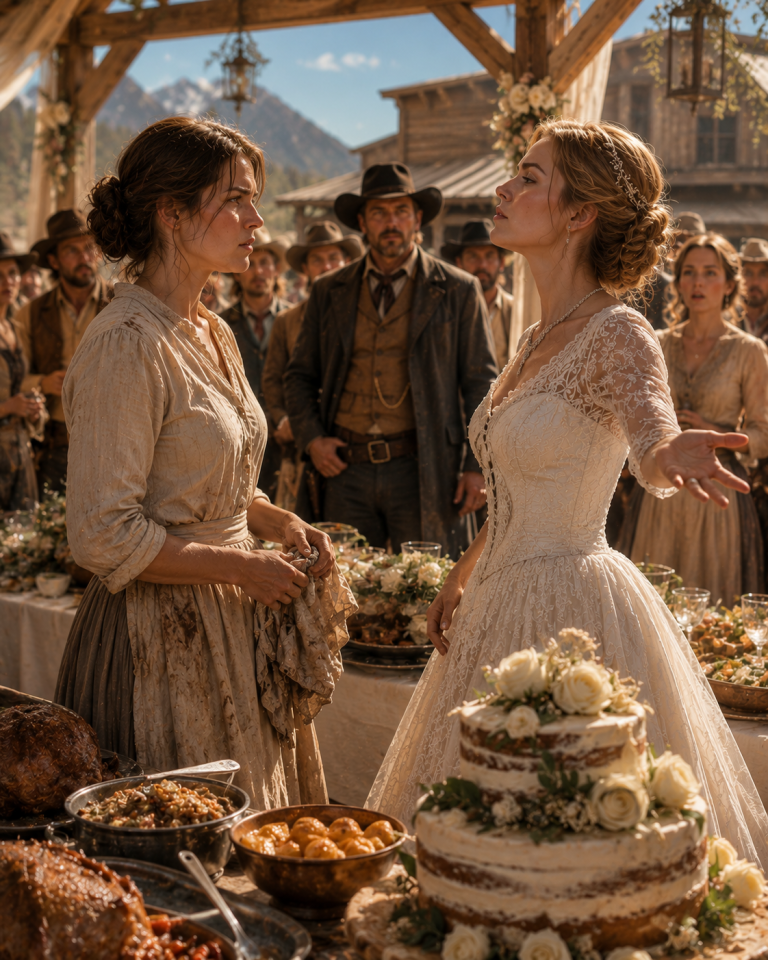
The wedding took four minutes in Judge Wilson’s cramped office. No music, no kiss, no pretense that it was anything but a legal maneuver. Caleb’s house sat at the edge of town — sparse, functional, built by a man who hadn’t expected company. “Your room’s upstairs,” he said. “There’s a lock if you want it.” Weeks passed in careful, distant avoidance, until Lillian, restless and tired of hiding, proposed starting a school — Sarah’s idea, really, since half the town couldn’t read. Caleb helped her build desks from scrap lumber, and slowly, without either of them quite naming it, they became something like partners.
Then, months into the arrangement, Caleb came home with news that upended everything again: the debt collector’s agency had confirmed an anonymous payment, made two weeks earlier from a bank in San Francisco. The contract was fulfilled. Legally, she was free to file for divorce immediately — no waiting required.
“Free,” Caleb said, carefully neutral. “We can file anytime.”
Before Lillian could fully sit with that impossible word, another visitor arrived at their door — a lawyer from San Francisco, holding papers that would upend her life a second time. Her father, it turned out, hadn’t only left debts. He’d left an inheritance too — one that would force her to decide, once and for all, what she actually wanted.