She Was Hired to Cook His Wedding Feast — Then the Groom Walked Away From the Bride for Her

—
PART 1
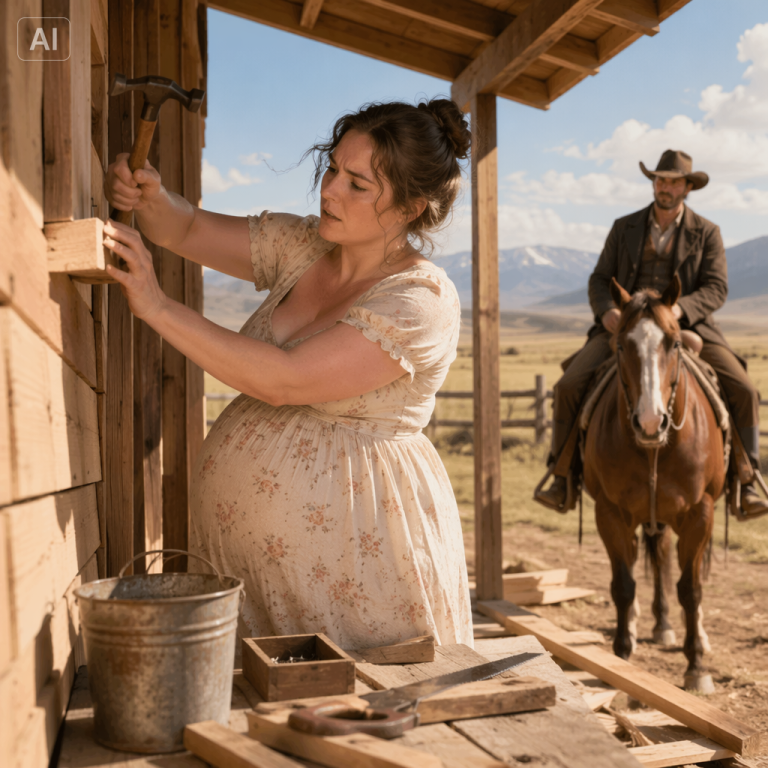
The morning Clara Hawthorne buried her husband, it rained hard enough that the preacher had to shout over it. She didn’t cry. Not because she wasn’t grieving, but because she was doing math in her head — thirty-one dollars in the coffee tin, a roof that needed fixing, a horse old enough that one bad winter might take him. Thomas Hawthorne had been a good, quiet man who’d loved her the undemonstrating way of frontier men, through mended fences and full wood piles rather than words. The fever took him in nine days. She turned from the grave before the dirt hit the coffin. There was bread that needed tending.
Three years of seven-day weeks followed — rising before dawn, learning by repetition and disaster how to turn flour and salt into something people would pay for. By the third winter, Clara Hawthorne had a modest reputation in Red Creek Crossing. If you wanted bread with a crust that cracked right, you found her. It was enough to keep the roof fixed. Barely.
The notice on the trading post board stopped her cold on a Tuesday in September. *Mercer Ranch* needed a head preparer for a formal wedding feast — two hundred guests, a three-tiered cake, seven days of preparation, compensation upon completion. The number at the bottom was three times her best month. She copied it onto her wrist in pencil and walked home thinking about the roof, not about Garrett Mercer specifically. That was what sensible women in her position did.
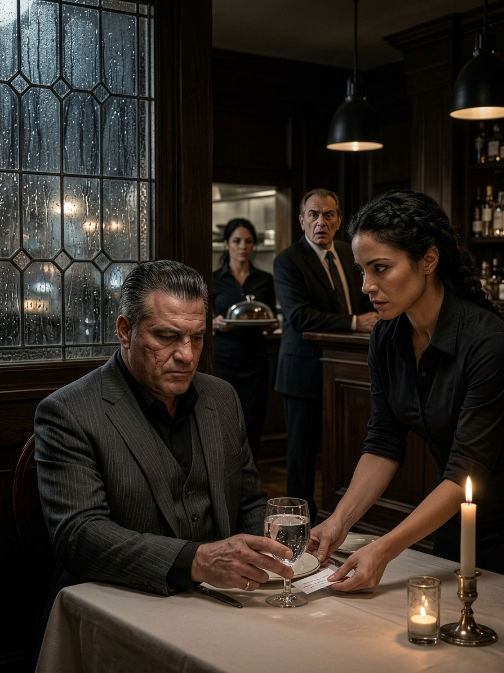
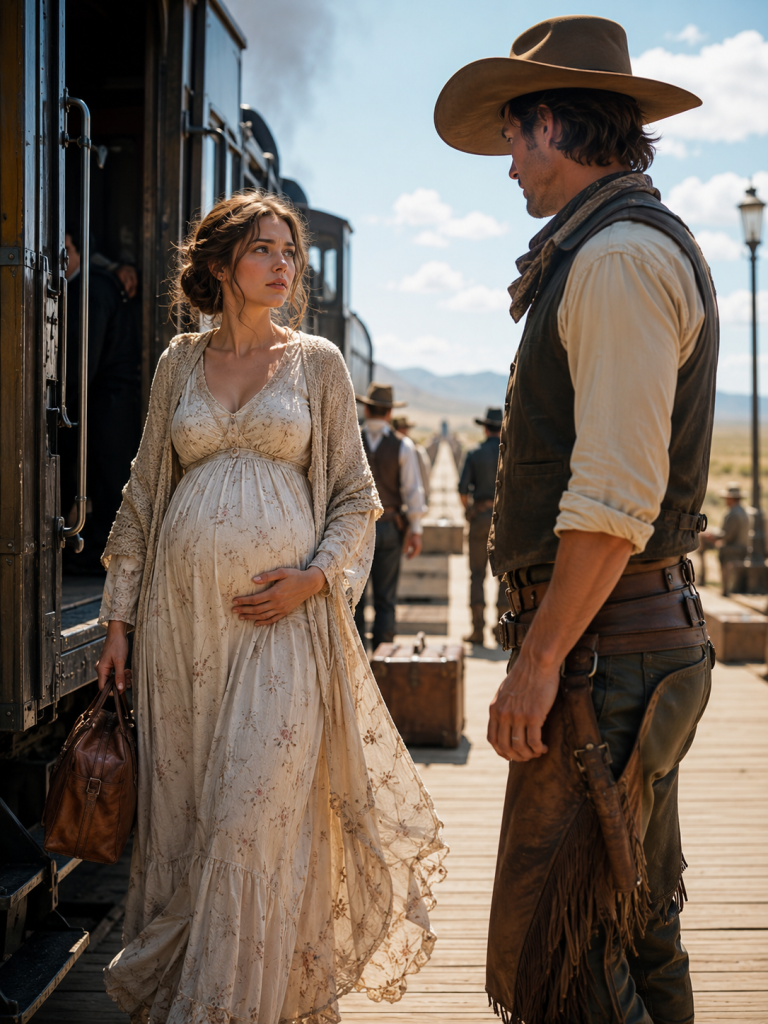
Garrett Mercer was tall, plainly built in the way of men who’d done actual work before they could pay others to do it, tired around the eyes in a way that had nothing to do with sleep. “I know why you’re here,” he said, before she’d finished sitting down. “I’ve heard of your work.” Then, flatly, like a man delivering something he found distasteful but was committed to anyway: “There’s a condition. My fiancée, Miss Whitmore, would prefer the cooking arrangements remain private. You’d use the back entrance. Stay out of the main rooms during events.”
Clara kept her face still. “I’ll need full access to the kitchen from five in the morning,” she said. “My quantities approved in advance, no substitutions after the menu’s planned, and I need it in writing.”
He blinked, clearly not expecting that. “Done.” Something shifted in his expression. “You’re not going to argue about the other part?”
“I’m not happy about the other part,” she said plainly. “But I need the work. Those are different things.”
“I can respect that distinction,” he said.
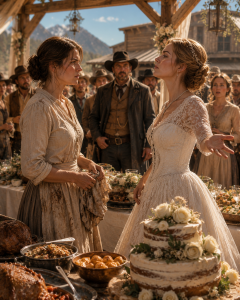
She had five days to prepare a menu for two hundred people, including a three-tier cake at a scale she’d never attempted — one meant to announce something about the people being married, not just feed them. She drew it, erased it, drew it again, working out the internal dowelling by memory of things she’d only read about.
Monday morning she arrived in the dark. The Mercer kitchen was enormous, better equipped than anything she’d worked in. Rosalie, the ranch’s permanent housekeeper, watched her organized rows of measured ingredients with grudging approval. “You know what you’re doing,” she said — about as warm as Rosalie got.
Garrett started appearing before sunrise on the second morning, standing awkwardly with an empty coffee cup like he wasn’t sure whose kitchen it was. “You always start this early?” he asked once, from the stool she’d assigned him on the far side of the room.
“If I want it done right. Bread rushed tastes rushed. People can’t always say why, but they can tell.”
“You think about it a lot. The food.”
“It’s my work. Doesn’t most work matter, if you’re the one doing it?”
He was quiet a moment. “You’d think so,” he said, heavier than he probably meant it to come out.
On the third day, Eleanor Whitmore arrived — genuinely, structurally beautiful, the kind of woman who’d grown up knowing exactly how it worked. She swept the kitchen with a quick, assessing look and settled on Clara’s apron, faded, small flowers embroidered along the hem, her mother’s.
“Interesting apron,” Eleanor said. “Very — rustic.” A beat. “Well, I suppose sentiment has its place.” She mentioned wanting to add a French course at this late stage; Clara told her the menu was set, that changing it now would compromise everything else. “Let’s see what Garrett says,” Eleanor said, smiling in a way that didn’t reach her eyes.
“That’s your right,” Clara said, even and unbothered, and something about her tone seemed to catch Eleanor slightly off guard before she left.
Rosalie appeared from the cold room. “Menu’s not changing,” she said.
“Menu’s not changing,” Clara agreed, and went back to the stock, the wedding six days away, and the whole of the hardest week of her working life still ahead of her.
—