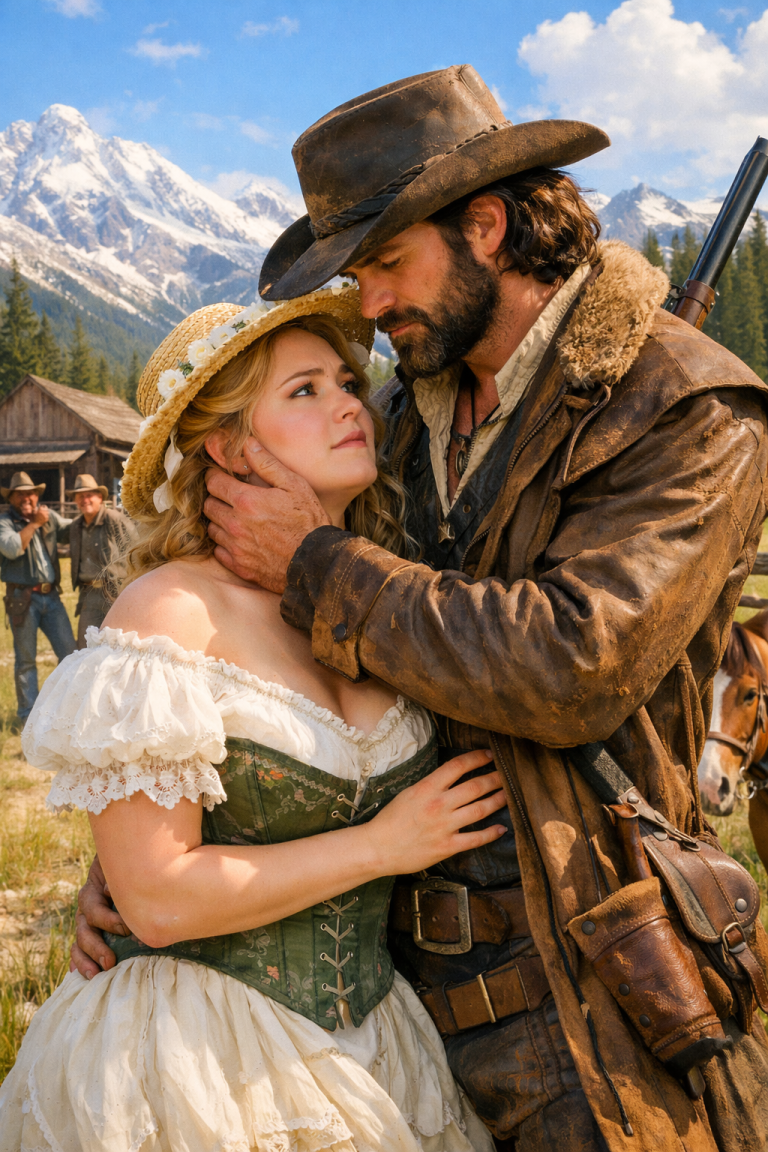
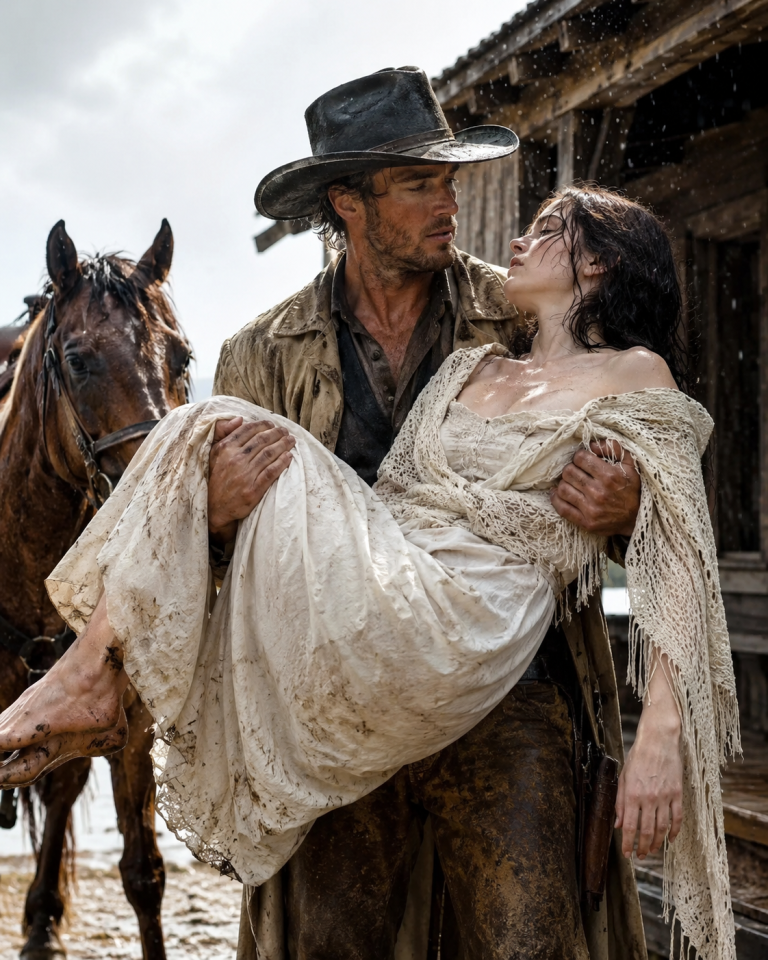
She Married the Rancher Everyone Called Broke — Then One Forgotten Ledger Destroyed a 15-Year Fraud

Later, standing at the edge of the gathering watching the light go amber over the mountains — a ranch that six months earlier had been a courtroom battlefield now just a place where people ate cake and argued about fence posts — Norah thought about everything that had led here: the frozen train platform, the cold house full of fifteen years of lies, the courthouse clerk who’d gone pale at Hail’s name, Pritchard’s shaking hands and steady voice, Judge Carver reading the complaint with the expression of a man who’d been waiting for exactly this. She thought about all the small, unheroic choices that had added up to something enormous — Miss Graves running the printing press without being asked twice, Marshal Cross making himself quietly visible near the right places, Henderson and Pritchard traveling to testify when staying silent would have been so much safer, the Lindfists showing up to help with a fence line without waiting to be invited. None of it had felt heroic in the moment. It had probably just felt like the next right thing. But collectively it had changed what was possible.
That was the thing that still surprised her. Not that Hail had eventually been stopped — the evidence was strong enough that the math would likely have caught up with him one way or another. But that so many people, given the chance to help and the assurance that someone was willing to go first, had chosen to help. She’d expected less of people. Experience had taught her to expect less. Maybe that was the real thing she’d been wrong about, walking into Red Hollow with her worn trunk and her sharp mind and her assumption that she’d have to fight alone.
That winter, a letter arrived from a woman in the next county, a Mrs. Sorenson, who’d seen a dry legal summary of the Hail case published in the Territorial Legal Gazette and recognized something familiar in it — a land broker named Pelletier, a compounding loan, numbers that never seemed to move the way they should. Norah sat with the letter a long while before showing Caleb. They’d just gotten through fourteen months of legal battles. They’d just gotten married. The sensible thing was to let it rest, to trust the system that had, against considerable odds, actually worked this time.
“What are you going to do?” he asked.
“Write back. Ask for the contracts.”
“Can we do it without it consuming everything again?”
“Probably not, if it’s serious,” she admitted. “Probably yes, if we’re smarter about it from the start — build the evidence before filing instead of simultaneously. Foresight’s office knows what to look for now. We’re not starting from scratch.” She met his eyes. “I’d rather it be us than nobody.”
Caleb thought about it — genuinely, not reflexively agreeing the way he might have a year before. “Write back,” he said finally. “See what the contracts say. We’ve gotten through worse with less, and we’ll get through whatever this turns out to be, too.”
“Yes,” she agreed. “We have.”