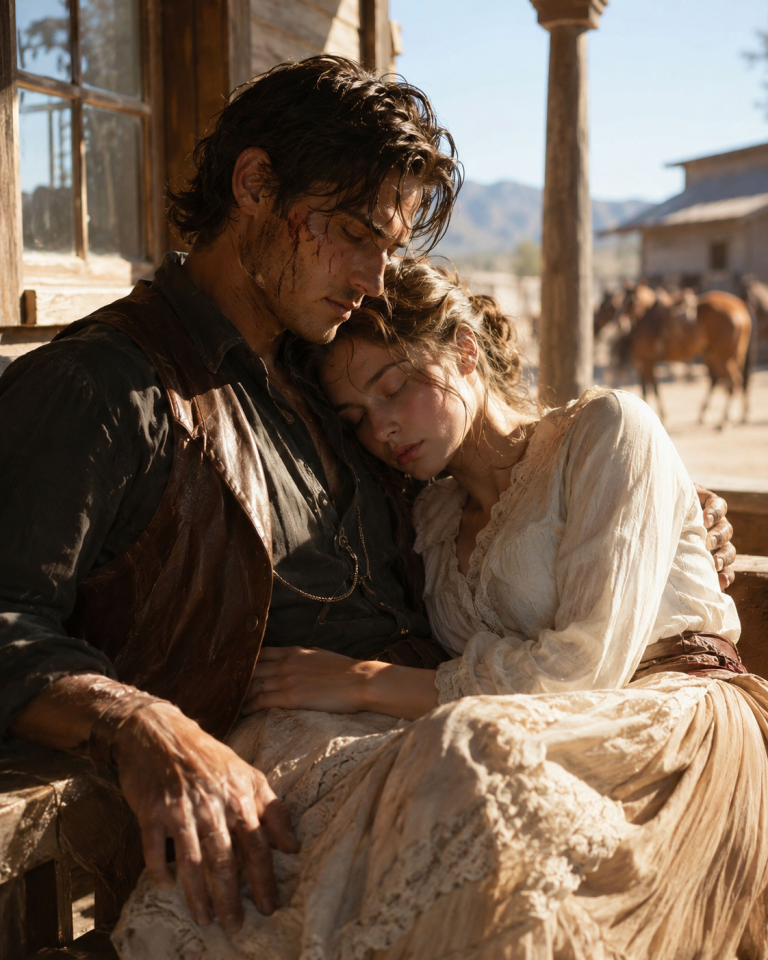
She Hid Her Pregnancy—Until the Mafia Boss Found the Test in the Trash and Said, “You’re Coming With Me”

## PART 1
The city had given me two years of near-perfect invisibility.
Then I ruined it in one bathroom, on one Thursday morning, with a pregnancy test I had bought at a twenty-four-hour pharmacy while wearing my diner apron and trying not to make eye contact with the cashier.
My name was Iris — or it had been, for two years. Before that I was someone else. Before that there was a house in the suburbs and two parents who loved me and a father who had agreed to testify against the wrong people. But that was another life and another version of me, and the woman standing barefoot on the cold tile of this bathroom, staring at two pink lines like they were a personal accusation, was just Iris.
Just Iris.
Just a waitress.
Just a woman who had been careful, careful, always careful — and then, on one stupid night in the wrong hotel, she had been something else entirely.
The pregnancy test sat in my hand like evidence.
My stomach lurched for the third time that morning and I grabbed the sink. I was getting good at this: the quiet, controlled nausea, the small breaths, the telling myself it would pass. I had been telling myself a lot of things would pass lately.
Fifty-eight days since the Castellan Hotel.
Fifty-eight days since the charity event where I had been hired last-minute to fill a catering shift, where the chandeliers had dripped light onto marble floors and every person in the room had that specific quality of the very powerful — not loud, not flashy, just the kind of calm that meant they never needed to be either.
Fifty-eight days since I had tripped.
Just tripped, the most ordinary thing in the world, a tray tilting, a moment of horror — and a hand had caught my elbow before anything shattered.
“Careful,” he had said.
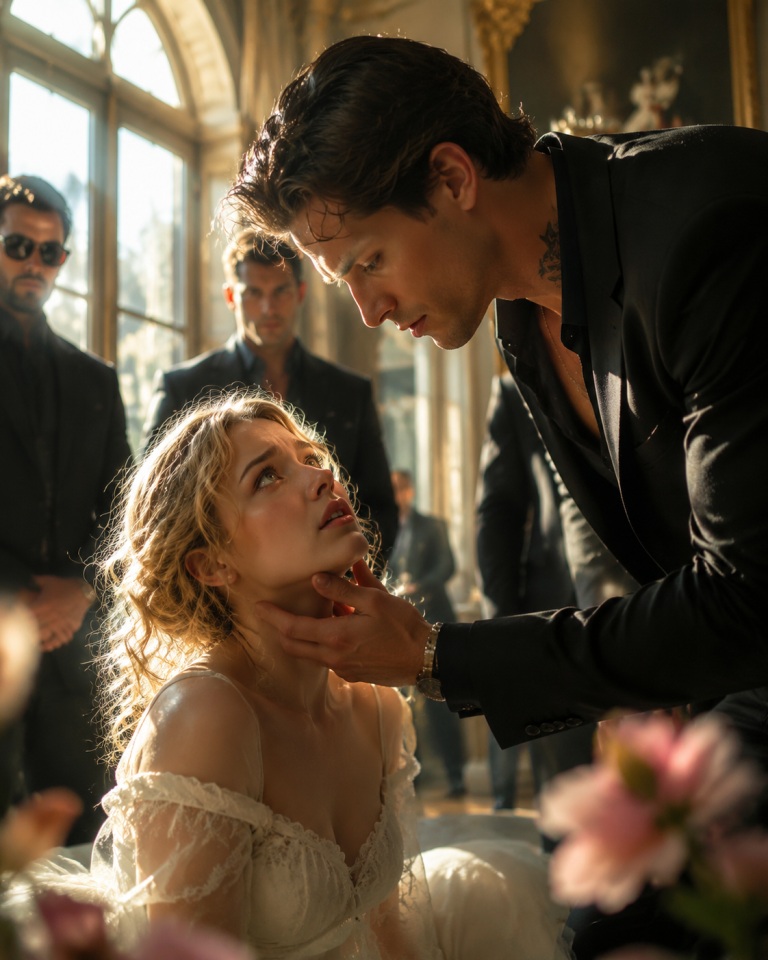
And I had looked up at the man everyone in Chicago whispered about.
Matteo Rinaldi.
The newspapers called him a developer. An investor. An arts patron.
People who had reason to know his real name called him something else.
His name sat in the same whispered category as the Ferraro family, the people who had employed my father, the people who had sent men to our house on a rainy night three years ago and walked away leaving two bodies and one surviving daughter who had been at her best friend Danny’s apartment studying for an economics exam.
I should have set down my tray and walked to the other side of the ballroom.
Instead I said thank you.
Instead he said what’s your name.
Instead I said the first name that came to me, which was Elena, my mother’s name, a gift I immediately felt terrible about.
And he looked at me like the ballroom had narrowed to a single point and I was it.
I should have left.
I did not leave.
There had been a note in an envelope afterward. A room number. An invitation framed as nothing more than a conversation. I had held it for twenty minutes in a hotel bathroom identical to this one and argued with myself about survival and then taken the elevator.
We had talked for hours. Not the dangerous kind of talking, the honest kind, which was worse — he had asked about my life, not because men like him needed information but because he seemed, unexpectedly, genuinely curious. He liked old architecture and strong coffee and he read books that were older than the crimes his family had committed. He spoke like a man who had been surrounded by people performing honesty for so long that actual honesty caught him off-guard.
I had been careful not to say anything true.
Most things I told him were invented. But some things, under the warm pressure of his attention, had slipped out whole.
I left before sunrise with my heart hammering and the absolute certainty that I had made a catastrophic error.
I had not looked back.
Until the test.
“Iris?” Danny’s voice came from behind the door. Not his voice from two years ago, still uncertain with my new name. Just Danny’s voice now, the one that meant he was paying attention.
“I’m fine.”
“You’ve been in there for a while.”
“I’m fine.”
I tucked the test behind the soap dish and opened the door.
Danny Vega looked at me the way he had looked at me since we were teenagers: with the comprehensive knowledge of someone who had watched me learn to survive and had helped me do it. He was holding a coffee mug and wearing the ancient Northwestern sweatshirt he’d had since sophomore year. He looked, in that moment, like the safest person in the world.
“Talk,” he said.
“Nothing to talk about.”
His eyes dropped to my hands. Then back up.
“Iris.”
“Don’t.”
“It’s not the flu, is it.”
I couldn’t answer.
Danny’s expression moved through several things quickly: fear, calculation, grief, love.
“Him?” he asked.
The word was so small.
Contained so much.
I looked at the window, at the strip of gray Chicago sky between our building and the next.
“Yes,” I said.
Danny closed his eyes for one second. When he opened them he was already thinking three steps ahead, the same way he had been when we were nineteen and he had helped me get a new name, a new city, a new person to be.
“We need to leave,” he said.
“We’ve had this argument before.”
“This is different.”
“I know it’s different.”
His jaw tightened. “You can’t stay.”
I pressed one hand flat against the doorframe.
“I’m not running anymore,” I said.
He stared at me.
“Iris.”
“I’m not running.”
What I didn’t tell him — what I couldn’t tell him yet because I hadn’t finished understanding it myself — was that the bigger problem wasn’t that Matteo Rinaldi might find me.
The bigger problem was that he was already looking.
I had been so careful. New name, new city, new face in a sea of new faces. But careful and invisible were different things, and somewhere in the last fifty-eight days, a man with very good investigators had apparently started asking questions about a woman named Elena who had given him a false number and disappeared from a hotel room before dawn.
I had learned this four days ago from a bartender I knew who had been asked about me.
Not about Iris.
About a woman matching my description.
I had not told Danny yet.
I looked at his worried face over my coffee mug.
I was about to.
Then my phone rang.
Unknown number.
My blood went cold.
—
## PART 2
I almost didn’t answer.
The instinct was immediate and old — unknown numbers were threats, unknown numbers were people you had trained yourself not to pick up, unknown numbers were the sound of the net tightening.
But Danny was watching me, and Danny knew what my face looked like when I recognized fear.
I answered.
“Iris.” A voice. Male, older, clipped Italian accent. “Or should I say Elena?”
The mug slipped. I caught it.
Danny was on his feet.
“I think you know who I am,” the voice said. “I work for Mr. Rinaldi.”
“I don’t know anyone by that name.”
“You gave him a false phone number. He has been looking for you. This morning he learned your current name.”
My blood drained south.
“How?”
“That is not your concern. Your concern is this: there are two men outside your building. They are mine. They are not there to harm you. They are there because an older party is also looking for you, and their intentions are considerably less courteous.”
I walked to the window. Looked down.
Two men in dark coats. One near the entrance. One across the street.
Watching.
“What older party,” I said flatly.
The name came back like a cold current.
The Ferraros.
The family that had employed my father. The family that had sent men to our house three years ago.
“Your father’s records,” the voice said. “They have never stopped looking for what he hid before he died.”
“He didn’t hide anything.”
A pause that said: we both know that isn’t entirely true.
“Mr. Rinaldi would like to speak with you. Today. In person. The choice is yours, but I would remind you that the people currently aware of your address include individuals who are not as interested in conversation.”
The line went quiet but didn’t disconnect.
Danny was beside me, reading my face. I covered the phone and whispered: “Is your car downstairs?”
“Yes.”
“Keys?”
He reached into his pocket.
I uncovered the phone.
“Tell Mr. Rinaldi I’ll come,” I said. “But I’m bringing someone. And I’m choosing the meeting place.”
Another pause.
“Very well.”
“And if those men outside move toward my building before I’m out the front door, I’m gone and I won’t come back.”
“They will not move.”
I ended the call.
Danny grabbed my arm. “What just happened?”
“Someone found us.”
“Rinaldi?”
“And the Ferraros.”
He stared. “At the same time?”
“Apparently.”
He grabbed his jacket. His face had gone to the specific controlled fear that I recognized as his survival mode — the same face he had made the night he helped me pack two bags and drive east with everything I owned fitting into the trunk of his dented car.
“Tell me this isn’t as bad as it sounds,” he said.
I looked at him.
“Danny.”
“Yeah?”
“It’s exactly as bad as it sounds.”
The phone buzzed again. A text from the same unknown number.
One photograph.
My bathroom trash.
The pregnancy test, clearly visible.
And below it, three words:
*He already knows.*
—
## PART 3
The meeting place I chose was public by design.
A coffee shop on the North Side that Danny and I had used as a neutral ground before, wide windows and enough foot traffic that dramatic exits were always possible. I sat with my back to the wall and my hands around a cup of something warm I wasn’t drinking, and at eleven-fifteen Matteo Rinaldi walked through the door.
The room didn’t change the way it had at the Castellan.
He wasn’t dressed for a ballroom. Dark coat, civilian clothes, the specific containedness of a man who had learned to move through ordinary spaces without commanding them. But people noticed anyway. The barista’s movements slowed by half a beat. The man at the counter moved his bag without looking up.
Matteo saw me immediately.
He stopped a few feet away.
He looked exactly as I remembered him, which I had been hoping wouldn’t be true.
“Elena,” he said.
“That’s not my name.”
“No.” He looked at me with an expression I couldn’t read. “What is?”
“Iris. For now.”
He pulled out the chair across from me and sat. Danny was at a table near the window, close enough to signal, far enough to give the illusion of privacy.
Matteo looked at Danny briefly, then back at me.
“You ran,” he said.
“I left before sunrise. That’s not running.”
“You gave me a false number.”
“I gave you caution.”
A pause.
His eyes dropped to my hands, then back up. He had already seen the photograph — that was clear in how he looked at me, not just as the woman from the hotel but as something complicated and weighted.
“Is it true?” he asked.
I could have lied.
I was practiced at lying.
But sitting across from him in a coffee shop while the Ferraros’ people presumably tracked my location and my phone, with Danny three tables away trying not to look like he was counting exits, with a pregnancy test sitting in a bathroom trash can that had already been photographed and sent to this man’s number — I was tired of the specific cost of lying.
“Yes,” I said.
Something moved across his face.
Not triumph, not acquisition. Something quieter.
“How long have you known?”
“This morning.”
He absorbed that.
“You were going to disappear again.”
“I was going to make a decision.”
“What decision?”
I looked at the coffee. “I don’t know yet.”
He leaned forward slightly.
“Iris. Whoever you are before that name — your real name—”
“My real name is the one I gave myself,” I said. “The other one belongs to people who wanted me dead.”
His jaw tightened.
“Tell me.”
So I told him.
Not everything at once. In the measured way you tell dangerous things to people you haven’t decided to trust — parceling it out, watching his face for the specific reactions that revealed whether he already knew, whether he was asking because he was curious or because he was calculating.
My father. The Ferraro family’s accounts. The months he had spent documenting what he saw until he couldn’t see it anymore and wanted out. The night the men came. The economics exam that had saved me by accident.
Matteo listened without interruption.
When I finished, he was quiet for long enough that I heard the espresso machine twice.
“You walked into the Castellan,” he said, “knowing I would be there.”
“I walked into the Castellan because another waitress called in sick and I needed the money.”
“You knew I was connected to the Ferraro family’s rivals.”
“I knew you existed. I didn’t plan anything.”
His eyes searched mine.
“I believe you,” he said finally. “Which makes you either very unlucky or very courageous.”
“Mostly unlucky.”
“The Ferraros have been monitoring my movements since they learned I was looking for you. They identified you through my search.”
That landed badly.
“So your looking for me put me at risk.”
“Yes.” He said it directly, without softening. “I’m sorry.”
The directness caught me.
Danny was watching us from the window table with the expression of a man trying to determine whether he needed to stand up.
“What do you want?” I asked.
Matteo looked at the table.
For the first time since he had walked in, he looked uncertain.
“I want to make sure you are safe,” he said. “Both of you.”
“You don’t know me.”
“I spent six hours talking with you. I’ve spent fifty-eight days trying to find you. I know more than you’re comfortable with.”
“That’s not knowing someone. That’s knowing their outline.”
“Then let me know more.”
I stared at him.
This man. This complicated, dangerous, reportedly very powerful man who had walked into a coffee shop without bodyguards and sat across from me with something in his face that looked disturbingly like vulnerability.
“The Ferraros,” I said. “How immediate is the threat?”
“Today. Maybe tonight.” He held my gaze. “They know my investigators found you, which means they know where you are.”
“And my father’s records?”
“What records?”
I looked at him for a long time.
His expression was genuinely uncertain.
“You don’t know,” I said.
“Know what?”
“That there are records.”
His stillness changed quality.
“What kind of records?”
—
I had not told Danny about the box.
It had arrived three months after my parents died, a small package mailed to the address of a great-aunt I had visited once at age seven, forwarded twice before it found me. Inside was a wooden jewelry box that had been my mother’s, and inside the box was nothing.
Nothing visible.
But in the months of grief and hiding, I had taken the box out sometimes, and once I had dropped it, and once dropping it I had noticed a thin seam along the bottom that opened when pressed in the right place.
Inside the false bottom: a small black drive, and a note.
My father’s handwriting.
*The river goes under the arch. You will know what that means.*
I had spent three months not knowing what that meant. Then I had remembered: our family used to drive past a certain bridge on the way to my grandmother’s house, and my father always said the same thing when we crossed it. He had called it the arch. He and my grandmother had a particular word for it, a private shorthand.
I knew where the files were.
I had not gone to retrieve them because going would have meant making a decision about what to do with them.
Sitting across from Matteo Rinaldi in a coffee shop with the Ferraros circling and a pregnancy test in my bathroom trash, I understood that the time for deferring that decision had just run out.
“My father kept records,” I said. “What he witnessed. Accounts, payments, names. Evidence that would destroy the Ferraro network.”
Matteo was very still.
“Where?”
“I don’t know exactly,” I lied. “He hid it.”
His eyes told me he didn’t entirely believe me.
“But I know how to find it,” I said. “And if you want to help, that’s how.”
—
Danny objected.
Vigorously.
Outside the coffee shop, in the cold wind off the lake, he stood in front of me with his arms crossed and the expression he reserved for when I was doing something that frightened him into complete sentences.
“You are not trusting a man with criminal connections to help you retrieve files that are the reason your parents are dead.”
“He’s not the one who killed them.”
“He is adjacent to the kind of people who did.”
“He’s adjacent to the kind of people who want to stop the people who did.”
Danny looked at the street, then back. “That’s the most optimistic sentence you have ever said.”
“I know.”
“You like him.”
I pulled my coat tighter. “I don’t know him.”
“You slept with him.”
“Once.”
“And now you’re carrying—”
“Danny.”
He stopped.
“I know,” I said. “I know how this looks. I know all the ways it could go wrong. I’ve been calculating worst-case scenarios since I was nineteen years old and I am very good at it.”
He looked at me.
“But the Ferraros already know where I am,” I said. “They know about the drive. Or they will, as soon as they realize what my father hid. I cannot run this time. There is nowhere to run to that they won’t follow.”
The wind moved through the gap between buildings.
“I need to end it,” I said. “Not hide from it.”
Danny was quiet for a long moment.
Then: “If anything goes wrong—”
“I’ll blame myself.”
“Iris.”
“I know. You’ll be there.”
He exhaled.
“Fine,” he said. “But I’m driving.”
—
The location was a church.
Old. Catholic. South Side neighborhood that had seen better decades but kept its dignity, the stone face weathered and the wooden doors still solid. My parents had been married here. My grandmother had taken me to Sunday mass here when I was small enough to fall asleep against her shoulder.
My father had known that I would remember it.
We arrived at dusk: me, Danny, and Matteo with two men he had brought who stayed outside. The church was unlocked. Soft light through old windows. The smell of candle wax and cold stone.
I walked directly to the baptismal font near the south wall.
My father had a particular thing about arches — he had always said the most important things needed to be protected by something that would last. The arch above the font was carved with running water, old symbolic language, the river going under the arch.
The stone beneath the font shifted when I pressed it correctly.
Inside: a small metal box, sealed.
Matteo watched me lift it without speaking.
Danny exhaled.
“How did you know?” Matteo asked.
“He taught me to think in patterns.”
I opened the box. The drive inside was protected in a sealed bag, intact. Beneath it, a second note in my father’s handwriting.
*If you’re reading this, you made it. I’m sorry about everything it cost.*
My eyes burned.
I folded the note and put it in my coat pocket.
That was when we heard the door.
Not the front door.
The side entrance.
Three men came through it with the specific efficiency of people who had been watching us arrive.
One of them I recognized.
The man with the broken crown tattoo on his neck who had been outside my apartment building in the weeks after my parents died, the one I had described to Matteo on the phone — or close enough to described, close enough to confirm that the Ferraros had been ahead of us.
“Well,” the man said. “The daughter has her father’s instincts.”
Matteo stepped in front of me.
Not possessively.
The way you step in front of something you’ve decided matters.
“Benedetti,” he said.
The man smiled. “Rinaldi. I wondered when our interests would intersect again.”
“They haven’t. This doesn’t involve you.”
“The Monroe records involve everyone who has had dealings with the Ferraro network. Including you.” He looked past Matteo at me. “Hand over the drive and you go home.”
“No,” I said.
Matteo looked back at me briefly.
I understood the question in it.
“No,” I said again. “Because the last person who made that offer to my family sent men to finish what a deal left unfinished. I don’t trust offers.”
Benedetti’s smile thinned.
“The drive has copies already,” I said. “Six hours ago I sent encrypted files to three separate contacts. A federal prosecutor. A journalist. And a lawyer in Milan who specializes in international financial crime.”
That was a lie.
But it was a very specific, very plausible lie, and I watched it land.
Benedetti looked at his men.
Matteo’s two men came through the front door.
The arithmetic changed.
“This is over,” I said. “The files exist. The copies exist. The only question is whether they’re released in a way that lets you negotiate terms, or in a way that offers you none.”
Danny, from his position near the pew, made a very small sound that I interpreted as involuntary admiration.
Benedetti looked at me for a long moment.
Then he looked at Matteo.
“Keep your woman,” he said. “But understand that the Ferraro network reaches further than one evidence file.”
“So does a federal prosecutor,” I said.
He left.
The side door closed.
The church was quiet.
Matteo turned around.
“You’re bluffing,” he said.
“Partially.”
“Which part is real?”
I reached into my coat pocket and pulled out a small envelope. “The Milan lawyer. She was my father’s contact. I sent her the encrypted summary three hours before the meeting.” I looked at the drive. “I needed a reason to be worth letting walk out of here. The rest buys time.”
He looked at the envelope.
Then at me.
“You planned that.”
“I planned for one contingency. There are usually more.”
“You were terrified.”
“I was also planning. Both things are possible.”
Danny started laughing from the pew.
It was the specific helpless laughter of someone who had been holding their breath for too long, and it echoed off the stone ceiling of the old church and sounded, improbably, like relief.
—
The federal investigation took months.
The Milan lawyer was real, and she was very good, and the files my father had kept were thorough enough that they did not require courage to use — only patience and documentation and people willing to read ledgers for a living.
The Ferraro network did not collapse all at once. That was not how these things worked. But it contracted. Key figures became unavailable. Accounts froze. People who had spent years insulated by proximity to power found that insulation thinning.
Benedetti was arrested in May.
I watched the news in Danny’s apartment with my feet up on his coffee table, seven months pregnant and tired of shoes.
Danny brought tea without being asked.
“Shoe-dropping time,” he said, sitting beside me.
“There will be more shoes.”
“I know. But this one’s significant.”
I leaned my head on his shoulder.
“Thank you,” I said.
“For what?”
“For three years.”
He made the specific sound he always made when I said something that mattered to him and he didn’t know what to do with it.
“Shut up,” he said.
“I mean it.”
“I know you mean it. Shut up anyway.”
Matteo came that evening.
We had been doing this since the church — careful, incremental, the slow process of two people learning each other without the distortion of crisis. He asked questions with the specific quality of someone who wanted actual answers, not reassurance. I gave them, mostly. Some things I still held back, not from distrust but from the habit of keeping the center of yourself to yourself.
He was learning to wait for those.
He brought food — always, which I had stopped arguing about on the grounds that arguing about it used energy I needed for other things. He sat at the table with Danny and they had the specific stilted conversation of two men who did not naturally like each other but were committed to coexistence for reasons that had nothing to do with either of them.
After dinner, while Danny was doing dishes with ostentatious focus, Matteo sat beside me on the couch and looked at the TV with his hands loose between his knees.
“Are you all right?” he asked.
“She’s kicking.”
“That wasn’t what I asked.”
I looked at him.
“I’m all right,” I said. “I’m tired of the legal calls. I’m tired of the depositions. I’m tired of explaining my father’s filing system to people who have never had to think about their own survival.”
He nodded.
“But I’m all right,” I said again. “More than I’ve been in years.”
He reached over and covered my hand with his.
Not claiming.
Just present.
“I owe you an apology,” he said.
I looked at him sideways.
“For what?”
“For looking for you in ways that compromised your safety. For prioritizing what I wanted to know over what you needed.”
I thought about the phone call. The photograph of the pregnancy test. The Ferraros who had found me because he was looking.
“Yes,” I said. “You do.”
He nodded.
“I’m sorry.”
The directness of it.
“I believe you,” I said.
“That doesn’t make it adequate.”
“No. But it’s a start.”
He looked at our hands.
“I’d like to earn more than a start,” he said.
“I know.”
“I’m not asking for anything you haven’t decided to give.”
“I know that too.”
The television murmured in the background. Danny ran water in the kitchen. Outside, Chicago did its ordinary night things, traffic and distant sirens and the particular urban hum that had become the soundtrack to a life I had built from pieces.
“What’s her name?” Matteo asked.
“I haven’t decided.”
“May I suggest something?”
I looked at him.
“Rosa,” he said. “For what survives.”
I thought about that.
About my mother, who had not survived. About my father, who had not survived. About the two years I had spent being someone else in the city they had wanted to leave, and the six hours in a hotel room where I had accidentally become myself.
“Rosa,” I said.
It fit.
“I’ll think about it,” I said.
He smiled.
Not the controlled smile of a man managing a room. The other kind.
—
Our daughter was born in a quiet hospital on a Tuesday in late autumn.
Matteo was there. Danny was in the waiting room and he cried, and he claimed afterward that he was simply tired, and no one believed him.
I held her and thought about my father’s note.
*You made it. I’m sorry about everything it cost.*
The cost had been real. I would not pretend otherwise. The years of fear, the lost name, the lost family, the careful smallness of a life lived under a false ceiling — those things did not disappear because the ending was livable.
But the ending was livable.
That was something.
I looked at Matteo holding our daughter with the specific terrified reverence of a man who had apparently never considered that he could be afraid of something so small.
“Rosa,” I said.
He looked up.
“Her name is Rosa,” I said. “After what survives.”
He looked back at the baby.
“Rosa,” he said.
She opened her eyes.
Neither of us spoke for a while.
Danny came in eventually and stood in the doorway with the look of a man who had spent three years protecting someone and was experiencing the complicated relief of not needing to in the same way.
“How long,” he said, “before she needs a fake ID?”
I laughed.
Actually laughed.
“Give her at least ten years,” I said.
“Reasonable,” he said. “I’ll keep the contact.”
Matteo looked at him.
“I can give you a better contact,” he said.
Danny pointed at him. “That is not reassuring.”
“No,” Matteo agreed. “But it is practical.”
I looked at my daughter and thought about practical things.
The apartment I had signed a lease for last month — not Danny’s spare room, my own space, with a door that locked from the inside and a window that faced east. The nursing program I had registered for in January. The deposition I still had to give next spring, which would be hard but would not break me, because I was more familiar now with my own tensile strength.
The world outside was still complicated.
The Ferraro network was damaged but not gone. There would be more legal calls, more careful decisions, more moments when the cost of having survived felt unequal to the surviving.
But I was no longer running.
I was no longer making myself invisible.
I was Iris — or I was becoming something with that name at the center and other names around it, the ones I had chosen and the ones I had been given and the one on the birth certificate that read Rosa Rinaldi-Monroe, both bloodlines written out without apology.
That had been my condition.
Both names.
No erasing.
Matteo had agreed without negotiation.
I looked at him across the hospital room with our daughter between us.
“What are you thinking?” he asked.
“That I’m not good at this.”
“At what?”
“Trusting people.”
“No,” he said. “You’re not.”
“I’m going to need time.”
“I know.”
“More time than is probably comfortable.”
“Iris.” He held my gaze. “I have been looking for you for fifty-eight days. I can wait longer than that.”
I thought about that.
About waiting. About the specific patience of a man who had sent investigators to find a woman who had given him a false name, not because he felt entitled but because something had been left unfinished and he did not know what to do with unfinished things.
“Stop counting days,” I said.
“Why?”
“Because I’m not going anywhere.”
He was quiet for a moment.
Then: “That’s the first time you’ve said that.”
“I know.”
The room was warm. The baby was asleep. Danny was still in the doorway, allegedly looking at his phone.
Outside, the city moved in its ordinary loud way, indifferent and eternal and full of second chances that nobody advertised and most people stumbled into sideways.
I had stumbled into mine.
I had held onto it with both hands.
That was enough.
That was, for now, everything.
—