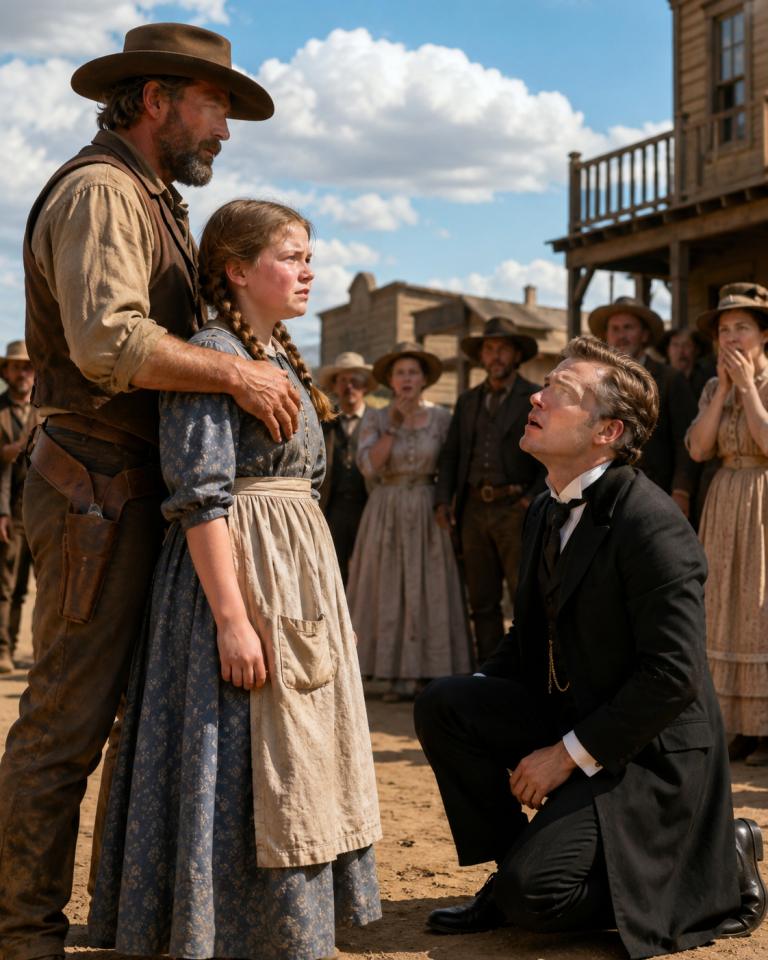
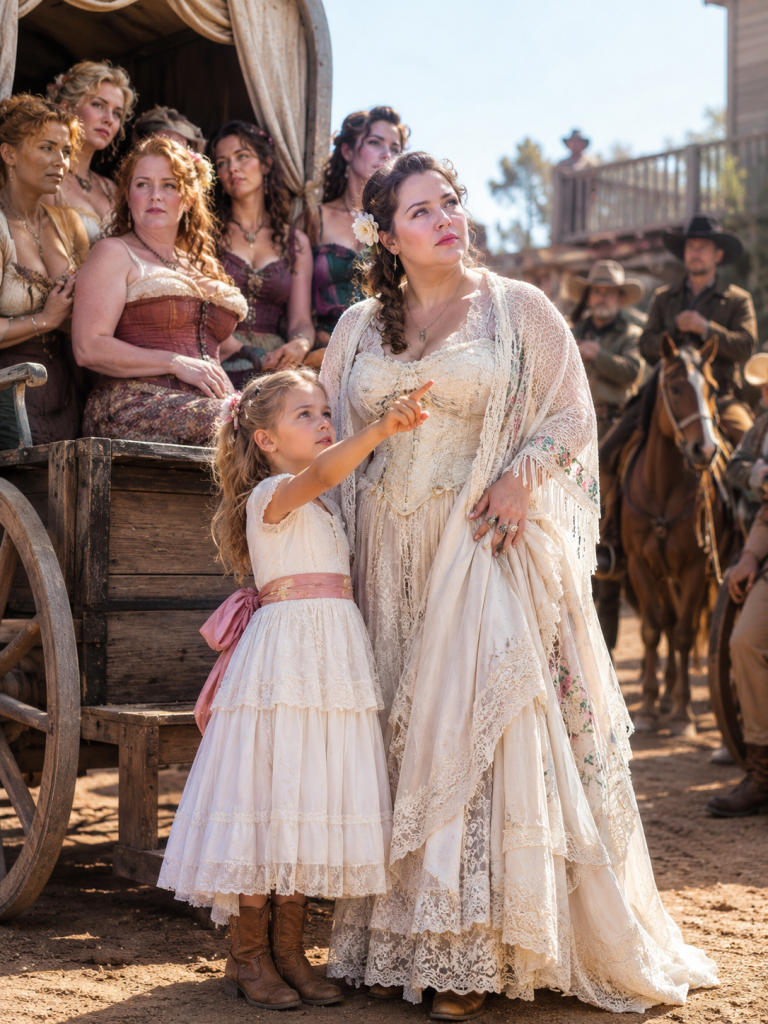
HE HAD BROKEN THREE WOMEN BEFORE HER — UNTIL A MAID FELL ASLEEP ON THE MONSTER KING’S CHEST

**PART 1**
The night Wren Ashby fell asleep on the Alpha King’s chest, three women had already been destroyed by the wolf living inside him.
One had survived only in the narrow, biological sense. She still breathed, still woke, still ate when attendants coaxed food past her lips — but whatever had once made her a person with preferences and memory and will had been hollowed out by six hours in his presence. A second lasted two full days before her mind cracked under the strain of simply existing near him, her wolf torn between total submission and total panic until both instincts burned her hollow. A third died when her heart simply forgot the difference between surrender and stopping altogether.
Wren didn’t know any of that when she collapsed beside him.
She didn’t know his name. Didn’t know the shape of his curse, or the politics closing in around him, or how much of the entire Nightspire Dominion had already begun quietly organizing its future around the possibility that their king might never again be fully human. She knew only the ache in her bones from twenty-one hours of labor, the sting of split knuckles from stone and lye, and the impossible relief of warm skin under her cheek when she stumbled through the wrong doorway and mistook a king’s bed for an empty place to die of exhaustion for a few blessed hours.
When she woke, his arm was around her waist. Forty wolves stood staring through the open chamber door. And the palace healer was whispering, in a voice stripped bare with disbelief, that the Alpha King’s breathing had been calm and steady for the first time in eleven months.
But the story hadn’t started there.
It started earlier, on the day Wren learned exactly how cheaply a human life could be translated into debt.
She was twenty-two when her father sold her. Not with chains. Not at auction, under lantern light with men shouting numbers. Nothing so dramatic. It happened at midday in the yard outside the grain shed, her youngest brother perched on an overturned bucket trying not to cough, while the tax collector from the Nightspire Dominion turned pages in a ledger with the detached efficiency of a man counting sacks of barley.
Marsh Hollow was not much of a pack settlement — ninety wolves, mostly farmers, tucked low into the Lowmarsh Flats where the soil ran rich when the seasons behaved and ruinous when they didn’t. The winters had turned bad two years running. Grain stores were thin, livestock weak, and tribute to Nightspire had gone unpaid long enough to turn dangerous.
The collector arrived with two guards and a cart. He counted the grain. Counted the pigs, the goats, the tools stacked against the barn wall. Then he looked at Wren.
“The girl,” he said, not to her but to her father. “How old?”
“She’s standing right here,” Wren said. “You can ask me.”
He didn’t even glance her way. He made a note, dipped his quill again, and said, “One able-bodied female wolf, transferred to Dominion service, clears eighteen months of the arrears.”
Her father argued. He really did — longer than Wren later thought anyone had expected of him. Nearly four minutes. He said she was needed at home. He said the harvest wouldn’t hold without her. He even raised his voice once, which was unlike him entirely.
But hunger is a patient persuader, and fear of state power works on people long before force ever needs to show itself. Marsh Hollow had younger mouths that needed feeding. Wren had two sisters and a brother still small enough to believe adults could fix anything if they only tried hard enough.
When the ledger closed and the collector nodded to his guards, Wren understood that four minutes of arguing still ended in the exact same silence.
She went.
Blackspire Citadel sat at the center of the Nightspire Dominion like something built not to inspire awe, but obedience — dark granite, massive walls, angled towers, no graceful curve or ornamental excess that didn’t also serve a defensive or symbolic function. Even its beauty, where any existed, was severe.
Wren arrived in a cart with six other debt transfers. The woman who received them, Grett, introduced herself more like a force of nature than a person — broad-shouldered, iron-gray, built with the practical menace of someone who’d spent decades moving heavy things and heavier people wherever they needed to go.
“Names are irrelevant,” she told the new arrivals. “You answer to assignment. Floor staff, kitchen detail, or laundry. Six days a week. You eat what’s provided. You sleep in the east wing dormitories. You do not enter the west wing.”
A boy beside Wren, barely seventeen and still foolish enough to think rules existed to be questioned, raised his hand. “What’s in the west wing?”
Grett looked at him like he’d asked what kissing a lit fuse felt like. “The Alpha King’s private quarters. And the last three women who went in uninvited are buried, or wish they were.”
Nobody asked again.
Wren was assigned to floor detail, and the work suited her — she became invisible fast, one more gray-clad figure bent over stone with a brush in hand. In a place like Blackspire, invisibility was both punishment and shelter. She learned to keep her eyes down, move efficiently, and listen while appearing not to. That last skill turned out to matter more than anyone in authority ever realized.
The kitchens told her the truth first. They always do. Through the cooks and scullery hands, and especially through Nell — a red-haired laundry girl with quick hands and a reckless affection for anyone who looked lonely — Wren learned exactly what kind of kingdom she’d landed in.
Alpha King Roran Blackmoor had inherited the Dominion at twenty-one, after his father died in what state records called a hunting accident and everyone else quietly called murder. Six years later, at twenty-seven, he’d already become half legend beyond Nightspire’s borders. Some said he was brilliant enough to have doubled agricultural output and reorganized trade faster than most men managed to learn their own council chamber. Others said his wolf had grown too dominant for full human reasoning — that the man still existed somewhere underneath, but only in flashes, like a lantern glimpsed through deep fog.
“What everybody agrees on,” Nell told Wren over folded linens her second day, “is that women suffer around him.”
Not because he struck them. Not because he hunted them the way stories liked to imagine. The dominance rolling off him overwhelmed female wolves so completely that mere proximity became a kind of devastation. Three Luna candidates had already been presented by the Elder Council that year. Three disasters followed. The first lasted six hours and never fully returned. The second made it two days before her wolf fractured under the strain. The third died of heart failure. Her name had been Faye. She was twenty-four.
By then the council had stopped pretending ordinary mate selection still applied.
“That’s the real trouble,” Nell said, lowering her voice though no one important stood near. “His wolf doesn’t sleep — that’s what the healers say. Always at the surface. They’ve tried herbs, sedatives, old spirit rites. Nothing’s worked. He hasn’t shifted back to fully human in months.”
Wren had never once seen him. No ordinary servant had. They knew his presence only through its aftermath — the west wing sealed off, furniture replaced in bulk, guards stationed permanently, healers summoned at strange hours, a hush descending whenever his name came up too directly.
Then, on her seventeenth day in service, Wren made herself visible to the wrong woman.
The Great Hall was roughly the size of a village square, paved in dark stone. Wren was on her hands and knees near the eastern colonnade when the Vaelor delegation arrived in blue and silver and entitlement, at their center Lady Sorcha Reyne — a woman who carried herself like she’d never once entered a room without assuming it would reorganize around her. According to the kitchens, she’d been courting a political marriage with Nightspire for two years, not for love but for access and leverage.
Corwin, the beta, received the delegation. Wren kept scrubbing. Then Sorcha saw her.
“Wine,” she said.
Wren looked up. “I’m floor staff, my lady, not service.”
“I didn’t ask your assignment.”
She should have risen, fetched the wine, and gone back to being forgettable. That would’ve been wise. It also would have required an obedience Wren had never quite managed when humiliation arrived dressed in polished certainty.
“The silver pitcher is behind you,” she said. “You could reach it without standing.”
Silence fell. Corwin closed his eyes briefly, the way a man does watching someone step toward disaster too late to stop them.
Sorcha studied her with a calm sharper than anger, asked her name, her settlement, her status. “Marsh Hollow,” Wren answered plainly. “Debt transfer.”
“A field mouse,” Sorcha said softly, and some of her delegation laughed, because they’d been trained to.
She recommended discipline for insubordination. Grett delivered it that same night, in the form of reassignment.
“West wing chamber maintenance,” Nell announced later, arriving at Wren’s dormitory cot with the cheerful horror of a messenger bearing doom. “Effective tomorrow.”
Wren sat up. “The west wing where the king lives?”
“That very one.”
“The west wing where women don’t come back from?”
Nell winced. “Well. One didn’t. Two did, technically.”
It was not helping.
The next morning Wren walked the west wing corridor at dawn. The two guards at the entrance let her through with the exhausted indifference of men long past questioning staffing decisions handed down from above. The corridor was dim, lined with iron sconces that cast more shadow than light. At its far end stood the heavy oak door leading to the antechamber outside the Alpha King’s private room.
She pushed it open.
The antechamber looked less like a room than the aftermath of a contained siege. A table split in half. Chairs reduced to kindling. A heavy candelabrum bent and embedded in the stone floor. Long claw marks scored the floor in ragged pacing lines that spoke more eloquently than any servant’s gossip. This wasn’t theatrical rage. This was repetitive, ongoing confinement — the marks of something too large for the room and too trapped to stop moving.
Then she heard him. Breathing. Slow. Deep. Wrong in a way that tightened her skin before her thoughts caught up. The sound came from the inner chamber, beyond a second reinforced door standing open exactly three inches.
Every useful instinct told her to walk away.
Instead she stepped forward and pushed the door wider.
The Alpha King sat on the stone floor, back against the wall. Shirtless, scarred, built for violence the way wolves at the top of every hierarchy always are — muscle laid over bone with no softness left to misread. Dark hair fell loose over his forehead, forearms resting on raised knees.
None of that held her. His eyes did.
Gold. Not amber, not warm brown edging toward light. Gold in the absolute inhuman sense. Wolf eyes set in a human face.
He didn’t move. Only watched her.
Wren stood frozen in the doorway and said the first thing exhaustion and alarm together produced. “You’ve destroyed the furniture.”
He blinked once. That was all. No growl, no attack, no word — only a slow blink and the unbearable pressure of being evaluated by something that might not have remained entirely man.
“I’m the new chamber maintenance,” she said. “I’m not supposed to be in here, I know that. But the door was open, and I thought maybe someone was hurt.”
A low sound came from his chest. Not aggressive. Acknowledging.
Wren backed out, left the inner door open the same three inches she’d found it, and spent the next four hours cleaning the antechamber.
The following morning, the room was wrecked again. So was the morning after that. Each day the inner door stayed open the same three inches. Each day Wren cleaned.
On the third day she brought part of her own meal ration and left it just inside the gap. On the fourth day, it was gone. On the sixth day, she found a folded blanket where the food had been — heavy, fur-lined, worth more than anything she’d owned in her life, positioned so she couldn’t possibly mistake it for accident.
She picked it up with both hands. “Thank you,” she said to the gap.
A low rumble answered her.
So it began. Food one day. Wool socks another, because he’d noticed the hole in her boot. A wildflower left on the cloth where she set his meals, though there were no gardens anywhere near the west wing. Wren talking while she cleaned, about weather, kitchen gossip, the stupidity of heavy stone and heavier people. He never answered in words, but the rumbles came at odd moments, as if he were learning where conversation lived.
Then, on the twelfth day, from beyond the gap, something broken and effortful reached her ears.
“Wr…en.”
Her name, half-made. It left her standing in the antechamber with tears on her face and a broom in her hand, shocked beyond speech that the man beneath the wolf had pushed through far enough to try.
By the sixteenth day, the inner door opened a full foot.
The gap had been a question all along. And Wren, by returning every morning without fear, had been answering it.
**PART 2**
By the seventeenth day, Wren no longer needed anyone to tell her that something impossible was happening in the west wing. She could feel it in the changed rhythm of the place. The antechamber still bore marks of violence, but not the same violence — furniture shifted instead of shattered, the once-ruined table dragged together and clamped with iron. The air still carried the immense weight of Roran’s dominance, but it no longer felt like a constant threat of collapse. It felt like a force learning restraint.
None of that protected her from exhaustion. The Vaelor delegation remained at the citadel, Sorcha still circling the question of alliance like a wolf too intelligent to waste herself on obvious moves. A state dinner had put the entire domestic staff on emergency rotation, and by midnight Wren’s body had passed far beyond ordinary fatigue.
When she pushed open the inner door that night, it stood wide enough to count as invitation. Roran lay flat on the bed, shirtless again, eyes fixed on the ceiling, burning gold. He turned his head when she entered and tracked her in complete silence.
Wren was too tired to fear him properly. That was the ridiculous truth. His dominance still pressed against her skin like invisible hands urging her to kneel, to disappear into hierarchy — but exhaustion disrupts instinct as effectively as courage sometimes does. Her wolf didn’t collapse. Didn’t fracture. It simply treated his dominance as information rather than command.
“I brought you dinner,” she said, the words slurred in her own ears. She set a cloth bundle on the bedside table and sat on the edge of the bed for just a moment, because her legs had begun trembling in earnest.
That was supposed to be all.
Instead her body tipped sideways like something cut loose. She didn’t remember deciding to lie down — only warmth, warm skin under her cheek, her hand settling against hard ribs, the smell of him, pine and iron and smoke and something darker underneath. And beneath all of it, the sound.
His heartbeat. Slow. Steady. Not the erratic predator rhythm the healer had described. Calm. Measured. Almost a lullaby for some forgotten animal part of her.
Wren fell asleep — not lightly, not in the half-tense drifting of servants used to waking at the smallest sound, but the kind of sleep that belongs to children, the ill, or the profoundly safe.
When she woke, sunlight filled the room. Voices too.
“Don’t move,” Corwin whispered from near the door. “Wren, don’t move.”
She opened her eyes. Her cheek was still against Roran’s chest, his arm still around her waist, his body curved slightly around hers in a position so instinctively protective it made her pulse skip. He was asleep. Not sedated, not collapsed from exhaustion. Asleep. Real, restorative sleep had softened the hard lines of his face just enough to let the man beneath the wolf show through more clearly than she’d yet seen.
She lifted her head carefully. The outer door stood open, the corridor beyond crowded — Corwin, Grett, Elspeth the healer, a cluster of guards and staff so thick they nearly filled the hall, all staring like the laws of nature had shifted under their feet.
“What,” Grett said, in a tone so controlled it was almost impressive, “in the name of every ancestor is happening?”
Before Wren could answer, Roran’s arm tightened. His eyes opened, gold flashing first at her, then past her toward the doorway. Recognition, then warning. A low growl rolled from his chest, aimed at everyone not lying on him.
Corwin understood fastest. “Out,” he snapped at the gathered crowd. “Everyone out. Now.”
People moved. Elspeth hesitated just long enough to say, voice gone raw with astonishment, “His heart rate is normal. Completely normal.”
Then the door shut.
The meeting that followed might have passed for official if anyone had wanted to preserve dignity. Wren sat in Grett’s office while Corwin, Elspeth, and Grett tried to decide whether she’d committed catastrophic insubordination or accidentally solved the single greatest crisis in the Dominion.
“You entered the private chamber against explicit instruction,” Grett said.
“The door was open.”
“A gap is not an invitation.”
“It felt like one.”
Elspeth leaned forward, the scholar in her fully awake, silver hair coming loose from its pins. “The Alpha King’s wolf has been in a state of permanent dominance for eleven months,” she explained. “Every female introduced to him triggered either submission collapse or aggression escalation. The gap between them was too severe — their wolves couldn’t coexist without one side breaking.”
“But not mine,” Wren said.
“Your wolf did not submit. It did not challenge. It simply — did not register the dynamic the usual way.”
Corwin said the part no one else wanted to. “She equalized him.”
Silence followed, because everyone understood the implication. The old texts mentioned such things, rarely, in nearly mythic language — compatibility so precise that hierarchy simply failed to activate, pairings where dominance and submission dissolved into matched resonance. Those texts always placed the phenomenon inside the territory of mating bonds and destiny.
Wren was a debt transfer from a farming settlement. Not a Luna candidate. Not politically vetted. Not remotely intended for any of this.
That was exactly when Lord Cassian Vale entered without knocking, a lean man in his fifties whose strength came not from claws but from the arrangement of other people around consequence. Behind him stood Sorcha Reyne, composed as ever, expression cooled to a mask so thin it might as well have been ambition with powder over it.
“The council has been informed,” Vale said. Of course it had — nothing that large stayed private in Blackspire longer than it took politics to smell advantage.
“What happens now?” Wren asked, before anyone could frame her as furniture.
Vale studied her like cataloging the use of a tool he hadn’t known existed that morning. “Now we determine whether the effect is reproducible.”
He wanted her back in Roran’s chamber that night, under supervision, measured and documented like an unexpected compound in a laboratory.
Wren stared at him. “You want me to fall asleep on the Alpha King again. On purpose.”
“Under controlled conditions.”
She didn’t look at Sorcha, or Grett, or even Elspeth. She looked at Corwin, and his expression told her nearly everything — he hated this, and he couldn’t stop it outright with Vale already moving and Sorcha watching like a hawk over prey.
She made her decision the way survival had always worked for women like her — when the room turns and the choice becomes inevitable, the only power left sits in the terms.
“No restraints,” she said. “No sedation. No crowd in the chamber. Corwin and Elspeth only. And someone tells me his name.”
The room stilled. Corwin blinked. “You don’t know it?”
“I know his title. No one’s said anything else.”
Something like pain crossed both his and Elspeth’s faces — not surprise, but recognition of what had been lost. Even trying to manage Roran’s deterioration, they’d begun speaking of him the way everyone else did — as position, as threat, as crisis. Not as man.
“Roran,” Corwin said quietly. “His name is Roran.”
Wren held that for a second, feeling how differently it reshaped the whole thing. Roran. A person. Not only a kingdom’s problem.
**PART 3**
That night the west wing felt altered, as if the whole corridor knew it stood on the edge of a change it didn’t yet trust. Guards had doubled. Corwin waited just beyond the antechamber. Elspeth had assembled monitoring equipment with the reverence of someone bracing for either disaster or breakthrough, not knowing which.
When Wren entered, Roran was standing in the center of the room. The first change was immediate — he’d put on a shirt. Dark linen, sleeves rolled to the forearm. Such an ordinary choice, such a basic mark of self-presentation, that its meaning struck her harder than anything more dramatic could have. Someone — Corwin, likely — had brought him clothes. He’d chosen to wear them because she was coming.
The second change stood behind him — the broken table, repaired, not replaced, the two halves clamped with iron forged from the bent candelabrum, the split down the center left visible like a scar he hadn’t bothered to hide. On top sat bread, dried fruit, honeycomb, arranged on cloth in the exact practical pattern Wren always used for his meals. He’d intercepted his own service tray and set it out for her.
“Oh,” she said. It was, for several seconds, the only word available.
He crossed to the bed afterward, pulled back the blankets with deliberate motion, lay back, and looked at her. No command. No force. An invitation offered in the only language trust had built between them.
“Can I stay?” she asked.
He didn’t speak. He didn’t need to.
Wren lay beside him, cheek against his chest again, his arm coming around her with immediate certainty, as if her body had become a pattern his had already memorized. Beneath her ear, his heartbeat slowed, smoothed. The impossible calm returned at once.
From beyond the door, Elspeth’s whisper carried through the wood. “Heart rate dropping. Alpha signature receding. He’s shifting back.”
And then, under Wren’s cheek, Roran said his first full word in nearly a year.
“Stay.”
It went through her like fire and ache together — not the wolf dragging language through the wreckage of a human mouth, the way her broken name had come days earlier, but chosen speech. The man returning with effort and will.
“I’m staying,” she whispered back.
His arm tightened. His breathing deepened. And for the second night in eleven months, the Alpha King slept.
That should have been miracle enough. It wasn’t the only thing Wren heard that night. Through the layers of door and stone came another voice — Lord Vale’s, low and measured, directed at Sorcha with the cold efficiency of a man rewriting strategy in real time.
“Forget the marriage alliance,” he said. “She’s more useful than a Luna. She’s a leash.”
Wren’s eyes snapped open in the dark. Roran’s arm tightened around her instantly — harder now, the wolf responding to threat even half-asleep in newfound peace. He’d heard it too.
Whatever this was between them — this impossible quiet, this bridge between beast and man — was not going to be left to grow unmolested. Politics had smelled blood. Men like Vale didn’t see healing. They saw leverage.
The following weeks turned the citadel inside out in quiet ways. Roran improved — pacing lessened, he ate from the trays left for him without needing supplementation, speech returned in short rough sentences, human and unmistakably chosen. When Wren entered the chamber now, he no longer held himself like a trapped weapon. He waited for her.
That, more than anything, frightened the council. They understood submission, seduction, hierarchy — the old pack laws translating female usefulness into political or reproductive value. They did not understand a thing that obeyed neither domination nor obedience. It looked too much like equality, and equal things are notoriously difficult to govern.
Vale tried to institutionalize it anyway — proximity protocols, duty rosters, scheduled access. Elspeth admitted it herself one evening, visibly uncomfortable. “He wants this made official. Not only for the Alpha’s health. For the council’s sense of security.”
“I’m not a treatment plan,” Wren said.
“No,” Elspeth agreed. “You are clearly not.”
The old bond texts Elspeth showed her privately were vague and half-mystical, describing resonance, paired signatures, rare unions where hierarchy failed to establish because the two involved recognized each other as complementary rather than ranked. One line stayed with Wren long after: *Where fear does not rise and instinct does not kneel, the bond may already be choosing.*
Sorcha found her in the orangery not long after, among the citrus trees and pale winter light. “You’re becoming careless,” she said without greeting. “No escort. No witnesses. Convenient — for what, I wonder.”
“With respect, my lady, I’m collecting laundry.”
“Do not mistake me for Vale,” Sorcha said. “He thinks he can turn you into a mechanism. A leash, was his word. I understand something he doesn’t — if Roran is choosing you, this stopped being a policy problem. It’s a succession crisis. You are unvetted, unallied, uneducated in governance. If he bonds to you, every faction in the Dominion tears itself open over what it means. Some will try to remove you. Some will try to use you.” Her mouth curved faintly. “Never let them separate you from Corwin. He’s the only one here whose loyalty stays embarrassingly personal.”
Then she walked away, diplomat once more.
That same night, Vale made his move — summoning Wren to council chambers after dark, without Elspeth, without Grett, without Roran’s knowledge. Corwin intercepted her halfway there and came along uninvited, quiet and furious the way mountains are furious.
Vale laid the proposal out in the language of state necessity: Wren transferred formally from domestic service into Alpha stabilization protocol, her residence moved permanently to the west wing, her movements and diet and exposure regulated, any future contact with Roran occurring under council authority.
“You mean controlled,” Wren said.
“Structured.”
“You mean owned.”
Before Vale could answer, the chamber doors blew inward — not opened, blown, the iron-latched wood cracking against stone. Roran stood in the doorway, no guard having managed to stop him, the air in the room changing at once under the full weight of his dominance — focused now, directed, furious rather than feral.
“You will not summon her without my knowledge,” he told Vale, voice rough but stronger than before, human enough to make his anger all the more terrifying. “You will not name her state property. You will not turn her into a protocol because you’re too afraid to admit what’s happening is beyond your control.” He crossed the room and stopped beside Wren — not in front of her, beside her, hand coming down on the back of her chair, claiming proximity as chosen fact rather than crude possession.
Sorcha broke the silence that followed. “Finally,” she said mildly. “An honest sentence.”
“Come with me,” Roran told Wren.
She stood. No one stopped her.
That night, for the first time, he locked the west wing from the inside — not against her, against everyone else. They sat at the repaired table and let the truth assemble between them without council phrasing to distort it.
“I heard him call you a leash that first night,” Roran admitted. “I wanted to tear the corridor apart. I was barely myself. I couldn’t even protect the word *stay*.”
“You did,” Wren said, laying her hand over his. “You came back.”
He knelt in front of her then — which shocked her more than any display of dominance could have, because kings weren’t supposed to kneel, predators least of all. “If this is a bond,” he said, low and painfully human, “I want it chosen. Not used. Not arranged by council. Not forced on you because my wolf found peace before my mind did.”
“And if I choose it?”
“Then I spend the rest of my life making sure no one ever treats you as expendable again.”
She laughed once through tears, because it was both the most romantic and most politically unwise thing anyone had ever said to her, and then she kissed him. No thunder, no magic flare — only the overwhelming rightness of it, something in the room settling and aligning at last.
The next morning changed the Dominion — not because Wren woke a queen, not because politics turned suddenly kind, but because Roran walked out of the west wing in full daylight and crossed the Great Hall with her beside him while every wolf in the citadel watched. At the head of the hall, in front of council and delegation and staff and guards, he said simply, “Wren Ashby is under my protection.” Not Luna. Not consort. Not asset. In pack terms it was more dangerous than any marriage declaration — it meant *touch her and answer to me.*
Vale tried to object. Roran didn’t let him get far enough to be eloquent. Sorcha watched with folded arms and, when Wren caught her eye, gave the smallest nod in the world — not warm, not friendly, only acknowledgment between women who understood the board had changed.
The months after were brutal in quieter ways. Politics didn’t vanish — it reorganized. Wren learned governance faster than anyone thought possible, partly because necessity is an efficient tutor, and partly because she’d spent her whole life reading rooms that wanted to own her. Court politics turned out to be the same skill, dressed in better fabric.
Roran healed — not all at once, not perfectly. There were nights the wolf pressed too close and the old pacing returned, hours when sleep felt like something he had to relearn with Wren’s hand on his chest reminding his body what peace sounded like. But the man kept coming back, and once returned, he proved every rumor of brilliance true — sharper now, if anything, suffering having stripped away whatever ceremonial distance kingship once maintained between him and consequence.
Wren, who’d entered Blackspire as debt, became impossible to dismiss — not by imitating noblewomen, but by refusing to. She stayed direct where court preferred layers, asking practical questions about grain and floodplains and labor because she’d lived under the weight of those abstractions while men like Vale treated them as policy math. Roran listened. Then he changed things. Not everything — no ruler remakes a territory in a season — but enough that Marsh Hollow got relief before the next winter, enough that debt-transfer practices were restricted and then dismantled altogether.
And on the first night, months later, when Roran finally slept without Wren physically beside him and woke still fully himself, Elspeth sat down in the corridor outside the west wing and wept openly for ten full minutes.
Years afterward, people told the story wrong. They said a maid tamed a monster. They said love healed a beast. They said destiny found a king and queen beneath impossible circumstances and made the rest inevitable.
All of it missed the point.
Wren hadn’t tamed Roran. She hadn’t saved him through submission or sacrifice or saintly patience. She’d walked into a room everyone feared, refused to kneel, brought him food, accepted his gifts, answered a question without even realizing that was what she was doing — and in the space that mutual recognition created, both man and wolf found something neither had known how to survive without.
Not obedience. Not conquest.
An equal.
That was the miracle, if there was one. And perhaps that’s why the first real word Roran chose, after eleven months of almost-lost humanity, wasn’t *hunger*, or *mine*, or any of the territorial language people expected from a dominant wolf.
It was *stay*.
A request. Not a command.
That mattered more than anyone on the Elder Council ever fully understood — because kingdoms are built on command. But lives, the real ones, the shared kind that survive power instead of merely wielding it, begin somewhere else entirely.
They begin where one soul, exhausted and cornered and treated as expendable by everyone around her, lies down beside another that has forgotten how not to terrify — and instead of breaking, both of them go quiet.