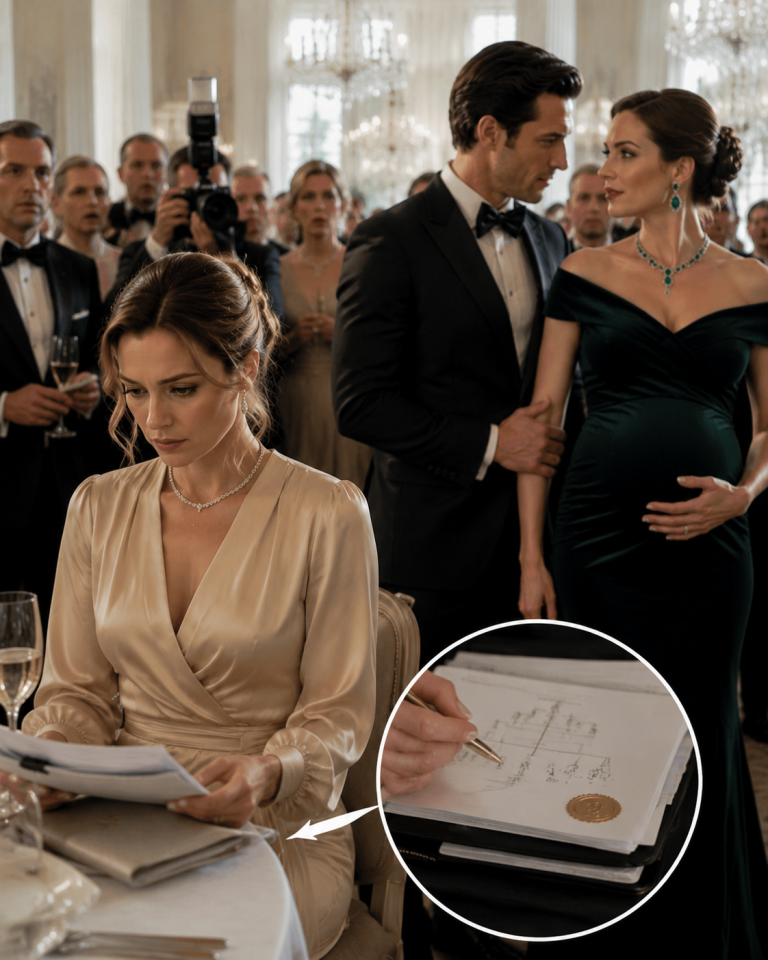
HE LOST THE AUCTION TO THE RICHEST MAN IN COLORADO — THEN THAT MAN CAME CRAWLING UP THE MOUNTAIN ON HIS KNEES WHEN HE LEARNED WHO THE LITTLE GIRL WAS

PART 1
December, 1883.
The San Juan Mountains, Colorado Territory.
The descent from the timberline always felt, to Silas Spencer, like crossing a border into a foreign country.
Up at eight thousand feet, where the air thinned and the trees grew twisted and defiant, the rules were honest. Cold killed you or it didn’t. The elk either crossed your path or it didn’t. A man was worth exactly what he could do, no more and no less, and the mountain kept its accounting with brutal impartiality. Silas had lived by those rules for a decade and had found in them a kind of peace, or at least the absence of the particular pain that civilization kept inventing new ways to inflict.
But twice a year, he came down.
Today he had a specific reason. For the past six months, Abigail had been quietly fascinated by the picture in the Montgomery Ward catalog — a silver-inlaid music box from a workshop in Geneva, the kind of thing that played three notes of a waltz and cost more than a prospector made in two months. She had never asked for it. She had simply looked at the picture with the contained, careful longing of a child who has learned not to want things too loudly.
Silas had noticed. He had spent the autumn running his lines harder than usual, taking premium pelts and panning the cold creeks at dawn, hoarding gold until the pouch in the iron chest had the right weight to it.
He was going to buy her the music box.
She rode in front of him on Samson’s broad back, bundled in wolf fur that swallowed her small frame almost entirely, her auburn hair escaping in wild curls from beneath the wool cap. The hickory brace that supported her left leg rested across the saddle — his own work, those long winter evenings when she was four years old, his large hands learning a patience they had not known they possessed, shaping the hickory to the precise angle of her stride, lining it with soft leather, reinforcing the joint with lightweight iron. She had learned to walk in it without looking at it, the way you learn to walk without thinking about your feet, and watching her move still produced in Silas a fierce, wordless pride he had no name for.
*Papa, are we almost there?*
*Just past this ridge, little bird.*
He pulled her closer against the wind, and below them, through the narrowing gap in the peaks, the smoke from the Garrison Ridge train depot rose in gray columns against the white sky.
He had not been to town in six months. Six months was long enough for a place like Garrison Ridge to change its face entirely, and as they descended the switchbacks into the valley, the change was visible from the ridge: the raw timber buildings he remembered had been replaced, street by street, with brick and glass and cobblestone, the raw material of a mining camp transformed into the architecture of ambition.
Harrison Caldwell’s ambition, specifically.
Caldwell was an eastern industrialist who had arrived in the San Juans with investment capital and the complete conviction that the frontier was simply a disorganized version of something he could organize, if given sufficient leverage. He had driven the railroad through the mountains at a cost in lives and labor that the company ledgers did not itemize. He owned the rail line, the bank, the largest silver mine on the Animas, and by extension the town itself. The men who worked his mines lived in company housing, bought from company stores, and owed their ongoing employment to the ongoing goodwill of a man who experienced goodwill the way other men experienced weather — as something that changed without notice and could not be predicted.
Silas despised him. He despised the breed of him, the tailored suit and the gold pocket watch and the easy, automatic contempt that men like Caldwell aimed at everyone who hadn’t made their fortune the way Caldwell had made his, which was by being in the right family at the right moment and then working very hard to ensure nobody else got a similar advantage.
But he looked down at Abigail on the saddle in front of him, and she was watching the town below with wide, wondering eyes, and the music box was waiting somewhere in that town.
*Doesn’t matter where it is,* he had told Josephine, when she’d explained the auction had been moved to Caldwell’s exchange hall. *We have business to do.*
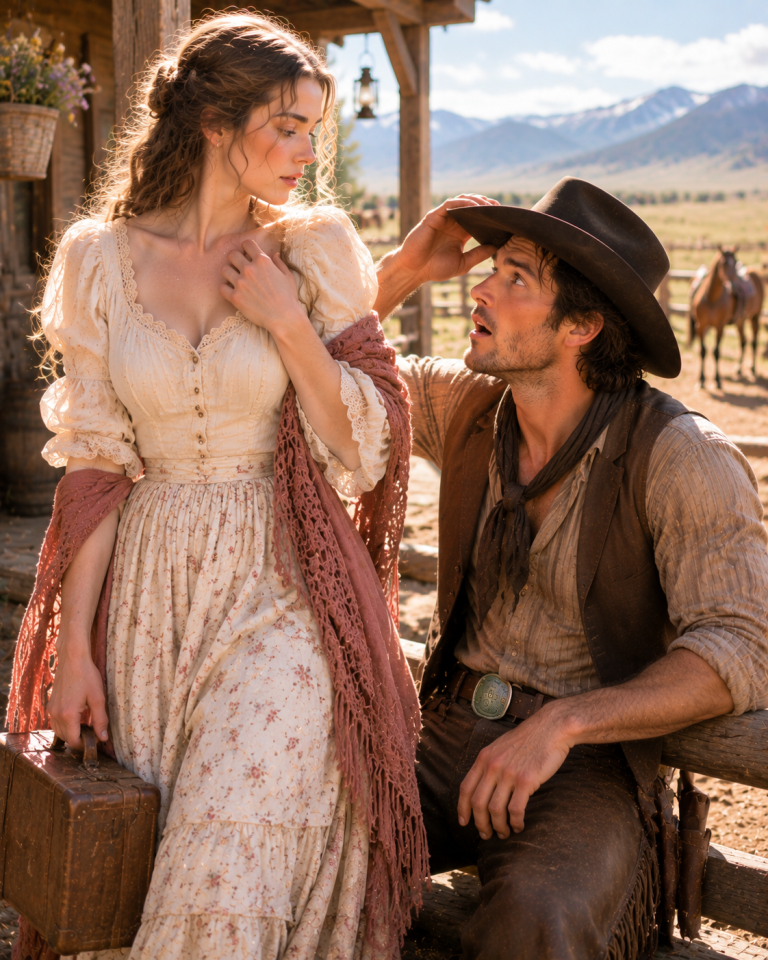
Josephine Bennett was the one person in Garrison Ridge who looked at Silas without the cataloguing assessment that strangers aimed at large, rough-looking men they didn’t understand. She was the town’s schoolteacher, transplanted from Philadelphia, possessing a sharp intelligence and a quality of attention that saw through surfaces to what was actually present underneath them. She had first met Silas when she’d asked if the large silent man who occasionally sat at the back of the schoolroom watching his daughter was going to introduce himself, and he had said *Silas Spencer*, and she had said *I know who you are, Mr. Spencer, I’m asking if you’re going to introduce yourself*, which was the first time in recent memory that he had laughed.
She had warned him, on the boardwalk outside the mercantile, her breath clouding in the cold air.
*Please be careful. Caldwell is in a foul mood. The railroad union is threatening a strike and he’s using this jubilee to parade his power. He won’t take kindly to anyone he deems unrefined.*
*I ain’t looking for trouble, Josephine. Just a music box.*
The Caldwell Exchange was a cathedral built to the glory of money. The ceilings vaulted, the mahogany pillars polished to a mirror finish, the crystal chandeliers throwing their cold brilliant light over four hundred people who had dressed for the occasion and were now performing the particular theater of the very wealthy at leisure.
When Silas pushed open the heavy oak doors, the sound of the hinges was exactly loud enough.
The room went quiet.
He stood in the doorway with Abigail’s small gloved hand in his massive one, and he felt the weight of four hundred pairs of eyes moving over them — the buffalo hide coat, the worn leather, the snow-dusted boots, the child in the hickory brace — and he watched the room perform its collective assessment and arrive at its collective verdict in approximately three seconds.
*Keep your head up, Abby,* he murmured.
*Papa, everyone is staring.*
*We have as much right to be here as anyone.*
On the raised balcony above the floor, Harrison Caldwell looked down at them over the rim of his crystal tumbler with an expression of pure, unfiltered disgust. The disgust of a man who has organized his entire world to exclude certain things and is now confronted with one of those things in his own house.
The bidding began at fifty dollars.
Silas spent everything he had.
At two hundred, he reached his absolute limit. He had panned every creek and worked every line through the autumn months, and every ounce of it was in the pouch in his coat, and two hundred was the number at the bottom of the accounting.
He bid two-ten.
Caldwell laughed.
*Five hundred.*
It fell into the room like a stone into still water. Five hundred dollars for a music box nobody in this room needed, a number so absurd that even the wealthy investors in the front row shifted in their chairs. Caldwell didn’t want the item. The item was beside the point. The point was the lesson being administered, loudly, in front of witnesses: this is what unlimited capital can do that willpower cannot. This is why you stay in your cave on the mountain.
Silas’s hands dropped from his coat.
He looked down at Abigail.
*I’m sorry, little bird. I can’t.*
She looked up at him with her mother’s green eyes and said the thing that broke him more thoroughly than anything Caldwell had done.
*It’s okay, Papa. It’s just a box. I have you.*
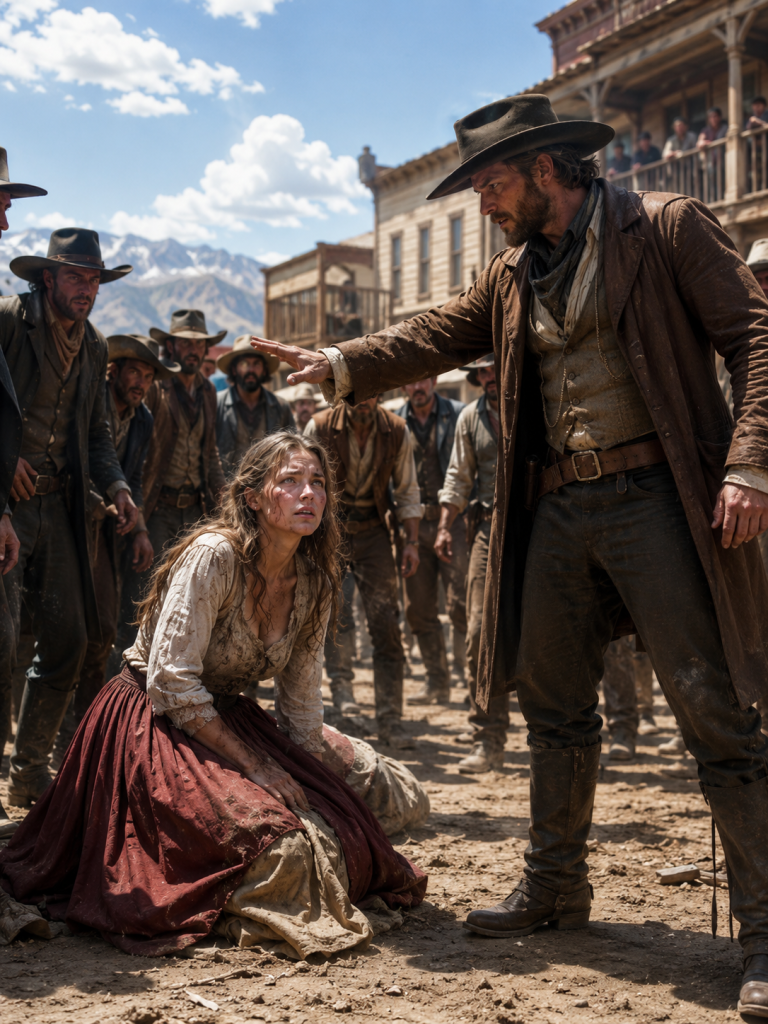
She took a step backward to leave, and her brace caught the edge of the imported Persian rug, and she went down hard against the display table, and the crystal champagne flutes went with her in a cascade of shattering glass.
The room’s silence was of a different quality now.
*Watch it, you clumsy little cripple.*
A woman’s voice, from somewhere in the crowd. Not loud, not particularly vicious, just reflexive — the automatic contempt of someone who has never had to think about what their words cost.
Silas was already on his knees, his big hands hovering over his daughter, checking her, speaking softly.
Abigail was trembling. The tears she had been holding since the bidding started came down freely now, and she pressed her face against his coat and said *I’m sorry, Papa, I’m sorry*, as if the crime were hers.
Heavy footsteps on the staircase.
Harrison Caldwell came down to the main floor and looked at the shattered crystal, and the snow melting from Silas’s boots onto his Persian rug, and then at the little girl on the floor, and he opened his mouth.
What he said next, every person in the Caldwell Exchange would carry the exact words of for the rest of their lives.
*A feral animal,* he said. *A wounded dog. The child belongs in a barn. It is an insult to civilized society that you even dragged her down from whatever squalid cave you inhabit.*
The room held its breath.
Silas did not throw the punch. He had calculated, in the second between Caldwell’s first word and his last, what a punch would cost: the Pinkerton guards would shoot him where he stood, and Abigail would be left alone in this town that had just called her a feral animal, and she would have to find her way in it without him.
So he picked her up.
He held her against his chest with both arms, and he looked at Harrison Caldwell from his full height, and what Caldwell saw in his face was not anger — anger Caldwell understood, anger was something he could manage — but something colder and more absolute than anger. The look of a man who has made a decision that he intends to keep.
*You look at her and see a stray,* Silas said. His voice was barely above a whisper, and it carried to every corner of the hall. *You look at her limp and you mock her. But you’re a blind, arrogant fool. You hold all the gold in this territory. But you don’t even know what you’ve thrown away.*
Caldwell frowned. *Speak sense, you savage, or get out of my sight.*
Silas turned and walked toward the doors.
*You’ll remember this night, Harrison,* he said, without looking back. *When the truth comes down the mountain, it’s going to bring you to your knees. And all your money won’t be able to buy you forgiveness.*
He pushed through the doors and the blizzard took them, and behind him the most powerful man in the Colorado Territory stood in his grand hall with the phantom echo of those words settling around him like something he could not identify and could not shake.
—
PART 2
The blizzard held for three days.
Up on the ridge, the cabin was sealed and warm, the fire built high, the world outside reduced to a white roar that Silas and Abigail inhabited together in the particular self-sufficient quiet of two people who have learned each other’s silences. Abigail did not speak of the music box. She did not speak of the exchange hall or the shattered crystal or the woman’s voice or the word *cripple* or the man on the balcony who had looked at her the way you look at something that has gotten onto your shoe.
She played with her carved wooden blocks and said nothing, which was worse than crying.
Silas oiled his Winchester and watched her and said nothing either, because there was nothing to say that would be adequate, and he had long ago decided that inadequate words were worse than silence.
On the fourth morning, after the wind died, someone knocked.
He had the rifle up before he’d consciously registered the sound, old instinct, and then he cracked the door and put it down.
Josephine stood on the porch in her heavy wool riding habit, her cheeks raw with cold, her horse steaming at the hitching post. She had ridden the switchbacks alone in the aftermath of a blizzard, which was either very brave or very foolish, and Silas had long since understood that with Josephine Bennett the distinction was usually irrelevant because she had already done the thing before the question of category arose.
She brought a parcel from her satchel. A wooden carousel, painted in bright colors, with tiny carved horses that moved when the crank turned. Mr. Higgins at the carpentry shop had made it; he had owed her a favor. It did not play music, but it had been made with the specific, focused care of a person who wanted to repair something they could not have prevented.
*Oh, Miss Josephine,* Abigail whispered, her green eyes catching the firelight. *It’s beautiful.*
Later, after Abigail slept, Josephine asked Silas what he had meant.
At the exchange hall. When he’d told Caldwell he didn’t know what he’d thrown away.
Silas was quiet for a long time.
Then he went to the iron chest at the foot of his bed and unlocked it.
—
PART 3
He came back with two things.
A tarnished silver locket, small enough to rest in the center of his palm and almost lost there. And a faded daguerreotype photograph, its image faded at the edges but preserved at its center, a young woman in eastern silk standing on the porch of a sprawling brick mansion, her chin tilted slightly upward, her expression containing the precise mixture of pride and something else — something contained, held close, not quite showing itself.
Silas placed them in Josephine’s hands without preamble.
She opened the locket.
The tiny portrait inside showed a young woman with striking emerald eyes and a cascade of auburn hair, and Josephine knew the eyes before she had consciously registered the resemblance, because she had been looking into those same eyes every day in the schoolroom for a year.
*My wife,* Silas said. *Catherine.*
*She was beautiful.* Josephine’s voice was very quiet. She looked at the daguerreotype, at the silk dress, at the mansion behind her. Something caught in her mind — the architecture, the particular cut of the stonework — and then she looked at the young woman’s face more carefully. The jawline. The set of the nose. The bearing.
*Silas.* She looked up. *Who was she?*
He leaned against the stone mantle and looked into the fire.
*A runaway,* he said. *Ten years ago. She fled a life she couldn’t breathe in — her father, his money, the way he used both of them like instruments. She hated what he was. She came out west to find something real.* He paused. *I found her when her stagecoach broke down near the Animas Pass. We fell in love. We built this cabin. We were happy, as happy as two people can be who know what they left behind to get there.* He was quiet for a moment. *When the fever took her, I thought it had taken everything. But she left me Abigail. A piece of her.*
He looked at Josephine directly then. The firelight moved across his face, and she saw behind the stoicism the grief that had never properly healed, only scarred over and kept going.
*Catherine never took my last name legally,* he said. *She kept her maiden name hidden in the records so her father couldn’t track her down through the circuit court registries. Her maiden name was Catherine Caldwell.*
The tin cup left Josephine’s hands.
She didn’t notice it fall. The hot coffee hit the stone hearth with a hiss and spread and she was not looking at it — she was looking at Silas with the specific expression of a person whose mind has just assembled a complete picture from fragments she has been holding for months without knowing what they formed.
*Harrison Caldwell,* she said. The name came out barely above a breath. *Abigail is his —* She stopped. *She’s his granddaughter.*
*His own flesh and blood,* Silas confirmed. His voice had gone flat and cold in the way that the mountain was flat and cold — not emotional, just the actual temperature of a fact. *The little girl he called a feral animal. The child he humiliated for a parlor trick.* He held Josephine’s gaze. *That is his lineage. That is the legacy he has left in this world.*
The fire burned down between them.
Outside, the wind had come back up off the peaks, low and sustained, pressing at the corners of the cabin.
*Does he know?* Josephine asked.
*He didn’t when I stood in his hall,* Silas said. *Whether he knows now depends on how carefully he’s been keeping his own records.*
—
Down in Garrison Ridge, Harrison Caldwell could not sleep.
This was itself unusual. Caldwell had been sleeping well for thirty years, the deep, untroubled sleep of a man who has organized the world to his satisfaction and sees no particular reason for his conscience to interrupt his rest. He had built an empire on the principle that everything had a price and that the man who could pay any price was, by definition, the man with no limitations. He had never found a compelling counterargument to this principle.
Until now.
The mountain man’s words had burrowed in and stayed. *You don’t even know what you’ve thrown away.* Not a threat — he had heard threats, had absorbed them and dismissed them and moved on — but something that did not resolve when he tried to dismiss it. Something that kept returning in the quiet of the early morning, when the house was still and the gas lamps burned low and the gold pocket watch ticked on the mantelpiece.
The little girl with the auburn hair and the emerald eyes.
Caldwell found himself, on the third sleepless night, standing in front of his own mahogany desk, looking at the locked bottom drawer. He had not opened it in two years. Inside it was a stack of letters returned to sender, unopened, from addresses that had stopped being current before the ink had dried. And a portrait of his daughter Catherine, painted when she was twenty, which was the last year she had sat still long enough to be painted, which was the last year she had been in the same room with him for long enough to have a conversation that didn’t end with one of them leaving.
They had fought about the banker he’d chosen for her. That was the surface of it. Underneath, the fight had been about something that had no name — his absolute conviction that he knew what her life should be, her absolute refusal to inhabit the life he’d designed. She had called him things he had never forgiven and that he could not stop hearing. He had said things he could not take back and had never tried to.
She had been gone the following morning, and the frontier had swallowed her as completely as if she had never existed.
He had spent considerable money looking. He had found nothing. He had eventually decided — had trained himself to believe — that this was a grief he had put behind him.
*You don’t even know what you’ve thrown away.*
He called for his enforcer before dawn.
Josiah Reed was a Pinkerton man of the old school — competent, thorough, discreet, and without any strong feelings about the nature of the work he was asked to do. He had been Caldwell’s chief enforcer for six years and in that time had handled situations that Caldwell’s lawyers preferred not to know the details of. When Caldwell told him what he needed — everything about Silas Spencer, his origins, his associations, the mother of the child — Reed had not blinked.
He was gone for five days.
When he came back, he looked unlike himself. The professional neutrality was intact, but underneath it was something Caldwell had not seen on Reed’s face in six years: uncertainty.
He placed a battered leather-bound book on Caldwell’s desk without speaking.
*I tracked down the circuit preacher who used to ride the San Juans,* Reed said. *He kept records. Marriages and burials in the high country. I think you need to read it yourself, sir.*
Caldwell’s hands were unsteady as he opened it. He found the page quickly — the preacher’s cramped, careful handwriting, dates entered with the methodical patience of a man who believed the recording of events gave them permanence.
*Buried, October 14th, 1879. Catherine Caldwell Spencer, wife of Silas, mother of Abigail. Taken by fever.*
The room compressed.
That was the only way Caldwell could describe it afterward, in the small hours when he was still trying to assemble what had happened to him that evening: the walls had moved inward, not physically, but in every way that mattered, the volume of space available to him suddenly and permanently reduced.
The little girl on the floor of his exchange hall. The auburn hair splayed out behind her as she fell. The green eyes, wide with a terror that he had produced, looking up at him with the specific expression of a child confronting something it does not yet have the vocabulary for.
His granddaughter.
Looking at him and seeing a monster.
*Saddle the horses,* he said.
Reed started to object — there was a blizzard moving in over the pass, the trail up the ridge was treacherous in this weather, it would be safer to wait until morning — and Caldwell looked at him with an expression that Reed had never seen on his employer’s face and did not know how to interpret, and did not argue further.
—
The ride up the mountain nearly killed him.
Caldwell was not a man accustomed to physical suffering. He had moved through the world in the insulation of wealth — warm rooms, good horses, sheltered coaches — and the San Juan Mountains in a December blizzard were not interested in making exceptions for men of standing. The cold stripped through his expensive English wool coat as if it were cotton. The trail, where it was visible at all, was a narrow ledge of packed ice above a drop he tried not to measure. His horse struggled and he drove it anyway, which was the kind of thing he always did, and which the mountain absorbed with its usual indifference.
He arrived at the cabin as the last light was going.
He threw himself off the horse before it had fully stopped, and the porch steps were icy, and he barely caught himself on the door frame. He pounded on the heavy timber with both fists.
The door opened.
Silas filled the frame the way the mountains filled the skyline — completely, without gaps, the kind of presence that reorganizes the space around it simply by existing. The Winchester rested in his arm with the casual ease of an extension of his body. Behind him, lamplight fell in warm columns across the cabin floor, and Josephine stood with Abigail in front of her, the child half-hidden behind the folds of her skirt, watching the doorway with her green eyes wide.
Caldwell had prepared speeches. He was a man who had always understood the importance of language, of framing, of controlling the terms on which any confrontation was conducted. He had composed and discarded seventeen different approaches on the ride up the mountain.
He looked at his granddaughter’s face, and all of it dissolved.
*Is it true?*
The words came out broken. He heard them leave him and did not recognize them — not the voice, not the register, not the particular quality of desperation that had replaced everything he’d spent sixty years constructing over the top of it. *Is she Catherine’s?*
He looked at Silas. He was begging. He understood this about himself clearly, perhaps for the first time in his life: he was begging.
Silas reached into his pocket.
The tarnished silver locket described a brief arc through the lamplight and hit the floor at Caldwell’s feet with a small, definitive sound.
Caldwell’s knees gave.
He went down onto the cabin floor in his English wool and his expensive boots, and the mud from Silas’s boots that he had found so intolerable in his exchange hall transferred to his trouser knees, and he did not notice. He opened the locket with hands that shook so badly he could barely manage the clasp, and he looked at the tiny portrait inside, and the portrait looked back at him with his daughter’s eyes in his granddaughter’s face, and something inside Harrison Caldwell — something structural, something that had been holding up a very large and very heavy edifice for a very long time — gave way entirely.
*My God,* he said. *What have I done.*
It was not a question.
He said it into his hands, his face buried, his shoulders shaking with the particular violence of grief that has been held back for too long and is now expressing itself without reference to dignity or context or audience.
*You looked right at your own blood,* Silas said. His voice was the voice of the mountain — not cruel, not performing anger, simply stating what was true with the flatness of a fact. *And you called her trash. You flaunted your wealth and crushed her spirit and mocked the very legs she struggles to walk on. Catherine died out here because she would rather face a brutal winter than spend one more day in the shadow of your greed.*
*Please.* Caldwell raised his head. The face that looked up at Silas was not the face of the untouchable tycoon from the grand hall. It was the face of an old man stripped of every layer that wealth and power had built around him, and what was underneath was smaller and more frightened than anything he had permitted anyone to see in thirty years. *Please. I have money. I can give her everything. The best doctors from New York for her leg. I’ll sign over the railroad, the mines, all of it. Just let me be her grandfather. Just let me —*
He reached toward Abigail.
Abigail buried her face against Josephine’s leg.
She was trembling. This weeping, broken man on the floor of her cabin was the man who had called her a feral animal, who had looked at her with that surgical contempt, and his tears did not yet make him safe — she had no way to know whether tears made him safe, because she had never seen anyone cry like this, and all she knew was that she was frightened.
Silas stepped between them.
*She doesn’t want your money, Harrison.* He looked down at Caldwell, and his voice was not angry anymore. It was something quieter and in some ways harder to bear than anger — it was the voice of a man delivering a sentence that has already been decided. *She doesn’t need your doctors. She has a father who loves her. And she has a mother who is buried under the pines out back.* He paused. *You threw Catherine away for your ambition. Now you have to live with what that cost. The only legacy you have left in this world is looking at you right now, and she looks at you and sees a monster.*
*No.* Caldwell grabbed at the hem of Silas’s coat, and Silas let him, because the gesture was too pitiful to meet with force. *No, please. I have nothing else. I have nothing.*
*You have your gold,* Silas said.
He stepped back, and the coat hem fell from Caldwell’s fingers.
*Now take it and get off my mountain.*
—
Reed had been standing in the doorway through all of it.
He was not a sentimental man — his profession had not selected for sentimentality — but he had served Harrison Caldwell for six years, and in six years he had seen Caldwell in court, in crisis, in the back rooms of political negotiations where considerable pressure was applied to considerable men, and he had never seen him like this. He moved forward and took his employer’s arms and brought him to his feet with the firm, impersonal steadiness of a man performing a duty he had not anticipated.
Caldwell offered no resistance.
He went where he was guided. Out the door, onto the icy porch, down the steps, to the horse that stood trembling and steam-clouded in the night air. Reed helped him into the saddle and mounted his own horse and took the lead rope, because Caldwell was in no condition to navigate.
They descended the mountain in the dark and the cold, and Caldwell did not speak the entire way down.
Silas closed the cabin door and threw the iron latch.
He stood with his hand on the latch for a moment, and the tension in his shoulders moved through one long, visible release — the exhale of a man who has been holding a weight at arm’s length for an extended period and has finally been permitted to set it down.
He turned.
Josephine was on her knees on the floor with Abigail in her arms, and she was looking up at him with the specific expression she used for things she had no adequate words for, which was the expression Silas had come to understand meant the most.
He crossed the room and dropped to his knees beside them.
He folded both of them into his arms, and the three of them held each other on the cabin floor while the fire burned in the hearth and the wind worked at the eaves, and after a while Abigail’s trembling stopped, and after a longer while her breathing shifted into the deep, regular rhythm of a child who has decided that the immediate world is safe and has surrendered to sleep.
Silas felt the exact moment it happened. He held her more carefully after that.
*What will he do?* Josephine asked, very quietly, after a long time.
*He’ll go back to his mansion,* Silas said. *He’ll pour his whiskey and look at his gold and find that neither of them answer the question he’s going to be asking himself for the rest of his life.*
*And Abigail?*
*Abigail doesn’t need him to answer it.* He looked down at his daughter’s sleeping face. The emerald eyes closed, the auburn hair spread against his coat. *She already knows who she is.*
Josephine was quiet for a moment, watching him watch the child.
*You could have told him earlier,* she said. Not an accusation. A gentle inquiry into the shape of a decision. *The moment you recognized the connection. You could have used it.*
*I thought about it.* Silas looked at the fire. *Then I thought about what Catherine ran from. The leverage, the arrangements, the way everything in that house was a transaction. She left all of it. I wasn’t going to bring it back up the mountain.* He paused. *And Abigail needed to see him for what he was before she could ever understand what he is to her. If she ever needs to understand it at all.*
*She might, someday.*
*She might.* He acknowledged this without resistance. *But she’ll come to it on her own terms, in her own time. Not because a rich man came up a mountain and threw his money at her.* He met Josephine’s eyes. *She’s Catherine’s daughter. She’ll know what it’s worth.*
Josephine reached out and placed her hand over his — the large, calloused, impossibly capable hand that had carved a hickory brace for a four-year-old’s leg and carried an elk carcass five miles through powder and held a child upright through a winter that would have broken most men.
She didn’t say anything.
She didn’t need to.
—
The winter passed the way winters in the San Juans always passed — slowly, completely, and then all at once, the snow retreating up the slopes over the course of several weeks in March until the south-facing meadows showed the matted brown of last year’s grass, and then the green of the new growth coming through, and the creek running high and fast with melt.
In Garrison Ridge, the railroad union settled its strike in January, on terms that were somewhat less favorable to Caldwell than the terms of the previous contract, which had itself been somewhat less favorable to the workers than the contract before that had been. The pattern, observed from sufficient distance, described a direction.
Harrison Caldwell did not fight it with his usual ferocity.
He did not fight much of anything with his usual ferocity through the winter of 1883 and into the spring of 1884. The men who worked for him noticed the change without being able to account for it — a loosening, somewhere in the machinery, a reduction in the relentless pressure that had previously organized everything around his will. He attended fewer meetings. He delegated more. He sat, more often than previously, in his office in the early morning with the locked drawer of his desk open, looking at the portrait of his daughter.
He hired a lawyer in March.
The lawyer was instructed to locate a very specific kind of craftsman: someone who made fine mechanical instruments, specifically music boxes, and was capable of producing a piece of exceptional quality that played something specific. The instruction regarding what it should play was handwritten, and the lawyer carried it to Denver with the understanding that the client did not wish to discuss the matter further once the commission had been placed.
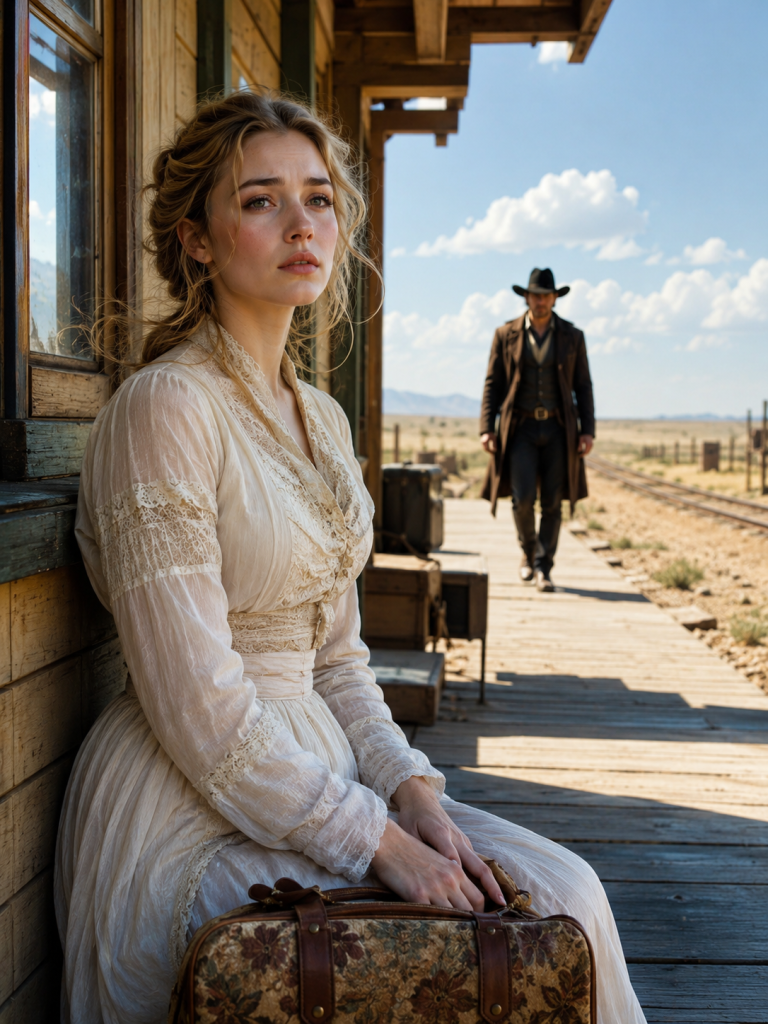
The music box arrived at the Garrison Ridge depot in late April, transported in a case lined with velvet, accompanied by a letter in Caldwell’s handwriting that was exactly twenty-three words long.
The letter was addressed to Abigail Spencer.
The letter did not ask for anything.
It said only: *Your mother loved this music when she was your age. It belonged to her. It should belong to you.*
Silas read the letter twice, standing in the mercantile while Ezekiel Cobb pretended to be very interested in his inventory, and then handed it to Josephine, who read it once and handed it back without speaking.
He carried the case up the mountain on Samson’s back.
That evening, he sat at the heavy oak table and watched his daughter open the case and lift the lid of the music box inside — silver-inlaid, from a workshop in Geneva, with a hand-painted miniature on the lid that showed a mountain scene, the peaks of the San Juans rendered in careful brushwork by someone who had used Caldwell’s description of them since he had never seen them himself.
It played the first eight bars of a waltz, clear and pure in the cabin’s warm air.
Abigail’s face did what faces do when they encounter something beautiful that they were not expecting: it simply opened, all the contained and careful management of expression that children learn dissolving for a moment into pure, unguarded reception.
*Papa,* she said. *Listen.*
*I’m listening,* Silas said.
She held the box and listened to it play through twice, and then she looked up at him with her mother’s eyes.
*Who sent it?*
He had thought, on the way up the mountain, about what answer to give. He had considered several. He had settled, as he usually settled, on the truth, offered without elaboration and left to be understood in whatever proportion was available to a seven-year-old in December of 1883.
*Your grandfather,* he said.
Abigail absorbed this.
She looked at the music box. She looked at Silas. She looked at the music box again, and he could see her working at it — the way she worked at difficult things, from the outside in, carefully, without rushing.
*The man from the hall?* she said. *The one who —*
*Yes.*
A long pause. The music box had wound down. She reached out and turned the key and it began again.
*Is he sorry?* she asked.
Silas looked at the miniature painting on the lid. The careful reproduction of mountains the painter had never stood in, rendered from the description of a man trying to send something toward a grandchild he had never properly seen.
*Yes,* he said. *I think he is.*
*Okay,* Abigail said.
She set the music box on the table and listened to it play, and after a while she went to find Josephine to show her, which was what she did with everything that mattered to her, and Silas watched her go with the hickory brace clicking softly against the floorboards, and the music played in the warm room, and through the window the last of the April snowpack was blue in the evening light on the upper slopes.
He thought about Catherine.
Not the grief of her — he carried that always, in the specific way you carry a thing that has become part of your weight — but the fact of her. The girl who had looked at a life built on money and power and the willingness to treat people as instruments, and had chosen a log cabin in the San Juan Mountains instead. The woman who had loved a mountain man and raised a daughter who said *it’s just a box, Papa, I have you*, as if this were the obvious ranking of things, as if she had simply inherited the ability to know what mattered.
She had.
She did.
He heard Josephine’s voice from the back room — the warm, particular voice she used with Abigail, the register that had no performance in it — and Abigail’s answering laugh, which was high and unguarded and entirely itself.
Silas Spencer sat at the heavy oak table in the cabin he had built and the life he had made, and the music played, and the light went off the mountains outside, and he stayed where he was until Josephine came back and sat across from him with two cups of the terrible chicory coffee that he had somehow developed a preference for over the years, and they sat together in the warm room with the music box between them and the sound of a child sleeping in the back, and the night settled over the San Juans like it always did — absolute and cold and clear, the stars so thick and close at this altitude that they looked almost touchable, the mountain holding up the sky as it always had, patient and permanent and entirely indifferent to the small warm lights of the people who had decided to make their lives against it.
Down in the valley, in a mansion full of gold and gas lamps and the accoutrements of a life built for appearances, Harrison Caldwell sat in the early dark with the portrait of his daughter and the echo of a music box he would never hear, and began, slowly, the long work of understanding what things cost.
He would not finish it. That was the nature of that kind of accounting: you never arrived at a final number. But he started, which was more than he had done the previous sixty years, and the mountain, which kept no particular interest in such matters, noted it with its usual silence and continued.
—
*THE END*