No One Could Handle the Mafia Boss’s Daughter—Until a Poor Waitress Did the Impossible

**PART 1**
The thing that silenced the Carano Room was not the sound of breaking glass.
In a supper club that served a clientele like this one — aldermen and developers, federal judges and men who would never appear in any newspaper but could still determine what happened to a zoning variance, a shipping route, or a person — broken glass was barely worth a flinch. What silenced the room was the quality of what preceded it: a voice stripped completely bare of its public-facing materials, rage running so pure it sounded almost like grief.
Rosa Vega had been carrying a tray of old-fashioneds toward table nine when the sound came from the upper mezzanine, and she had not quite put the tray down fast enough.
One of the glasses caught the edge of the service station when she set it down.
She stood, tray balanced, and looked up.
On the mezzanine level where the private booths were, where the lighting was warmer and the distances between tables were arranged for the specific privacy of powerful people, a woman was standing with a crystal whiskey tumbler raised over her head like a woman who had decided the laws of consequence no longer applied to her and was daring the room to disagree.
She was very beautiful and completely uninterested in it.
Gianella Caruso was twenty-two, wore a black dress that looked like someone had constructed a weapon out of silk, and had the particular expression of a person who had been told *calm down* too many times by people who had no standing to give that instruction.
One of the bodyguards assigned to her — a heavy man named Dario who Rosa had seen in the club every week for the past eight months — was bleeding from a cut on his cheekbone and holding both hands out in the universal posture of a man trying to reason with weather.
“Miss Caruso,” Dario said carefully. “Your father asked us not to let you leave.”
“My father,” Gianella said, “can go to hell.”
The tumbler made a clean arc.
It hit the brass railing at the edge of the mezzanine and the sound it produced was the kind that reached down to a cellular level and told the human body it was time to become very still.
Everyone in the Carano Room became very still.
Except Rosa Vega.
Rosa set down the tray, untied her apron from behind, and handed both to the nearest station.
Her manager, Paulo, materialized at her elbow with his face doing several things at once. “Rosa. Do not even consider—”
“I’ll be right back,” she said.
She climbed the mezzanine stairs at the pace of someone who had decided.
This was, Rosa understood, a bad decision by every rational measure. She had been working the Carano Room for eight months because she needed money, and she had been surviving her entire adult life on the specific combination of stubbornness and pragmatism that meant she always knew when the smart thing was to stay out of something.
This was not that moment.
She was five days from eviction, behind on a car payment, and had exactly two hundred and twelve dollars in her checking account as of this morning.
She was also thirty-one years old and had been watching a girl unravel for eight months without anyone doing anything except give her more space to unravel in.
“Put it down,” Rosa said.
Gianella turned.
She looked at Rosa the way people looked at things they were deciding whether to categorize as irrelevant.
“I’m sorry?”
“The tumbler.” Rosa crossed to the table. “Put it down.”
Dario made a sound beside her that was probably meant to be a warning.
Gianella’s gaze sharpened. “You’re one of the servers.”
“I’m the person trying to finish a shift,” Rosa said. “Put it down. You’re frightening the room, and you’re going to hit someone you didn’t intend to hit, and then everybody’s night gets worse.”
The mezzanine was very quiet.
Nobody in the Carano Room had spoken to Gianella Caruso this way. Not her father’s captains, not the men who moved around her like satellites afraid of her gravity, not the therapists she had reportedly gone through the way other people went through umbrellas — one after another, lost or destroyed, replaced only by someone even more temporary.
Gianella laughed.
It was not a friendly sound. It was the laugh of someone genuinely surprised by something they had not planned to find interesting.
“Do you know who my father is?” she asked.
“Rich,” Rosa said. “Powerful. Not here right now.” She put both hands flat on the table and held Gianella’s gaze. “Those things are all true. None of them are reasons to throw a tumbler at a man’s face.”
A beat passed.
Then Gianella looked down at her own hand, at the tumbler still balanced there. She looked at it like she had almost forgotten she was holding it.
Rosa moved the glass pitcher on the table slightly. Not aggressively. Just as a reminder of angles.
Gianella understood the gesture. She made a small sound — not a laugh exactly, but a concession to the absurdity of the specific moment.
She set the tumbler down.
“This is embarrassing,” she said.
“Yes,” Rosa agreed.
“You’re not afraid of me.”
“Not particularly.”
“Why?”
Rosa thought about this honestly. “Because you’re not trying to hurt anyone. You’re trying to be heard. Those are different.”
Something crossed Gianella’s face — a flash of something real, visible for maybe two seconds before the armor reassembled.
She walked past Rosa, not gently, shoulder catching Rosa’s arm with enough force to leave a bruise, and descended the stairs with Dario and the other bodyguards scrambling behind her.
Rosa stood at the mezzanine railing and listened to the front doors close.
Then she became aware of her own heartbeat and how aggressively it was rioting.
Dario appeared at her elbow.
“That,” he said, “was the most dangerous thing I’ve seen anyone do in this room.”
“She didn’t hurt anyone.”
“You,” Dario said, “are why people get surprised.”
He went after Gianella.
Rosa went back to her tray.
She was at table nine, setting down the last old-fashioned, when Paulo tapped her arm.
“There’s a man asking for you,” he said. His voice had the specific quality of someone describing a situation they hoped would resolve before involving them further. “In the office.”
“Am I fired?”
Paulo looked like he genuinely didn’t know.
“His name,” Paulo said, “is Marco Falco.”
The name arrived in Rosa’s chest like something cold.
Everybody who worked in establishments like the Carano Room knew Marco Falco the way they knew weather in specific climates: as a force with patterns, not to be argued with, not to be ignored, not to be misunderstood. He was the Caruso family’s primary problem-solver, which in this context meant the man who made problems disappear, by negotiation where possible and by other means when not.
Rosa set down the empty tray.
She walked to the office because there was nothing else to do.
—
Marco Falco sat behind Paulo’s desk.
He had the dark focused quality of a man who had learned, very young, that attention was more useful than expression and had never unlearned it. His suit was charcoal and fit precisely. A thin scar ran through one eyebrow. He was thirty-five or so — it was difficult to tell because his face was one of those faces that had stopped aging at a certain point and simply remained there, fixed at whatever age consequence had arrived.
He turned a tablet toward her.
Security footage: the mezzanine, precise and clear, stopping on the frame where Rosa stood with her hands on the table and Gianella Caruso looked at her like something she had not expected to encounter.
“Sit down, Miss Vega,” Marco said.
She sat.
“My men have been managing Miss Caruso for four months,” he said. “Three previous companions before that. Her father has attempted direct intervention twice.” He turned the tablet off. “You got her to stand down in under a minute.”
Rosa kept her face level. “She wanted to be heard.”
“What she wanted,” he said, “is complicated. But yes.” He studied her. “How much do you make here?”
She told him.
He reached into his jacket and removed a checkbook, which was already open.
He wrote. He tore. He placed the check on the desk.
Rosa looked at it.
Eight thousand dollars.
“That’s a signing bonus,” he said.
Rosa picked up the check and looked at him. “For what.”
“For a position with the Caruso family,” he said. “Companion to Gianella Caruso. Live-in. Your own room, full expenses covered. Three thousand five hundred dollars a week.”
The number was so far outside her current financial reality that it briefly stopped making sense.
She understood what three thousand five hundred dollars a week meant in the specific context of her life: it meant the eviction notice disappeared. It meant the car payment. It meant breathing room she had not had in three years. It meant stopping the particular kind of daily arithmetic that converted everything into what she could and couldn’t afford.
Rosa looked at the check.
“What’s the actual offer?” she asked.
Marco looked at her.
“I mean,” she said, “what are the real terms.”
He leaned back. “The real terms are that you go where she goes, you keep her from making decisions that put her in a coffin, and you do not speak about the family to anyone outside it.”
“And if I decide to leave?”
“You leave,” he said. “If you betray us, that’s different.”
“How different?”
“Different enough,” he said, “that I would suggest not finding out.”
Rosa looked at the check again.
Then she looked at him.
“I need to know what broke her,” she said.
Something shifted in his expression. Not much. A degree.
“Her mother died three years ago,” he said. “She and Gianella were close. The family has not been good at managing grief in a way that leaves room for other people’s.”
“She’s been doing this for three years?”
“The escalation began after the one-year mark.”
Rosa looked at her hands.
She thought about the girl on the mezzanine. About the flash of something real for two seconds. About *you’re not afraid of me* said with the specific tone of someone who had been afraid for a long time themselves and recognized the absence of it in other people.
She folded the check and put it in her apron pocket.
“One condition,” she said.
“Tell me.”
“I don’t receive instructions on how to handle her from anyone. Not her father, not you. I read the situation and I act according to what I see. If you want someone who follows a script, hire someone else.”
Marco looked at her for a long moment.
“The last person who said something like that to me,” he said, “was very good at their job.”
“Was?”
“They moved on.”
“Voluntarily?”
“Yes.”
Rosa stood.
“All right,” she said.
By midnight, she was in the back of a black car heading north.
The Caruso estate was larger than she had pictured, which was saying something because she had pictured it as large. Stone walls, cameras, the specific topography of wealth that had decided decades ago that it did not need to be inviting. The main house stood pale and heavy under winter clouds, all windows and columns and the sense of a building that had absorbed a great deal of human history and had not particularly been changed by any of it.
At the foot of the main staircase, a man waited.
He was older than she expected, silver-haired and slightly bent over a cane, but the air around him was the specific air of someone who had once required no assistance at all and was still in the process of negotiating with that fact.
Sebastiano Caruso looked at her with the focus of a man who did not make decisions quickly but made them absolutely.
“Marco called you a natural,” he said.
“I don’t know what I am,” Rosa said. “I talked to your daughter and she put down a glass.”
“Nobody has managed that in three years.”
“I didn’t manage it. I just spoke to her like she was a person.”
Something shifted in the old man’s face.
“She’s in the pool house,” he said. “She’s been there since she got back.”
Rosa went.
The pool house was warm and wrecked in the specific way of beautiful rooms that had been mistreated by someone with access to everything and respect for nothing. A chaise lounge had been dragged into the pool. A side table lay in pieces against the glass wall. Gianella sat at the pool’s edge in a robe over a swimsuit, smoking, looking at the water like she was trying to see the bottom of something that didn’t have one.
She heard Rosa come in and didn’t turn.
“The babysitter,” she said.
“Rosa.”
“Did my father pay you to be here?”
“He employed me,” Rosa said. “That’s different.”
Gianella made a sound of limited agreement.
Rosa sat on the edge of the pool, a few feet away, not close enough to crowd but not far enough to be absent.
For a while neither of them said anything.
“You should leave,” Gianella said. “Everybody does eventually. The smart ones do it early.”
Rosa looked at the water.
“My rent was due five days ago,” she said. “My car payment is two weeks late. I have enough in my account for approximately four days of groceries.” She paused. “I’m not leaving for financial reasons, and I’m not staying for noble ones. I’m staying because you’re interesting and I’m broke.”
Gianella finally looked at her.
Something moved through her face — genuine surprise, and under it, something more fragile.
She laughed. It was short and real and nothing like the sounds she had been making earlier in the evening.
Then she studied Rosa’s face the way people studied things they were trying to understand.
“You’re hiding something,” she said.
“Everybody is,” Rosa said.
“No,” Gianella said. “Specifically. You.” She tilted her head. “You weren’t afraid of me on that mezzanine. But you’re afraid of something.”
Rosa held her gaze without looking away.
“Then we have that in common,” she said.
Gianella looked at her for a long moment.
Then she flicked her cigarette into the water.
“Fine,” she said. “Stay. Let’s see how long you last.”
Rosa thought: probably longer than anyone expects.
She thought: I hope that’s true.
She thought: I have not been in a place where someone looked at me like I was interesting in a very long time, and I did not plan for that to be complicating.
She thought nothing else about Marco Falco.
She tried not to.
—
**PART 2**
The first week was the two of them calibrating.
Gianella tested like a person who had been disappointed too many times to stop testing and not enough times to stop hoping. She tried dismissal, which Rosa absorbed. She tried cruelty, which Rosa answered with flat honesty. She tried disappearance, slipping between rooms with the specific talent of someone who had learned to move through large spaces unnoticed, and Rosa followed with the specific talent of someone who had learned how large spaces worked.
She did not manage Gianella.
She paid attention to her.
That was the difference, though neither of them named it.
The crack in the wall arrived on a Thursday.
Rosa woke at two-fifteen with the instinctive alertness of someone whose sleep was not deep enough to be immune to the sound of an engine turning over. She was dressed and at the east garage door in ninety seconds. Gianella’s silver Alfa was already backing out, lights off.
Rosa looked at the garage, assessed, and made a decision.
Marco’s motorcycle was against the far wall.
She found the keys in the handlebar storage, which was the specific kind of carelessness that came from being certain nobody on your property would take your motorcycle without permission.
She took the motorcycle.
The chase ran them down three highways and into the city’s old warehouse district, to an underground club with bass so low it felt structural. Gianella went in wearing a red dress that was designed to make people look and Rosa went in wearing the clothes she had put on in ninety seconds, which were not designed for anything except function.
She found Gianella in a private room.
Five men. The specific quality of their attention — too focused, too familiar, the particular predatory patience of people who had calculated that the woman they were with had come somewhere she probably shouldn’t have and understood that this gave them leverage.
Rosa assessed in three seconds.
“We’re leaving,” she said.
Gianella rolled her eyes. “Go back to bed.”
One of the men stood up. He had a smile that had been designed to be reassuring and had missed.
“She said she wants to stay,” he said.
Rosa hit him with a bottle.
Not elegantly. She had grabbed the closest thing off the nearest table and swung before the sentence finished landing, because the time between a sentence like that and a worse outcome was specifically the gap she needed to prevent from existing.
What followed was approximately two minutes of controlled violence.
Rosa overturned a table into one man’s knees. She caught another with an elbow strike to the throat. She pulled Gianella toward the kitchen by the wrist, through the specific geography of chaos she had created, and found the back exit blocked.
Two men with knives.
Gianella went still beside her.
Rosa did not.
She grabbed a cast-iron pan from a hook, hit the first man on the forearm rather than the head because she had learned that forearms were more effective at changing someone’s functional capacity and less likely to produce consequences she would have to account for later. The second came at her with the knife driving down and she caught his wrist and felt her shoulder start to fail and thought: *this is the part where timing becomes critical.*
A gunshot.
The man fell sideways.
Marco Falco stood in the kitchen doorway.
He was wearing a dark coat. He was holding a pistol with the casual posture of someone who had done this many times and found neither pleasure nor distress in it. His eyes moved across the kitchen with the economy of a man accounting for every variable.
They landed on Rosa.
Something happened in his face. A calculation running faster than usual.
“You stole my motorcycle,” he said.
Rosa was breathing through the specific focused quality of extreme adrenaline. “It’s outside. I brought it back.”
He looked at the two men on the floor.
He looked at Gianella, who was pressed against the wall with her knees not quite steady.
He looked at Rosa again, with a new quality of attention she could not immediately name.
“How,” he said, “did you do that.”
“Kitchen geometry,” she said. “And a heavy pan.”
He crossed the room. His soldiers were already moving through the club, efficient shadows in dark coats. He stopped in front of Rosa and looked at her for a moment long enough to be calibrated.
“You’re not a waitress,” he said.
“I am a waitress,” she said. “I’m also other things.”
He looked at the pan still in her hand, at the three men still on the floor, at the specific pattern of how she had moved through the room.
She saw the moment he placed it.
Not what she was — he didn’t know that yet. Just that she was *trained.* And training had a grammar that people who understood training recognized.
He said nothing else.
He guided them both out to the waiting car.
In the back seat, Gianella’s breathing was uneven. She pressed her hands flat on her thighs to stop them shaking and then looked at Rosa.
“They were going to—”
“I know,” Rosa said.
“I didn’t realize.”
“I know.”
Gianella looked at her hands.
“Someone told them we’d be there,” she said. “I told two people where I was going. I told Marta at the house.” She looked at Rosa. “And I texted a number I thought was a friend.”
Rosa looked at Marco in the front seat.
He was already on his phone.
“Is Marta still employed?” Rosa asked.
“She is as of tonight,” Marco said, without turning. “The friend’s number will be traced by morning.”
“Someone,” Rosa said, “has been leaking Gianella’s movements.”
Marco’s silence confirmed it.
Gianella looked out the window.
“I could have been dead,” she said. Not dramatically. As a fact being processed.
Rosa didn’t answer immediately.
Then: “Yes.”
“But you came after me.”
“That’s the job.”
Gianella turned back to look at her. “No,” she said quietly. “It isn’t. Most people take the money and stay in the room where it’s safe.”
Rosa looked at the city moving past the window.
“I don’t know how to do that,” she said. “I’ve tried.”
—
**PART 3**
The attack in the club changed Gianella.
Not all at once. It was not that kind of change — the sudden, theatrical version that arrived in a single moment and made everything after it look fundamentally different. It was the slower, stranger transformation that happened when someone who had been performing invincibility discovered that invincibility had been doing most of the work of keeping them alive, and that the night it wasn’t available they had found themselves afraid and frozen and in need of someone they had not been particularly kind to.
She came down to breakfast the next morning.
Not dramatically. Not with any announcement. She simply appeared in the kitchen, poured her own coffee, and sat across from Rosa.
“I froze,” she said, into the coffee.
“Yes.”
“You didn’t.”
“I have training you don’t,” Rosa said. “Freezing under those circumstances is a rational physiological response to information your body hadn’t learned to override.”
Gianella looked at her.
“That’s a very clinical way to tell someone they’re not weak.”
“I wasn’t telling you you’re not weak. I was telling you why you froze. Those are different conversations.”
Gianella considered this.
Then, very quietly: “Thank you.”
It was the first honest thing she had said to Rosa without armor around it.
Rosa looked at her. “You’re welcome.”
After that, the space between them changed shape. Not friendship exactly — Gianella was too armored for easy friendship and Rosa was too careful — but something more functional than the adversarial coexistence of the first week. Gianella stopped testing and started observing. Rosa stopped managing and started noticing. They navigated the house and the schedule and the specific social landscape of being Gianella Caruso’s companion with the efficiency of people who had decided to take the project seriously.
Marco noticed.
He came to the house twice a week, sometimes three times, for security briefings with Sebastiano and then for the practical management of whatever was currently being managed. He spoke to Gianella with more directness than Rosa had expected — he didn’t handle her, she realized, which was why she endured him when she endured very few people. He spoke to Rosa with the specific focused attention of someone who was still running the calculation about what she actually was, keeping it open while the evidence accumulated.
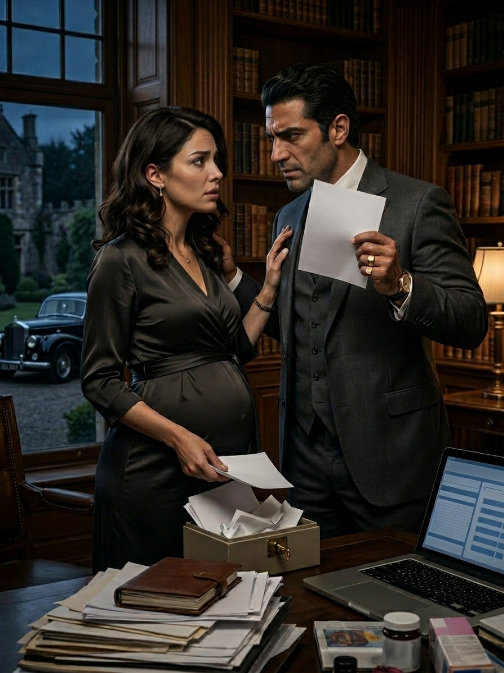
On the third Thursday, he found her in the study at seven in the morning with her laptop open and three of Sebastiano’s private shipping records spread across the table.
She had been there for an hour. She had not heard him come in.
“Those are private documents,” he said.
Rosa looked up. “They’re in an unlocked cabinet. Gianella asked me to find a contract from last March. I was looking.”
“And reading.”
“I read quickly.”
He looked at the records. He looked at her. The calculation behind his eyes was running faster now.
“What do you see,” he said. “In those records.”
Rosa looked at the documents.
“Inconsistencies in the manifest dates for three freight routes,” she said. “Nothing dramatic. The kind of thing you’d miss unless you were looking at patterns across multiple periods.”
Marco crossed the room and looked at the records.
He was quiet for a long time.
“Three routes,” he said.
“The same contractor appears across all three with variance that doesn’t match the volume.”
Marco picked up one of the documents.
He looked at it.
Then he looked at her with the specific quality of attention he used when he was reassessing something he thought he had already understood.
“Where,” he said, “did you learn to read shipping manifests.”
Rosa closed her laptop.
“I grew up around commerce,” she said.
“That’s not an answer.”
“No,” she said. “It isn’t.”
He looked at her for a long moment.
“I’m going to find out who you are,” he said.
“I know,” Rosa said. “I’d have found out by now if I were you.”
He almost smiled. It was the kind of almost-smile that was more visible for being so restrained.
“Give me until the weekend,” he said.
“I’m not going anywhere,” she said.
And she meant it. That was the complicated part. She had been in this house for two weeks and she meant it in a way that was beginning to be inconvenient.
—
The charity gala was at the Lyric Opera House, three weeks later, on a night when winter had finally arrived properly in the city and coated everything in the specific flat gray of a sky that had made a decision.
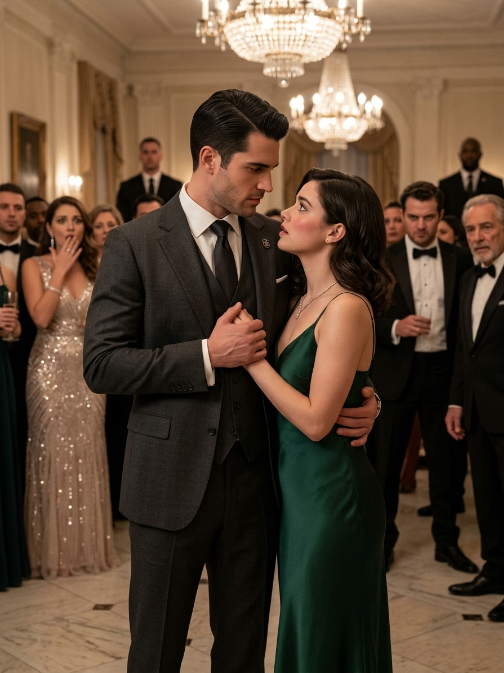
Gianella wore midnight blue. Rosa wore black, which Marco had selected, and under the dress in a thigh holster he had fitted himself with careful, professional hands and absolutely no acknowledgment of what that required physically, she carried a compact weapon.
“If anyone,” he said, as he buckled the holster, “gets too close to her—”
“I know what to do,” Rosa said.
“I know you do.” He paused. His hands were still. “That’s what concerns me.”
She looked at him.
He looked back.
The problem was — and she had been aware of it for weeks in the specific way you were aware of a structural change in familiar ground, the tilt that indicated something underneath had shifted — the problem was that she was beginning to want to tell him the truth. Not strategically. Not because it would benefit anyone. But because she was tired of being invisible to people she was starting to trust.
She had spent three years building the kind of invisibility that kept her alive.
She had not planned for the specific exhaustion of being very visible to one person and completely hidden to another.
They arrived at the gala together, Marco slightly behind her, which was the specific position of someone who was watching everything while appearing to be watching nothing. Gianella moved through the room with the particular grace of someone who had been trained from childhood to be observed and had learned to use that training offensively.
Rosa watched the room.
And then, across the floor, past two senators and a conductor and a woman in red who was doing something diplomatic with a glass of champagne, Rosa saw him.
Callum O’Brien.
Her uncle.
Her father’s brother, who had decided eight years ago that her father knew too much and had done something permanent about it, and who had been looking for Rosa — whose name had been Áine Burke until she changed it — for three of the five years she had been running.
She turned.
She turned too fast.
Marco noticed.
Of course Marco noticed. Marco had been noticing everything she did for three weeks with the focused patience of a man who was building a picture one detail at a time and was getting close to completion.
He was at her shoulder in thirty seconds.
“Who did you see,” he said.
“No one.”
“That’s the second time you’ve said no one and meant someone specific.”
She looked at the floor.
The gala moved around them — crystal and conversation and the specific social performance of people who needed each other to believe they were all operating from the same agreed-upon map of what mattered.
“I need a minute,” she said.
“You don’t have a minute.” He stepped close enough that his voice barely needed to travel. “I ran your background three days ago.”
She went still.
“The edges are clean but the structure is recent. The job history checks out but the earlier years don’t produce the depth that lived experience leaves. Someone built you a background.”
“Marco—”
“Your name is not Rosa Vega.”
She looked at him.
His face was completely still.
“What is your name,” he said.
“Not here,” she said. “Not in front of Gianella.”
“Gianella is—”
A shot.
Not from inside the room. From outside, from the elevated walkway that ran along the opera house’s upper level, a single precise shot that took out the lighting control panel and dropped the main hall into emergency orange.
Screaming. Movement. The specific chaos of three hundred people in formal clothes discovering they were in the wrong room at the wrong time.
Rosa was already moving.
Across the floor, four masked men were moving toward Gianella from two directions.
Rosa drew.
She took the first man before he reached Gianella. The second she intercepted with her body, driving him into a pillar, getting the weapon clear before he could use it. She heard Marco behind her, firing with the controlled precision she had watched him apply to everything — efficient, specific, nothing wasted.
They fought the room together.
She did not think about this. There was no space for thinking. There was the room and the people in it who needed to be safe and the people who were attempting to make them unsafe, and she moved through the problem the way she had been taught to move through problems: with pattern recognition and correct application of force and the specific forward intention that made hesitation unavailable.
At the side exit, when the last attacker was down and the security team had arrived and Gianella was against the wall with her hands shaking but her face composed in the way Rosa had come to recognize as her particular courage, Marco caught Rosa’s arm.
He was not pointing his weapon at her.
But he was looking at her with the expression of a man who had completed a calculation.
“Now,” he said.
Rosa looked at him.
At Gianella, who had heard the exchange at the gala and was watching them with the specific alertness of someone who had already understood that something larger than an attack had just become visible.
“My name is Áine Burke,” Rosa said. “My father was Callum O’Brien’s brother. Eight years ago my father told him he was going to go to the Garda with information about how Callum had been stealing from the Dublin partnership and using the surplus to build toward something the partnership had explicitly prohibited.”
Marco was completely still.
“My father died in a car fire three days later,” she said. “I was sixteen. I’ve been running since I was twenty-three, when I understood that Callum had traced my original location and that staying meant either becoming useful to him or disappearing permanently.”
Silence.
“I came to Chicago because it was far and because I needed money and because the Carano Room was hiring. I did not know Sebastiano Caruso employed the man who shares a business history with Callum O’Brien until two months into the job, at which point I had already decided to stay.”
“Because of the information,” Marco said.
“Because of the job,” she said. “Because Gianella needed someone who was actually going to pay attention.”
She reached into the lining of the dress, into a pocket Marco had not known was there, and removed a folded document protected by a clear sleeve. She held it out.
“This is a partial ledger,” she said. “It documents eight years of Callum’s diversions from the Dublin partnership. It documents the partnership he built using that money. It documents the names.” She paused. “He has been trying to find me because I have this and because I’m the only surviving person who can provide corroborating testimony.”
Marco looked at the ledger.
He did not take it.
He looked at Rosa.
“Why give this to us,” he said.
“Because Callum was in that room tonight,” she said. “Because he was at that gala. Because whoever leaked Gianella’s location to the men in the club and whoever arranged tonight’s attack are connected, and Callum O’Brien is the connection.”
Marco held her gaze.
“And because,” Rosa said, “I have been living in your employer’s house for three weeks and I am too tired to keep being invisible to people I respect.”
Gianella made a sound.
Rosa looked at her.
Gianella had both hands over her mouth, which was the expression she made when something had broken through the armor in a way she had not fully prepared for.
“You came after me in that club,” Gianella said, “knowing this entire situation would expose you.”
“I came after you because you were in danger,” Rosa said. “I’m not particularly interested in my own safety as the primary variable.”
Gianella looked at Marco.
Marco looked at Rosa.
He had not put away his weapon, she noticed. But he was holding it at his side and not pointing it at her, which was a different kind of statement.
“The ledger,” he said.
“Take it.”
He took it.
He read the first three pages standing in the opera house side exit with the sounds of the city coming through the service door and Gianella still pressed against the wall and Rosa waiting for whatever came next.
He turned to the final page.
He looked up.
“How long have you been building this,” he said.
“Eight years,” she said. “On and off. The last year consistently.”
“You built this the way an investigator builds a case.”
“Yes.”
“Because you were trained by someone.”
“Because my father trained me,” she said. “He was a barrister. He believed documentation was the only thing that survived people.”
Marco looked at the ledger.
He looked at Rosa.
“Stay here,” he said. “Both of you.”
He took the ledger and his phone to the far end of the corridor.
Gianella slid down the wall until she was sitting on the floor, which was something Rosa had never seen her do before. She sat with her arms around her knees in her midnight-blue gown and looked at Rosa.
“Why didn’t you tell me,” Gianella said.
Rosa sat on the floor beside her.
“Because it wasn’t yours to carry.”
“It was your danger.”
“You had enough of your own.”
Gianella looked at her hands.
“I fired a gun tonight,” she said.
“You did.”
“I didn’t think I was capable of that.”
“You did it to protect someone,” Rosa said. “That’s a different category than you might think.”
Gianella was quiet for a moment.
Then she said: “Are you going to leave.”
Rosa looked at the corridor ceiling.
“I don’t know,” she said honestly.
“You said you were tired of running.”
“I am.”
“Then stay.” Gianella looked at her sideways. “The compound has better security than wherever you’ve been living. And my father would genuinely benefit from someone who can read a shipping manifest.”
Rosa almost laughed.
“Is that your attempt at a compelling argument?”
“I have other arguments,” Gianella said. “But this one has the advantage of being practical.”
Marco came back.
He crouched in front of Rosa with the ledger in his hands.
“Sebastiano wants to speak with you,” he said.
“Tonight?”
“He’s already on the phone. Tonight.”
Rosa looked at him.
“The ledger,” he said. “The connection to O’Brien. The raids on Gianella’s location.” He paused. “Sebastiano has been looking for an explanation for three months. You’ve been sitting in his house for three weeks with the answer.”
“I didn’t know you were connected to O’Brien until—”
“Until you read the shipping manifests.”
“Yes.”
He looked at her for a moment.
“You could have left,” he said. “When you realized.”
“I know.”
“Why didn’t you.”
Rosa looked at Gianella, who was still sitting on the floor with her knees up.
“Because somebody needed to pay attention,” Rosa said.
Marco held her gaze for a long time.
Then he stood and held out his hand.
She took it and stood.
—
By the following week, Callum O’Brien was in custody.
Not because the Carano family had arranged something — though Sebastiano Caruso had the standing and the reach to have arranged something. Because Rosa had presented the ledger to the specific federal contact she had maintained for three years, the one who had been waiting for exactly this kind of documentation, and the arrest had been executed through proper channels, which was the way her father would have wanted it and the way she had wanted it since she was twenty-three years old and had understood what clean evidence was actually for.
Sebastiano had objected initially.
Rosa had told him that the documentation would survive prosecution only if it arrived through legitimate channels, and that if he was interested in Callum O’Brien going away permanently — which he was, she understood, for reasons that extended beyond Gianella’s safety — this was the only architecture that produced that outcome.
Sebastiano had looked at her the way he looked at things he was deciding whether to trust.
“Your father,” he said, “was a barrister.”
“Yes.”
“He raised you to think like one.”
“Yes.”
The old man set down his glass.
“He raised you well,” he said.
It was the first time she had cried in three years.
She did it in the kitchen at midnight with Gianella sitting across from her and not saying anything, which was the right thing to do, and with a cup of tea going cold between her hands.
After the arrest, after the federal case absorbed the documentation and began its slow institutional work, the house changed.
Not dramatically. Not with announcement. The specific threat that had been present for Gianella’s entire recent life — not just Callum’s network but the general sense of the Caruso family as a target — shifted in the way that a room shifted when someone opened a window. The same room. Different air.
Gianella started therapy again.
She told Rosa this not as an announcement but as information, delivered over breakfast one morning.
“The woman doesn’t seem afraid of me,” she said.
“Good.”
“My father found her.”
“Also good.”
Gianella looked at her coffee.
“I told her about my mother,” she said. “The first session.”
Rosa said nothing. Let it breathe.
Gianella looked up. “I haven’t told anyone about my mother in two years.”
“How was it?”
“Terrible,” Gianella said. “And necessary.” She paused. “I think that’s what necessary things feel like.”
Spring arrived late that year and all at once.
On the first genuinely warm evening, Rosa sat in the garden behind the pool house — where she and Gianella had first reached something like honesty — and thought about the arithmetic of the past several months. The eviction notice she had received in November. The check that had looked like stage money. The girl on the mezzanine who had wanted to be heard.
The man who had come to the kitchen in the morning and looked at shipping manifests with her.
Marco found her there.
He moved quietly, which she was accustomed to. He sat beside her on the bench with enough space between them that it was a choice rather than an accident.
“Gianella says you’ve decided to stay,” he said.
“She suggested it would be practical.”
“She was right.”
“She usually is,” Rosa said. “She doesn’t always act like it.”
He almost smiled. “She’s improving.”
“She’s working.”
“Yes.”
The garden was quiet. The house behind them had lights in several windows and the specific warmth of a place that was becoming, slowly, habitable again.
“You could have gone to the federal contact the week you read the manifests,” Marco said.
“Yes.”
“You chose not to.”
“The timing wasn’t right.”
“The timing was strategic,” he said. “Waiting until you had the gala connection gave you significantly more leverage.”
“Yes,” she said. “That too.”
He looked at her.
“You’re very good at the long view,” he said.
“My father thought in years,” Rosa said. “He used to say that the difference between evidence and rumor was patience.”
Marco was quiet for a moment.
“I’m going to ask you something,” he said.
“All right.”
“And I want you to answer honestly.”
“I usually do,” she said. “Eventually.”
The corner of his mouth moved.
“When you walked up those mezzanine stairs,” he said, “were you thinking about any of this. The ledger. O’Brien. The strategy.”
Rosa thought about it honestly.
“No,” she said. “I was thinking about a girl who wanted to be heard.”
He held her gaze.
“That’s a problem,” he said.
“Why?”
“Because it means you make decisions based on what you see in front of you rather than what benefits you strategically,” he said. “Which means you’re either very good or very dangerous or both.”
“Both,” Rosa said. “Probably.”
“Yes,” he said. “I’ve been operating on that assumption for a while.”
He leaned back on the bench.
The garden was soft with early spring and the specific quality of a city evening that had remembered how to be gentle.
“I’d like to ask you to stay,” he said. “Not strategically. Not because of the ledger or Gianella or anything useful.” He paused. “Because I’ve been watching you think for three months and I find it— I find *you*—” He stopped.
Rosa looked at him.
“Interesting,” she said.
“That’s a flat word for it.”
“You started it.”
He turned toward her.
“You are the most complicated person I have ever met,” he said, “and I spend most of my time around people for whom complications are the primary profession.”
“Is that a compliment?”
“It’s an honest statement,” he said. “I’m not sure I have access to compliments.”
Rosa looked at him.
At his face, which was doing the specific thing it did when he was being honest rather than strategic — less controlled, more visible, the scar through his eyebrow catching the garden light.
“I stayed,” she said, “because I was tired of running. Because Gianella needed someone who would actually pay attention. Because your employer’s shipping manifests were interesting.” She paused. “And because watching you think is also—” She looked away. “—interesting.”
His hand found hers on the bench.
Not dramatically. Not with announcement.
Just a hand finding another hand in the dark, and both of them letting it stay there.
“What do you want now,” he said.
Rosa thought about the eviction notice. The two hundred and twelve dollars. The tray she had set down and the stairs she had climbed because a girl needed to be heard.
She thought about three years of running and the specific weight of evidence she had been carrying for eight.
“I want to stop having a contingency,” she said. “I want to be somewhere for reasons that don’t have an exit built into them.”
“That can be arranged,” he said.
“I want Gianella to be okay.”
“She’s working toward it.”
“I want the case to close.”
“It will.”
“And I want—” She stopped.
He looked at her.
She looked at the garden, the lights in the house behind them, the specific warmth of a place that had started, slowly, to feel like it was meant to have people in it.
“I want to sleep through the night,” she said. “For the first time in three years.”
Marco was quiet.
Then he said, very quietly: “I can help with that too.”
Rosa looked at him.
He looked back.
And for the first time in three years, the thing that had been waiting just outside every door she had been afraid to stop at long enough to find out what it was — that thing took a step inside.
—
That autumn, Gianella Caruso stood in a gallery opening in the West Loop, in front of a photograph she had taken herself, and watched people look at it.
It was a photograph of Rosa sitting on the pool house steps in March, holding a cup of tea, looking at something just outside the frame with the specific expression of a person who has decided where they are and meant it.
Rosa stood beside her.
“You didn’t ask permission,” Rosa said.
“You would have said no.”
“Yes.”
“I’m not sorry.”
Rosa looked at the photograph.
She looked ordinary in it. Tired, a little, in the way of someone coming through something that had lasted too long. But present. Both feet on the ground, full weight, going nowhere.
“What did you name it,” she said.
Gianella looked at the placard.
*Staying,* it read.
Rosa looked at it for a moment.
Then she looked at Marco, who was at the edge of the room doing the thing he did in rooms — accounting for every variable, watching all the angles — and who, when he felt her looking at him, turned and looked back.
He held her gaze for a moment.
She held his.
Then she looked at Gianella.
“The photograph is good,” Rosa said.
Gianella almost smiled. “I know.”
“Don’t be insufferable about it.”
“I make no promises.”
Rosa laughed. Real and full and easy, the sound of someone who had stopped waiting for the floor to change.
She had walked up a staircase eight months ago with two hundred and twelve dollars in her account and nothing to protect her except the stubborn conviction that some things were not acceptable.
She had not expected this.
She had not planned for the girl who became something like a sister. For the man who became something like a reason. For the house that became something like a home.
She had not planned for staying.
But she understood, standing in that gallery in the autumn light with the photograph of herself looking like someone who had decided, that the most important things she had ever done had not been planned.
They had been chosen.
One afternoon, one staircase, one girl who needed someone to actually look.
And Rosa had looked.
That was the whole of it.
That was enough.