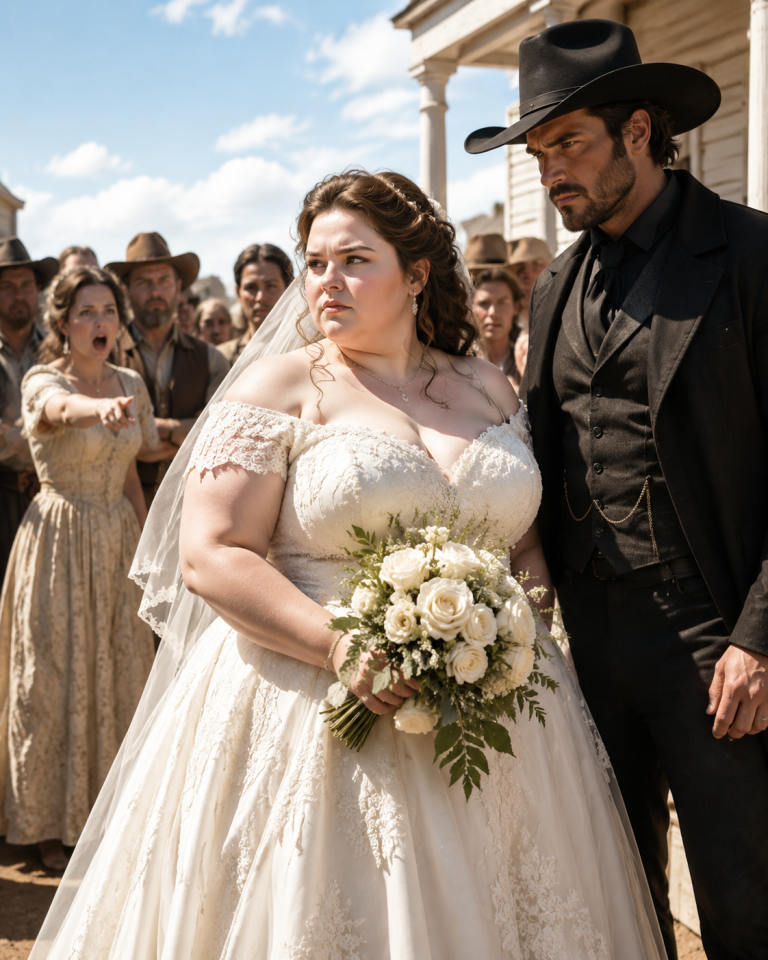
Her Ex Drugged Her Drink—Then the Mafia Boss Made Him Drink It in Front of Everyone

## PART 1
The man across the bar waited until she went to the bathroom.
That was when Declan Voss saw it — the small bottle, the quick hand, the cocktail spoon stirred three times before it was replaced against the napkin as if it had never moved.
The woman came back two minutes later, sat down, reached for her glass.
Declan was already standing.
He had been in the corner booth with three business associates for forty minutes, reviewing acquisition paperwork, and he had noticed her the moment she walked in. Not romantically — or not only that. He had noticed the way she sat, the specific careful posture of someone who had learned that being watchful was less exhausting than being surprised. The way she checked the door when it opened. The way she had placed her bag so the strap wrapped around the chair leg.
The body language of someone who had been trained by someone else’s unpredictability to be constantly prepared.
He had noticed the man too.
Had been watching him the whole time.
—
Her name was Sera Calloway.
She learned his in the private office behind the bar, which smelled of cedar and old wood, where he had set the doctored gin and tonic on the table between them with the careful attention of a person handling evidence.
“He poured it from a small glass bottle,” Declan said. “Brown. The kind that fits in a jacket pocket.”
Sera’s hands were wrapped around her elbows, her fingers pressing into her own arms.
“Marcus,” she said.
The name arrived with the quality of a thing that had been braced for.
“He’s my ex,” she said. “We separated eight weeks ago. He said he accepted it.” She looked at the glass. “He followed me here.”
“He also picked the bar carefully. This is your neighborhood.”
She looked up.
“You noticed that too.”
“I notice things. It’s useful in my work.”
“What is your work?”
The question was direct.
He appreciated that.
“I own several businesses. Some of them require knowing the difference between a man who is upset and a man who is planning something.”
She heard what that meant.
He watched her decide whether to pursue it.
She decided not to. Not yet.
“What happened to Marcus?” she said.
“My associate has him in the next room. He is not injured. He is very uncomfortable.” Declan looked at his hands. “He drank the glass.”
“You made him—”
“I gave him the choice.”
A long pause.
“The whole glass?” she said.
“No. Enough to demonstrate the calculation.”
Something crossed Sera’s face — not satisfaction, not quite, but the specific expression of a person learning that the math has changed.
“He’ll recover,” Declan said. “But he knows we have him on camera. He knows my associate took the bottle. He knows that if he approaches you again, the footage goes to law enforcement and someone who manages the narrative around certain federal investigations.”
Sera stared at him.
“You’re organized crime,” she said.
It was not a question.
“The more accurate phrasing is organized interests with a complicated relationship to certain regulatory bodies,” he said. “But yes. In the terminology you’re reaching for, yes.”
She absorbed that.
The bar noise filtered through the closed door — glasses, conversation, the low track of something with piano.
“Why did you help me?” she said.
He was quiet for a moment.
“My daughter is twenty-one,” he said. “She lives in Brooklyn. She walks home at night because she says the subway is fine and she refuses to be afraid of the city she grew up in.” He looked at the glass on the table. “Three years ago, someone put something in her drink at a bar in the East Village. She got home safely because her roommate was with her. I have not been able to sit in a room and watch someone reach for a doctored glass since then.”
The silence after this was a different kind than the ones before it.
“I’m sorry,” Sera said.
“She’s fine. She was fine.” He stood. “I’d like to offer you a car home. Just the car. My driver. No other obligation.”
“I drove.”
“Then an escort to your car. It’s raining and Marcus is currently indisposed but not detained.”
Sera looked at him.
“I have a job interview on Tuesday,” she said, apparently at random.
He waited.
“Brand strategy director,” she said. “At Alton Group. I’ve been trying to get that interview for four months. I was supposed to come here tonight and celebrate that it was confirmed and prove to myself that I could sit in a bar alone without looking over my shoulder.” She looked at her hands. “That’s all I wanted. One hour. One drink. By myself.”
“You nearly had it,” he said.
She laughed once, briefly. “Nearly.”
He opened the door.
“The car is at the side entrance,” he said. “No obligation. No debt. If you want company on the walk, I’ll walk you. If you want to leave alone, my driver will follow at a distance to make sure Marcus isn’t in the parking structure.”
She picked up her bag from the floor where she’d set it.
“I don’t need to be followed.”
“No. But you might appreciate it.”
Sera looked at him for a long moment.
He met her gaze and did not look away and did not perform anything — no charm, no power display, nothing except the particular straightforwardness of a person who was telling the truth and was reasonably sure she could tell.
“Walk me,” she said.
He did.
In the parking structure, his phone buzzed.
He glanced at it and his expression changed — not dramatically, but in the specific way of someone receiving information that required immediate recalibration.
“What is it?” Sera said.
He showed her the screen.
A message from his associate inside the bar.
*Marcus Hale is connected to the Vasov network. This wasn’t personal. They’ve been watching you.*
Sera read it.
Read it again.
“Who is the Vasov network?” she said.
Declan looked at her in the parking structure light.
“A question that means you are in more danger than you were eight minutes ago,” he said, “and it is not a coincidence that your ex-boyfriend appeared in this specific bar tonight.”
—
## PART 2
She did not drive home.
This was not because Declan asked her not to. He offered again, twice, with the same absence of pressure that had characterized everything he had said or done in the last forty minutes. She made the decision herself, standing in the parking structure with her keys in her hand and the message on his phone still processing.
“What do you know about the Vasov network?” she said.
“Enough to understand why someone connected to them would have an interest in drugging you.”
“I’m a brand consultant,” she said. “I work for mid-size companies. I have no connection to anything that sounds like—”
“Do you know a company called Prentice Holdings?”
She stopped.
Prentice Holdings was on the list she had been reviewing for the Alton Group pitch. She had spent three weeks building a competitive landscape document that included, among forty other entries, Prentice Holdings and its European affiliates.
“I have a pitch document that mentions them,” she said carefully.
“Who else has seen that document?”
Sera ran through it.
Her laptop. Her cloud drive. Her last partner, who had reviewed her work on several projects before they separated and who had never returned her key to the shared office space they’d briefly used.
Marcus.
Marcus had been in that office.
Marcus had access to her cloud storage through an account she had not yet revoked because she had been busy and because revoking shared access had felt petty when she’d been trying to be civil and reasonable about a breakup that was neither.
“He didn’t follow me here,” she said.
“No.”
“He was sent. Because someone believes I have information about Prentice Holdings that matters to them.”
“That is our current working theory.”
She looked at her keys.
“The interview on Tuesday,” she said.
“The Alton Group works with several Prentice subsidiaries. If your pitch document included their internal structure—”
“It included things they haven’t made public yet. I was thorough.” She pressed the back of her hand to her mouth briefly. “I was very thorough.”
Declan watched her work through it.
She was fast, he noted. The kind of fast that came from actually building things rather than theorizing about them.
“I need to understand what’s in my pitch document that matters to them,” she said.
“Yes.”
“And I need to know who Marcus was working with specifically.”
“Also yes.”
“And I need to do both of those things without losing the interview.”
He studied her.
“That last requirement is where it gets complicated,” he said.
“Everything is complicated,” she said. “Tell me what you know.”
He told her.
The Vasov network was a financial infrastructure operation — legal businesses running interference for capital that needed to be somewhere it wasn’t. Prentice Holdings was one of seventeen companies connected to their European routing. Sera’s pitch document, if it included the internal subsidiaries she had mentioned, contained a map that Vasov’s people had spent two years trying to prevent from being visible to anyone with the resources to act on it.
Like a major agency that worked with federal regulatory bodies.
Like Alton Group.
“They don’t want you delivering that presentation,” Declan said.
“They wanted to incapacitate me before Tuesday.”
“Yes.”
“And Marcus was their access point.”
“He was being paid to manage you.”
She absorbed that with a stillness that told him the betrayal wasn’t new, exactly — just specific now, given a shape she hadn’t had before.
“I’m not canceling the interview,” she said.
“I didn’t expect you to.”
“And I’m not going to pretend I don’t have the information in that document.”
“Also expected.”
“So what I need from you is a way to make me impossible to incapacitate before Tuesday morning.”
Declan looked at her in the parking structure.
She was not performing bravery. She was not overriding fear. She was simply being practical about a situation that required practicality, which in his experience was rarer and more useful than bravery.
“I have a suggestion,” he said. “You will not like all of it.”
“Tell me anyway.”
He told her.
She did not like all of it.
She accepted the parts that made sense and pushed back hard on the parts that didn’t, and when she pushed back she was specific and she was right, and by the end of the conversation in the parking structure they had an arrangement that was partly his and partly hers and therefore better than either would have been alone.
“One condition,” she said.
“Name it.”
“I make the decisions about my own life. You provide resources. You don’t make moves without telling me first.”
He nodded.
“Non-negotiable,” she said.
“Agreed,” he said, without qualification.
She unlocked her car.
“One more thing,” she said.
He waited.
“Your daughter,” she said. “The one in Brooklyn.”
“Yes.”
“Does she know what you do?”
A pause.
“Yes,” he said.
“And?”
“And she calls me every Sunday and argues with me about whether she needs a driver and we disagree about it consistently and she always wins.” Something crossed his face. “She says I taught her that safety was worth being stubborn about.”
Sera looked at him.
“She sounds right,” she said.
She got in her car and drove, and Declan stood in the parking structure for a moment before returning inside to deal with Marcus Hale, who had made the mistake of assuming that a woman celebrating her own freedom was an easy target.
—
## PART 3
The apartment Declan provided was on the twenty-third floor of a building in the Financial District that he had owned for eleven years. It was not a luxury display — or not only that. It was a specific location chosen for sightlines, for building security, for the fact that two of his people lived on the floor below and four more worked security rotations in the lobby.
Sera accepted it for four days.
She said four days directly, not as a negotiation opener but as a statement of fact, and then she moved back to her apartment on the Upper West Side because she had a Tuesday morning interview and she needed to sleep in her own bed with her own routines intact.
He sent two people with her.
She knew they were there.
She found this acceptable.
The Tuesday morning interview at Alton Group lasted two hours and forty minutes and resulted in an offer by end of week, contingent on reference checks that Sera had been preparing for months.
She texted Declan when she left the building.
*Got the offer. Also I think I identified the Prentice subsidiary issue.*
He called immediately.
“Explain.”
She explained.
During the interview she had been asked about the competitive landscape document in a way that was professional and also very specific, and she had answered professionally and specifically, and afterward she had sat in a coffee shop and written out everything she remembered being asked and matched it to what Vasov’s people would have needed to know.
“The document didn’t expose Prentice directly,” she said. “It exposed a holding company in the Netherlands that connects to them. My research identified the connection independently. That’s what Vasov didn’t want seen.”
“You built a map they couldn’t build themselves.”
“I built a map and then took a job at the company best positioned to use it. From their perspective, that’s a problem.”
“You should have led with that in our first conversation.”
“I didn’t know yet in our first conversation.”
“Fair point.”
She was in his office by afternoon.
His office was what she had expected — clean lines, city view, the organization of a person who thought in systems. Also several things she had not expected, which were the photographs on the shelf behind his desk. A daughter at a college graduation. The same daughter, younger, at what appeared to be a science fair. A woman who was not present in current photographs but who appeared in older ones beside him and the daughter, smiling in a way that indicated she was the one who had taken the other photographs.
Sera looked at the photos and said nothing.
Declan noticed her noticing.
“My wife died four years ago,” he said. “Elena. Cancer.”
“I’m sorry,” Sera said.
“She is why Olivia is the way she is,” he said. “Elena was very determined about certain things. She passed that down comprehensively.”
“Is that where the stubbornness about driving herself comes from?”
He looked at her.
“You remembered that.”
“I remember things,” she said. “It’s useful in my work.”
He smiled.
It was the first time she had seen him smile, and it changed his face in the way she had suspected it might — not soft, exactly, but younger, and less carefully contained.
She looked away.
They spent the next three hours going through the pitch document systematically, identifying the specific data points that had drawn Vasov’s attention and tracing each back to its source. Sera’s research methodology was precise enough that they could construct a credible account of how a brand strategist had independently arrived at information that an international financial operation had tried to keep invisible.
“This goes to Alton Group,” she said. “Before I start.”
“They’ll want to know how you have it.”
“I’ll tell them I identified it during competitive research. Which is true.” She looked at the documents. “What I don’t tell them is that someone tried to drug me to prevent me from taking the job.”
“You want to keep Marcus separate.”
“I want Marcus dealt with separately. What happens with Alton Group should be about the work.”
Declan considered that.
“The Vasov people will try again,” he said. “Not Marcus — he’s no longer useful to them. But they have other options.”
“Then we make me a bad target before they recalibrate.”
“How?”
“Same way you made me a bad target in the parking structure,” she said. “Visibility. If I’m publicly associated with you, and it’s known that I’ve provided information to Alton Group through legitimate channels, and the work is out there rather than contained — they lose the reason to act.”
“That associates you with me publicly.”
“Yes.”
“My world is complicated.”
“You’ve said that. I’ve heard it.” She looked at him. “I’m not naive about what you are or what that means. But you have also been honest with me consistently since the moment you stood up from that corner booth, and I have spent two years in a relationship with someone who was never honest about anything, and the difference is significant.”
He was quiet for a moment.
“What would public association look like, to you?” he said.
“For now? I take a consulting project through your company. We have a professional relationship that’s visible. It buys me three months of stability while I build the Alton Group work and while your people trace whatever Vasov is doing with the Prentice routing.”
“And after three months?”
She met his eyes.
“After three months, we reassess.”
—
The Vasov situation resolved over eight weeks, not three months.
The Prentice connection was larger than Sera’s document had indicated — she had found the edge of it; federal regulators found the rest. The information she provided to Alton Group through proper channels initiated a review that expanded into a joint investigation, which Declan had been anticipating and for which he had been quietly building support for two years through the kind of carefully positioned strategic cooperation that never appeared in news coverage.
He had several conversations with people Sera was not introduced to.
He told her about each one after the fact.
She appreciated the after-the-fact part.
She pushed for the before-the-fact part.
He got better at it.
Two Vasov operatives were arrested.
Marcus Hale reached a cooperation agreement with federal prosecutors and moved to a city he declined to specify.
The Prentice subsidiary network was dismantled through a process that took longer than anyone wanted and generated more paperwork than seemed proportionate for the amount of actual consequence it produced, but that was the nature of financial crime, and Sera said so in the bar at the end of the week the last arrest was announced.
Declan said, “You have strong feelings about financial crime enforcement for a brand consultant.”
“I have strong feelings about inefficiency,” she said. “Financial crime is inefficient.”
“In what sense?”
“It takes enormous resources to build a system designed to move money invisibly, and then it all falls apart because someone was thorough enough with their competitive landscape research.” She sipped her wine. “All that architecture for a pitch document.”
He looked at her.
“My daughter would like you,” he said.
“She sounds like she has good judgment.”
“She does. She gets it from her mother.”
“And from you.”
He considered this.
“She would say I contributed the stubbornness,” he said.
“The stubbornness was load-bearing,” Sera said. “In the parking structure and since.”
That was the first time she said anything that was explicitly about them rather than about the situation.
He noted the timing.
He did not say anything immediately, which she also noted.
She thought: *he’s the kind of person who wants to be certain before he speaks.*
She was a person who often preferred speaking before certainty.
This was probably going to require ongoing negotiation.
—
The consulting engagement ran six months.
The Alton Group position became permanent.
Sera’s apartment remained hers.
She did not move into the Financial District building, though she was there often enough that the concierge knew her by name and had once asked if she wanted her own mailbox.
She had said no, which had nothing to do with Declan and everything to do with the fact that she had spent two years with Marcus and the first thing she intended to do differently was maintain clear lines between her life and the person she was choosing to have in it.
Declan understood this without being told.
That was, she had found, the most consistent thing about him: he paid attention. Not to manage. Not to anticipate weaknesses. Just to understand, which was rarer than she had expected from a person who operated in systems of power.
Olivia came to dinner in November.
She was, as advertised, extremely opinionated and entirely unimpressed by her father’s management of anything, which she communicated by offering detailed alternative approaches to every decision he mentioned. She was also clearly very fond of him, which she communicated by sitting beside him and stealing his bread roll without asking.
She looked at Sera across the table with the specific assessment of a twenty-four-year-old who had her own ideas about most things.
“My dad says you identified a financial network using competitive landscape research,” she said.
“Yes.”
“For a branding pitch.”
“I was being thorough.”
Olivia looked at her father.
“I like her,” she said.
“I thought you would,” Declan said.
“Don’t be smug about it.”
“I’m not being smug.”
“You’re doing the thing where you’re smug internally and trying not to show it.”
Sera watched them.
She thought about a bar in the rain, and a glass with something in it that hadn’t been there before, and a man standing up from a corner booth because he had been watching and had decided not to look away.
She had come in that night to prove she was free.
She was free.
She was also something else — a person with a complicated life that contained a complicated man, and a job that she had earned, and a friendship with Olivia that involved being corrected about cheese selections with great confidence, and a sense of her own space that she had rebuilt carefully and intended to maintain.
Not the freedom she had imagined.
Something more accurate.
Something that had been built from the actual materials rather than the version she had hoped for, which turned out to be better than imagined things usually were.
—
In the spring, Declan took her back to the bar where they had met.
He had bought it.
She had not known.
“You bought the bar,” she said.
“It came available.”
“Declan.”
“The previous owner wanted to retire. It’s a good location. There’s a renovation planned.”
She looked at him.
He looked back, with the particular expression of a person who knew they had done something slightly over the top and was not entirely sorry about it.
“You are impossible,” she said.
“I am direct about investment opportunities.”
“This is not about investment.”
“It’s partly about investment.”
“It is very slightly about investment and mostly about sentiment.”
He was quiet.
“Yes,” he said. “Mostly about sentiment.”
She stood in the bar where she had sat alone eight months ago with a drink she’d been about to raise in a toast, and she thought about what she had been toasting.
Freedom. The interview. The end of two years of someone else’s version of who she was.
She had those things.
She had the interview and the job and the freedom and the life she had been building since before Marcus, the one she had not let him take from her even when he had tried very hard.
She also had this.
Whatever this was.
Something built in a parking structure and a twenty-third-floor apartment and six months of professional work and Sunday dinners with a daughter who stole bread rolls.
Something that had started with a man standing up because he had decided not to look away.
“I need the bar to stay open on Thursdays,” she said.
He tilted his head.
“Why Thursdays?”
“Because my friend Rachel has a terrible commute and Thursday is the only night she can meet for drinks, and if you close it for renovation on Thursdays I will lose my favorite place to sit.”
Declan pulled out his phone and texted his renovation team.
“No Thursdays,” he said.
“Thank you.”
“You’re welcome.”
She picked up the menu that was sitting on the bar.
It was new. Clean lines, simple text, a small redesign in the header.
“Did you do the rebrand yourself?” she said.
“I consulted someone.”
She looked at the logo.
The visual language was familiar.
She turned to look at him.
He had the expression of a person who had made a decision and was prepared to defend it.
“You used my work,” she said.
“The design principles from your Alton Group rebrand case study. Publicly available. With your name on it.”
“This is—”
“Sentiment,” he said. “Mostly sentiment.”
She set down the menu.
She looked at the corner booth where he had been sitting that night.
She looked at the bar where she had been sitting.
She thought about two years of being made smaller and the particular work of being made larger again — not by someone else, but by her own insistence, her own stubbornness, her own refusal to disappear.
She thought about a man who had learned to tell her things before he did them.
Not perfectly.
But consistently.
Not perfectly, but consistently, turned out to be the standard worth holding.
She kissed him.
In the renovated bar, in the place where they had met, she kissed him first, which she would later point out to him was also what she had done in his office the first time, and which he would say demonstrated a pattern she could not dispute.
She did not dispute it.
—
*The bar reopened on a Thursday in April.*
*Sera was there with Rachel, who declared the new cocktail list excellent and the atmosphere completely transformed and asked, for the fourth time, how exactly Sera had ended up with the man who owned the building across the street.*
*Sera said: I went in for one drink to celebrate a job interview, and someone tried to drug me, and a man in a corner booth noticed.*
*Rachel said: that is the least romantic origin story I have ever heard.*
*Sera said: it gets better.*
*Rachel said: tell me.*
*And Sera did.*
—