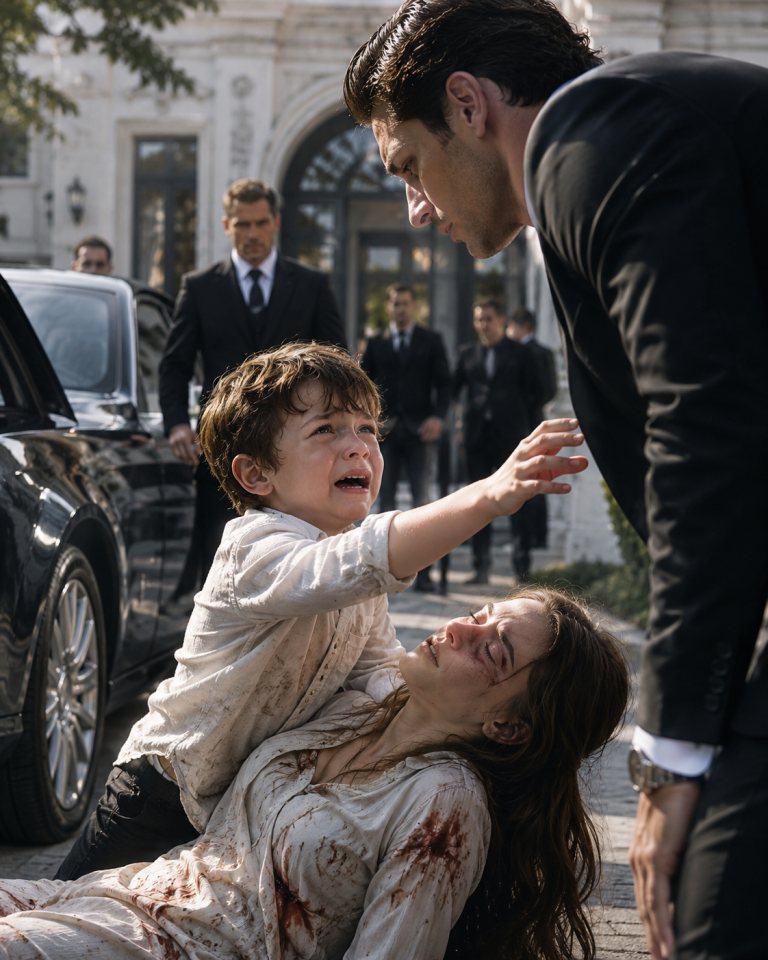
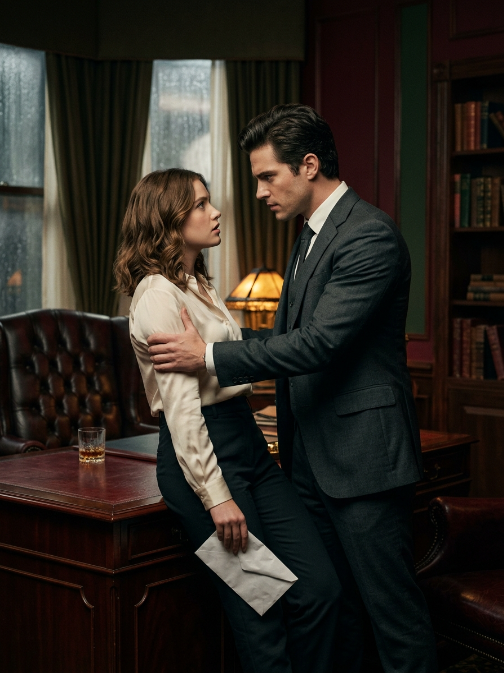
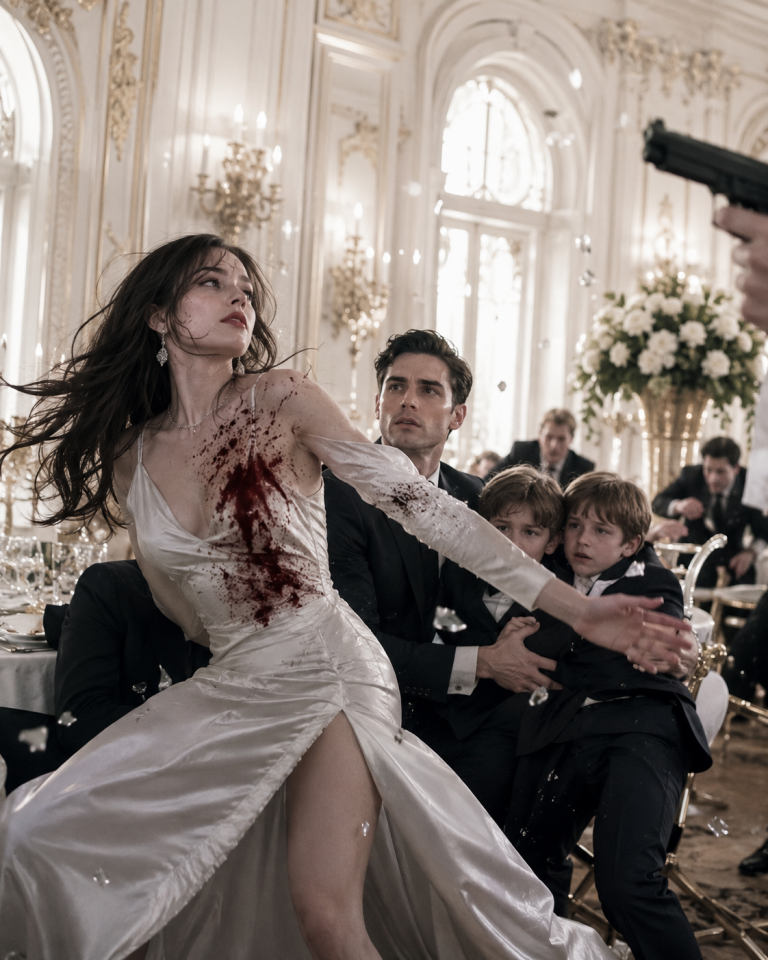
MY HUSBAND’S GIRLFRIEND TOOK MY SEAT ON THE FAMILY JET AND TOLD THE PILOT I WASN’T ON THE LIST — SHE HAD NO IDEA WHOSE NAME WAS ACTUALLY ON THE DEED

**PART 1**
She said it the way cruel women always do when they want it mistaken for elegance — softly, like a favor.
Camille Ford sat by the window in cream cashmere, ankles crossed, a champagne flute balanced between two manicured fingers. January sun poured through the oval window and turned her hair the color of expensive honey. She looked beautiful the way showroom furniture looks beautiful — polished, staged, untouched by anything real.
My husband, Weston Vance, stood halfway up the jet stairs with one hand on the railing, his eyes anywhere but on me.
His mother, Beatrix, adjusted the pearl brooch at her throat. “Adele, please don’t embarrass the family in front of the staff.”
I stood at the bottom of the stairs holding one small suitcase.
One suitcase. After nine years of marriage, three miscarriages, a hospital bed I woke up in alone, and a funeral that had emptied whatever warmth I had left, everything I needed fit inside it.
Weston sighed like my existence had delayed his schedule. “This trip goes smoother if you stay behind and accept reality.”
*Reality* was what he called flying his girlfriend to his father’s memorial weekend. *Reality* was what he called letting her wear my emerald earrings. *Reality* was what he called replacing my name with hers.
I didn’t cry. I didn’t ask why. I didn’t remind him that I’d held his father’s hand while the cancer took his voice, while Weston was in Aspen “meeting investors” with Camille.
I only stood in the cold at Teterboro and watched them reveal themselves in front of witnesses.
Then the pilot came back down the stairs holding the manifest, his face pale. He looked at Weston. Then at me.
“Mrs. Vance,” he said, “there appears to be a legal issue with the passenger list.”
Camille laughed lightly from the cabin. “For heaven’s sake,” Beatrix said. “Just handle it, Captain.”
The pilot straightened. “I am handling it, ma’am.” Then he said the sentence that erased every smile on that jet. “Mrs. Vance is the aircraft owner on record. No one flies unless she boards.”
*
Three hours earlier, I’d stood in the dressing room of the Vance townhouse, staring at the black dress I’d worn only once before, to my mother’s burial. Plain silk, no shimmer, nothing fashionable stitched into the seams — the kind of dress that makes people lower their voices around you. Weston had always hated it. *Makes you look severe,* he’d said once, and I’d thought that was criticism. Now I understood it was fear. Severe women don’t beg. They don’t perform forgiveness for people who wounded them.
Downstairs, Beatrix’s voice floated through the marble foyer, calm and sharp as a blade being cleaned. “We cannot have her falling apart this weekend. Nathaniel deserves dignity.”
Nathaniel. My father-in-law. The only Vance who ever called me family without making it sound like charity. He’d died twelve days earlier, rain streaking the hospital windows, my hand wrapped around his while Weston arrived forty-seven minutes after time of death, a lipstick mark still on his collar that Beatrix pretended not to see. I did. That last afternoon, Nathaniel had pressed a sealed envelope into my palm with fingers gone to bone. *For Adele,* in shaky blue ink. Not Weston. Not Beatrix. Not the family lawyers. Me. I hadn’t opened it yet. Grief has strange rules — sometimes a letter feels less like paper and more like a door you aren’t ready to walk through. I’d slipped it into my coat pocket and left it there.
At noon, our housekeeper, Rosa — twenty-one years with this family, wise enough to know every secret and pretend she knew none — appeared with red eyes. “They changed the travel arrangements this morning,” she said quietly. “Miss Ford is going with you.”
Not a rumor I’d invented out of grief. Not paranoia. Camille was coming to Nathaniel Vance’s memorial weekend, on the family jet, to the family estate, to accept condolences beside my husband as though she’d earned a place there by warming his bed.
I’d seen the story being built for months. Beatrix no longer calling me daughter. Weston discussing my sadness in rooms where I stood present, like furniture. *Adele hasn’t been herself. Adele struggles with stress. Adele gets confused when she’s tired.*
*Confused* was the word he used the night I found Camille’s bracelet under his passenger seat. The word he used when I found a second phone in his desk. The word he used when a hotel charge from a weekend he swore he was in Dallas showed up on our joint account. The most dangerous lies are never shouted. They’re spoken gently, by people who want you to doubt your own memory.
Downstairs, Weston waited in a charcoal overcoat, clean-shaven, handsome in the way that made strangers turn their heads — old money, though Vance money was only three generations deep. His grandfather built ships. His father built hotels. Weston built excuses.
“Is that necessary?” he asked, eyeing my dress.
“For your father’s memorial? Yes.”
His jaw tightened. Grief annoyed him when it didn’t center him.
Camille came down the stairs in cream — cream cashmere, cream coat, cream gloves, my emerald earrings glowing at her ears like two green flames. “Adele. I hope this won’t be uncomfortable.” Polite on the surface, rotten underneath.
Beatrix appeared behind her. “Let’s all be adults.” Another word people use when they want the wounded to bleed quietly.
I looked from the earrings to Weston’s face. He didn’t flinch.
That was the moment something in me stopped trying to survive the marriage. Not broke — stopped. A broken thing wants repair. A stopped thing waits.
In the car to the airport, Camille talked about Newport like she’d summered there her whole life. Beatrix called the estate “a Vance institution.” Weston said, “Adele never really liked it,” which was a lie — I loved it, the cedar shingles silvered by sea air, the library that smelled of salt and leather, the mornings Nathaniel fed bacon to the golden retriever Beatrix pretended not to love.
I said nothing. Camille tilted her head. “Maybe some places just don’t suit everyone.”
“No,” I said softly. They all looked at me. “Some people don’t suit them.”
No one spoke the rest of the ride.
At the terminal, the Gulfstream waited under a flat winter sky — the plane Nathaniel had bought after Beatrix complained about commercial delays, the one Weston called “the family jet” as if things became his simply for being born nearby. I knew the aircraft well. I’d picked the leather, the walnut trim, insisted on one small thing no one else noticed: a blue cashmere blanket folded in the rear cabinet, because Nathaniel got cold on night flights after chemo.
Camille walked past the pilot like she’d done it for years and took the window seat that had always been mine. A flight attendant came down looking deeply uncomfortable. “Mrs. Vance, I’m so sorry, but your name isn’t on the manifest.”
Weston came halfway down the stairs. “Adele, don’t make this a scene.”
I had never hated him more than when he sounded tired of hurting me.
“You’re still legally married to my son,” Beatrix said. “Behave with some dignity.”
I almost smiled. Legally married — how strange that the truth only mattered when it served them.
“I’ll have the car take you back,” Weston said, lowering his voice. “We’ll talk after the weekend.”
“About the divorce?”
Camille’s smile widened. Beatrix inhaled sharply.
“Yes,” Weston said. “About the divorce.”
“And the memorial?”
“Dad is gone. This family has to move forward.”
I looked at the jet. At Camille in my seat. At Beatrix, who’d once told me over lunch that women who couldn’t produce children should at least produce grace.
“I understand,” I said. That was all. And because I didn’t cry, they mistook me for defeated.
The captain disappeared into the cabin. For two minutes, only the wind spoke.
Then he came back down with the manifest in his hand.
**PART 2**
The pilot, Captain Alden Reyes, was not a dramatic man — silver hair, square shoulders, the steady calm of someone who’d flown through storms without blinking. But on that tarmac, he looked shaken.
“Mr. Vance,” he said, “I need to verify something before we proceed. The aircraft ownership record.”
Camille leaned into the aisle, champagne still in hand. “For God’s sake, we’re already late.”
Weston’s friend Marcus, who’d flown up separately and had been waiting near the terminal doors with his own bag, drifted closer to watch, sensing that whatever was unfolding was worth more than the flight schedule.
The captain didn’t look at her. He looked at me. “Mrs. Vance, did you authorize a change to today’s manifest?”
“No.”
“Did you authorize the removal of your name from it?”
“No.”
“Dean, this is family business,” Weston snapped.
“No, sir. This is an aircraft operation, and I follow the legal owner’s instructions.”
Beatrix stepped forward. “Nathaniel owned this plane.”
“He did, ma’am.”
“Then my son is the heir.”
“Not according to the current registration and trust documents on file.”
The silence that followed was so complete I heard Camille set her glass down.
“What are you talking about?” Weston laughed, sharp and false.
Captain Reyes held out the manifest. “The aircraft is registered under Windmere Holdings LLC. As of the most recent filing, controlling ownership transferred to Adele Vance.” Camille stood. “No, it didn’t.” The first honest thing she’d said all day.
“I confirmed with operations,” the captain said. “Mrs. Vance is the owner on record. No one flies unless she boards.”
The sentence didn’t arrive like thunder. It arrived like winter — quiet, clean, unarguable.
**PART 3**
My phone buzzed in my coat pocket. A message from an unknown number: *Mrs. Vance, this is Simon Pierce, counsel for Nathaniel Vance’s estate. I’m at the terminal. Please don’t board until I arrive.*
A black car pulled up outside the glass doors. A tall, gray-haired man in a dark overcoat stepped out with a leather briefcase. Beatrix went pale. “Simon?”
Simon Pierce had been Nathaniel’s personal attorney for thirty-two years — the kind of man who made rooms straighten themselves. He crossed the tarmac and greeted me first. “Adele.” Not Mrs. Vance. It made Beatrix’s mouth tighten.
“What the hell is this?” Weston demanded.
“Your father’s instructions,” Simon said mildly.
“My father is dead.”
“Yes. And unusually well prepared for it.”
Camille stepped down from the jet as if proximity to Weston might protect her. Simon opened his briefcase. “Did they attempt to leave without you, Adele?”
“That’s not relevant,” Weston snapped.
“It’s very relevant.”
“Charles — Nathaniel would never humiliate this family like this,” Beatrix said.
Simon looked at her fully for the first time. “Beatrix. Nathaniel watched this family humiliate Adele for years.”
No one breathed. Wind lifted a strand of Camille’s perfect hair.
I remembered Nathaniel in the hospital, his hand searching for mine under the white blanket, his eyes filling with tears he no longer had the strength to wipe away, tapping the envelope against my palm until I understood he wanted me to take it.
“The jet is only one item,” Simon said. “Nathaniel revised his estate plan six months ago.” Beatrix made a small sound. Six months ago — the exact stretch of time Weston had told me his father was too weak to understand anything, when Beatrix told me not to burden him with my “emotional problems,” when Camille started appearing at family events as Weston’s “consultant.”
“Adele, did you open the envelope?” Simon asked.
I shook my head. “Please do,” he said gently. My fingers were numb as I drew it from my coat. Inside: a handwritten letter and a small brass key taped to the page.
I unfolded it and read it aloud, my voice low and calm and, for the first time in months, entirely mine.
*Adele — if you are reading this, I am gone, and I failed to protect you while I was alive. I saw more than they believed I saw. I know my son has betrayed you, and I know my wife has helped him make you feel small enough to leave quietly. Do not leave quietly. Windmere was never meant for the cruel. The plane, the estate, and the controlling shares of Windmere Holdings now belong to you — not because you married into this family, but because you were the only one who acted like family when it cost you something. Use the key. The truth is in the blue room. Forgive me for waiting so long. — Nathaniel.*
“Controlling shares?” Camille whispered.
“It means your father left Adele the majority voting interest in Windmere Holdings,” Simon said. “The aircraft, the Newport estate, several accounts, and the hotel management company all fall under that umbrella.”
Beatrix gripped the railing. “That cannot stand.”
“It already stands.”
Weston stared at me with an expression I’d never seen from him. Not love. Not regret. Fear. “You manipulated him.”
I almost laughed. He’d ignored his dying father for months, and now, suddenly, Nathaniel was fragile enough to be manipulated. “No, Weston. I visited him.”
Captain Reyes cleared his throat. “Mrs. Vance, would you like to board?”
Every face turned to me. Camille stood on the stairs in cream, no longer glowing. Beatrix was rigid with fury. Weston looked like a man watching the foundation of his life crack under Italian leather.
I lifted my suitcase. “Yes. But Ms. Ford will need to step off my plane.”
*
Camille didn’t move — people like her aren’t used to instructions applying to them. “Tell her,” she said to Weston. His mouth opened, then closed. Years of telling me where to stand had not prepared him for a language where ownership changed the room.
“Ms. Ford isn’t on the authorized list,” Simon said.
“I was invited.”
“Not by the owner.”
“Claire — Adele, this is beneath you,” Beatrix snapped. My humiliation had been dignified when it entertained them. My boundary was beneath me the moment it inconvenienced them.
“My earrings,” I said, looking at Camille’s ears. Her hand flew to the emeralds.
“Those are listed in the marital property inventory as belonging to Adele,” Simon said. Camille removed them with trembling fingers; one slipped and struck the tarmac with a small, bright sound. I picked it up myself — not because I had to, but so everyone watching could see I could bend without bowing.
As she passed me on the stairs, Camille whispered, “You think this makes him love you?”
“No,” I said. “That’s why it works.”
I boarded. Took the window seat. My seat. Beatrix followed without a word, then Weston, jaw tight, then Simon, who set his briefcase on his lap like a judge setting down a gavel. Camille remained on the tarmac as the door closed, already on her phone, cream coat whipping in the wind.
“You enjoyed that,” Weston said, once we were airborne.
“No. I enjoyed surviving it.”
He flinched, as if survival were an accusation.
*
Windmere appeared at the end of a long gravel drive, cedar shingles weathered silver, windows facing the Atlantic like eyes that had watched every version of this family and judged most of them. A wreath of white roses hung on the door. My throat tightened — not for Weston, not for Beatrix, but because the man who should have been inside, reading by the fire with his old dog at his feet, was gone.
At the end of the main hall was a small room with blue walls — Nathaniel’s study, ignored by Weston because the Wi-Fi was poor, beloved by Nathaniel because, he always said, the light there was honest.
The brass key fit the lock on a small box atop the mahogany desk. Inside: a flash drive, a folder of printed emails, a stack of photographs, and a second letter addressed to me.
Simon exhaled quietly when he saw the contents, as if confirming a fear he’d been carrying.
*Adele — the first letter gave you protection. This room gives you the truth. Weston and Beatrix have been planning to force you into a quiet divorce, discredit you emotionally, and protect the family name. I discovered this by accident, and I kept copies. I hired an investigator after overhearing Weston discuss your medical records with Camille. Your pain was never imagined. Your confusion was manufactured. I am sorry. — N.*
The first email, Beatrix to Weston: *She cannot be allowed to control the narrative. If she refuses the settlement, we emphasize her decline after the pregnancy loss. People believe tragedy makes women fragile.*
The next, Weston to Camille: *Once Dad passes, we file. Mom says the board backs me if Adele looks unstable. We need her to react publicly.*
*We need her to react publicly.* That explained everything — the affair displayed just enough to wound, the missing invitations, the changed locks, Camille in my earrings, today’s seat. They hadn’t been careless. They’d been baiting me, waiting for one scene, one headline whispered through their circle: *Adele Vance breaks down on tarmac after being removed from family jet.*
“This is private family communication,” Weston said.
“No,” I said softly. “This is evidence.”
Beatrix’s polish finally cracked. “You ungrateful little woman. I brought you into this family. You had nothing.”
“I had myself.”
“And what was that worth?”
The answer came from the doorway. “More than all of you.” Rosa stood there, still in black, coat over one arm, flanked by a woman in a navy suit and a man with a camera bag.
“Rosa,” Simon said. “You came.”
“Mr. Nathaniel asked me to.”
“What is the staff doing in here?” Weston demanded.
“For once,” Rosa said, “telling the truth.”
The woman in navy stepped forward. “Adele Vance? I’m ADA Priya Kapoor, Manhattan District Attorney’s office.” Weston went still. “Nathaniel contacted her before his death,” Simon said. “He believed there may have been financial coercion, medical privacy violations, and attempted fraud.”
Simon played the flash drive. Static, then Weston’s recorded voice: *She won’t sign if she thinks she has options.* Camille’s, light and irritated: *Then make sure she doesn’t.* Beatrix’s: *The doctor will confirm instability. After the miscarriage, it will be believable.* Camille again: *If she sees me wearing the earrings at the memorial, she’ll lose it.* Weston: *I don’t want her destroyed.* Camille: *You want her gone with no claim.* A pause. Then Weston: *Yes.*
One word. Quiet. Clean. Unforgivable.
I felt the last thread tying his cruelty to my hope finally snap.
When the recording ended, ADA Kapoor documented the evidence. Weston tried every objection a panicked man reaches for — privilege, illegality — and Simon dismantled each one calmly. “This was recorded in your father’s own study, where he was present. New York is one-party consent. Either way, your problem was never the recording. It’s what you said on it.”
Beatrix sat down. For the first time, she looked her age.
Weston’s phone rang. Camille. He answered, and we all heard her voice, sharp with panic — the board meeting canceled, her company card declined, legal asking for her consulting contracts. “You left me at an airport, Weston.” Then, hearing Beatrix in the background: “Adele? Is she there?”
“Yes,” I said.
A brittle laugh. “Enjoy the plane. You still don’t have the husband.”
“That’s the first thing you’ve said today that comforts me,” I replied, and Simon almost smiled.
*
The memorial dinner went ahead that evening exactly as Nathaniel had wanted — candlelight, white flowers, forty-seven guests who’d come to mourn a man and quietly measure the power left behind him. Camille wasn’t there; her absence had a shape everyone noticed, along with Captain Reyes speaking quietly with Simon near the library, and the woman in navy leaving through the side hall with an evidence case.
Rosa stopped Weston from taking the head of the table. “Mr. Nathaniel left seating instructions.” My place card sat beside Nathaniel’s empty chair. Not Weston’s. Not Beatrix’s. Mine.
Halfway through the second course, Simon stood and read a statement Nathaniel had prepared — not the will, which would be read Monday in Manhattan, but a personal message for the people who’d known him. He spoke of building things with his name on them and realizing, near the end, that legacy isn’t what carries your name, but what carries your decency. He named the betrayals and the cowardice he’d learned of in his final year without airing every wound, and said simply that Adele Vance had shown him more loyalty and courage than anyone who shared his blood — that he asked the room to honor her not as his son’s wife, but as his chosen daughter.
Weston’s chair scraped back. “Enough.”
An old friend of Nathaniel’s, tiny and formidable, stood at the far end of the table. “I’ve known Adele nine years and you since you were in diapers, Weston. Sit down before you embarrass yourself further.” He sat.
After dessert, I rose and told the room how I’d met Nathaniel — spilling red wine on a white tablecloth at an engagement dinner, and how he’d laughed with me, not at me, and told me every family worth joining should have at least one stained tablecloth, or nobody in it was living honestly. I told them he wasn’t perfect, and knew it, but had grown brave near the end in a way I’d spend my life respecting. I told them I wouldn’t use what he’d left me to punish anyone — only to protect what he loved from people who confused inheritance with ownership. “To Charles — to Nathaniel,” I said. “Who learned late, but still learned.”
Weston didn’t drink. Beatrix did, her hand shaking.
Afterward, in the hallway of family portraits, he looked smaller than his own name. “I don’t know how we got here,” he said.
“Yes, you do.”
“I made mistakes.”
“A mistake is missing an exit. You built a road.”
“I loved you once.”
The words found no home in me. “I know,” I said. “That’s the saddest part.”
“What happens now?”
“Simon contacts your attorney. The divorce proceeds. The estate proceeds. The investigation proceeds.”
“And us?”
I thought of the woman I’d been when I married him — hopeful, eager to be loved by a family that inspected her like a résumé — and wished I could reach back and tell her that being chosen by the wrong people isn’t a blessing, that love should never require self-erasure.
“There is no us,” I said, and he nodded once, like the words had physically struck him, and walked away.
Outside, the ocean was black under a thin moon. Rosa found me on the terrace with the blue cashmere blanket from the jet. “Mr. Nathaniel said you always forget to stay warm.” That undid me more than any of it — not the betrayal, not the cruelty, not the champagne smile. A small, remembered kindness. I wrapped the blanket around my shoulders and cried, quietly, not from defeat. From release.
*
Six months later, the divorce was finalized on a rainy Thursday in Manhattan. Weston lost the board seat his father had never trusted him with, lost the townhouse once forensic accountants traced marital funds moved through Camille’s consulting company, lost the version of himself that could walk into a room and expect people to mistake his confidence for character. Beatrix moved to Palm Beach and told anyone who’d listen that grief had made me vindictive; few people listened for long. Camille tried to sell her side of the story to a podcast, until one letter from Simon’s office ended that.
I stayed at Windmere through spring. People assumed I’d sell it. I didn’t. I opened part of the estate as a retreat for women recovering from medical trauma and coercive marriages, and we called it the Lighthouse Room. Rosa became director of household operations and finally accepted the salary Nathaniel had wanted to give her for years. Captain Reyes still flies the jet, though now the blue blanket is always laid across my seat before boarding.
That’s what inheritance became in my hands. Not revenge. A door.
Margaret, Nathaniel’s old friend from the dinner table, wrote me a short note that spring, no more than a few lines, saying she’d known plenty of women who inherited houses and none who’d inherited their own name back along with it. I kept the card in the drawer of the blue room desk, beside the brass key that no longer opened anything but still felt important to hold onto.
One morning in June, hydrangeas blooming along the stone path, the ocean gentle for once, I carried coffee into the blue room and found sunlight spread across Nathaniel’s old desk. For the first time, the room didn’t feel like a place where truth had been hidden. It felt like a place where truth had survived.
I opened the window. Sea air moved through the house like a long-held breath finally leaving, and I thought of the woman I’d been on that tarmac — silent, cold, holding one suitcase while people who mistook cruelty for power tried to leave her behind.
I wish I could tell her what I know now: that silence can be strategy, that dignity can be louder than screaming, that truth doesn’t always arrive with thunder. Sometimes it walks down jet stairs holding a flight manifest. And sometimes, after everyone else takes your seat, your name is still the one on the deed.