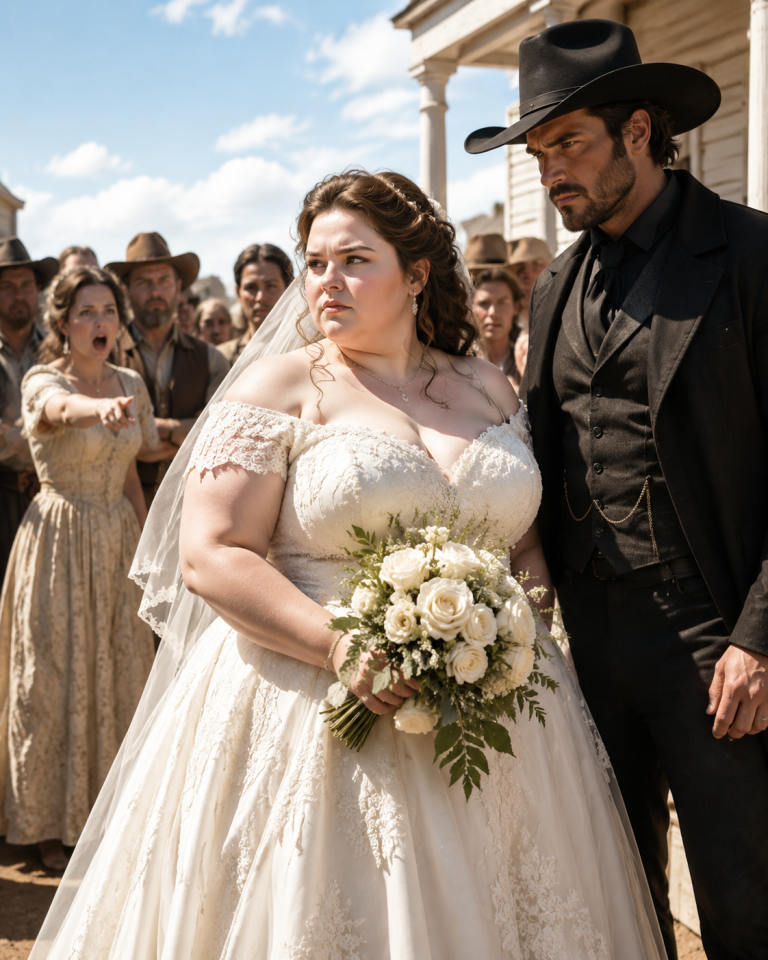
She Wore My Grandmother’s Ring to My Gallery Opening — Then My Lawyer Walked In

**PART 1**
The ring caught the light before I saw her face.
I knew it from across the room, the way you know a scar on your own hand without looking — the thin rose-gold band, the cushion-cut sapphire my grandmother had smuggled out of Budapest sewn into the hem of her coat. I had touched that ring exactly twice in my life. Once at her funeral, when my father pressed it into my palm and said, *this stays in the family, Odette.* And once three weeks ago, when I unlocked the safe in my husband’s study to find the velvet box empty.
I told myself I’d misplaced the key. I told myself a lot of things that spring.
Now the box wasn’t empty. It was on someone else’s hand, and that hand was resting on my husband’s arm, and that arm belonged to Marcus Ferrand, who had built our marriage on restoration loans and my family’s name and was currently accepting compliments on his new curator.
Her name was Delphine Roy. Twenty-six. A voice like a held breath, and a laugh she’d clearly practiced for rooms exactly like this one — my gallery, my opening, two hundred collectors in black tie pretending not to watch.
She saw me looking. She didn’t hide the ring. She lifted her glass and let the sapphire catch the chandelier, slow, deliberate, a woman showing off a kill.
“Odette.” Marcus said my name the way he said everything lately — like a formality he was tired of performing. “You remember Delphine.”
I remembered Delphine perfectly. I remembered the invoice for “acquisitions consulting” that Dean, my accountant, had flagged four months ago. I remembered the six-figure wire transfer routed through a shell company registered in Marcus’s mother’s maiden name. I remembered, above all, the moment two nights ago when the gallery’s security footage showed Marcus opening my father’s safe at 11 p.m. on a Tuesday, sliding the velvet box into his coat pocket like a man stealing bread.
I smiled at Delphine. I have a very good smile. My mother taught it to me the way other mothers teach piano.
“I do remember you,” I said. “You wrote the condition report on the Corot forgery we almost bought last year. Sharp eye.”
Something flickered behind her composure — the particular fear of a woman who has just been reminded that someone in the room actually knows what she’s worth.
Marcus’s jaw tightened. “Odette.”
“What?” I sipped my champagne. “I’m making conversation. It’s my gallery. My opening. My grandmother’s ring.”
The room had gone very quiet in that specific way rich rooms go quiet — no gasping, just two hundred people suddenly fascinated by their canapés.
“It was a gift,” Delphine said, too fast.
“Was it,” I said. Not a question. A verdict.
Marcus set down his glass. “This isn’t the place.”
“You’re right,” I said. “The place would have been four months ago, when you started signing invoices for a woman who doesn’t officially work for us. Or six weeks ago, when you had the estate attorney draft a new beneficiary schedule for my father’s trust and asked him not to mention it to me. Or last Tuesday, at eleven at night, in my father’s study.”
Marcus’s face did something I’d never seen it do in nine years of marriage. It went white, then blank, the particular blankness of a man doing arithmetic he doesn’t like.
“You’re imagining things,” he said, but his voice had lost its floor.
I looked past him, toward the gallery’s east entrance, where a woman in a plain gray suit had just stepped through the door, folder under her arm, moving through the crowd with the unhurried calm of someone who has already won and is simply waiting for the paperwork to catch up.
Renata Cole. My lawyer. Three weeks early, by my count, which meant something had accelerated.
She caught my eye and gave the smallest nod.
Marcus saw it too. I watched him try to place her face and fail, because he had never once bothered to learn the names of the people protecting what he was trying to take.
“Who is that?” Delphine asked, and for the first time all night, she sounded like what she actually was — young, and cornered, and beginning to understand that the man beside her had brought her to a war she didn’t know she’d enlisted in.
I finished my champagne.
“That,” I said, “is the person who’s about to explain why you should probably take that ring off before someone asks you to.”
**PART 2**
Renata didn’t raise her voice. She never did. That was the thing people underestimated about her — the softer she got, the worse it was for whoever she was looking at.
“Mr. Ferrand,” she said, stopping in front of Marcus with the same pleasant expression she might use to order coffee. “I’d like a word. Somewhere private would spare everyone the theater.”
“I don’t know who you are,” Marcus said.
“Renata Cole. I represent Odette, and as of four this afternoon, I also represent the Delacroix Family Trust, which — as you’ll recall from the paperwork you signed nine years ago — retains right of audit over any transfer of trust-held assets, including the contents of that safe.” She tilted her head slightly toward the ring. “Including that.”
Delphine’s hand moved instinctively, like she wanted to hide the sapphire behind her champagne flute.
“That ring is registered to the trust’s insurance schedule,” Renata continued, conversational, terrible. “Removing it from secured premises without trustee consent is, depending on how uncharitable the DA’s office is feeling this quarter, either a civil matter or a very expensive misunderstanding.”
Marcus laughed, but it cracked halfway through. “This is absurd. You’re threatening me over jewelry at a party.”
“I’m not threatening you over jewelry,” Renata said. “I’m here because this afternoon, the trust’s forensic accountant finished tracing eleven transfers totaling $340,000 routed from the gallery’s acquisitions account into a company called Argent Consulting LLC — whose sole listed officer is your mother, and whose sole client, for the past year, appears to have been you.” She let that sit. “The ring, Mr. Ferrand, is the least of what’s in this folder.”
The color that left Marcus’s face didn’t come back.
Delphine looked at him. Really looked, the way you look at someone when the story you’ve been told suddenly doesn’t match the man standing in front of you.
“You said the gallery money was yours,” she said quietly. “You said it was separate from her family.”
Marcus didn’t answer.
That silence was the loudest thing in the room.
Renata opened her folder just enough for the edge of a court seal to catch the light. “I’d suggest,” she said, “that we continue this somewhere with fewer photographers.”
Across the gallery, I saw one of the arts journalists lift her phone, already typing.
Marcus turned to me, and for one unguarded second, I saw something almost like the man I’d married — cornered, furious, and very, very afraid.
“Odette,” he said. “Don’t do this here.”
I looked at the ring on Delphine’s hand. At my grandmother’s sapphire, smuggled across a border in a dead woman’s coat, now trembling slightly under the chandelier because the hand wearing it had started to shake.
“You didn’t leave me anywhere else to do it,” I said.
Then I turned toward the small stage where, twenty minutes earlier, I’d been scheduled to give a welcome toast to two hundred of the city’s most important collectors.
I walked toward the microphone instead of away from it.
**PART 3**
I want to be clear about something, because people who heard about that night later always got this part wrong: I didn’t take the stage to humiliate anyone. Humiliation is loud, and I have never once in my life needed to be loud to win.
I took the stage because I had spent four months building a case in silence, and silence, once it’s finished its work, deserves an audience.
“Good evening,” I said, and the microphone caught the small tremor in my voice and made it sound, ironically, like grief rather than rage — which was fair, because it was both. “I’m not going to give the toast I planned.”
Marcus stood frozen near the champagne table. Renata had positioned herself, without seeming to, between him and the door.
“Four months ago,” I said, “I found out that my husband had been moving money out of my family’s trust through a shell company managed by his mother, using it to fund a relationship with a woman he introduced to our board as a ‘curatorial consultant.’ Three weeks ago, I found out he’d removed a piece of trust-secured jewelry from a locked safe and given it to her.” I paused. “That jewelry belonged to my grandmother, who survived a war to bring it here. I imagine most of you can guess how I feel about where it ended up tonight.”
No one moved. Even the photographers had stopped.
“I’m telling you this now, publicly, for one reason,” I said. “Not to hurt him. He’s about to be plenty hurt on his own, in rooms with much worse lighting than this one. I’m telling you because three of you in this room are also his investors, and by Monday morning, when the trust’s asset freeze takes effect and Argent Consulting’s accounts are subpoenaed, you’re going to want to have heard it from me first instead of from a headline.”
A murmur went through the crowd — not scandal exactly. Recalculation. The sound of two hundred people quietly rewriting their weekend plans.
Marcus found his voice at last. “This is a personal matter. You have no right—”
“I have every right,” I said, and for the first time all night, I let my voice go cold instead of composed. “This is my gallery. My grandmother’s ring. My family’s trust. The only thing here that was ever yours, Marcus, was the coat you carried the ring out in.”
I saw Delphine slip the ring off her finger with shaking hands and set it, very quietly, on the edge of the champagne table, as if putting it down might undo the last four months.
It wouldn’t. But it was, I noted, the first honest thing she’d done all night.
—
The weeks after moved the way lawsuits always move — slower than justice wants and faster than dignity can survive. Renata’s audit widened. The gallery’s board, once they understood the exposure, voted unanimously to remove Marcus from every position tied to trust-adjacent funds. Delphine, once her lawyer explained that continued silence made her a co-defendant rather than a bystander, began cooperating within a week; the recordings she handed over — of Marcus explaining, almost bored, how easy it would be to make me “look unstable enough” that a judge would hand him control of the gallery’s endowment during a messy divorce — did more damage to him than the money ever could have.
My father’s trust had a clause my grandmother insisted on decades before I was born, the kind of clause people call paranoid until the day it saves everything: any attempt to misappropriate trust assets through marriage triggered an automatic conversion of the offending spouse’s remaining claims into the trust’s favor. Marcus had signed it at twenty-six, laughing, certain he’d never need to read it again.
He left with nothing but his name, which by then wasn’t worth much either.
I kept the gallery. I kept the ring, cleaned and re-set, and I kept the habit — one my grandmother would have approved of — of writing everything down long before I ever needed to say it out loud.
Renata became, unexpectedly, a friend rather than just counsel; we still have coffee on Thursdays, and she still refuses, on principle, to let me apologize for how thoroughly I researched my own husband.
Delphine sent a letter, eventually. Not an excuse. Just an admission that she’d wanted, badly, to be chosen by someone important, and hadn’t asked closely enough what that would cost. I didn’t answer it. Some apologies deserve to be read once and then simply put away.
As for me — I reopened the gallery’s east wing eight months later with a small exhibition no one expected: portraits and jewelry donated by women who’d inherited things nobody thought were valuable until someone tried to take them. My grandmother’s ring sat at the center of the case, no longer locked in a safe, no longer hidden from anyone.
The placard beside it was short.
*Sapphire ring, smuggled from Budapest, 1944. Nearly lost twice. Kept anyway.*
People lingered there longer than at any other piece in the show. I liked to think it was the stone. I know, really, it was the story.
On opening night, I stood in front of the case a long time, alone, before the doors opened to the crowd. My assistant found me there and asked, gently, if I was all right.
I was. For the first time in a year, I actually was.
Some women lose everything trying to hold on to a man who was never really holding them back.
I lost a marriage and got my grandmother’s whole war back.
I’d call that a fair trade.