For Seven Years They Called Her Barren—Then a Korean Mafia Boss Uncovered the Secret Her Husband Killed to Hide

PART 1
The thing about being removed from a life is that you notice the smallest detail first.
Not the divorce papers. Not the husband standing by the fireplace with his wedding ring already gone. Not the mother-in-law arranged in the window chair like a woman who has been waiting for exactly this scene for exactly this long.
The suitcases.
Two of them, sitting by the front door of the Woo family home on Capitol Hill, and they had been packed by someone else’s hands.
Sera Lim had been in this house for eight years. Eight years, and someone had decided what was worth keeping without asking her. They had folded her blouses. They had stacked her books. They had looked at the objects of her daily life and made choices on her behalf, which was, she understood now, exactly how the last eight years had worked.
“Don’t make this harder than it has to be,” Daniel Woo said from across the room.
She looked at him.
Once he had been the kind of man who stayed up arguing about climate policy with her over lukewarm ramen in a graduate school common room. Once he had kissed her in the rain outside Pike Place Market and said he wanted the complicated version of her life, not the easy one. That man had stood in this room and made a promise in front of people, and she had believed the promise, and here they were.
“Sera,” said Margaret Woo, from the window chair. Her voice had that particular texture — warm on the surface, cold all the way down. “You understood this was a possibility.”
“You hoped it was a certainty,” Sera said.
Margaret’s expression didn’t change. It didn’t need to. She had spent eight years teaching Sera how to read the millimeter variations in her silence.
Daniel’s sister Diane made a small sound near the bookcase. His other sister, Cait, examined her wine glass.
Sera turned back to Daniel.
“The prenup,” he said. “You’ll receive—”
“I know what the prenup says.”
“It’s fair, Sera.”
“You defined fair. You and your attorney and your mother. That’s not the same word.”
He looked away first.
That had been happening more frequently in the last two years. Daniel Woo, who had been one of the sharpest people Sera knew when she met him, had developed a habit of looking away from things he didn’t want to see.
She had spent eight years trying to understand when exactly that had started.
She understood now.
She walked to the marble table. Looked at the papers. Did not touch them.
“I’ll have my lawyer review these,” she said.
“Of course,” Daniel said, in the tone he used to make concessions sound like generosity.
She picked up both suitcase handles.
Margaret spoke from the window.
“You came into this family with nothing. You leave with considerably more.”
Sera turned to her.
She kept her voice even, because she had learned, at considerable personal cost, that the most effective thing in this room was precision.
“I came in with a career I paused for eight years. A name I put aside at your suggestion. A body that was examined and tested and found completely healthy, while your son never once agreed to be tested himself. A mind that was told, in this house and by the people in it, that it was better suited to charity committees than boardrooms.” She looked at Margaret directly. “You didn’t give me anything. You borrowed me and called it a gift.”
The room went very still.
Cait’s wine glass went back to the table.
“She still can’t even cry,” Diane said softly.
Sera looked at her.
Diane looked at the floor.
She walked to the front door. Daniel said her name once. She didn’t stop.
Outside, Seattle in January was wet and sharp and indifferent.
She stood on the front steps with two suitcases, eleven percent battery on her phone, three hundred and forty dollars in a personal account that wasn’t attached to the Woo family holdings, and a law degree she had not used in seven years because Margaret believed Woo wives did volunteer work, not litigation.
She went down the steps.
The hill was steep and slick and the streetlights were doing their best. Snow was falling, not heavily but consistently, the kind that accumulates before you realize it’s doing so. She walked because she didn’t have a destination and because stopping felt like a different kind of surrender.
Her left suitcase wheel caught in a gap between pavement stones.
She pulled. It didn’t move. She pulled harder, the suitcase tilted, she nearly went with it.
She stood there under a streetlamp with wet snow in her hair and the wheel still stuck and she laughed.
Not the kind that meant anything was funny.
The kind a woman makes when crying would cost more than she has.
“Need a hand?”
She turned.
A man stood several feet away beside a black SUV at the curb. Two men were near the vehicle; they weren’t doing anything in particular but their attention was everywhere and their hands were visible and their stillness was the specific stillness of people paid to be ready.
The man himself was tall, wearing a dark coat dusted with snow, standing with the ease of someone who had nothing to prove in the arrangement of his own body. His face was striking in the way of something formed by discipline rather than inheritance.
He came forward, crouched at the curb without commentary, and freed the wheel in one motion that required familiarity with how things broke and how to undo that.
Then he stood and stepped back.
No smile. No performance.
He looked at her face, not her body, not her suitcases.
“You’ve been crying,” he said.
“I haven’t.”
“You’re close.”
She despised being accurately read by strangers.
“What’s your name?” she said.
He held her gaze.
“Rhys Cho.”
—
PART 2
Nour texted her the name at 2 a.m.
*Rhys Cho. Port investments, private security, waterfront real estate. Also: federal hearing 2019, name appeared eleven times, face appeared zero times. Two investigations, zero charges. He is COMPLICATED, Sera.*
Sera was sitting in a guest room in a house in Madrona that was large enough to require a housekeeper and old enough to have absorbed several decades of things it wasn’t repeating. Mrs. Han had given her dry clothes before she asked, soup before she said no, and a room with a window overlooking a garden without commentary.
She had not googled Rhys Cho.
She read Nour’s message.
Then she closed the phone and looked at the ceiling.
She had spent eight years with people who broke her legally and carefully and called it tradition. She had sat through family dinners where the word *barren* moved through conversation like a weather system no one acknowledged. She had brought Daniel the results of three separate fertility evaluations — all normal, all conclusive — and watched him not schedule his own.
“Western medicine doesn’t catch everything,” he had said.
He had said it twice. She had let it stand both times, because she was thirty and still trying, and hope is the last thing that leaves a person.
Now she sat in the home of a man who had told her he was dangerous before he offered her a room, and who had not once, in the six hours since she arrived, looked at her like she owed him something for existing.
In the morning, she found him in the library.
“You’re still here,” he said.
“You said I could stay.”
“I did.”
“Were you expecting me to run?”
He was quiet for a moment.
“Most people make a decision about this house based on what they’ve heard about it,” he said. “They either leave immediately or they stay too long to leave cleanly.”
“Which was I supposed to do?”
“I didn’t know.” He looked at her. “I still don’t.”
She folded her arms.
“Why did you help me?”
“Honest answer?”
“Please.”
“You laughed when your suitcase got stuck,” he said. “Not because anything was funny. Because you were past the point where appropriate responses felt worth the effort.”
She stared at him.
“I’ve been in that place,” he said. “I know what it looks like.”
She stayed.
Not because she had decided to trust him. Because the house asked nothing of her and she had forgotten what that felt like.
She used the study on the third floor to rebuild the parts of herself she’d set aside. She updated her legal credentials, reached out to compliance professionals she’d known in a previous version of her career, and discovered — painfully, and then with a specific rising anger — that her competence had not diminished. It had only been living among people with a financial interest in making her forget it.
Rhys left documents on the desk. Trade analysis. Court briefs. Articles marked with questions in the margins.
Not answers. Questions.
As though her mind was worth the invitation.
They began eating dinner together without deciding to. First it was Mrs. Han setting two places without explanation. Then it was Sera coming down at seven and Rhys appearing at five past. First night: port regulations. Second: Seattle development law. Third: grief, quietly and without warning.
“My mother died when I was fourteen,” he said, looking at the table rather than her.
“I’m sorry.”
“She used to leave books under my door if she thought I was struggling. Never knocked. Just the book.”
Sera thought about this.
“That is either very considerate or very avoidant.”
“Both,” he said. “She was both.”
Something moved between them over the weeks. Not dramatically. Not the way it moved in the stories she had read as a girl, which had always seemed to require weather events and misunderstandings and grand gestures. This was slower. A question asked at a normal volume. A door held. The specific way he looked at her when she said something that surprised him — not delighted surprise, not performative surprise, but the expression of someone recalibrating.
Then Daniel announced his engagement.
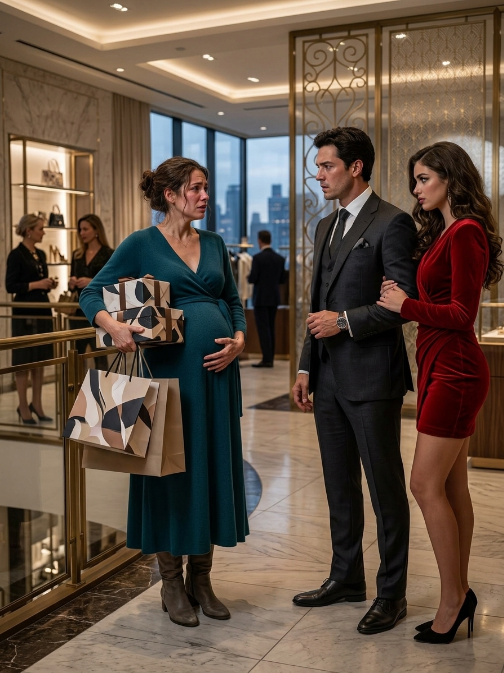
Six weeks after the divorce. A woman named Priya Anand, twenty-seven, an events coordinator. The statement mentioned they were expecting.
Nour called before the article finished loading.
“I’m going to say words I cannot take back,” Nour said.
“Don’t.”
“He knew, Sera.”
“I know.”
“If he could—”
“Nour.” She set the phone on the desk. “I know.”
She sat in the study for a long time.
What lived in her chest was not grief, exactly. It was the specific sensation of a verdict being handed down for a crime you didn’t commit, after you’ve already served the sentence.
She went to Rhys.
“I need to go to a hospital,” she said.
He stood from his desk immediately.
“Are you—”
“Fertility testing. Comprehensive. Tonight.”
He asked no additional questions.
He drove her himself.
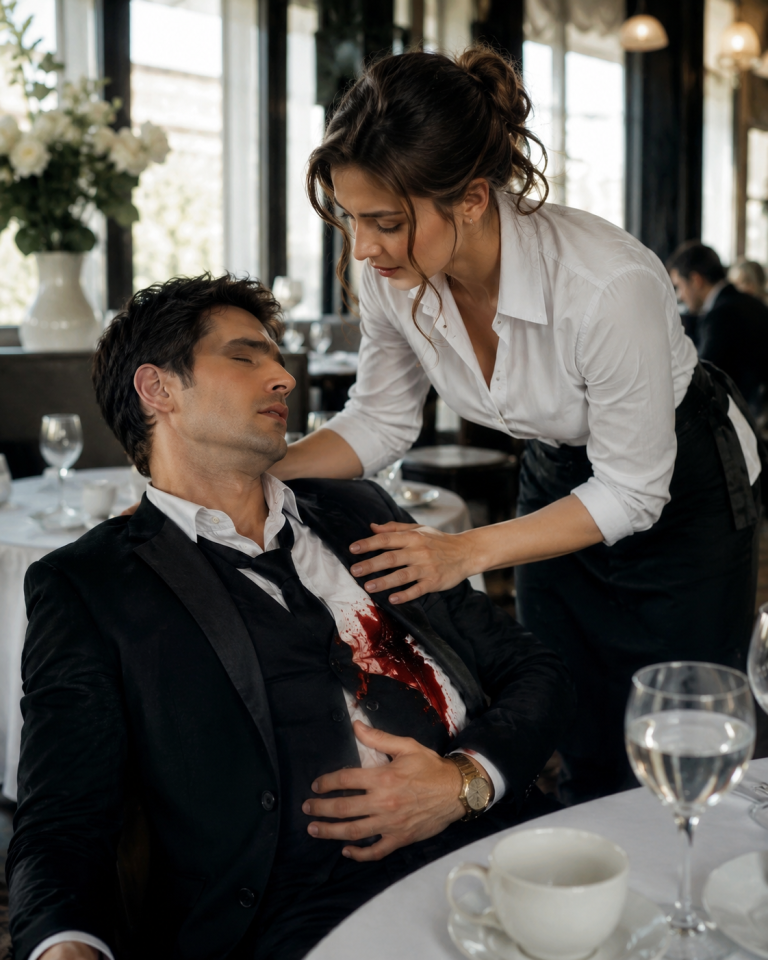
At Swedish Medical Center, Dr. Jae-Yun Park conducted a thorough evaluation. Bloodwork. Imaging. Full history.
She returned to the consultation room with her tablet and sat across from Sera with the calm of someone about to say something important.
“Your results are completely normal,” she said. “There is no medical reason you couldn’t conceive naturally.”
Sera made her say it again.
“There was never anything wrong with me,” she said.
“No. There was not.”
In the waiting room, Rhys stood by the window.
When she came through the door, he turned and saw her face before she said a word.
She told him.
His face went still in the particular way of someone converting something into a controlled response — not hiding it, just managing the container.
“I’m sorry,” he said.
“I don’t want sorry.”
“I know.”
“I want the truth to exist somewhere other than my body.”
He nodded once.
“Then we make sure it does.”
The truth came apart quickly.
A week later, Priya Anand’s pregnancy was exposed as fabricated — two journalists received documentation confirming there had been no viable pregnancy at the time of the announcement. The Woo family released a statement about privacy. Seattle responded accordingly.
Then came the second piece.
Daniel Woo had undergone fertility testing in 2020. The diagnosis was significant. Natural conception was virtually impossible for him.
He had known for four years.
He had known while Sera sat through Christmas dinners with Margaret’s acquaintances asking, in the careful language of concerned people, whether she had considered *alternative approaches*. He had known while his sisters made quiet observations about empty nurseries. He had known while Sera sat in three separate doctors’ offices in three separate years and was told each time that she was fine, that there was nothing wrong, that the difficulty was elsewhere.
He had known.
And he had let her carry it.
The story broke on a Thursday.
Sera read every article once.
Then she called Attorney Bess Kwon, whose reputation for clean facts and willingness to work with difficult opponents had been described to her by Nour as “genuinely frightening.”
“The prenup was structured on a false premise,” Bess said, reviewing the filing. “Material information was withheld from you throughout the marriage, including information that directly affected the terms and the accusations implied in the settlement documentation.” She set down the folder. “This is not just cruel. This is documentable.”
For the first time in months, Sera almost smiled.
—
PART 3
Daniel called before she was ready to answer.
She waited until the news cycle had stripped him down to what he actually was — not the executive, not the family name, not the gray suit. Just a man who had let the people around him make a cruelty out of his private failure and had never once said stop.
She chose a coffee shop in Capitol Hill, afternoon light, people moving through their ordinary Thursday around them.
Daniel was thinner. Not dramatically. The particular thinness of a person whose consequences have started costing them sleep.
He stood when she arrived.
She sat without acknowledging it.
“Clara—” He caught himself. “Sera. I’m sorry.”
“I’m going to need more than that.”
He swallowed.
“I’ve known since 2020,” he said. “After my father died, everything with the company succession and my mother and the—”
“Careful,” she said.
He stopped.
“Those are reasons,” she said. “Don’t ask me to receive them as explanations.”
His eyes reddened at the edges.
“I watched them blame you.”
“Yes.”
“I watched you bring me those results.”
“Yes.”
“I kept telling myself I would find a way to—”
“You found a way,” she said. “You divorced me.”
He flinched in the specific way of someone who had been hoping a different framing would land.
“Do you hate me?” he said.
She looked out the window.
Snow had started again, late and light, dusting the February sidewalk.
She thought about the suitcases packed by someone else’s hands. She thought about Margaret’s pearls and the word she had used, in various registers, for eight years. She thought about the cracked curb and the stuck wheel and a man crouching in the snow to free it without asking for anything in return.
“No,” she said.
Something in Daniel’s posture loosened.
“Don’t,” she said. “I’m not forgiving you. Not today, and possibly not in the way you’re hoping for. But I won’t hate you either. Hate is a room I lived in for eight years, Daniel. I’m not moving into another one.”
He was quiet.
“There’s one thing I should thank you for,” she said.
He looked up.
“If you hadn’t packed those suitcases, I would never have found where I was supposed to be.”
She left him sitting there with his coffee going cold.
Three weeks later, Bess Kwon delivered a revised settlement.
Sera did not become wealthy from it.
That had never been the point.
What she became was legally and documentably free. Free with money enough to open the compliance consulting firm she had been sketching in Rhys’s third-floor study for two months. Free with money enough to rent an office in First Hill under a name that was only hers.
*Lim Global Compliance.*
The first morning she stood in the hallway outside the office and saw those words on the frosted glass door, she put her hand over her mouth.
Nour cried loudly and without apology.
Mrs. Han sent flowers with a note that said only: *Expected nothing less.*
Rhys arrived last.
He was carrying nothing.
He handed her a framed copy of her first signed client contract.
She stared at it.
“How did you have this framed this quickly?”
“I know people.”
“Dangerous people?”
“Resourceful people.”
She smiled before she could prevent it.
He watched the smile as if it was the kind of thing worth watching.
That evening, standing in the garden of his house where the winter was beginning to release its grip — not warmly yet, just less aggressively — she looked at the city lights beyond the trees and understood that she had been walking toward something from the moment the door closed behind her.
“I’m moving into my own apartment next month,” she said.
He nodded slowly. “You should.”
She turned toward him.
“You’re not going to ask me to stay?”
“I want to.”
Her breath caught.
“But you won’t?”
“I won’t make this house another room that decides for you.”
She looked at him.
Right there. That was the thing she’d spent eight years not being given — love that understood the difference between staying beside someone and standing in front of them.
“I’m pregnant,” she said.
The garden was very quiet for a moment.
Rhys went completely still.
She kept her voice steady, because truth deserved that.
“I found out this morning. Seven weeks. It happened before the divorce was final — before everything that’s happened since. The child is Daniel’s, biologically.”
She said it plainly, because plainly was the only way truth should travel between people who had decided to be honest with each other.
Rhys’s face moved through something.
Not disgust. Not calculation. Not the careful reassembly she had learned to recognize in men deciding whether a situation fit their requirements.
Something more like impact. Like a person choosing, second by second, where to stand when the ground has shifted.
Then he stepped closer.
“What do you need?” he asked.
She had heard that question for months and she knew, by now, that he meant it every time.
Tonight she needed a different one.
“I need you to tell me what you want.”
He lifted his hand — slow, giving her room to move away — and touched her face.
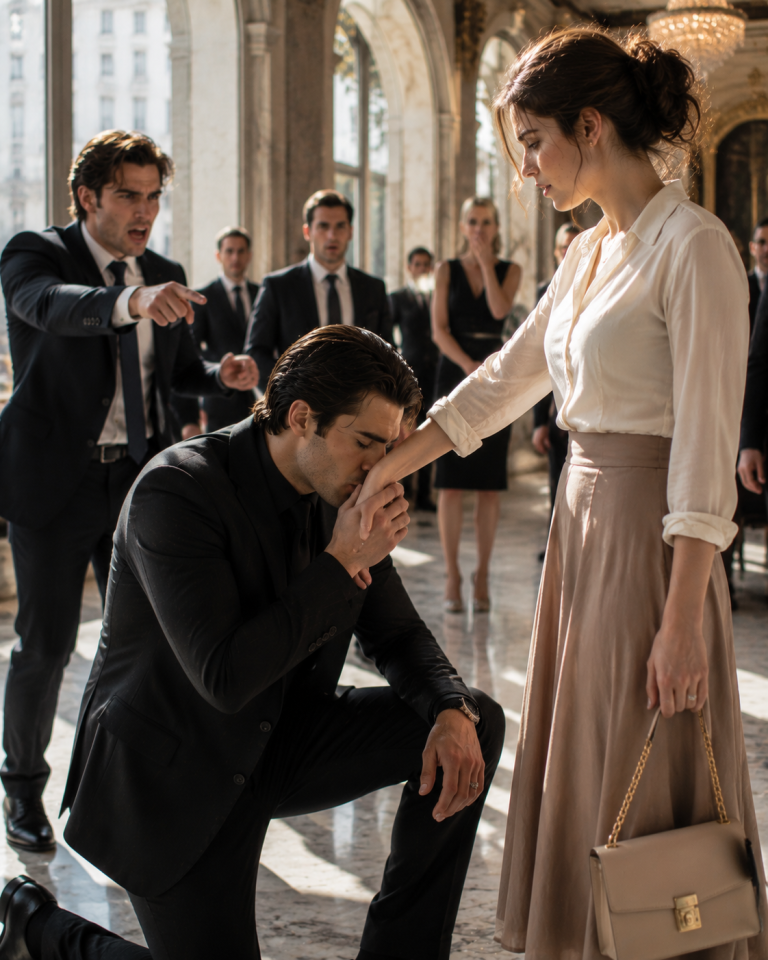
“I want you,” he said. “I want the child if you choose to have it. I want the appointments and the lawyers and the questions people will ask, because people always ask the questions that reveal how small they are. I want the mornings that frighten you and the evenings that don’t. I want the life that’s actually yours, not the edited version that would be easier for me.”
Her eyes blurred.
“You understand this will be complicated.”
His thumb moved once against her cheekbone.
“Sera,” he said. “I spent fifteen years building things in complicated conditions. This is the first thing that has ever felt worth the effort.”
She covered his hand with hers.
“Okay,” she said.
—
The pregnancy news arrived at the Woo family through legal documentation, the way all relevant communications traveled now.
Daniel called once. She did not answer. He sent a message.
*I know I have no right to ask for anything. But I want to do right by the child.*
She read it in Bess Kwon’s office.
Bess waited.
“I want legal clarity,” Sera said. “I want financial arrangements handled through counsel. I want Margaret Woo to have no access to my child unless I specifically and in writing approve it.”
Bess noted this.
“I want everything documented,” Sera said. “Especially Margaret.”
Bess smiled faintly.
“I’ll make it airtight.”
Daniel agreed to the terms faster than Sera expected.
Maybe guilt had finally made him honest. Maybe the public record had made silence too expensive. Either way, she accepted the agreement not as mercy but as the legal architecture of a protected future.
Margaret tried several approaches.
Phone calls. Letters. Acquaintances with phrasing like *healing* and *family* and *what’s best for the child*.
Sera declined all of it.
Then, in late March, Margaret appeared at the office.
The receptionist called back with the careful voice of someone conveying uncertain information.
“There’s a Margaret Woo here. She says she’s your mother-in-law.”
Sera looked at the contract on her desk.
“She’s not,” she said.
She went out anyway.
Margaret stood in the reception area in a cream coat, pearls at her throat, with the expression of a woman unused to waiting and unwilling to acknowledge that this was her situation.
Her eyes moved across the office, the name on the glass, Sera’s fitted jacket, the small evidence of a new shape beneath it.
Something shifted in Margaret’s face that Sera had never seen there before.
She looked uncertain.
“Sera,” she said.
“Mrs. Woo.”
The title, formal and closed, landed between them.
Margaret’s composure adjusted.
“I came to apologize.”
“No,” Sera said. “You came because the child exists.”
Color rose in Margaret’s face.
“That’s not—”
“You used a word for eight years,” Sera said. “Not always directly. Sometimes in the arrangement of your silence. Sometimes in the things your daughters said at tables where you were present and did not correct them. Sometimes in the way you looked at me at family dinners when someone mentioned children. You made my body a story the family told about what was wrong with me, and your son knew the whole time that the story was false, and you never questioned it because questioning it would have required looking at something you preferred not to see.”
Margaret’s mouth moved.
“I didn’t know,” she said.
“You chose not to.”
The reception area was quiet. The receptionist was finding paperwork to review.
“You will not use this child to repair your standing,” Sera said. “You will not refer to it as a Woo heir in any context. You will not appear at my home, my office, or my medical appointments. If my child ever knows you, it will be because you have spent a significant amount of time becoming someone deserving of that introduction. That is not a short road.”
Margaret’s lips pressed together.
“And if I pursue this differently?”
Sera smiled.
It was not warm.
It was the specific expression of a woman who has legal counsel and is not in a hurry.
“You’d meet Bess Kwon,” she said. “She’s looking forward to it, actually.”
Margaret left.
That evening, she told Rhys what had happened.
He listened the way he listened to everything — completely, without performing attention.
When she finished, he said, “I would have wanted to see that.”
“I know,” she said. “That’s why I didn’t call you.”
His mouth moved.
“Probably the right decision,” he said.
“Definitely the right decision.”
—
By summer, Sera’s life no longer felt provisional.
She had a firm, clients, a doctor she trusted, a best friend who had moved twenty minutes away because Nour claimed proximity to the baby was non-negotiable. Mrs. Han had begun acquiring items without admitting they were for the nursery.
And Rhys remained.
Not as a rescuer. Not as a person who had decided her life was now partly his to manage. As someone who showed up.
He came to appointments when she asked and stayed in the waiting room when she didn’t. He learned which specific crackers helped her nausea in the second trimester when nothing else did. He installed a handrail on the garden steps after watching her pause there once without comment. She found three parenting books hidden under a stack of shipping manifests.
“You run a port security firm,” she said, holding up *The Expectant Father*.
“I contain depth.”
“You’ve highlighted pages.”
“They seemed important.”
She laughed until she cried.
He went still and then cautiously retrieved a glass of water.
“I wasn’t—” she started.
“I know,” he said. “But water seemed safer than doing nothing.”
The ultrasound at twelve weeks revealed twins.
Sera stared at the screen.
Rhys’s hand closed around the edge of the exam table.
The technician said, with the careful cheerfulness of someone delivering enormous information, “Two strong heartbeats.”
Sera began crying.
Rhys pressed his forehead to her hand and said nothing, which was exactly right.
In the parking garage afterward, she said, “You can walk away. This is a significant escalation.”
He looked almost insulted.
“I am not Daniel.”
“No,” she said softly. “You are not.”
—
The wedding happened in September, small and specific to them, held in the garden with the ivy on the walls and strings of light that Nour had insisted on and Rhys had pretended to be indifferent to until the moment they went up and then said, quietly, that they were right.
Sera wore a simple dress the color of winter light. Her mother flew in from Incheon and took Rhys’s face in both hands when she met him, which he accepted with more grace than seemed possible.
“You take care of my daughter?” her mother asked.
Rhys answered immediately.
“She takes care of herself. I’m here for everything else.”
Her mother looked at him for a long moment, then nodded once, which was the family equivalent of full approval.
There were no Woos at the wedding.
No Margaret in pearls.
No sisters delivering layered observations.
No rooms so designed to make a person feel the dimensions of their own insufficiency.
There was Nour crying into champagne and not apologizing. There was Bess Kwon dancing with the focus of someone applying professional competence to a personal challenge. There was Mrs. Han, who had said she was coming to supervise the food and had spent most of the evening crying quietly into a handkerchief she produced from a pocket that should not have held one.
And there was Rhys.
At the end of the garden path, watching her walk toward him with the particular expression of a man who still found it slightly unbelievable that she had chosen to.
When she reached him, he said, low enough that only she heard: “You’re sure?”
She looked at the man who had knelt in the snow for her suitcase and had not once, since that evening, tried to make her smaller.
“For the first time in eight years,” she said, “completely.”
—
The twins came in February.
A girl first, then a boy, both furious about their arrival in the way of people who had opinions from the beginning.
Sera held them against her and cried with a joy so specific and physical that it had no relationship to anything she had felt before.
Rhys stood beside the hospital bed with his hand over his mouth and his eyes doing something he was not trying to control.
Nour said, quietly to Mrs. Han, “He’s completely finished.”
Mrs. Han said, “Obviously.”
The girl they named Yuna, after Sera’s grandmother, who had also been a woman of considerable opinions. The boy they named Kai, after no one specific, because some people get to have names that belong only to them.
Daniel met them months later, in a lawyer’s office, under the terms of the agreement.
He cried.
Sera let him.
He didn’t ask to hold them. She thought this was the first wise decision she had observed him make.
“I’ll honor the agreement,” he said.
“Yes,” she said. “You will.”
As she left, he asked, “Are you happy?”
She paused at the door.
Rhys was in the hallway with both infant carriers, looking entirely natural for someone who had once been described in a federal hearing transcript seventeen times in two days.
She looked back at Daniel.
“I’m whole,” she said. “Happy is part of that.”
—
One afternoon in June, Sera sat in the garden with her tea.
Yuna was in the bassinet beside her, asleep with the specific commitment of someone who has decided sleep is the most important work. Kai was in Rhys’s arms inside, engaged in an ongoing negotiation about something — she could hear his voice through the open window, patient and slightly bewildered, the way he was with all negotiations where the other party had very strong feelings and no language yet.
Nour had texted seventeen outfit photographs and demanded votes.
Mrs. Han was humming in the kitchen.
The garden smelled like the roses that had come back along the south wall after a winter everyone had assumed had killed them.
Sera looked at her tea.
She thought about Capitol Hill in January. The entrance hall and the suitcases and Margaret in the window chair. She thought about Daniel by the fireplace. She thought about the specific weight of eight years in a house where kindness kept receipts.
She thought about the stuck wheel and the cold pavement and the man who crouched in the snow without asking for gratitude.
She had thought, standing on those steps, that she was leaving everything behind.
She knew better now.
The door opened behind her.
Rhys came into the garden with Kai against his shoulder, the baby’s eyes wide and temporarily satisfied, looking at the world with the expression of someone taking notes.
Rhys sat beside her.
“He’s reconsidered his position on napping,” he said.
“What position did he take?”
“Strongly against. We reached a temporary armistice.”
Kai looked at Sera with the expression of a person who had recently made a significant concession.
She picked up her tea.
It was still warm.
She drank it.
Rhys looked at her sideways.
“Okay?” he asked.
She looked at the garden, the babies, the man beside her, and the house that had never once presented her with a bill for being loved.
“Yes,” she said.
She didn’t look back.