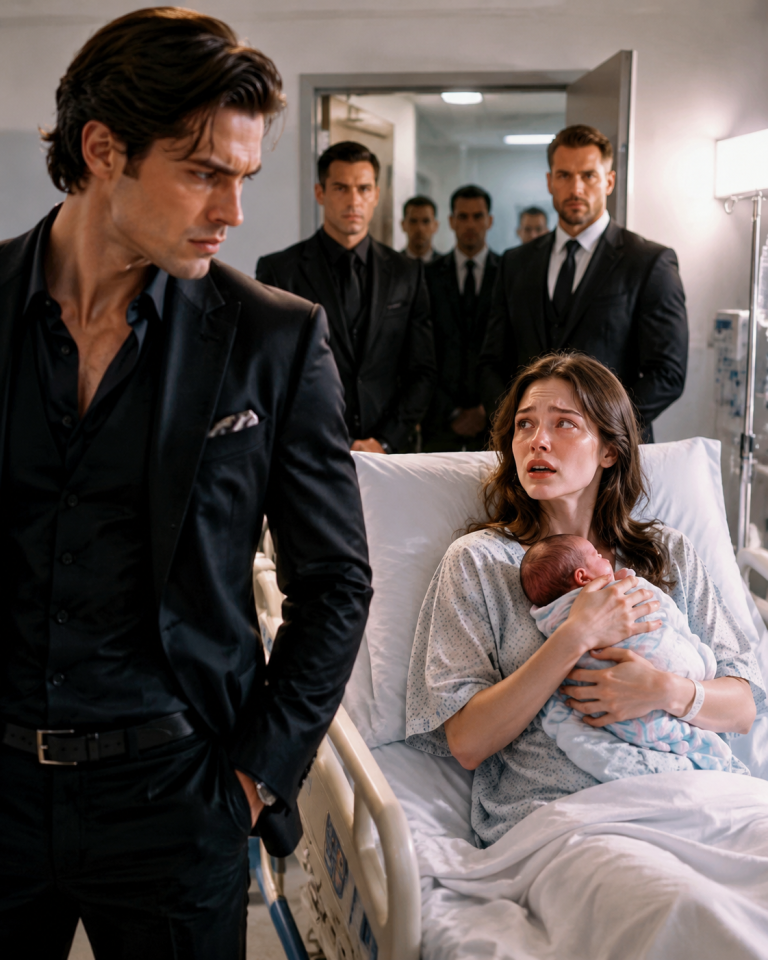
The worst mistake the mafia boss ever made was leaving the call on. While his empire waited for his wedding, he heard his fiancée corner the one quiet woman who could still speak in his dead mother’s name. Then the woman whispered a sentence only his mother used to say. And suddenly, the bride was no longer the most dangerous secret in the room.

**PART 1**
The day before the blessing dinner, the Castellaro estate stopped pretending to be a house.
It became a production.
Florists carried white dahlias and eucalyptus through the main hall before seven in the morning. Caterers arrived through the service entrance with carts that needed four people to push. The staff had been sorting crystal glasses since the previous evening, holding each one up to the window light to check for watermarks, replacing any that were less than perfect.
Valentina Moreno moved through all of it as though she had designed it.
Which, in some sense, she had.
She redirected the floral arrangements twice. She sent the first tablecloth back because the ironing had left a shadow crease. She told the head chef that Don Lorenzo preferred lighter preparations now — though Sera, who had served him the same espresso at the same temperature every morning for eight months, knew he changed his habits approximately never.
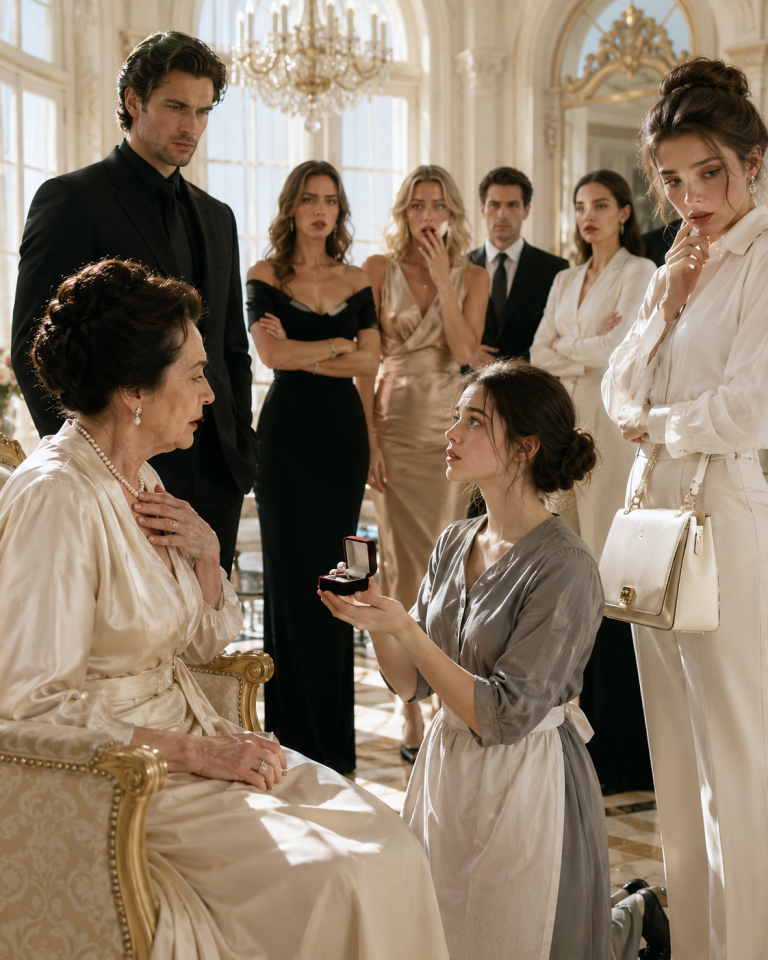
Then Valentina came to Donna Giulia’s room with two dresses over her arm.
“The champagne,” she said, holding up the first. “It photographs beautifully.”
Donna Giulia looked at the dress.
Then she looked at Sera.
One tap on the chair arm.
No.
Sera kept her expression neutral. “Donna Giulia prefers the gray-blue. She wore it to the last family dinner.”
Valentina’s smile didn’t move. It was the kind of smile that had been practiced until it no longer required effort — present regardless of whether she felt anything behind it.
“She told you that?”
“Yes.”
“How interesting.” Valentina stepped closer, lowering her voice to the register of someone sharing something private. “You are very devoted to her, Sofia. Anyone would think you forgot which family you actually work for.”
Sera lowered her eyes.
She had learned, in eight months, the precise amount of submission required to make a dangerous woman feel safe. Too little and you became a threat. Too much and you became a tool. The calibration was exhausting and necessary, like carrying water in a container that had a slow leak.
After Valentina left, Donna Giulia reached for the board in her lap.
Her handwriting had been improving since the second specialist. The letters still broke where her hand trembled, but the intention in them was always clear.
She wrote: She frightens you.
“She threatens,” Sera said quietly. “There is a difference.”
Donna Giulia’s eyes asked the question before her hand could.
“My son,” Sera said.
The old woman’s face changed.
She had a specific expression for moments when the cruelty of something registered fully — not surprise, because Donna Giulia had lived too long in the orbit of power to be surprised by cruelty, but a kind of sorrow that was almost formal, like someone observing a mourning rite.
She wrote: How long.
“Since she arrived.”
Donna Giulia set down the pen and sat with that for a moment.
Then she wrote one more word, slowly, each letter separated from the next as if she were pressing them into stone.
Tell.
—
Lorenzo came to see his mother that afternoon before leaving for a meeting near the port.
He was thirty-eight years old, built with the compact, deliberate quality of a man who had learned early that stillness communicated more than movement. He wore a dark suit impeccably. He had his mother’s jaw and his father’s eyes, and he had spent the fifteen years since his father’s death learning what it cost to be worth fearing.
He knelt before Donna Giulia the way he always did — not as performance, but as habit, the particular posture of a man who had been taught that the only people who deserved eye level were the ones who’d earned it.
“Mama,” he said. “Tomorrow is important.”
Donna Giulia looked at him steadily.
He swallowed.
“I will not marry without your blessing. You know that.”
Valentina stood slightly behind him, her hand resting on his sleeve, the engagement ring catching every available piece of light in the room.
Donna Giulia turned her gaze from her son to Valentina.
Then she looked away.
Sera recognized that look.
It meant: I have told you with everything I have, and you are not listening.
Valentina spoke first.
“She is tired,” she said, soft and reasonable. “It is a large evening.”
Lorenzo looked at Sera.
There was something in his eyes she had learned to read — not softness exactly, but the specific quality of attention a man gave when he actually wanted to know the answer and was afraid he might not like it.
“Sera?”
Every word Sera needed to say arranged itself in her throat.
Valentina’s fingers moved on Lorenzo’s sleeve.
Just slightly.
A millimeter of pressure.
Sera looked at her son’s school in her mind. The left gate, where Matteo always waited because the dog in the building across the street barked at him from the other side of the fence and he thought this was friendly.
“She is tired,” Sera said.
Donna Giulia didn’t look at Sera for a full minute after Lorenzo left.
Then she looked.
And the disappointment in it was something Sera would carry in her chest for the rest of the year.
“I am sorry,” Sera whispered. “I am so sorry.”
Donna Giulia reached for the pen.
Is boy safe?
Sera pressed one hand over her mouth.
“I don’t know.”
A tear moved down Donna Giulia’s cheek in a slow, careful line, as if even grief were trying to be orderly.
—
Valentina came back in the late afternoon.
Donna Giulia was in her chair facing the window. The garden outside had gone gold and gray. Sera was folding linens she had already folded once, her hands needing something to do.
Valentina had a phone in her hand.
“Lorenzo.” She said his name softly, the way you say a word you’ve been practicing.
His voice came through, warm and unguarded in the way men’s voices get when they believe they are speaking in private.
Valentina’s face became something it had never been in this room before: genuine.
Not good. But genuine.
She said all the right things. She sounded like a woman who loved him, and maybe some piece of her did, though Sera had stopped believing love explained everything Valentina did. Some of it was calculation. Some of it was the particular hunger of a person who had decided they deserved a specific life and was going to have it.
“Everything is ready,” Valentina said. “Your mother will bless us. I feel it.”
Lorenzo said something Sera couldn’t hear.
Valentina laughed.
“I love you too.”
She lowered the phone and touched the screen.
She thought the call had ended.
It had not.
She turned to Sera, and the warmth left her face the way winter leaves a room when someone opens a door onto it.
“Close it,” she said, nodding toward the door.
Sera closed it but stayed near Donna Giulia’s chair.
Valentina walked to the center of the room. Not hurrying. She never hurried. Hurrying was for people who weren’t certain of outcomes.
“Tomorrow night,” she said, “when Lorenzo asks for the blessing, you will give it.”
“Donna Giulia gives her own—”
“Donna Giulia’s own means nothing without a voice.” Valentina looked at the old woman without flinching. “You are her voice. If you say yes, he believes yes. If she taps no, you correct it. If she writes something inconvenient, you misread it.”
Sera felt her chest tighten.
“I won’t.”
Valentina looked at her with the expression of someone who has just confirmed a calculation.
“Yes, you will.”
“Donna Giulia—”
“Donna Giulia is an old woman with a broken body who has been dying slowly for four years.” Valentina said it without cruelty, which was worse than if she had. Just fact. “Her son loves her and cannot see her as she is. That is the leverage I have. You are the tool I will use. Those are the facts.”
“I won’t lie for you.”
“Then your son will not come home from school.”
The room ceased to have sound.
Sera heard, in the silence, the exact quality of Matteo’s laugh when something surprised him. She heard the sound of his shoes on the apartment stairs. She heard him asking why the butter at the school lunch was different from the butter at home, which had been a serious inquiry lasting most of a week.
“Dark curls,” Valentina said. “He waits at the left gate because of the dog. Children are honest about their habits. It makes them findable.”
Donna Giulia’s hand moved toward the writing board.
Valentina picked it up from the side table and placed it on the highest shelf. Out of reach. In sight.
Sera understood then the specific quality of Valentina’s intelligence. She didn’t only take what you needed. She left it somewhere you could see it and couldn’t have it. That was the refinement of cruelty that came from practice.
“If you expose me,” Valentina continued, moving to the mirror to check her hair, “I’ll say you turned her against me. I’ll say you’ve been feeding her fear to keep yourself necessary. I’ll say you enjoy being the only person who can reach her.” She met Sera’s eyes in the glass. “You are a caretaker. I am his fiancée. She cannot speak. Who does Lorenzo believe?”
Sera looked at the phone on the side table.
The screen was still glowing.
She had looked at it because she needed somewhere to put her eyes.
But now she looked at it differently.
Valentina did not follow her gaze.
“Tomorrow night,” Valentina said, “you give me the blessing and your son comes home. It is simple mathematics.”
She turned from the mirror, picked up the phone, and froze.
The screen showed an active call.
Eight minutes, forty-two seconds.
Valentina went the specific white of someone watching a door they believed they had locked swing open.
“Nico?”
Silence from the phone.
“Nico, I—”
The call ended.
For three seconds, Valentina stood in the room with all of her plans visible on her face. Then calculation dressed her again.
She turned to Sera.
“If he asks, you misunderstood. I was discussing the seating chart. You are confused about context.”
Sera said nothing.
Valentina looked at Donna Giulia.
“She is an old woman with a broken body,” she said again. “That is still true.”
She left.
Donna Giulia was already reaching toward the board’s place on the shelf. Sera took it down immediately and placed it in her hands.
Giulia’s fingers shook. She wrote in pieces, letters separating.
Nico heard?
“I think so.”
The old woman closed her eyes.
Something crossed her face that Sera recognized from her own experience of dangerous hope: the specific fear of wanting something too much to trust it.
—
The house went quiet in the wrong way.
No guards running. No voices raised. No indication that anything had changed except that it was quieter than it should have been given what had just happened, and Sera knew enough about how power operated in houses like this to understand that the dangerous men were the ones who went quiet.
She waited.
An hour.
Two.
At half past five, her phone rang.
Matteo’s school.
She answered before the first ring completed.
“Signora Moreno?” The secretary’s voice was careful in the way voices got when they were managing information they weren’t sure how to deliver. “Your son is safe. But there is a situation here. There is a man. He says he is from the Castellaro family.”
Cold flooded Sera’s chest.
“Don’t release him to anyone.”
“The man says Don Castellaro is here himself. He’s in the principal’s office.”
Sera went still.
“Put Matteo on.”
A pause. Footsteps. The specific background noise of a school hallway after hours.
“Mama?” Matteo’s voice.
She sat down because her legs had decided they were done.
“Are you all right? Did anyone touch you?”
“No. A tall man brought me a sandwich. He said you were busy.”
“Stay with the principal. Don’t go anywhere until I call again.”
“Okay.” A pause. “Mama, are you crying?”
“No,” she said.
She was.
“I love you.”
“I love you too.”
When she ended the call, Donna Giulia was watching her.
“Lorenzo is at Matteo’s school,” Sera said.
Donna Giulia pressed her hand flat against her chest.
—
Lorenzo returned after dark.
By then, Matteo was at a family apartment in the north of the city under the care of a woman named Rosa who had been with the Castellaro household for twenty years and who, Sera would later learn, had been personally asked by Lorenzo to cook whatever Matteo wanted and to read to him until he fell asleep if necessary.
Matteo requested pasta and a story about a ship captain who was also secretly a dragon, which Rosa improvised for forty minutes.
A guard came to Donna Giulia’s room at nine.
“Don Castellaro asks for you. The study.”
The study was a room Sera avoided. It smelled of wood polish and decisions. The shelves were filled with books that looked read and maps that looked used and a collection of things that had survived previous generations of Castellaro men and now belonged to Lorenzo, who had inherited them before he understood what inheriting them would cost.
He was standing by the desk, jacket off, sleeves turned back.
On the desk: a phone, a small recording device, and a photograph of Matteo outside his school.
Sera’s throat closed at the sight of the photograph.
“My son—”
“Is safe.” Lorenzo’s voice was even. “He will not be touched.”
“Did you hear everything?”
He turned.
His face was not what she expected.
She had expected anger. The contained, lethal kind she had seen him use in business — the removal of warmth from a conversation, the particular coldness that preceded consequences in the Castellaro world.
Instead, his face was the face of a man who had been listening to sounds from inside a wall and had just understood what the sounds meant.
“I heard enough,” he said.
Shame rose in Sera before she could prevent it.
“I should have told you sooner.”
“Yes.” He paused. “She knew your son’s name.”
“I was afraid.”
“You had reason.”
Silence.
Then he looked away from her, toward the rain on the window.
“How long has my mother been afraid of her?”
Sera’s eyes filled.
“Since the first day she arrived.”
Lorenzo’s hand found the edge of the desk.
“And I did not see it.”
She couldn’t offer comfort. It would have been false, and he would have known it.
“Tell me what happened. From the beginning.”
So she told him.
Not all at once. Fear-held truth comes out the way frozen ground thaws: slowly, from the bottom. She told him about the writing board being moved. About the way Valentina arranged for conversations to be interrupted when Donna Giulia was composing a message. About the compliment that turned to threat in the time it took to close a door.
Lorenzo listened without interrupting. Once, when Sera reached the part where Valentina had placed the board on the shelf — in sight, out of reach — his hand on the desk edge went white at the knuckles.
“Who else in the house?” he said.
“Carmela. And one of the outer guards. Maybe more.”
He nodded.
He picked up Matteo’s photograph and turned it face down.
“The car outside your son’s school belongs to a man in Valentina’s cousin’s employ.” He paused. “He was found an hour ago.”
“Found?”
Lorenzo looked at her.
“He will not be near your son again.”
Sera didn’t ask what found meant in the Castellaro world.
“What do you want from me?” she asked.
“Tomorrow night,” he said, “I want my mother to speak. Through you, through the board, through refusal if that is what she chooses. But only what she chooses.”
Bianca had wanted her to speak for Donna Giulia.
Lorenzo wanted permission from Donna Giulia.
In that difference was everything.
“She will want to say no,” Sera said. “Valentina knows that. She will move to contain it.”
“Let her.”
“It could be dangerous.”
“Yes.”
“For Matteo—”
“Your son is under my protection.”
Sera looked at the window.
“People say things like that.”
“I know they do.”
“Sometimes they mean them.”
“I mean it because you spent eight months protecting a woman I failed to protect.” He met her eyes. “And because the next time you are afraid for your son, you come to me. You don’t carry that alone.”
Trust was not a door that opened because a powerful man said the right words. She knew that.
But she also knew the difference between words practiced for effect and words that cost something to say.
She nodded.
“Before morning,” he said, “Matteo stays where he is. After tomorrow night, we reassess.”
“Thank you.”
He was quiet for a moment.
“I should be thanking you.”
She looked at him.
“Don’t,” she said. “Not yet. Let it work first.”
Something moved through his expression.
Not quite a smile. Something that lived in the same neighborhood.
She went back to Donna Giulia’s room and slept on the narrow sofa and woke twice from dreams that were really memories.
The second time, Donna Giulia was already awake.
She wrote: Is it settled?
“Tomorrow night,” Sera said. “Lorenzo is ready.”
Donna Giulia stared at the ceiling for a long moment.
Then she wrote one slow word.
Good.
—
**PART 2**
Friday arrived gray and cold, the kind of morning that commits to its mood early and doesn’t apologize for it.
Inside the estate, the preparations from the previous day had been amplified. The florists came back to adjust arrangements. The cook sent three versions of the first course to the dining room for approval. Men checked perimeters, guest lists, vehicles, and faces.
Valentina arrived at Donna Giulia’s room before eleven.
Sera was doing Donna Giulia’s hair, each stroke slow and unhurried, the way Donna Giulia preferred.
Valentina came to stand behind them in the mirror.
“How is everything this morning?” she asked.
Her voice carried no trace of the previous evening.
“Well,” Sera said.
Valentina’s eyes moved to the writing board in Donna Giulia’s lap.
“Tonight is going to be beautiful.” She addressed this to Donna Giulia’s reflection. “All you need to do is sit and be present.”
Donna Giulia tapped once.
No.
Valentina’s expression flickered.
Just briefly.
She looked at Sera.
“Make sure she rests.”
She left.
Donna Giulia’s hand found Sera’s.
She didn’t write anything.
She just held on.
At noon, Lorenzo came without Valentina.
He knocked.
He had not, Sera realized, knocked on this door before. He had always opened it the way children of a house open doors — as right, not as request.
Donna Giulia looked at the door.
“Come in,” Sera said.
He entered slowly.
He looked like a man who had thought about what he wanted to say and hadn’t slept while doing it.
He knelt before his mother.
Not performing.
Just doing it.
“Mama,” he said. “I need you to know something before tonight.”
Donna Giulia watched him.
“I am sorry,” he said.
Two words.
Without qualification or direction. Just the weight of them.
“I passed your door every day. I told myself you were fine because I needed you to be fine. I did not look at what was in front of me.”
Donna Giulia’s throat moved.
Lorenzo looked at Sera.
“May I?”
She handed him the board.
He placed it in his mother’s lap as if it were something that required care.
Donna Giulia’s fingers moved.
She wrote: Not her fault.
Lorenzo read the words.
His breath changed.
“I know,” he said.
She wrote again: Boy safe?
“Yes. He ate too much cake and asked Rosa why rich people’s butter comes in small dishes.”
The corner of Donna Giulia’s mouth moved.
She wrote one more word.
Tonight.
Lorenzo’s face hardened into the expression Sera had learned to recognize as his version of commitment.
“Tonight,” he said.
—
The dining hall had been transformed.
Gold candlelight. White linen. Crystal catching every flame. The kind of tablescape that took four people six hours and was designed to communicate that whatever happened in this room was authorized by beauty and therefore real.
Guests filled the room with the specific noise of important people performing casualness. The Castellaro family in their seats, old and established, watching from behind wine glasses. Valentina’s relatives, newer, louder, measuring the paintings and the staircase with the hungry attention of people making calculations.
Valentina entered last.
She had chosen white. A different calculation than ivory would have been.
She looked magnificent and she knew it.
Sera entered with Donna Giulia — the gray-blue dress, the silver chain, the writing board across her lap, her eyes steady despite everything they had survived to get to this room.
Valentina saw Sera and smiled.
It was the smile of a woman who believed she had already won.
The dinner took its time. Courses came and were eaten. Conversations rose and fell. Valentina moved through the room performing grace with the precision of someone who had prepared each gesture.
Twice she looked at Sera across the table.
The first time: assurance.
The second time: reminder.
Sera looked back once.
Then Lorenzo stood.
The room went quiet the way rooms did for him — not all at once, but quickly, like falling dominoes.
“You know why we are here,” he said. “In this family, a blessing precedes a marriage. My mother’s blessing. No one else’s.”
Valentina’s fingers tightened around her glass.
He came around the table.
He knelt before Donna Giulia.
“Mama. Do you bless my marriage to Valentina Moretti?”
The entire room waited.
Donna Giulia looked at Valentina for a long moment.
Valentina’s smile was perfect.
Donna Giulia looked at Sera.
Sera placed the board in her hands and the pen between her fingers.
Valentina spoke before the first letter appeared.
“She is overwhelmed,” she said, warm and concerned, turning to the guests. “This is a lot for her. Sofia reads her well. Sofia, why don’t you tell us what Donna Giulia is feeling?”
Every face turned to Sera.
The room balanced on the edge of what she would say.
She looked at Donna Giulia.
Donna Giulia’s eyes were tired and steady and trusting.
She looked at Lorenzo.
He gave no command. No instruction. A small nod that said: I gave you the choice. Whatever you say, you said it freely.
She turned to the room.
“Donna Giulia will speak for herself,” Sera said.
A murmur.
Valentina’s voice sharpened beneath its softness. “Sofia, she can barely—”
“Then we wait,” Lorenzo said.
Two words.
They landed on the room and the room obeyed.
Donna Giulia pressed the pen to the board.
Her hand shook. The first stroke was thin. The second steadier. She wrote slowly, deliberately, with the concentration of a woman who had been waiting for this moment with the patience of someone who had learned to measure time in smaller increments than other people.
She wrote: No.
A sharp intake of breath somewhere to the left.
She wrote: No blessing.
Valentina pushed back her chair.
“She is confused—”
Donna Giulia kept writing.
She threatened my caretaker’s son.
The room did not erupt. It froze, which was worse. Frozen rooms hold everything that was in them when they stopped, and what was in this room was the specific horror of people who had believed something and been shown otherwise.
“This is,” Valentina began, and her voice had the quality of someone constructing the sentence as they spoke it, “this is a misunderstanding. Sofia has been—”
“Playing the recording now,” said one of Lorenzo’s men, who had appeared near the dining room entrance.
Valentina turned.
The playback filled the room.
Her own voice.
*Tomorrow night, when Lorenzo asks for the blessing, you will give it.*
Then Sera’s voice, shaking.
*Donna Giulia will refuse.*
Then Valentina again.
*Then your son will never come home from school.*
A woman at one of the far tables put down her glass.
The recording continued.
*Dark curls. He waits at the left gate because of the dog across the street. Children are easy to find when their mothers are predictable.*
Valentina’s relatives sat very still. Not from loyalty. From the particular calculation of people determining which way to move.
*You are a servant. I am his fiancée. And she cannot speak.*
Lorenzo stopped the playback.
The room held its shape for a moment longer.
Then Valentina moved.
She moved toward Sera.
“You did this,” she said, and the grace was gone now, the performance stripped, and what was underneath it was just anger — the specific anger of someone who had been very good at something and found out it had not been good enough. “You turned her against me from the day I arrived. You kept yourself necessary. You—”
“My mother wrote what she believed,” Lorenzo said.
Valentina spun.
“She is ill. She is managed. That woman has been manipulating—”
“Valentina.”
Something in the way he said her name stopped her.
He walked toward her. Not fast. Not threatening. With the unhurried pace of a man who has already made every decision and is now executing them.
He took her left hand.
She looked at his face and seemed to understand something.
“Nico,” she said. Softly. The real version of his name. The one she used in private.
He removed the ring.
Not violently. Not theatrically.
Just with finality.
Valentina’s family started to rise. Lorenzo’s men were already positioned. One of Valentina’s cousins stopped halfway up from his chair and looked at the room and sat back down.
“Take her out,” Lorenzo said.
Valentina screamed.
Not words first. Just the sound of a plan collapsing. Guards moved in. She turned back once toward Sera.
“You ruined everything!”
Sera stood with one hand on the back of Donna Giulia’s chair and her knees shaking and her voice, when she found it, steadier than she had any right to.
“No,” she said. “You did.”
The doors closed.
The room exhaled.
Lorenzo knelt before his mother in the middle of the dining hall — in front of family, allies, enemies, staff, guards, and everyone who had ever mistaken her silence for weakness.
He took her hands.
“Mama,” he said, and his voice broke.
“Forgive me.”
Donna Giulia looked at him for a long time.
Then she lifted one hand with great effort and pressed it briefly against his face.
She tapped twice.
Yes.
Sera looked away. Some moments belonged only to the people in them.
—
**PART 3**
That night, after the guests were gone and the house had returned to something like quiet, Sera found Lorenzo in the corridor outside his mother’s room.
His jacket was off. He looked like a man who had just set down a weight and was still feeling where it had been.
“She’s asleep,” Sera said.
“And Matteo?”
“Rosa says he invented a second-floor library and used it to hide from bedtime for forty minutes.”
Lorenzo almost smiled.
“He asked me,” Sera added, “when he learned you were involved, whether mafia bosses had better snacks than regular houses.”
“He asked Rosa the same thing.”
“It’s a genuine inquiry. He’s very principled about food.”
Lorenzo looked at the closed door.
“I owe him an apology too.”
“He doesn’t know enough to need one.”
“He knows his mother was frightened for weeks. Children know the rooms their parents are afraid in.”
That was true enough to land.
“You were brave tonight,” Lorenzo said.
“I was terrified the whole time.”
“I know.” He looked at her. “That is not the same as not brave.”
“That sounds like something people say to other people who did the difficult thing while they watched.”
His jaw tightened.
“Yes.”
She hadn’t expected the agreement to come so quickly.
“What happens to Valentina?” she asked.
“She leaves the city before morning.”
“That’s all?”
His voice was even.
“That is all you need to carry home.”
She accepted that.
—
Matteo woke the next morning in a guest room larger than their apartment.
He was sitting up in bed examining a small dish of butter with the expression of a researcher who has encountered a previously undocumented phenomenon.
“Mama,” he said, when she appeared in the doorway. “Why is the butter in its own dish?”
“Rich people,” she said. “They like to give things their own rooms.”
“We don’t have enough dishes for that.”
“No.”
He put the butter dish down.
“Did the bad lady go away?”
“Yes.”
“Because of Don Lorenzo?”
“Because of the truth. He helped with the rest.”
Matteo considered this.
“Can truth fix things?”
“Sometimes. It usually needs someone to say it out loud first.”
“Were you scared?”
She crossed to the bed and sat beside him.
“Yes.”
“But you said it anyway?”
“I didn’t want to. But Donna Giulia needed me to.”
Matteo leaned against her.
“I think that counts as brave even if you were scared,” he said.
She pressed her lips to the top of his head.
“I had a very good teacher,” she said.
He went back to investigating the butter dish, satisfied.
—
The mansion changed after Valentina left.
Not in the ways a stranger would notice. The rooms were the same rooms. The staff went about the same routines. The gates opened and closed on the same schedules.
But Donna Giulia’s board was never moved out of reach again. A second one appeared in the sitting room and a third in the small sunroom off the east corridor. Lorenzo hired a consultant who came twice a week to work with the entire household staff on communication methods — not to replace Sera but to make his mother legible to everyone around her.
Carmela, the housekeeper who had been Valentina’s auxiliary in the interruption of messages, was given the option to leave quietly or be discussed loudly. She left before the week was out.
Two guards were replaced.
The flowers Valentina had chosen for the entrance hall were removed. The replacement arrangement was smaller and had no roses in it. Donna Giulia had never liked roses. She had simply stopped making the point, at some stage, when making the point had consequences.
And Lorenzo began to sit with his mother in the evenings.
Not conducting business nearby. Not passing through. Sitting with her, the way people sit when they are trying to learn a language rather than just hear it.
He made mistakes. He missed signs she repeated. He asked Sera too many questions and not enough of his mother directly. But he learned, slowly, the difference between watching and seeing, and Donna Giulia had the patience of someone who had been waiting a long time for a student.
The first time Lorenzo understood her without looking at Sera first, Donna Giulia smiled.
It was a small smile. Brief. But it changed his whole face.
Sera saw it from across the room and looked back at her work, because some things were better observed from the corner of your attention.
—
She had told herself she would leave.
After Valentina, after Matteo was home, after the immediate emergency had resolved into ordinary life — she had told herself she would find work somewhere quieter. A house without gates and guards and enemies with long memories. A place where her son could inherit nothing more dangerous than habits.
She told Donna Giulia first.
The old woman listened without expression.
“Matteo needs peace,” Sera said. “I need it too, I think.”
Donna Giulia reached for the board.
You leave because afraid.
“Yes.”
Good mother is afraid.
Then, after a pause:
But fear should not choose everything.
Sera sat with that.
Lorenzo found her in the garden two days later.
The roses had been cut back. What remained was neat and a little bare, which was better than ornate and wrong.
“My mother says you are thinking of leaving,” he said.
“Your mother reads well.”
“She reads correctly.” He stood beside her at a distance that was deliberate. “If you leave, I will arrange work through a different household. Your pay continues until you are settled. If there is something you need in the transition, you ask.”
Sera looked at the garden.
“That is a generous exit.”
“It is what you are owed.”
“I am not sure that’s how employment usually works.”
“It is how it should.”
She turned to look at him.
He was watching the cut-back roses with the expression of someone working out a problem.
“What would make you stay?” he asked.
“What would it change?”
“Tell me and find out.”
She looked back at the garden.
“No more being called Sofia when you want something done and Signora Moreno when someone needs to be reminded of distance.”
“Agreed.”
“Matteo is not a guest and he is not staff. He is my son and he needs to be neither remarkable nor invisible.”
“Agreed.”
“Donna Giulia decides how she spends her time. If she wants to spend three hours writing to me about the history of Venetian glassmaking, that is her afternoon.”
Lorenzo almost smiled. “She has done that.”
“I know. It was excellent.”
“What else?”
Sera looked at her hands.
“I need to understand what I am staying for.”
The question sat between them.
Lorenzo was quiet for longer than he usually allowed himself to be.
“My mother is alive in ways she has not been for years,” he said. “You did that.”
“She was always alive. I just showed up.”
“I know.” He looked at her. “You showed up every day. You protected her when I did not see she needed protection. You told the truth in a room full of people who were waiting for you to lie.”
“That was self-preservation.”
“It was also courage.”
“Sometimes they are the same thing.”
“Yes.”
He turned slightly, as if considering the angle of approach.
“I don’t have a clean thing to offer you. My world is complicated. That is a real statement, not an evasion. My enemies are real. The danger is real.” He paused. “But Matteo would be safe. My mother would be well. And you would never again be the only person in this house who could hear what she was trying to say.”
Sera looked at the manor.
“That is not a romantic declaration,” she said.
“No.”
“It is accurate.”
“I thought accuracy was more useful.”
“Usually.”
She was quiet for a moment.
“I’ll stay,” she said. “Not because Donna Giulia needs me and not because of last week. I’ll stay because Matteo climbed into bed with her this morning and showed her his drawings for forty-five minutes and she annotated each one with tap code that he has apparently learned independently, and when I came in to find out what the noise was, they were engaged in what appeared to be a serious debate about whether the horse he’d drawn was running or dancing.”
Lorenzo was very still.
“She hasn’t— she hasn’t laughed in two years.”
“She tapped twice when he said it was dancing,” Sera said. “Very emphatically.”
He turned away briefly.
When he turned back, he had composed himself.
“Stay,” he said. “Not as Donna Giulia’s caretaker. As her advocate. You answer to her first and to no one else in this house, including me.”
“And if I think you’re wrong?”
“Then you tell me.”
“You’ll listen?”
“I’ll try.”
“That’s a mediocre guarantee.”
“It’s an honest one.”
She looked at him.
“Yes,” she said. “I’ll stay.”
—
The months that followed had the quality of things that grow without being tended.
Donna Giulia’s health did not improve in any dramatic sense. But she became more present, the way plants become more present when they are moved from a dark corner to a window — not different, just more themselves. She had opinions about the dinner menu. She corresponded with a niece who lived abroad and to whom she had not written in three years. She taught Matteo forty-seven signs that Sera had to ask her to document because he began using them as a private language with her and then became indignant when Sera couldn’t follow the conversation.
Matteo thrived in the particular way children thrive in unusual environments — by treating the unusual as ordinary. The guards were “the men who stand around.” The estate was “Nonna Giulia’s house,” a designation Donna Giulia had ratified with two enthusiastic taps. The cook was “the pasta specialist.” Lorenzo was, for an extended period, “the tall one,” until Matteo decided he was trustworthy enough to be called by name.
The decision about Lorenzo’s name appeared to be related to the day Lorenzo sat on the kitchen floor for twenty minutes helping Matteo figure out why his model of the solar system had Saturn’s rings falling off, which required significant renegotiation of the original design and Lorenzo’s complete agreement that the first design had been flawed.
Matteo informed Sera that evening that he thought Lorenzo was “okay.”
“High praise,” Sera said.
“He doesn’t pretend to know things he doesn’t,” Matteo explained. “Some adults do that. It’s annoying.”
Sera thought about this.
“Yes,” she said. “It is.”
Lorenzo’s relationship with her developed the way things develop when two people are in proximity and the pretenses that usually govern proximity have been made useless by a prior emergency. He had seen her afraid. She had seen him ashamed. Both conditions stripped away the usual performances.
He started asking her questions that weren’t about Donna Giulia.
About Matteo’s father, briefly, which she answered briefly and he didn’t press.
About nursing school, which she had left two years before Matteo was born and thought about sometimes with the feeling you thought about paths that had diverged.
About what she had done before this, and before that.
She answered. She asked her own questions. She stopped looking for the transaction underneath his attention and started, cautiously, believing that some attention was simply what it appeared to be.
One evening in the late winter, she came to find Donna Giulia and found Lorenzo there instead, reading to her from a book Donna Giulia had selected — something about Venetian trade routes, which Donna Giulia loved and which Lorenzo was working through with the expression of a man doing honest work.
He looked up when Sera appeared.
Donna Giulia looked at Sera and tapped twice.
Very satisfied.
Sera looked at the two of them, at the lamplight on the old woman’s face, at Lorenzo mid-sentence with a book he had not chosen but was reading anyway.
“I’ll come back,” she said.
“Stay,” said Lorenzo.
She stayed.
—
Donna Giulia arranged it.
Sera would have said nothing was inevitable, in retrospect — that what happened between her and Lorenzo came from a hundred small choices and could have been derailed by a hundred different ones. But Donna Giulia, who had been watching both of them from her chair with the comprehensive attention of someone who had nothing else to do with her time, apparently disagreed.
She did it at a small dinner, just family and staff, in the dining hall where Valentina had fallen. She had requested the dinner herself, which surprised everyone, and the room looked different without fear in it — same candles, same crystal, but the air felt like air instead of tension.
Near the end of the evening, Donna Giulia placed her hand flat on the table.
The conversation stopped.
She reached for her board.
She wrote slowly, and each letter was the clearest Sera had ever seen from her.
I want Lorenzo to marry Sera if Sera chooses freely.
Matteo looked at Sera.
Sera’s face had gone warm.
“Donna Giulia,” she said.
Donna Giulia looked at her.
Then she wrote: Not debt. Not gratitude. Choice.
Lorenzo was sitting very still.
He read the board and then he looked at his mother and then he looked at Sera.
In his face was something she had never seen there before. Not the controlled authority. Not the grief underneath it. Something newer than both.
“Mama,” he said, “you could have mentioned this privately.”
Donna Giulia tapped once.
No.
Matteo said: “Does this mean Don Lorenzo would live here? Or would we? Does it change the pasta situation?”
Rosa made a sound that was technically a cough.
Donna Giulia tapped twice at Matteo. The emphatic version.
He immediately looked at his plate, abashed.
Lorenzo turned to Sera.
“You don’t have to answer anything tonight,” he said.
Which was exactly the right thing to say and made it exactly the wrong kind of difficult to hold back an answer.
“I spent my whole adult life,” Sera said, “not accepting help that came with conditions I hadn’t agreed to.”
“Yes.”
“I have a son who is the first thing I think about in the morning and the last thing I check on at night.”
“I know.”
“I am not looking to be part of your world because it is safer than the alternative or because your mother wants it or because I am grateful.”
“I know.” He was looking at her steadily. “Those would all be the wrong reasons.”
“Then what would be the right one?”
He was quiet for a moment.
“That we are better when we are in the same room,” he said. “That is the only version I can offer honestly.”
Donna Giulia tapped twice.
“She agrees with you,” Sera said.
“She usually does. It is extremely irritating.”
Donna Giulia tapped twice again, more emphatically.
Sera laughed.
And then Matteo laughed because she was laughing, and Rosa laughed because Matteo did, and Lorenzo’s face did the thing it did when something surprised him — the mask lifting briefly, completely, before it descended again — and Donna Giulia sat in the middle of it looking profoundly satisfied with the results of her plan.
“Yes,” Sera said, when the room had settled.
“Yes?” Lorenzo said.
“Yes. But slowly. With truth. With Matteo. With Donna Giulia deciding half of everything.”
Donna Giulia tapped twice immediately.
“More than half,” Sera said.
Donna Giulia tapped four times.
“That means yes,” Matteo said, helpful.
“I know,” Lorenzo said.
—
The wedding was in the spring, in the garden that had been replanted after Valentina’s roses were removed — something smaller and more considered, chosen by Donna Giulia with Matteo as enthusiastic consultant.
Matteo wore a suit he had negotiated down from formal black to something he described as “dark but interesting” and was very proud of.
Donna Giulia wore gray-blue.
Rosa cried from the first minute and made no effort to stop.
The priest asked for the blessing.
Donna Giulia raised her board.
Every person in the garden turned to her.
She wrote, in the steadiest letters she had produced in four years of writing:
Family is the person who stays to hear what the world refuses to listen to.
Lorenzo bowed his head.
Sera held Matteo’s hand and did not look away.
Donna Giulia tapped twice.
Yes.
Then twice more for good measure.
—
Years later, people asked how it had begun.
Sera always told them the same thing: a job, a woman who couldn’t speak, a phone call that nobody ended in time.
They wanted more.
“That’s it?” they’d say.
“That was the beginning,” she’d say. “The rest was one choice at a time.”
The truth she didn’t say out loud was simpler than the story people preferred.
She had stayed because a voiceless woman had held her hand and because an eight-year-old had looked up from a drawing and because a man had asked his mother forgiveness and meant it.
She had stayed because courage wasn’t the absence of fear. It was what you did while you were still afraid.
And because sometimes, in the quietest rooms, the people who cannot speak say the most important things.
You just have to learn to listen.
Donna Giulia had known that for years.
It had taken everyone else a little longer to understand.