Forced to Replace Her Stepsister at the Altar of a Mafia Boss—But That Night Changed Everything

## PART 1
He said it without preamble, without ceremony, without the softening language people use when they know the thing they are about to say is going to land like a structural failure.
“Marry me.”
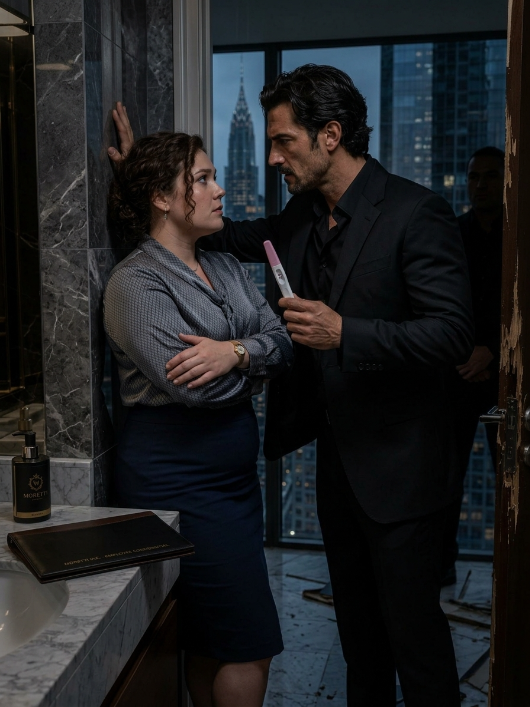
I stood in the service corridor of the Harrington Hotel with my back against a painted cinder block wall and fluorescent light doing nothing for either of our complexions, and I stared at the man who had just placed a file folder in my hands containing what appeared to be the organized destruction of my future.
“I’m sorry,” I said. “Could you repeat that?”
“No.”
That was all. No explanation attached. As if repetition were a courtesy he had already extended by saying it once.
His name was Cormac Vale. I knew it the way people who grow up adjacent to certain kinds of power know certain names — not from introductions, but from the way adults lowered their voices when they said it, from how quickly rooms reorganized when he entered them, from the specific quality of careful neutrality that crossed people’s faces right before they pretended not to know who he was. Construction, development, port interests, the sort of labor negotiations that stopped being negotiations around the third meeting. The kind of businessman that civic leaders found indispensable and polite company found inconvenient to discuss.
He was not what I had expected, though I hadn’t expected him at all. He was forty, perhaps, or the kind of forty that got there through difficulty rather than comfort. His face was structured for authority rather than reassurance — a jaw that didn’t offer softness, eyes the color of deep water that were built for assessing rather than warming. His hands were still. That was what I noticed first in the corridor. Most people in crisis situations move, shift, betray something. His hands were perfectly still at his sides, which meant he was not in a crisis situation. He was managing one.
Mine.
I looked down at the file again.
Bank statements. Digital transfer records. Wire authorizations. Vendor invoices addressed to shell companies with names that looked real until you looked too hard. All of it moving through accounts opened under my Social Security number, my address, my name. A quarter million dollars over six months, siphoned from a Vale Capital Holdings subsidiary in careful increments designed not to trigger automatic review.
My hands were not still.
“You said you know these are forgeries,” I said.
“Yes.”
“Then why—”
“Because knowing and proving are different problems. The accounts are real. The transfers completed. The documents filed. By the time anyone examines the signatures carefully enough to establish forgery, you will have been arrested, charged, and publicly ruined.”
I forced myself to look up from the papers.
His expression had not changed. There was something almost respectful about his directness — the absence of the cushioning people use when they want you to receive bad news without fully registering it. He was telling me what was happening. Not softening it.
I thought of my father. He had taught me chess at the kitchen table when I was nine, and his primary lesson was never about the game. It was about how to look at a bad position without panicking. *You can’t think from inside the emotion,* he would say, moving a piece I hadn’t seen. *Look at what you actually have. Not what you wish you had. What you have.*
What I had was this: federal exposure, my stepmother’s long hands visible in every line of the forgery even if unprovable tonight, and a man I had never spoken to before this moment offering me a door through a wall I couldn’t otherwise climb.
“Why me?” I asked.
His answer surprised me.
“I was at your father’s funeral,” he said.
That landed wrong. Not unpleasantly wrong. Just unexpectedly.
“You knew my father?”
“We had business adjacencies. I didn’t know him well.” A pause. “I watched you during the service. You were twenty years old. Your stepmother was performing grief in the front pew, and you were in the third row keeping your face composed while she destroyed it. I thought — there is someone who has learned to carry weight without announcing it.”
The fluorescent light hummed above us. From the ballroom came the muffled bass register of a toast, someone’s voice elevated through a microphone, laughter arriving after.
“You remembered me for four years,” I said slowly.
“I pay attention to people under pressure. It tells me more than anything a résumé does.”
“And what does my current pressure tell you?”
“That you’re going to need an exit that moves faster than your stepmother expects.”
My name was Mira Lian. Twenty-four years old. My father had died in a hotel room in Tokyo during a business trip when I was twenty, two years after he had married Constance, and everything since had been a sustained exercise in survival against someone who had learned, in the years of her marriage, exactly how my father organized his assets and his affections.
The trust was the center of it. My father’s estate, set aside in a protected structure, due to transfer to me at twenty-five. Eleven months from now. Constance had been circling it for four years with the patience of a woman who believed the law was simply a tool that rewarded people willing to wait.
My half-sister Gemma — Constance’s daughter from her first marriage, who had adopted my father’s warmth and his bank account with equal appetite — was downstairs in the ballroom right now, celebrating her engagement to a man whose family’s real estate holdings made Constance’s ambitions look modest. Tonight was supposed to be about Gemma’s future.
Instead I was in a service corridor holding the paperwork of my own legal destruction.
“The proposal,” I said. “What does it actually mean?”
He reached into his jacket pocket and produced a second document. One page, dense with language, pre-printed.
“Term sheet,” he said. “Two years minimum. During that period, the accounts dissolve into a legitimate restructuring my legal team manages. Federal records go quiet. Your trust transfers on schedule, protected through marital asset structure my lawyers design. At the end of the term, quiet divorce, full trust retained, negotiated settlement.”
I looked at the sheet.
“And in exchange?”
“Public presence. Selected events. You live at the residence. You don’t engage with my business.” A pause. “And you don’t deceive me about things that matter to the arrangement.”
“That last condition is notably vague.”
“It’s intentionally flexible. I find specific lists create more loopholes than they close.”
I stared at the term sheet.
“How long do I have to decide?”
“You have as long as it takes to walk back through that service door.” He checked his watch with the calm of someone who had already calculated that timeline. “Your stepmother sent Gemma looking for you three minutes ago. If Gemma returns without you and I’m still absent from the ballroom, Constance will begin her next move tonight rather than tomorrow.”
“Her next move being?”
“Filing a courtesy complaint with a contact at the US Attorney’s office. Protecting her position by moving the timeline before you have a chance to complicate it.”
My chest tightened.
He watched me process this without helping.
That was the thing — he wasn’t performing patience, wasn’t signaling sympathy, wasn’t doing the work that most people did in moments like this where they softened things to make themselves feel better about watching someone face something difficult. He was simply present. Waiting.
It reminded me, uncomfortably, of the chess table.
I looked at the term sheet one more time.
“You said you need a wife,” I said. “Not any wife. Why specifically me?”
He looked at me with something that was the furthest thing from flattery and therefore felt more honest than praise would have.
“Because you know how to be in a room without making it about you,” he said. “Because you have spent four years being underestimated by people with resources, which means you know what power looks like from underneath it. Because a woman who came with an engineered scandal attached would give the real estate transaction I am negotiating exactly the narrative I need to replace.”
“You want me to be a useful story.”
“I want you to survive while being one.”
From the ballroom, I heard Gemma’s voice, too bright and carrying in the way of someone raised to project.
I thought of prison. Concrete. Constance at my father’s estate, moving through the rooms, replacing everything he had chosen with things she preferred, rewriting the house the same way she had rewritten the legal documents — systematically, certain that no one would check.
I thought of my father saying: *Look at what you actually have.*
What I had was a term sheet.
What I had was a man whose hands were still.
“Yes,” I said.
He inclined his head once — not triumph, not relief. Acknowledgment. Then he held out his arm.
“We are walking back in together,” he said. “You don’t look like someone who was hiding.”
“What do I look like?”
“Someone who was saying yes in private before announcing it publicly.”
And when we pushed through the service door back into the gold warmth of the ballroom, I understood for the first time in four years what it felt like to enter a room as something other than an inconvenience.
—
## PART 2
Cormac made the announcement at eleven thirty, during the toast sequence, when the ballroom’s attention was already organized and pointing in one direction.
He didn’t use the microphone. He didn’t need it.
He simply raised his voice by exactly the increment required to carry the room without raising it at all, and he said: “I came tonight to celebrate an engagement. I find I’m leaving with one of my own.”
The room did the thing rooms do — the held breath before the reconfiguration.
“Mira Lian has agreed to become my wife.”
I stood beside him and watched four years of Constance’s careful architecture crack in real time.
She recovered fastest. She always did. But I watched the crack before the recovery, and it was significant.
Gemma was worse. Her face did the thing faces do when someone has been cut in a place they were certain was armored — genuine, helpless blankness before the social training reassembled.
The applause came. Hands found my arm. Congratulations arrived in the specific texture of people who were not sure whether they approved but understood that Cormac Vale’s opinion mattered more than their own.
He kissed me for the audience. It was brief, controlled, and still surprising — not for what it was, which was performative, but for what it wasn’t, which was cold.
Afterward, when the room had resumed its social noise, Constance reached us.
“Mr. Vale,” she said, and her voice was impeccable. “What a wonderful surprise.”
“Yes,” he said, with a pleasantness that contained nothing warm.
She turned to me, and her smile was exactly the kind that made everything visible if you knew what to look for. “Mira, darling. How thrilling.”
“Isn’t it,” I said.
She leaned slightly closer, under the cover of social warmth, and murmured: “You think this changes anything.”
“I think it changes everything,” I said. “But I’m sure you’ll adjust.”
We left at midnight.
—
In the car, the city moved past in broken reflections.
I sat very still and thought about the uncle.
My father had a younger brother named David Lian, who had lived in Los Angeles for fifteen years running an import business and had maintained a consistent and apparently unforced distance from the family since before my father’s marriage to Constance. I knew the name as a piece of the past that didn’t have edges.
Three days after the engagement announcement, my phone rang with a Los Angeles area code.
“Mira.” A voice I recognized from nothing at all. “My name is David Lian. I’m your father’s brother. I think we need to meet.”
I told Cormac that evening.
He listened without interrupting.
“He said Constance has stolen more than the trust,” I said. “Something about property. He wanted to meet alone.”
Cormac was quiet for a moment.
“Don’t meet him alone,” he said.
“He specifically asked—”
“I know what he asked.” His tone was even. “Think about who benefits from a meeting you attend without me.”
I sat with that.
“He could be genuine,” I said.
“He could be,” Cormac agreed. “He could also be the person who helped Constance understand the timing of your trust and position herself accordingly, who is now calculating that your marriage to me changes the leverage math and needs to reposition himself before the transfer completes.”
The room was very quiet.
“You think he was working with her,” I said.
“I think men who disappear from families for fifteen years and reappear with evidence at convenient moments deserve examination.” A pause. “This doesn’t mean his evidence is false. It means we should receive it with the correct understanding of what it cost him to provide.”
I looked at my hands.
“If the evidence is real and his motives are calculated, does that change what we do with it?”
Cormac’s expression shifted — very slightly, the micro-movement I was beginning to learn indicated genuine consideration rather than a formed response.
“No,” he said finally. “But it changes what we owe him.”
We met David Lian together, at a restaurant in the Mission on a Tuesday at noon. He was smaller than I expected, my father’s features arranged more anxiously, a man who had built his life at an angle to something larger he could never quite face straight on.
He slid a folder across the table without preamble.
Inside were property records. A commercial building in the Dogpatch district, mixed-use, generating substantial rental income. My father had held it in a personal trust outside the main estate, apparently intending it for me separately. Six months after his death, a series of corrective filings and affidavits from a since-retired attorney had transferred it into Constance’s control.
The building’s current assessed value sat at the top of the first page.
My vision narrowed slightly.
“You knew about this,” I said to David.
He looked at his coffee. “I knew your father intended it for you. I didn’t know she had moved it until recently.”
“Why recently?”
“Because someone I trust told me to look.” He met my eyes briefly. “Because I heard about your marriage and understood what it probably meant about what you know.”
Cormac was reading the property documents with total, rapid attention.
“You were in contact with Constance,” I said.
David was quiet for a moment.
“In the early years after James died,” he said. “She approached me about the estate. I provided some documentation about my brother’s business arrangements. I told myself it was legitimate estate administration.” He exhaled slowly. “It was not.”
“What do you want from this?” I asked.
He looked at me with something that appeared to be actual shame, though I was not yet ready to trust its sincerity.
“I want to fix what I helped break,” he said.
Cormac set down the documents.
“The property can be recovered civilly,” he said. “The transfer documents are defective — the attorney who signed the affidavits had an undisclosed conflict of interest that voids the certification. With forensic accounting on the rental income, we can establish unjust enrichment over four years.”
He looked at David.
“You’ll need to provide a statement about your role in the original estate documentation.”
“That exposes me,” David said.
“Yes,” Cormac said. “That’s the cost.”
David was quiet.
I watched him process the arithmetic of restitution, which always costs more than the alternative until the alternative catches up with you.
“I’ll provide the statement,” he said.
I did not tell him it was forgiven. It wasn’t, not yet. But I nodded once, and that was what it needed to be right now.
—
## PART 3
The lawsuit moved with a speed that had nothing to do with luck and everything to do with Cormac’s legal team operating with the efficiency of people who billed by the quarter hour and were genuinely good at what they did.
Temporary asset freezes. Forensic accounting reviews. Civil filings in three courts. Quiet contacts to Constance’s legal representation about the embezzlement framework — the accounts, the false vendor invoices, the forgeries — suggesting that the full federal picture would be significantly more expensive than a negotiated civil resolution of the property matter.
Constance fought.
Then she negotiated, because she was rational and her lawyer was better at arithmetic than she was.
I did not attend the settlement conferences. I read the summaries. I gave approvals when asked. I had learned, in the months since the Harrington Hotel, that delegation was not the same as passivity — that choosing where to spend your attention was itself a form of authority.
I was spending my attention elsewhere.
The community project had begun as an accident, which was how most useful things began.
Three weeks after the wedding — quiet, small, city hall, with Cormac’s mother in attendance and Alejandra, his assistant, holding two emergency safety pins and a folder of documents — I found a set of architectural plans on the dining room table.
I looked at the plans because the site was familiar.
“This is in the Excelsior,” I said.
He looked up from his laptop. “Yes.”
“My father used to take me to a dim sum place two blocks from here.” I studied the floor plan, the labeled spaces. Clinic. Legal office. Childcare. Transitional housing. Meeting rooms. “This isn’t a residential development.”
“No.”
“You’re building a community center.”
“Infrastructure for a community center,” he said, with the precision of someone for whom the legal distinction mattered. “The nonprofit that will run it is a separate structure.”
I sat down with the plans.
“The family the seller wants,” I said slowly. “The reason the optics of marriage mattered for this deal. They’re conservative because of what the property is for. They didn’t want to sell to a developer who would flip it.”
“They wanted someone who would build something that lasted.”
“Yes.”
I looked at the plans for a long time.
“I want to be involved in this,” I said.
He didn’t change expression immediately. Then: “How?”
“Not at ribbon cuttings. Actually involved. Planning, partnerships, the nonprofit structure, community outreach.” I looked up. “I know how charity boards work. I know how to talk to donors who need to believe they are being useful rather than being asked for money. I know which people in this city give because they care and which ones give because they want the photograph.”
A pause.
“You spent four years watching your stepmother use philanthropy as social currency,” he said.
“I spent four years watching her do it badly. She wanted the credit without the accountability. People could feel the absence of actual interest.”
Cormac closed his laptop.
“The project director has been struggling with major donor cultivation,” he said. “The board is functional but not well connected to the communities the center will actually serve.”
“I can fix both of those things.”
“It would require significant time.”
“I have it.”
He looked at me for a long moment with the evaluating attention I had learned to recognize as genuine — not the social look that catalogued and moved on, but the one that was actually computing.
“All right,” he said.
The work became the third thing in the marriage.
The first had been the structure: the legal arrangement, the residence, the public events, the careful performance of a version of us that was true in outline if not yet in all its internal dimensions.
The second had been the private accumulation — the small habits and particular knowledges that build between people who share space honestly. The way he made coffee at six-fifteen with an intensity that suggested the outcome mattered. The fact that he read physical books on airplanes and never mentioned what he was reading unless asked. The night he found me in the kitchen at two in the morning after a nightmare about the federal charges — not as they had almost been but as I still dreamed them, concrete and real — and said nothing except to make tea and sit across from me until my hands steadied. The morning he drove past the street where my father’s house had been, without me asking, and slowed for a moment, and I understood he knew where it was because he had looked it up.
Trust did not arrive. It was built. One action at a time, each one a small piece of evidence.
The third thing — the project — built faster than either of us expected, because I turned out to be better at it than I had known.
I recruited three physicians within six weeks, cultivating relationships at medical school alumni events that Cormac’s social calendar facilitated without his direct participation. I found a family law attorney through a connection at a Pacific Heights lunch who had been looking for a pro bono commitment she could actually make visible on her résumé. I worked with the project director on community engagement, sitting in the Excelsior neighborhood meetings until the faces recognized me and understood I was there because I was trying to understand, not because I was performing.
Cormac attended one of those meetings. He came in the middle, sat in the back, asked no questions, and left before it ended.
“You were testing something,” I said in the car afterward.
“Yes.”
“Whether I was performing or actually engaged.”
“Yes.”
“And?”
He glanced at me. “You knew the names of the families who had spoken at the previous two meetings. You used them. You noticed when a woman in the back looked like she wanted to say something and gave her the opening. No one was performing for you and you were paying attention to everyone.”
“Is that unusual?”
“It is for someone who grew up with money.”
“I didn’t grow up with Constance’s money,” I said. “I grew up with my father’s attention. He paid attention to people. I learned from that.”
The settlement deed arrived on a Thursday morning.
My name on the property. Owner.
Not stepdaughter. Not dependent. Not the inconvenient daughter of a man who loved too broadly and died too young.
Owner.
Cormac was in the kitchen when I came in with the document. He read it. Set it down.
“I want to donate it,” I said. “Not sell it. To the center.”
He stared at me.
“Mira—”
“I know what it’s worth.”
“You built nothing for four years because she controlled your access to resources. This is the resource.”
“I know. I also know that my father believed money should do something.” I sat down across from him. “I have the trust now. I have the settlement. I have the monthly arrangement and the marital structures. I don’t need the building to be wealthy. I need it to be useful.”
He was very still.
“If you donate it,” he said carefully, “the center becomes sustainable independently. No single donor can pull out and collapse the funding structure. The combined properties give it the physical capacity to serve three times the population in the original plan.”
“Yes.”
“And you would not have the rental income.”
“No.”
“Or the asset appreciation.”
“No.”
He sat back and looked at me with the expression I had learned meant he was processing something he had not predicted.
“What do you get from this?” he asked.
“I get to own part of something that matters rather than all of something that earns.”
He was quiet.
Then: “Your father said something like that once. At a lunch. Years ago, before I knew who you were.” A pause. “He was talking about why he had started a scholarship program instead of expanding a particular investment vehicle. He said he wanted to own outcomes rather than assets.”
I felt something move through my chest that was not grief and not joy exactly, but the specific emotion of recognizing a person you loved in a pattern you had lived without understanding where it came from.
“The donation stands,” I said.
He nodded once, and it was the acknowledgment of a man who had spent months watching someone become legible to him and was now reading something he hadn’t expected to find.
—
The community center opened in the spring.
I stood in the main entrance on opening day and watched families come through the doors. The childcare wing, painted the color of sunlight. The legal consultation offices with their privacy glass and the intake coordinator who had spent two years at a domestic violence legal clinic and came with a waiting list of people she was ready to help. The medical examination rooms that did not smell like institutional fear because someone had fought for the small details.
The settlement had completed three months earlier.
Constance’s resolution was structured, negotiated, and legally airtight. She returned the Dogpatch building, accounted for four years of diverted rental income, and released a corrective statement through counsel regarding the estate transfer — language carefully engineered to be accurate without being prosecutable.
The trust had transferred at my twenty-fifth birthday, protected and intact.
I was at the center in the afternoon when Gemma arrived.
She came without Constance, which was itself a kind of statement.
She looked at the building. She looked at me. She looked at the families moving through the entrance.
“I didn’t know it would be like this,” she said.
“I thought the announcement at the party was about Cormac Vale wanting something,” she continued. “I didn’t understand you were building something.”
“It started as one and became the other,” I said. “That’s allowed.”
She was quiet.
“I didn’t know what the accounts were,” she said. “The ones in your name. My mother told me you had been borrowing from one of his companies and she was handling it quietly to protect you. I believed her.”
I looked at her and tried to locate the version of this that was true. Probably she had believed Constance. Probably believing had also been convenient and she had not looked too hard at the inconvenience of doubt.
“I know,” I said. Which was not forgiveness and not accusation. Just acknowledgment of the particular shape of what had happened.
She left after twenty minutes. I did not know what that visit would become.
David Lian came to the opening.
He stood near the legal wing and looked at the intake forms and said nothing for a long time.
“Your father would have given money to this,” he said. “He would have asked to be involved.”
“I know.”
“I’m sorry,” he said. “Not only for the estate. For the years. For not looking.”
“You gave your statement,” I said. “You took the cost. That’s what I needed.”
He nodded and didn’t push for more, which was the right instinct.
Cormac found me in the childcare wing near the end of the afternoon.
The room was quieter now. Tiny chairs pushed under small tables. Books sorted into bins by topic. A child’s drawing of a house taped near the window.
“Your father’s chess lesson,” Cormac said from behind me.
I turned. He was looking at the room.
“Which one?”
“Don’t react to the move that scares you most. Look at what it’s protecting.”
“How do you know that?”
“You told me in the car once, late, when you were tired and talking more than usual.” He looked at me. “I wrote it down.”
Something tightened in my chest in a way that was not grief but resembled its anatomy.
“You wrote it down,” I repeated.
“I do that with things that seem important.”
We stood in the small room with the city light coming through the windows and the sounds of the opening day fading through the walls.
“I’m falling in love with you,” I said. “Which is inconvenient.”
He looked at me.
“Why inconvenient?”
“Because the timeline says two years and I’m already certain I don’t want the exit terms.”
He was quiet for a moment.
“The timeline was always flexible,” he said.
“You said minimum.”
“That means it can be longer.” A pause. “Considerably longer. If both parties agree.”
“You planned for that possibility.”
“I don’t use the word minimum by accident.”
The laugh came from somewhere unexpected, genuine and slightly embarrassing.
“That is a profoundly unromantic declaration,” I said.
“It’s an honest one.”
“Those aren’t mutually exclusive.”
He crossed the room in two steps and kissed me in the way that had been accumulating since the beginning — not for an audience, not for performance, but with the weight of everything that had been quietly true between us for months and was only now being said directly.
—
The settlement deed sat framed on the wall of my office at the center.
My name on the property. Not because I needed to see it. Because I wanted other people who came in — the women clutching custody documents, the men with wage theft cases, the teenagers who had aged out of systems and had nowhere stable to land — to see it too. To know that names on property could be corrected. That the official record could be argued with.
In the spring we married again.
Not legally — we were already legally married. This was small, private, in a garden, with twelve people who had earned the right to be there. A ceremony built from choice, which is the only kind that survives.
I said vows that were not standard language. I said: “I came here through a service corridor with nothing to recommend the decision except that you told me the truth when you didn’t have to. I chose you in the worst three minutes of my life and I would choose you again in the best.”
Cormac said: “I wrote down your father’s chess lesson. I kept it because I thought it was the truest thing I had heard in years. I didn’t know, when I wrote it down, that I was starting to understand you. I think I was. I think I had been, without naming it, since a funeral in a city where you were holding yourself together with both hands and still made the right face.”
I laughed.
He allowed this.
Afterward we walked back through the city toward the center, because the spring light was the kind that made San Francisco look like something a painter had argued with and both had agreed on a beautiful compromise. The streets smelled like coffee and damp eucalyptus and salt from the bay.
I had a board meeting the next morning. A donor lunch. A phone call with the childcare director about a waitlist problem and three possible solutions we had been working through.
Cormac had meetings that would run from seven until evening, negotiations in the particular style of his particular world, which I understood better than I had and not as well as I eventually would.
We walked in comfortable silence, the kind that doesn’t require filling.
At the corner outside the center, I stopped.
The building was lit from inside, staff members visible through the ground-floor windows. The street around it was ordinary — a bus stop, a bodega, someone walking a dog with the specific determination of a person who has somewhere to be. The center stood among these things as if it had always been there.
“I used to feel like I was taking up space that belonged to someone else,” I said.
Cormac waited.
“I stopped feeling that.” I looked at the building. “I don’t know exactly when. But somewhere in the last year, I stopped.”
He took my hand.
Not demonstratively. Just: took my hand.
“Good,” he said.
We stood on the corner outside what we had built until the light changed and the evening settled in around us, and I understood — not for the first time, but more clearly than before — that recovery was not the reversal of what had been taken. It was the construction of something better from the materials you still had.
I had come to this city as someone else’s footnote.
I was leaving this corner as someone who had added a line to the story the city was telling about itself.
My father would have found that amusing. He would have found Cormac infuriating and interesting in roughly equal parts, and he would have come to the center on a Tuesday and talked to the legal intake coordinator for forty-five minutes and left with three connections he had made on her behalf, because that was what he did.
I carried that with me everywhere now.
Not as loss.
As inheritance.