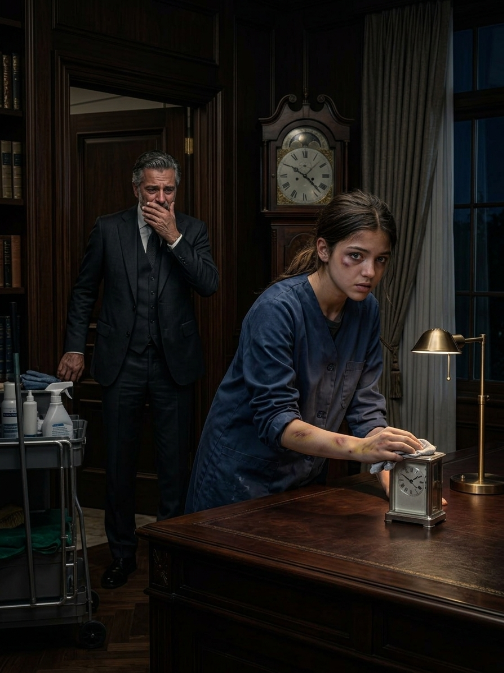
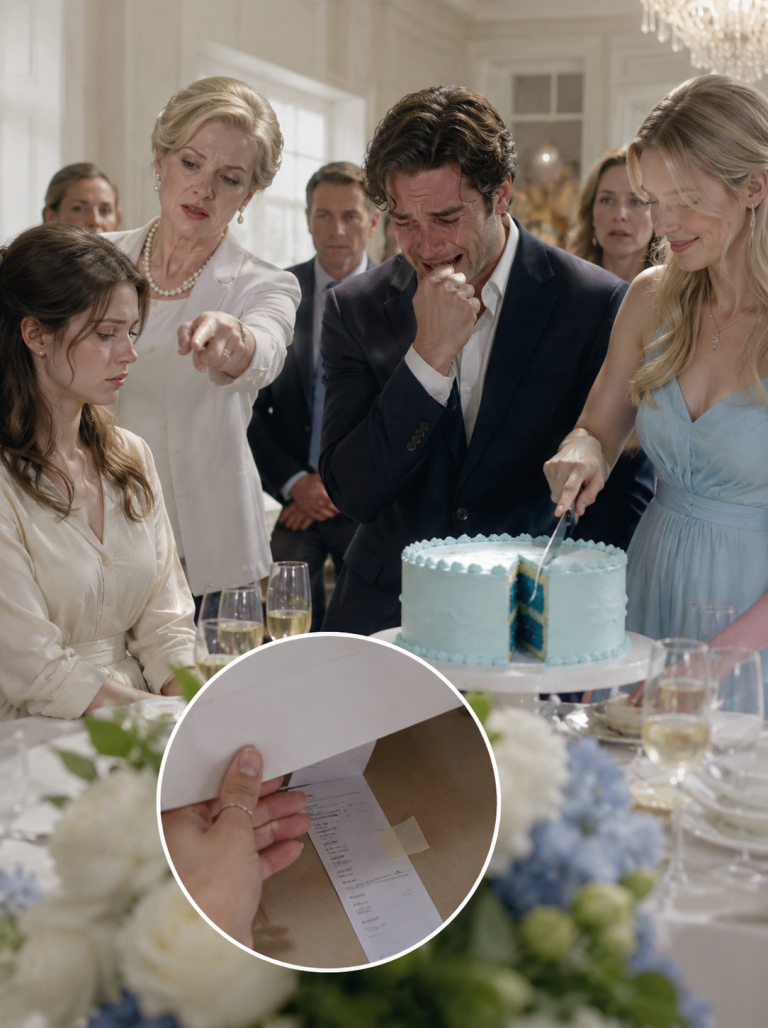
Her Family Offered the Perfect Sister to the Mafia Boss—But He Chose Elena Instead

## PART 1
I had learned to become unremarkable so completely that even I sometimes forgot I was in the room.
Tonight I sat at the far end of the dining table in the Hale family’s estate while sixty guests smiled at my sister. My placement had a practical logic: the noise from the kitchen corridor was loudest here. The light was dimmest. If conversation stumbled, I could be quietly removed from the count without disrupting the table’s symmetry.
I was used to this.
Twenty-four years of being Catherine Hale had taught me one enduring skill: how to disappear from rooms I had technically entered.
My mother’s name was Harriet. My father was Edmund. My sister was Isobel, and she sat at the head of the table beside the man our parents had spent three months constructing this evening around — smiling with the practiced warmth of a woman who understood exactly what she was worth tonight and had decided to be worth it gracefully.
The man’s name was Nikolai Vane.
Everyone in the city knew who Nikolai Vane was, though most only admitted it in careful company. He controlled shipping routes, real estate, and the kind of private rooms where decisions were finalized before the public ever learned what was being decided. Men like my father lowered their voices before saying his name. That had always seemed to me the most honest form of worship — not admiration, but caution.
He was buying Isobel tonight.
Not crudely. Not in the way the word implied. But the architecture of the evening made no other reading available: our father’s debts had reached a critical volume, our family name was eroding beneath them, and Isobel had been designed since childhood to stand beside power and make it look like partnership.
I had been designed for something else.
Mainly, applause.
I clapped when the toast was given. I smiled when my aunt touched my arm and whispered, “She does look lovely, doesn’t she?” I said yes. I meant it, actually. Isobel was lovely in the specific, architectural way of women who have had resources applied to them from the beginning.
The dinner progressed.
I ate the soup.
I exchanged four complete sentences with the man beside me, who manufactured something in Sheffield and was here, I suspected, because no one had thought carefully enough about the seating to remove the invitation he’d accepted three months ago.
I was reaching for my wine when Nikolai Vane stood.
He rose without announcement, the way powerful men rose — not to announce themselves but because the act of standing was the announcement. Every conversation in the room shortened without ending.
My father lifted his champagne glass, already shaping the proud-father speech he’d been practicing.
Nikolai looked down the table.
Past Isobel. Past my mother’s pearls. Past the flower arrangements and the candlelight and the careful social architecture that had been erected to direct his attention toward one specific focal point.
He looked at me.
“I’d like to speak with Catherine,” he said.
For three seconds, the room ceased to function.
I genuinely looked behind me.
There was no one there.
When I turned forward, Nikolai was still watching me with the specific quality of attention that belonged to men who had learned that looking directly at something was more efficient than being indirect about it.
“Catherine?” my mother said, with the precise inflection of a woman rearranging a sentence she had not written.
“Yes,” Nikolai said. “Catherine.”
The silence that followed was the particular silence of a room full of people too polished to say the wrong thing out loud and too shocked to say anything useful.
My aunt Dorothea, seated three places from me, pressed her lips together. I saw the expression cross her face — not surprise, but recognition. As if something she had been waiting for had finally, belatedly, arrived.
Isobel’s smile held.
She was very good. I had always given her that.
Edmund Hale placed his champagne glass down slowly, and I watched the calculation move across his face — not offense, exactly, but the rapid reordering of a man who had made a significant wager and was discovering the board had additional pieces he’d not accounted for.
I stood.
My napkin fell from my lap.
I left it.
I walked the length of the table with the specific sensation of moving through a room that has decided you are suddenly visible, which is a stranger feeling than invisibility because invisibility had been, at least, comfortable.
—
The library was where Nikolai had directed us — *us* being himself, myself, and Aunt Dorothea, who had followed without being invited, which Nikolai acknowledged by simply not acknowledging.
He stood at the window with his back to the room for a moment.
When he turned, his face had the quality of someone who had made a decision several steps before this room and was now completing the motion.
“Do you know why I asked for you?” he said.
“No,” I said.
“Yes, you do.”
I looked at him.
“You’re more careful than that,” he said. “You’ve been watching this room for three hours. You notice more than anyone believes you notice.”
That was accurate. I did not confirm or deny it.
Nikolai reached into his jacket and placed a document on the writing table between us.
I looked at it without touching it.
It was a contract. My father’s handwriting at the top, Edmund Hale written in his labored formal script, and beneath it a clause I read once and then had to read again because the first reading did not produce comprehension.
Transfer of debt liability. Subject: Catherine Elspeth Hale. As security against outstanding balance.
Security.
My name under my father’s name as collateral.
I was very still.
Nikolai’s voice was even. “He had this prepared before tonight. I was meant to discover it gradually. The assumption was that I would use it as leverage to secure better terms rather than object to it on principle.”
I said, “He assumes a great deal about men.”
“Yes,” Nikolai said. “He does.”
Dorothea made a sound at the edge of the room. Something that was not quite a word.
I looked at her.
She was watching me with those dark eyes she’d always had — the eyes that felt like they were reading something in me rather than looking at me.
“Aunt Dorothea,” I said. “Did you know about this?”
She crossed the room and sat down beside the writing table with the deliberateness of a woman preparing to say something she has been holding for a long time.
“Not the contract,” she said. “But I knew about the debt. I knew about your father’s intentions. And I know something neither of them has told you.”
Nikolai looked at her carefully.
“There is a second document,” Dorothea said.
“Dorothea,” Nikolai said quietly. It was not a warning. It was the word of a man who had been waiting for the same moment and was acknowledging its arrival.
She reached into the bag she always carried — that old worn leather bag I had never seen her without since childhood — and placed an envelope on the table beside my father’s contract.
The seal was not a Hale crest.
It was a different symbol. A compass rose, the cardinal points marked in silver.
“Your grandfather’s seal,” she said.
I looked at it.
“He died when I was four,” I said.
“He died when I was thirty-one,” Dorothea said. “And before he died, he wrote something. I have kept it for twenty years.”
She pushed the envelope toward me.
On the front, in a hand I did not recognize: *For Catherine. When the house requires it.*
I looked at Nikolai.
His expression told me nothing useful. But he was watching.
I opened the envelope.
—
## PART 2
The letter was three pages.
I read it once, standing, with my hands not entirely steady. Then I set the pages down and read the critical section again.
My grandfather had modified his will. The modification had never been filed through the family solicitor — it had been deposited with the Vane family’s legal trust, under a protection agreement made twenty years prior. The terms were specific: the Hale estate, its holdings, remaining shares, and all rights of succession would transfer not to Edmund Hale, but to his second daughter, Catherine Elspeth, upon her twenty-fifth birthday.
My birthday was in six weeks.
The room had become very quiet.
Nikolai spoke first. “Your father did not know.”
“Or he knew and hoped to prevent it,” Dorothea said.
“Is that what tonight was?” I asked. “Not selling me. Getting rid of me.”
Neither of them answered.
That was answer enough.
I thought about the debt contract. The way my name appeared beneath my father’s. Not as daughter but as security. If I had signed it — if I had been persuaded, coerced, or simply not told its contents — I would have signed away the inheritance before I knew it existed.
The door opened.
My mother stood in the threshold.
She looked at the documents on the table. At Dorothea. At Nikolai. At me.
For one moment, something very complicated moved across her face. Not guilt, exactly. Something more like the expression of a woman calculating whether damage can still be contained.
“Edmund’s explaining to the guests that it was a private conversation,” she said.
“It still is,” Nikolai said.
“Nikolai, I hope you understand that any confusion about the arrangements—”
“There is no confusion,” he said. “There is documentation.”
Harriet looked at me.
“Catherine,” she said, in a voice designed to sound reasonable. “Come and speak with your father.”
“Not yet,” I said.
She blinked. In twenty-four years, I had not refused my mother a direct request.
“You don’t understand what’s at stake,” she said.
“I’m beginning to,” I said.
She looked at Dorothea with an expression that had teeth in it. “You had no right.”
“She had every right,” I said. “She is my mother’s sister. My mother, who is dead. My mother, who — Aunt Dorothea, how did my mother die?”
The room changed.
Dorothea’s face changed first. Then Harriet’s.
“Fever,” Harriet said. Immediately. Too immediately.
“I know what you told me,” I said.
Dorothea’s hands pressed flat on the table. “Her name was Miriam. She was the elder Hale daughter, before Edmund married her. She was careful, intelligent, and she discovered the modification to her father’s will six months before she died.” She did not look at Harriet. “She wrote to me twice. Both letters arrived after she was already buried.”
The temperature in the room dropped several degrees.
“What are you implying?” Harriet asked.
“I am stating facts,” Dorothea said.
“You are making accusations against—”
“I am stating facts,” Dorothea said again.
I looked at the woman who had raised me.
Who had placed me at the far end of tables.
Who had told me my entire life that Isobel was the daughter born for something important, and I was — what? Useful when sacrifice was required? I had always thought that was indifference. I was beginning to understand it might have been something more deliberate.
“Who else knows about the will?” I asked.
Nikolai answered. “One person. A solicitor your grandfather trusted. He deposited the documentation with my family’s legal trust with explicit instructions.”
“And your family kept it.”
“My grandfather and yours were friends,” he said. “The protection agreement was genuine. I only learned its full contents three months ago.”
“When you agreed to this dinner.”
“When I discovered what your father was planning and decided to come myself instead of sending lawyers.”
I looked at him.
He was watching me with the same quality of attention as in the dining room. Direct. Measuring. Not unkind.
“Why?” I asked.
“Because the solicitor told me what your mother had discovered before she died,” he said. “And I wanted to know whether Edmund had told you.”
I understood what the question was.
“He hadn’t,” I said.
“No,” Nikolai said. “I can see that.”
Harriet had not moved from the doorway.
Her expression had settled into something I recognized from childhood — the specific, controlled blankness she wore when she had decided that the situation required management rather than emotion.
“This document is twenty years old,” she said. “Its validity—”
“Is not in question,” Nikolai said. “I have already had it verified.”
“Without consulting the family—”
“I consulted the family’s interests,” he said. “Which are, at the moment, better represented by Catherine than by Edmund.”
Harriet looked at me.
And for the first time in my life, I saw something in her face that I had not seen before.
Fear.
Not of me, exactly.
Of what I was holding.
I picked up my grandfather’s letter and folded it carefully.
“I’d like to speak with my father,” I said.
Dorothea stood.
“I’ll come with you,” she said.
“Not yet,” I said. “I need to do this part myself.”
I walked back through the hallway, past the oil portraits and the vases and the particular smell of the Hale house — beeswax and something underneath it, faintly damp, the smell of old money with bad drainage.
I pushed open the dining room door.
Sixty pairs of eyes turned toward me.
My father was standing near the fireplace, attempting the expression of a man who was not concerned.
I crossed the room.
I placed the folded letter on the mantelpiece in front of him.
“I need to know,” I said, “whether you knew what I was.”
Edmund Hale looked at the letter.
Then at my face.
Then at the room full of witnesses.
“Catherine,” he said, very quietly. “This is not—”
“Did you know,” I said, “that Grandfather’s estate belongs to me.”
The silence that followed had a different quality from the one in the library.
That one had been private.
This one was witnessed.
My father’s mouth opened.
Isobel looked at me from her seat with an expression I had never seen her wear before: the look of a woman encountering a version of her sister she did not recognize.
Aunt Dorothea appeared in the doorway behind me.
Then Nikolai.
My father’s face shifted through several expressions before settling on the one he’d prepared for emergencies: composed, authoritative, slightly wounded.
“You’re overwhelmed,” he said. “That letter—”
“Is verified,” Nikolai said from the doorway. “The solicitor will confirm tomorrow morning.”
Edmund looked at him.
And in that look I saw something I had never expected: the expression of a man who understood he had been outplayed, and who was now calculating whether there was still a position to play from.
He turned to the room.
“If our guests would excuse us—”
“No,” I said.
Every head turned.
“You preferred an audience when you were arranging my future,” I said. “They can remain for this.”
Edmund’s face hardened.
Then the front doors opened.
Not guests leaving.
Someone arriving.
A woman entered wearing a dark coat, her gray hair pulled back with the precision of someone who understood that neatness was armor. She carried a briefcase and did not look around the room the way people looked around rooms they were visiting for the first time.
She looked around the room the way people looked around rooms they were owed.
She stopped near the center of the dining table and addressed Edmund directly.
“Mr. Hale. I am Patricia Greer. I represent several parties to whom you are substantially indebted, and I understand an attempt was made tonight to transfer that debt against an asset that does not legally belong to you.”
My father went gray.
Patricia Greer opened the briefcase.
“I have been waiting,” she said, “for your daughter’s twenty-fifth birthday. Now that the situation has accelerated, we are moving that timeline forward.”
She placed a document on the dining table.
“This is a full accounting of the debt transferred against Catherine Hale’s name without her knowledge or consent. It is also a preliminary notice of forgery.”
Isobel’s chair scraped back.
My mother appeared in the doorway from the hall, having clearly followed this development from some adjacent position.
Edmund looked at me.
“You don’t know what this will do,” he said. “To the family.”
“Tell me,” I said. “Which family you mean.”
He had no answer to that.
Patricia Greer looked at me across the debris of the evening.
“Miss Hale,” she said, “we should speak privately.”
I nodded.
But first I turned to the room.
Sixty people in their evening clothes, glasses in hand, the elaborate social machinery of the Hale name running on fumes.
“I apologize for the interruption to dinner,” I said.
My voice was steady.
That surprised me.
“Please continue.”
Then I walked out of the room I had sat in invisibly for two decades, and this time, everyone watched me leave.
—
## PART 3
Patricia Greer’s actual name was irrelevant; what mattered was what she represented, which was a collection of creditors, legal entities, and one particularly important private investigator’s office that had been building a file on Edmund Hale for approximately eight years. She sat across from me in the library and laid this file out with the methodical pleasure of a woman who had been waiting to do so.
Nikolai stood near the bookcase.
Dorothea sat beside me.
Isobel, who had followed us in uninvited, stood by the door.
I had not asked her to leave.
Edmund’s debt, it turned out, was more extensive than anyone in the family had acknowledged. He had borrowed against assets he did not own, transferred obligations using forged documentation, and had recently — within the last three months — used my name on two promissory notes without my knowledge or consent.
“Forgery,” Nikolai said. He said it the way he said most things: calmly, without inflection, which made it more rather than less serious.
“Forgery,” Patricia Greer confirmed.
I looked at the promissory notes. My name was there. The signature was close — a studied approximation of the signature I used when I signed birthday cards for relatives. Close enough to pass a casual inspection. Not close enough, Patricia said, to survive a graphologist.
“Who investigated this?” I asked.
She glanced at Nikolai.
“House Vane’s legal office,” he said. “After the solicitor made contact.”
“You were investigating my father.”
“I was investigating the situation. Which included your father.”
I looked at the documents spread across the writing table.
“What happens now,” I asked, “if I choose to prosecute.”
“Scandal,” Patricia said. “The forgery charges alone would be significant. The full debt picture would likely require sale of remaining assets. Your father would face criminal charges.”
“And if I choose not to.”
“You absorb the debt as the legal inheritor and manage it through the estate.”
“Which means protecting him from consequences.”
“Which means making a strategic choice about which battles are worth the cost of fighting them publicly.”
I looked at Isobel.
She had been very quiet. That was unusual. Isobel was rarely quiet. Her silence now had a texture to it — not contrition, exactly, but the specific quiet of a person who is rapidly reassembling their understanding of their own life.
“You signed a witness line,” I said. “The debt transfer. Your signature is on it.”
She did not deny it. “They told me it was paperwork. Administrative.”
“Did you read it?”
Pause.
“No,” she said.
That was honest, at least.
“Were you afraid of what would happen if you asked questions?”
A longer pause.
“Yes,” she said.
I looked at her for a moment — this woman who had grown up in the same house with all the mirrors pointed at her, who had been told from childhood that she was the one who mattered, and who had spent so long being told she was beautiful and important that she had confused that for information about the world.
She was not evil. That was the inconvenient truth.
She had simply been made into a particular tool and used accordingly.
“I need time,” I said to Patricia Greer. “Before I decide.”
“Understood,” Patricia said. “But the forgery issue does not wait indefinitely. The parties involved require resolution.”
“How long?”
“Forty-eight hours before the formal notice goes out regardless.”
She stood. She placed her card on the table. She left the library with the contained momentum of a woman who had done her part and was leaving the rest to circumstances.
—
I found my father in his study.
He was sitting behind his desk, which was where Edmund Hale went when the world required confrontation — behind a large piece of furniture, with the physical architecture of authority arranged around him.
I sat down across from him without being invited.
He looked at me with the complicated expression of a parent who has done irreparable harm and has not yet decided how much of it to admit.
“I want to understand,” I said.
He folded his hands.
“The estate was going to default,” he said. “Three years ago, maybe four. I made decisions to prevent that. Some of those decisions were—”
“Criminal,” I said.
He flinched at the word.
“Desperate,” he said.
“Both can be true simultaneously.”
He looked at his hands. “I never meant for any of this to fall on you.”
“Then why put my name on documents you forged?”
“Because the solicitors would have checked your signature against public records and an unknown creditor’s name raises flags.” He paused. “Yours was already on file. It was simpler.”
The word *simpler* landed like something dropped on stone.
“You made me into an instrument,” I said. “Because it was simpler.”
He did not answer.
“Did you know about Grandfather’s will?”
He looked up.
“I found out four years ago,” he said. “One of the solicitors let something slip. I couldn’t locate the documentation. I knew it existed somewhere. I thought if I could—” He stopped. “If the situation could be resolved before your twenty-fifth birthday, it wouldn’t matter.”
“That’s why you arranged tonight.”
“I hoped Nikolai would take the debt contract at face value and accept it as settlement. I thought it would be done before—”
“Before I knew what I was inheriting.”
He closed his eyes.
“I never thought of it as—”
“Don’t,” I said.
He stopped.
“Don’t tell me you didn’t think of it that way,” I said. “You had the letter. You found the solicitor. You knew exactly what I was inheriting and you spent four years trying to make sure I never got it.”
His mouth opened.
“Did you know about my mother?” I said.
The room went very still.
“Your mother died of—”
“Did you know,” I said carefully, “that she discovered the will modification. That she wrote to Dorothea. That she died six months after she found out.”
Edmund’s face had gone the color of old paper.
“What are you saying?”
“I’m asking a question,” I said. “I don’t know the answer. I want to know if you do.”
He was silent for a long time.
“Your mother,” he said slowly, “became ill. The fever—”
“Was administered,” said Dorothea’s voice from the doorway.
We both turned.
She was standing in the threshold with her worn leather bag and the expression of a woman who has been carrying something a very long time and has finally found the place to set it down.
“I had her exhumed four years ago,” Dorothea said. “When you began finding her letters after her death, Edmund. I suspected you were looking for the will. I had Miriam’s remains examined.” Her voice did not shake. “The physician was paid. The dose was modified. She did not die of natural fever.”
Edmund stood.
“You cannot make that accusation.”
“I already have,” Dorothea said. “The results are with Patricia Greer’s office.”
The room shifted.
I looked at my father.
And for one strange, tilted moment I understood something I had not wanted to understand about the nature of families: that the worst damage was rarely done by people who were obviously monstrous. It was done by people who convinced themselves that necessity and cruelty were the same thing, and then spent years protecting themselves from the evidence.
“I did not know,” Edmund said. To me, not Dorothea.
“Were you asked?” I said.
He looked at Harriet, who had appeared behind Dorothea in the doorway.
And that look — the specific quality of it, the way it moved between them with the weight of something shared — told me everything I needed to know about the questions I had not asked yet.
I stood.
“I will give Patricia Greer my decision tomorrow,” I said. “Tonight, I want you both out of the main house.”
Edmund’s face collapsed.
Harriet said, “This is our home.”
“No,” I said. “It’s mine.”
—
It was Isobel who came to find me an hour later.
I was in the garden, which was where I had always gone when the house became too full. The roses were past their best, the October air had teeth, and I stood near the old sundial that my grandfather had installed and that no one had ever used for its actual purpose.
Isobel came and stood beside me without speaking for a while.
“I didn’t know about Mother,” she said.
“I believe you.”
“I’m not sure I deserve that.”
“Probably not,” I said. “But I’m trying to only say true things tonight.”
She almost smiled.
“The dinner,” she said. “I knew what it was. I knew it was an arrangement. I agreed because they told me it was necessary and I had been told my entire life that I was the one who managed necessary things.” She paused. “I didn’t ask what would happen to you.”
“No,” I said.
“I was jealous of you,” she said.
I looked at her.
“Grandfather asked for you,” she said. “Dorothea watched for you. Nikolai came here tonight for you. And I had all the mirrors and the invitations and the eveningwear, and no one came for me specifically.” Her voice was very quiet. “I was afraid of you. Which is absurd, because you were invisible.”
“I was made invisible,” I said.
“Yes.” She looked at the garden. “I helped make you invisible. I didn’t think about it, but I did. Every time I called your name like it was furniture. Every time I let them seat you at the far end of the table.”
I looked at the sundial.
“You can’t undo that,” I said.
“No.”
“But you could do something different from now on.”
She was quiet.
“Is that forgiveness?” she asked.
“It’s an observation,” I said. “What you do with it is up to you.”
—
Patricia Greer received my decision the next morning.
I would not pursue criminal charges for the debt forgery, on the condition that Edmund provide full documentation of every outstanding debt, every forged document, and every party involved.
The murder of my mother was not my decision to make. That went to the magistrate directly, through Dorothea’s evidence.
It took three months for the legal structure to settle.
Edmund was charged. The physician who had altered the treatment was located. Harriet’s role was questioned extensively; the investigators found no direct evidence of her involvement in my mother’s death, but sufficient evidence of conspiracy around the debt forgery to warrant a separate proceeding.
I did not attend the trials.
I had work to do.
The estate had the bones of something that had been neglected, as neglected things often did. The accounts were complicated by years of bad management. The staff was excellent and had clearly been doing the work of a household twice their size for years. I paid them properly. I consulted the solicitor. I spent four months understanding what I owned before I made decisions about it.
Isobel left in November.
She sent a letter in December saying she had taken a position at a publishing house in Edinburgh and was finding it educational. The letter was careful. Not warm, exactly, but honest.
I wrote back.
Dorothea stayed.
She moved into the east wing and became the person who remembered things I hadn’t learned yet — which families we had obligations to, which contracts predated my father’s management, which portrait was whose. She was not gentle with the information. She delivered it bluntly and expected me to keep up.
I kept up.
—
Nikolai came back in January.
I was in the library when he arrived, which was where I spent most of my time now. He knocked on the doorframe.
“The courts asked me to give a deposition,” he said. “I was in the city.”
“I know,” I said. “Dorothea told me.”
He came into the library and stood looking at the shelves for a moment.
“You’ve rearranged these,” he said.
“They were organized by acquisition date,” I said. “I prefer subject.”
“Heretical.”
“Efficient.”
He sat down across from the desk.
“How are you?” he asked.
It was not a social question. He asked it with the same quality of attention he brought to everything — direct, actually waiting for the answer.
“Strange,” I said. “I spent twenty-four years being invisible and now everyone wants a piece of me.”
“That will pass,” he said. “Some of them will lose interest when the initial drama fades.”
“And the rest?”
“The rest will want something specific and it will be your job to decide whether to give it.”
I looked at him.
“What do you want?” I asked.
He considered the question with the seriousness it deserved.
“My grandfather asked yours to protect this situation,” he said. “I came to execute that protection. I thought that would be straightforward.”
“And it wasn’t.”
“It became complicated,” he said. “The complication is ongoing.”
I understood what he was not saying. Or I thought I did.
“You came to the dinner with documentation,” I said. “You were prepared to burn it if necessary. You knew who I was before you looked at me.”
“Yes.”
“But you looked at me anyway.”
“Yes.”
“Why?”
He was quiet for a moment.
“Because the solicitor told me you had been made invisible for a reason,” he said. “I wanted to know whether you understood your own worth. Whether you had been diminished by the invisibility or simply concealed by it.”
“And which was it?”
“I’m still determining,” he said.
I looked at him.
“That is either very honest,” I said, “or very calculated.”
“Both,” he said. “I usually manage both.”
I picked up my pen.
“The partnership agreement your grandfather proposed,” I said. “The protection arrangement. I had the solicitor send me the full terms.”
He waited.
“It includes a marriage clause.”
“It does,” he said. “My grandfather was a practical man.”
“As was mine, apparently.” I set the pen down. “I had it struck.”
He was still.
“The property protection terms can stand independently,” I said. “I don’t need to be married to have a legal ally. And I don’t intend to be married as a provision of any document.”
A long pause.
“Fair,” he said.
“If at some point,” I continued, “the question of marriage becomes relevant for its own reasons, that is a different conversation.”
Something changed in his expression. Not surprise. Something more like a recalibration.
“Also fair,” he said.
I looked at the window.
Outside, the estate’s grounds were bare-branched and gray-skied and still in the January light. The sundial caught a thin line of sun and cast a shadow that moved so slowly you could only track it in increments.
“My grandfather installed that sundial,” I said.
“I know,” Nikolai said. “He showed me once, when I was a boy. He said measuring time requires patience.”
I looked at him.
“He was right,” I said.
—
The dinner that spring was nothing like my father’s.
No crystal chandeliers performing importance. No seating arrangements designed to display rank. No daughters exhibited and evaluated.
I opened the estate for a working meeting of the creditors, the solicitors, the magistrate’s representative, and the two investigative firms that had contributed to the proceedings. We sat at the dining table — the same table, with its same scarred wood and its same view of the garden — and we worked through the settlement accounts until the work was done.
Isobel attended by telegraph.
Dorothea sat at my right hand.
Nikolai sat across from me and took notes when asked and offered opinions when they were useful and did not perform importance.
By the end, the debts were settled, the estate’s legal position was clarified, and Patricia Greer received the final document with the expression of a woman who had seen too many disasters to be particularly moved by any resolution, however complete.
She shook my hand at the door.
“Your mother would have handled it exactly this way,” she said.
I looked at her.
“You knew her.”
“Slightly. She hired my predecessor once, briefly, before she died.” Patricia Greer picked up her briefcase. “She was practical. Unsentimental. She believed that inheritance was only worth having if you understood what it was for.”
“What did she think it was for?”
Patricia almost smiled. “She said she wanted to build a house that someone deserving could live in.”
I looked back at the dining room, where Dorothea was already at the window, looking out at the garden.
The portrait of my grandfather hung in the hall now. It had been in storage.
My mother’s portrait would be commissioned. I had found a photograph — small, a little blurred, a woman with a direct gaze and a coat I recognized from childhood, standing in this same garden.
She was laughing at something outside the frame.
I was going to hang her in the entry hall.
Where the light was best.
—
That evening I found Nikolai in the garden.
The sundial.
He was standing nearby, hands in his pockets, looking at the shadow line.
I came and stood beside him.
“Are you measuring something?” I asked.
“Patience,” he said.
I looked at the garden, at the bare beds that would fill in again come spring, at the boundary hedges that had been untended for years and were just beginning to respond to attention.
“My mother wrote a letter,” I said. “The one Patricia Greer mentioned. Written before she died, sent to Dorothea. I read it last month.”
He waited.
“She said she hoped whoever found the will would be someone who understood what they were doing. She said the estate wasn’t the point. The people in it were.” I paused. “She said she hoped her daughter would know that.”
“She wrote that to a woman she didn’t know would deliver it.”
“She was thorough,” I said. “I come by it naturally, apparently.”
He almost smiled.
I looked at the sundial.
“Are you happy?” I asked.
It was a strange question.
He looked at me.
“That,” he said, “is a question I have not been asked in a long time.”
“Is it a difficult one?”
“It is an honest one,” he said. “Which is more interesting.” He thought about it seriously. “I am satisfied with today. I am uncertain about what comes next. I am—” He paused. “I am standing beside something I did not expect, and I find it more interesting than expected.”
“That’s not quite happy.”
“No,” he said. “But it’s a beginning.”
I nodded.
The sundial’s shadow moved so slowly it seemed still.
But it was moving.
I turned back toward the house.
“There’s still work to do,” I said.
“There always is,” he said.
We walked inside together.
The house was lit from within.
Not performing warmth.
Just warm.
—
My mother’s portrait was finished in March.
She had been laughing at something when the photograph was taken. The painter caught it — the way her eyes tilted when she was amused, the specific quality of a woman who had decided that life was worth finding funny.
I hung it in the entry hall.
Dorothea came and stood beside me when it was done.
“She would argue with you about the placement,” Dorothea said. “She thought the light in the east corridor was better.”
“She can be wrong occasionally,” I said.
Dorothea made a sound that was approximately a laugh.
We stood there for a while.
My mother in her coat, laughing at something beyond the frame. All the years she had missed. All the years I had been arranged around other people’s priorities in the house she had meant for me.
I had spent a long time being invisible.
I was finished with that.
“She wrote something at the end of the letter,” I said. “After everything about the estate and the will and what she hoped for.”
Dorothea looked at me.
“She wrote: *Tell her the house was never the inheritance. She was.*”
The hall was very quiet.
Dorothea pressed her mouth together in the way she did when she was holding something in.
“Yes,” she said, after a moment. “That sounds like Miriam.”
I looked at my mother’s face.
At the laugh she had been caught mid.
At the woman who had tried to protect something worth protecting, and had not survived the attempt, and had trusted it to time anyway.
“I’m going to make it worth it,” I said.
Dorothea squeezed my arm once, briefly, and let go.
Outside, spring was beginning.
The garden would come back again.
It always did.
—
**THE END**