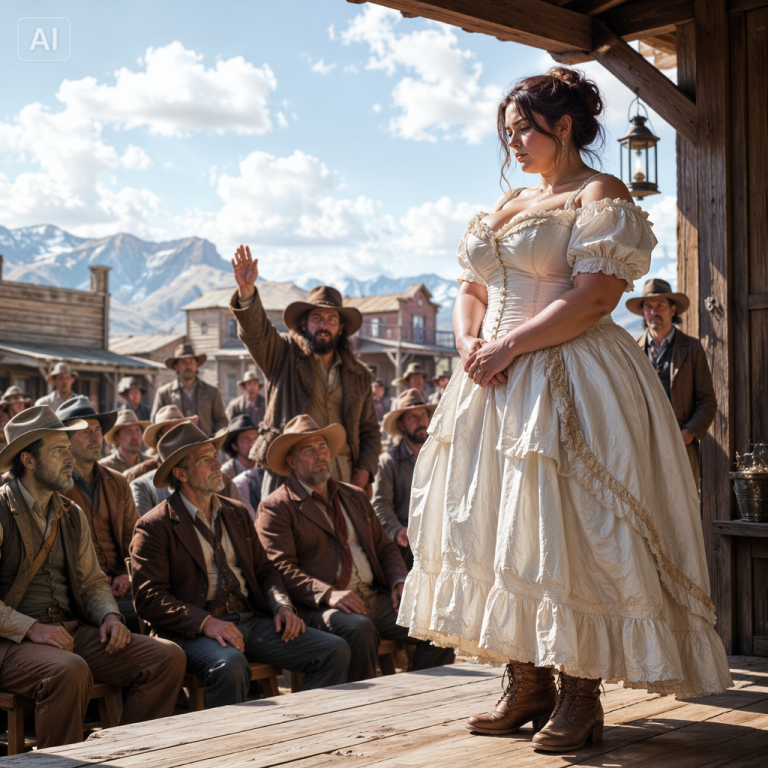
When the pregnant widow was dragged from her home at gunpoint, everyone turned away—until a lone cowboy stepped into the road and said, “Touch her, and you answer to me.”

## PART 3
The hearing came five days later in a courtroom that smelled of old wood and older decisions.
The courthouse was packed. Lanterns burned yellow against the walls. Women whispered behind gloves. Men stared at Margaret’s belly like it was evidence instead of life. Judge Henry Garrett sat at the bench with the posture of someone who had learned long ago not to be surprised by the capacity of his fellow men to hide malice beneath procedure.
Judge Samuel Cole rose first.
“Mrs. Norwood is emotional, vulnerable, and easily influenced,” he said, his voice carrying the weight of someone accustomed to authority recognizing itself. “She came to this community as a widow, isolated and grieving. Now she has married a stranger—a cowboy with questionable finances and a history of interference in town matters. This hasty marriage, combined with her obvious emotional instability, suggests she is incapable of caring for an unborn child or managing property responsibly.”
He paused, letting his words settle.
“I propose temporary guardianship of the child and administrative management of her estate until she has proven herself stable.”
The courtroom shifted with the weight of what he had not said aloud: ownership masked as protection.
Margaret stood.
Her hands trembled, but her voice did not.
“Judge Garrett, Judge Cole is correct that I am emotional,” she said. “I lost my husband, my financial security, and nearly lost my home. Emotion is the appropriate response to those losses. But emotion and instability are different things.”
She walked to Judge Garrett’s table.
“I have kept records,” she said. “Not unusual for an apothecary. But I have also kept careful documentation of everything discussed with me by clients over the past three years.”
She placed Daniel’s journal on the table.
“If I am unstable, then let my handwriting explain the business.”
She placed a second document beside it: a list of names. Women who had come to her shop. Women who had become widows. Women who had lost property, children, and dignity to processes that looked like law but functioned like theft.
Judge Garrett opened Daniel’s journal.
His face did not change as he read. But his hands did. They became very still, as if holding something that might shatter if moved wrong.
When he finished, he looked up at Margaret.
“You heard Judge Cole planning this?” he asked.
“I heard Judge Cole and his lawyer discussing payment for my child and ownership of my property. I heard them plan my discrediting. I have not recorded the exact words Judge Cole spoke, but I have documented the pattern of his visits, his questions, and his increasingly inappropriate interest in my circumstances.”
Judge Garrett turned to Judge Cole.
“Is this accurate?”
Samuel Cole’s face had gone the color of spoiled milk.
“This is a widow’s fantasy,” he said, but his voice had lost its authority. “A woman made unstable by—”
“By your own design,” Judge Garrett interrupted. “By a plan she clearly overheard and carefully documented instead of panicking.”
Garrett looked at the list of names.
“How many women?” he asked Margaret.