The Mafia Boss Brought Roses to Her Grave Every Week—Until the Dead Nurse Appeared in His Office

## PART 1: The explosion lit up Route 7 like a second sunrise.
Cara Venn watched it from the back seat of a black government SUV doing eighty in the opposite lane, and she understood — with the particular clarity that comes from seeing your own life end — that she had already crossed the line. There was no side of it left to stand on.
The Subaru went fast. One moment: a car. Next moment: a column of orange against a January sky so dark it looked solid.
Inside it, a woman no one had been looking for.
A Jane Doe from the county morgue with brown hair and approximate height and a file that would be quietly amended by morning.
By morning, that file would say Cara Venn, 29, ICU physician, deceased.
Agent Carver dropped into the front passenger seat and said, “Keep moving,” to the driver in the tone people use when they’ve already stopped feeling things.
The driver kept moving.
Cara did not look back.
She had been specifically instructed not to look back.
She looked back.
The fire shrank in the rear window — orange to amber to a smear of light on the flat Connecticut dark — and then the highway curved and it was gone. Her apartment was gone. Her hospital badge. Her parking space in the Mercy North garage. The mug she’d had since residency with the chipped handle she’d never replaced because replacing it felt like admitting she’d stopped moving long enough to notice.
All of it: gone.
The woman left behind to be her: gone.
Cara turned forward and put both hands in her lap and looked at nothing.
Three days earlier she had been ordinary.
Ordinarily exhausted. Ordinarily behind on her student loan payments. Ordinarily eating cereal at eleven p.m. in an apartment that was efficient and impersonal in the way of someone who works too much to care about throw pillows.
Her parents had died within eighteen months of each other — her father first, then her mother, as though her mother had simply decided the arrangement was non-negotiable. Her younger brother Dom was in New Zealand on a research contract, answering texts sporadically and with the particular cheerfulness of someone who didn’t know yet how bad things were back home.
Cara worked double shifts because the alternative was going home to the apartment.
Then, on a Tuesday at 1:47 a.m., she cut through the east parking structure on her way to her car and heard something that stopped her feet before her brain had finished processing it.
Voices. Low and close and wrong.
She pressed herself against a concrete pillar and looked through the gap between two parked vans.
Four men. One kneeling. The standing three weren’t asking questions anymore.
She had her phone out before she understood why. Some emergency-physician reflex — document, assess, don’t contaminate the scene — that had no useful application here.
The first shot made her hands spasm.
The phone flash fired. Once.
In the silence after, one of the standing men turned his head slowly toward the shadows between the vans.
Cara ran.
She made it to her car. Made it home. Deleted the photos at 2:30 a.m. with shaking hands.
The cloud had already saved them.
The FBI arrived Wednesday afternoon. Two agents — Carver and a woman named Shin who let Carver do the talking and watched Cara in a way that felt like calibration.
The men in the parking structure were Bratva. Not peripheral, Carver said. Not ambitious foot soldiers. Central. The kind of connected that meant judges and councilmen and police captains who had long ago made a calculation about which side of things was worth standing on.
The three dead men on the parking structure floor were linked to a crime family operating through a network of import businesses and private members’ clubs — Italian, old money in the worst sense, currently in a territorial dispute with the Bratva that had, until Tuesday night, been conducted with a certain professional discretion.
Cara’s accidental photographs were the only unimpeachable identification of the shooters that existed.
“We need you alive until trial,” Carver said. “That’s twelve to sixteen months, best estimate.”
He said it the way you say *the procedure takes about forty minutes* — informational, practical, not unkind.
“And my brother?”
“Cannot know.”
“He’ll be told I’m dead.”
“He’ll be told there was an accident. Yes.”
Cara looked at the table between them for a long time.
“What’s the alternative?”
Carver didn’t answer. Agent Shin looked at the window.
The alternative was the parking structure. The alternative was joining the three men whose faces Cara had accidentally preserved.
“Okay,” she said.
That was Thursday.
By Saturday, Dr. Cara Venn had been cremated — expediently, no service, immediate family notified by phone — and a woman named Rachel Moss was sitting in a Vermont safe house watching snow come down outside a window that didn’t open.
What Rachel Moss did not yet know was that a man she had never met was already standing at a grave with white roses in his hand, reading a name he believed he had put there.
A name he had been trying to save.
A name he had failed — or so he believed — by exactly four hours.
Nine months earlier — before the parking structure, before the photographs, before any of this — Cara Venn had treated a patient in Bay 7 of the Mercy North ICU for eleven days.
He had been brought in under a false name, which she hadn’t known at the time.
She had known he was guarded. She had known the men outside the unit door weren’t hospital security. She had known, by the third day, that whoever he was, he was watching her with an attention that felt different from how patients usually watch the people keeping them alive.
On the eleventh day he was transferred, abruptly, before morning rounds.
He left nothing except a single note on the pillow, folded once.
*You work too hard. Someone should tell you that.*
She had thrown it away.
She had thought about it approximately every two weeks since.
The man’s real name, she learned later from a colleague who’d overheard the security detail: Konstantin Vael.
She hadn’t looked him up.
She had thought about looking him up approximately every two weeks since.
Konstantin Vael, who was not the kind of man who appeared in news articles as himself but appeared frequently in court documents as the subject. Who ran legitimate business through a holding company that was legitimate the way a mask is legitimate — present, functional, not the face.
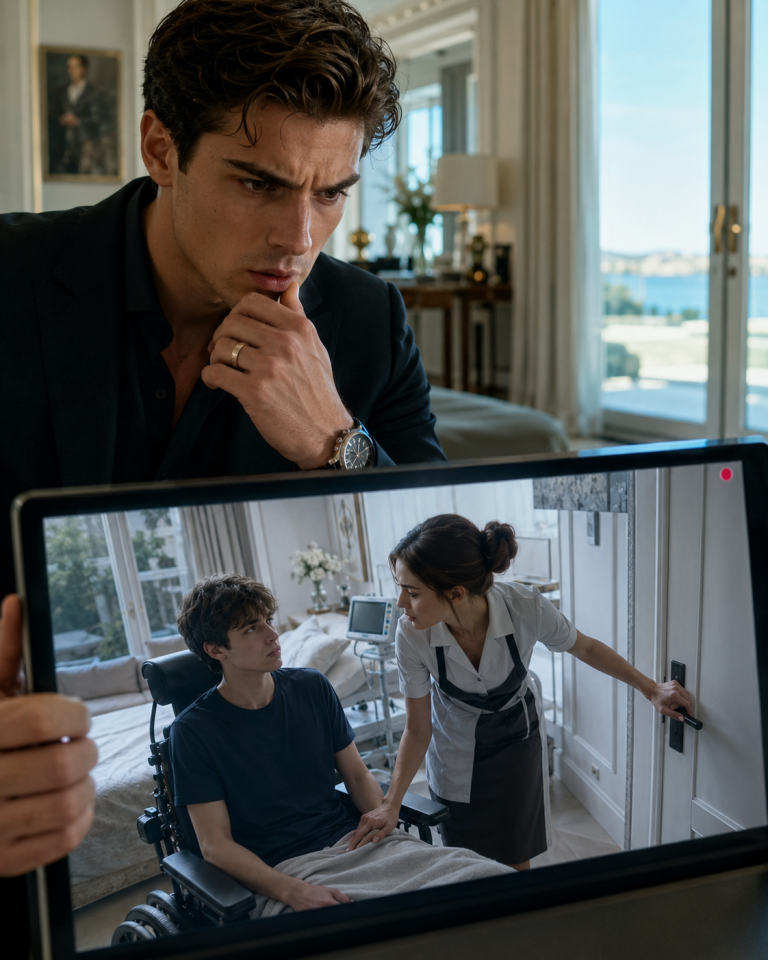
Who was, at this precise moment on a Saturday morning, standing at a grave in Millbrook Cemetery with white roses and an expression that the groundskeeper, who had seen him three times now, would later describe as *like a man waiting for a verdict that already came in.*
The name on the headstone was Cara Venn.
The date of death was four days ago.
Konstantin stood there for eleven minutes. He did not pray. He did not speak.
He set the roses against the stone and walked back to his car, and no one watching him would have known — no one could have known — that he was holding himself responsible for the death of a woman who, at that exact moment, was sitting in a Vermont safe house eating reheated soup and trying to remember what her own name sounded like.
Nine months later, Rachel Moss would walk into an office in a building she wasn’t supposed to enter, looking for the only person she’d calculated could keep her safer than federal protection had managed to.
The man behind the desk would look up.
And Konstantin Vael — who had been placing white roses on her grave every Friday for nine months — would see a dead woman standing in his doorway.
What happened in the next thirty seconds would undo everything both of them had spent nine months carefully building.
—
## PART 2:
He stood up.
That was the first thing — the specific way he rose from the chair, not startled but *certain*, the movement of a person whose body has understood something before their mind has finished confirming it. The chair didn’t scrape. He didn’t knock anything over. He simply stood, and looked at her, and the room went very quiet.
Cara had rehearsed this moment for six days. She’d had a speech — factual, efficient, structured like a differential diagnosis. Rule out the dangerous explanations first. Lead with what she knew. Don’t let the nine months of white roses at her grave make her stupid.
She said: “I need your help.”
Not the speech. Those four words, which were true and also much harder than the speech would have been.
Konstantin looked at her for what felt like a long time but was probably four seconds. He had the same quality she remembered from Bay 7 — that attention that felt like being read rather than looked at, thorough and without judgment, the way a physician looks at a scan.
She had thought about that quality approximately every two weeks for nine months.
“Close the door,” he said.
She closed it.
“Sit down.”
She sat. He remained standing — not looming, just upright, like a person who needed to be able to move quickly and had made that decision without consciously making it.
“Your protection detail,” he said.
“Compromised.” She set her bag on the floor. “I’ve been in four locations in nine months. Each time, within six weeks, something happened — a car outside the house, a stranger who asked the wrong question, a local police contact who knew details he shouldn’t. The FBI keeps calling it operational noise.” She looked at him steadily. “It’s not noise.”
“How did you get out?”
“Carver pulled me two days ago. He said the current location had been flagged and we were moving again.” She paused. “And then the transport didn’t come.”
Konstantin went very still.
“I waited four hours,” she said. “Then I left. I’ve been moving on my own since Monday morning.” She put both hands on the table. “I have the photographs. I have copies in four places that are not federal servers. I am still the only person who can identify the shooters on the stand.” She held his gaze. “Someone is trying to either kill me or move me somewhere they control. I need to know which, and I need someone outside the federal system to help me figure out who.”
He looked at her for a long moment.
“Why me,” he said.
It was the question she’d expected. She’d prepared for it honestly.
“Because you’re not on either side of this,” she said. “The Bratva, the Italian family, the federal case — you have no stake in who wins. And because you put white roses on my grave every Friday for nine months.” She let that sit. “I don’t know what that means. But it means something, and I needed someone it meant something to.”
Konstantin was quiet.
Then he moved to the window, and looked out at the street below, and said: “How much do you know about what Carver told you in those first interviews?”
“Everything he said?”
“How much of it have you verified independently.”
She opened her mouth. Closed it.
She was a physician. She ran differentials. She had been running one since Monday morning — who was the leak, what was the motive, which of the four locations had been compromised and by whom. She had been thorough. She had been careful.
She had verified none of Carver’s original briefing because it had never occurred to her to question the frame.
Something in her expression must have shown it.
“There is something,” Konstantin said, still at the window, “that I have known since approximately the fourth day in Bay 7. When I was well enough to understand what was being said in the room around me.” He turned. “Something the FBI does not know I know. Something the Italian family has been trying to locate for nineteen months.” He paused. “Something they believe you can lead them to.”
The room rearranged itself.
“I was a witness,” she said. “That’s all I am to this case. I saw three men shoot someone in a parking structure—”
“You saw three men,” Konstantin said, “who were employees of the Barbieri family. In a parking structure attached to a hospital where I had been a patient eleven days earlier.” He held her gaze. “You were not an accidental witness, Cara. You were the only person with regular, unquestioned access to me during those eleven days. The only person who came and went from Bay 7 without being documented by their security.”
She heard the rest of it before he said it.
“They don’t need your photographs,” he said. “They never did. They need you to tell them what I said to you. What I gave you. What I left behind when I was transferred.” His voice stayed even. “Because they believe — and they have believed for nine months — that I gave you something during those eleven days that I haven’t given anyone else.”
The silence lasted several seconds.
“You left a note on the pillow,” she said.
“Yes.”
“Folded once.”
“Yes.”
“I threw it away.”
Something shifted in his face — so briefly she almost missed it.
“I know,” he said. “The note was not the thing.”
—
## PART 3:
She had been in that room for eleven days.
She ran through it the way she ran post-shift reviews — systematically, without sentiment, accounting for everything she had touched and seen and done. The IV lines she’d adjusted. The chart entries. The conversations with the security detail outside the door, brief and professional, about medications and visiting restrictions and the particular tedium of guarding a person who was going to recover.
The window she’d opened on day six because he’d said, without opening his eyes, *the air recycling in this building is going to make me sicker than whatever I came in with.*
She had opened the window.
She had left him alone for eleven minutes while she responded to a crash in Bay 3.
Eleven minutes. She had noted it in the chart because she noted everything, because the chart was what stood between a good outcome and a legal proceeding.
“The window,” she said.
Konstantin looked at her.
“Day six. I opened the window and then I got pulled to Bay 3. I was gone eleven minutes.” She looked at him. “You were alone in the room for eleven minutes with an open window.”
“Yes.”
“And the window frame. The exterior ledge.” She thought about it — the physical layout of Bay 7, the window that faced the hospital’s inner courtyard, the ornamental ledge below it that she’d noticed once because a pigeon had landed there and Konstantin had watched it for the entire time it stayed. “There’s a ledge. Below the sill. You could have placed something there.”
“I could have,” he said.
“Did you.”
He looked at her steadily. Not confirming, not denying — assessing, the way he’d been assessing her since the doorway.
She understood, suddenly, what he was doing. He had told her the structure of the situation — that she was bait, that the Barbieri family believed she was carrying something she didn’t know about — and he had stopped there. He was watching her run the differential herself. He was waiting to see if she reached the same conclusion he had.
She reached it.
“If I knew what it was,” she said slowly, “I would have already told someone. The FBI. The transport. Anyone who asked the right question the right way.” She looked at her hands. “And if I knew and hadn’t told anyone, the Barbieri family would have known that too. Because someone in the federal program has been their source for nine months.”
“Yes.”
“So you told me just enough that if they’re watching this meeting — if someone is in a van outside this building right now reporting back — what they see is consistent with what they already believe. You gave me the information they think you gave me in Bay 7.” She looked at him. “You’re running a version of the same play.”
Konstantin’s expression did the thing she had seen it do once before, in Bay 7, on the fourth day when she’d caught him fully awake and watching her update his chart. A recalibration. The specific look of a person who has been modeling someone and has just discovered the model was too small.
“The actual evidence,” she said. “What you actually have. Where is it.”
He moved to the desk. Opened the lower drawer. Removed a thin envelope and placed it between them.
She opened it.
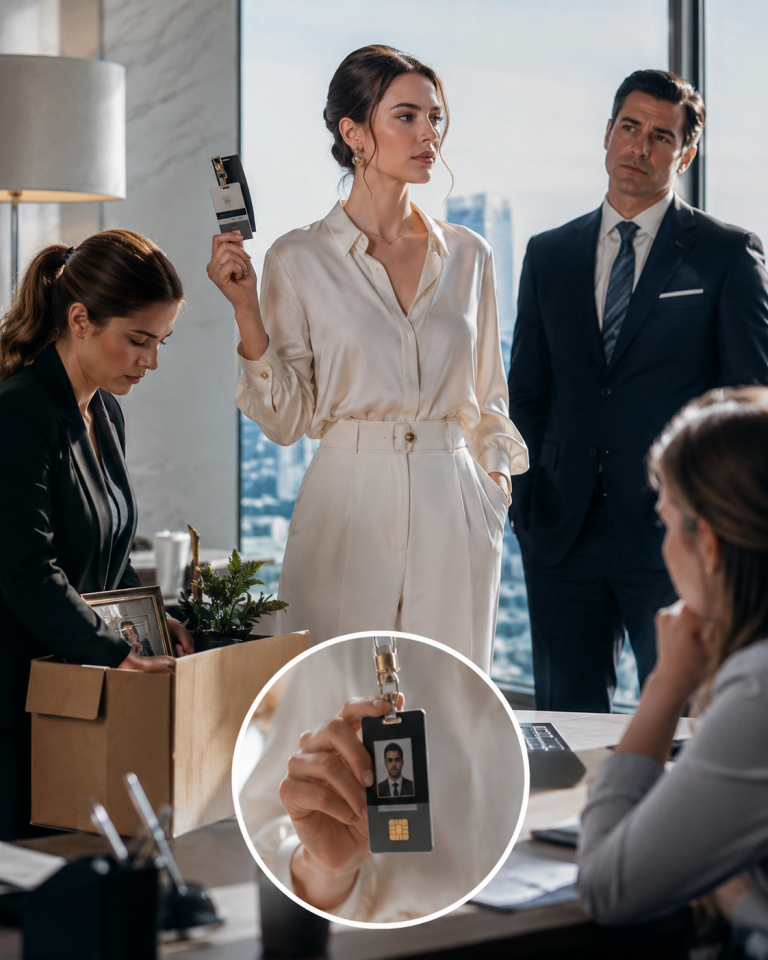
Inside: a photograph and a single page of handwritten figures. The photograph showed four men at a table — restaurant setting, candlelight, the particular body language of people who believe they’re not being watched. Three of the men she didn’t recognize. The fourth was someone she did: a face she had seen in a Connecticut federal building on a Wednesday afternoon, sitting across from her with a legal pad and a voice that said *the procedure takes about forty minutes.*
Agent Carver.
Nineteen months ago. A dinner with the Barbieri family’s top three operating principals.
“He was never protecting you,” Konstantin said. “He was managing you. Moving you between locations on a schedule the family approved. Keeping you alive until they could identify what you knew and where it was.” He paused. “When you became too difficult to manage — when I assume you stopped cooperating with the fourth move — he cut the transport and let you run.”
“So I’d come here,” she said.
“So you’d come here.”
She looked at the photograph.
Carver at the table. The Barbieri men. Candlelight. Nineteen months ago, which was five months before a woman named Cara Venn had cut through a parking structure at 1:47 in the morning and taken a photograph she wasn’t supposed to take.
“How long have you had this,” she said.
“Since month four of my ICU stay,” he said. “The window. Day six.” He looked at her steadily. “I had eleven minutes and I needed somewhere it would stay safe until I could retrieve it.”
“It’s been on the ledge for—”
“No.” Something that was almost amusement moved across his face. “I retrieved it when I was discharged. I’ve had it since January of last year.” He paused. “I didn’t know what to do with it. The federal channels were compromised — I didn’t know how deeply. Going to the Italian side with evidence against one of their Bratva-connected targets made me a liability the moment I handed it over.” He looked at the photograph. “I needed someone who had no relationship with either side. Someone who was, by definition, outside all of it.”
She looked at him.
“A dead woman,” she said.
“A dead woman,” he agreed. “With copies of photographs in four locations that are not federal servers. Who is still the only person who can identify the Bratva shooters on a stand.” He held her gaze. “If you bring both sets of evidence forward together — the parking structure photographs and this — neither case can be suppressed without the other surfacing. Carver can’t manage one without the other following.”
The logic was clean. She ran it twice and it was clean both times.
“I’d have to surface,” she said. “Cara Venn would have to come back.”
“Yes.”
“That puts a target on me until trial. Minimum twelve months.”
“Yes.”
“Except this time without federal protection, because the federal protection is the problem.”
“Without Carver’s federal protection,” he said. “There are other channels. Agent Shin — Carver’s partner. She’s been running her own parallel inquiry for six months. She doesn’t know what I have, but she knows the program is compromised. She’s been building toward the same conclusion from the outside.” He paused. “She’s reachable.”
Cara sat with all of it.
She thought about the Vermont safe house and the window that didn’t open. She thought about nine months of being Rachel Moss — eating reheated soup, sleeping in rooms that belonged to no one, carrying her own name in her chest like something she was keeping warm until she could use it again.
She thought about Dom in New Zealand, answering texts sporadically, not knowing.
She thought about a man who put white roses on her grave every Friday.
She looked at the photograph in the envelope.
Then she looked at Konstantin Vael, who had spent nine months attending a grave and nineteen months sitting on the one piece of evidence that could close both cases, waiting for the specific impossible person who could use it.
“Why didn’t you just go to Shin yourself,” she said.
“Because I’m not credible,” he said simply. “Everything I have — my business, my history, my name in those court documents — makes me the worst possible source for evidence against the Barbieri family. Anything I hand over gets challenged, delayed, discredited.” He looked at her. “But a physician with no relationship to any of this, who witnessed a shooting by accident and has been in federal protection for nine months? Shin will listen to you.”
“I’m still going to need you to tell me,” she said, “why you were in Bay 7.”
He looked at her for a moment.
“The Bratva sent someone,” he said. “For the same reason they always send someone — a territorial question that couldn’t be settled at the table. I wasn’t the target. A man two floors below me was.” A pause. “I was in the wrong building for the wrong reason at the wrong time and I had a cardiac event in the lobby, which I understand is an undignified way to enter a story.”
“You were awake by day two,” she said. “You told me the air recycling was going to make you sicker.”
“I told you the air recycling was going to make me sicker,” he agreed. “I was awake by day two.”
She thought about eleven days in Bay 7. The way he’d watched her update his chart. The window she’d opened. The note she’d thrown away and thought about every two weeks for nine months.
*You work too hard. Someone should tell you that.*
She had thrown it away.
She had been right to throw it away — the note was not the thing. She understood that now. The note was the only thing he could offer that cost him nothing to lose, because he was leaving the thing that mattered somewhere she would never look for it and might never find.
He had trusted her with it anyway.
Not by telling her. By hiding it where she’d been, in a room she’d worked in, attached to a building she’d walked back into every day for nine months while she was supposed to be dead.
She picked up the envelope.
“I need a phone,” she said. “Not traceable to this building.”
He opened the desk drawer and produced one.
She looked at it.
Then she looked at him — at the man who had stood at her grave with white roses, who had sat on evidence for nineteen months waiting for the right impossible person, who had told her the truth in the correct order so she could reach the conclusion herself rather than be handed it.
She picked up the phone.
She dialed the number she had memorized in the Vermont safe house because memorizing important numbers was something she had always done — physician habit, the same reflex that had put her phone out in a parking structure at 1:47 in the morning.
Shin answered on the third ring.
“This is Cara Venn,” she said.
Her own name in her own voice, in a room in a building she wasn’t supposed to enter, for the first time in nine months.
It sounded like hers again.
“I’m alive,” she said. “And I have something you need to see.”
—
She stayed in Konstantin’s building for six hours.
Not hiding — that distinction mattered to her, and she made it deliberately. She was in a room with a window that opened and a door she hadn’t locked, working through the logistics with Shin over three calls and two hours of documentation, building the evidentiary chain that would need to be airtight before anyone moved.
Konstantin worked at his desk through most of it. He didn’t involve himself in the calls — it was Shin’s operation now, her jurisdiction, her credibility on the line. He simply remained in the room, which she had also not asked him to do and had also not asked him to stop.
At seven in the evening, when the third call ended and Shin had what she needed and the next step had a timeline attached to it, Cara set the phone on the table.
“Dom,” she said.
Konstantin looked up.
“My brother. He’s been in New Zealand for nine months believing I’m dead.” She looked at the window. “Shin says I can’t contact him until after Carver is in custody. Two days, maybe three.” She paused. “He’s going to find out I’m alive from a federal agent making a phone call. He’s going to have had nine months to — ” She stopped.
“Yes,” Konstantin said.
She pressed her fingers against the table.
“I don’t know how to do that to him,” she said. “Tell him I’m alive after nine months. It’s not — it’s not a relief if he finds out badly. It’s a different kind of damage.”
“Then you tell him,” Konstantin said. “Not the agent.”
“Shin said—”
“Shin said until Carver is in custody. Carver will be in custody in forty-eight hours.” He held her gaze. “You get to decide how your brother finds out his sister is alive. That decision is yours and it should stay yours.”
She looked at him.
He had said it without calculation — not strategy, not positioning. Just the specific, practical truth of it, stated the way he’d stated everything tonight: exactly, without excess.
She thought about the note on the pillow. Not *I’ll protect you* or *I’ll find you* or any of the things a person with his resources might reasonably have offered. Just: *You work too hard. Someone should tell you that.*
He had been in Bay 7 for eleven days and the most honest thing he’d found to leave her was an observation about her.
She had thought about it every two weeks for nine months.
“Thank you,” she said. For the phone. For all of it — she meant all of it, and she thought he understood that.
“You did the work,” he said.
She picked up her bag.
“The white roses,” she said, at the door.
He looked at her.
“You could stop,” she said. “She’s not there anymore.”
Something moved in his expression — not the recalibration, not the assessment. Something underneath both of those that had been there since she walked through the door and had not moved once.
“I know,” he said.
She left the door open behind her.
—
Forty-seven hours later, a federal task force arrested Agent Carver in a parking structure in New Haven.
Cara was told this by Shin, at 6 a.m., over the phone Shin had issued her the previous evening — a different phone, a real one, registered to her own name.
Cara Venn. The name on the back.
She looked at it for a moment.
Then she dialed Dom’s number from memory.
It rang twice. New Zealand morning, he’d be awake — he was always awake early, the particular cheerfulness of a person who hadn’t yet learned that bad news comes in the morning too.
“Hello?”
His voice. Exactly the same.
She sat down on the edge of the bed in the hotel room Shin had arranged — not a safe house, a hotel, a distinction she had been precise about — and put her hand flat on the blanket.
“Dom,” she said. “It’s Cara. I need to tell you something, and I need you to sit down first.”
He made a sound — not words, just the sound a person makes when the world shifts under them.
“I’m okay,” she said. “I’m alive. I’m going to explain everything.” She pressed her hand against the blanket. “But first I need to hear you say you’re sitting down.”
A long pause.
“I’m sitting,” he said. His voice had changed completely. “I’m sitting. Cara—”
“I know,” she said. “I know. I’m so sorry.”
She told him everything.
It took a long time.
She didn’t measure it.
Afterward, when Dom had stopped crying and started asking questions — the practical questions, the *what happens now* questions, the questions that were really just ways of staying on the phone — she stood up and walked to the window.
Outside, the city was doing its ordinary morning things. A woman walking a dog. A delivery truck double-parked. Pigeons on a ledge that caught the early light and held it for a moment before it moved on.
Dom was talking. She was answering. Her name was Cara Venn and she had been dead for nine months and was not anymore, and there were things still to do — testimony, trial prep, the long bureaucratic work of becoming real again on paper — but those were tomorrow’s problems.
Today there was her brother’s voice in her ear.
Today there was her name on the back of a phone.
She held both of them.
She did not need anything else yet.
—
**THE END**