The Boston Crime Lord Warned Me the Crimson Gown Would Never Leave His Townhouse — He Had No Idea What I’d Buried for Two Years to Wear It

**Part 1**
The chandelier trembled before I did.
That was the strange part. I heard the crystal shiver against itself a full second before Damien Cole’s voice reached me from the far end of the corridor, low and even, the kind of quiet that made grown men in his employ go still.
“That gown isn’t leaving this house.” A pause, deliberate as a held breath. “And neither are you.”
My fingers locked around the strap of my purse. Beneath my palm, the silk of the crimson dress felt suddenly foreign, like I’d borrowed someone else’s skin for the night. I had worked double shifts for four months to afford it. My hair, normally scraped into a bun tight enough to give me headaches, hung loose past my shoulders. The fake reading glasses I wore every day at the office sat folded in my bag instead of on my face.
For two years, Damien Cole had looked straight through me.
Tonight, for the first time, he was actually seeing me — and it looked like the sight had knocked something loose behind his eyes.
“Mr. Cole.” My voice came out steadier than I felt. “I didn’t expect you home.”
“Evidently.”
His gaze traveled the length of the dress once, slow, almost reverent, the way a man looks at a door he’s walked past a thousand times only to discover it led somewhere entirely different.
“I’m off duty,” I said.
“I can tell.”
“I have plans.”
“With who?”
“Not your concern.”
Two years ago I would have apologized for taking up space in that hallway. I would have dropped my chin and slid past him like smoke. But something about this dress had put a spine back into me that I hadn’t felt since before Gregory Marsh.
Damien took a single step forward. Charcoal suit, sleeves rolled, tie hanging loose the way it always did by seven o’clock. Every restaurateur, dockworker, and city councilman in Boston knew the Cole name — half of them out of respect, the other half out of something closer to dread. He ran hotels and shipping piers and a silence that stretched across three boroughs. He was not a man people talked back to.
I was done disappearing, though. That much I’d decided in a staff bathroom mirror an hour earlier.
“I’m meeting someone downtown,” I told him. “A date.”
Something moved behind his composure, there and gone so fast I might have imagined it if I hadn’t spent two years memorizing every flicker in that face — the tightened jaw when his mother called and he let it ring out, the way he drank his coffee slower on the mornings after nightmares he never described to anyone.
This was new. This was jealousy, plain and unmistakable.
“You’re taking a car dressed like that?” he asked.
“Like what, exactly?”
He opened his mouth. Nothing came out. For the first time since I’d started working for him, Damien Cole had run out of words.
“Beautiful,” he finally said, almost like the word had escaped against his will.
It landed harder than any insult could have.
I had spent two years making certain no man ever called me that again. Beauty hadn’t felt like a gift in my old life — it had felt like a target stitched onto my back. My last employer, Gregory Marsh, had called me beautiful right before he locked his office door. Right before his hand slid from my shoulder down to my waist. Right before I learned exactly how fast politeness curdles into a trap.
I’d broken a lamp across his face to get out that night.
Afterward I cut my hair, then let it grow only to hide behind it. I bought clothes two sizes too big. I wore glass lenses with no prescription. I made myself quiet, efficient, forgettable.
It had worked. Damien Cole had walked past me at seven hundred mornings without truly registering my face.
Until tonight.
“Please move,” I whispered.
He stepped aside. I passed close enough to feel heat radiating off him through his shirt, and the little bottle of floral perfume I’d been too nervous to wear suddenly felt far too intimate in that narrow space between us. His hand curled at his side. He didn’t reach for me.
I made it to the front door.
“Elena.”
My name in his voice stopped me cold.
I turned. He stood under the gold hallway light, powerful and rattled and — for once — entirely human.
“Who is he?” Damien asked.
**Part 2**
“Just a normal guy,” I said, and left before he could see my hands shaking.
The date was supposed to be my rescue. That had been Sophie’s plan, at least. Sophie Reyes had been my closest friend since our university days, back when I still had a scholarship, a father who could climb stairs without pain, and the naive belief that careful people got rewarded. She’d watched me shrink after Gregory. Watched me swap bright colors for gray uniforms, nights out for overtime shifts.
So when her boyfriend’s coworker Marcus Doyle asked if I was seeing anyone, Sophie acted like fate had handed her an assignment.
“He calls his mother every Sunday,” she’d promised. “Doesn’t look like a man who threatens people for a living.”
She hadn’t said Damien’s name. I’d understood anyway.
The car dropped me outside a harbor-side restaurant, gold-lit windows, white cloth tables, enough happy couples inside to make me feel like an intruder in someone else’s life.
“Reservation for Marcus,” I told the hostess.
At eight, I sat with my spine straight, hopeful. At eight-fifteen, I checked my phone. By eight-forty, a text arrived.
*Something came up. Rain check?*
I stared at the screen until the letters swam. Four months of saved wages. An hour spent transforming in a staff bathroom. The hallway. Damien’s stare. My own heartbeat, wild as a caged bird.
All of it, for a man who thought I could be rescheduled like a dental cleaning.
I stood, grabbed my purse, and made it outside before the tears became public property.
The cold hit my face like an open hand.
“Elena.”
Damien leaned against a black sedan at the curb, looking absurdly out of place and entirely at home at once. Behind the wheel, Derek Voss — his right hand, closer to a brother — watched us with the weary patience of a man who’d seen this exact disaster coming from a mile off.
“What are you doing here?” I demanded.
“Passing by.”
“Worst lie I’ve ever heard.”
“I told him that,” Derek called through the window.
“Derek.”
“Zipping it, boss.”
I crossed my arms. “You followed me.”
“I made certain you arrived safely.”
“That’s a yes.”
His gaze slid past me to the dark restaurant windows. “He didn’t show.”
“No.”
“How long did you wait?”
“Long enough to feel like an idiot.”
His jaw hardened. “You’re not an idiot.”
“You don’t know me well enough to say that.”
“I know exactly enough.”
The certainty in his voice nearly undid me right there on the sidewalk.
**Part 3**
“Have dinner with me,” Damien said.
I laughed, short and humorless. “Absolutely not.”
He didn’t flinch. He never did, not once in two years, no matter how many contractors screamed at him over lost shipments or how many rivals sent men to test his patience. It was strange, standing on that curb, realizing his stillness had always felt like safety to me even when I couldn’t name why.
“Say something else,” I told him. “Not that.”
“Like what?”
“Anything that isn’t about fixing me tonight.”
He considered that. The wind picked up off the harbor, cutting through the thin fabric of the dress, and I hugged my arms tighter without meaning to. Damien noticed — of course he noticed, he noticed everything, that was half the problem — and shrugged out of his suit jacket without a word, draping it over my shoulders before I could protest. It smelled like cedar and rain.
“Okay,” he said finally. “Not fixing anything. Just this: you looked like yourself tonight. The version I only ever saw in glimpses — day three, day twenty-seven, day one-twelve. I wanted five more minutes of her before the night ended, and I panicked and followed you across the city like an idiot instead of just saying so.”
“That’s honest, at least.”
“I’m trying.”
“Why?”
“You tailed me across the city and watched a stranger stand me up, and dinner is your solution?”
“No,” he said. “It’s an alternative.”
“You’re my employer.”
“Not for much longer, if that’s the obstacle.”
My pulse tripped. “What does that mean?”
“It means if my name on your paycheck is the only thing keeping you from answering me honestly, that ends tomorrow morning.”
Anger flared hot enough to scorch through my humiliation. “You don’t get to fix everything by rearranging the world around you.”
Something shifted in his face — not offense. Focus.
“Then tell me what does stop this,” he said, gesturing once between us. “Whatever’s been sitting here for two years.”
“Nothing’s been sitting here.”
“Elena.”
“There’s nothing.”
He looked at me the way that made lying feel childish. “Derek told me, when I said I was leaving the house tonight, that if I didn’t chase you down he’d quit out of pure secondhand embarrassment.”
From the car, Derek raised a hand. “Standing by that.”
I looked between the two of them, then back to Damien. “You’re unhinged.”
“Frequently.”
“You followed me.”
“Yes.”
“Why now?” My voice cracked on the question before I could stop it.
He went quiet a long moment. “Because when you walked down that hallway in that dress, I understood I’d spent two years refusing to see something standing directly in front of me.”
I couldn’t breathe. “Damien—”
“You want the truth? I noticed you on your third day, when you reorganized my entire calendar better than three executives before you managed in a year. On day twenty-seven, when you corrected my CFO without flinching. On day one-twelve, when you fell asleep over paperwork because you were working two jobs to cover your father’s bills.” His voice gentled. “On the day you brought soup to Mrs. Alvarez in the kitchen because she was running a fever, and stayed twenty minutes past your shift to make sure she ate it.”
My throat closed. He remembered everything. Not the highlights. The small, unglamorous proof of a person trying to survive.
“I noticed,” he said, “when you stopped laughing.”
That was the one that broke something loose in my chest. I had stopped. After Gregory. After the lamp. After learning that fear could live in the most ordinary rooms — an office, a hallway, a smile that turned out to be a door swinging shut.
“There was a version of you before all that,” Damien said. “I never met her. But I’ve spent two years watching you build yourself back into someone close to her anyway, piece by piece, with nobody helping you carry it.”
“I didn’t want help,” I said. “Help felt like exposure.”
“I know.” His voice roughened. “That’s why I never said anything. I told myself watching from a distance was respect. Some nights I believed it.”
“And the other nights?”
“The other nights I stood in my own kitchen at two in the morning, furious at a man I’d never met, for a crime I only half understood, wanting to put my fist through something on your behalf.” He exhaled. “That’s not respect. That’s just love wearing a patient mask.”
The word landed between us like a dropped glass, sharp enough that neither of us moved to pick it up right away.
His eyes narrowed slightly, reading something in my face. “Who hurt you?”
“No one.”
“You’re shaking.”
“I’m cold.”
“You’re lying.”
“Stop doing that,” I snapped, voice cracking loud enough that even the traffic seemed to pause. “Stop looking at me like you can solve me.”
My hands wouldn’t stay still. I pressed them flat against my thighs, feeling the crimson silk bunch beneath my palms, and made myself say it before the courage left me the way it always did.
“His name was Gregory Marsh,” I said. “My last employer. He called me beautiful right before he locked his office door. He put his hand on my waist when I asked him to stop, and when I finally got the door open, he told the entire office I’d imagined it, that I was unstable, that no one should trust a word I said.” My breath shook. “I broke a lamp over his head to get out. I’ve spent two years making sure no man ever looked at me long enough to see anything worth locking a door over again.”
Damien didn’t move. Didn’t reach for me. He simply stood there and let the words land without flinching away from any of them, which somehow mattered more than any comfort he could have offered.
“I’m not telling you this so you’ll fix it,” I added, quieter now. “I’m telling you because I’m tired of it living in me alone.”
“Then it doesn’t have to,” he said. “Not alone. Not anymore.”
It was here — right on that cold sidewalk, with my carefully rebuilt walls finally trembling all the way down — that Derek’s phone buzzed against the dashboard, and everything I thought I understood about the night tilted sideways.
“Boss.” Derek’s voice had changed, gone flat and careful. “You need to see this.”
Damien didn’t look away from me. “Not now.”
“It’s about the girl’s date. Marcus Doyle.” Derek held up the screen. “He didn’t get cold feet. He got a phone call twenty minutes before the reservation. Five thousand dollars to disappear for the night, no questions.”
The color drained from my face. “Someone paid him not to show up?”
“Someone,” Derek said grimly, “who’s been asking around about you for a week. Since before the reservation was even made.”
For one sick, dizzying moment, I thought of Derek himself — the way he always seemed to know my schedule, the way he’d been unusually attentive lately, asking what nights I worked, what train I took home. My stomach turned to ice. “Derek, did you—”
“No.” He said it fast, wounded. “I’ve been asking because Damien’s had me watching your building since a Marsh Logistics truck started idling outside it last month. I wasn’t stalking you. I was guarding you and doing a lousy job of explaining it.”
The false alarm cracked and fell away, but underneath it sat something far colder. *Marsh.* My whole body went rigid at the name.
“Marsh Logistics,” I repeated. “Gregory Marsh?”
Damien’s expression had gone dangerously still. “Your old employer runs freight now. For the Moretti family.”
The world tipped. Gregory hadn’t just humiliated me and lied about it to save his reputation — he’d crawled into bed with the one crime family that had spent three years trying to break Damien’s grip on the harbor. And somehow, in the last two years, I had become useful to both sides without ever knowing it.
“He’s been feeding the Morettis information,” Damien said slowly, pieces locking into place behind his eyes. “About my schedule. My routes. My *house.*” His gaze snapped to mine, sharp with dawning horror. “Through you. Every calendar you’ve built for two years, every meeting you’ve confirmed — Elena, if Gregory ever accessed your notes, your files—”
“He knows everything about how you move through this city,” Derek finished quietly.
I pressed a hand to my mouth. All those months of feeling small and safe behind gray clothes and fake glasses — and the entire time, my old tormentor had been circling, using the trail I left in my own work like a map.
“How long?” I asked, voice barely holding.
“According to the shipping manifests I pulled this afternoon,” Derek said, “eleven months. Since right around the time you started keeping my digital calendar synced to the office server instead of your personal notebook.”
“That was my idea,” I whispered. “I thought I was being efficient.”
“You were being watched,” Damien said, and the gentleness in it somehow hurt worse than blame would have. “Not because of anything you did wrong. Because Gregory Marsh has spent two years waiting for exactly the kind of access you’d eventually have without ever meaning to give it.”
The gray sedan crept another car length closer at the light, and something in Damien’s posture changed entirely — the warmth gone, replaced by the coiled stillness of a man who had survived plenty of nights like this one and intended to survive several more.
“Elena.” His hand found mine, steady despite everything. “I need you to trust me for the next four days. Not because I’m asking you to disappear again. Because I’m asking you to let me finish something before it finishes us.”
“What happens in four days?”
“I take back what he thinks he stole.”
“Tonight wasn’t a coincidence,” Damien said. “Someone paid Marcus Doyle to get you out of my house, off my property, somewhere quiet and unguarded. Someone wanted you alone on a street corner in the dark.”
Headlights swept the block behind us, too slow, too deliberate. A gray sedan idled at the far corner that hadn’t been there five minutes earlier.
“Get in the car,” Damien said, and the warmth was gone from his voice, replaced by something forged from years of surviving men exactly like Gregory Marsh. “Now.”
I didn’t argue. Derek had the engine running before either door fully shut, and we peeled from the curb as the gray sedan lurched after us, then fell back at a stoplight, boxed in by traffic Derek had clearly timed on purpose.
“They’ll try again,” Damien said, low, his hand finding mine across the seat without seeming to think about it. “Marsh doesn’t quit. He’ll assume tonight failed and try something closer to home.”
“So we bring it to him first,” I said, surprising myself with how steady it came out.
Damien looked at me like he was seeing the woman in the red dress and the woman who’d survived Gregory Marsh as the exact same person for the first time. “You don’t have to be part of this.”
“I already am. I have been for two years and never knew it.” My chin lifted. “I’m done being something men move around without asking.”
It took four days.
Derek traced the Marsh Logistics trucks back to a warehouse near the container yards, the same one, it turned out, where Gregory had been quietly moving stolen manifests to Moretti’s people for the better part of a year. He didn’t do it alone — Sophie, once she learned what had actually happened, spent two nights combing through old emails from her boyfriend’s firm, cross-referencing invoice dates until a pattern emerged clean enough to hand a prosecutor. “I should hate you for keeping me out of this,” she told me over the phone at midnight, “but honestly, watching you fight instead of hide is the best thing that’s happened to me in years.”
The four days felt longer than the two years before them.
Damien moved me into a guest room at the townhouse “for logistics,” he claimed, though we both understood it had more to do with the way his shoulders only unclenched when he could see the light under my door from the hallway. I spent the first night unable to sleep, staring at a ceiling I didn’t recognize, replaying Gregory’s voice in my head until Damien knocked softly around two in the morning, sat on the floor outside my door because I wasn’t ready to let him in, and talked quietly about nothing — a shipment of Portuguese tile that had gone missing in customs, a business rival who couldn’t parallel park to save his life — until my breathing evened out enough to sleep.
On the second night, I found him in the kitchen at the same hour, restless in a way I recognized because I’d worn that same restlessness for two years straight.
“You don’t have to keep watch,” I told him, pulling two mugs down from the cabinet without asking.
“I know.”
“Then why are you awake?”
He was quiet long enough that I thought he wouldn’t answer. “Because the last time I let someone I cared about walk out of a room unguarded, my father didn’t come home. I was nineteen. I’ve spent every year since making sure it never happens to anyone else in this house.” He looked at me over the rim of his mug. “I know that’s not the same as what you survived. I’m not comparing them. I’m just telling you why I can’t sleep either.”
It was the first time he’d said anything about his father beyond the photograph in his desk drawer. I didn’t push. I just sat across from him at the counter, in the cedar-and-rain jacket I still hadn’t given back, until the sky started going gray at the edges.
On the third day, Damien asked me to come with him.
I hadn’t expected that. I’d expected to be tucked somewhere safe while men handled it the way men like Gregory had always assumed things got handled — behind closed doors, without my voice anywhere in the room.
“You don’t have to,” Damien said, watching my face carefully in the car. “But you told me, on that sidewalk, not to let a powerful man solve everything by rearranging the world around you. I’m trying to listen.”
Gregory Marsh’s office smelled exactly the way I remembered it — expensive cologne over something sourer underneath. He rose from his desk when we walked in, confidence sliding off his face in real time.
“Elena.” He tried a smile. It had worked on me once. It did nothing now. “Been a long time.”
“Not long enough,” I said.
Damien set a file on the desk between them — two years of shipping records, falsified manifests, a signed statement from a dockworker willing to testify Gregory had personally routed classified freight schedules to the Morettis. “You have until Friday to resign every contract you hold in this city,” Damien said, quiet and final. “After that, the commissioner’s office receives this regardless of what you decide.”
Gregory’s eyes flicked toward me, searching for the frightened girl who used to apologize for existing in his doorway. He didn’t find her.
“You could’ve just asked me to stay quiet,” Gregory said, an old ugliness surfacing beneath the panic. “Locked doors work both ways, Elena.”
I felt Damien go rigid beside me, felt the effort it cost him not to move. I put a hand on his arm — not to stop him, but because this next part needed to be mine.
“I broke a lamp over your head and walked out of that office on my own two feet,” I said. “I’ve spent two years rebuilding a life you tried to take from me, without your permission and without your help. You don’t get to threaten me from a doorway ever again. You’re not even the scariest thing standing in this room.”
Gregory said nothing more. There was nothing left to say. By Friday his contracts were gone, his warehouse seized pending investigation, and whatever protection the Morettis had extended to a man who could no longer deliver anything useful evaporated overnight. The gray sedan never appeared outside my apartment again.
No lamps needed breaking this time. Just paperwork, a prosecutor, and a debt two years overdue finally called in.
On the fifth night, Damien knocked on my apartment door instead of waiting in some hallway for me to walk past him.
“I owe you a dinner,” he said, when I opened it. “The one that isn’t an alternative to anything. Just dinner, because I want to sit across from you and not have to follow you there.”
I looked at him for a long moment — this man who’d knelt to help a bird with a broken wing when he thought no one was watching, who called his mother twice a week now that I’d mentioned once how much I missed being able to call mine, who had turned the worst secret of my life into the reason he finally fought for something instead of just owning it.
“Let me get changed,” I said.
I didn’t reach for the gray uniform, or the fake glasses folded in their usual drawer. I reached for the crimson dress instead, and this time, when I walked toward him wearing it, I wasn’t running from anything. I was simply arriving.
“That dress,” Damien said softly, “still isn’t leaving my house.”
“Good,” I told him. “Neither am I.”
We didn’t rush anything after that. Some nights I still reached for the fake glasses out of old habit before catching myself and leaving them in the drawer. Some mornings Damien still watched the street outside his own windows a beat too long before he could relax, an old instinct that took longer than four days to unlearn. Healing, it turned out, wasn’t a single knee bent on a sidewalk — it was a hundred smaller choices afterward, both of us choosing, again and again, not to go back to the versions of ourselves that had learned to survive by disappearing.
He started leaving his office door open during the day, something he told me he hadn’t done since long before his father died. I started wearing color again — not just the crimson dress, but small things, a blue scarf, a yellow coat that made Sophie whistle appreciatively the first time she saw it on me. Neither change happened all at once, and neither of us rushed the other toward it. Both of them stuck anyway, quietly, the way real change usually does.
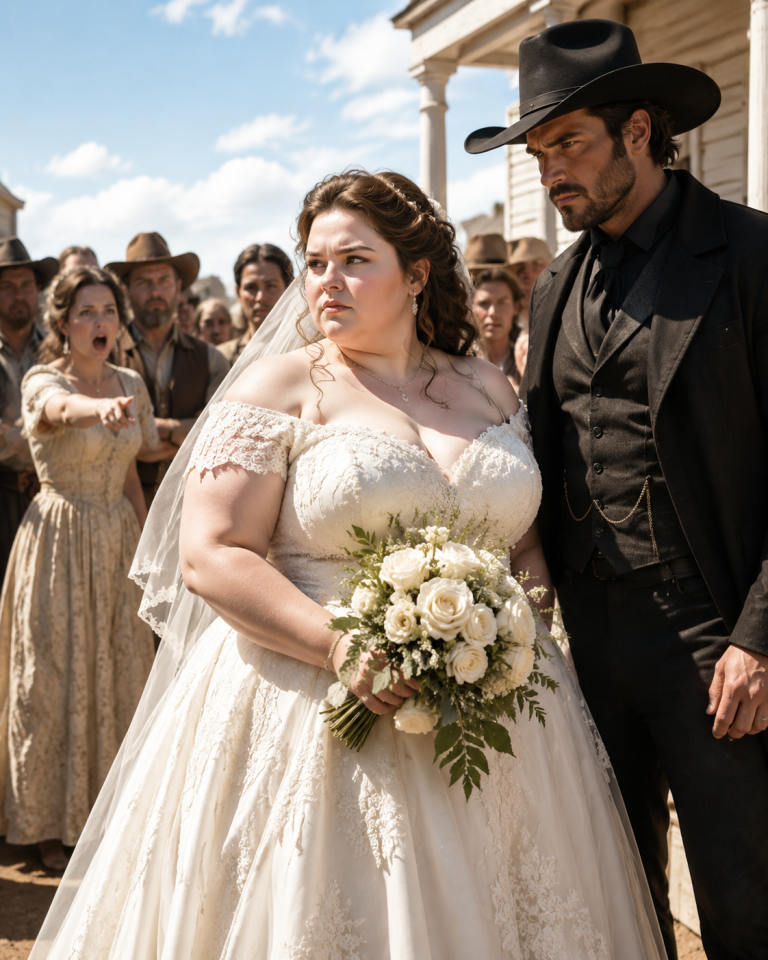
A year later, Sophie stood beside me in a dress the color of a Boston sunrise while I put on one the color of the one I’d never given back. Derek gave a best man’s toast that somehow made half the room laugh and the other half cry, and finished it by raising his glass toward me and saying, “About time,” the exact words he’d shouted on that sidewalk the night everything started.
Mrs. Alvarez, retired now but never far from the family she’d helped raise, pressed a container of soup into my hands before the ceremony, “for luck,” she said, though we both knew it was really just love wearing a familiar shape.
Sophie found me in the dressing room twenty minutes before the doors opened, fussing with a loose pin in my hair the way she used to fuss over my collar before job interviews back when we were twenty-two and certain the world only ever rewarded careful people. “You know what I remember most,” she said, meeting my eyes in the mirror, “isn’t the sidewalk, or the lamp, or any of it. It’s the first time you laughed again. Three weeks after you started seeing him properly. You didn’t even notice you’d done it. I had to leave the room so you wouldn’t see me cry.”
“I didn’t notice a lot of things back then,” I admitted.
“You notice everything now.” She squeezed my shoulder. “That’s the whole difference.”
Derek, waiting by the door in a suit that still somehow looked like it wanted to be a leather jacket, cleared his throat when I passed him in the hall. “For what it’s worth,” he said, gruffer than usual, “I’ve worked for that man since I was twenty. Never once seen him nervous before a meeting in fifteen years. He’s been nervous all morning.”
“Good,” I said. “Let him wait a little longer.”
Derek laughed — a real one, rare enough that Sophie glanced over in surprise — and offered his arm instead of Damien’s, since my own father’s hands no longer had the strength to walk me down an aisle. “Consider it professional courtesy,” he said. “Someone’s got to make sure you actually get there. Old habit.”
I took it. It felt right, somehow, that the man who’d first driven me away from a stood-up date and toward everything that followed would also be the one walking me toward the man who’d waited at the end of it.
I stood at the end of the aisle and watched Damien Cole — feared across three boroughs, gentle with broken-winged birds, quiet with grief he no longer carried alone — watch me the way he had that first night in the hallway, like the painting on his wall had turned out to be a window the entire time.
The chandelier in the ballroom caught the light the same way the one in his townhouse had that first night, crystal trembling faintly with the movement of the crowd, and for a moment I let myself stand in both nights at once — the girl frozen in a borrowed spine on cold marble, and the woman walking steadily forward now, no glasses, no oversized sleeves, nothing left to hide behind. Derek released my arm at the front row. Sophie caught my eye and pressed a hand to her chest. And Damien, waiting exactly where he’d promised he would be, reached for my hands like he still couldn’t quite believe they were his to hold.
“Hi,” he said, low enough that it belonged only to us.
“Hi,” I answered, and meant it the way I’d never quite managed to mean anything in that hallway two years earlier — steady, unafraid, entirely present.
Recovery doesn’t always happen in a single dramatic night. Trauma doesn’t dissolve because a dangerous man once knelt on a sidewalk and told the truth. But mine had begun there anyway — in a crimson dress, on a cold Boston street, with a man who finally stopped looking through me and started looking *at* me, and never once let me disappear again.
**THE END**