She Whispered Goodbye to the Wounded Cowboy — Then He Opened His Eyes and Repeated Every Word

He turned, caught off guard. “You sure? We’re not in a hurry.”
“We’re not rushing. We’re choosing. There’s a difference.”
He took a breath, and she watched something flicker across his face that she recognized instantly, because she’d worn it herself often enough these past months — the fear of a person who has finally found something worth losing, and knows it.
“Lydia Hail,” he said. “Would you marry me. I can’t promise it’ll be easy. I can promise I’ll spend every day trying to make you happy.”
“Yes,” she said, without a single second of hesitation. “Yes, I’ll marry you.”
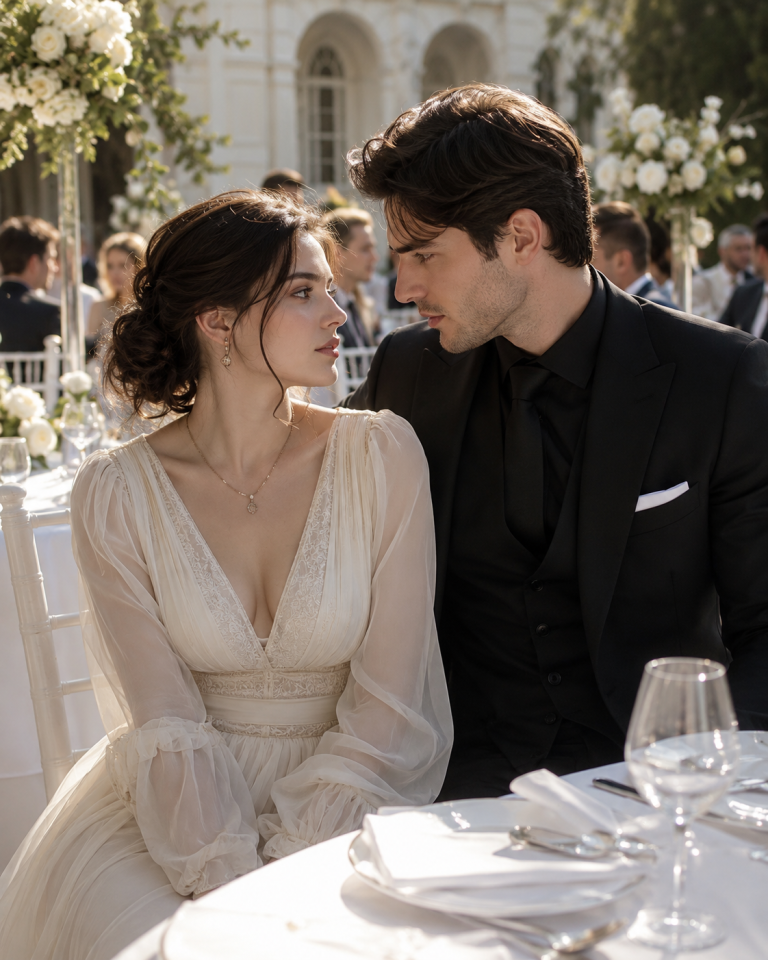
They were married in November, under the oak tree on the hill, in the shade of the two graves that had waited there for ten years — Martha, and the son who’d never drawn breath. Some might have thought it a strange place for a wedding. Lydia understood it wasn’t about erasing what came before. It was about building something new in full view of it.
She wore a dress she’d sewn herself, cream-colored, plain lace at the collar. Caleb wore the suit he’d bought for Martha’s funeral and never touched again until that morning, and his hands shook badly enough that Tom had to help him with the top button.
“Nervous?” Lydia asked, when they finally stood face to face beneath the branches.
“Terrified,” he admitted. “Never thought I’d do this again.”
“Neither did I,” she said. “But here we are.”
He slid the ring onto her finger with hands that still hadn’t quite steadied, the minister’s words nearly drowned out by the wind moving through the oak leaves overhead — the same wind that had once carried the smell of woodsmoke to her across a mile of open dark, on the night she’d decided this ranch might be worth the risk of stopping.
Tom cried through the vows and denied it fiercely afterward. The crew had pitched in on a wedding gift — a new stove for the kitchen, the kind she’d once mentioned wanting in passing, to men she hadn’t realized were listening at all. She cried at the sight of it, undone less by the gift than by the plain fact of being heard.
The next morning, before the heat set in, Lydia walked out to the garden in her wedding-morning dress, the way she had every morning since she’d first arrived with nothing but a bag. The tomato plants had tripled since summer. She knelt in the dirt and pulled a weed choking one of the vines, because that was what you did — you planted, and you tended, and sometimes, against every reasonable expectation, the thing grew anyway.
Caleb found her there, watching from the fence rail the way he had months before, when neither of them had a name yet for what was growing between them.
“Things grow,” she said, without looking up, “when you finally give them what they need.”
Behind her, the house stood with its windows open and its fire already lit — no longer a tomb, no longer a place two lonely people simply endured, but a home, chosen twice over, standing in the morning light.
THE END