SHE SAT IN MY GRANDMOTHER’S CHAIR DEMANDING AN ALLOWANCE FOR MY HUSBAND’S BABY — SHE DIDN’T KNOW WHO OWNED THE ROOM

Part 1
The coffee had gone cold in my hand before Thomas Reed’s voice cut through the phone, low and careful, the tone people use when they’re standing three feet from a fire and pretending it isn’t spreading.
“Mrs. Calloway,” he said. “Sabrina Vane is upstairs. With Julian. And a folder.”
I was still in the back seat of the car, parked outside Calloway Tower, watching my own reflection ghost over the glass while the city rattled past in gray winter light. My first thought wasn’t about my husband. It was about the folder. Affairs unravel messy and loud. Folders arrive organized. Folders mean someone has already decided how the story ends.
“What’s in it?” I asked.
A pause, the kind that costs money. “Itemized expenses. And a request. For an allowance.”
I set the coffee down. Checked my reflection — pearl studs, no smudge, no shake in my mouth. Good.
“Put them in the west conference room,” I said.
“She’s already sitting in your chair.”
Something in me went very quiet and very warm at once, the way it does right before you understand you’ve been handed a gift.
“Then let her get comfortable,” I said. “I’ll be right up.”
By the time the elevator doors opened onto the fortieth floor, the entire office had gone silent in that particular way old money goes silent — heads down, keys still, everyone suddenly fascinated by their own screens because something ancient was about to become something bloody.
Calloway Tower had my husband’s grandfather’s name cut into limestone above the door. It had my grandmother’s money holding up the walls behind it. That was the whole difference between the Calloways and the Marshes, if you wanted it in one sentence: the Calloways liked their name on buildings. The Marshes liked their name on the paperwork that actually controlled them.
Thomas met me near reception, gray at the temples, buttoned into a navy suit like it was armor. In thirty years managing trusts and family disasters, I had never once seen him look personally offended. He looked personally offended now.
“She asked if the housekeeping staff could be billed as ‘lifestyle support,'” he murmured. “She also asked whether the lake house comes with a driver in winter.”
“Does it?”
“Only if she enjoys explaining trespassing to a judge.”
We walked past the wall of white roses my husband insisted on keeping fresh in every room, a habit he’d picked up the week his mother declared lilies “too funereal” for the family who ran on appearances. Julian had always loved the appearance of decency more than the practice of it.
The east conference room had a wall of glass overlooking the harbor and, at its head, the chair my grandmother, Margaret Marsh, had chosen the day she founded Marshfield Trust — the quiet holding company that owned more of the Calloway empire than any Calloway ever had. It wasn’t the biggest chair at the table. It was simply the only one that faced the door.
“Always face the door,” my grandmother used to tell me. “Anyone who walks in smiling is still walking in.”
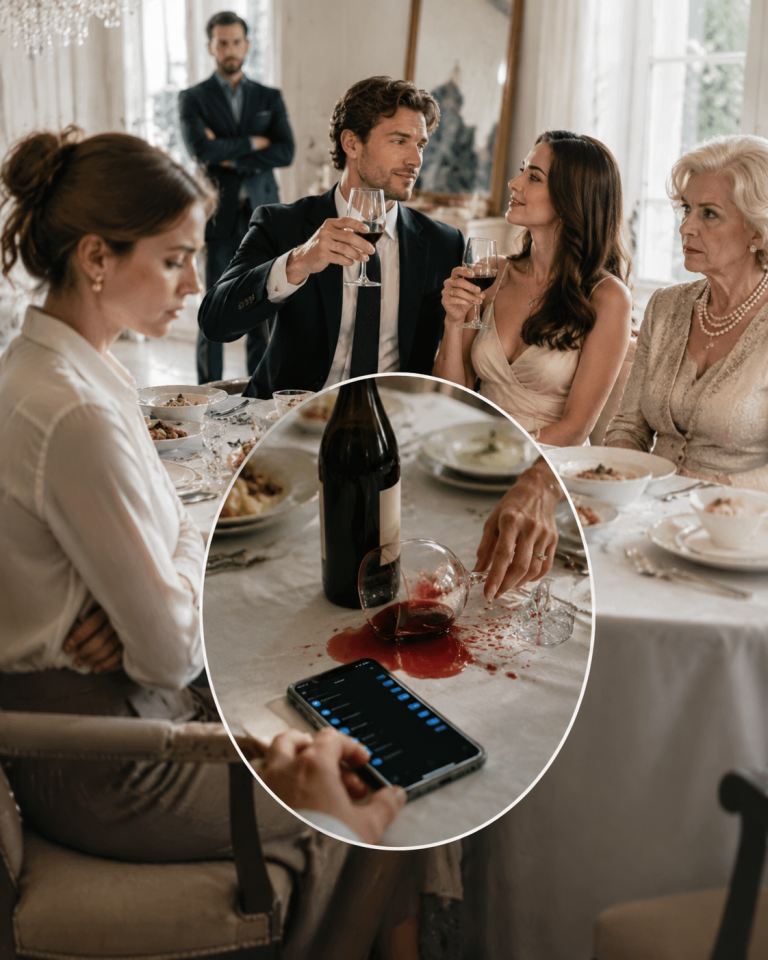
Sabrina Vane sat in that chair now, cream cashmere, gold hoops, and an expression that suggested she’d mistaken a man’s attention for a binding legal document. My husband stood behind her, one hand resting on the back of my grandmother’s chair like he owned it. Like he owned any of it.
“Elena,” Julian said. Not a nickname. Not an apology. Just my name, delivered like a warning shot.
I looked at his hand on the chair. Then at the folder on the table. Then, finally, at the woman who thought she’d already won something.
“Good morning,” I said, and walked to the far end of the table instead of the seat he’d tapped for me.
Sabrina opened her folder with a smile that wasn’t nervous at all — that was her first mistake — and slid a printed page toward me.
“We’re just trying to be practical,” she said.
“For whom?” I asked.
“For me,” she said. “I’m pregnant.”
The room seemed to hold its breath around that word, waiting to see if I would break.
I had known for four months. I had known about the apartment in the Riverside district, the diamond bracelet, the wire transfers dressed up as consulting fees. I had also known, for exactly two weeks, one detail neither of them did — that whatever was growing inside Sabrina Vane, it wasn’t my husband’s to claim.
But some truths are worth more if you let them earn interest first.
“Congratulations,” I said, and picked up the pen.
Part 2
Julian’s shoulders relaxed the second I picked up that pen, because he’d already decided silence meant surrender. That was his second mistake.
I read the page in full. Apartment. Prenatal concierge care. A driver. A nanny retainer on a child not yet born. Discretionary use of the lake house, the coastal house, the ski chalet. Every line item written like a woman claiming a throne she’d never been crowned for.
“This is missing something,” I said.
Sabrina’s smile flickered. “What?”
“Legal fees.”
Julian laughed under his breath. “I’m covering those.”
“I wasn’t talking about yours.”
I uncapped the pen, wrote one word across the top in black ink — DENIED — and turned to Thomas.
“Freeze Julian’s discretionary account. Suspend all access to Marshfield-managed properties pending legal review.”
Julian straightened like I’d struck him. “What did you just say?”
“You heard me.”
Sabrina looked between us, the confidence draining out of her face in real time. “Can she even do that?”
Julian didn’t answer fast enough. That hesitation told her everything I already knew — that the empire he’d built his whole personality around had never actually belonged to him.
Because six years earlier, when Calloway Sterling Capital nearly collapsed under a leveraged real estate deal that went bad before the ink dried, it wasn’t Julian who saved it. It was my grandmother, sliding a rescue package across her tea table to his father with a single condition attached: control. Preferred shares. Veto rights. Property liens. A quiet, paperwork-thin majority no one at our wedding would ever think to ask about.
Julian signed a prenup two days before our rehearsal dinner, distracted by seating charts and bourbon tastings, certain he’d never need to read the fine print because he never imagined he’d be the one who broke the marriage.
Infidelity paired with the misuse of family funds triggered forfeiture. Concealment triggered audit. Introducing a third party into any Marshfield-managed benefit terminated his access on the spot.
He had signed every page. Then kissed my forehead and said he hated that we even needed it.
I looked at him now — hand still gripping the back of my grandmother’s chair, mouth slightly open, watching the woman he’d brought here to negotiate his freedom go pale beside him — and felt nothing close to triumph.
Just clarity.
“There’s one more thing you should both know,” I said quietly, “before you decide how this ends.”
Sabrina’s hand drifted instinctively to her stomach. “What thing?”
I closed the folder. “That baby isn’t the only secret sitting in this room.”
Part 3
Julian Calloway married me because he believed I was safe. Not poor — the Marshes had never been poor — but safe, in the way people mean when they want a wife who won’t embarrass them in front of cameras. My family didn’t pose for society pages or name racehorses after virtues. We made our money in shipping and insurance and the dull, unglamorous instruments that survive recessions long after men with better hair have gone bankrupt twice.
I met Julian at a hospital fundraiser in Boston the winter I turned twenty-six. He sent handwritten notes afterward. He remembered that I took my coffee black and loved old churches more than new money. He called me *steady*, like it was praise and not a shelf he was quietly filing me onto.
His mother, Beatrice, hadn’t approved of me at first. At our engagement dinner, over crystal candlesticks, she’d smiled and said, “The Marshes keep to themselves, don’t they?” — which meant, *no one really knows what you’re worth.* I’d smiled back. “We keep to ourselves enough.” Which meant, *and that is precisely why we’re still solvent.*
Six months before the wedding, the Calloway family very nearly lost everything that mattered. Not the houses — families like his rarely lose the houses first. They lose credit lines, then voting control, then the confidence that makes the houses look like anything other than expensive museums of panic. Julian never told me. Neither did Beatrice. His father, Edmund, did, arriving unannounced at my grandmother’s brownstone with the face of a man who’d spent sixty years mistaking reputation for capital.
Calloway Sterling had overleveraged itself in a commercial real estate deal that soured before the ink dried. A hostile lender wanted the board. A cousin wanted a forced sale. Edmund wanted mercy.
My grandmother poured him tea and made him explain the numbers twice. When he finished, she said, “You don’t need mercy, Edmund. You need adult supervision.” Three weeks later, Marshfield Trust provided the bridge capital that kept Calloway Sterling standing — and in exchange, quietly acquired preferred shares, veto rights, and property liens spread across a stack of instruments so unglamorous that no one at a wedding would ever think to ask what they meant. The company announced a “strategic recapitalization.” Beatrice wore emerald silk to the press conference and told everyone the family had never been stronger. My grandmother watched from the back of the room and didn’t clap.
On our wedding day, Julian cried when I came down the aisle, and I believed those tears completely. That’s the humiliating part, looking back — not that he eventually lied, because liars lie, that’s simply what they do. The humiliating part is remembering how holy his face looked to me once.
The prenup was my grandmother’s wedding gift. Julian signed it two days before the rehearsal dinner, distracted by seating charts and bourbon tastings, certain he’d never need to actually understand what he was agreeing to. His lawyer skimmed it. Mine did not. Infidelity paired with the misuse of marital, trust, or foundation funds triggered forfeiture. Concealment triggered audit rights. Extending any Marshfield-managed family benefit to a third party terminated his discretionary privileges outright. He signed every page, kissed my forehead, and told me he hated that we even needed something like that between us.
“Then let’s never need it,” I’d said.
For years, we didn’t. Or at least I believed we didn’t. I restored the townhouse his mother said felt too cold. I found the physician who finally got his father eating again after his stroke. I wrote the thank-you notes he forgot to write, hosted the dinners he took credit for, and carried Owen through a brutal stretch of colic alone while Julian was three states away closing a deal that could have waited. When our third pregnancy ended at eleven weeks, he sent flowers because he had a retreat in the mountains he didn’t want to miss. The card read, *We’ll try again.* Not, *I’m coming home.*
That was the first real crack. Not the affair — the affair came later, dressed up in a communications consultant’s blazer and a laugh that arrived half a second before his jokes finished landing. The first betrayal is always quieter than people expect: it’s simply the day you understand that someone can love the life you built for them more than they love you.
Sabrina arrived through the foundation, the way these things so often do. Twenty-nine, ambitious, photographed exclusively from her left side, with an official title of communications consultant and an unofficial gift for making married men feel like misunderstood visionaries. She called Julian brilliant in rooms where everyone else called him late. She laughed before his jokes finished. She touched his sleeve during ordinary conversations like it was an accident every time.
At first I watched with the detached pity older wives reserve for women who think they’re being subtle. Then Julian changed his passwords. Then he started showering the moment he walked through the door, as though the day itself needed washing off before I could touch him. Then he began saying, “You’re imagining things,” in the exhausted tone of a man annoyed that evidence had interrupted a fantasy he’d gotten comfortable inside.
I hired Renata Cole four months earlier, on the night Julian missed Ivy’s kindergarten lantern walk and told me his flight had been delayed. His flight had landed at the regional airport five hours before he called. His phone, according to the record Renata pulled within a week, had spent that evening at a boutique hotel called The Larkspur.
Renata had once been a federal prosecutor. She had a voice like something poured over ice and eyes that made powerful men fill silences just to escape them.
“Proof for divorce,” she’d asked me over coffee, “or proof for war?”
I’d looked at my ring. “Is there a difference?”
“There is in court.”
For four months she built the file. Hotel receipts. Wire transfers labeled donor strategy. Jewelry charged to the Calloway Family Foundation card. A lease on the Riverside apartment paid through a shell vendor. Security footage from buildings Marshfield owned outright. And, finally, a paternity test — obtained after Sabrina filed a preliminary claim for child support — that excluded Julian entirely.
Julian had not been capable of fathering a child in nearly three years. A complication after Ivy’s birth had ended that quietly, privately, and he had never once turned it into a conversation between us. He’d simply let me go on trusting a version of our marriage that no longer physically existed.
Renata found the second name by accident, buried inside a hotel ledger from a long weekend in the coastal district: two rooms, one card, one night. Sabrina Vane and Weston Calloway — Julian’s younger brother. A married man. A sitting board member of Calloway Sterling Capital who’d spent years telling reporters that family discipline was the backbone of good capital.
“Do you want to use it?” Renata had asked, sliding the file across her desk.
I’d looked out at the gray winter harbor for a long moment. “Not yet.”
“Why not?”
“Because Julian still thinks he’s the one choosing how this ends.”
Three days after that meeting in my grandmother’s chair, Sabrina posted a photograph from Ashford Memorial — her hand resting on a white blanket, a hospital bracelet turned just enough to be legible, Julian’s sleeve caught at the edge of the frame. *Protecting what matters,* the caption read.
By noon my phone was full of messages pretending at sympathy. I answered none of them.
At two that afternoon, Julian called, breathless. “Sabrina had a scare. She’s stable, but this is exactly why I need you to stop making things difficult.”
I was in the library, signing a birthday card for Owen’s teacher, the fire burning low and blue behind me. “You froze my accounts,” he said.
“Marshfield froze your accounts.”
“Don’t hide behind the company.”
“Don’t hide a mistress inside one.”
“I need you to come to the hospital,” he said. “The lawyers are here.”
“You brought lawyers to a hospital room?”
“I brought a mediator.”
“To a pregnant woman’s bedside.”
“You’re twisting this.”
“I’m describing it.”
I went anyway. Ashford’s private maternity wing looked less like a hospital and more like a hotel that had learned to whisper — marble floors, white orchids, a security guard stationed with practiced discretion. Julian’s mother, Beatrice, was already waiting outside the suite in winter white, her rage dressed up as composure.
“This has gone too far,” she said.
“I agree.”
“Then sign what his attorneys brought and let everyone breathe.”
I looked past her at the closed door. “Everyone?”
Her mouth thinned. “You know how families like ours handle these things.”
I did know. The wife absorbs the damage quietly. The husband issues a statement about privacy. The mistress receives a settlement, and the family closes ranks around the man because men are treated as structural and women as decoration that occasionally shatters.
“I know how they used to be handled,” I said, and went inside.
There was a version of that morning where I could have stayed in the hallway, signed whatever Beatrice wanted, and let the family close ranks around Julian the way it always had. That version would have been easier. It would also have been a lie I’d have to keep telling for the rest of my life, and I was done financing other people’s comfort with my own silence.
Sabrina reclined against a mountain of pillows, luminous in a way that told me the scare hadn’t been much of one. Julian stood at the window with two attorneys near the sofa. Weston sat in the corner in a gray suit with no tie, wearing guilt like a low fever. Sabrina’s eyes flicked to him and back to me — small, involuntary, the kind of tell that secrets always leave behind even when they think they’re hidden.
“We all want this resolved,” Julian said.
“Do we?” I asked.
The silver-haired attorney cleared his throat. “We’ve prepared a separation framework that protects all parties. Confidentiality, custody terms, temporary support for Ms. Vane and the child.”
Weston studied his shoes.
“Vivian—” Julian caught himself. “Elena. I’m asking you to be decent.”
That was the word that did it. Not the affair, not the chair, not the itemized allowance. *Decent.* He wanted my decency to underwrite his cruelty.
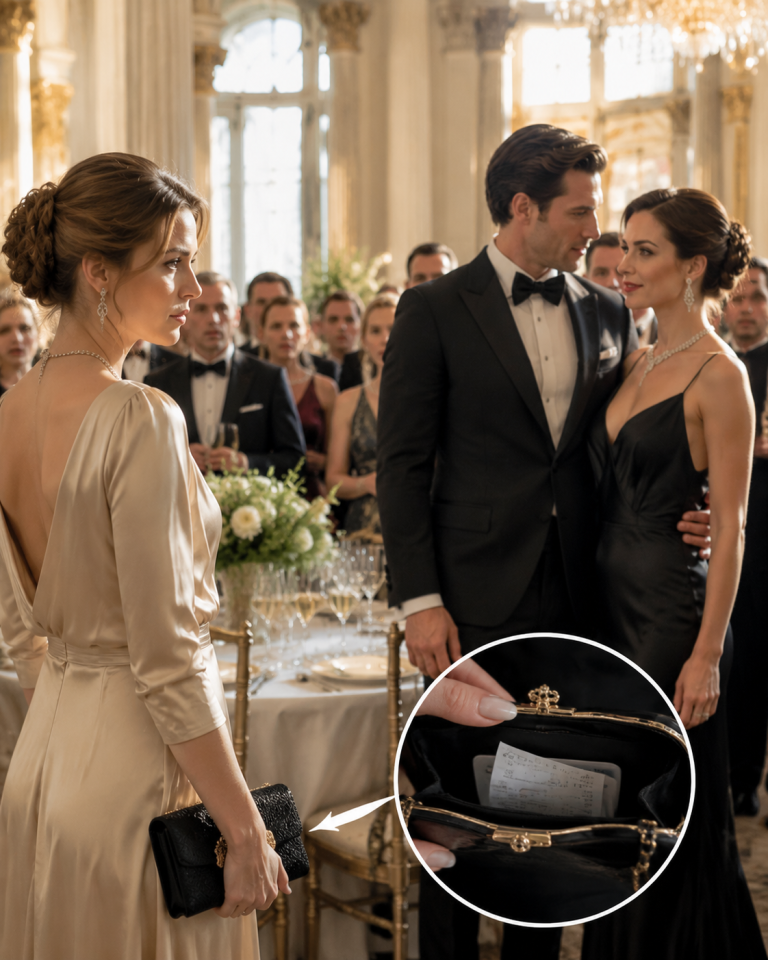
I set my bag on the table beside the bed. The clasp opened like a weapon being readied. From it I took three envelopes — one for Julian, one for the attorneys, one for Beatrice, who had followed me in because grief and scandal always draw an audience.
“Notice of audit,” I said. “Renata Cole will be reviewing every charge made through Calloway Sterling, the family foundation, and any Marshfield-adjacent vendor accounts for the last eighteen months.”
“This is insane,” Julian said.
“This is measured.”
Sabrina’s hand slipped off her stomach. “What does that mean?”
“It means your apartment, your jewelry, your flights, and possibly this hospital stay may have been paid for with money you were never entitled to.”
“Did he tell you the lake house was his?” I asked her.
Her eyes hardened. “He said it was the family home.”
“It is. It belongs to my daughter’s trust.”
Beatrice inhaled sharply.
“The coastal house?”
“Not his.”
“The ski chalet?”
Weston closed his eyes.
“Not his either,” I said. “None of it ever was.”
“Graham—” Sabrina started, then caught the wrong name in her own mouth, flustered. “Julian?”
For the first time since I’d met her, she sounded young. Not innocent — just young, the way people sound the moment they realize the ground they were standing on was never load-bearing.
“You’re enjoying this,” Julian said.
“No,” I told him. “I enjoyed my marriage.”
The room went so quiet it had its own architecture. I picked up my bag, walked to the door, and stopped — because my grandmother taught me never to leave before placing the last word exactly where it would be found.
“Julian,” I said. “You should ask Sabrina who was with her in the coastal district on the ninth of October.”
Weston made a sound like a laugh breaking in half. Sabrina went white. Julian turned to look at his brother, and I stepped into the marble hallway and finally let myself breathe.
—
Twelve days later, the Calloway Family Foundation’s winter gala filled the Great Hall with candlelight, string quartets, and every donor in the city pretending they hadn’t already heard the rumors. I wore black velvet — not mourning, just armor that didn’t beg light to notice it — and my grandmother’s emerald drops, cold and green as a verdict.
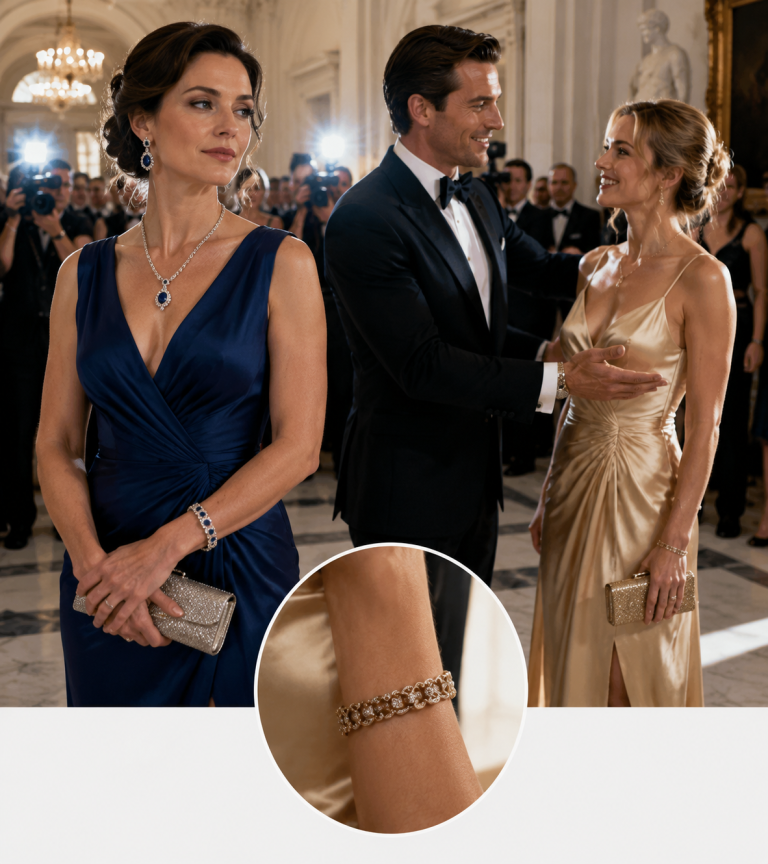
Julian arrived with Sabrina on his arm, her gown stretched over the small curve of her pregnancy, a diamond necklace at her throat that I recognized instantly from a foundation vendor invoice. Mine were older. Hers were evidence.
Beatrice crossed the marble hall toward me with Edmund beside her in his wheelchair, her smile sharp enough to cut ribbon. “You should have told us you were coming,” she said.
“I’m on the program.”
“As Julian’s wife.”
“As the foundation’s incoming chair.”
Her smile stopped moving entirely. Edmund looked up at me, tired rather than cruel — he had benefited from cruelty for sixty years, which is a different thing, and sometimes worse. “Is this necessary?” he asked quietly.
I glanced across the hall, where Julian was laughing too loudly beside Sabrina while donors pretended not to notice her stomach. “No,” I said. “It’s inevitable.”
At dinner, he found me between courses. “You’re making this harder than it needs to be.”
“You keep saying that.”
“Because it’s true.”
“No. You mean I’m making it harder than you expected.”
“Do you think anyone in this room will choose you over me?” he asked, leaning close enough that the cameras couldn’t catch it.
I looked around at the board members, the donors, the judge who still owed my grandmother a favor from a dispute over a yacht two decades earlier.
“No,” I said. “I think they’ll choose whoever signs the checks.”
When the speeches began, Julian took the stage and spoke about legacy and family values with the practiced warmth of a man who had never once considered that character might be visible under soft lighting. Then the foundation’s elderly chairman, Arthur Bellamy, rose to his feet.
“And now,” Arthur said, “it’s my honor to welcome the person who has quietly guided this foundation’s endowment, expanded its education fund, and secured its future for the next generation. Elena Marsh Calloway.”
The room shifted — not loudly, the way elite panic never is loud, just spines straightening and forks going still. Julian’s smile froze as I walked past him to the podium.
“For years,” I told the room, “this foundation has been called a family legacy. That’s true. But legacies aren’t protected by names. They’re protected by stewardship.” I let that settle. “Effective immediately, Marshfield Trust is formalizing its role as managing partner of this endowment, and the board has accepted Julian Calloway’s leave from all financial oversight pending an independent audit.”
No one gasped. The silence that followed was too expensive for gasping.
—
By the time we reached the courthouse in spring, the tabloids had already named it. Beatrice called it a misunderstanding. Julian called it character assassination. Renata called it Tuesday.
Julian’s attorneys opened with custody, arguing he deserved equal time with the children despite never once managing a school pickup, a pediatrician appointment, or a nightmare at two in the morning without calling me first. Equal custody photographed well. It said nothing about who actually showed up.
Renata answered with calendars. Flight logs that never matched his excuses. Nanny schedules stretching back three years. Text messages where he’d canceled weekends with Owen and Ivy for “investor meetings” that happened to coincide with hotel stays under a different name. A photograph from Ivy’s spring recital — one reserved seat beside mine, conspicuously empty, while Julian was photographed elsewhere that same evening laughing beside Sabrina at a private dinner.
His attorney objected to what he called “emotional framing.” The judge allowed the documents anyway. Documents, I’ve learned, are simply emotion with a spine.
Weston never testified. He’d resigned from the board two weeks earlier, quietly, through a one-line letter that mentioned nothing about hotels or paternity tests, and everyone in that courtroom understood the letter for exactly what it was.
Then the finances: the prenup, the forfeiture clause, the vendor payments routed to a consulting entity created forty-six days after the affair began.
Then the recording.
Julian’s own voice, pulled from a call Renata had lawfully obtained: *”She’ll sign. Elena hates mess. She’ll pay to keep it quiet.”* And Sabrina’s, asking about the allowance, and Julian laughing, low and certain: *”Take what you can. She doesn’t understand the structure.”*
I did not let my face move. That was the only gift I gave myself that day.
Then paternity — sealed, but confirmed in the room: Julian was not the father. He turned in his seat to look at Sabrina, and for the first time in this entire ordeal, he looked genuinely betrayed. It was almost funny. Almost.
The judge granted me primary custody, supervised visitation pending review, continued the freeze on every discretionary account, and referred the foundation’s finances for further investigation.
Afterward, Julian found me by a tall window in the courthouse hallway.
“Did you know?” he asked. “About Sabrina and Weston?”
“Yes.”
“How long?”
“Long enough.”
“Why didn’t you tell me?”
The old ache rose for a second — the version of me who’d waited up through business trips and hospital rooms and quiet holidays wanted to answer like a wife still in love. Instead I said, “I stopped managing your conscience.”
“I made mistakes,” he said.
“No. You made plans.”
“I never meant to lose the kids.”
“You didn’t lose them,” I said. “You put yourself in front of them so many times a courtroom finally noticed.”
“I loved you,” he said, and it was the one sentence in the whole hallway that actually cost him something.
“I know,” I said. “That’s the saddest part.”
Thomas approached with a tablet, apologetic. “Mrs. Calloway, the board is waiting.”
Julian’s eyes sharpened with something close to fear. “Elena—”
I straightened my gloves. “Start her allowance at zero,” I told Thomas. “End his access there too.”
“Yes, Mrs. Calloway.”
Julian stood in that hallway with his hands empty, finally understanding that the woman he’d betrayed had never just owned the chair.
She owned the room.
—
The first night the children and I slept in the townhouse without him, Ivy climbed into my bed at two in the morning clutching her stuffed rabbit.
“Is Daddy mad at us?”
“No, sweetheart.”
“Is he mad at you?”
“Probably.”
She thought about it. “Are you scared?”
I looked up at the shadows on the ceiling. For years I had been frightened inside beautiful rooms — frightened of losing a husband who’d already left, frightened of my children someday reading headlines and wondering if I’d fought for them, frightened of becoming someone hard.
“No,” I told her. “Not anymore.”
She tucked herself under my arm and, within minutes, was asleep.
In the morning Owen made pancakes shaped like circles trying to be states, and Ivy spilled orange juice on the rug Beatrice had always hated, and I laughed before I could stop myself. Joy has a way of returning without asking permission — through kitchens, through crooked pancakes, through small hands reaching for yours at a crosswalk.
Marshfield moved the family office out of Calloway Tower that autumn. We kept the building — my grandmother had always said there was no point burning down a house just to prove you could — but the real decisions happened elsewhere now, in a smaller room with better light, where nobody’s name was carved above the door.
Sabrina had her son that June. I sent white roses anonymously, not as a threat this time, but as a release — the child had done nothing to deserve any of it. Weston’s marriage didn’t survive the summer. Beatrice stopped speaking to me in public, which was, for her, a form of surrender. Beatrice sent one final card that autumn, unsigned, containing nothing but a pressed white rose, which I understood well enough not to need an explanation for. Edmund, Julian’s father, sent the children birthday gifts and me short, handwritten notes. *Thank you for protecting what I should have protected.* I kept them in a drawer — not because I needed them, but because some apologies arrive too late to heal anything and still deserve somewhere to sit.
That fall, I had the chair in the east conference room replaced. Not because Sabrina had sat in it, but because I no longer wanted furniture chosen for war. The new one was pale leather, lower, warmer, angled toward the windows.
“Still facing the door?” Thomas asked, the day it arrived.
“Always,” I said, and meant it as a promise to myself as much as anyone else. Some habits aren’t about fear anymore once you’ve survived the thing you were bracing for. They just become the shape of how you sit in a room.
That winter I took Owen and Ivy to Savannah, not for a gala, just for the coast. We walked past the old chapel where Julian and I had married, its stone walls silver under a cold sky, and for a moment I stood at the gate remembering white roses and a young woman who had believed, in the ordinary way love makes all of us believe, that hope was the same thing as truth.
I didn’t hate her. That surprised me more than anything else that year. For a long time I’d assumed healing would mean becoming someone else entirely — harder, colder, impossible to fool twice. Instead it turned out to be something quieter: standing in front of the exact place where you were once deceived and feeling nothing but tenderness for the woman who still believed in it.
“Mommy, are we going in?” Ivy asked, tugging my hand.
I looked at the chapel doors, then past them to the ocean, gray and endless and very much alive.
“No,” I said. “We’re going forward.”
Owen ran ahead, scarf flying. Ivy chased him, laughing. I followed at my own pace, wind lifting my hair, the sea breaking steady against the rocks behind us.
For once, when the bells began to ring, they didn’t sound like a wedding.
They sounded like morning, plain and ordinary and entirely mine.
There was no version of that day I could have imagined for myself two years earlier — no version where the woman standing at that gate, watching her children run toward the water, would have called herself happy. And yet there I was, unremarkable in the best possible way, owing nothing to anyone’s forgiveness but my own.
THE END.