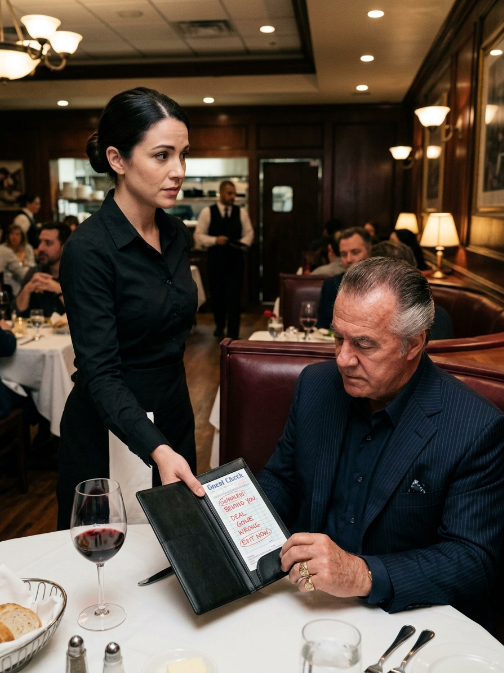
She Loved the Mafia Boss in Silence for Years—Then He Claimed Her: “You’re Mine”

## PART 1
I had been managing Lev Sorokin’s empire for three years before I understood what that empire was going to cost me.
Not in the ways you might think. Not in the danger, though that was real. Not in the moral ambiguity, though I had made my peace with that before the end of my first month. What it cost me was simpler and more inconvenient than either of those things.
It cost me any possibility of a normal life.
I understood this clearly on a Tuesday evening in October, standing three feet from his desk in the office above Palermo’s harbor, waiting for him to finish a phone call that had run twenty minutes past our scheduled meeting. The rain against the floor-to-ceiling windows sounded like white noise, like static between signals.
Lev did not acknowledge my presence. He never did, not immediately. That was the ritual of three years — his way of establishing that even in a room together, he was the one who determined when attention shifted.
“Tell him,” he said into the phone, his Italian precise and unhurried, “that this renegotiation request tells me he has either forgotten our arrangement or has decided he no longer values the arrangement’s protections. Remind him, gently, what absence of protection looks like.”
I kept my gaze on the Botticelli hung behind his left shoulder. Venus emerging from the sea, serene as stone. Lev collected art the way some men collected evidence — for what it proved about power, not for what it said about beauty.
He ended the call and his eyes came to me.
“The Messina meeting,” I said before he could. “Moved to Friday at ten. Vitello’s people confirmed neutral territory. I’ve arranged for Reka and seven others to secure the perimeter from nine.”
“The Zurich accounts?”
“Cleared through the holding company this morning. No delays, no discrepancies.”
“Good.”
He reached for his whiskey. Evenings only. The single self-imposed discipline I had noticed in someone whose life was otherwise entirely undisciplined in its pursuit of control.
“The Amato matter,” I continued. “His son’s school fees are paid for the next four semesters. He withdrew his statement this morning.”
Lev looked at me with something approximating approval.
“You’re efficient, Cecilia.”
Three years. Compliments from him still landed like territory won.
I had taken the job at twenty-three, desperate and underprepared. My father’s debts had come due after his death — not money he owed anyone legitimate, but the kind of debts that do not wait for grief to finish before demanding payment. A friend had mentioned that Lev Sorokin’s organization was looking for someone with languages, discretion, and no existing loyalties. The pay was extraordinary. The work was unspecified.
The woman who interviewed me, a cool Pole named Krysia, had asked whether I could work for a man operating in significant legal gray areas. I had said yes. I had meant it with the clarity of someone who had already looked at the alternative.
I had learned the nature of those gray areas quickly.
The shipments that moved through his import business carried things that would not have appeared on the manifest. The meetings I scheduled were negotiations over territory and tribute and the occasional necessity of making an example. The calls I screened came from people whose names appeared on lists in government databases.
But I had also learned that Lev kept every promise he made, punished betrayal swiftly and consistently, and protected those who served him with a completeness that made other forms of loyalty seem flimsy by comparison.
When my mother’s cancer diagnosis came eighteen months in, he had made two phone calls. The best specialist in Europe was in Naples within a day.
When a rival organization attempted to use me as leverage six weeks later, his response had been so total and so swift that no one had tried anything similar since.
I was his assistant. That made me untouchable.
It also made me, in every way that actually mattered, his.
“One more thing,” I said, consulting my tablet with the care of someone who has already memorized what they are about to say. “I need to leave at six tomorrow. Personal appointment.”
Lev’s hand paused on the way to his glass.
The pause lasted less than a second. I would not have noticed it in year one. By year three I could read his silences the way sailors read weather.
“Personal appointment,” he repeated.
“Everything is handled. Your seven o’clock with the Palermo auditors moved to eight-thirty Wednesday. The Monaco contracts will be on your desk before I go.”
“What kind of appointment.”
Not a question. A test.
I had been planning this conversation for two weeks. I had anticipated the tone, the precise quality of his attention when it focused on something he found threatening.
“Dinner,” I said. “I have a date.”
The silence that followed was different from his usual controlled pauses. This one had texture.
Lev set his glass down. He produced a silver cigarette case I had seen a hundred times and never seen opened. He placed one between his lips. He lit it with a lighter that had probably been his father’s.
He did not smoke. I had worked for him for three years and knew this with certainty.
The flame threw shadows along the sharp line of his jaw. He exhaled slowly toward the ceiling.
“Who,” he said through the smoke.
“Someone you don’t know.”
“Name.”
“Not relevant to my employment, Mr. Sorokin.”
The formal address. I used it deliberately, marking a line.
He looked at me through the smoke and I held the eye contact because I had learned in three years that looking away first was a concession he would remember.
“Everything relevant to your safety is relevant to your employment,” he said carefully.
“I’ll be at a restaurant in the Vucciria district. Well lit, public, good security. My phone will be on.”
“That’s not what I asked.”
The cigarette burned in his fingers, forgotten. He had not taken another drag.
“I know,” I said. “Good night, Mr. Sorokin.”
I left, my spine straight, my hands steady, my wrist burning slightly from the place where his attention had rested on me as I crossed the room.
In the elevator, going down, I let out a breath.
Three years of careful professional distance. Three years of telling myself the tension was professional. Three years of pretending that what I felt when he said my name was nothing more than the particular charge of working for a dangerous man.
I was about to go on a date with a perfectly pleasant urban planner named Fabrizio.
I already knew it would not go well.
—
## PART 2
Fabrizio was kind.
He was tall and had easy opinions about architecture and smiled at the right moments and asked follow-up questions, which is rarer than it should be and more attractive than it sounds.
He was also, sitting across from me over very good Sicilian pasta, the wrong person entirely.
I kept my phone in my bag. Reka — Lev’s head of security, built like a door with the face of someone who had long ago stopped finding anything surprising — was at a table near the entrance in clothes that were only marginally less conspicuous than a tactical vest. I had not acknowledged him.
Fabrizio told a story about a commission in Catania that had gone wrong in a series of increasingly specific ways. I laughed at the right moments. I contributed to the conversation. I was, by any external measure, a woman enjoying a first date with a pleasant man.
My skin stayed entirely quiet.
I thought: *this is what normal feels like.* Open. Uncomplicated. The complete absence of the electrical charge that ran through every room I shared with Lev, that lived in the space between an instruction and an acknowledgment, that came with being in the orbit of someone who had never once managed to look at me like furniture.
I should have found Fabrizio’s normalcy restful.
Instead it felt like holding my breath.
My phone buzzed near the end of the meal. I reached for it despite Fabrizio’s polite *please, go ahead.*
From Lev: *Situation developing with the Marsala operation. Reka has eyes on something. Stay in the restaurant until he confirms clear.*
Not: *Come back.* Not: *Emergency requires your presence.* Just the information, and the implicit trust that I would make the right call.
I showed the message to no one. I excused myself to the bathroom and replied: *Understood.* Then I sat with Fabrizio for another thirty minutes, while outside Reka dealt with whatever the situation was, and I thought about the fact that Lev had sent me a warning instead of a summons.
He was letting me stay.
Fabrizio walked me to my car. He was a gentleman about the goodnight. He asked if he could see me again, and I told him honestly that I was not sure, that my life was more complicated than it appeared.
He accepted this with grace.
In my apartment, still in my dress, I called Lev.
He answered on the first ring.
“You’re home,” he said.
“Yes. The dinner was fine.”
“Fine.”
A pause with weight in it.
“Will you see him again?”
I looked at my ceiling.
“I don’t know,” I said.
The silence that followed was longer than necessary for a man who did not waste time.
“Good night, Cecilia,” he said finally.
“Good night.”
I sat with my phone on my lap and the dress still on and the knowledge crystallizing slowly that I had spent the entire evening wanting to be somewhere I had not permitted myself to want.
I wanted to be in Lev Sorokin’s orbit.
Not because I had no choice.
Because I had chosen it.
—
## PART 3
### The Tactics
The next two weeks were a demonstration of how power operates below the level of explicit command.
A meeting that extended past six on Wednesday. A trip to Rome that materialized Thursday requiring my presence through the weekend. A client dinner Sunday where Lev needed someone beside him who could move easily through the conversation, someone who understood which topics to steer toward and which to leave untouched.
Every time, he was regretful. Every time, the necessity was real. And every time, Fabrizio’s patience wore a little thinner.
“I’m starting to feel like I’m scheduling a meeting with you,” Fabrizio said after the third postponement, his voice still warm but carrying something underneath it. “And losing.”
“My work is demanding,” I said, which was the truest possible understatement.
“You’re allowed to have a life outside it,” he said gently.
I did not tell him that the line between my life and my work had dissolved so gradually that I was no longer sure where one ended. I told him I would make the next appointment work, and then I went back to the desk and the contracts and the carefully managed world of Lev Sorokin’s empire.
Three days later, I walked into Lev’s office without knocking.
He looked up from the document he was reviewing. One eyebrow. The expression he used for things that were slightly unusual but not quite concerning.
“I’m taking Friday evening off,” I said. “No emergencies. No urgent requirements. I’ll have everything covered before I leave, and my work phone will be off.”
“There are security considerations,” he said.
“Assign me security. But I’m going.”
Something moved in his expression that was not quite the careful neutrality he usually maintained.
“Why is this architect important to you?” he asked.
The question arrived with the specific weight of a man who had already decided the answer and wanted confirmation anyway.
“Because when he looks at me, he sees a person,” I said, before I had finished deciding to say it. “Not an asset. Not a function. Not a problem that needs managing. Just Cecilia.”
Lev went very still.
“I see you,” he said.
“You see your assistant,” I corrected. “Highly competent. Extremely useful. But that’s the lens.”
“Is it.”
He rose from the desk and moved to the window — his default position for conversations he found genuinely difficult, I had learned long ago. The harbor below was still in the evening light. The sun was going down behind Palermo’s skyline.
“Fabrizio Gentile,” he said without turning. “Thirty-four. Urban planning degree from La Sapienza. Partner at a small practice in the Kalsa district. Family in Agrigento. Clean record.”
“You had him investigated.”
“I do preliminary research on everyone who enters my professional sphere.”
“He’s not entering your professional sphere. He’s taking me to dinner.”
“You are my professional sphere, Cecilia.”
The statement landed precisely because it was both possessive and honest, and I was no longer certain I wanted to argue with either quality.
“That’s not—”
“I know,” he interrupted. “I know how it sounds. I know I have no right to frame it that way.” He turned from the window, and his expression was stripped of its usual management — not vulnerable exactly, but more honest than I had seen it. “I’m telling you that I do it anyway. That I can’t make myself not.”
I stood there in his office with the document I had been carrying and the carefully planned argument I had prepared, and I felt the argument dissolving.
“Then say what you mean,” I said.
“I mean that I don’t want you to see him. I mean that the thought of him looking at you the way he looks at you produces an impulse in me that Dmitri would find alarming.” He said it flatly, without performance. “I mean that I have spent three years maintaining a distance I increasingly resent.”
“Then close it,” I said. “Or let me go.”
Something fractured behind his eyes.
“I can’t do either simply,” he said. “Closing it means making you a target in ways I’ve been carefully preventing. You’re currently protected as an employee. If you become more than that, you become a different category of liability. People will test what you mean to me.”
“And letting me go means what? I date Fabrizio and pretend we don’t exist?”
“It means you have access to a normal life,” he said. “The one you were building before your father died. The one where you don’t know what I know, can’t be touched by what I’ve done, wake up next to someone who builds cities instead of destroying people who threaten them.”
“You don’t get to decide what kind of life I want,” I said.
“I’m aware of that.”
“Then stop deciding.”
His phone rang.
He looked at it, then at me, and the calculation was visible on his face — the war between reflex and decision.
He declined the call.
Sent a text one-handed without looking at the screen.
“Cancel Fabrizio,” he said. “Have dinner with me instead.”
“Is that an order?”
“It’s a request.” He picked up his jacket from the back of the chair. “One I’m hoping you’ll accept.”
I looked at him for a long moment.
Then I pulled out my phone and called Fabrizio.
I apologized. I told him the truth in the gentlest version I had: that my situation was more complicated than I had represented, that I was involved in something I had not been honest about, that I was sorry for wasting his time.
He was graceful about it. I was grateful.
When I came back to Lev’s office, he was waiting with his jacket on, his expression carrying the particular quality I had only ever seen briefly — openness, just a fraction of it, the kind that cost him something to offer.
“Where are we going?” I asked.
“I own a restaurant in the old quarter,” he said. “It’s quiet and the food is extraordinary and the staff will understand that we don’t want to be interrupted.”
“Of course you own a restaurant.”
“Several.”
I picked up my bag.
“Seven sharp,” I said. “I’ll meet you downstairs.”
The corner of his mouth moved.
“I’ll come to the door,” he said. “Like a person who is trying to do this correctly.”
—
### What He Meant By Correctly
He came to the door at six fifty-eight.
The restaurant was in a converted noble’s house, all ancient stone and warmth, the kind of place that makes you understand why people have been eating dinner in Sicily for three thousand years. We were on a private terrace with views of the harbor, a table set for two with candles that someone had lit in advance of our arrival, and we ate through courses I could not properly appreciate because I was managing a conversation that kept redirecting toward the thing neither of us had finished saying.
“Tell me something you’ve never told me,” I said, somewhere between the second course and the third.
He considered this with the seriousness he brought to actual decisions.
“When my mother died,” he said eventually, “I spent six months reading nothing except mystery novels. Not good ones. The kind with amateur detectives and obvious killers. I don’t know why. I still don’t know why. I’ve never told anyone that.”
I looked at him.
“I find it completely plausible,” I said.
“You’re the only person who would.”
“Why?”
“Because you don’t have a version of me you’re trying to protect,” he said. “Everyone else has a relationship with what I represent. You have a relationship with what I actually am.”
“Which is what?”
“A man who reads terrible mystery novels when he’s grieving,” he said, “and pretends he doesn’t.”
I told him about my father. Not the version I had given his organization during the background check — the sanitized outline — but the real one. The specific character of his particular failures, the way certain kinds of love come attached to damage that is not the love’s fault, the way grief for someone you loved imperfectly is complicated in ways that grief for a saint never could be.
He listened without performing patience. He simply waited, and he heard.
We talked until the restaurant staff had gone home.
When he drove me back to my apartment, he walked me to my door in the literal sense — elevator, hallway, the actual door — with a formality that was clearly his version of doing something correctly.
“This is the part where I don’t invite you in,” I said.
“I know.”
“Not because I don’t want to,” I added, which cost me something to say.
“I know that too.”
He reached past me and pressed his hand flat against the door frame for a moment, and I understood this was the physical language for something he had not finished finding the words for.
“Tomorrow,” he said.
“Tomorrow,” I confirmed.
I went inside, leaned against the closed door, and understood that every careful distance I had maintained for three years had just quietly closed.
—
### What Came After Honesty
The war with the Ferrini family arrived four weeks later, quiet and methodical, the way Lev’s wars always arrived.
Not explosions. Not dramatic confrontations. Shipments rerouted. Contacts who went silent. A pattern emerging over three weeks in the reports Reka brought to the morning briefings, which I now attended as a matter of course.
“The Ferrini family has been positioning since spring,” Reka reported, his English carrying the Croat consonants he had never lost. “They moved against the Trapani operation last night. Minimal damage but deliberate.”
Lev listened with the stillness that meant he had already been expecting this.
“Consolidate the eastern network,” he said. “Move the Marsala arrangements. And I want a full assessment of their secondary contacts before the weekend.”
After Reka left, Lev looked at me across the office.
“This is the complication I warned you about,” he said.
“You warned me about a lot of things.”
“This specific one. That being with me means becoming a target. The Ferrini family will have identified you by now. They’ll be calculating what you mean to me.”
“Then we make sure the calculation costs them,” I said.
He looked at me for a moment.
“You’re not frightened.”
“I’m exactly frightened,” I said. “But I’m not running. There’s a difference.”
The distinction seemed to land somewhere important.
The conflict lasted four weeks. Lev fought it with the patience and precision of someone who had been doing this for twenty years — not through direct force but through the careful dismantling of the positions that made the Ferrini family’s aggression viable. Allies peeled away. Supply routes went unreliable. The math of the challenge stopped working in their favor.
I ran the legitimate operations while he managed the rest. I attended the meetings that required a face people trusted, answered questions that needed answers that didn’t come from the organization’s visible power, kept the seventeen moving parts of Lev Sorokin’s above-ground life functioning while the below-ground life conducted its war.
At night, he came back to me. Sometimes marked. Sometimes exhausted in ways that went deeper than the body. I learned to tell them apart.
The night he came back with blood on his sleeve and didn’t explain it, I cleaned the sleeve without asking and made tea and sat beside him until he was ready to talk about something else.
“You should ask,” he said.
“About the sleeve?”
“About what produced it.”
“I know what produced it,” I said. “I’ve been reading your operation’s internal reports for three years. I know how your world works.”
“Knowing intellectually and—”
“And knowing because I was there for one of them are different things,” I said. “Yes. I know.” I looked at him. “It doesn’t change what I think of you.”
“It should.”
“Lev.” I said his name with the specific weight of someone who is done with a particular argument. “I’m not going to pretend I find everything you do morally comfortable. But I chose this with my eyes open. Stop testing me on it.”
He was quiet for a long time.
“You’re the only person,” he said finally, “who has ever said that to me.”
“What, stop testing me?”
“No. That they chose it. With eyes open.” He looked at the table. “Everyone else is in my world because they were born there or because I gave them no choice. You had a choice. Multiple choices. You came back.”
“I came back every day for three years,” I said. “And then I came back one more time.”
He looked at me.
Then he reached across the table and covered my hand with his, and that was the end of the conversation about choosing, because we had been having it continuously since October and we both knew the answer.
—
### The Question He Asked Correctly
The war ended the way Lev’s wars always ended — not with a dramatic battle but with a phone call, a set of terms, an acknowledgment by the Ferrini family that the position they had started from was no longer tenable. He told me over dinner. His expression was what I had come to think of as his victory face, which looked almost identical to his ordinary face except that his shoulders sat differently.
“You’re pleased with yourself,” I observed.
“I’m satisfied,” he corrected. “There’s a difference.”
“Tell me.”
“Pleased implies surprise. I’m not surprised when I win.”
“That’s terrifying.”
“Yes,” he agreed, and meant it as a statement rather than a boast. “I’m aware.”
We ate. The restaurant — his restaurant, we had established a habit of it — was quiet. The harbor glittered below the terrace. November had turned the air cool enough for the heavy candles to feel right.
“I have something to ask you,” he said, setting down his fork.
“I’ve noticed.”
“How long?”
“Since the second course. You’ve been deciding something.”
He reached into the pocket of his jacket and placed a small box on the table between us. Not velvet — matte black leather, the kind of case that doesn’t announce itself.
Inside was a ring. A single stone, deep blue, set simply. Not ostentatious. Not the kind of ring that says *look what I can afford*. The kind that says *I thought about what this person would want.*
“I know the timing is unconventional,” he said. “I know asking you to make yourself legally visible in my world carries risks I’ve been trying to protect you from. I know you have the apartment in Monreale and you could be on a flight to somewhere quiet tomorrow if you decided that was the better choice.”
“I know all of that,” I said.
“I’m asking anyway. Because I’ve spent three years calculating every consequence of every decision and the only decision I can’t calculate my way around is wanting you with me permanently. Not under the same professional arrangement. Under every arrangement.”
I looked at the ring.
I looked at him.
“You should know something,” I said.
“Tell me.”
“The apartment in Monreale. I’ve been paying the lease monthly for four years, since before I started working for you.” I picked up my wine glass. “I kept it through the first year as an escape route. Then through the second because I was honest enough with myself to admit I might need it. Then through the third because I was still being careful.”
“And now?”
“Now I pay it out of habit. And because you told me to keep it, and I was touched that you offered the option.” I set down the glass. “But I haven’t thought of it as an exit in a long time.”
He was very still.
“So when I ask—”
“Yes,” I said. “With my eyes open. The same way I’ve been saying yes for three years.”
He picked up the ring and slid it onto my finger with the care of someone who understood that some things, once done, could not be undone, and had decided that was not a reason to hesitate.
“I love you,” he said. It came out direct, without ceremony, in exactly the voice he used for things he meant completely. “I’ve loved you since the night you came to thank me for the specialist and you cried quietly in my office and I understood that the most competent person I had ever employed was also the bravest. I’ve spent two years since then not saying it, and I’m done not saying it.”
“I know,” I said. “I’ve known for a while.”
“How long?”
“Since the cigarette.”
He almost smiled. “The cigarette.”
“You don’t smoke. You’d had that case for three years and I’d never seen it open. And then I told you I had a date and you lit a cigarette in front of me and held it without taking a single other drag.”
“That obvious.”
“To me. I’ve been watching you for three years.”
“And I you,” he said. “Every movement. Every decision. Every time you pushed back against something you thought was wrong and did it with complete calm.” He looked at the ring on my finger. “You’re the only person in my life who isn’t afraid of me.”
“I’m sometimes afraid of you,” I said honestly. “But not in the way that matters.”
“What’s the way that matters?”
“The way that makes you want to be smaller,” I said. “The way that makes you stop pushing back. I’ve never felt that with you.”
“Good.” He leaned across the table and kissed me, which was the first time he had done it in this particular way — not the urgency of the night we had finally stopped pretending, but something slower. Something like confirmation.
When we broke apart, he said: “The wedding can be whatever you want.”
“Small,” I said immediately. “Very small. My mother and whoever you trust the most. No business associates, no political connections, nothing that performs. Just the actual thing.”
“Just the actual thing,” he agreed. “That’s what I want too.”
—
### What We Built
We married on a Saturday in December, in the chapel attached to the estate outside Palermo that his family had owned for four generations. My mother was there, looking better than she had in three years, laughing at something Reka said with the ease of a woman who had accepted the nature of her daughter’s life and decided the man was worth the complications.
Reka stood with Lev. I had expected him to look uncomfortable in a suit. Instead he looked exactly like himself, which was somehow the most reassuring thing about the day.
I wore white because I wanted to, not because it meant anything symbolic, and the dress was the one I had chosen myself from a shop in Monreale where the owner had not recognized my surname.
Lev was at the chapel entrance when I arrived. Dressed in black, as he always was, but wearing an expression I had never seen on him in any professional context — something wide open and unguarded, the face of a man for whom the moment had arrived and exceeded the anticipation.
“You’re early,” I said.
“You were going to be early,” he said. “I didn’t want to be the one still arriving when you got here.”
The vows were traditional with two modifications. He said: *I promise to see you completely, without the version I might find convenient.* I said: *I promise to tell you when you’re wrong, and to do it in a way that assumes you’re capable of being corrected.*
My mother wept quietly. Reka did not weep but stood slightly straighter, which I had come to understand was his version of emotion.
After, we had dinner in the estate’s formal room with the five people who mattered most and a table too long for the occasion and wine from a vineyard Lev had purchased in Trapani the year before. It was the first night I had seen him eat a full meal at a table where he was not managing something.
He talked to my mother for forty minutes about her recovery, about the treatment, about what she had been reading during the long weeks of convalescence. She told me afterward that he had remembered every detail from the update briefings I had sent him two years earlier.
“He was paying attention,” she said.
“He pays attention to everything,” I said.
“Not the same way,” she corrected. “He was paying attention to her specifically. That’s different.”
I thought about that on the drive back to the penthouse. The specific quality of Lev’s attention when it was directed at something he cared about. The difference between the surveillance he applied to everything and the care he applied to certain things.
He had been applying the second kind to me for longer than I had known.
That night, sitting on the penthouse terrace with the harbor below and November cold enough to need the blanket he had brought out without comment, he said:
“Tell me something you’ve never told anyone.”
“I thought I already did that,” I said. “On the first dinner.”
“That was something you’d never told me,” he said. “I’m asking for something you’ve never told anyone.”
I thought about it.
“I knew, the first week I worked for you,” I said. “Not what I felt exactly. But that something was going to happen. I remember sitting in your office waiting for you to finish a call and thinking: *this is going to change everything.* I didn’t know what that meant. But I knew.”
He was quiet.
“The first week,” he said.
“Yes.”
“I knew the third,” he said. “The night you stayed until two in the morning to finish a contract that could have waited, because you had noticed a clause I had missed and you wanted it corrected before it went to the other party. You came to find me to confirm your interpretation and you had my reading glasses in your hand because you had borrowed them from my desk.”
I turned to look at him.
“You never said anything.”
“I spent a long time not saying things.” He looked at the harbor. “I’m done with that now.”
Below us, Palermo continued its particular kind of beautiful chaos, indifferent as all beautiful cities are to what happens above them. The harbor lights moved on the water. The air smelled of November and brine and the faint cedar of his cologne.
I had come to this city at twenty-three with a dead father’s debts and a very practical willingness to work in gray areas. I had left my old life so gradually that I had not noticed the leaving, and entered this one so completely that returning felt like a concept with no referent.
This was my life.
The ring on my hand. The man beside me with his reading glasses in his jacket pocket and his war-won silences and his mystery novels read in grief and never admitted. The city below, half his in all the ways that couldn’t be put in documents.
Mine, because I had chosen it. Every day. For four years.
And tomorrow, and every day after.
“Come inside,” Lev said. “It’s cold.”
“In a minute.”
“I’ll wait,” he said.
He did.
He always did.
**THE END.**
—
—