Seven Years She Slept Alone in His House — Then One Night He Heard Her Whisper His Name in a Dream

PART 1
Ashcombe Hall had learned, over seven long winters, how to hold its breath.
Snow pressed thick against the stone that January, and weak morning light slid through the tall windows of the east wing without ever quite managing to warm the rooms it touched. Rosalind Vayle, Countess of Ashcombe, stood at her sitting room window with a cup of tea gone cold in her gloved hands, watching frost creep across the frozen park below.
She did not drink the tea. She rarely did anymore. Some habits outlive their purpose and simply become the shape a person takes instead.
At nine-and-twenty, she had grown almost fluent in waiting. She waited each morning to wake alone. She waited through long afternoons while the staff passed her door with careful, sympathetic eyes. She waited each night for the particular sound of her husband’s footsteps in the corridor — steady, unhurried, always slowing near her door before continuing on toward his own distant chambers at the far end of the house.
Her marriage had never once pretended to be about love. Edmund Vayle, Earl of Ashcombe, had needed a wife of good name and steady temperament, and Rosalind, daughter of a modest baronet with excellent connections and no fortune worth mentioning, had been entirely suitable. The wedding had been proper and grand, held before three hundred watching eyes in London, and she had worn ivory silk and felt, beneath it, almost nothing at all.
He had spoken his vows in a voice that never once warmed, not that day, not in all the days since. She had answered as expected and kept every promise she’d made, managing his household without complaint, hosting when duty required it, moving through Ashcombe Hall with a quiet, practiced grace that asked for nothing because she had learned, early and thoroughly, that asking changed nothing at all.
No child had come in seven years, though no one said aloud where the fault was assumed to lie. Edmund showed no inclination to close the distance between their rooms, and separate chambers had long since become simple custom, the way silence, in that house, had become something closer to law.
A soft knock drew her from the window. Nell, her lady’s maid, entered with the morning post and news of the household’s Christmas preparations.
“Lady Prudence sends word,” Nell said carefully. “She suggests fewer candles this year, my lady. Fewer courses at dinner. A quieter sort of celebration.”
Rosalind understood the meaning without needing it explained. *Be smaller. Be quieter. Be grateful for what you’ve been given, and do not ask for more than that.*
Nell hesitated at the door, then added, gentler still, “And Mr. Frederick Vayle writes that he’ll be arriving for the holiday, my lady. His lordship’s brother.”
Something tightened in Rosalind’s chest at the name. Frederick had been gone from Ashcombe for three years, since the quiet scandal no one in the family spoke of directly. He was, by every account she’d heard whispered belowstairs, everything his brother was not — warm where Edmund was distant, easy where Edmund held himself apart from every room he entered. His return would draw attention to a house built entirely on the avoidance of it.
That evening, Rosalind sat by her fire with a book open and unread in her lap, watching darkness press against the windows, wondering — not for the first time — whether her own body had entirely forgotten what warmth felt like from anywhere but the hearth.
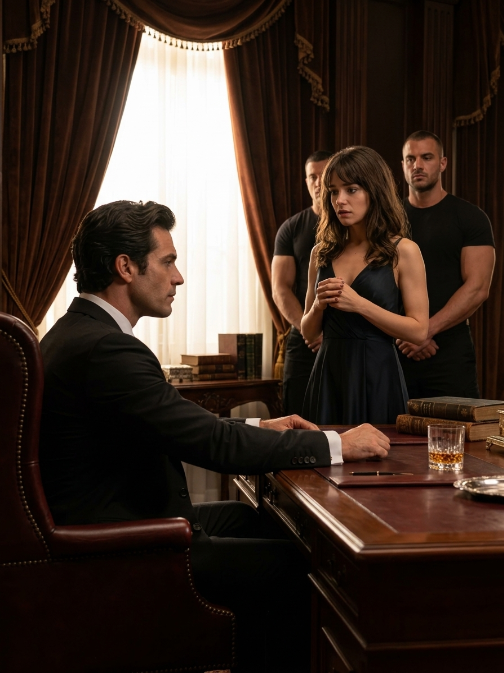
Down another corridor, Edmund received the news of his brother’s arrival with his jaw set hard enough to ache. Without quite understanding why, he rose from his desk and found himself walking toward his wife’s wing of the house, the way he sometimes did on the worst nights, when the silence in his own chambers grew too loud to bear alone.
He stopped outside her door.
He did not knock.
After a long moment, he turned away again, the way he always did, because some distances, he had long ago convinced himself, were safer left uncrossed.
He did not yet know that within the week, something would happen in the dark of that very corridor that would make seven years of careful distance impossible to maintain — not because of anything he chose to do, but because of four words, spoken in his wife’s sleep, that he was never meant to hear at all.
—
PART 2
Christmas Eve arrived on a gust of wind and carriage wheels grinding over frozen gravel, and for one evening, Ashcombe Hall remembered how to hold warmth instead of merely enduring cold.
Frederick Vayle arrived late and laughing, easy in every way his older brother was not, embracing Edmund with the unguarded affection of a man who had never learned to fear his own feelings. He found Rosalind afterward, seated quiet at the edge of the drawing room where she usually went unnoticed, and spoke to her with a kindness so plain and unfamiliar it unsettled her more than any impropriety could have.
“You’ve made yourself very small in this house, Lady Ashcombe,” he said, not unkindly. “I remember when you used to fill a room without trying.”
She had no answer for that. It was true, and its truth was precisely what unsettled her.
That night, exhausted from the effort of an evening spent being watched, Rosalind lay alone in the dark long after the house had gone quiet around her. Sleep came reluctantly, and when it finally arrived, it brought with it a dream she had not permitted herself in years — long corridors, locked doors, her own voice calling out across some impossible distance, saying a name she had trained herself, for seven winters, never to say aloud in daylight.
*Edmund.*
Not “my lord.” Not the careful, dutiful address she used in every waking hour of her marriage.
Just his name, spoken with all the longing she had buried so deep she’d nearly convinced herself it no longer existed.
Down the corridor, in his own cold and solitary chamber, Edmund Vayle lay awake in the dark, sleep refusing him the way it often did on nights when his brother’s easy warmth reminded him too sharply of everything he’d trained himself to live without. Somewhere between waking and dreaming, faint through the old stone walls, he heard it.
Her voice. His name. Grief and longing wound so tightly together he could not have separated them if he’d tried.
His heart began to race in a way seven years of careful discipline had never once permitted.
For the first time since their wedding night, Edmund rose from his bed, crossed the cold floor in bare feet, and walked the length of the corridor toward his wife’s door — not out of duty, not out of any obligation the house had ever demanded of him, but because some instinct older and more honest than pride had finally overruled it.
He did not knock. He simply opened the door, candle trembling faintly in his hand, and found her there in the dim light — asleep still, tears silvering her temples, one hand stretched into the cold, empty space beside her where, in seven years, no one had ever once lain down.
“Edmund,” she whispered again, caught somewhere between the dream and the edge of waking.
The sound of it, unguarded and true, struck him harder than any accusation Parliament had ever leveled at him, harder than any ledger of his own failures he’d quietly kept and never once shown to another living soul.
He took a single step further into the room he had avoided for seven years, and felt, for the first time in longer than he could remember, something in his carefully ordered chest begin, quietly and irreversibly, to come apart.
She stirred. Her eyes opened, unfocused at first, then found him standing there in the candlelight — impossible, unannounced, entirely unlike himself.
For a long moment, neither of them moved, the space between waking and dream still balanced delicately in the air.
“You came,” she whispered, voice thick with sleep and something rawer than sleep.
And for the first time in seven years of marriage, Edmund Vayle discovered he had absolutely no practiced words left to answer her with at all.
PART 3
He could not answer her at first. Words had always come easily to Edmund Vayle — in Parliament, in the management of tenants and ledgers and every ordinary crisis a great house produced — but standing here, in the one room he had spent seven years refusing to enter, discipline deserted him entirely.
Rosalind blinked, the dream’s haze slowly giving way to waking awareness, and color rose swift and mortified in her cheeks as she registered the impropriety of it — her husband, standing in candlelight at her bedside in the small hours, herself still tangled in sleep and half-spoken longing.
“My lord.” She pulled the quilt higher, attempting to sit upright, to reassemble the careful composure that had carried her through seven years of exactly this kind of exposure never happening. “Forgive me. I did not—”
“Do not,” he said quickly, and the urgency in his own voice startled him as much as it clearly startled her. He steadied his hand around the candle and tried again, gentler this time. “Please. Do not apologize.”
She went still, watching him with the guarded, searching look of a woman who had learned, painfully, not to trust sudden kindness.
“I heard you,” he said at last, because there was no version of this conversation that did not begin there. “In your sleep. You said my name.”
Her breath caught audibly. “You heard that.”
“I did.”
The silence that followed was not the practiced, comfortable silence that had governed their marriage for seven years. It was something rawer, more exposed, a silence that seemed to know it could not last.
“I am sorry,” she said, and the apology came automatic, worn smooth from years of apologizing for things that had never once been her fault to begin with.
“No.” The word came out harder than he intended. “Do not be sorry. Not for that.” He took another step into the room, then stopped, visibly uncertain how much closer he was permitted to come after seven years of choosing distance. “I told myself a great many things, Rosalind. That distance was a kind of respect. That silence kept you safe from disappointing me, or from being disappointed by me. I believed, or made myself believe, that I was sparing you something.”
Her hands twisted in the bedclothes. “You spared me nothing, my lord. You only ever left me alone with it.”
The truth of that settled between them, plain and undeniable.
“I see that now,” he said quietly. “I do not know that I have ever truly seen it before tonight.”
She turned her face away, tears slipping silently into her hair. “Seeing it now does not return to me the years I spent believing myself unworthy of anything warmer.”
“No,” he agreed. “It does not. But it may, if you will allow it, change what remains of the years still ahead of us.”
A short, humorless laugh escaped her. “You speak of this as though it were a matter of accounts to be reconciled. A debt to be repaid on schedule.”
“I speak,” Edmund said, “as a man who has been a coward for seven years, and has only just this hour found the courage to name it plainly.”
That word — *coward* — spoken so simply and without any of his usual careful armor, made her look at him properly for the first time since he’d entered the room. She searched his face for the mockery or cold formality she had learned to expect from him in every difficult exchange of their marriage.
She found neither. What she found instead frightened her considerably more: something unguarded. Something that looked, unmistakably, like fear.
“I do not know how to undo seven years, Rosalind,” he admitted. “I only know that I cannot return to my own cold room tonight and pretend I did not hear what your sleep finally let you say aloud.”
“And tomorrow?” Her voice trembled, though she kept it low. “What of the household? Your aunt’s opinions? The rules this family has lived by since before either of us was born?”
“I have lived by rules my entire life,” Edmund said. “They were meant to protect this family from — ” He stopped himself, jaw working.
“From what?” she pressed, gentler now, sensing something beneath the surface she had never once been permitted to see.
He was quiet a long moment, and when he spoke again, his voice had lost its careful edge entirely.
“My father loved my mother a great deal,” he said. “Loved her past all sense, past all prudence, in ways that ruined this estate twice over before I ever inherited it — debts incurred to please her, scandals endured to protect her happiness at the expense of everyone else’s. When she died, he followed her within the year, as though there had been nothing left in him worth keeping upright without her. I was eleven. I watched an entire inheritance nearly collapse because one man let feeling govern every decision he made.” His hands had curled at his sides. “I promised myself, kneeling at both their graves within twelve months of each other, that I would never again let the heart hold that much power over a house, a name, a family’s future. I built this marriage on the opposite principle entirely. I thought restraint was the safer inheritance to leave behind.”
Rosalind stared at him, seven years of assumed coldness rearranging itself, all at once, into something closer to grief wearing armor.
“You were protecting us,” she whispered. “Both of us. From becoming what they were.”
“I told myself that,” Edmund said. “For seven years, I told myself that very story, and called it wisdom instead of what it actually was.”
“And what was it actually?”
“Fear,” he said simply. “Dressed carefully enough that I nearly believed it myself.”
She said nothing for a long moment, hope and old caution warring visibly across her face. Hope had been dangerous for seven years. She had learned that lesson far too thoroughly to abandon it easily, even now.
He moved closer to the bed, slow enough to give her every opportunity to pull away if she wished it. She did not. He stopped near enough that she could see the effort the stillness cost him — the tension in his jaw, the careful discipline it took simply to remain standing there instead of retreating to the safety of distance.
“I do not ask you to forgive seven years in a single night,” he said. “I ask only that you allow me to try to become something worth the years still remaining to us.”
She studied him — this man who had been her husband in name only for so long she had nearly forgotten what the word was meant to mean beyond duty and ledgers and separate wings of a very large, very cold house.
“Trying will hurt,” she said finally. “It will hurt more than the silence did, some days. Hope always does.”
“Yes,” he agreed. “But so has not trying. I have had seven years of evidence for that particular truth.”
Another silence followed — softer now, less afraid of itself. Slowly, barely perceptibly, she nodded.
It was all the permission he needed. He reached for her hand, hesitated at the last moment as though still half-convinced he had no right to it, and then gently covered her cold fingers with his own.
She did not pull away.
“I will not leave you alone again tonight,” he said quietly.
Tears spilled freely now, no longer silent. She turned her face into the pillow, overwhelmed by the simple, enormous weight of his hand and the warmth she had genuinely forgotten she was capable of missing.
“Stay,” she whispered.
He did.
—
Morning came too quickly and too gently both at once, pale winter light finding them still awake more often than not, having spoken more honest words in those few dark hours than in the whole of the previous seven years combined. When Edmund finally left her room, it was not with the relief of a difficult duty discharged, but with something that felt, unfamiliar and fragile, like resolve.
The household noticed the change within the day. Orders were quietly given. Rooms were rearranged without explanation offered to the staff, though the staff, as staff always do, understood perfectly well regardless. Nell watched with poorly hidden hope. Lady Prudence, arriving for the holiday two days later, watched with immediate and considerable suspicion. Frederick, observing his brother across the dinner table that first evening, watched with the quiet satisfaction of a man who had waited three long years to see something essential finally set right in his family’s house.
By dinner that second night, whispers had already moved through every corridor of Ashcombe Hall. Edmund barely touched his food, his attention returning again and again to his wife seated across the long table, and Rosalind felt his gaze like actual warmth against her skin — unsettling in its novelty, and yet she found, to her own quiet astonishment, that she did not look away from it.
Frederick rose partway through the second course, glass in hand, his easy voice carrying just enough authority to cut cleanly through the room’s careful small talk.
“I believe my brother has something he’d like to say,” he announced, entirely too pleased with himself, “and I, for one, do not intend to let him postpone it until it becomes convenient. Edmund rarely finds anything convenient. We’d be here till spring.”
A ripple of surprised laughter moved through the assembled guests. Edmund’s jaw tightened, not with his old cold irritation, but with something closer to nervousness — an expression Rosalind had genuinely never once seen on her husband’s face in seven years of marriage.
He stood. The room quieted.
“I find,” Edmund said slowly, “that I have spent a great many years mistaking silence for wisdom, and distance for kindness. I would like, with my wife’s permission, to correct that error somewhere she does not have to watch me fumble through it in front of thirty guests and my aunt’s considerable disapproval.”
He held out his hand toward her down the length of the table.
Rosalind’s heart pounded so loudly she was certain the whole room could hear it. This was no dream now. This was choice, offered plainly, in front of witnesses, by a man who had spent seven years avoiding exactly this kind of exposure.
She rose and crossed the room to take his hand.
He led her, candlelight spilling ahead of them down the corridor, toward the small family chapel at the eastern end of the house — and for the first time in seven years of marriage, she walked *beside* her husband instead of several careful paces behind him, not apart from him at all, but genuinely, unmistakably, with him.
—
The chapel doors closed behind them, muffling the low hum of the dinner party continuing without them. Candlelight flickered against old stone worn smooth by generations of quieter prayers than the one about to be spoken here. The air smelled of beeswax and pine boughs brought in for the season, and the silence inside felt entirely unlike the silence that had governed their marriage until three nights ago.
This silence waited. It listened.
Edmund turned to face her, and to her genuine shock, lowered himself to one knee on the cold stone floor.
Rosalind froze. No one had ever knelt for her in her life — not in courtship, which had never truly existed between them, and certainly not in the seven years since.
“I will not pretend this is simple,” he said, his voice steady but stripped entirely of its usual careful formality. “I cannot return the years I kept you alone in this house out of fear dressed up as principle. I cannot undo what my own inherited caution cost you. But I can stand before you now, Rosalind, without any of the armor I have worn since I was eleven years old and convinced myself feeling was the most dangerous inheritance a man could accept.”
“You are an earl,” she whispered, tears already threatening. “You should not kneel to anyone.”
“I am a man,” he answered, “who failed the woman he vowed, in this very building, seven years ago, to honor. This seems precisely the place to correct that.”
Tears slid freely down her cheeks now, unchecked. She had imagined some version of this moment in a thousand private, carefully rationed hopes over the years, and none of them had felt remotely as real, or as frightening, as this one did.
“I heard you call my name three nights ago,” he continued, “not as a title. Not as a duty owed. As a truth you’d kept from both of us for seven years because you believed, rightly, that I had no interest in hearing it. I have spent this entire marriage hiding behind silence because I was afraid of wanting something I might eventually lose the way my father lost everything wanting my mother too completely. I understand now that in trying so hard to avoid that particular loss, I built an entirely different one instead, and handed it to you to carry alone.”
She swallowed hard, throat working around words that wouldn’t quite come.
“I taught myself not to hope,” she finally managed. “Hope became too dangerous a thing to keep in this house.”
“I know,” he said. “And I will not ask you to hand it over freely, all at once, as though seven years could be undone with a single evening’s honesty. I ask only that you let it return slowly, if it wishes to return at all, and that you allow me to prove myself worthy of it as it does.”
He reached for her hand, waiting, giving her every chance to withhold it.
When she placed it in his, the contact felt, absurdly, almost sacred.
“There will be no more separate wings,” he said. “No more doors left closed between us out of habit or fear. If you will permit it, I want a marriage that is genuinely lived, Rosalind, not merely endured for the sake of appearances and family name.”
Her voice, when it came, barely carried past the small space between them. “And if I cannot become whatever it is you imagine wanting?”
“I do not want a performance,” Edmund said. “I have had seven years of performance from both of us. I want you, entirely as you are, and I would like the chance to become a man worth that honesty in return.”
Something in her chest, held tightly closed for seven long winters, finally gave way all at once. She stepped closer, and he rose to meet her.
Their first true kiss was gentle, uncertain, carrying the weight of seven years of unshed grief within it — salt and candle wax and something fragile that had, against every reasonable expectation either of them had carried into that chapel, somehow survived intact enough to be worth reaching for.
Behind them, the candles burned on, steady and undisturbed, as though the old stone walls had simply been waiting, patiently, for exactly this.
—
The change did not arrive all at once, the way sudden things rarely do in houses built to endure centuries of careful restraint. It unfolded instead, slowly, through the ordinary weeks that followed that Christmas — doors once kept deliberately closed now standing open along the east wing. Mornings that had once passed in separate silence now found them sharing breakfast, trading small, uncertain observations about the weather, about tenants, about nothing of any real consequence at all, simply for the pleasure of being heard.
They learned each other in careful increments. Edmund discovered his wife laughed, unguarded and genuine, at something quietly absurd Frederick said at dinner, and found he wanted, quite badly, to hear that particular sound again as often as possible. Rosalind discovered her husband read poetry late at night when he believed no one was watching, and kept, in a locked drawer of his study, a single pressed flower from a garden neither of them had ever discussed.
The staff noticed. So did the guests who remained through the New Year. Lady Prudence departed for London within the week, trunks packed with considerably more disapproval than she’d arrived with. Frederick left in early spring, satisfied, in his own quiet way, that something essential in his family’s house had finally been set right after three years of watching it slowly starve.
By March, the last of the snow had retreated from the park below the east windows, green pushing stubbornly through half-frozen soil. In the shared chamber they had chosen together — neither his old rooms nor hers, but a third space entirely their own — a single candle that had once burned alone through countless solitary nights now rested beside two pillows instead of one.
One morning in early spring, Rosalind stood at the window watching new grass take hold along the park’s edge, and felt, rather than heard, Edmund come to stand behind her, his presence warm and steady and entirely, finally, real.
She was no longer waiting for anything.
Seven years of careful distance had not, in the end, destroyed either of them. It had only taught them, at considerable and unnecessary cost, exactly what fear disguised as wisdom could quietly steal from two people who had simply never been given permission to want anything more than duty from each other.
Sometimes love does not arrive with any great announcement at all. Sometimes it simply waits, patient and unclaimed, in the silence of a house that has forgotten how to hope — until, at last, in the smallest hour of an ordinary winter night, someone finally listens closely enough to hear it, and dares, however imperfectly, to cross the distance that fear alone had built.
THE END