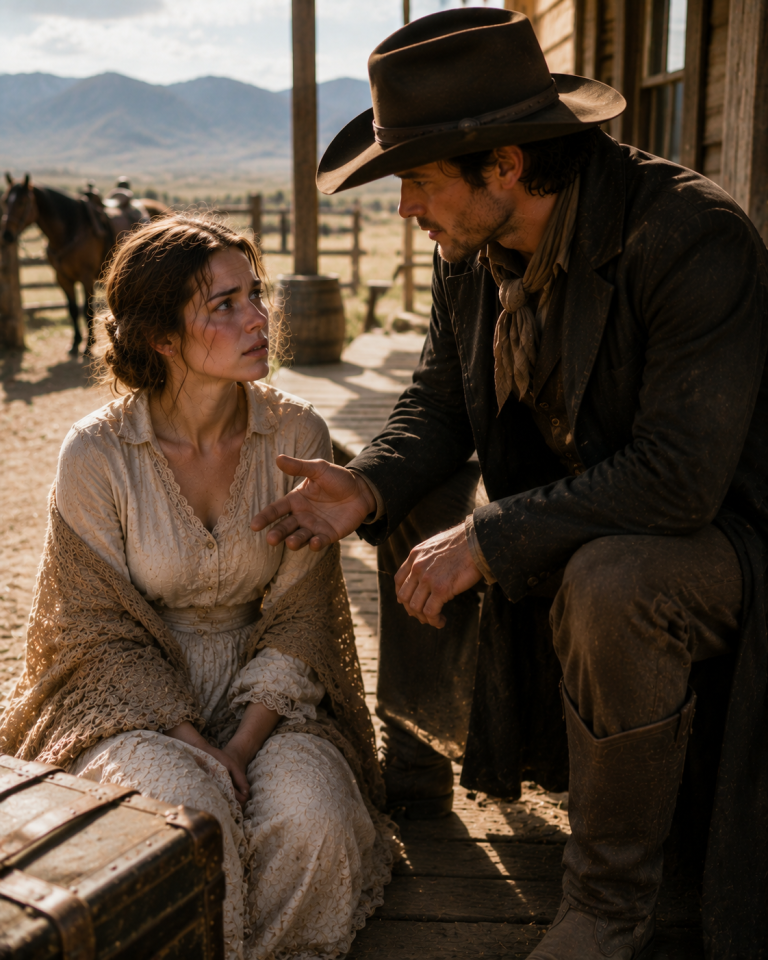
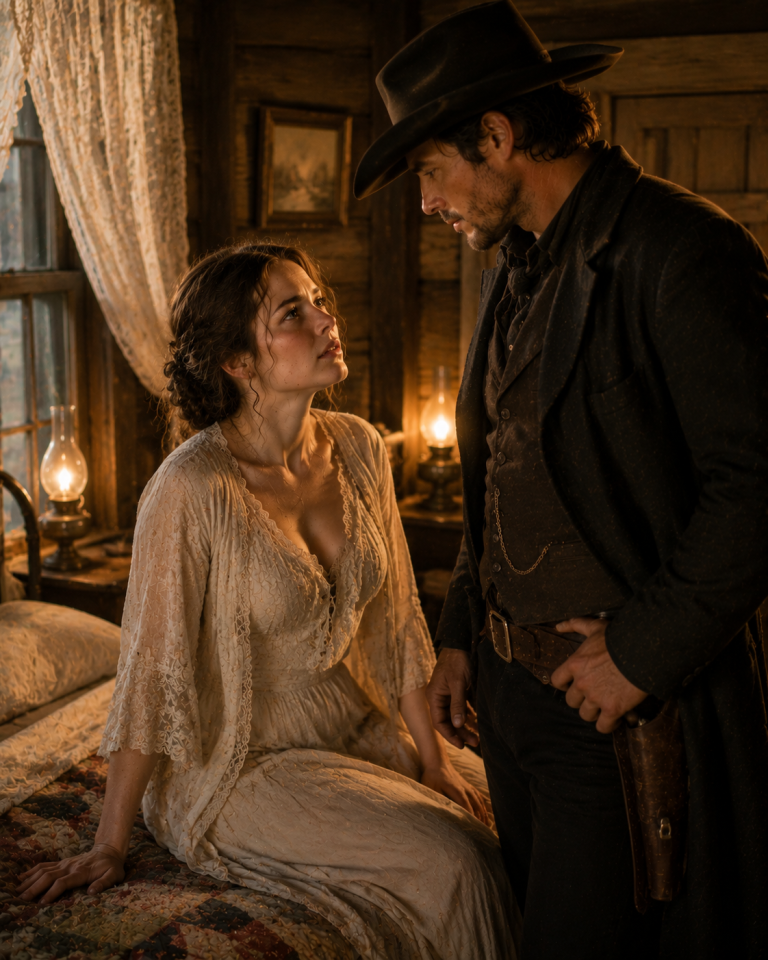
Ignored at Dinner, She Walked Out—Then Discovered Her Husband’s Family Were Mafia Bosses

**PART 1**
The dress had cost her three weeks of doubt and one afternoon of crying in a department store fitting room.
Not because it was expensive — it wasn’t, not by the standards of the women who would be wearing jewelry worth more than her annual salary — but because Anna Calloway had stood under those fluorescent lights and asked herself, for the first time with real honesty, whether she was choosing the dress for herself or for the distant hope that her husband might finally look at her the way he used to.
She had bought it anyway. Deep teal. Simple cut. The kind of dress that asked nothing from the woman wearing it.
Daniel had not looked at her when she came downstairs.
“We should have left ten minutes ago,” he said, checking his phone.
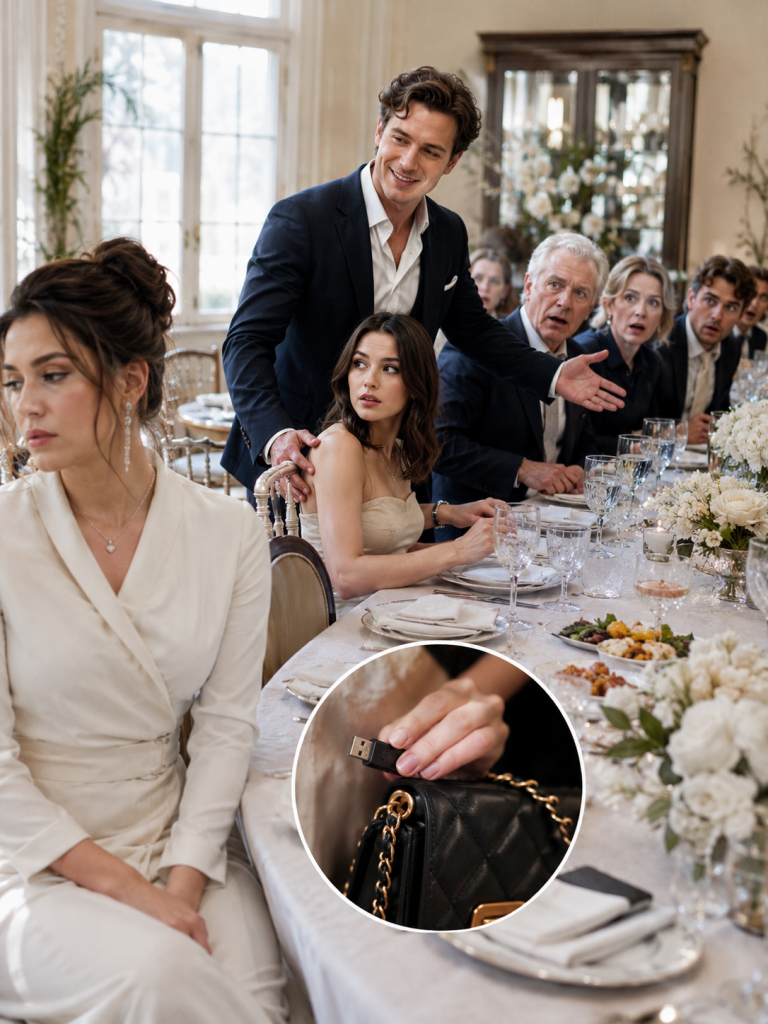
The Harrington Hotel in downtown Chicago occupied the top three floors of a building made entirely of glass and arrogance. The event — a charity gala for some foundation Anna had never been able to get a clear explanation of — glittered with the particular brightness that only real money could produce. Chandeliers like frozen waterfalls. Tablecloths that cost more per yard than Anna’s first car. Men in tuxedos who laughed at things that weren’t funny because the man telling the joke owned three companies.
Anna stood near the back windows overlooking the city.
She had been standing there for an hour.
Daniel had not been near her once.
She had watched him work the room the way she’d watched him work every room for the past three years: charming, attentive, effortlessly fluent in the language of men who had inherited their first million before they learned to drive. He was good at this. She had loved that about him once, that ease, the way he could make anyone feel like the most important person in a space. She had believed, for a long time, that she was one of those people.
She was not.
Across the room, near the bar, Daniel stood with his hand resting on the arm of a woman in a champagne-colored gown. He bent toward her ear. She laughed, head tilted back, one hand rising to touch his lapel.
Anna watched this for seven seconds. She knew because she counted them, a method she had developed for managing the specific pain of being invisible in her own marriage.
Seven seconds was enough.
She set her untouched wine on a passing waiter’s tray, picked up her coat from the chair where she’d left it, and walked to the elevator without stopping, without turning back, without giving anyone the satisfaction of watching her break.
The November air outside was brutal and honest. She stood on Michigan Avenue while the doorman asked twice whether she needed a car, and she said no both times because movement felt necessary. She walked south with no destination, just the cold and the noise of the city and the terrible clarity that arrives when a person finally stops hoping.
She thought: I have been waiting three years for him to choose me.
She thought: He chose something else a long time ago.
She thought: I do not want to spend another year in a house where I disappear by inches.
She found a diner near the river — the kind of place that had been there for forty years and showed no signs of caring what year it was. Vinyl booths. A counter with spinning stools. Coffee that smelled like it had been brewing since noon.
A man behind the counter asked what she’d have.
“Just coffee,” she said.
“Bad night?”
“Three bad years.”
He poured without further comment, which was exactly what she needed.
Her phone buzzed. Daniel.
*People are asking where you went. Bit embarrassing, Anna.*
She stared at the message for a long time.
She typed: *I’m done. Don’t come home tonight.*
His reply: *You’re being ridiculous.*
She turned the phone face-down on the table.
She was finishing her second coffee, beginning to think about the logistics of sleeping at her friend Clara’s apartment, when the phone lit up again.
Not Daniel this time.
The name on the screen stopped her cold.
*Edward Calloway.*
Her father-in-law. A man she had met six times in three years. A man Daniel spoke of with a complicated mixture of reverence and carefully controlled resentment. Edward Calloway, who occupied the top of whatever the Calloway business actually was — a question Anna had asked once, early in the marriage, and received an answer so smoothly vague she had never asked again.
She answered.
“Anna.”
His voice was what she remembered: deep, deliberate, the kind of voice that had decided exactly what it wanted to say before it began speaking.
“Mr. Calloway.”
“I know what happened tonight.”
She almost laughed. “Then you know more than I do.”
“I know considerably more than you do,” he said. “That is why I’m calling.”
Something in his tone reached through the phone and pressed against her sternum.
“Are you threatening me?”
“No.” A pause. “I am warning you.”
She looked at the rain beginning to streak the diner window.
“About what?”
“About what my family’s name means,” he said. “And about what it means for you now that you’ve decided to leave it.”
Anna’s hand tightened around the phone.
“I’m going to need you to explain that.”
“Not over the phone.” He said it without urgency, which somehow made it more frightening. “I’m sending someone to you. Don’t leave the diner.”
“How do you know where I—”
The line went quiet.
Anna set the phone on the table and looked at her reflection in the dark window. A woman in a teal dress in a twenty-four-hour diner, drinking bad coffee after walking out of a life that had never quite fit.
Fourteen minutes later, a black SUV stopped at the curb outside.
A man in a dark jacket came through the door. He was broad-shouldered and contained in the way of people trained to be invisible in rooms. His eyes found her immediately.
“Mrs. Calloway?”
Anna stood slowly.
The counterman watched with open concern. “You need me to call someone, hon?”
Anna looked at the man. At the slight bulk beneath his left arm that she recognized because her father had hunted, and she knew that particular shape.
“I’m fine,” she said to the counterman. Then, to the man in the jacket: “Where are we going?”
“Somewhere safe,” he said.
She wanted to laugh. She wanted to ask what safe meant in the context of an armored car and a concealed weapon and a father-in-law who called after midnight to issue warnings.
Instead, she picked up her coat and her phone and followed him out into the rain.
**PART 2**
The estate in Lake Forest was nothing like the modest house Daniel described from his childhood — the kind of origin story successful men polished for dinner parties. This was Georgian brick and iron gates and grounds that disappeared into darkness. Security cameras rotated on stone pillars like patient sentinels.
Edward Calloway waited at the top of the front steps. He wore a dark sweater and the bearing of a man who had not needed to prove anything to anyone in a very long time. Silver at the temples, storm-gray eyes, a stillness around him that she’d noticed at every family dinner — the stillness of someone who saw everything and chose carefully what to respond to.
He led her inside without ceremony.
The study smelled of wood smoke and old books. A fire burned low. Portraits of men with hard eyes watched from the walls.
Anna remained standing.
“Tell me what’s happening,” she said.
Edward sat across from her and looked at her in a way that felt, uncomfortably, like being accurately measured for the first time in years.
“My family came from Sicily,” he said. “Three generations ago. My grandfather built a business here. Legitimate things and other things. The distinction mattered to him when it suited him and didn’t when it didn’t.”
Anna went still.
“Daniel’s business is shipping,” she said.
“That is part of it.”
She sat down because her legs had made the decision for her.
“You’re telling me the Calloway family is—”
“Was. Is. It depends on the generation, the year, and who is asking.” He folded his hands. “I am telling you because you left tonight, and in my world, leaving a family creates a category problem.”
“A category problem,” Anna repeated flatly.
“People who were inside the circle and move outside it become unknown quantities. Unknown quantities make certain people nervous.”
“So I’m in danger for divorcing your son.”
“You are in danger because you have been standing in rooms for three years, hearing names, seeing faces, and everyone assumed you were too occupied with being a wife to retain any of it.” His voice was careful. “You retained more than anyone realized.”
She had. She knew she had. She had never understood why certain men stopped speaking when she entered a room, or why dinner conversations pivoted so smoothly away from specific topics, or why Daniel had once taken a phone call in the garage at eleven at night and come back looking like someone had redistributed all his bones.
She had filed it away. Wives learned to file things away.
“What do you want from me?” she asked.
“Nothing,” Edward said. “I want to give you something. Time. Protection. A real choice made from the correct information, not from the version of events Daniel curated.”
“And if I walk out of here right now?”
“Then I will make sure you get home safely and that protection follows you until the divorce is settled and the risk diminishes.” He paused. “But I would like you to stay tonight. There are things you deserve to understand.”
Anna stared at the fire.
She should leave. Every rational part of her understood that.
But she thought of Daniel’s text. *You’re being ridiculous.* Three years of being ridiculous. Three years of being too sensitive, too needy, too present in a marriage that didn’t have room for her.
And she thought of the way Edward Calloway looked at her. Not through her. Not past her. At her.
As if what she thought and felt and decided actually mattered.
“One night,” she said.
He nodded once.
“I’ll have Marta prepare a room.”
Anna looked at the portraits on the wall. At the hard eyes of men who had built something through methods that didn’t survive examination.
“Your son sent me divorce papers this morning,” she said. “By courier. To our home.”
Edward’s expression did not change.
“I had them redirected here.”
She turned to look at him.
“Your building is being watched,” he said, and before she could ask by whom, his phone rang, and he stood and answered it, and the conversation he had — short, controlled, in a language she didn’t recognize — left the room colder than it had been.
When he turned back, his face had changed by a fraction no one untrained would catch.
“There’s someone I need to speak with tonight,” he said. “Stay inside. I’ll explain everything in the morning.”
“Who is it?”
He held her gaze for one moment too long.
“A man who has been watching our family for reasons that have nothing to do with my son and everything to do with what my family owes the past.”
He left.
Anna sat alone in the study with the portraits and the dying fire and the specific, creeping understanding that the danger Edward had warned her about had arrived before either of them expected it.
**PART 3**
She did not sleep.
She sat in the leather chair by the fireplace with a blanket Marta had brought and waited for sounds she could not name, watching the glow of the embers and thinking about how three years of marriage had been spent believing she was too emotional and not quite enough, and how strange it was that the first place she’d felt entirely, uncomplicatedly seen was a house she should have run from.
Edward returned at two in the morning.
He looked like a man who had made a decision he would live with.
“Sit down,” Anna said. “You look like you’ve aged ten years.”
He actually paused at that. Then he sat in the chair across from her.
“There’s a man named Ferretti,” he said. “Vincent Ferretti. He has been building a new operation in Chicago for two years. He wants to fill the space that my family would leave if I stepped back from the business.”
“And?”
“He has been using Daniel.” Edward said it cleanly, with no ceremony. “Daniel has been feeding him information. Names, accounts, routes. In exchange for Ferretti’s protection once I’m gone.”
The fire popped.
Anna absorbed this.
“Your son is selling out his own father.”
“My son has been frightened his entire life,” Edward said, with a tiredness that carried more grief than anger. “I made him that way. I taught him that vulnerability was weakness and that power was the only currency that mattered. He learned the lesson and chose a different patron.”
“That doesn’t excuse it.”
“No.” He looked at his hands. “It explains it. Explanation is not the same as excuse.”
They sat with that for a moment.
“What happens now?” Anna asked.
“I have a meeting with federal prosecutors next week. I’ve been in contact with them for six months.” He looked at her steadily. “I am cooperating with a transition. Legitimate businesses remain. The rest is being dismantled in an order that minimizes casualties.”
Anna stared at him.
“You’re testifying.”
“Against myself, yes. Against associates. Against certain partnerships. In exchange for a structured exit and immunity for the people in this house who never had a choice about the family they were born into.”
She could not find words for a moment.
“Daniel will see this as betrayal.”
“Daniel has already betrayed me.” Edward said it simply. “He simply hasn’t been told yet that I know.”
Anna stood and walked to the window. Outside, the frost-covered grounds lay still under the last of the night. She thought of Daniel in the gala. The hand on another woman’s arm. The text. *You’re being ridiculous.* She thought of three years of furniture-grade invisibility in a marriage to a man who was, she now understood, too busy managing his own fear to have ever really seen her at all.
She thought of Ferretti’s men watching her building.
She thought of the forty-minute drive through dark roads to get here.
She thought of an old man in a charcoal sweater who had called a stranger in a diner to warn her because he believed she deserved to make a real choice.
“What do I do?” she asked.
“Whatever you want,” Edward said.
“That is not a helpful answer.”
“It is the only honest one.” He stood and came to stand beside her at the window, not touching, just present. “You have good instincts. You have been suppressing them for three years because the man you married told you they were inconvenient. I am telling you they are exactly the thing that kept you safe tonight.”
She looked at him sideways.
He was looking at the grounds.
“Why does it matter to you?” she asked. “Genuinely. You could have sent money. Arranged the protection. Explained none of this. Why tell me everything?”
A long pause.
“Because Maria — my wife — asked me that question once. Why do you do things halfway? Why do you give people half the truth and call it kindness?” He exhaled slowly. “I told her I was protecting her. She told me I was protecting myself from having to watch her react to the whole of it.”
Anna waited.
“She was right,” he said. “She was almost always right, and I understood that most clearly when I no longer had the chance to tell her.”
—
She stayed.
Not because she was afraid, though fear played a role in the first few days. She stayed because the estate, for all its complicated history, had a rhythm to it that felt — in ways she couldn’t immediately articulate — more honest than anything she’d lived in for years. Marta made coffee at seven. The gardener, an older man named Pete who had worked the grounds for two decades, left the best hydrangeas at the kitchen door on Fridays. Edward ate breakfast at the long table in the east room and read two newspapers and asked Anna, when she appeared, what she thought about whatever he was reading.
He asked what she thought.
Not to make conversation. He sat back and listened to her answer and sometimes pushed back and sometimes nodded and sometimes simply looked at her with that quiet expression that said: *This is interesting. You are interesting.*
Daniel’s divorce papers arrived again on day four. Anna signed them at the kitchen table with Pete’s coffee going cold beside her, and she felt nothing dramatic — no grief, no rage, just the clean click of a door she’d been leaning against finally shutting properly.
She sent them back with her own attorney, a woman named Harris who Edward had recommended and who, Anna gathered from one thirty-second interaction, was the kind of lawyer who didn’t raise her voice because she never needed to.
The settlement Daniel proposed was insultingly modest.
Harris called it an opening bid.
By the end of the second week, Daniel had stopped posturing.
By the end of the third, it was done.
—
Ferretti’s men came for Anna on a Thursday in January.
She was returning from volunteering at a literacy program in a nearby town — something she’d started partly out of restlessness and partly because the elementary school three miles from the estate had a program desperately short of tutors, and Anna had a degree in education she’d spent the past three years explaining away in conversations that never went anywhere.
Thomas, her driver, noticed the grey sedan two turns before Anna did.
“Hold on, Mrs. Calloway,” he said, calm as weather.
The next twenty minutes happened in pieces: sharp turns, Thomas speaking quietly into a radio, the gates of the estate opening as they arrived and closing behind the car before the sedan could follow.
Edward was in the driveway.
He did not ask questions. He pulled her inside, and when the door closed and she was standing in the marble foyer still wearing her coat, breathing too fast, he put his hands on her shoulders and said: “You’re safe. Look at me. You’re safe.”
She looked at him.
She was shaking.
He was not.
“That was Ferretti,” she said.
“Yes.”
“He knows I’m here.”
“He has known for two weeks.” His hands didn’t move from her shoulders. “We let him know. It gave him a reason to stay visible while my attorneys finished the cooperation agreement.”
“You used me as bait.”
Something moved across his face.
“No,” he said. “I kept you close because I was not willing to risk you being outside this perimeter. If that was wrong, tell me.”
She looked at him.
“It was arrogant,” she said. “You should have told me.”
“Yes.”
“And I would have agreed, if you’d asked.”
He exhaled.
“I know,” he said. “Old habits.”
“Maria again?”
“Maria again.”
Anna reached up and took one of his hands from her shoulder.
She held it.
Not as comfort. As a statement.
He looked down at her hand in his with an expression she had no previous framework for — something careful and stunned and terribly, terribly careful not to be wrong about what it meant.
“Edward,” she said.
“Anna.”
“I am not a project.”
“I know.”
“I’m not a second chance at something you missed.”
“You’re not,” he said quietly. “You’re yourself. That is the thing.”
She searched his face.
“This is an absurd situation.”
“Profoundly.”
“Daniel will say terrible things.”
“He will.”
“I don’t care about that.” She was surprised to find it was true. “I just want you to be honest with me. About everything. From now on.”
“That is all I want too,” he said.
—
The months that followed were not a fairy tale.
They were something more demanding and more real than that.
Edward’s cooperation with the federal investigation moved slowly, with the grinding bureaucratic patience of institutions that had learned to distrust men like him. Names were given. Records were opened. Three men who had considered themselves untouchable discovered they were not. The Chicago papers ran pieces that were careful and legally vetted but that left the general impression of a dynasty being responsibly wound down.
Some of Edward’s associates called it weakness.
Some called it worse.
He absorbed it without apology.
“Legacy,” he told Anna one evening, while she graded reading worksheets at the kitchen table and he reviewed documents from his attorneys, “is not what you build. It is what the building cost.”
“That’s bleak.”
“It is meant to be motivating.”
She looked up at him.
He was watching her over his reading glasses with that expression she’d come to recognize — the one that said he was having a thought he was deciding whether to say out loud.
“Say it,” she told him.
“I have been thinking about Maria’s garden.”
The garden was a walled space at the far edge of the property, locked since his wife’s death fifteen years ago. Anna had stood at the iron gate once and looked through it at the overgrowth — wild roses eating the stone paths, vines over the bench, weeds cracking through the fountain basin.
“What about it?”
“I think it wants to be a garden again.”
She held his gaze.
“Then open the gate.”
He did, the following Saturday, with Anna beside him. It took them most of the morning to clear enough of the path to reach the old bench under the oak tree. They worked without ceremony, Anna in borrowed gardening gloves, Edward in a shirt that Marta would later refuse to launder without protest. They did not talk much. There was something about the physical work — the resistance of the overgrowth, the smell of cold earth and old roses — that didn’t need language.
When they finally sat on the bench, it creaked but held.
Edward looked at the garden the way someone looks at a place they have been avoiding.
“She would have let it go to ruin too,” he said. “She was better at letting go than I was.”
“That’s not the same as giving up.”
“No.” His voice was low. “It’s different. She knew the difference between things that needed tending and things that needed to end.”
A leaf fell from the oak above them.
Anna looked at the afternoon light moving through the tangle of vines and thought that even wild things retained their shape — that under the neglect, the garden was still organized around something it had once been.
She placed her hand on top of his.
He turned his palm up and held it.
They sat until the light changed.
—
The proposal happened in April.
Not in the garden, though that was where Anna had expected it, if she had allowed herself to expect it at all. It happened in the kitchen, at seven in the morning, which was perhaps exactly right — no staging, no performance, just Edward standing at the counter with two cups of coffee looking like a man who had decided something and was experiencing the specific vulnerability of acting on it.
He set the smaller cup in front of her and put a velvet box beside it.
“That belonged to my mother,” he said. “Before Maria. My mother wore it for fifty years and left it to me with a note that said: give this to someone it fits.”
Anna opened the box.
The ring was antique platinum, a single pearl surrounded by small diamonds, unusual and warm.
She looked up at him.
“I cannot promise it will be easy,” he said. “I can promise honesty. Respect. That I will never make you invisible in your own life. That I will ask what you think and mean it.” He paused. “That I will go home when you ask me to.”
Her throat tightened.
“That’s a very specific promise.”
“I am a man who has learned which promises matter.”
“Yes,” she said.
He blinked.
“Yes?”
“Yes.”
He exhaled like a man setting down something he had been carrying for a long time.
—
The wedding was small.
November, which felt right. The garden restored now, rose canes cut back to something purposeful, stone paths cleared, the fountain running again. The oak tree had gone gold above them. Twelve people in total — Marta and Pete, Harris the attorney, Thomas the driver, Anna’s friend Clara who cried through the entire ceremony, and a small number of Edward’s remaining associates who had stayed not because they were owed something but because they had chosen, over the years, to remain.
Anna wore ivory and no jewelry except the ring.
Edward’s eyes, when he saw her at the entrance to the garden, did exactly what Daniel’s eyes had never done.
They stayed.
Father McGinty kept the ceremony short, which Edward had specifically requested and Anna had specifically appreciated.
The vows were simple and precise: truth, loyalty, presence. Not perfection. Not immunity from difficulty. Just the choice to face it without lying.
When it was over and the small crowd was moving toward the table Marta had set under the oak, a car stopped at the far end of the property.
Daniel stepped out.
He stood at the iron gate in a dark suit, looking in at the garden. Two of Edward’s men stood at a measured distance behind him.
For a moment, no one moved.
Then Anna walked to the gate alone.
She and Daniel looked at each other through the iron bars.
He looked older. Not badly — just used, the way people looked when they had been carrying something that turned out to be heavier than they told themselves.
“Congratulations,” he said, with a kind of dull sincerity that surprised her.
“Thank you for coming,” she said.
“I didn’t come for you.” He glanced past her at Edward. “I came to tell him that I know he knew about Ferretti. About the months of information I gave him.” His jaw worked. “I know he let it happen to build the case.”
“I know too,” Anna said.
Daniel looked at her.
“Are you angry?”
She considered it genuinely.
“I was,” she said. “Then I thought about what you would have done differently. And I realized you made the same choice you always made — you chose the thing that felt safer instead of the thing that was right.”
Something crossed his face that might have been grief or might have been recognition.
“I was afraid of him,” Daniel said. “My whole life.”
“I know.”
“He never told me.”
“He knows that too.” She held his gaze. “He’s trying to earn something different. So are you, I think. Just in different ways.”
Daniel was quiet for a moment.
“You’re happy,” he said. Not a question. Something flatter than that.
“Yes.”
He nodded once.
He walked back to his car without saying goodbye, which was, Anna supposed, the most honest version of goodbye he had available.
—
Five years later, the estate was not a fortress.
It was a house.
The Mitchell Foundation — rebranded and restructured, its legitimate work separated cleanly from its complicated origins — operated out of the west wing now, funding literacy programs in four counties and a vocational scholarship that carried Maria Calloway’s name. Edward attended the annual review meeting every June and sat in the back, which Anna always noticed and never commented on.
The locked doors were open.
Some of the portraits had come down.
Not all of them — Edward had a particular relationship with history that involved looking at it directly rather than removing it — but the hardest-eyed ones, the men who had built things with methods that couldn’t be explained at dinner, had been replaced in the dining room by photographs. The elementary school. The scholarship recipients. The garden in spring.
Anna taught three mornings a week at the school that had become something of a second home to her. She had started a reading program for children with learning differences that a university in Evanston had recently asked to study as a model.
She never called it an achievement. She called it paying attention.
—
The day Ellie was born was a Tuesday in March, during a late snowstorm that made the drive to the hospital something Thomas would describe for years with a particular mixture of pride and horror.
She had Edward’s eyes — that precise gray that could look like storm cloud or still water depending on the light — and Anna’s habit of watching a room before deciding what she thought of it.
She was three when she asked, with the directness of small children who had not yet learned to soften questions: “Daddy, were you a bad man before?”
The kitchen went quiet.
Anna kept her eyes on her coffee.
Edward set down his newspaper with great deliberateness.
“I did some bad things,” he said.
Ellie considered this.
“But not now?”
“No. Not now.”
“Because Mommy helped?”
Edward looked at Anna.
Anna looked at her coffee.
“Mommy reminded me,” Edward said, “that it was not too late to be something better.”
Ellie seemed to find this sufficient, and asked for more orange juice, and the morning continued.
—
That November, on their anniversary, Anna stood at the garden room window watching Ellie chase the last leaves under the oak tree, and Edward came to stand behind her, and it was not dramatic.
That was the thing she had learned.
The best parts were not dramatic.
The best parts were this: a warm room, a child in a yellow coat, coffee going cold on the windowsill, a man who had chosen accountability over escape standing close enough that she could feel the steadiness of him.
She thought of the woman she’d been in that Chicago diner. Cold. Certain her marriage had emptied her. Angry at the right things and afraid of the wrong ones.
She thought of how terrified she’d been to walk out of the gala, how ordinary the act had seemed — a woman leaving a party — and how that ordinary act had been, she understood now, the bravest thing she had done in years.
Not because of where it led.
But because she had trusted herself enough to move.
“Happy?” Edward asked.
She leaned back against him.
“Yes,” she said. “Happier than I had a plan for.”
Outside, Ellie shouted for them to come immediately, having found what she called the most significant leaf in the world.
Anna took Edward’s hand.
They went out together into the cold and the gold of it, the past where it belonged — behind them and accounted for — and the garden breathing, and the child waiting, and nothing ahead of them but the long, specific work of a life chosen on purpose.