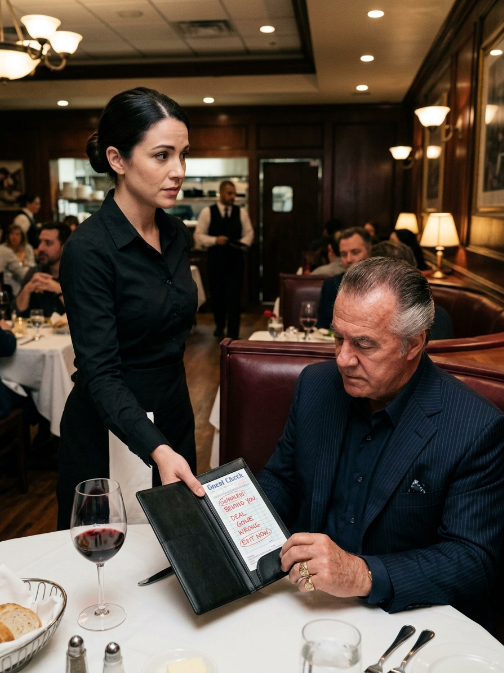
A Poor Girl Called a Mafia Boss and Whispered That His Mother Was Poisoned at Box 7—Time Was Running Out

## PART 1
My mother died of a slow thing.
That is what I have learned to say when people ask. A slow thing. It sounds like illness — like something cellular and inevitable and nobody’s fault. It sounds like the kind of answer that closes a conversation gently instead of blowing it open.
The truth is my stepfather poisoned her over fourteen months with small, careful doses of arsenic in her evening tea, and every doctor she saw called it autoimmune, metabolic, stress-related, psychosomatic. The truth is I watched her disappear and didn’t understand what I was seeing until three weeks before the end. The truth is I understood too late, couldn’t prove it, and by the time I enrolled in nursing school, the official cause of death was heart failure and my stepfather had a new girlfriend and a life insurance check and I had a grief so specific it had turned itself into a curriculum.
I studied poisons.
Every category, every mechanism, every symptom cluster and window of intervention. Not as part of my nursing program — the program taught me what most nurses needed. I taught myself the rest. Rare compounds. Detection windows. Antidotes kept in specialist units, not standard crash carts. I told myself I was being thorough.
The truth was I was building the thing I should have had three years earlier.
By the night I served champagne at Meridian Hall, I was twenty-six, second-year nursing student, three hundred and forty dollars short on a tuition installment, and hired through a temp agency to work charity gala service for the San Francisco arts circuit. My shoes were one size too small. My hair had started falling out of its pins by the second hour. The borrowed uniform pulled across my shoulders when I reached for glasses.
I was invisible, which was the job.
I was also watching everything, which was not.
The woman in the premier loge began showing symptoms before her champagne glass was half empty.
I noticed because I was trained to notice. The flush rising beneath precisely applied foundation. The tremor starting in the left hand. The way she pressed one palm to her abdomen with the careful pressure of someone managing an interior fire. And the eyes — wide, amber, processing something the other guests had not perceived yet.
Her name was Isadora Voss.
Everyone in San Francisco knew that name. Old money, older influence, and beneath both of those, darker associations that people referenced in the passive voice when they referenced them at all. She wore diamonds that probably cost more than the building I rented a room in, and she was dying inside them while a string quartet played something Baroque below.
I set down my tray.
The guests turned toward me with the collective expression of people interrupted during something expensive.
“Call an ambulance,” I said.
The silence held for one long beat.
Then: “Now.”
That word moved them.
I knelt beside Isadora, two fingers at her wrist. The pulse was rapid, irregular, already thinning at the edges. Skin hot across the sternum, cold past the elbows. Her pupils responsive but strained, the tremor progressing from the hand into the wrist. She smelled faintly of copper — not blood, but that particular metallic exhalation that I had only ever read about in toxicology papers and prayed I’d never recognize in a living person.
I recognized it.
My mind resisted the conclusion for three seconds because the alternative explanations were so much more convenient.
Then Isadora’s hand shot out and seized my wrist with strength that should not have existed in someone that compromised.
Her eyes found mine.
“My son,” she gasped. “Lucian. Call him.”
She pressed her phone into my hand. Her fingers were shaking so badly I nearly lost it.
“Tell him — Box Premier. *Dimercaprol.*”
The word went through me like cold water.
Not a guess. Not a fear.
She knew the antidote by name.
I dialed the number open on the screen.
One ring.
A man’s voice, unhurried, with the particular control of someone accustomed to containing whatever they were feeling: “Mother. I’m in the middle of something.”
“Your mother has been poisoned at Meridian Hall,” I said. “I’m a nursing student. She’s presenting with symptoms consistent with thallium exposure — rapid onset after champagne, abdominal distress, neuropathic tremors, metallic breath, abnormal temperature distribution. She named the antidote herself. She needs dimercaprol and she needs it before paramedics arrive, because paramedics won’t carry it.”
The line went completely quiet.
Not confused quiet. Not processing quiet.
The quiet of a person becoming very dangerous very quickly.
“Who are you?”
“Cara Delvane. SF General nursing program, second year.”
“How do you know thallium presentation?”
I looked at Isadora, whose breathing had begun to shorten.
“I’ll explain after she’s stable,” I said. “You have less than an hour before the neurological window closes.”
Another silence.
Then: “Stay with her.”
“I’m not going anywhere.”
“I’ll be there in nine minutes.”
“The ambulance—”
“I’ll arrive first.” His voice lowered to something that was not quite a threat but lived in the same building as one. “If you are wrong about this, Miss Delvane, you will regret making this call.”
The line went dead.
I stared at the phone for exactly two seconds.
Then Isadora made a sound that converted fear into focus.
“I need ice,” I said to the room. “Cold compresses, her bag, any medication she has on her. And move back — everyone. Give her air or leave.”
They moved.
People in crisis do not need authority. They need someone willing to move first.
I elevated Isadora’s legs, opened her collar, monitored her airway, tracked the pulse every ninety seconds. I asked her what she could answer and let silence fill what she couldn’t.
“The champagne,” I said quietly. “Box service?”
A faint nod.
“Did it taste different?”
Her eyes closed briefly.
“Metal,” she whispered.
I pressed two fingers to her wrist again and counted.
Not enough time. Never enough time. I had read that sentence in every toxicology chapter I’d ever studied and now it was sitting in the room with me like a third person.
The loge door opened with the force of something that had been moving fast and had decided to stop.
Lucian Voss entered.
Tall. Dark coat. A face assembled from hard angles and complete authority, with amber eyes identical to his mother’s except where hers held warmth, his held something else — the controlled intensity of a man who had spent years making rooms adjust around him without raising his voice.
Two men came in behind him.
Quiet. Positioned near the exits. Armed, I was certain, though nothing showed.
He went directly to Isadora and for one unguarded moment I saw the son beneath the man — something cracking open, something terrified — and then control returned and he opened a small black case.
Vials. Syringes. The antidote.
“You carry dimercaprol,” I said.
He looked at me.
“You diagnosed thallium poisoning from a theater loge.”
He pulled a syringe.
“Are you certain?” he asked.
Not doubt. A man deciding in real time whether to trust a stranger he had spoken to for forty seconds with the one thing he could not afford to lose.
I met his eyes.
“Rapid onset, abdominal distress, neuropathic progression, metallic exhalation, heat at the core and cold at the extremities, champagne as the vector, and your mother named the treatment before I did. Yes. I’m certain enough to act.”
He looked at me for three seconds.
Then held the syringe out.
I took it.
He didn’t argue. He didn’t ask why. He moved to support his mother’s head and shoulder and said, simply: “Do it.”
I swabbed the site, measured the dose, and pushed the medication with hands steadier than my pulse.
Below us, the soprano reached the aria’s highest note.
Isadora’s breathing stuttered.
Then — slowly, not completely, but enough — it steadied.
The ambulance arrived four minutes later.
When the paramedics took over and the room filled with the efficient language of emergency response, I stepped back. The champagne stain on my sleeve. The too-small shoes. The way the whole loge smelled of adrenaline and expensive perfume and something narrowly avoided.
Lucian Voss was looking at me.
Not with gratitude.
With the expression of a man who has just encountered something he doesn’t have a category for yet.
“I should return to work,” I said.
His hand closed around my wrist.
Not hard. Not asking.
“You’re coming to the hospital.”
“I work for an agency. I can’t just—”
“Your agency has been compensated.”
My face heated.
“I’m not something you compensate for.”
Something moved through his expression.
“No,” he said. “You’re the only reason my mother is breathing. And whoever poisoned her saw your face.”
That had not, until that exact moment, fully occurred to me.
I looked at the crowd. The phones already out. The eyes already shaping me into a story I had not agreed to be in.
I pulled my wrist free.
“I’ll take the ambulance,” I said.
Lucian Voss almost smiled.
“As you prefer.”
—
## PART 2
The hospital waiting room smelled of antiseptic and money performing anxiety.
I sat across from Lucian Voss with a vending machine coffee going cold between my hands, watching him be still in the particular way of men who are never still — every muscle controlled, every expression managed, and underneath all of it, something held so tightly it was almost vibrating.
He had not thanked me again after the loge.
I suspected gratitude, for someone like him, felt too close to owing.
“You identified a rare poisoning faster than most attending physicians would,” he said.
I looked at the cup.
“Luck.”
“No.” His voice was flat. Final. “That was not luck. And you know it.”
I said nothing.
“Then tell me the truth.”
“I did. I’m a nursing student who recognized a symptom cluster.”
“You gave me your name and a diagnosis. That is not truth. That is selected disclosure.”
I stared at him.
“Do you always interrogate people who just saved your mother?”
“I interrogate anything I don’t understand.”
“Put me on the list, then.”
The corner of his mouth moved. Almost.
A doctor appeared before either of us could continue.
Isadora was stable. The early intervention had likely prevented permanent neurological damage. The antidote had been correct. Tests were running.
Lucian’s hand, resting on the chair arm, unclenched.
I felt my own shoulders drop for the first time in hours.
The doctor looked at me.
“Who administered the first dose?”
“I did.”
His expression shifted with the particular weight of someone recalibrating.
“She likely wouldn’t have made it without that window,” he said. “You saved her life.”
I nodded because I didn’t know how to receive that in a room full of armed men and consequences I hadn’t consented to yet.
After the doctor left, Lucian said: “Now tell me everything you observed.”
So I did. The champagne. The box service tray that didn’t come from the regular station. The man with silver cufflinks who leaned close before Isadora lifted the glass. The woman near the back exit who looked away too deliberately. The taste Isadora described.
When I finished, Lucian was quiet for a moment.
“You notice the specific things.”
“I’m training to be a nurse.”
“You notice danger,” he said. “That is different.”
The sentence found something inside me I didn’t want touched.
I stood.
“I need to go home.”
“You need protection.”
“I need six hours of sleep and to make my morning clinical.”
“There are people who now know your face and understand what you can identify.”
“There are also people who know my face from the collections office. They’ve been more persistent.”
Something hardened in his expression — not at me, but at the accuracy of what I’d said.
Three days later, I opened my apartment door and found him sitting at my kitchen table reading my toxicology notes.
My studio was not designed to contain a man like Lucian Voss. It barely contained me. Narrow bed, milk-crate bookshelves, a table with one short leg, curtains I’d hemmed myself. A water stain on the ceiling that looked, on bad nights, like a pointing hand.
I did not scream.
I grabbed my umbrella and aimed it at him.
“Get out.”
He looked at the umbrella.
“Your lock was already compromised when I arrived.”
My anger faltered.
He slid a photograph across the table.
My front door. Close-up. The frame scratched, the lock damaged, the timestamp reading three hours earlier while I was at clinicals.
Mia’s stomach dropped.
My stomach dropped.
“Someone came in?”
“Yes.”
“They didn’t take anything—”
“They came to show they could.” He opened another folder. “And then they followed you.”
Inside were photographs.
Me leaving campus.
Me at the diner where I worked weekends.
Me at a bus stop in the rain.
Me buying coffee outside the hospital.
Every image from the forty-eight hours since the opera.
My throat went dry.
Lucian watched me process it.
“Fear is more useful when it has a shape,” he said.
“That sounds like something a dangerous man tells someone to make surveillance feel like a gift.”
“It is both.”
He did not soften it.
That honesty was almost harder than a lie would have been.
“Pack for two weeks,” he said.
“No.”
“Cara.”
“You don’t get to break into my apartment, show me photographs of myself, and issue orders. I am a person, not a problem you manage.”
That stopped him.
Only for a second.
But I saw it register.
“Yes,” he said, quieter. “You are. Which is why I am asking you to let me keep you alive.”
I looked at my broken lock.
At the photos.
At the single overhead light that had been flickering for three weeks because I hadn’t had time to change the bulb.
I thought of my mother.
How she had been photographed too, in a sense — documented by someone who watched her daily and planned her ending with patience.
I was not going to be patient with my own survival.
“I have clinicals,” I said.
“Arranged.”
“My shift at the diner.”
“Covered.”
“I am not your employee or your obligation.”
“No,” Lucian said. “You are the reason my mother is alive. I intend to honor that whether or not it is convenient for you.”
Twenty minutes later, I was packed.
—
## PART 3
The Voss estate in Pacific Heights sat behind iron gates and cypress trees and the particular silence of money that has stopped needing to announce itself. Security cameras tracked the car from the gate. Men stood where landscapers should have been. The city glittered below the hill like something that belonged to a different dimension than the one I’d been living in.
A staff member took my duffel bag with such careful respect that I nearly apologized for the worn canvas.
I stopped myself.
“This is temporary,” I said, to no one in particular.
“Of course,” Lucian said, already moving toward the house.
The east wing suite overlooked the bay through floor-to-ceiling windows. Isadora Voss sat propped against silk pillows, silver hair combed smooth, a reading lamp burning beside her like a small deliberate flame. She looked, impossibly, as if she were recovering from something merely inconvenient.
When she saw me, her face warmed in a way that made it difficult to stay defended.
“My guardian,” she said.
“I’m a nursing student who happened to be in the wrong place.”
“The right place at the right time,” she said. “Guardian applies.”
Lucian made a sound from the doorway.
I ignored it and moved closer, checking her color, pulse, the tremor still faint in her right hand. She submitted to the assessment with the patience of someone who had learned not to argue with competence.
“Your son broke into my apartment,” I said.
Isadora looked at Lucian.
“Did you?”
“The entry was already compromised.”
“That is not the same thing as not breaking in.”
Victoria — Isadora — sighed. “You have your father’s gift for reframing intrusion as protection.”
Lucian said nothing.
The silence confirmed everything.
Isadora reached for my hand.
“Thank you,” she said. “For coming and for staying.”
“I didn’t have many options.”
“Men like my son,” she said carefully, “often confuse removing options with providing safety. I hope you’ll tell him when he does it.”
I looked at her.
“I already have.”
She smiled.
“Good.”
In the days that followed, I learned the estate the way you learn a beautiful constraint. The kitchen smelled of espresso and fresh bread. The library smelled of leather and old decisions. Security moved through every hallway with the careful invisibility of people trained to be noticed only when necessary.
I attended lectures remotely. A car with a security detail I was not supposed to acknowledge took me to clinicals. I hated needing it. I hated more that I’d needed it before and not had it.
Isadora improved by degrees, and as she did, she used recovery as an opportunity to ask questions with the elegance of someone who understood that curiosity, deployed correctly, was a form of intimacy.
“Where is your family?”
“Gone.”
“All of them?”
“My father left early. My mother died three years ago.”
Victoria’s face softened.
“I’m sorry.”
I nodded.
She did not ask me to perform grief for her. Did not wait for the story. Did not fill the silence with her own feelings about death.
That made me trust her, slightly, against my better judgment.
Lucian operated differently. He studied me — not with warmth but with precision, circling the same question from different angles across every conversation. He reviewed my class schedule. Asked about my clinical rotations. Examined my textbook annotations with the focus of someone looking for what wasn’t being said.
One evening I found him in the library with my toxicology notes open on the desk.
I stopped in the doorway.
“Those are private.”
He looked up without guilt.
“You have three separate notebooks dedicated to delayed-onset and undetectable compounds.”
“I’m thorough.”
“You are obsessive,” he said. “There is a difference, and the difference tells a story.”
The word hit too precisely.
I crossed the room and gathered the notebooks.
“Unexplained knowledge isn’t evidence,” I said.
“In my world, it is the first kind.”
“Then your world has a privacy problem.”
He stilled.
Then stood and moved away from the desk.
“You’re right,” he said. “I apologize.”
I waited for the qualifier.
It didn’t come.
“That sounded painful,” I said.
“It was.”
Despite everything, I almost smiled.
Then I remembered why we were in the same room.
“Who poisoned your mother?”
His expression closed.
“Someone who wants to stop what she’s building.”
“Which is?”
He looked toward the dark bay windows for a moment.
“My family’s history involves money that was not always earned cleanly,” he said. “My mother has spent ten years reversing that. Moving assets into legitimate structures. Medical research. Infrastructure. Hospitality. Audited, disclosed, documented. Clean.”
“And someone doesn’t want that.”
“Old partners prefer the old arrangement. Reform in our world is more threatening than betrayal.”
I absorbed this.
“So she’s trying to go legitimate and that’s the reason she was nearly killed.”
“Yes.”
“And you’re supporting that.”
He looked at me.
“I am learning to,” he said. “The cost is becoming clear.”
That was the most honest thing he had said to me.
The following week, Isadora had a gown delivered to my room — dark green silk, understated, perfect. The accompanying note, in her handwriting:
*The Harrington benefit is tonight. You are safer visible at our side than hidden in this house. Come. — I.*
I brought the note downstairs.
“No.”
Isadora looked up from her tea.
“Good morning.”
“I’m not attending a gala as a prop.”
“You’re attending as a woman under our protection, which requires being seen under our protection.”
“There is a difference between being protected and being displayed.”
“Yes,” she said. “Tonight requires both.”
The Harrington ballroom was exactly what money looked like when it was performing confidence. Chandeliers. Champagne. Politicians smiling at donors they distrusted. Old families being gracious to new money that had quietly bought half of their city. I stood beside Isadora in the green gown and felt the strangeness of being seen in a room that had spent a decade not seeing me.
Lucian appeared at my shoulder.
His hand moved toward the small of my back.
I stopped walking.
“Don’t touch me without asking.”
He stopped immediately.
“I apologize.” No hesitation. No performance. “I needed to signal protection. I should have asked.”
“Yes. You should have.”
“May I?”
I considered.
“Not there. Walk beside me.”
He did.
The distinction mattered. He seemed to understand that it did.
He introduced me to the room as “the woman who saved my mother’s life,” which was the most efficient demolition of social camouflage I had ever experienced. People looked at me differently after that sentence. Some with genuine warmth. Some with curiosity. Some with the particular calculation of people adding me to a mental ledger.
One man looked at me too long.
Nero Falco.
Handsome in the way of things that had been polished into concealing their decay. He kissed the air above my hand and said, with the warmth of something rehearsed: “How fortunate for Isadora. A catering student with such remarkable instincts.”
“How fortunate for the poisoner,” I said, “that most people assume catering students aren’t paying attention.”
His smile didn’t change. But his eyes did.
Later, Lucian guided me through a waltz I didn’t know. He moved like someone trained in two languages simultaneously — elegance and violence, both fluent.
“Falco is the primary suspect,” he said quietly near my ear.
“I thought so.”
“He has interests in the organizations my mother is dismantling.”
“Including yours?”
He looked down at me.
“Yes. Including mine. Which is why I know exactly what he is capable of.”
“And what are you capable of?” I asked.
He didn’t answer immediately.
“I’m trying to learn the limits of that,” he said.
I didn’t know what to do with that honesty, so I filed it away.
The morning three days later, the estate was too quiet in a way that reached me before I understood why.
No kitchen sounds. No footsteps in the hallway. The east wing, when I passed it, had the particular stillness of a room recently vacated in a hurry.
Isadora’s teacup sat on the nightstand, still warm.
Her reading glasses on the floor.
A jewelry drawer open.
My phone buzzed.
Unknown number.
A photograph: Isadora, seated and bound in a space that smelled industrial even through a camera lens.
The message: *Pier 14. Warehouse B. Forty-five minutes. Come without the Voss family.*
I called Lucian.
No answer.
Three times. Nothing.
I stood in the marble entryway shaking with something that had moved past fear into pure, clarifying anger.
“This is a trap,” I said aloud.
Of course it was.
Traps work because someone puts inside them the one thing you cannot leave behind.
Forty minutes later I was outside Warehouse B in my clinical scrubs — because if I was walking into this, I wanted to be wearing the truest version of myself.
The door stood open.
Inside: salt air, rust, cold concrete, and Nero Falco, standing with the ease of a man hosting something he’d planned carefully.
Isadora sat bound in a chair beneath a dirty skylight. Pale. Upright. Her expression the controlled fury of someone who refuses to perform fear for an audience.
“Cara,” Isadora said. “You shouldn’t have come.”
“You’re here,” I said. “So.”
Falco stepped forward.
“She insisted you would,” he said. “Victoria — Isadora — has great faith in you.”
“More than is warranted, apparently, since I walked straight into this.”
One of his men produced a syringe.
Sodium pentothal, from the color. Mixed with something else — a paralytic, possibly, from the viscosity.
I recognized it before I consciously processed it.
Falco saw my eyes.
His smile widened.
“There,” he said softly. “That. That is the thing that has been bothering me since the opera. You are not a student who got lucky. Your knowledge is too specific. Too fast. Too particular.” He stepped closer. “Who trained you, Cara?”
“No one.”
“Tell me the truth.”
“I am.”
He tilted his head.
“Then explain the notebooks. The rare compounds. The antidote knowledge. The recognition speed.” He studied me. “This is personal for you. I want to know why.”
The warehouse door came off its hinges.
Lucian moved through the breach like someone who had been building toward this moment for a long time. His men flooded the space. Falco’s guards went down fast and without ceremony. Gael reached Isadora and cut her free. Lucian crossed the room and his hand touched my shoulder.
“Are you hurt?”
“No.”
His eyes moved across my face.
Only when he was certain did anything else enter his expression.
“You came alone,” he said.
“You weren’t answering.”
“I was cutting off Falco’s support network.”
“You left no information.”
“I left instructions with Gael.”
“Instructions are not the same as information.”
Even in a warehouse with weapons drawn and men shouting, that argument was so precise it almost felt intimate.
Lucian looked at me.
“You’re right,” he said.
Three times now. That word. From a man who had probably never needed it.
I went to Isadora.
That night, back at the estate, Lucian found me on the terrace before dawn. Fog off the bay. City lights below. I had a blanket over my shoulders and Falco’s question still sitting somewhere unresolved in my chest.
“He knew,” I said, before Lucian could speak.
Lucian was quiet.
“He knew my knowledge was personal. He was right.”
I felt Lucian go still.
That helped.
“My mother died three years ago,” I said. “My stepfather poisoned her over fourteen months with arsenic in her evening tea. Small doses. Slow accumulation. Every doctor she saw gave it a different name — autoimmune, metabolic, stress, depression. By the time I understood, she had three weeks left.”
The fog moved through the cypress trees below.
“I couldn’t prove it. He was careful. Insurance payout, new relationship, new city. I became the grieving daughter who couldn’t accept a natural death.”
I pulled the locket from under my collar.
My mother’s last photograph. The one from two years before she got sick, when she still looked like herself.
“I started studying poisons because it was the only way to make something useful out of what I’d missed,” I said. “I told myself: if I ever see it again, I will not miss it.”
Lucian said nothing for a moment.
Then: “And then you saw my mother.”
“Yes.”
He did not say *I’m sorry* to end the sentence. He said it to enter it.
“I’m sorry,” he said.
And he stayed.
Isadora joined us an hour later, wrapped in a cashmere robe, and I told the story again with her beside me. When I finished, she held my hands in both of hers.
“Then you were not sent to us only to save me,” she said.
“I don’t believe in being sent anywhere.”
“Neither do I,” she said. “I believe in people who turn the worst thing that happened to them into something that helps the next person it happens to. What that thing is called doesn’t matter.”
The foundation came out of that conversation.
Not romance. Not rescue. Foundation first.
Isadora’s project — ten years in the making — was moving Voss family wealth out of shadow operations and into legitimate holdings. Medical research. Real estate. Hospitality. Biotech. Clean money, fully documented, publicly filed. Harder than the alternative. More dangerous in the short term because old partners treated reform as betrayal.
The foundation needed a medical director.
A center focused on toxicology education, rare poisoning identification, emergency response training, and advocacy for patients whose symptoms were dismissed — by overworked systems, by inadequate testing, or by people who stood to benefit from the dismissal.
I stared at them when they offered it.
“I’m still a student.”
“You will finish,” Isadora said.
“I don’t have experience running anything.”
“You have clarity of purpose,” Lucian said. “We can hire experience. Purpose is harder to find.”
“This money has to be clean.”
“It is.”
“Completely clean. Not mostly. Not clean on paper.”
“Full independent oversight,” Lucian said. “External board. Public filings. Your authority over every medical program.”
“No one from the family influences patient cases.”
“No one.”
“If this becomes reputation management, I take every document and every contact I’ve built and I leave.”
Isadora smiled.
“Now you sound like us on our better days.”
I did not know how to take that.
Three months later, the Delvane-Voss Medical Research Center opened in a building three blocks from SF General with Cara Delvane’s name on the door and her mother’s name on the founding plaque.
The first program trained emergency nurses and paramedics to recognize rare poisoning patterns in time to act. The second created a confidential pathway for reporting suspected domestic poisoning — anonymous, protected, free. The third funded toxicology screenings for patients who had been dismissed because they were poor or uninsured or inconvenient or female or simply not believed.
Cara thought of her mother every time she signed a program document.
Not saved. Never saved.
Witnessed.
Named.
That mattered differently than she had expected.
Nero Falco was arrested six weeks after the warehouse. One of his own men accepted immunity and provided documentation connecting him directly to Isadora’s poisoning. Powerful men rarely fall cleanly. But he fell enough.
The case became public. So did the foundation. So did I.
I hated the attention with a consistency that apparently amused Lucian.
He shielded me from it when I asked. He stepped back when I told him to. He learned — slowly but with genuine effort — that protection without asking was just a different kind of control.
Our love grew inside those corrections.
Not in one declaration. In arguments, and in apologies that came without conditions. In late nights over foundation policy and hospital hallways and the way he started asking “do you want help?” instead of simply providing it. In the way I learned that accepting help from someone who had earned the right to offer it was not the same as losing myself.
In the way Isadora watched both of us and maintained a completely unconvincing expression of innocent observation.
The first time Lucian kissed me, we were in the foundation’s training room after midnight. I had just finished a call from a nurse in Sacramento who had used the new protocol to identify a poisoning case in time. The patient survived. A young mother.
I hung up and cried.
Lucian was nearby, unsure in a way I had never seen him be.
“Good news?” he asked.
“Yes.”
“Then—”
“Good news can hurt when it comes too late for someone you needed to save it for,” I said.
He understood.
He crossed the room and stopped close enough to touch without touching.
He waited.
That was the difference. After everything — the opera and the warehouse and the months of learning each other’s edges — he waited.
So I stepped into him.
The kiss was quiet. Careful. Not possession or rescue. Something chosen, by both of us, in a room that smelled of medical textbooks and new beginnings.
A year later, the premier loge at Meridian Hall had a small engraved plate beside the door.
Isadora had arranged it.
*Reserved for the Delvane-Voss Foundation.*
On opening night, I sat in the seat where Isadora had nearly died. She sat beside me, recovered, radiant, wearing her diamonds again because she had decided that reclaiming things was its own form of defiance. Lucian sat on my other side. The orchestra warmed in the pit below. Chandeliers did what chandeliers do.
I looked at the velvet seat beneath me.
I thought of the champagne. The pulse too fast under my fingers. The word *dimercaprol* in Isadora’s mouth. The dangerous voice on the phone saying *you will regret this call.*
Then I looked at the plaque bearing my mother’s name in a building three blocks away.
At Isadora, alive.
At Lucian, waiting without reaching, until I reached for him first.
I took his hand.
He held it.
Below, the first notes rose.
I had not come to Meridian Hall that night to enter a world I was never supposed to be part of. I had come to serve champagne and survive the month. One act — one decision to move before the room did — had pulled everything after it like thread.
The truth about surviving is not that it restores you.
It is that it asks you, once you’re still standing, what you intend to do with the evidence.
My mother had been poisoned slowly and quietly and dismissed by every system that should have caught it.
I had spent three years building the knowledge to never miss it again.
And then I walked into a room and didn’t.
That was not destiny.
That was preparation meeting the moment.
And what I built from it was not about being remarkable.
It was about making sure the next person — the one still living in the same silence my mother lived in — had somewhere to go.
Someone trained to see them.
A system willing to believe them.
That was enough.
That was, in the end, exactly enough.