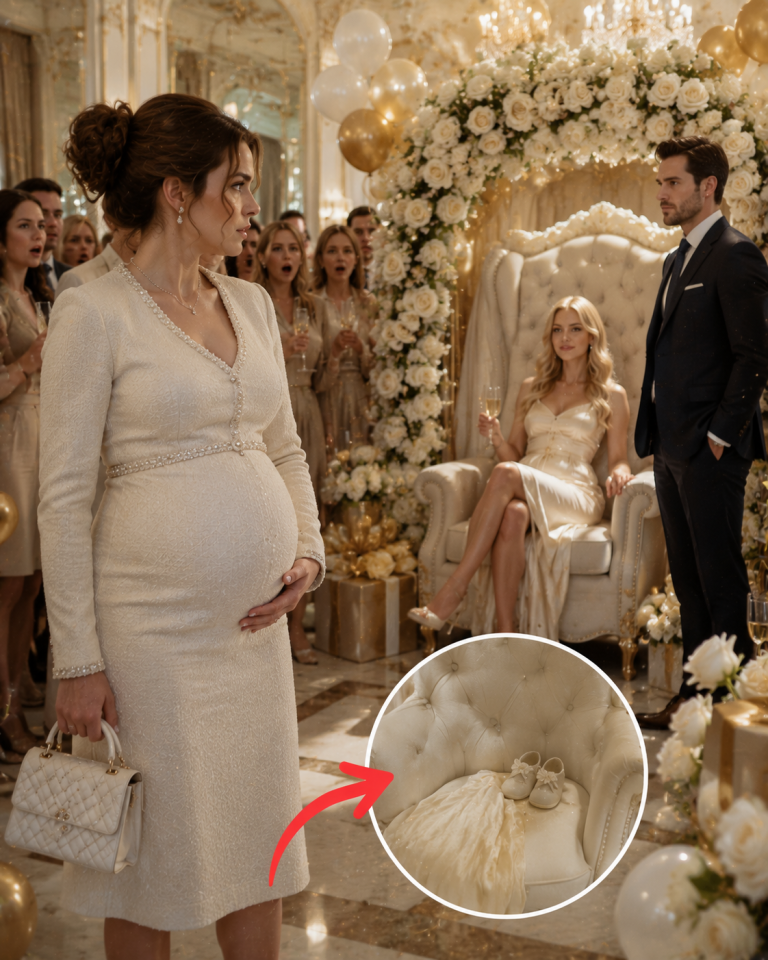
My Husband Flaunted His Mistress for Years — Then She Discovered the One Reason I Stayed Married


—
## PART 1
When Clara Whitmore walked into the charity hospital’s new pediatric wing with six-year-old Lily holding one hand and four-year-old Noah holding the other, the first thing she saw was her husband’s mistress standing beneath the donor wall, laughing at her name.
Vanessa Hail had one manicured finger pressed against the bronze letters that read *Whitmore Family Pediatric Recovery Center.* She wore a cream suit from a private invoice Clara recognized, and pearl earrings Clara had once left in a velvet drawer.
“You really brought the children?” Vanessa asked, loud enough for the volunteers at the registration table to hear. “Clara, that’s almost brave. Or desperate. I can never tell with you.”
Clara felt Lily’s fingers tighten around hers. Noah leaned closer against her coat, a paper airplane folded from a hospital program still in his pocket, looking up at Vanessa with the solemn confusion of a child who understood cruelty before he understood adultery.
Across the marble lobby, Bennett Whitmore turned from a group of board members — handsome in the polished, expensive way that made strangers trust him too quickly. For eight years he’d introduced Clara as his quiet wife. For the last five, he’d introduced Vanessa as his foundation strategist. Today, he didn’t introduce Clara at all.
“I told you this was a donor event,” he said, crossing the lobby, voice low but irritation public. “The children shouldn’t be here.”
Clara looked past him to the ribbon stretched across the new wing’s entrance. Cameras waited. A news crew adjusted its lights. “Their names are on the invitation,” she said.
Vanessa smiled like Clara had confirmed a private joke. “As decoration, sweetheart. The public loves a family image.”
Bennett’s jaw tightened. “Vanessa, enough.” But he didn’t step away from her. He didn’t tell her to remove Clara’s earrings. He looked down at Lily and Noah instead, with a rehearsed softness that made Clara feel colder than shouting would have. “Kids, go with Miss Parker. She has cupcakes in the green room.”
Lily hid behind Clara’s coat. Noah shook his head.
“They’re staying with me,” Clara said. That was the first moment Bennett’s smile cracked.
For years she’d been easy to manage because she’d let him believe she was easy to manage. She’d nodded through dinners while he checked his phone under the table. She’d slept in the guest room when late meetings left him too tired for conversation. She hadn’t divorced him at the first hotel receipt, or the photo of his hand on Vanessa’s knee, or the nights he stopped coming home before the children fell asleep. Everyone thought silence meant weakness. Clara had learned silence could also be storage.
Bennett leaned close enough for only her to hear. “Do not embarrass me today.”
Clara glanced at the donor wall again. Her children’s names were there in small letters beneath the family name. Hers wasn’t. Bennett had removed her first name from the final plaque proof six months earlier, calling it a branding decision. Clara had signed nothing. She’d said nothing.
Vanessa placed a hand on Bennett’s arm. “Maybe she came because she finally understands this is your world, not hers.”
Clara smiled then — small, almost tired, the kind of smile people mistook for surrender because they’d never seen a locked door from the inside.
“No,” she said. “I came because it’s time the children see what their father built.” Bennett looked relieved for half a second. “And what he stole to build it.”
The lobby quieted in a way no microphone could have created. A volunteer froze with name tags in her hand. Vanessa’s smile remained, but her eyes sharpened.
Bennett laughed once, too loud. “Clara’s emotional. She’s been under stress.”
“I have,” Clara said. “Almost five years is a long time to be patient.”
Vanessa tilted her head. “Almost five years? Is that what you call staying married to a man who stopped loving you? Patience?”
Clara looked at the woman wearing her earrings, who’d eaten breakfast in the apartment Bennett claimed was for out-of-town investors. She looked at the cameras, the board members, the ribbon, her children close against her side.
“No,” she said. “I call it evidence.”
—
## PART 2
Nearly five years earlier, Clara had found the first receipt in the pocket of Bennett’s charcoal coat. No lipstick on the collar, no note in red ink — just a bill from the Ellery Hotel, a suite on the 32nd floor, two breakfasts, one bottle of champagne, and a name Bennett had never mentioned: Vanessa Hail.
Lily was eighteen months old. Clara was seven weeks pregnant with Noah and too nauseous to stand for long. Bennett had come home after midnight, kissed her forehead without looking at her face, and said a client dinner had run late.
The woman Clara had been before motherhood might have thrown the coat down the stairs, woken him, called a lawyer. But motherhood had changed her instincts. Rage rose in her — but so did a colder question: *if I confront him tonight, what does he hide tomorrow?*
So she put the receipt in a folder labeled *household repairs.* She washed the coat. She made tea. By morning she understood something important: he lied easily because he assumed she’d never check.
Within a year, Clara knew the affair had begun before Noah was conceived, and that Bennett had been using Whitmore Foundation accounts to disguise personal expenses. She also knew something Bennett didn’t: the Whitmore name protected him less than he believed. His grandfather had founded Whitmore Medical Capital, but the modern fortune had been saved by Clara’s mother, Margaret Vale, who’d invested in Whitmore when Bennett’s father was weeks from losing the company — on one condition. The Vale Trust would hold controlling rights over several key assets, including the pediatric recovery program that later became Bennett’s favorite public charity.
*Men who inherit applause often mistake it for ability,* her mother had told her before the wedding, fastening a sapphire pendant around Clara’s neck. *Love him if you choose. Never confuse love with paperwork.*
Bennett knew there was family money on Clara’s side. He’d never bothered to understand the structure. He called it old money. Background. Nothing he needed to worry about.
That mistake became the foundation of her plan. She hired Elise Marlo, a family attorney with silver hair and a voice calm enough to make panic feel undignified, who’d worked with Margaret Vale for years.
“Does he know what you control?” Elise asked, reading the first folder.
“No.”
“Does he know what he’s exposed?”
“No.”
Elise closed the folder. “Then don’t educate him too early.”
That sentence became Clara’s discipline. While Bennett traveled with Vanessa, Clara studied trust documents after the children slept, attended foundation meetings under her maiden name through remote votes Bennett never noticed, and quietly blocked his attempts to redirect restricted funds into publicity campaigns that benefited him more than patients. When he complained she’d become dull, she nodded. Fragile women were underestimated. Fragile women weren’t searched for fingerprints on the machinery.
Then Bennett pushed the hospital for the wing that would carry his name — cameras, ribbon, a plaque donors could touch — and brought Vanessa into the planning meetings. Clara reviewed the proposal from her home office and approved the funding through the Vale Trust, with conditions: every expenditure audited, every donor representation certified, naming oversight retained until opening day.
Bennett signed without reading carefully.
Three weeks before the ribbon cutting, Vanessa forwarded the signed agreement to Clara by mistake, with a private note meant for Bennett at the top: *She still thinks she’s part of this. Be gentle until the launch. After that, she can cry wherever she wants.*
Clara printed it, slid it into a clear sleeve, and wrote the date in the corner.
—
## PART 3
By the third year of the affair, Vanessa had grown careless — the way people did when they mistook access for ownership. She called Bennett during family dinners. She sent Clara emails disguised as foundation notes, always with a sentence engineered to cut. Then, as Bennett rewarded her boldness, she drifted closer to the children.
One afternoon, Clara arrived early at Lily’s ballet recital and found Vanessa in the hallway holding white roses. “Bennett asked me to bring these. He’s running late.” When Lily brightened, Vanessa added, “They’re from your father *and me.*” Clara watched her daughter’s face change — quick, but she saw the hurt settle.
“They’re from her father,” Clara said, and took the bouquet, removing the card. Bennett had signed only his name; Vanessa’s handwriting filled the rest. It went into a folder too.
The next escalation came at a school benefit, where Vanessa bent toward Lily and said, “Your mommy is so lucky. Some women would be replaced completely.” Lily didn’t tell Clara until bedtime, whispered under a quilt, hair damp from the bath. “Mommy, can people replace mommies?”
Clara sat very still. There were moments when anger arrived too large for the body — she wanted to drive to Vanessa’s apartment, pound on Bennett’s office door, become the woman everyone expected after betrayal. Instead she brushed Lily’s hair back.
“No,” she said. “People can make bad choices. They can pretend. But no one can replace your mother.”
“Then why did she say it?”
*Because she is cruel. Because your father lets her be.* “Because she doesn’t understand what families really are,” Clara said.
After Lily slept, Clara called Elise. “She spoke to my daughter.”
Elise was quiet for one breath. “Then we move on two tracks at once.”
That week, Clara did not wait for a stage to protect her daughter. She told the school in writing that Vanessa Hail was not authorized to have unsupervised contact with either child, and asked the front office to log any attempt. She started Lily with a child therapist Elise’s firm had used before, someone practiced at helping children name feelings without being asked to referee adult conflict. She had Elise draft a protective letter putting Bennett on formal notice that further contact between Vanessa and the children would be raised with the court immediately, not eventually. None of it stopped the marriage — that piece of the plan still needed the audit, the donor records, the documented pattern. But Lily’s safety was never made to wait on Clara’s timeline the way the divorce was. They moved on two tracks: one protecting the children now, one building toward a room large enough to hold Bennett accountable for the rest.
They didn’t file for divorce immediately — filing too early would have let Bennett frame the whole matter as a private marital dispute and drag it out for years while the children absorbed the fallout. Clara needed the foundation audit completed, the donor misallocation traced to Bennett’s approvals, Vanessa’s role documented beyond gossip. Most of all, she needed Bennett to choose a public stage himself. Men like him trusted stages. They believed applause could drown out documents.
The pediatric wing gave her that stage.
—
Opening day began with Lily refusing the designer dress Bennett’s assistant had sent — *”it scratches”* — and choosing a green cardigan instead. Noah picked yellow because, he explained seriously, “it makes hospitals less scary.” Clara wore navy and her mother’s sapphire pendant, tucked beneath her collar.
“Will Miss Vanessa be there?” Lily asked in the car.
“Yes.”
“Do we have to be nice to her?”
“You have to be polite,” Clara said. “You don’t have to make yourself small.”
At the entrance, Bennett’s name appeared on the printed program beside the words *visionary donor.* Clara’s appeared nowhere except in the legal documents locked in Elise’s briefcase. Bennett met them with a smile meant for lenses, kissing Lily’s hair, brushing Clara’s cheek with lips that felt like cold paper.
“Where’s the blue dress?”
“I didn’t like it,” Lily said.
“Next time, ask your mother to help you make better choices.” Clara felt Lily flinch and squeezed her hand.
Vanessa appeared then, radiant in the cream suit, Clara’s earrings, a diamond bracelet Bennett had claimed was a donor raffle prize. “I was worried you might not come,” she told Clara.
“Why?”
“Some women avoid rooms where they’re no longer relevant.”
A photographer lifted his camera. Bennett shot Clara a warning look, as if her reaction would be the problem.
“Those are pretty,” Lily said softly, looking at the earrings.
“Thank you,” Vanessa said. “Your father has beautiful taste.”
“Mommy has earrings like that,” Noah said, puzzled.
“Lots of women have pearls,” Vanessa laughed.
“Do you want to explain?” Clara asked Bennett.
“Not here.”
“Of course. Public truth has always made you uncomfortable.”
The hospital president approached with a donor liaison. “We’re ready for the preliminary photographs. We’d love the family near the ribbon.” Vanessa stepped forward automatically.
“Mrs. Whitmore and the children, please,” the liaison said.
Bennett’s hand found the small of Vanessa’s back. “She should be included. She was instrumental.” When the liaison hesitated, his voice cooled. “She’s part of the family story.”
The words hit the lobby harder than a slap, delivered so softly. Clara felt Lily’s hand tremble.
She knelt to their eye level. “Go stand near Miss Parker. I can see you.” Lily shook her head. “I know,” Clara said. “But this next part is for adults.” The children moved reluctantly away.
Vanessa slid closer to Bennett. “Maybe Clara can stand at the side. She’s always been better in the background.” The cameras caught it. Clara saw the red recording light on the news camera, and saw Elise Marlo crossing the lobby with two associates carrying document cases — not to open them here, but to be ready the moment the room changed.
For nearly five years, Clara had waited for a room large enough to hold the consequences. This lobby was only the doorway to it.
—
Bennett noticed Elise before Vanessa did. His expression shifted from irritation to calculation. “Clara. Why is Elise here?”
“Because you invited the press,” Clara said. “That’s not an answer.” “It’s the reason.”
Elise crossed the lobby without hurry. “Dr. Ellison, I believe your office received the revised donor authority packet this morning.”
“Yes,” the hospital president said. “Our legal department is reviewing it.”
“Revised donor authority?” Bennett laughed. “What is this?”
“Confirmation that the Vale Trust retains controlling oversight of the restricted funds used for this wing — naming, donor representation, final compliance approval.”
“This is absurd,” Vanessa said. “Bennett is the lead donor.”
“Mr. Whitmore is the public representative of one donor entity,” Elise said. “He is not the controlling authority.”
“The Whitmore Foundation funded this project,” Bennett said, flushing.
“The Whitmore Foundation funded the press launch and the donor reception,” Elise said. “Every dollar of actual construction capital was restricted funding released through the Vale Trust, under conditions you signed eighteen months ago.” The lobby had gone still enough for the camera lights to hum audibly.
“Clara is what — a messenger?” Vanessa asked.
“Clara Vale Whitmore is the primary beneficiary and acting trustee of the entity that paid for this building.”
For a moment, nobody spoke. “That’s not possible,” Bennett said.
“It’s very possible. You just never asked.”
“You never told me.”
“You told me I didn’t understand money.”
Vanessa’s eyes moved from Bennett to Clara to the donor wall — the first crack in her confidence. Not fear yet. Offense. She’d built her triumph around Clara being merely the discarded wife.
“This is a misunderstanding,” Bennett recovered, cold. “My wife’s family had some legacy involvement. That doesn’t change the fact that I built this partnership.”
“The partnership is currently under compliance review,” Elise said.
Dr. Ellison had already seen enough. He glanced toward the news camera, toward the two children standing with Miss Parker at the edge of the lobby, and made the call before anyone could ask him to.
“This does not belong in a lobby with a press pool and patient families walking through,” he said, and signaled to the event coordinator. “Postpone the ribbon cutting. Tell the press the launch is delayed for a routine governance matter — nothing further until legal has reviewed it. Everyone with a stake in this partnership, into the east conference room. Now.”
The cameras kept rolling on an empty ribbon and a closing door. Whatever ran on the evening news would run on that one bland sentence, not on the specifics of anyone’s marriage.
—
The east conference room held a long table and considerably fewer witnesses — Dr. Ellison, two board members, Elise and her associates, Bennett, Vanessa, Clara. No cameras. No patients. No children.
“This is not for the lobby,” Elise said, opening the first folder only once the door was closed, “but the board is entitled to see it before another dollar moves through this partnership.” A ledger appeared on the table: restricted pediatric funds, vendor reimbursements routed through a shell company, three payments to Hail Strategic Communications — Vanessa’s company — for services never approved by the board.
“That’s confidential,” Vanessa managed.
“It’s audited,” Elise said. “And this is a closed compliance session, which is exactly why it’s happening here and not in front of a camera.”
“Is this accurate?” Dr. Ellison asked, quiet.
“Of course not. This is taken out of context.” Denial was always Bennett’s first room. Rage came second. Victimhood came later, once the doors began locking.
The next document: emails between Bennett and Vanessa discussing how to present her consulting role to donors. In one, Vanessa wrote that boards loved women with soft voices and sad-looking children, so long as they stayed in the background. Bennett had replied: *Clara will stay where I put her.*
One of the board members inhaled sharply. Vanessa’s face went white beneath her makeup. Bennett looked at Clara with raw hatred. “You hacked my private account.”
“No,” Clara said.
“You used the foundation server,” Elise said, “and copied Miss Hail on restricted donor correspondence, which triggered internal review rights under the agreement you signed.”
Clara watched Vanessa’s hand drift toward the pearl earrings — unconscious, someone touching borrowed armor after realizing it was glass. “You should remove those,” Clara said.
“Excuse me?”
“The earrings. They belong to my mother. Bennett took them from my personal safe last winter and charged the replacement appraisal to the foundation, under donor hospitality.” A security still followed: Bennett entering Clara’s dressing room while she was at Noah’s therapy appointment. Then the appraisal invoice. Then a photo Vanessa had posted three days later, wearing the earrings.
“You said they were purchased for me,” Vanessa whispered. Bennett didn’t answer. The silence told her more than any confession.
Clara felt no satisfaction from Vanessa’s shock — too small, too late, too concerned with Vanessa’s own embarrassment. But it shifted the room. Until that moment, Vanessa had played the confident mistress. Now she’d become evidence of a pattern.
Bennett stood so fast his chair scraped the floor. “I want this room cleared and my own communications team in here before another word of this goes anywhere.”
“There is nowhere for it to go,” Marisol Dayne said from the door — the private security director Clara had approved through the trust that morning. “The press received one sentence about a governance delay. This session is confidential unless the board votes to make it otherwise.”
“I am Bennett Whitmore.”
“I know who you are, sir.” The word *sir* sounded like procedure, not respect.
—
Vanessa didn’t break all at once. First denial — the payments were legitimate. Then vanity — donors liked her modern approach. Then self-preservation. “Bennett handled the invoices,” she said.
He turned so sharply Clara nearly heard his neck crack. “Vanessa.”
“You did. Don’t be stupid.” The insult stripped the last romance from her face. For years she’d believed she’d been chosen because she was more exciting than Clara. Now she understood: he’d chosen her because she was useful.
Elise held out a document. “Miss Hail, you have the right to counsel before answering further questions. The hospital has requested immediate return of materials, credentials, and donor records in your possession.”
“I didn’t steal donor records.”
“You forwarded restricted guest lists to a private planner for Bennett’s birthday dinner.”
“He told me to.”
“You did it.”
Bennett lunged for victimhood. “This is what Clara does. She waits, gathers, twists. Do you think a normal wife documents her marriage for years?”
“A normal wife doesn’t need to,” Clara said. “I did.”
“And you brought them into this today,” he said — his best weapon, and he knew it, even with the children safely out of the room.
“I brought them because your office listed them on the press schedule.” Elise slid a page to Dr. Ellison: the media plan from Bennett’s office, wardrobe instructions, positioning notes — *Lily on your left, Noah in front, Vanessa beside you, Clara at the outer edge.*
Vanessa looked at Bennett with something like disgust — not moral awakening. She’d discovered she’d been placed too.
“My children will not be photographed as part of that image, today or at any future event tied to this wing,” Clara told Dr. Ellison, who nodded once, unambiguous.
“Bennett,” Clara said. “Elise filed a custody petition on my behalf earlier this week. Temporary orders request the children remain in their current home, school, and medical routines. Your visitation will be structured until the court reviews your use of them in media planning and their exposure to Miss Hail.”
“You cannot do that.”
“It’s already done.”
“No judge is going to take my children because you’re jealous.”
“The petition doesn’t rely on jealousy,” Elise said. “It relies on records.”
Bennett looked around the table, searching for allies — board members protecting themselves, a hospital president stunned by liability, a security director who answered to the trust and not to him. For the first time since Clara had known him, no room was willing to become his mirror.
—
The ribbon cutting didn’t happen at noon. The hospital moved donors into a conference room while legal counsel reviewed emergency governance procedures. Clara sat with the children in the family lounge, Lily coloring a flower purple.
“Mommy, are you divorcing Daddy?”
She had promised herself never to lie to her children to make adults comfortable. “Yes. I am.”
“Will Daddy live at our house?”
“No.”
“Will we still see him?”
“Yes. If it’s safe and healthy, a judge will help make the rules.”
“Miss Vanessa said you were pathetic,” Lily said, pressing hard with the crayon.
“Miss Vanessa was wrong.” Clara took her hand. “Why did you wait?” Lily asked — the question strangers would ask online, relatives at dinners, the question Clara had asked herself in darker hours.
“Because leaving isn’t always one step,” she said. “Sometimes a mother has to build a safe place first, so no one can take important things away by lying.”
“So you were building?”
“Yes.”
Noah looked up. “Like blocks? And Daddy knocked them?”
“Daddy made choices that hurt people,” Clara said, and he leaned into her side.
Elise stepped in from a call. “The foundation board is convening emergency session. Bennett’s suspended pending review. The wing will open under revised donor representation — not today.” She paused. “Vanessa’s counsel has contacted my office. She wants to provide documents. A recording where Bennett discussed transferring consulting blame to her if the audit escalated.”
“Do we need her?” Clara asked.
“Legally, she strengthens several points. Morally, that’s your call.”
Through the glass, Vanessa sat alone on a bench, the cream suit no longer luminous, the pearl earrings sealed in an evidence bag beside her.
“She doesn’t get redemption because Bennett hurt her too,” Clara said.
“Agreed. But if she has evidence, we use it.”
Outside the lounge, Bennett appeared, stopped twenty feet from the children by security. “Clara. We need to talk like adults.”
She stepped into the hallway, closing the door behind her. “Now you want adults.”
“Let me see them.”
“Not while you’re like this.”
“Like what? Their father?”
“Like a man who tried to use them as props two hours ago.” His mouth twisted. “You had my son after you knew,” he said — the accusation Vanessa had sharpened, thrown now with heavier force.
Clara felt the hallway narrow. She’d learned of the affair while pregnant, made every decision after under pressure no one else could measure. He wanted to turn Noah’s existence into proof of her weakness.
“Do not use my child to excuse your betrayal,” she said.
“*Our* child.”
“Then act like his father instead of using him as a weapon.”
“You planned this whole thing?”
“Yes.” The admission struck harder than denial would have. She stepped closer — not enough to threaten, enough that he had to hear every word. “I planned the accounts you couldn’t drain. The custody record you couldn’t rewrite. The audit you couldn’t bury. I planned a home where Lily and Noah would wake up safe after you finally lost the right to perform fatherhood for cameras.”
Bennett stared at her.
“And I plan to leave you,” she said, “now that leaving no longer means losing what matters.”
—
By evening the story had spread past the hospital. By midnight, a clipped video of Vanessa saying Clara *belonged in the background* had traveled farther than any press release Bennett ever paid for. Clara didn’t read the comments. She fed the children tomato soup and let them sleep in her bed, both of them too quiet after bath time.
At one in the morning she found Bennett in the foyer, an overnight bag in hand, staring at the family photographs on the wall.
“You should leave,” she said.
“I wanted to see the kids.”
“They’re asleep. You’ll change the locks tomorrow.” He laughed bitterly. “Efficient.” “Necessary.”
“Was any of it real?” he asked.
She almost smiled at the arrogance of the question — after years of lying, he still felt qualified to question reality. “My love was real. My patience was real. The children are real. Your choices were real too.”
“I made mistakes.”
“No. You made a system. A mistake is one lie. You built calendars around yours. Staffed them. Photographed them. You let Vanessa speak to our daughter.”
He looked away. There had been a time she wanted him to feel shame because she believed shame could become change. Now she understood: shame in men like Bennett usually became strategy. He wasn’t sorry enough to heal. He was sorry enough to bargain.
“I can fix the foundation issue,” he said.
“You’re suspended. You’ll likely resign.”
“You always thought you were better than me.”
“No,” she said. “I thought you were better than this.” That silenced him.
“What do you want?” he finally asked, and the fight seemed to drain out of him too easily to trust. Once she’d have answered with love, then truth, then apology. Now wanting had become simpler and harder.
“A clean divorce. Stable custody. Full restitution to the foundation. Return of my mother’s property. No public statements about my parenting. No contact between Vanessa and the children. Elise will have the petition and the settlement terms with your attorney by the end of next week.”
“You came prepared.”
“Almost five years,” she said. He didn’t answer. He picked up his overnight bag and walked out into the night. Clara locked the door behind him and let herself shake for one private minute — not regret. Just the body demanding payment after the mind had finished the plan.
—
The petition arrived at Bennett’s attorney’s office the following Thursday, exactly as Elise had promised — no servers at the door, no theater, just a courier and a signature. Bennett contested nothing about the timeline. He’d had a week to understand there was no version of a fight that didn’t require reading things he’d never bothered to read the first time.
The following months weren’t glamorous. Bennett’s lawyers sent letters accusing her of alienation and instability; Elise answered with documents precise enough that the threats grew shorter. Bennett sent flowers about missed Sunday pancakes; Clara photographed the card and threw the flowers away before Lily saw them. He appeared at school events he’d ignored for years, told Lily her mother was confused; Lily told her therapist, and the visitation supervisor changed the next week.
Clara didn’t celebrate these small corrections. She documented them.
Vanessa cooperated with investigators, returned the earrings and several donor lists, and gave a statement admitting she’d mocked Clara and spoken inappropriately to Lily. *I believed Mrs. Whitmore was weak because Mr. Whitmore described her that way for years,* she wrote. Not an apology — evidence of how contempt travels. Bennett hadn’t only betrayed her privately. He’d authored a version of her for others to mistreat, and that realization hurt more than the affair itself.
The audit concluded in late summer. Bennett repaid the misused funds and resigned every leadership role connected to the pediatric program. The wing opened under a new name: the Vale Children’s Recovery Center. Not Clara’s name. Her mother’s. Beneath the donor wall, in small letters, a line Clara had written herself: *for children who deserve healing without becoming anyone’s performance.*
Vanessa appeared near the exit after the ceremony — gray dress, no pearls, no borrowed shine. “I’m leaving the city,” she said.
Clara said nothing.
“I know that doesn’t matter to you.”
“It matters if you stay away from my children.”
Vanessa nodded, eyes tired. “I thought you were weak. I thought if you really had power, you’d have used it sooner.”
“That’s because you thought power was the same as punishment,” Clara said. “It’s not. Sometimes power is waiting until the innocent people are protected.”
“Bennett told me you stayed because you had nowhere to go.”
“Bennett told everyone stories that made him feel taller. And you let him.”
“I let him create evidence,” Clara said. Vanessa absorbed that, a bitter smile touching her mouth and gone.
“I’m sorry for what I said to Lily.”
“You should be.”
“I am.”
“Then carry it properly.” Vanessa’s eyes filled, but she didn’t ask for forgiveness. It was the first decent thing Clara had seen her do.
—
The divorce finalized on a rainy Thursday in November. The settlement wasn’t merciful, but it was clean — the house held in trust until the children finished school, structured visitation tied to family therapy, full restitution, Bennett’s resignation from every affiliated board. Vanessa’s company dissolved under regulatory review; she avoided criminal charges by cooperating, and was barred from donor management work for years.
In court, Bennett tried one final performance. “Your honor, I only want it noted that I love my children and hope their mother someday stops punishing me.”
The judge looked at him over her glasses. “Mr. Whitmore, the court has reviewed extensive evidence that your children were exposed to adult conflict, media staging, and inappropriate third-party contact. Compliance with these orders is not punishment. It’s parenting under supervision, because your judgment required supervision.”
Bennett sat down. Afterward, near the elevator, he asked, “Was this worth it?”
Clara looked at the man she’d married, the father of her children, the architect of nearly five years of quiet harm. Smaller now. Not harmless. “Yes.”
“You destroyed me.”
“No. I stopped protecting you from what you built.”
“You think the kids will thank you?”
“I think they’ll grow up knowing their mother didn’t teach them to confuse silence with consent.”
The elevator closed between them.
—
That evening, Clara took Lily and Noah to her mother’s old lake house — smaller than the Whitmore residence, older, creaking. She’d kept it through the trust but rarely visited; grief had made every room too loud. Now she opened the windows and let the children run inside. Lily found a box of Margaret’s gardening gloves. Noah found a cabinet of board games missing half their pieces.
Over pasta from mismatched bowls, rain tapping the glass, Lily asked, “Was Grandma Margaret brave?”
“Yes,” Clara said. “Very.”
“Like you?”
Her throat tightened. “I’m learning.”
Lily considered that. “I think waiting can be brave if you’re building.” Noah nodded solemnly. “Like blocks.”
Clara laughed — a real laugh, surprising herself, filling the old kitchen.
Later, after the children slept under quilts that smelled of cedar, she stood on the porch with tea, the lake dark, the rain softening the trees. Her phone filled with messages from people who’d ignored her for years and now wanted to call her strong. She turned it off.
Strength, she’d learned, wasn’t a headline, or a perfect line delivered in a lobby, or even winning in court. It was packing lunches while gathering evidence. It was telling a child the truth without poisoning them. It was refusing to burn down a hospital wing just because a faithless man had used it as a stage.
She touched the sapphire at her throat. For nearly five years, Bennett had believed she stayed because she had no plan. The world had seen a quiet wife standing in the background and assumed nothing was happening there.
She had never been in the background. She had been at the foundation.
**THE END.**