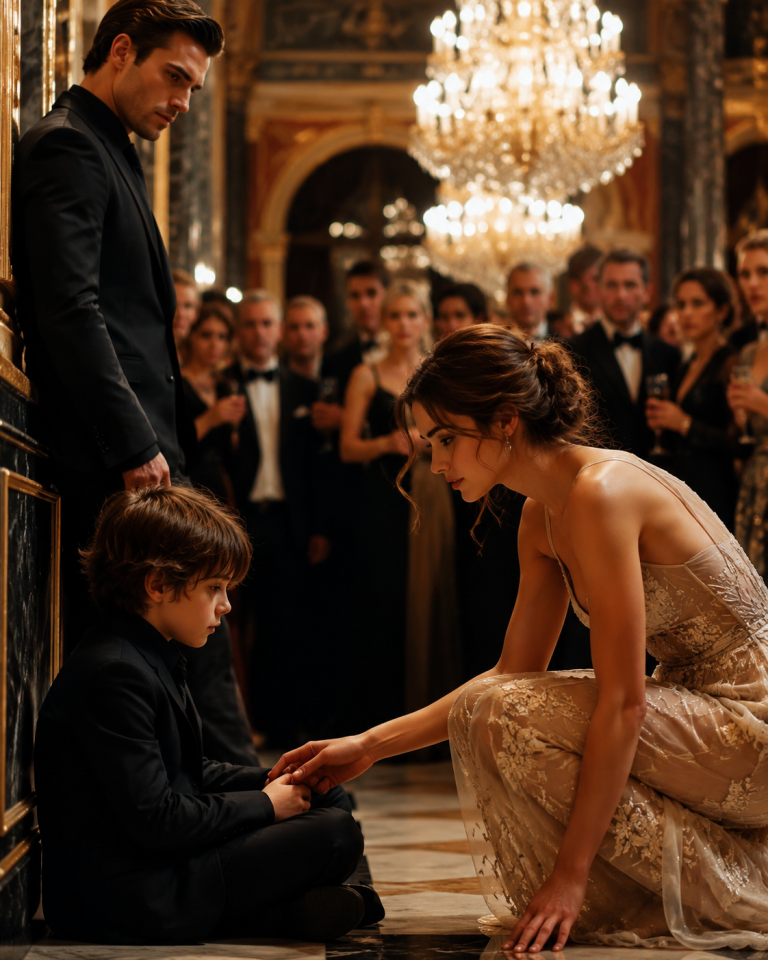
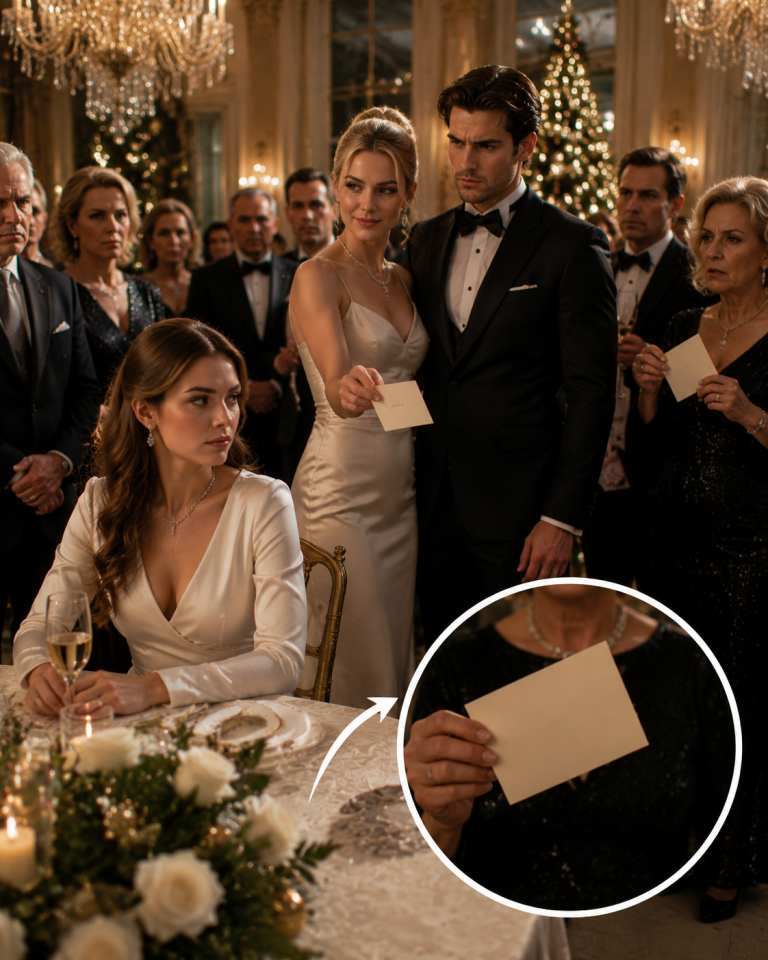
My husband’s mistress invited me to dinner so I could “hand over the family peacefully” — she had no idea my mother had already written the ending.

## PART 1: THE TABLE THEY SET FOR MY DISAPPEARANCE
Camille Reyes chose The Cypress Room on Royal Street because she knew exactly what she was doing.
It was the restaurant where my mother used to take me on rainy Sunday afternoons in New Orleans, back when the whole city smelled like river water and chicory coffee, and every problem could be fixed with beignets and an hour of her undivided attention. My mother always requested the corner table beneath the framed photograph of the old French Market. She said it was the quietest place in the city to forgive someone.
Camille requested that table.
Not the private room upstairs where wealthy families usually hid their ugly business behind velvet curtains and chilled wine buckets. My mother’s table.
When the hostess led me through the dining room, I recognized the back of my husband’s head before I saw his face. Preston Ashgrove sat with his shoulders squared, dark suit pressed, wedding hand bare against the linen. His mother, Judith, sat beside him in pearls older than my grief. His sister, Priscilla, sipped white wine with the bored elegance of a woman who had never paid her own electric bill.
And Camille sat at the center of them all — twenty-eight, polished like a knife, dark hair swept behind one ear, a cream silk dress that looked bridal without being honest enough to admit it. Around her neck, on a thin gold chain, hung Preston’s wedding ring.
My wedding ring’s companion.
The sight of it didn’t make me gasp. I’d already done all my falling apart in places none of them could watch.
I stopped beside the empty chair they’d left for me.
“Odette,” Camille said softly, like we were old friends meeting after church. “Thank you for coming.”
Preston looked up, and for one foolish second I searched his face for shame. There was none — only discomfort, the kind rich men call regret when they don’t intend to change anything.
His mother’s eyes moved over my black dress and the small silver locket at my throat. My mother’s locket. I’d worn it because that morning, before coming here, I’d stood in her empty house on Prytania Street and opened the last envelope she left me.
Judith noticed. “How sentimental,” she said. “Your mother did love making ordinary things feel grand.”
The first cut of the evening. Small. Precise. Practiced.
I sat down. A waiter filled my water glass; the ice clicked like tiny bones. On the table beside my plate sat a thick cream envelope, my name printed in clean black letters: *ODETTE MERCIER ASHGROVE.* Not Mrs. Ashgrove. Not Odette. They’d chosen the name they intended to return me to.
Camille placed one hand over her stomach. Not dramatically. Just enough.
“There are some things we should discuss as adults,” Judith said.
I folded my hands in my lap. Preston cleared his throat. “Odette, we wanted this to be civil.”
*Civil.* People use that word when they’ve already set the house on fire and would like you not to complain about the smoke.
Camille tilted her head with a sympathetic expression she’d clearly practiced in a mirror. “I know tonight is painful. But the longer everyone pretends, the harder it becomes. Preston and I are building something real. A family.”
The word passed around the table like a private joke. For eleven years I’d hosted their Christmas dinners, remembered their birthdays, sat beside Judith through her husband’s final illness, helped Priscilla’s son get into rehab, signed every thank-you note Preston forgot to write. I’d been the steady pair of hands behind every polished Ashgrove photograph. But I hadn’t given them a child. That was all they’d ever needed to decide I was temporary.
Priscilla leaned forward, her bracelet flashing under the chandelier. “No one wants a scandal. Especially not now.”
*Now.* Because Camille was pregnant. Because Preston’s family believed a baby would finally secure the Ashgrove name for another generation. Because they’d mistaken a heartbeat for a claim.
I looked at the envelope. “What is this?”
“Settlement papers,” Preston said.
“And a confidentiality agreement,” Judith added. “For everyone’s protection.”
“And a transition plan,” Camille said, softer now, crueler. “For the house, the foundation, the family accounts. Preston said you handle many of those details, and we thought it would be kindest if you could hand everything over peacefully.”
The waiter arrived with appetizers no one had ordered for me. My mother had hated oysters. Camille picked one up, elegant and fearless. “I don’t want us to be enemies,” she said. “But the kindest thing you can do now is disappear before this becomes humiliating.”
I looked at my husband. His eyes dropped to the table.
There it was. Not betrayal — that had happened months, maybe years, ago. This was permission. He’d given them permission to speak to me this way. To bring me to my mother’s favorite restaurant. To seat me beneath her photograph of the market. To place surrender beside my plate before the appetizers arrived.
I did not cry. I did not reach for the papers. I did not ask him why.
Instead, I reached into my purse and touched the second envelope inside — the one my attorney had handed me that morning, the one my mother had sealed before she died.
And while Camille watched me with that pretty, triumphant smile, I understood something that made my whole body go still.
They thought they’d invited me to my ending. They had no idea I’d come carrying theirs.
—
## PART 2: A RING ON A CHAIN AND A KNIFE IN THE SMILE
The dinner began the way executions probably did in old families: politely.
Judith ordered wine, told the waiter to bring an extra glass for Camille, then laughed and corrected herself. “Sparkling water for you, darling.” *Darling.* In eleven years, the warmest word Judith Ashgrove had ever given me was “Odette,” and even that usually sounded like a reminder I’d been permitted indoors.
Priscilla pushed the envelope closer. “You should read it before the main course. It’s generous.”
“Is it?” I asked.
“You came into this marriage with a teacher’s salary and a used Corolla.”
“My mother bought me that car.”
“And Preston gave you a life.”
“Did he?” I said, and Preston looked up, anger flashing — not guilt, but the fact that I’d spoken out of character. Quiet wives are expected to stay quiet all the way through the burial.
I could have told them the real history — the year his father had a stroke and I slept in hospital chairs so Judith could go home and preserve her complexion; the foundation I’d rebuilt from a folding table in our kitchen; the three miscarriages, the first at ten weeks when Preston cried with me, the second at fourteen when he stopped meeting my eyes, the third so early the doctor called it “chemical,” as if grief became smaller when medicine gave it a tidy name. I could have told them about Judith standing in my bedroom doorway afterward with a casserole dish, saying, “Some women simply aren’t built for legacy.”
I didn’t. They already knew what they’d done. Cruel people don’t need explanations. They need audiences.
Camille began a soft, rehearsed speech about loneliness and falling in love despite herself, and Judith sighed as if it explained years of adultery, and Priscilla said, “We all saw it — you made everything so heavy,” and I thought of my mother’s death, three lost pregnancies, and years of keeping this family from collapsing under debt disguised as tradition, all of it apparently a stain on their furniture.
The waiter returned to check on us. “Perfectly,” Judith told him.
Camille opened the envelope herself and arranged the papers — divorce settlement, nondisclosure agreement, resignation from the foundation board, release of claims to the Coliseum Street house — and at the bottom, clipped with a gold paperclip, a handwritten note in looping script: *Odette, let this be graceful.*
I looked at the ring on her throat. “Does it feel heavy?”
“I didn’t wear it to hurt you,” she said. “I wore it because Preston wanted me to know he’d chosen.”
Silence. In it, I heard my mother’s voice: *Baby, never argue with someone holding a match. Just let them show everybody they came to burn something down.*
I glanced at my purse, where a thicker packet of papers sat like a pulse. That morning, my attorney, Desmond Ferris, had met me at my mother’s little shotgun house on Prytania. He’d stood in her kitchen among yellow curtains and chipped mugs and told me he was sorry for my loss, in the careful voice lawyers use when they know grief is about to become evidence. Then he’d handed me the envelope she’d left, my name in her familiar hand across the front: *Open this when they ask you to give away what was never theirs.*
At the time, I thought grief had made me misread it. Then I opened it, and my whole life split open, quietly.
“Reality,” I told them now, “is exactly why I came.”
—
## PART 3: THE PEN THAT WROTE THE TRUTH BACK IN
My mother, Colette Mercier, had been a bookbinder, which meant she believed every secret was either misplaced or waiting between the wrong pages.
She raised me in a house that smelled of leather glue, old paper, and the ferns on her porch. She never had much money, but she made small things feel sacred — beignets on chipped plates, library sales wrapped in brown paper during storms. When I married Preston, she smiled in every photograph. Later, when everyone else called me lucky, she only squeezed my hand. “Old houses have old ghosts,” she’d whispered the night before my wedding. “Don’t let them convince you the haunting is your fault.”
I thought she was being poetic. She’d been warning me.
Desmond had explained it in her kitchen that morning while rain blurred the windows. My mother had been adopted as an infant in 1958. I knew that part — she’d told me when I was young, always with gratitude for the Merciers who raised her. But three years before she died, a routine genealogy test taken at a church fundraiser turned up a name: her birth mother had been Eleanor Ashgrove Delacroix — a name I’d heard my entire married life, spoken in reverent tones at family events. The wild daughter in the Ashgrove portraits, the one who’d disappeared from New Orleans society after a scandal no one described directly, said to have run off with a musician and died out west without children.
The family version was a lie. Eleanor had been seventeen when she gave birth to my mother at a home for unwed girls outside Baton Rouge. Her father had removed the baby, sealed the records, and written Eleanor out of every public family narrative. But before she died, Eleanor had done one more thing — she’d taken up her own grandmother’s fountain pen, the one that had signed the original Ashgrove-Delacroix Trust two generations earlier, and used it to sign a codicil naming her biological line as the trust’s rightful controlling heirs, should that line ever be concealed or defrauded.
Desmond placed a copy of it in front of me that morning, along with a small cedar box. Inside, wrapped in a handkerchief, sat the pen itself — black lacquer, a gold clip, the initials *A.D.* etched faintly into the barrel. Eleanor’s grandmother, Adeline Delacroix Ashgrove, had used it to found the trust; Eleanor had used it, decades later, to try to undo what her family had done to her and to the baby they’d erased.
“The clause is simple enough to be brutal,” Desmond had said. “Administrative control of the primary family assets passes to the eldest living direct descendant of Adeline Delacroix Ashgrove through the biological line. If that line is concealed or defrauded, any trustee benefiting from the concealment can be removed.”
I’d laughed, not because it was funny, but because my mind refused to hold the shape of it. “So my mother was—”
“The rightful heir through Eleanor,” Desmond said. “And now, you are.”
At the restaurant, that pen sat inside my purse in its cedar box, beside my mother’s letter.
Judith tapped a fingernail against her wine glass. “Odette, you’re being very quiet.”
“I’m listening,” I said.
“To what?” Priscilla asked.
“To all of you.”
Preston leaned in, voice low. “This attitude doesn’t help you.”
I looked at him — the tiny scar near his eyebrow from a boating accident at fifteen, the way he used to burn grilled cheese in our first apartment and serve it anyway by candlelight. Somewhere along the way he’d stopped being that man, or maybe he’d simply stopped needing to pretend.
“You brought me here,” I said, “to make me sign away my life in front of your mistress.”
He flinched at the word. Camille did not. “Mistress is outdated,” she said.
“So is shame,” I replied. “Apparently.”
The waiter arrived with entrées — seared fish, filet, roasted chicken, pasta for Camille. Nothing for me. “Ma’am, I’m sorry, I wasn’t given—” the waiter started.
“That’s all right,” I said. “I’m not hungry.”
Camille’s eyes flickered with satisfaction. Small cruelties reveal planning far more than big betrayals do — big ones can be excused as passion or confusion. This one had been imagined in advance. They’d pictured me hungry while they ate, wanted me to feel like the extra chair.
“Sign tonight,” Preston said, “and this doesn’t get uglier.”
I reached into my purse. Everyone watched my hand. I pulled out my mother’s envelope — pale blue, not cream, the color of the stationery she bought in bulk because she liked pretty things even when money was tight. *Odette baby*, in her handwriting across the front.
I opened it, removed the legal packet behind the letter, and placed it beside their settlement papers.
The table went still.
“What is that?” Judith asked, eyes narrowing.
“The family history,” I said.
Preston laughed first, short and nervous, looking to his mother to laugh with him. She did not. Because Judith Ashgrove knew something — I saw the flicker beneath her pearls, a shadow behind her eyes. Not surprise. Recognition. My mother had been right. Old houses have old ghosts.
“Whatever you think you have,” Judith said, “this is neither the time nor the place.”
“You chose the time,” I said. “Camille chose the place.”
“I don’t understand what’s happening,” Camille said.
“No,” I said. “You don’t.”
Priscilla reached for the packet. I put my hand on top of it. “Don’t.” She froze — the first time all evening anyone had obeyed me.
“You can’t intimidate us with paperwork your mother left behind,” Preston said.
“My mother’s name was Colette Mercier,” I said. “Before that, it was Baby Girl Delacroix.”
Judith’s face lost color. “Mother?” Priscilla whispered.
I kept my voice calm enough to frighten even me. “She was born outside Baton Rouge in 1958, to Eleanor Ashgrove Delacroix. Eleanor was Adeline Delacroix Ashgrove’s granddaughter. Her child was removed, hidden through private adoption, and erased from the family record.”
“Graham—Preston?” Camille looked between us.
“This is insane,” he said.
But Judith hadn’t moved. I turned the first page and slid it into the center of the table. “Birth record. Adoption order. DNA report. Court-certified copies.”
“You had me investigated?” Preston’s face flushed dark red.
“No,” I said. “My mother investigated herself.”
I opened the cedar box next and set it beside the papers. The pen caught the candlelight, its scratched barrel gleaming. “This belonged to Adeline Delacroix Ashgrove. She used it to found the Ashgrove-Delacroix Trust. Her granddaughter Eleanor used it to sign the codicil that makes the trust follow the biological line — not the last name.”
“What does any of this have to do with dinner?” Camille asked.
Everything, I thought. “The trust doesn’t follow whoever calls themselves an Ashgrove,” I said aloud. “It follows Adeline’s blood. My mother was that line. Now I am.”
The words settled over the table like ash. For one perfect second, no one spoke. Then Preston stood so abruptly his chair struck the floor.
“That trust belongs to my family.”
“Legally, it belongs to its beneficiaries,” I said. “Administratively, it belongs to the rightful controlling heir.”
“You’re my wife.”
“Only until the court finalizes what you started.”
Judith slammed her palm lightly against the table. “This is nonsense. My husband managed that trust for thirty years.”
“Yes,” I said. “After his father failed to disclose Eleanor’s child existed.”
“That child was adopted out.”
“That child was hidden.”
“She had no place here.”
There it was. Not denial. Entitlement. The mask had finally slipped, and underneath was exactly what my mother had known all along.
“According to the order signed this morning,” I said, “the court disagrees.”
That was when Desmond Ferris walked into The Cypress Room, unhurried, holding a leather folio, followed by a silver-haired woman in her fifties with the calm expression of someone who had ruined richer men before breakfast.
“Mr. Ferris,” I said, lifting a hand slightly.
“Who the hell are you?” Preston demanded.
“Desmond Ferris. Counsel for Mrs. Ashgrove in matters concerning the Ashgrove-Delacroix Trust and related marital proceedings.”
“Renata Cole,” the other woman said. “Court-appointed interim compliance officer for the trust.”
“This is a private dinner,” Judith said.
“No,” Renata replied. “This is a documented meeting at which trust assets were being discussed and apparently transferred under coercive conditions. That makes it relevant.”
“You set us up,” Preston said to me.
“You invited me.”
Desmond placed a second set of documents on the table beside the melting oysters. “Effective at 4:12 this afternoon, administrative authority over the Ashgrove-Delacroix Trust was suspended pending review. Mrs. Odette Mercier Ashgrove has been recognized as the presumptive controlling heir.”
“But Preston’s baby—” Camille started, before she could stop herself.
Renata looked at her with something almost like pity. “The unborn child may have claims through Mr. Ashgrove only if Mr. Ashgrove retains recognized beneficiary status. At present, all distributions to the Ashgrove branch represented here have been frozen pending investigation into concealment, misappropriation, and breach of fiduciary duty.”
Frozen. Judith gripped the table edge. “You cannot freeze family accounts over one hysterical woman’s fantasy.”
“The accounts are already frozen,” Desmond said.
The waiter approached Preston’s chair, pale. “Sir, I’m sorry — the card on file was declined.”
Silence expanded. Even the rain outside seemed to hold its breath.
“You think this makes you powerful?” Preston said.
“No,” I said. “It makes me awake.”
—
Real revenge, the kind that arrives after years of swallowed humiliation, is quiet. It is a lawyer clearing his throat. A card declined. A woman no longer explaining herself to people committed to misunderstanding her.
“My husband is dead,” Judith said. “He cannot defend himself.”
“No, ma’am,” Desmond said. “But he left records.”
Renata removed a slim recorder from her folio. “We’ve also received audio files recorded by the late Marcus Ashgrove in the final year of his life. Those files have been entered into sealed review.”
“Daddy recorded what?” Priscilla whispered.
I remembered Marcus Ashgrove differently than the others did — stern, distant, but in his final months, when illness hollowed him out and Judith could no longer bear the smell of antiseptic, I’d been the one who sat beside him, read him headlines, held a straw to his lips. Once, near the end, he’d grabbed my wrist. “Your mother,” he’d whispered. “I’m sorry.” I’d thought it was the morphine. It wasn’t.
Renata didn’t play the recordings. The possibility of them was enough. Judith’s posture began to collapse.
“You knew?” Preston asked her.
She said nothing. Priscilla covered her mouth. Camille pushed back from the table slightly, as though distance might save her from the family she’d been so eager to inherit.
I picked up my mother’s letter, the blue paper trembling once before I steadied it, and read the part I’d chosen. “My sweet girl, if they are hearing this truth at a table, it means they tried to make you smaller in public. So be public. Let the room hold what you carried alone. I was born from that family, but I was not raised by them, and that may have been mercy. You owe them no performance of pain. You owe them no apology for surviving the door they locked before you were born.”
My voice nearly broke on the last sentence. Nearly. Not quite.
“I didn’t know any of this,” Camille said quickly. “Graham told me you were refusing to move on. He said the marriage had been over for years.”
“You knew he was married,” I said. “That was the part you needed to know.”
“I’ll fight this,” Preston told Desmond.
“That is your right.”
“This will destroy the Ashgrove name.”
I finally smiled. “No, Preston. You did that at dinner.”
“You were nothing when I found you,” he said, low and vicious.
The table froze. There it was — the sentence behind every anniversary gift, every gala smile he’d given my mother while quietly believing she should be grateful her daughter had married up.
I stood, not quickly, not dramatically — the way my mother had taught me to stand when a man tried to make himself tall by making me small.
“I was loved when you found me,” I said. “That is not nothing.”
I gathered my purse, my mother’s letter, and the cedar box with the pen. I left their settlement papers untouched on the table.
“Odette,” Judith said thinly. I looked at her — not the queen of anything anymore, just an aging woman in pearls, surrounded by children raised to value inheritance over decency, watching the walls of her life reveal themselves as paper. “You cannot mean to remove all of us.”
I thought of every Christmas morning spent cooking while they opened gifts in the next room, of my mother sitting alone in an adoption file for six decades, erased by people who still called themselves family.
“I can’t hand over the family,” I said. “I just removed all of you from the trust.”
Camille unclasped the chain around her neck with shaking fingers. The ring fell into her palm, looking, for the first time all evening, exactly like what it was — a circle of metal from a broken promise. She set it on the table beside Preston’s untouched steak. “I need some air,” she whispered, and pulled away when he reached for her wrist.
I turned toward the exit. The manager approached, anxious. “Mrs. Ashgrove, about the bill—”
I opened my own wallet — not the trust card, not Preston’s, mine, the account my mother had told me to keep separate no matter how much I loved him. “Please add a generous tip. The staff had nothing to do with this.”
Outside, rain fell silver under the streetlights. Desmond followed me to the awning. “You handled that with remarkable restraint,” he said.
I looked back through the window at the wreckage of what they’d thought they owned. “No,” I said. “My mother did.”
—
Justice doesn’t arrive all at once. It comes with affidavits, inventory lists, calls from cousins who’d ignored me at weddings but suddenly wanted to “hear my side.” Preston sent white roses the next morning with a card that read, *We should talk before lawyers make this worse.* I sent them to The Cypress Room’s hostess station. Judith left one voicemail — not an apology, a warning dressed as grief: *You are playing with things you don’t understand. Family is more than blood.*
She was right, in a way she didn’t intend. Family was my mother saving grocery coupons in a jar so she could buy me a winter coat. Family was my neighbor bringing gumbo after my second miscarriage because she’d seen the ambulance and hadn’t asked questions. Family was Desmond standing in my mother’s kitchen, voice gentle, while my old life fell apart in legal language.
My sister, Fabienne, flew in from Houston the second weekend after the dinner, arriving with a duffel bag, a bottle of decent Armagnac, and no patience whatsoever for my attempts to seem fine. She sat across from me at my mother’s old kitchen table, poured two glasses neither of us really wanted, and said, “You don’t have to perform composure for me. I already heard about the dinner from three different cousins before you called.”
“I’m not performing,” I said.
“You’re doing the thing where your voice stays level and your hands stay busy,” she said. “That’s still a performance. It’s just for an audience of one.”
She wasn’t wrong. I set down the dish towel I’d been folding and refolding for no reason, and let myself finally say out loud what I hadn’t said to Desmond or Renata or even the empty hallway of the Coliseum Street house — that some nights I still reached across the bed out of habit, that I hated myself a little for missing the warmth of a man who’d spent nearly a year quietly building a life to replace mine. Fabienne didn’t try to fix it. She topped off my glass and said, “Grief doesn’t care that he deserved to lose you. It still misses the version of him you married.”
That distinction mattered more than I expected. I hadn’t been mourning Preston exactly. I’d been mourning the man I’d invented out of years of hope — the one who used to burn grilled cheese and serve it anyway by candlelight, the one who cried with me after the first loss, before he decided grieving quietly meant I no longer needed tending. Fabienne stayed the week. She helped me sort through my mother’s closets, box up what belonged to grief rather than to memory, and she was the one who found, tucked behind a shelf of old ledgers in the bookbinding studio out back, a second cedar case I hadn’t opened since the funeral.
Inside were letters my mother had written me over the years — birthdays, my wedding, the week I told her about the first pregnancy — each one signed with the same unmistakable slant, the same careful hand. I hadn’t realized how many existed until I laid them all out across the studio table. Fabienne sat beside me while I read through them one by one, and near the bottom of the stack was one I’d never seen before, dated the spring after my second loss, that Desmond must have folded in with the rest of the estate papers without mentioning it.
*Odette — I don’t know what to say to a daughter who has lost so much so quietly, so I won’t pretend I do. I’ll only say that grief, handled honestly, doesn’t make a woman weak. It makes her accurate. Don’t let anyone convince you that surviving without noise means you didn’t survive completely.*
I hadn’t cried reading the codicil in Desmond’s kitchen the way I cried reading that letter in the studio, Fabienne’s hand steady on my back, the second cedar case open between us like something that had been waiting patiently for the right week to be found.
The investigation widened. Marcus Ashgrove’s recordings confirmed what the documents suggested — his own father had known about Eleanor’s baby, and Judith had discovered the sealed correspondence years into her marriage and persuaded Marcus not to disclose it, arguing “no one benefits from resurrecting shame.” Over decades, that shame became houses, foundation titles, and control.
The court didn’t strip every Ashgrove of every benefit forever — real law rarely satisfies wounded hearts as cleanly as they’d like. But it removed them from control, froze discretionary distributions, opened audits, stripped Judith of the foundation chair, removed Preston from the investment committee he’d barely attended but loved mentioning at parties. The Coliseum Street house, the one Judith swore I had no claim to, was confirmed as trust property under the controlling line. Mine to administer.
The first night I slept there alone, I expected to feel haunted. Instead the house exhaled. I walked past portraits of people trained not to smile until I found Eleanor’s — seventeen in the painting, dark hair, direct eyes, one hand curled around a chair back like she was considering throwing it.
“They didn’t erase you,” I whispered, and hung my mother’s photograph beside hers. Not grand. Not approved by Judith Ashgrove. Beautiful.
Six months later I reopened the family foundation under a new name — the Colette Mercier Fund for Women and Children — sold three unnecessary cars, ended two vanity memberships, and redirected the money toward legal aid for women leaving financially controlling marriages. The first grant went to a shelter in the Ninth Ward. The second paid emergency housing for a mother whose husband had locked every account after she filed for divorce. My hand shook signing that check. Not from fear. From recognition.
I keep Adeline’s pen on my desk now, in its cedar box, beside my mother’s letter and the folded photograph from her locket. Some visitors to the foundation office ask about the scratch worn pale near its cap. I tell them it belonged to a woman who tried to undo a wrong before she died, and that it finally finished the job two generations later, in the hands of a granddaughter she never got to meet.
Camille had a son that spring. I was glad for the baby — children don’t choose the rooms they’re born into — and arranged, through the court, for any legitimate claims of his to be protected independently, away from Preston’s control. She wrote me one letter, short, saying she was sorry, that she’d mistaken being chosen for being loved. I didn’t answer, but I kept it — not because forgiveness had arrived, but because someday it might want proof that she tried.
Preston fought longer, the way men like him grieve access more than they grieve women — the house, the accounts, the way people stopped stepping aside for him at galas. Once, outside a courthouse, he caught up with me on the steps. “I did love you,” he said. I believed him. That was the sad part.
“I know,” I said. “You just loved being an Ashgrove more.”
He had no answer for that.
The next year, on my mother’s birthday, I went back to The Cypress Room — not for revenge, which had been a doorway I’d already walked through, not a place to live — and reserved the corner table beneath the old market photograph. This time I sat with Desmond and his wife, my neighbor Mrs. Delcroix, the shelter director, two women from the foundation’s first housing program, and Priscilla’s son, who’d called me after rehab and said, “Aunt Odette, I think you were the only adult in that family who ever asked if I was okay.”
There was real laughter at that table — messy, overlapping, unpolished. We ordered too much food. When dessert came, I opened my mother’s locket and looked at the tiny photograph of her holding me as a baby, both of us squinting into sunlight.
For most of my life I’d thought inheritance meant money passed through cold hands. Now I knew better. Inheritance was courage you didn’t know you had until cruelty demanded proof. It was a mother leaving truth behind like a lantern, and a grandmother’s pen finding its way, generations later, into the one hand that would finally use it the way she’d intended.
Outside, rain began again, soft against the windows, turning the streetlights gold. I looked at the empty chair beside me and imagined my mother there, stirring sugar into her coffee, pretending not to be proud.
“You were right,” I whispered. Old houses did have ghosts. But some ghosts weren’t there to haunt you.
Some were there to lead you home.