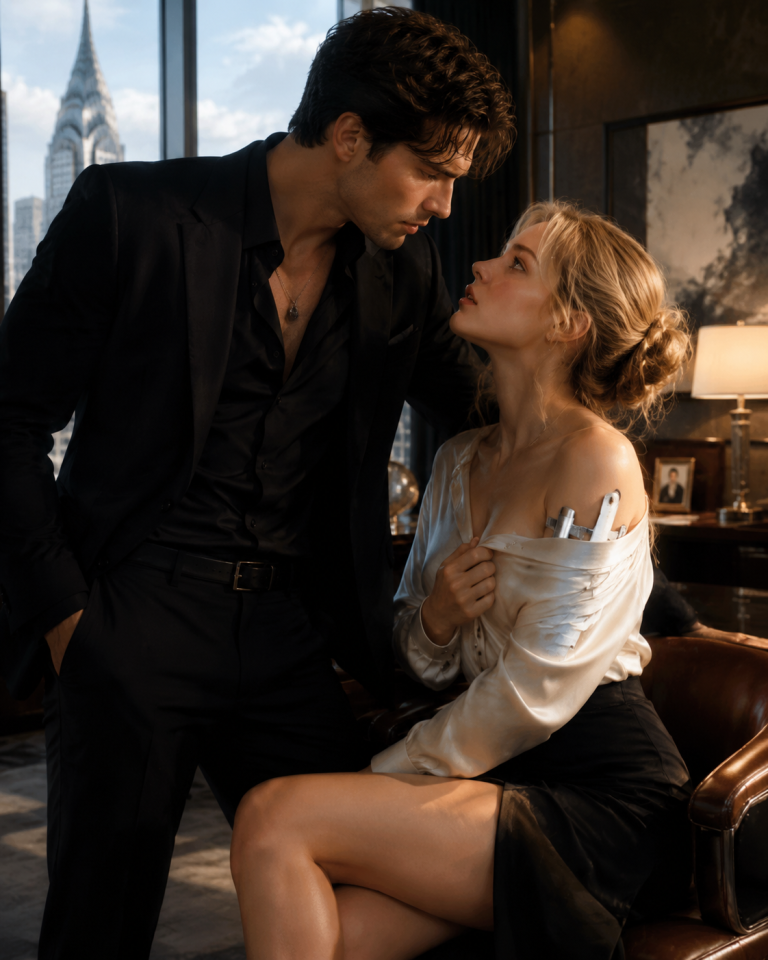
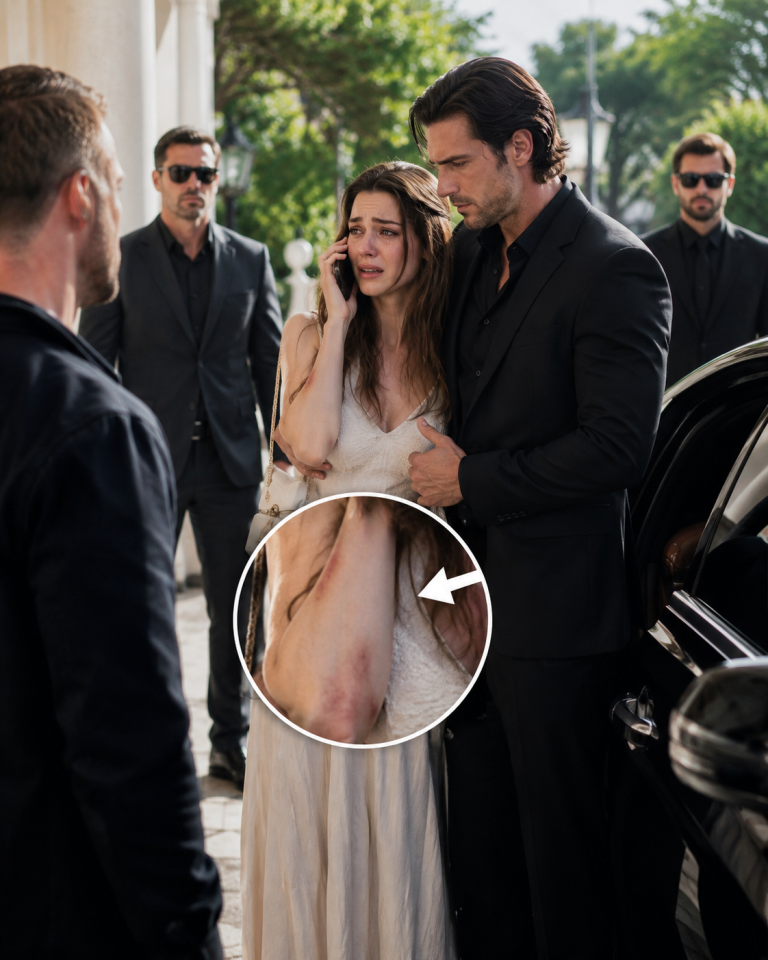
The Mafia Heir Landed A Helicopter On Her Rooftop — Then Realized The Invisible Girl Had Been Watching Him For Three Years

The rooftop wind cut through my thin leather jacket like broken glass. I should have gone downstairs. That would have been the reasonable thing.
Downstairs, Bianca’s apartment was shaking with New Year’s Eve chaos. Music thumped through the ceiling. Someone was laughing too loudly near the kitchen window. Cheap champagne had probably already spilled across the floorboards. People in sequins and fake confidence were counting down toward midnight like a new calendar number could magically turn them into better versions of themselves.
I didn’t believe in that kind of magic. So I stayed on the roof. Alone. Exactly as planned.
My sketchpad balanced on my knees while charcoal smudged against my frozen fingers. Below me, Philadelphia pulsed with celebration. Apartment windows glowed gold. Traffic crawled in red and white lines between buildings. The river stretched dark and silent beyond the skyline, waiting for midnight when fireworks would burst across the water and everyone would pretend, for ten seconds, that explosions were beautiful instead of terrifying.
I wore ripped jeans, a black hoodie, and a vintage leather jacket that was more style than warmth. My dark curls whipped across my face every time the wind rose. My fingers ached. My nose was numb.
I kept drawing.
People assumed spending New Year’s Eve alone at twenty-three was tragic. Poor Wren. Quiet Wren. Strange little tattoo artist Wren, sitting on a rooftop with charcoal under her nails while everyone else kissed strangers and drank too much.
They had it backwards. I chose this. Solitude was safer than parties. Distance was cleaner than belonging. And I had spent the last three years perfecting the art of being present without being noticed.
That was what happened when your best friend was Bianca Donati. Bianca, wild and beautiful and reckless, who had run from her family’s mansion into a rent-controlled apartment with cracked radiators and one reliable window because rebellion felt better when it had bad plumbing. Bianca, who dragged me to Donati family dinners where men in tailored suits discussed territories and shipments in careful code over plates of handmade pasta. Bianca, who laughed too loudly because silence in that family meant obedience, and she was allergic to both.
And then there was her brother.
Alessio Donati. Thirty years old. Six foot three. Controlled menace in a charcoal suit. The kind of man who entered rooms before his body crossed the doorway, because power traveled ahead of him. Dark hair precisely styled. Sharp jaw. Cold gray eyes that missed nothing and revealed less. He stood near windows at family dinners, never with his back fully turned, scanning rooms clockwise like a man who had been raised to expect betrayal with dessert.
I had watched him for three years. Not romantically. At least, that was what I told myself. I watched everyone. It was my job. My survival method. My art.
As a tattoo artist, you learned people through patterns. The way they held still through pain. The way they joked when they were scared. The way their bodies told truths their mouths refused to confess. Skin was never just skin. It was memory. Identity. Grief. Ego. Devotion. Regret. A living record of what people wanted the world to know and what they accidentally revealed anyway.
Alessio Donati was full of patterns. He checked his phone every eleven minutes. He always chose the seat with the clearest exit view. He drank whiskey older than I was.
He ignored me sixty-three times. Yes. I counted. Not because I cared. Because invisible people count things. It gives shape to being unseen.
He had walked past me at Bianca’s twenty-first birthday, Christmas dinners, summer parties, charity events, and one disastrous engagement party where Bianca threw a glass of prosecco at a man her father wanted her to marry. He had never once acknowledged me beyond the kind of polite nod people gave furniture in old houses.
That was fine. I preferred invisible. Invisible meant safe. Invisible meant I could sketch the architecture of power without becoming part of the building.
My charcoal caught on a rough patch of paper. I was shading future fireworks over the river, anticipating where the first burst would bloom. That was the trick: understand the pattern well enough to draw what had not happened yet.
Then I heard it. Not fireworks. Rotor blades.
I looked up. A sleek black helicopter descended through the winter darkness like a predator dropping from the sky. The sound swallowed everything. Wind flattened my curls against my face. The downdraft scattered loose sketches across the gravel.
I lunged for them, pressing one palm flat against my pad before it flew toward the edge of the roof. My heart hammered. This building did not have a helipad. This building had rent-controlled apartments, broke artists, a broken laundry machine in the basement, and Bianca’s dramatic attempt to live like ordinary people while still spending money like a Donati.
Helicopters did not land here. Except one just did.
The door opened before the blades fully stopped. I knew who it was before his expensive shoes touched the rooftop.
Alessio Donati stepped out wearing a charcoal suit that probably cost more than my yearly rent. No coat. Of course not. Men like him did not let weather create inconvenience. His hair did not move despite the wind, which felt personally offensive. His eyes found me immediately.
For the first time in three years, Alessio Donati looked directly at me.
“Where is my sister?”
No greeting. No apology for landing an aircraft on a residential roof. Just command.
I stayed crouched over my scattered drawings, trying to gather them with shaking hands.
“Good evening to you too.”
His eyes narrowed. “I don’t have time for pleasantries. Bianca isn’t answering her phone. I know she lives here. Where is she?”
“Not here.”
I stood slowly, clutching my rescued sketches against my chest while the wind tried to rip them away again.
“Where did she go?”
“Vegas.”
His jaw tightened.
“With a bassist named Jax. He has a mohawk and seventeen facial piercings. She said something about getting married in a chapel shaped like a guitar.”
For three seconds, Alessio just stared. Processing. Recalculating. I had seen him do it before. At dinners. During tense phone calls. When information did not match the outcome he expected, something behind his eyes rearranged the world until it made sense again.
Except he had never done it to me. Because I had never given him information before.
“You let her go to Vegas?” His voice dropped lower. “With some musician?”
“I didn’t let her do anything. Bianca is twenty-one.”
“And you didn’t think to inform the family?”
Something hot flared in my chest. Maybe it was the cold. Maybe it was three years of being dismissed as furniture. Maybe it was the absurdity of being interrogated at 9:47 p.m. on New Year’s Eve by a man who had never bothered to learn my name.
“I don’t work for you.”
His expression changed. Not anger. Something more complex. Surprise, maybe. Like a statue had spoken.
“Bianca is an adult,” I said. “She can run away with whoever she wants. Including a bassist. Including a man with questionable posture and worse hair. Including someone your family did not preapprove like a business acquisition.”
He moved closer. Each step deliberate.
“You think you know my family?”
“I think landing a helicopter on someone’s roof without warning is aggressive. I think barking orders before you say hello is rude. And I think expecting me to track your adult sister like she’s your possession says everything about why she ran.”
His eyes sharpened. Now he knew who I was. Not just Bianca’s quiet friend. Someone specific. Someone with a spine he had not anticipated.
“Wren.”
My name in his voice sounded strange. Foreign.
“Wren Castillo,” I said. “Tattoo artist. Invisible girl who sits three chairs down. The one you’ve walked past sixty-three times without acknowledgment. But now you need something, so suddenly I exist.”
His gaze moved over me slowly. Charcoal-stained fingers. Ripped jeans. Frozen curls. Defiance I had kept hidden for years.
“You counted?”
“I observe people. It’s what I do.” I gestured with my sketchpad. “You’re predictable, actually. Same entrances. Same window positions. Same exit timing. Clockwise room scans. Phone every eleven minutes. Whiskey old enough to vote.”
Something almost like amusement touched his mouth. “That is very observant for someone invisible.”
“Invisible people see everything.”
I tucked the sketches under my arm and moved toward the roof access door.
“Now, if you’ll excuse me, I have a New Year’s Eve to spend alone. By choice.”
I made it three steps before his voice stopped me.
“I need to find Bianca tonight.”
“Then you need to learn how to say please.”
I did not turn around. “Consider it a New Year’s resolution. Being polite to people you need help from.”
Silence. Wind. Distant music from below. The helicopter blades slowing behind us.
Then, quietly, like the word cost him blood, Alessio said, “Please.”
I turned. He stood in the middle of the rooftop with the helicopter behind him, looking at me with something that was not desperation. But it was not control either.
“Help me find my sister,” he said. “Please.”
That was how it began. Not with romance. With manners dragged out of a mafia heir like a confession.
—
Bianca answered my call on the second ring.
“Wren, oh my God, you should see this chapel. It has neon guitars and Elvis is—”
“Your brother landed a helicopter on our roof.”
Silence. Her joy evaporated. “Is he furious?”
“Probably. But I’m negotiating. Are you safe?”
“Yes.”
“Are you sober enough to know what you’re doing?”
A pause. “Mostly.”
“Do you love Jax, or is this rebellion theater?”
Her voice softened. “I love him. I know it sounds crazy, but I do. I’m tired of being the Donati daughter. I just want to be Bianca for a while.”
“Then be Bianca. Send pictures. Don’t let fake Elvis rush the vows.”
“You’re the best friend I’ve ever had.”
“I know.”
I hung up and faced Alessio. “She’s safe. Happy. Getting married in about forty minutes. Your extraction services are not required.”
His face went unreadable. “And I’m supposed to accept this?”
“Yes.”
“She is marrying a nobody.”
“She is marrying someone she chose. Those are not the same thing.”
“You do not understand our world.”
“I understand that she cries every time she has to go home for dinner.” I watched that land. “I understand that she loves you and resents you because you protect her like she’s fragile glass instead of a person with hands, legs, and a right to make mistakes.”
“That is not—” He stopped. Recalculated. “I protect her.”
“From what? Happiness? Choice? The possibility of living a life not designed by men in suits?”
Below us, someone set off early fireworks. Sparks cut through the sky. Premature celebration. Alessio looked toward the city, jaw tight. Then he said, “If she is safe, I will not drag her back.”
It was not exactly surrender. For him, it was practically a miracle.
I moved toward the door again. “Good. My work here is done.”
His hand caught my arm as I passed. Firm, not painful. Heat radiated through my jacket where his fingers touched.
“You’re really spending New Year’s Eve alone on a rooftop?”
“That was the plan.” I looked pointedly at his hand. He released me.
“I just canceled my flight back,” he said.
“Congratulations on your newfound freedom.”
“My evening cleared.”
“Enjoy it.”
“I’m staying.”
I blinked. “Where?”
“Here.”
“On the roof?”
“Until midnight.”
“You are insane.”
“Probably.” He shrugged off his suit jacket like the cold was beneath him, revealing a white dress shirt opened at the throat, a triangle of tanned skin, and the edge of a tattoo I had never known existed. “I flew across the city to find my sister, discovered she eloped with a bassist, and got lectured about basic courtesy by a five-foot-four tattoo artist who counted how many times I ignored her. Insane feels appropriate.”
“Five-foot-five.”
His mouth curved. “My mistake.”
I stared at him. At the helicopter. At the city. At the impossible fact of Alessio Donati settling onto the frozen gravel three feet from where I had been drawing, close enough to talk, far enough to respect space.
Calculated. Of course. Everything he did was calculated.
“What are you drawing?” he asked after a minute.
“The city. The river. Fireworks that haven’t happened yet.”
“How do you draw what has not happened?”
“Anticipation.” I held up the sketch. “Understand the pattern well enough to predict the explosion.”
His eyes moved over the page with genuine interest. “Like you predicted me.”
“Exactly.”
“What does my pattern tell you now?”
I studied him. The controlled posture. The tension in his shoulders. The way his hand wanted to reach for his phone but did not, because he knew I would notice.
“You’re furious about Bianca, but trying to respect my opinion. You’re not used to sitting still. You’re fighting the urge to check your phone. And you’re wondering why you’re staying on a freezing rooftop instead of going back to whatever polished event you were supposed to attend.”
He laughed. A real laugh. Low. Unexpected. Dangerously attractive.
“Frighteningly accurate.”
“What’s your pattern?” he asked.
“I don’t have patterns.”
“Everyone has patterns, Wren. You hide yours better.” He leaned back on one hand, eyes on the skyline. “You stay invisible because it is safer than being seen. You count things because numbers feel controllable when people do not. You choose rooftops because height gives distance. And you sketch fireworks before they happen because you are always preparing for things to explode.”
The accuracy made my chest tight. “Maybe you’re more observant than I thought.”
“Maybe we both are.”
—
The next hour became something I did not have a name for. We drank expensive champagne from paper cups he pulled from the helicopter, which felt like the perfect metaphor for the night: wealth and absurdity and rough edges all colliding in the cold.
He asked about tattoos. Not the stupid questions. Not “Does it hurt?” or “What’s the weirdest thing you’ve ever done?” He asked why people chose pain to make beauty permanent. He asked whether ink felt like identity or memory. He asked how much trust it required to let someone mark your skin forever.
“It’s intimate,” I said. “More than people realize. You’re under someone’s skin, creating something that outlives arguments and breakups and sometimes the person they got it for.”
“Like a contract written in pain.”
“Except contracts can be broken. Tattoos stay.”
He asked if I had regrets. I showed him the mandala I had tattooed on my own forearm at nineteen, black and gray, geometric precision mixed with organic curves.
“The symmetry is slightly off here,” I said, pointing. “Drives me insane.”
He leaned closer. His fingers traced the pattern. Careful. Warm.
“I don’t see a flaw.”
“That’s because you’re not a perfectionist obsessed with mathematical precision.”
“No,” he said, looking up at me. “I see something beautiful made human by imperfection.”
“Spoken like someone who has never created anything permanent.”
His hand went to his collar. “Want to test that theory?”
Before I could answer, he opened more buttons of his shirt, revealing the tattoo over his heart. An eagle. Black and gray realism. Wings spread. Every feather precise. Predatory and lonely.
“I got it at twenty-one,” he said, quieter now. “Three months after I took over from my father. The old man in Naples who did it said the eagle meant power and vision, but also isolation. Birds of prey hunt alone.”
I reached out before I could stop myself. My fingers touched the ink. His skin was warm beneath my frozen hand. His heart beat steady under my palm.
“It’s beautiful work.”
“There’s a flaw.” He covered my hand with his. “Left wing. Two feathers don’t connect. The artist apologized for hours. I told him to leave it.”
“Why?”
“To remember even predators bleed.”
We stayed like that too long. Hand on chest. Heart under ink. City below. Midnight approaching.
At 11:59, he stood in front of me with fireworks already blooming early over the river.
“I’m going to kiss you at midnight,” he said.
I should have called him arrogant. Instead, I asked, “And if I say no?”
“Then I leave this roof.” His eyes held mine. “But I think you’re tired of disappearing.”
I was. God help me, I was.
The city counted down. Ten. His hands found my waist. Nine. Mine pressed against the eagle over his heart. Eight. I was terrified. Seven. So was he. Six. The first honest thing we had in common. Five. Fireworks burst exactly where I had drawn them. Four. He lowered his forehead to mine. Three. “Still your choice,” he whispered. Two. “Yes.” One.
Alessio Donati kissed me as Philadelphia exploded into the new year.
It was not soft. Not careless either. It was hunger restrained by respect, possession held back by choice, three years of watching collapsing into one reckless moment where being seen felt more dangerous than any shadow I had ever hidden in.
We stayed on that rooftop until two in the morning. Talking. Kissing. Arguing about art, loneliness, Bianca, and whether solitude was freedom or fear wearing better clothes.
Then he walked me to my apartment door. Kissed me once more. And vanished. No number. No promise. No follow-up. Just the taste of champagne, the smell of helicopter fuel and expensive cologne, and the memory of his voice saying, *Thank you for letting me see you.*
—
For two weeks, I convinced myself it was better that way. One perfect night. Permanent like ink. No maintenance required.
Then he walked into my tattoo studio like he had stepped out of a sketch I had not finished.
“I have a proposition,” he said. No hello. Classic Alessio. Then, after one beat, he added, “And before you tell me to learn to say please, I am asking. Please hear me out.”
I set down the tattoo gun. “I’m listening.”
He needed someone to accompany him to galas, charity dinners, museum events, and political functions while he built a legitimate public profile for a city council nomination. Someone outside his world. Someone intelligent. Creative. Humanizing.
“You want a fake girlfriend,” I said. “A prop.”
“I want a real partner in a mutually beneficial arrangement.”
He set a thick contract on my worktable. Ten months. Public appearances. My autonomy protected in writing. My gallery fully funded, the one I had been planning for three years to combine tattoo history, contemporary installation, body art photography, and immigrant street traditions into one permanent space.
My heart stopped. “How do you know about the gallery?”
“Bianca showed me your business plan last Christmas.”
“You read it?”
“I studied it.”
“Why?”
“Because it deserved to exist.”
That was the first dangerous thing he said that day. Not because of money. Because he was taking my dream seriously.
The contract was fair. Too fair. No artistic control. No ownership claim. Exit clauses. Compensation. Legal protections. My name on everything.
“What do you actually get out of this?” I asked. “Not politics. Not optics. The truth.”
Alessio was quiet for a long moment. Then he said, “I get to be near you without feeling like I am corrupting something good. I get to help you succeed and know I did something useful with the kind of power I inherited. I get to kiss you at events and call it performance. And I get to pretend, for ten months, that someone like you might choose someone like me.”
The honesty was devastating. So I said yes.
—
The first three months blurred into champagne, art openings, political dinners, headlines, and dresses I did not pay for but insisted on choosing myself.
The media loved us. The dangerous Donati heir and the tattoo artist who made him look human. His numbers rose. My gallery took shape in a converted Old City warehouse with exposed brick, black steel, warm light, and enough wall space for every version of myself I had once hidden.
In public, we were perfect. His hand at my back. My smile sharp enough to cut. Kisses for cameras. Interviews about art and civic responsibility.
In private, we were a problem neither of us knew how to solve. Because fake has limits when the touch starts feeling real.
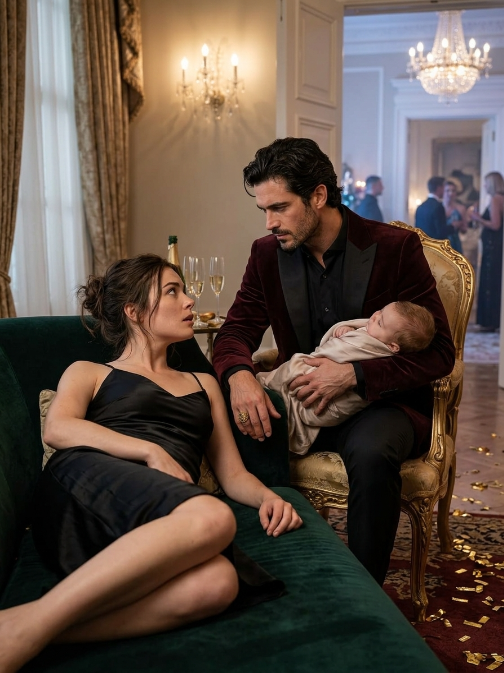
One night in his penthouse, after a donor dinner where I had smiled until my face hurt, I found him checking his phone for the fourth time in ten minutes.
“You’re doing it again,” I said.
“Doing what?”
“Monitoring threats instead of being present.”
“The monitoring never stops.”
“We’re alone.”
He put the phone down, crossed the room, and stood behind me at the window. The city spread below us like a circuit board of lights.
“There are people who would use you if they knew you mattered.”
“Do I matter?” I asked before I could stop myself.
His arms tightened around me. “You know you do.”
“No. I know you kiss me like I matter. I know you funded my dream. I know you introduce me to people who can change my career. But I don’t know if you would still be here without the contract.”
He turned me to face him. “You will never be invisible again.”
“That sounds like control, not love.”
He flinched. Just slightly. But I saw it.
That became our fight. Protection versus control. Agency versus safety. His world had taught him that love meant guarding every door. Mine had taught me that locked doors could become cages.
We learned slowly. Badly at first. Then better.
The night we stopped pretending was in his penthouse, rain sliding down the windows, the contract still months from ending. He said he had forgotten it was supposed to be fake. I said I was afraid of becoming my mother, swallowed by a man’s gravity until no part of me remained distinct.
He said, “Then make me earn every day you choose me.”
That was when I kissed him. Not for cameras. Not for the story. For myself.
—
By August, my gallery opened. Critics came. Collectors came. Artists came. People who once called tattoo work lowbrow stood beneath my installations and whispered the word *important* like they had discovered it themselves.
When the last guest left, Alessio pulled the contract from his jacket. “Terms fulfilled.”
I stared at it. “So now what?”
“Now you decide.” No pressure. No strategy. No command. Just a man who had built empires asking a tattoo artist to choose him without paperwork.
“We can end this,” he said. “Or try for real. No contract. No exit clauses. Just us, figuring out whether what began as performance can survive reality.”
“I want to try,” I said. “But I am not promising forever.”
“Good,” he said. “Forever should scare us. It means we’re risking something real.”
—
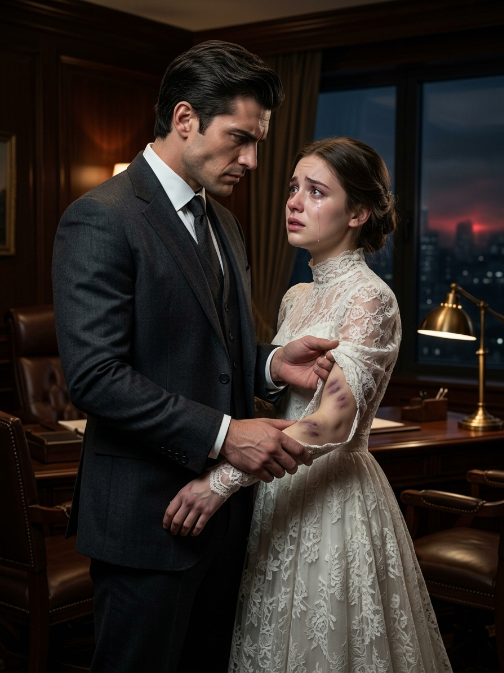
Three weeks later, my past arrived in a manila envelope. A photograph. Me, two years earlier, in Marcus Vane’s studio. I had modeled for him when I was broke and hungry for any work that made me feel like an artist instead of a struggling girl with rent due. Marcus had been charming. Talented. Predatory in the quiet way that teaches you later how much you ignored because you needed opportunity.
The photo had been taken without my consent. Private. Vulnerable. A violation. On the back was one word. *More.*
I barely made it to the trash can before I got sick. Marcus had promised he destroyed everything after I found out what he had done. He had lied. Now someone had bought my shame and aimed it at Alessio’s campaign.
The message to him arrived two hours before my envelope. *Drop out of the race or we release everything. Your artist girlfriend’s secrets. Your family history. Your father’s connections. Forty-eight hours.*
Alessio’s first instinct was to lock me away and handle it. Mine was to run from him before he could. Instead, we fought. Really fought.
“You do not get to make my past disappear without me,” I said.
“You are being threatened because of me.”
“I am being threatened by a man who violated me before you ever kissed me.”
“And I have resources to make him stop.”
“No. We do this my way. With records. Lawyers. Evidence. Security if needed, yes. But I face him.”
It nearly broke him, letting me lead. I saw it in his jaw, his hands, the way every instinct in him screamed to stand in front of me. But he stood beside me. That was the difference.
We confronted Marcus with attorneys, documented demands, a forensic tech team, and yes, Alessio’s terrifying security just outside the door. Marcus handed over hard drives, cloud access, physical prints, and names. He signed agreements. He gave statements. No dramatic revenge. No dark hallway myth. Just evidence collected cleanly enough to hold.
But the world of men who use secrets does not end with one coward.
Eighteen months after that rooftop kiss, when Alessio had won his council seat and my gallery had become a real institution instead of a risky dream, a tablet arrived at the gallery. On it was Marcus’s face. Gaunt. Terrified. He admitted there were backups he had sold before we found him.
Not to a gossip site. Not to a jealous rival. To an Eastern European syndicate called the Drozdov network trying to force its way into Philadelphia. They had everything: the photos, our contract timeline, proof of Donati money behind the gallery, enough family dirt to trigger investigations and destroy Alessio’s transition into legitimacy.
They wanted him to agree to their terms. Or they would release it all.
This time, Alessio did not say, “You do nothing.” He looked at me. Waited. And I understood that love had changed him not because he had become softer, but because he had learned to stop mistaking silence for obedience.
“We release the truth ourselves,” I said.
His face went still. “That destroys the narrative.”
“No. It takes the weapon out of their hands.”
We told everything. Not recklessly. Strategically. With lawyers, statements, documentation, and timing precise enough to make even Alessio proud. We admitted our relationship began as a contract. We admitted the gallery funding came through Donati-backed civic arts money and opened the books to independent audit. We named the unauthorized images as a consent violation and announced legal action against anyone distributing them. We disclosed what could be disclosed about the threats and handed the tablet, messages, and financial trail to federal investigators.
The headlines were brutal for forty-eight hours. Then the public mood shifted. People understood coercion. Artists understood patronage. Women understood violation. Voters understood that a man willing to expose his own secrets to protect someone else’s consent was not the same man his enemies claimed he was.
The Drozdov leverage collapsed. Federal raids followed the money trail they had stupidly created. Several shell companies went down. So did two officials who had quietly helped them.
Alessio kept his seat. My gallery survived. Barely at first. Then fiercely. Because truth, once survived, becomes armor.
—
The hardest reckoning came later. Not with enemies. With Alessio himself.
One night, I walked into his study and found the old world staring back at me. A man on his knees. Rocco nearby. Alessio with bruised knuckles and murder in his eyes. The man had stolen from the family. Twice. Maybe three times.
I do not soften what I saw. I do not pretend it was noble. That night, I saw the part of Alessio I had known existed but had chosen not to look at directly. The inheritance. The violence. The rules enforced before courts could touch them.
“Leave,” he said.
“No.”
“Wren.”
“If it happens in your study while I’m in your bed, it is my concern.”
We stepped into the hall. He told me mercy was weakness in his world. I told him brutality was not strength just because his father had called it that. He said, “This is how people stay safe.” I said, “Then build a world where safety does not depend on terror.”
It would be prettier if love changed everything in one speech. It did not. But that night became the line. Alessio made the man repay what he stole through legal transfer, public severance, and documented restitution. He lived. He left. He could not return.
The old guard hated it. His father called him weak. His mother called me dangerous. Bianca called me the only person in Philadelphia brave enough to interrupt a Donati family tradition without getting buried under one. Alessio called it the first truly hard thing he had done in years.
From there, the transformation was slow. And because it was slow, it was real. The Donati family did not become clean overnight. That would be a lie. But Alessio began transferring operations into legitimate structures with public oversight. City contracts. Arts funding. Logistics companies with audited books. Community investments that were not just tax shields.
I kept my gallery independent. My name on the lease. My accounts separate. My studio mine. He never entered without knocking. That was romance to me. Not diamonds. Not helicopters. A closed door respected. A choice renewed.
—
Two years after the rooftop, we held an exhibition called *Visible.* Tattoo artists, immigrant muralists, former street illustrators, prison art program graduates, women who had reclaimed their bodies through ink after illness, childbirth, grief, assault, survival. The opening filled three city blocks.
Alessio stood near the back, not drawing attention, failing because he was Alessio Donati. When I walked to him, he looked at me the way he had on that rooftop at midnight. Like I was the only thing worth counting down to.
“You did this,” he said.
“No,” I corrected. “We built conditions. They did this.”
He smiled. “You still correct me in public.”
“I promised consistency.”
That night, after the gallery emptied, he took me back to the roof where it began. No helicopter. No emergency. No sister in Vegas. Just the city, the river, cold wind, and a bottle of champagne with two paper cups.
“You’re being sentimental,” I said.
“I am evolving.”
“That sounds expensive.”
He laughed. Then he became serious. “I brought you here because I wanted to ask in the place where you first made me say please.”
My heart stopped. “Alessio.”
He took out a ring. Not enormous. Not performative. A dark gray diamond set in blackened platinum, with a tiny engraved line inside the band. *Still your choice.*
“I will not ask you to disappear into my world,” he said. “I will not promise I will never fail. I will. I was built wrong in some places, and I am still rebuilding. But I promise I will keep choosing partnership over possession. Truth over control. You over the version of power I inherited.” His voice roughened. “Wren Castillo, will you marry me?”
I looked at the man who once ignored me sixty-three times. The man who had landed a helicopter like a threat. The man who had learned to say please. The man who had stood beside me while I faced my past. The man who had let truth burn his public image clean instead of hiding behind my silence.
“Yes,” I said. Then, because I was still me, “But no giant wedding. No Donati political circus. No press exclusives. And I design the invitations.”
His smile was devastating. “Whatever you want.”
“Careful. That sounded obedient.”
“I am learning.”
—
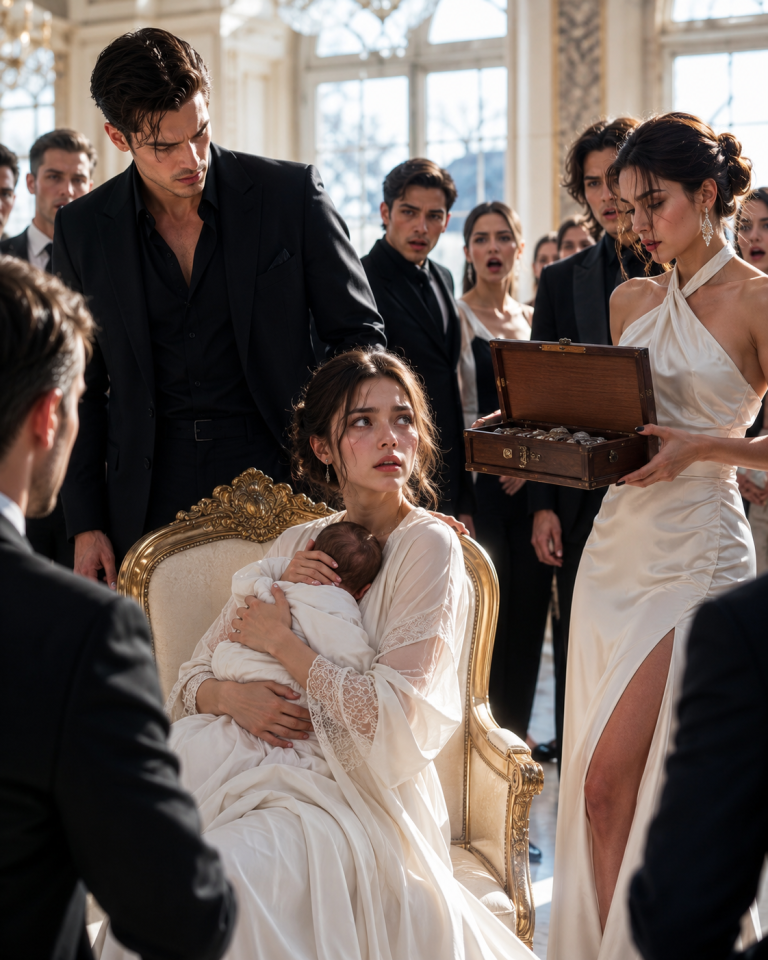
We married six months later at the gallery. Not a cathedral. Not a hotel ballroom. My gallery. Our walls. Our artists. Our witnesses.
Bianca stood beside me wearing red and crying before the music even started. Jax had become a surprisingly devoted husband and only had fifteen facial piercings now. Growth, apparently, came for us all.
Alessio’s father attended with the face of a man swallowing gravel. His mother attended because social absence would have been worse than emotional discomfort. Rocco cried and denied it. The museum trustee board sat near the back looking both honored and afraid.
I walked myself down the aisle. Not because I was alone. Because I was not being given away. Alessio understood.
He waited beneath a suspended installation made of paper, ink, and light — hundreds of drawn wings, each one slightly flawed, each one intentionally human.
His vows were short. That made them stronger.
“I spent my life believing love was another territory to secure,” he said. “You taught me love is not held by force. It is invited. It is renewed. It is free to leave and chooses to stay. I will never deserve how you saw me before I knew how to be seen, but I will spend my life making sure you never regret looking.”
Mine were not much longer.
“I spent my life thinking invisibility was safety,” I told him. “You saw me, and I thought that would destroy me. Instead, it made me choose what kind of visible I wanted to become. I will love you without disappearing. I will challenge you without cruelty. I will stay because I choose to, and I will keep choosing only as long as we both protect the freedom inside that choice.”
When we kissed, no fireworks exploded. No helicopter landed. No enemies interrupted. For once, life allowed us a quiet miracle.
—
Years later, people still tell the story wrong. They make it sound like a mafia heir rescued an invisible tattoo artist. That is not what happened.
I was not waiting to be rescued. I was drawing the skyline. I was alone by choice. I had built invisibility like a room with locked doors because the world had taught me being seen meant being consumed.
Alessio did not rescue me from the rooftop. He interrupted me. Annoyed me. Argued with me. Made me furious enough to speak. Then, slowly, imperfectly, he learned to listen.
That is the part people miss in stories about dangerous men. Danger is not love. Power is not romance. Protection is not devotion if it becomes a cage.
What made Alessio different was not the helicopter, or the money, or the way rooms rearranged themselves when he entered. It was that he could have consumed my life and chose, again and again, to make room for it instead.
He funded my gallery but did not own my art. He protected me but learned to stand beside me. He loved me but did not make love an excuse to control me.
And me? I learned that being seen does not have to mean being erased. Some people look at you and reduce you to something useful. Some look at you and decide what you should become. But every once in a while, someone sees the whole complicated architecture of you — the fear, the talent, the boundaries, the scars, the fire — and does not ask you to become smaller so they can understand you more easily.
Alessio saw me. I made him say please. That was our beginning.
A rooftop. A helicopter. A runaway sister. A fake Elvis in Vegas. A countdown. A kiss at midnight. And a girl who thought she was safest in the shadows finally deciding that the light did not belong only to people born powerful enough to stand in it.
Now, every New Year’s Eve, we go back to that roof. No press. No family dinners. No political performance. Just us, paper cups, good champagne, and the skyline I still draw before the fireworks begin.
He always checks his phone at least once. I always call him predictable. He always says, “You counted.” And I always answer the same way.
“Invisible people see everything.”
Then he kisses me at midnight, softer now, but no less certain. And every year, when the sky breaks open over Philadelphia and light scatters across the river exactly where I knew it would, I remember the girl I was before the helicopter landed.
Small by choice. Silent by strategy. Safe but unseen.
I want to tell her something. Not that a man is coming. Not that love will fix everything. Not that danger becomes beautiful just because it wears a tailored suit and knows your name.
I want to tell her this: one day, someone powerful will finally look at you. Do not shrink. Look back. Make him say please.
And if he learns, if he listens, if he stands beside you instead of in front of you, if he helps you become more visible without making you less free — then maybe, just maybe, the explosion you spent your life preparing for will not destroy you.
Maybe it will light up the whole sky.