She Risked Her Life to Save His Son—Then the Mafia Boss Claimed Her as His Own

## PART 1:
She almost didn’t stop.
That was the part that would find her at 3 a.m. in the weeks that followed, when she couldn’t sleep and the ceiling offered nothing useful. The almost. The two full seconds she sat with her foot on the brake and her hands on the wheel and every reasonable argument lined up in favor of calling it in and waiting.
She had been awake for seventeen hours.
She was twelve miles from her apartment.
She was not on duty.
Then she heard him.
Dani Reyes took the Fulton Street route because the transmission on her Civic made a specific sound on highway inclines that she had been managing around for six weeks while she decided whether to fix it or sell it. The Fulton route was surface streets, slower, but flat all the way to her neighborhood, and at the end of a double shift in the ER the difference between sound and silence from her transmission felt significant.
She was a paramedic. Eight years. She had the specific brand of exhaustion that emergency medicine produces — not sleepiness exactly, more like a gradual erosion of the buffer between what you’ve seen and how it sits with you. Tonight’s shift had included a construction accident, two cardiac events, a teenager who had made a very bad decision about substances, and a four-hour stretch where the radio hadn’t stopped.
She wanted a shower. She wanted the leftover rice in her refrigerator. She wanted her sister’s voice on the phone for twenty minutes and then eight hours of no one needing anything from her.
The burning car appeared in her headlights like a fact.
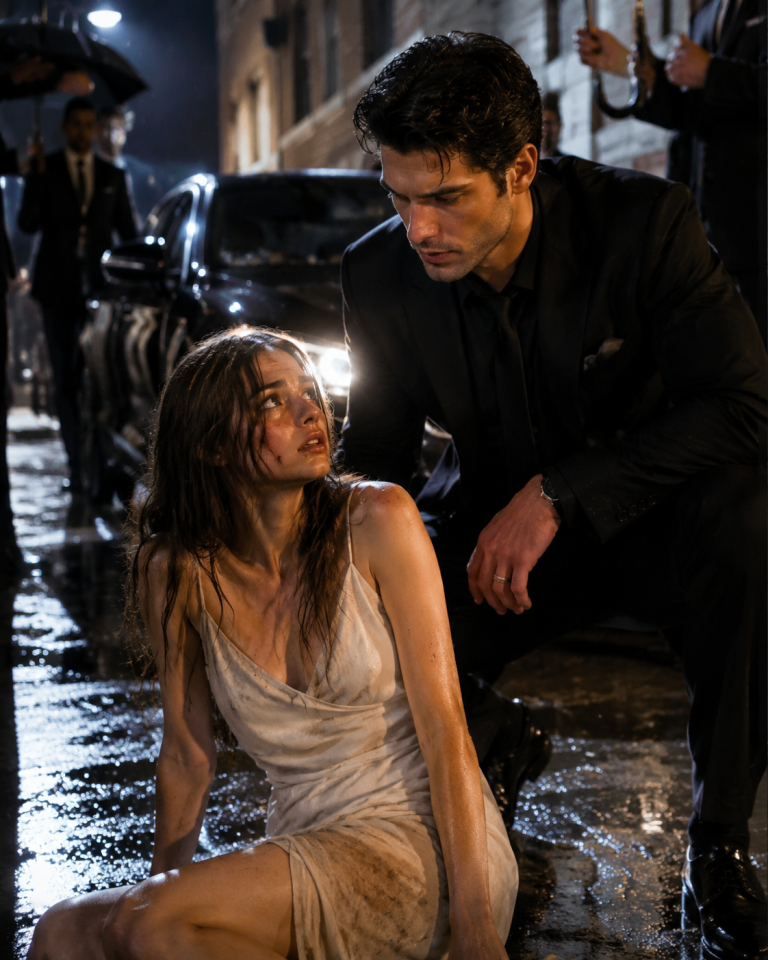
Black sedan, overturned, flames working through the engine compartment with the particular intensity of something that had been burning for less than five minutes — recent enough that the structure still held, long enough that the windows had gone. The road surface was wet from earlier rain and the fire threw orange light across it in wavering sheets.
Dani’s foot hit the brake.
Her training ran its checklist automatically: scene assessment, hazard evaluation, call it in, stage at a safe distance, wait for—
The sound from inside the car stopped every item on the list.
A child. High and thin and exhausted, the cry of a small person who had been frightened past the acute phase into something more sustained and more desperate.
Dani was out of the Civic before she’d made a decision.
She grabbed her jump bag from the back seat because her hands knew where it was without her looking. Slung it over her shoulder. Covered the distance to the car in fifteen seconds and felt the heat change the air against her face as she got close — the specific wall of it that told her she had a window, not a guarantee.
The driver’s side had taken the primary impact. She assessed it in two seconds and moved on.
Back seat. Rear passenger side, less compromised. Through the smoke and the cracked glass she could see the car seat — rear-facing, expensive, the kind with multiple harness points — and in it, a small boy who stopped crying when her face appeared in the broken window.
He just looked at her.
Four years old, approximately. Dark hair. A navy blue jacket with something embroidered on the chest she couldn’t read through the smoke. Eyes so dark they were nearly black, fixed on her with the concentrated attention of a child who has decided this person is either help or the next frightening thing and is waiting to find out which.
“I’m getting you out,” Dani said. Clear, calm, the voice she used in the back of the ambulance. “You’re going to be okay. What’s your name?”
He didn’t answer. His lower lip was shaking.
“That’s okay. You don’t have to tell me. I’m Dani. I’m going to get you out now.”
She swung the glass punch. Cleared the remaining window. Reached through and found the harness mechanism.
It was jammed.
Of course it was.
The fire had reached the rear of the car — not the seat, not yet, but the sound of it was changing in the way sounds change when they’re getting closer and finding more to work with.
“Hey.” She caught the boy’s eyes. “Look at me. Just look at me.”
He did. With that same fixed, trusting attention.
She worked the harness with one hand and kept her eyes on his and said whatever came to mind — not quite words, just the continuous reassuring sound of a human presence — until something shifted in the mechanism and the harness released and she had him.
She got his weight against her chest and pulled back and stood and moved away from the car with the fast, deliberate walk of someone who knows running is for the last possible moment and this is the second-to-last.
She was twelve meters clear when the fuel tank went.
The percussion of it hit her in the back and drove her forward and she went down on the wet road with the boy underneath her — not under her, she twisted, she took the road on her left shoulder and hip and kept him clear — and the air smelled like burning and rain and the specific chemical signature of a modern car on fire.
She lay still for two seconds, listening to her own breathing, doing the rapid self-assessment her body had been trained to do: pain localized, nothing structural, she was okay.
The boy was already pushing against her chest, trying to sit up, which told her everything she needed to know about whether he was okay.
“Hey. Hey.” She sat up with him, keeping her arms around him. “I’ve got you. You’re out. You’re safe.”
He looked at the burning car.
Then he looked at her.
He said, very quietly: “That was Papa’s car.”
The SUVs arrived two minutes later.
Not one. Three, moving in convoy from the east end of the block, the kind of vehicles that didn’t announce themselves because they didn’t need to. They stopped in a formation that was not accidental — surrounding the scene, Dani registered, containing it, before she had fully processed what that meant.
Eight men got out.
Armed. Not ostentatiously — not rifles, not anything that read as military — but the posture of men who were armed, and the particular way their eyes moved across the scene, and the way two of them peeled off toward the burning car with a purposefulness that had nothing to do with helping.
One of the others was already on a phone.
“He’s not in it,” he said. Then, after a pause: “No. A woman pulled him out.” He looked at Dani with the assessing quality of a man trying to determine what category she fell into. “I don’t know. Local, looks like.”
A second man approached her directly.
Late thirties. Close-cropped hair. A calm, organized face that had clearly been organized at some point by something difficult.
“Is the boy injured?” he asked.
“Shaken. Possible minor smoke inhalation. He needs to be evaluated.” She kept her arms around the child, who had tucked his face against her neck and was breathing in the particular way of children who have decided the current situation calls for being very small. “Who are you?”
“We work for his father.”
“Where’s his father?”
The man didn’t answer that. Instead he spoke again into his phone. “She’s a medic, I think. She has Matteo.” Another pause. “Yes. Ten minutes. I’ll tell her.”
He put the phone away and looked at Dani with an expression she couldn’t read — not threatening, not friendly. Evaluating.
“Mr. Vasile is on his way,” he said. “He’s asked that you stay.”
“I need to call this in.”
“We’ve handled that.”
She looked at him.
“You’ve handled it.”
“The correct people are being notified.” He said it with the careful precision of someone who has had to explain this category of thing before. “The fire will be reported. There will be a record. Mr. Vasile would like to speak with you before you go.”
The child — Matteo — had pulled back slightly to look at the man who’d spoken his name. Some of the tension had left his body at the recognition.
He trusted this person. Okay. That was information.
“I need to check him properly,” Dani said. “I have my kit. Let me do that.”
“Of course.”
She opened her jump bag and worked methodically — pupils, airways, the careful check for things that present late — while the men maintained their perimeter and the burning car threw orange light across the wet road and the sirens she could now hear in the distance were, she noted, coming from a direction that would reach the scene after, not during.
Matteo watched her work with those dark, focused eyes.
“Does this hurt?” She pressed carefully along his collarbone.
He shook his head.
“How about here?”
Another head shake.
“You were very brave,” she said.
He considered this seriously. “I was scared,” he said, as though correcting a factual inaccuracy.
“You can be both,” she said. “That’s what brave actually is.”
He absorbed this. Then: “Are you a doctor?”
“Paramedic. Like a doctor for emergencies.”
“Is this an emergency?”
She looked at the burning car. At the eight armed men. At the three black SUVs arranged in formation around a section of Chicago road that had been, twelve minutes ago, empty and unremarkable.
“Yeah,” she said. “This qualifies.”
The fourth SUV arrived from the west at 11:48 p.m.
It stopped and the door opened and the man who got out was not running — she noticed this immediately, the deliberate not running, the choice to walk toward his son at a pace that said *I am in control of myself even now* — but something in his face when he saw Matteo was the most undefended thing Dani had seen all night.
He crossed the distance and crouched and pulled the boy against him and held him with both arms and said his name twice, quietly, in a language she didn’t speak.
Matteo held on with the grip of a child who has been waiting for exactly this.
After a moment the man lifted his head.
He looked at Dani over his son’s shoulder.
He was perhaps forty. Dark-featured, with the kind of face that had been tested by something and come through it carrying the evidence. He wore a dark overcoat over a dress shirt, no tie, and he had the kind of presence that she associated, after eight years of emergency work, with people who operated in the space where normal rules thinned out.
He looked at her hands — the right one wrapped in gauze from her kit where the glass had caught her, the left one still holding her penlight.
He looked at her face.
Then he said, in English with an accent she couldn’t immediately place: “My son is breathing because of you.”
It wasn’t a question.
“He’s okay,” she said. “Minor smoke exposure. Watch for any respiratory changes tonight, but he’s okay.”
The man stood, keeping one hand on Matteo’s shoulder.
“Your hand,” he said.
“It’s fine.”
“It needs proper attention.”
“I’m a paramedic. I’ve assessed it.”
Something moved through his expression — not quite a smile, but the acknowledgment of a response he hadn’t expected.
“I know,” he said. “I know what you are, Ms. Reyes.”
Dani went still.
He hadn’t asked her name.
None of his men had asked her name.
She hadn’t given it.
He watched her process this with the patient expression of a man who is accustomed to being the one in the room who knows more than has been said.
“There are things to discuss,” he said. “Tonight is not the right moment for them.” He glanced at the burning car, then back at her. “But there are things you should know, and I would like to be the one to tell you.” A pause. “Before you hear them another way.”
The sirens were closer now.
Matteo had turned in his father’s hold to look at Dani with those dark, focused eyes.
“She said brave and scared can be the same,” he said to his father, with the informational gravity of a four-year-old reporting something important.
The man looked at his son. Then at Dani.
Something in his face shifted — just slightly, just enough to change what the expression meant.
“She’s right,” he said quietly.
He reached into his coat and produced a card and held it out to her. Plain. A name — Constantin Vasile — and a number.
“Tomorrow,” he said. “When you’ve slept. I’ll answer every question you have.”
She took the card.
“You knew my name,” she said. “Before you got out of that car.”
He looked at her steadily.
“Yes.”
“How?”
Constantin Vasile looked at his son, safe and breathing, and then back at the woman who had pulled him out of a burning car on a road she hadn’t planned to take.
“Because the car wasn’t an accident,” he said. “And the person who arranged it knew your route home.”
The sirens arrived.
The night reorganized itself around the sound.
And Dani stood on a wet Chicago road holding a business card and understood, with the clinical clarity of someone who has spent eight years assessing situations that have already gone wrong, that she had not stumbled into this scene.
She had been there all along.
—
## PART 2:
She didn’t sleep.
She told herself she would — shower, rice, six hours — and she did the first two, and then she sat in her kitchen at 1 a.m. with the business card on the table and the particular insomnia of a person who has been told something is true and can’t stop their brain from testing it.
*The person who arranged it knew your route home.*
She had taken the Fulton route because of the transmission. That was a decision she made depending on her shift, on the weather, on whether she felt like surface streets or highway. It was not a fixed route. She varied it.
For someone to guarantee she’d be on Fulton tonight, they’d need to know about the transmission. Which meant they’d need to know her car. Which meant someone had done the specific, patient work of learning how she moved through the city.
She thought about eight years of emergency calls. The faces. The names she remembered and the ones she’d let go and the ones that came back at 3 a.m. anyway.
She thought about the card in front of her.
At 9 a.m. she called.
He answered before the second ring. “Ms. Reyes.”
“You said you’d answer every question.”
“Yes.”
“Who arranged the accident.”
A pause. Brief. The pause of someone who has decided to be honest about something that is complicated to be honest about.
“A man named Sorin Baciu,” he said. “He has been with my organization for fourteen years. He is currently—” Another pause. “No longer with my organization.”
“He tried to kill you through your son.”
“He tried to create an outcome in which Matteo survived and I did not.” His voice was very even. “He needed Matteo alive. The succession — how things transfer — it requires a living heir. Matteo’s survival was not incidental to the plan. It was structural.”
Dani processed that. “And he needed a paramedic on the scene.”
“He needed a specific paramedic.” Constantin paused. “I will tell you the rest in person, if you’re willing. There is a reason it’s specific to you, and I would rather explain it where I can see your face.”
She thought about the eight men and the three SUVs and the deliberate not-running.
“My partner knows where I am at all times when I’m meeting someone I don’t know,” she said. “It’s not negotiable.”
“Of course,” he said. “I’d expect nothing less.”
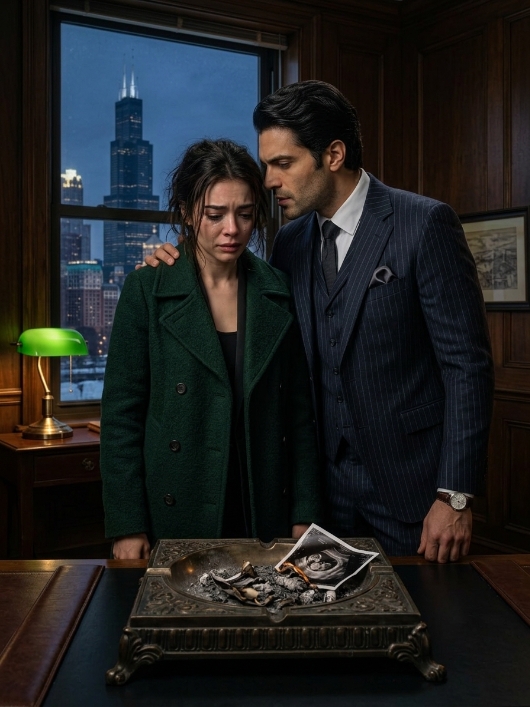
The address he gave her was a building on the north side — not a house, a floor of an office building, which she’d half-expected. The kind of space that said *this is a place where things are decided* rather than *this is where someone lives.*
He met her in a room with good light and a table and two chairs and, conspicuously, no one else. She noted the no one else and decided to take it as a gesture.
He looked like he hadn’t slept either, which she found oddly reassuring.
He had her medical records on the table. Or rather — one record. A single call sheet, her handwriting on it, a date six months ago.
She looked at it.
“March 14th,” she said.
“You remember.”
She remembered because it had been strange in the specific way that strange things are — not dramatic, just wrong at the edges. A single-car accident on Fulton Street. Male, late thirties, presenting with lacerations and a shoulder injury she’d documented as inconsistent with the described mechanism of injury. The man had been insistent about the story — hit a pothole, overcorrected, that was all — and she’d documented the injury pattern and her clinical note about the inconsistency and moved on because she had three other calls waiting.
“Sorin Baciu,” she said.
“Yes.” Constantin looked at the call sheet. “You documented that the shoulder injury was inconsistent with a vehicle impact at that angle. You noted the pattern was more consistent with—” He paused, reading. “A restraint injury from behind, or a strike from a specific direction that the described mechanism couldn’t produce.”
“It was a clinical observation. I flagged it for the receiving facility.”
“You flagged it,” he said, “and then it sat in a system for six months. But the record exists. Your note is in the file — timestamped, signed, specific.” He looked at her. “Sorin was injured that night in an internal dispute. A dispute that would establish who held what in the organization. He needed the injury to look like an accident. Your clinical note documents that it wasn’t.”
“So he wanted me on the scene last night to—” She stopped. Worked through it. “Not to save Matteo. To connect me to this. To create a reason for me to meet you.”
“So that I would seek you out,” Constantin said. “Come to you as the person who saved my son. Ask questions about your background. Find the record.” He held her gaze. “He needed the record surfaced in a way that couldn’t be traced to him. Through you, through this sequence of events, it would surface naturally. And it would implicate me.”
“The record implicates you.”
“The injury Sorin sustained during that dispute — if it’s established as a non-accident — it creates a legal question about what happened. About who was present. About my involvement in an event that I was, in fact, present for.” He set both hands flat on the table. “Sorin was maneuvering to remove himself from the succession by removing me first. Through a series of steps that would look, at every point, like he had nothing to do with them.”
Dani looked at the call sheet on the table.
Her handwriting. Her note. The clinical observation she’d made in three minutes at the back of an ambulance six months ago and filed and moved on from.
“He put Matteo in that car,” she said.
“Yes.”
“His own—” She stopped. “He’d been with you fourteen years.”
“Yes.”
She sat with that. With what fourteen years meant and what a person chose to do with it.
“The record,” she said. “What does it actually show? If it’s evaluated properly.”
“That Sorin’s injury was not consistent with the accident he reported. That someone was present who caused the injury.” He paused. “What it doesn’t show — what my legal team has established — is my role. I was present. I was not the cause. But the record, on its own, is ambiguous.”
“Ambiguous enough to create a problem for you.”
“Ambiguous enough that Sorin could use it. If it surfaced through the right channel. If I appeared to be concealing it.” He looked at her directly. “He needed you to bring it to me as a natural consequence of last night. And he needed it to look like I’d been sitting on this for six months.”
Dani understood the architecture of it. She’d spent eight years in emergency medicine, which meant she’d spent eight years seeing what happened when systems that were supposed to be simple turned out to be structures that someone had built for a purpose.
“He didn’t count on you telling me all of this,” she said.
“No.” Constantin was quiet for a moment. “He expected me to be grateful for my son’s life and defensive about the record. He expected me to try to manage the situation quietly.”
“Instead.”
“Instead I’m telling you everything,” he said. “Because you’re the person who pulled my son out of a burning car on a route you took because of a faulty transmission. Because you documented what you saw six months ago, accurately, because that’s what you do.” He held her gaze. “And because the only thing I’ve found consistently useful in the past forty years is telling the truth to people who are capable of handling it.”
The room was quiet for a moment.
“What do you need from me?” she asked.
“Nothing,” he said. “The record is what it is. My team will handle the legal question. Sorin is being dealt with.” He paused. “I needed you to know what you walked into. That’s all.”
“That’s not a small thing.”
“No,” he said. “It isn’t.”
—
## PART 3:
She went home with the call sheet.
A copy — he’d offered, she’d said yes, because the record was hers and had always been hers and it felt important to have it in her possession while she thought about what she knew.
She sat at the kitchen table again, same chair as last night, and read her own handwriting.
*Male, approx. 35-40. Single-vehicle. Lac. to R temporal, R shoulder. Injury pattern inconsistent w/ described mechanism — distribution and depth suggest perpendicular impact or restraint from superior angle. Pt. resistant to full assessment. Flagged for receiving.*
Twelve lines. The kind of note she’d written hundreds of times. The kind of note she’d stopped thinking about the moment the next call came in.
She thought about the moment in the ambulance six months ago — the way she’d looked at the shoulder and something had registered, the small professional friction of *this doesn’t match the story.* She had noted it and moved on. That was the job. You documented what you saw. The documentation went into a system. Other people dealt with what the documentation meant.
She had not thought about it again.
Until now.
She thought about Matteo with his navy blue jacket and his dark eyes and his careful correction: *I was scared.* The precision of a four-year-old who had been taught that language mattered, that what you said should be what you meant.
She thought about a man who had been with Constantin’s organization for fourteen years — who had sat across tables, who had been trusted, who had decided at some point that the path forward required putting a child in a burning car.
She thought about the people she’d treated over eight years. The ones whose stories hadn’t matched their injuries. The ones she’d noted and flagged and moved on from because that was what the structure required.
How many of those notes were sitting somewhere, doing nothing, waiting?
That wasn’t a thought she could finish tonight. It was a thought for a different day, a different kind of reckoning.
Tonight she had one call to make.
She picked up her phone.
Her sister answered on the third ring, which meant she’d been asleep, which meant it was later than Dani had registered.
“I need to tell you something,” Dani said. “And I need to talk it through out loud before I know what to do with it.”
“Okay,” her sister said, in the specific tone that meant *I’m awake, go ahead.*
Dani told her.
Not everything — the full shape would take more than one conversation and some of it wasn’t hers to share completely. But the essential structure of it: the route she’d taken because of the transmission, the burning car, the boy, the men in the SUVs. Constantin Vasile and his fourteen-year employee and the clinical note she’d written six months ago in the back of an ambulance and filed and forgotten.
Her sister listened without interrupting, which was a skill she had developed over years of these calls.
When Dani finished, there was a pause.
“The note,” her sister said. “The one from six months ago.”
“Yes.”
“You were right. When you wrote it.”
“I know.”
“You didn’t know you were right in any way that mattered.”
“No.” Dani looked at the copy on the table. “That’s the thing. I was just doing the job. I saw what I saw and I wrote it down and I moved on.”
“And it mattered anyway.”
“It mattered anyway,” Dani said. “Even though I didn’t know it would.”
Her sister was quiet for a moment.
“The kid,” she said. “Matteo.”
“He’s okay. He’s with his father.”
“The thing he said. About being scared and brave at the same time.”
Dani smiled into the phone. “He was very serious about it.”
“He’s four.”
“He’s very precise.”
Another pause.
“Are you okay?” her sister asked. “Not the medical version. You.”
Dani thought about that honestly.
She thought about seventeen hours and a flat route home and two seconds with her foot on the brake. She thought about the way she’d moved across twelve feet of floor and fifteen meters of burning-car distance with the particular body knowledge of eight years. She thought about the note she’d written in three minutes and the architecture someone had built around it.
She thought about Matteo looking at her from the car seat with those dark, waiting eyes.
“I pulled a kid out of a burning car,” she said. “And then I found out it was more complicated than a kid in a burning car. And I’m going to have to figure out what that means.” She looked at the call sheet. “But right now, at this specific moment, I’m okay. I’m just tired.”
“Get some sleep,” her sister said.
“Yeah.”
“Dani.”
“Yeah.”
“The transmission. Get it fixed. You can afford it.”
Dani laughed — a short, real laugh, the kind that surprised her.
“Good night,” she said.
She put the phone down.
She sat for a moment with the call sheet and the kitchen light and the city outside that was doing its 2 a.m. things without any knowledge of what had happened on Fulton Street.
She thought about what Constantin had said: *the only thing I’ve found consistently useful in the past forty years is telling the truth to people who are capable of handling it.*
She didn’t know yet what happened next — with the legal question, with Sorin Baciu, with whatever position she’d just walked herself into by being the person who pulled Matteo out of a burning car and then went and sat across a table and listened to the full shape of why it had happened.
She didn’t know whether Constantin Vasile was a person she should trust, or whether the honesty he’d offered was its own kind of calculation, or whether those two things could coexist in a person who had been tested by something and come through it carrying the evidence.
She didn’t know whether the note from six months ago was going to matter in a way that affected her life, or whether it would sit in a file somewhere and simply be accurate and nothing more.
What she knew was what she’d seen. What she’d done. What she’d written down.
She folded the call sheet in half.
She put it in the drawer where she kept things she wasn’t done with — her lease, her sister’s birthday card from last year, a receipt from the mechanic who’d first told her about the transmission.
She would get it fixed.
Probably.
Tomorrow she had a shift. The day after that, another. The city would have its emergencies and she would respond to them with eight years of accumulated calibration, and most of them would be exactly what they appeared to be, and some of them would be more complicated, and she would document what she saw regardless.
That was the job.
That had always been the job.
She turned off the kitchen light.
She went to bed.
She slept.
—
Six weeks later, a letter arrived from a law firm she didn’t recognize.
Brief, professional, the kind of language that had been reviewed by people who thought carefully about every word.
It informed her that her clinical documentation had been entered into evidence in a private proceeding. That her observation had been determined to be accurate and relevant. That there was no legal action or obligation on her part. That her cooperation, such as it was, was appreciated.
At the bottom, in handwriting rather than print:
*Matteo says brave and scared can be the same. He has been saying it to everyone. — C.V.*
Dani read it twice.
Then she put it in the drawer with the call sheet.
She went to the window.
Outside, the city was doing its ordinary morning things — traffic, movement, the specific texture of Chicago in November, which was grey and purposeful and not particularly interested in being picturesque about it.
She thought about the Fulton Street route. About the transmission that was, as of last week, fixed. About the specific sound it used to make on inclines that she no longer had to manage around.
She thought about two seconds with her foot on the brake.
She had almost kept driving.
She had not.
That was the whole of it, and it was enough, and she was not going to spend more time than necessary thinking about what would have happened if she had.
She got her jacket.
She had a shift.
—
**THE END**