The Mafia Boss Caught the Maid Training His Blind Daughter—What She Revealed Changed Everything

## PART 1
The knife was at Sophia’s throat when Dante Caruso kicked the door open.
That was how he would remember it afterward, in the particular way that moments of almost-catastrophe preserved themselves — the flash image, stripped of context, burned in. His daughter against the wall. A woman’s hand at her wrist. A blade catching the light.
His gun was up before his mind had finished processing the scene.
“Move,” he said.
His voice was the voice he used for men who had made the last mistake they were going to make. The woman did not flinch.
“Don’t shoot,” she said.
“One.”
“Two.”
Sophia moved.
Not away from the blade. Into it. Her free hand shot up, caught the woman’s wrist, pivoted at the hip, and disarmed her in a single fluid motion that ended with the knife spinning across the floor and Sophia Caruso standing upright, breathing hard, with her spine straight and her chin level.
Dante stared.
His blind ten-year-old daughter, who had not spoken in three years, who wore silk ribbons over her scarred eyes because he could not bear to see them, who he had surrounded with guards and nannies and instructions that she was not to be touched or startled or allowed to feel the shape of any danger the world might offer her —
had just disarmed an adult.
The woman, Rachel Vance, stepped back. She turned to face him the way soldiers turned when they were done fighting and ready to be held accountable. Not with their hands up. With their feet planted.
“That,” she said, “was lesson thirty-two.”
—
The story started six weeks earlier in the way all the worst stories started: with a need so ordinary it felt safe.
Dante needed a maid.
The nannies kept leaving. The third had lasted four days before appearing in Luca’s office, pale and trembling, saying the house felt like something inside a held breath. The house felt like grief that had been furniture-ized, she said. She could not explain it better than that, but she needed to leave.
Dante did not argue. He had stopped arguing about the nannies after the second one.
“Find another one,” he told Luca. “And find a maid while you’re at it.”
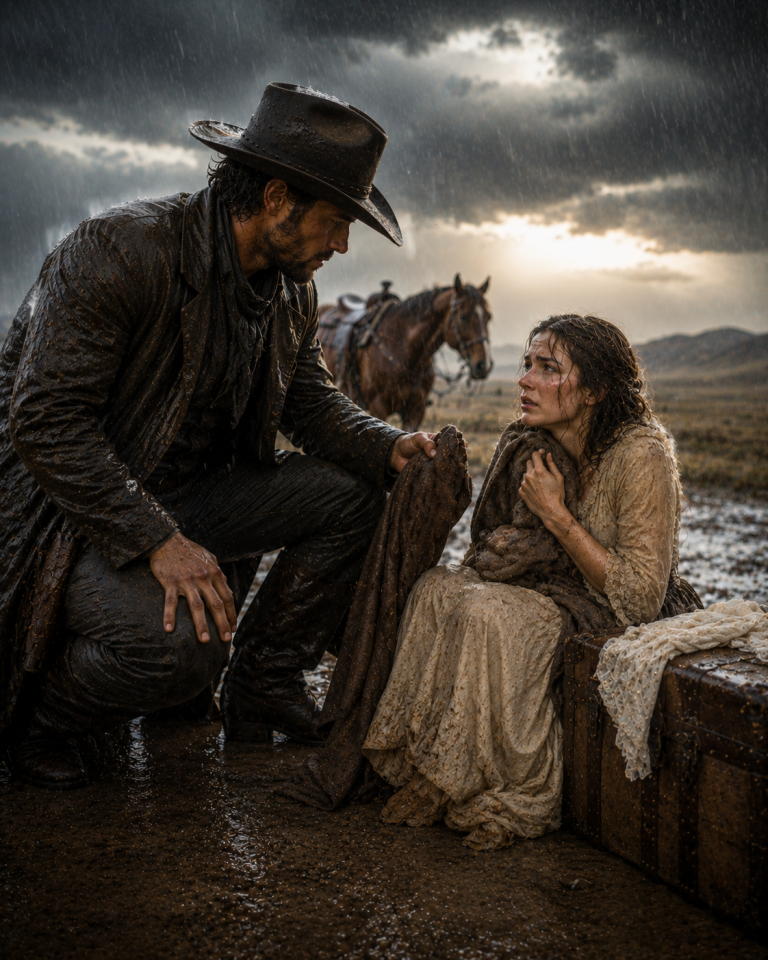
Rachel Vance appeared at the service entrance on a Thursday morning wearing a gray cardigan that had been washed so many times it had forgotten its original color, sneakers with the soles beginning to separate, and glasses too large for her face. Her résumé said five years of hotel housekeeping in Jersey.
Her résumé was a work of fiction.
The truth was that Rachel — her real name was Mara Drake, but the woman who had given her that name was dead, and the woman who had created Rachel Vance had survived five years underground — had chosen the Caruso estate for the same reason anyone chose the most dangerous place available: because people looking for you rarely looked there.
Mrs. Ferris, the head housekeeper, looked Rachel over the way people looked at things they intended to use hard and put away worn.
“Head down,” Mrs. Ferris said. “You clean what you’re told. Miss Sophia is not your concern. The boss doesn’t want the help near the girl. Clear?”
“Clear,” Rachel said.
It became unclear on the third day.
She was polishing the banister on the second floor when she saw Sophia in the hall. The child was sitting in the center of the corridor wearing a white dress with an embroidered hem, a silk ribbon across her eyes, her hands folded in her lap like someone who had practiced stillness until it became the only available state.
She looked like a held breath that had been breathing that way for three years.
Sefano came down the hallway.
Rachel had already noticed Sefano. She noticed the way he looked at things that couldn’t look back. She noticed the way his smile arrived faster than any feeling behind it. She had spent years learning to categorize men by their tells, and Sefano’s tell was the smile, which was technically friendly and fundamentally not.
He stopped in front of Sophia.
“Move, princess.”
Sophia flinched. Her foot caught the dress hem as she stood. She stumbled, her hands grasping at nothing, no wall to brace against, no shoulder to catch herself on.
Sefano watched her go down. He laughed.
“Careful. Daddy isn’t here.”
The rag in Rachel’s hand twisted until she felt her knuckles.
She knew what she was capable of. She had spent years being capable of it and then more years convincing herself she had become someone else. The person she was capable of being could have crossed that hallway in four steps, swept Sefano’s legs, and had his face against the floorboards before he finished the laugh.
She did not.
She dropped the metal bucket instead.
The sound rang through the hall like a shot. Sefano’s hand went to his hip. Sophia froze, shaking. Rachel dropped to her knees and scrubbed at nothing.
“Sorry, sir. So sorry.”
Sefano sneered and walked away.
When the sound of his footsteps was gone, Rachel glanced at the girl on the floor. Sophia had pulled her knees to her chest. She was breathing in short, shallow bursts, like someone who had learned that existing too loudly made things worse.
“He’s gone,” Rachel said quietly.
Sophia said nothing. She had not said anything in three years, according to Mrs. Ferris.
“My mother used to say,” Rachel continued, keeping her voice low, keeping her hands moving with the rag because the camera in the corner was watching, “that the dark isn’t where you’re powerless. It’s where everyone else is.”
Sophia’s head tilted. One degree. In Rachel’s direction.
“How?” The word was a sound that had clearly not been used in a long time. Rough, like a key in a rusted lock.
Rachel looked at the camera, then back at the girl.
“I can’t tell you here. But if you come to the library during my break, I can show you.”
That night, Dante reviewed the cameras from his study. He saw the new maid polishing the library. He saw Sophia in the armchair with an audiobook playing. He watched for several minutes, saw nothing alarming, and turned off the screen.
He poured a drink.
He did not know that the audiobook was cover.
He did not know that beneath the recorded voice, his maid was teaching his daughter to identify men by the rhythm of their footsteps.
He thought he had hired someone to clean the floors.
He had hired someone who cleaned floors so that no one would look closely enough to see what else she was doing.
The training started carefully.
Sophia had almost no muscle strength. She was thin from three years of barely eating, pale from three years of staying inside, and she moved with the particular hesitation of someone who expected the floor to simply stop at any moment.
But she was fast.
Terrifyingly, unexpectedly fast, once she started listening.
The library between two and four p.m. became the only room in the house where Sophia Caruso was permitted to exist at full volume.
“Stand,” Rachel said, on day three.
Sophia stood.
“I’m going to move around you. Track me. Not by breathing. By air displacement. By the creak of the boards.”
“I can’t do that.”
“You can’t do it yet.”
Rachel moved. She had trained in close-quarters combat until it became less a skill than a language, and she used that fluency carefully — leaving just enough sound for a beginner’s ears.
Sophia pointed left. Rachel was right.
Sophia pointed center. Rachel was behind her.
“Again.”
“It’s too dark.”
“The dark is the only place you’re already ahead of everyone else.”
Sophia pointed left.
Rachel was left.
They stopped. Sophia’s chest was heaving.
“You know,” Sophia said, very quietly, “Daddy says I’m broken.”
Rachel looked at the silk ribbon across her daughter’s eyes. She thought about the man two floors above them who had turned his grief into architecture and built it all around this child.
“Your father loves you,” Rachel said carefully. “But sometimes the people who love us most only know how to protect us by making the walls higher.”
She took Sophia’s hand and pressed the girl’s fingers lightly against her own throat.
Sophia startled and tried to pull back.
“What are you—”
“Feel.”
Rachel activated the muscles below her jaw.
Sophia’s fingers stilled on her skin.
“Vocal cords,” Rachel said. “They vibrate when I speak. They tighten when I lie. When you can’t see, you read everything through your hands and your ears. Your blindness isn’t a wound. It’s a frequency no one else is tuned to.”
Sophia swallowed.
“I don’t want to be weak anymore,” she said.
Six words. Delivered in a voice that had been underwater for three years, emerging finally into air.
Rachel went still.
She had heard confessions in much louder places, from much more formidable people. None of them had hit her like this.
“Then stop asking permission to survive,” she said.
Sophia straightened her spine.
For the first time.
Like something clicking into place that had been waiting for permission.
They worked for weeks.
How to map a room through echoes.
How to count paces between furniture.
How to distinguish weapons by sound — the specific intake of breath before a man raised his arm, the whisper of a blade through air, the distinctive click-mechanics of different firearms.
Sophia learned everything faster than Rachel expected. Blindness had not diminished her — it had concentrated her. Every sense she still had was running at full capacity in a way most sighted people never achieved.
Within three weeks, Sophia could identify each of the corridor guards by footstep alone.
And Rachel noticed: Sefano’s footsteps appeared near the nursery wing too often. Always when Kalin was out. Always in the evening.
One night, she was leaving the library when she heard his voice through the door of the security room.
Hushed. Careful.
“She’s still isolated,” Sefano said. “Easy to move when the time comes.”
The phone crackled.
A distorted voice: “Wait for the shipment. We take the girl. Caruso will kneel.”
Rachel went cold in the specific way of someone who had heard similar conversations before and understood exactly where they led.
Kidnapping.
Sophia.
Someone inside the syndicate had been positioning Sefano since before she arrived.
She backed away.
The floorboard announced her.
Sefano’s voice sharpened. “Who’s there?”
Rachel ran.
The corridor turned and she hit something solid — a wall of bespoke Italian wool and muscle that closed around her arm like a lock.
Dante Caruso looked down at her.
His eyes were the color of something very old and very cold.
Sefano appeared behind her, smiling.
“Just the maid, boss. Startled me.”
Rachel looked between them.
She could tell him. Right now. But if Sefano understood she knew — if he left this hallway and made a call — Sophia would not survive the next twenty-four hours.
She dropped her eyes.
“Sorry, sir. I thought I saw a rat.”
Dante stared at her.
He held her arm for three more seconds than was necessary.
Then he released her.
“Get back to work.”
Rachel walked away with her heartbeat in her throat, counting his footsteps behind her.
He did not move for a long time.
That night, Dante called Luca into his study.
“Background check. Rachel Vance. Full depth.”
Luca returned at two in the morning.
His face said what his mouth hadn’t formed yet.
“There is no Rachel Vance,” he said. “The name is constructed. The history is fabricated. The social security number traces to a deceased woman from Minnesota.”
He slid a file onto the desk.
“One face match.”
Dante opened it.
Military profile. Special operations. Black budget program, designation level redacted. Combat record spanning eleven years. Confirmed kills documented. Status, at the bottom of the page, marked in red:
**PRESUMED DEAD.**
Real name: *Mara Drake.*
Dante turned the page.
His blood moved differently when he read the second document.
The car bomb.
Bella’s death. Sophia’s blindness.
The federal investigation.
The suspect list, never charged.
And at the bottom, the notation that had closed the file three years ago:
*Sole surviving witness: Mara Drake. Whereabouts unknown. Presumed deceased.*
The chair fell when Dante stood.
The maid.
The ghost.
She had been there the day his wife died.
She was in his house.
Near his daughter.
He took the gun off the desk and was in the hallway before Luca could speak.
—
## PART 2
The nursery door came off its hinges when Dante’s boot connected.
He registered the scene in pieces: Rachel’s hand around Sophia’s wrist, the blade, his daughter’s face — not terror, he noticed, not the blank frozen fear she wore when anything surprised her, but something concentrated, something awake.
Then Sophia moved.
And the knife hit the floor.
Dante’s gun arm dropped two degrees. His mind refused the image.
Rachel stepped back. She turned to face him with the posture of a person who has spent a long time being ready to be found and has finally stopped running from it.
“That was lesson thirty-two,” she said.
He should have shot her.
He had shot people for less.
Instead he heard himself say: “What.”
“She can defend herself,” Rachel said. “Your daughter. The one you were protecting from the world by removing her from it. She can defend herself now.”
Dante’s jaw tightened. “You lied to me.”
“Yes.”
“You infiltrated my home.”
“Yes.”
“You put a blade to my daughter’s—”
“I was teaching her to take one away,” Rachel said. “Which she just did.”
Dante looked at Sophia.
Sophia stood with her head up. Breathing steadily. Not flinching away from the sound of raised voices. Her hands were at her sides and they were not shaking.
“Why?” Dante said. His voice had gone somewhere quiet that was worse than loud.
“Because you were killing her,” Rachel said. “Slowly. With love, but still killing her.”
Dante stared at her.
“She’s blind—”
“She’s alive.” Rachel stepped closer. “She survived the bomb. She survived losing her mother. She survived losing her sight.” A pause. “She was surviving you. But surviving isn’t the same as living, and you’d stopped letting her do even that.”
Dante took a breath that didn’t accomplish much.
“You were there,” he said. “The day Bella died.”
Rachel didn’t flinch.
“Yes.”
“The file says you were a witness.”
“I was more than a witness,” she said. “I was undercover. Federal black ops, running an asset inside your organization. We’d been tracking a traitor for eight months.” She reached into her cardigan. Luca’s weapon came up immediately. Rachel produced a flash drive. “The bomb that killed Bella,” she said, “was not meant for Bella.”
Dante went completely still.
Rachel’s voice was even. Relentless.
“It was meant for Sophia.”
The room lost air.
“No,” Dante whispered.
“Someone wanted leverage over you, and they calculated that a dead wife would only make you angrier. But a blind, traumatized daughter who you spent the rest of your life trying to protect—” Rachel’s voice didn’t waver. “That would make you controllable.”
She turned to the doorway.
Sefano stood there.
His face had the gray quality of someone who had already made the calculation and found it came out badly.
Rachel said, simply: “Him.”
Sefano moved.
He was fast. He had made the same calculation Rachel had, and his answer was the gun.
The hallway exploded.
Sophia dropped.
Not from fear.
From training — the floor was the correct position when shots fired, she had learned that in week three, and her body executed it before her mind had time to choose.
Rachel tackled Dante sideways. Luca returned fire. The hallway became noise and motion and the smell of burning.
Sefano fired toward the nursery door.
Sophia heard the trajectory. The angle of the sound, the shift of weight before the shot — she had been learning to hear these things for six weeks, in a library between two and four p.m., under the cover of an audiobook, from a woman who had decided that a promise made to a dying person was the kind that didn’t expire.
She found the fallen knife.
She had never thrown a weapon in her life.
She had thrown six weighted objects during training, all at stationary targets, all guided by Rachel’s instructions on angle and force relative to the sound of impact.
She threw the knife.
Sefano screamed.
The gun dropped.
Dante was already moving.
Three steps. One shot. The kind that ended things cleanly, which was the only kind Dante Caruso fired.
Sefano collapsed.
Silence.
Only the rain, which had been going the whole time and had not paused for any of it.
Dante turned.
Sophia was on the floor where she had gone down. She was shaking. But she was upright, knees underneath her, spine straight, face oriented toward the door as if waiting to hear what came next.
He walked toward her the way he had approached nothing in years.
Carefully.
Like something made of something he did not have words for.
“Sophia.”
She turned toward his voice.
“Daddy.”
Dante Caruso, head of the Caruso crime family, a man who had not cried at his wife’s funeral because the people watching needed to see what they were dealing with, knelt on the floor of his daughter’s nursery and came apart.
Sophia reached forward with both hands and found his face.
“You taught me to be afraid of everything,” she said.
Her voice was steady.
Her hands were gentle.
“She taught me to be afraid of the right things.”
—
## PART 3
The night settled around them slowly, the way nights did after violence — not peacefully but with the particular quiet of things that had spent themselves.
Luca organized what needed organizing. He was good at that, always had been. Dante trusted him with the parts of the aftermath that required efficiency rather than feeling, and Luca executed them the way he executed everything: completely and without drama.
Dante stayed with Sophia.
They sat in the nursery, on the floor, which was not where they usually sat, but Sophia had not stood up yet and Dante found he could not make himself be further from her than this. She leaned against him and he felt the specific weight of a child who had stopped bracing against the person holding her.
He did not know when he had last felt her relax.
He was not sure she ever had.
“How long?” he asked.
“Six weeks,” Sophia said.
“You never said anything.”
“I didn’t know if you’d let me keep going.”
Dante sat with that.
“Would you have?” Sophia asked.
He thought about the answer honestly, which was the least he could give her.
“No,” he said. “I wouldn’t have.”
Sophia nodded.
“I know.”
She was quiet for a moment.
“She said you love me the way a hammer loves a nail,” Sophia said. “That you think you can fix things by hitting them hard enough.”
Dante made a sound that was not quite a laugh.
“She said a lot of things.”
“Were they wrong?”
He looked at his daughter’s face in the low light. The silk ribbon was gone — it had come off during the disarming, and he had not replaced it, and neither had she, and now he could see the scars he had spent three years trying not to see.
They were scars. They were the marks of something survived.
He reached over and touched the side of her face.
“No,” he said. “They weren’t wrong.”
Rachel was still in the room.
She was standing near the window, her back to them, giving them something like privacy in a space too small to truly offer it. Dante looked at her — really looked, the way he had not looked when she was the maid he had decided was not worth looking at.
She was watching the rain on the glass with the expression of someone who has been carrying a thing for a long time and is not yet sure they’re allowed to put it down.
“Bella knew you,” Dante said.
Rachel turned.
Not surprise. She had been waiting for this question.
“Yes.”
“How.”
Rachel came across the room and sat in the chair beside the window.
“Five years before she died,” she said, “I was running an operation that went wrong. The asset burned. The network collapsed. I was extracted under fire and I was — compromised. Wounded. Not in a way you could see easily, but in a way that mattered.”
She looked at her hands.
“I ended up in a hospital under a false name with a wound that was closing and a state of mind that wasn’t. Bella was there visiting a patient — a woman from her church, from the neighborhood, someone completely separate from any of this. She sat with me for three hours. I don’t know why. I was nobody to her. A stranger in a room.”
“She did that,” Dante said.
“She said: ‘I don’t know what you’ve been through, and I’m not going to ask. But you look like someone who’s forgotten that surviving doesn’t have to be the whole plan.'” Rachel paused. “She came back the next day. And the day after. By the end of the week I told her more than I had told anyone in five years, because she was the kind of person who made honesty feel safe.”
Sophia was very still beside Dante, listening the way she listened to everything now — completely, with her whole body.
“Before she left on the last day,” Rachel said, “she told me she had a daughter. She said: ‘She’s six years old and she’s the best thing in the world, and I live in a world where things can happen. If something ever happens to me, will you promise me that if she needs someone, you’ll be there?'”
Dante closed his eyes.
“I didn’t take it seriously,” Rachel said. “Not the way she meant it. I told her yes because she deserved to hear yes, and I thought the probability of her needing me was close to nothing.”
“And then she died.”
“And then she died.”
Dante sat with that for a while.
“You came to find out who did it,” he said.
“I came because of the promise,” Rachel said. “The investigation was secondary. I already knew most of what I needed to know — I had been tracking Sefano’s network for two years before I got close enough to confirm he was the one who ordered the device. But I needed to get close to Sophia.” She paused. “I needed to see what she needed.”
“And what did she need?”
Rachel looked at Sophia.
“She needed to stop being glass.”
Sophia made a small sound — not quite a laugh, not quite a cry. The sound of a person recognizing something true.
“The evidence on the drive,” Dante said.
“Everything you need to close the case. The communication records. The financial chain. The logistics of the device. Sefano’s contact in the federal system who helped suppress the investigation.” Rachel set the drive on the arm of the chair. “It’s yours.”
“This could have been given to me through other means,” Dante said.
“Yes.”
“So why come yourself.”
Rachel looked at him steadily.
“Because I made a promise in person,” she said. “It seemed like it should be kept in person.”
Dante looked at her for a long time.
He was a man who had learned to read people by the things they revealed when they thought he wasn’t watching. He had watched Rachel Vance for six weeks while thinking she was only a maid, and what he had seen without registering was this: a person running toward something while pretending to run from it. A person who showed up early and stayed late and flinched when Sophia flinched and steadied when Sophia steadied, as if she had transferred her own composure to the child as a gift she wasn’t permitted to give openly.
“You could stay,” he said.
Rachel looked at the window.
“No,” she said. “I think the thing I was running from has been running after me long enough. It’s time to turn around and face it.”
“That’s a vague description of a problem.”
“It’s a vague kind of problem.”
Sophia stood up.
She stood with the new posture — the spine that had clicked into place six weeks ago and had not returned to its old position. She walked across the floor in the direction of Rachel’s voice with the certainty of someone who had memorized the room and knew where she was inside it.
She found Rachel’s hand.
“Will I see you again?” she asked.
Rachel looked at her.
“No.”
Sophia frowned.
“But I thought—”
“You don’t need me anymore.” Rachel pressed Sophia’s hand between both of hers. “You know where everything is. You know who people are before they open their mouths. You know how to fall down and get back up in the same motion.” She paused. “You threw a knife in the dark and hit your target.”
“I was scared.”
“You were scared and you did it anyway,” Rachel said. “That’s the definition. That’s the whole thing.”
Sophia was quiet.
“My mother asked you to come,” she said. Not a question. She had been listening and had assembled it.
“Yes.”
“Did you know her well?”
“Enough,” Rachel said. “Enough to know she would have been very proud of who you’re becoming.”
Sophia pressed her lips together.
She released Rachel’s hand.
She turned back toward her father, and the way she turned — oriented precisely, no hesitation, no reaching — made Dante’s chest do something complicated.
Rachel stood.
She looked at Dante.
He wanted to say: you should have come to me directly. He wanted to say: six weeks was a long time to be in my house under a false name. He wanted to say many of the things that were technically true and also missed the point entirely.
What he said was: “Thank you.”
Rachel nodded.
She left before the sky began to lighten.
No announcement.
No farewell.
Only the particular absence that followed someone who had been present in a way they had never admitted to.
—
The estate changed over the months that followed.
The silk ribbons disappeared first.
Then the rules about the dresses — Sophia began wearing what she wanted, which turned out to be training clothes most mornings and something more comfortable in the evenings, and Dante stopped having opinions about it.
The nursery became a different kind of room.
Dante had a training mat installed. He arranged for an instructor — someone Luca had vetted across six different security checks — to work with Sophia three times a week. Then four times. Then Dante started joining them, which surprised the instructor and did not surprise Sophia at all.
The first time Sophia pinned him during a drill, she laughed.
It was the first full laugh Dante had heard from her in three years. It was not the cautious, polite sound she occasionally produced around people she didn’t trust. It was the real version: involuntary, bright, a little startled by itself.
He sat on the mat and let it happen.
Luca, watching from the doorway, had the discretion to say nothing.
The case file on Bella’s death was reopened using Rachel’s drive. Three people were arrested within the first month. Two more were identified and handled through channels that did not involve arrest. The federal agent who had suppressed the investigation resigned quietly and disappeared into the kind of early retirement that people arranged for themselves when they understood the alternative.
Dante did not attend the proceedings.
He attended Sophia’s training sessions.
He ate breakfast with her three times a week and then every morning and then — without either of them marking the transition — simply every morning, no policy, just a thing that happened.
He stopped putting the ribbon on her eyes.
This had taken longer. It had been the last thing to change, because he had thought he was doing it for her — shielding her from the awareness of her own scars — but she told him one morning, very directly, that the ribbon made her feel like something that needed to be covered up, and he sat with that for the rest of the day and then removed it and never replaced it.
“You look different,” she said, about a week after the ribbon was gone.
“Different how? You can’t see me.”
“I can hear you,” she said. “Your breathing is different. You sound less like someone holding something.”
“I am less like someone holding something.”
“What were you holding?”
“Guilt,” he said. “Mostly guilt.”
She was quiet.
“It wasn’t your fault,” she said. “The bomb.”
“No. But you were in my world when it happened.”
“I’m still in your world.”
“I know.”
“And I’m fine,” she said. “I’m more than fine.”
She was.
This was the thing Dante came back to, over and over, in the months that followed: she was more than fine. She was not the fragile thing he had been protecting. She had never been that. She had been a girl who survived catastrophic loss and then been placed in a room where survival was the highest thing permitted to her, and she had been waiting — with the specific patience of someone who has run out of options — for someone to tell her she was allowed to do more.
Rachel had told her.
And now Dante was trying to be the person who kept telling her.
He was getting better at it.
One year later, Sophia came into the library while he was sitting with a book he was actually reading — a development she had also noted and apparently approved of.
She placed a letter in his hands.
“This came for you,” she said.
He looked at it. No return address. His name, in handwriting he did not recognize but somehow identified anyway — a person who wrote the way they did everything, precisely and without excess.
Inside, one line.
*Glass breaks. Steel bends. But girls who survive darkness become impossible to destroy.*
He read it twice.
He looked at Sophia.
She was smiling with her full face — the expression she wore when she already knew the ending of something she was pretending not to.
“She wrote to you,” he said.
“Three times,” Sophia said. “Small things. Checking in.”
“You didn’t tell me.”
“She asked me not to. She said you’d want to find her, and she needed to finish something first.”
Dante folded the letter.
“Is she done?”
“I think so,” Sophia said. “Her handwriting is different now. Less like running.”
He held the letter and thought about a woman who had kept a promise made to a dying person across five years and a cover identity and a war with whatever she had been running from, and who had chosen to keep it by becoming invisible in his house, and who had left before sunrise without asking for anything.
“She’ll be all right,” Sophia said.
“How do you know?”
Sophia tilted her head.
“Because she taught me what all right sounds like,” she said. “And that’s what her letters sound like. Someone who finally turned around and found out what was behind her wasn’t as big as she thought.”
Dante looked at his daughter — her straight spine, her upright head, her eyes uncovered and steady and aimed at nothing in particular in the way of people who don’t need to look at a specific thing to see it.
He thought about a woman who had walked into his house in a gray cardigan and cheap sneakers and changed everything in it without asking permission, under the cover of clean floors and quiet.
He thought about Bella, who had sat with a stranger in a hospital three hours for no reason except that it was the right thing to do, and who had extracted a promise from that stranger without knowing it would matter, and who had been right that it would.
He put the letter in the book he was reading and kept it there.
Later that evening, sitting at dinner with Sophia passing him the salt before he asked because she had heard him reach for it, he said: “She taught you well.”
“She taught me to hear things,” Sophia said. “You’re teaching me the rest.”
“What rest?”
Sophia considered.
“That the world isn’t just something to survive,” she said. “That it’s also something to be in.”
Dante was quiet.
“I’m still learning that too,” he said.
“I know,” Sophia said. “I can hear you learning.”
The rain came down outside, the way it always came down in this city — not washing anything away, just making everything slicker, just revealing what was already there.
Inside, the house was not a tomb.
It was not a fortress.
It was not a shrine to everything lost.
It was a home where a father was learning to love his daughter without walls, and a girl was learning that the dark she lived in was not a prison but a vocabulary, and somewhere beyond the rain-soaked city, a ghost had finally stopped being one.
Some promises were worth keeping across five years and a false name and everything in between.
Some debts were paid not in kind but in continuation — in the simple, radical act of keeping someone alive long enough to discover they never needed saving.
Only need someone who would stop trying to save them.
And let them stand.