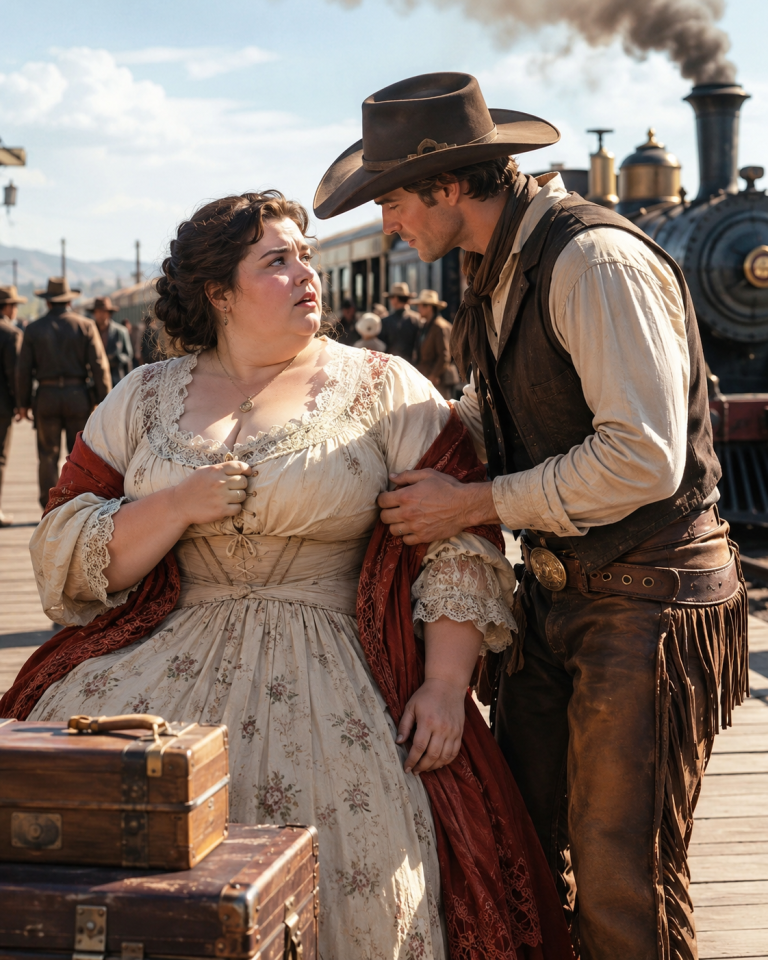
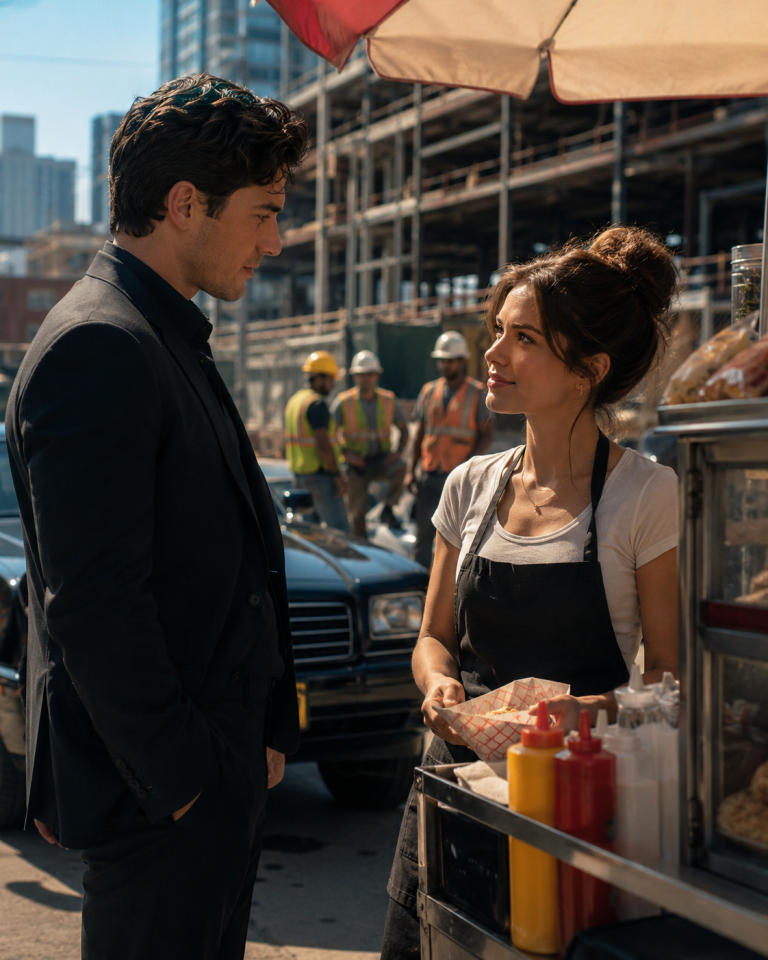
She Hugged a Dangerous Stranger to Escape Her Toxic Ex—Then Realized He Was the Mafia Boss Who Would Burn the City to Protect Her

## PART 1
She had learned to read a room the way other women learned to read faces — fast, from the edges, always calculating the distance between herself and the nearest exit.
Calla Reed had four exits catalogued within the first ten minutes at Obsidian: the main entrance, the emergency side door behind the DJ booth, the service corridor near the bathrooms, and the fire exit she’d confirmed was unlocked when she slipped inside at nine-thirty. She kept them updated the way a navigator kept wind speed — constantly, unconsciously, because the cost of being wrong was too high.
Three months out. New locks. New phone number. A restraining order that meant something only when someone chose to honor it.
Her best friend Petra was somewhere on the dance floor, laughing with a man whose name she wouldn’t remember by morning, and for approximately forty minutes, Calla had let herself almost believe that ordinary was possible again. That music and dim light and the warmth of a crowded room could coexist with safety.
Then the main entrance opened.
Her body registered it before her eyes confirmed it. A cooling in the stomach. The particular quality of attention that certain kinds of danger produced, different from ambient anxiety, specific and directional.
Joel Strand.
He stood at the entrance doing what he had always done in her life — scanning slowly, with the patient confidence of a man who had never had to hurry because the thing he wanted had nowhere to go. His face was familiar in the worst way, and seeing it moved through her like a chemical reaction, the kind that left a residue.
He was not supposed to be anywhere near her. That was what the paper said. But Joel had been teaching her for two years that paper was what he made of it.
He looked toward the bar.
Calla moved.
Not toward the exits. The emergency door was too exposed — she’d have to cross the main floor and he’d see her. The service corridor was too narrow; if he followed, she’d be trapped. She looked up, the old instinct, because up meant VIP, meant people who noticed things, meant the particular social physics that surrounded money and influence.
The VIP section sat elevated behind black rope. Two men in suits stood guard, and they looked nothing like the bouncers on the main floor. They looked like men who were paid for their attention, not their size.
In the corner booth, furthest from the light, a man sat alone with one hand around a glass he hadn’t touched.
Dark. Still. Expensive in the way that required no performance.
He was watching the room with the calm of someone who owned it.
Calla ducked under the rope.
One guard moved. She was faster — or her panic was, which amounted to the same thing. She slipped past his reach, crossed the platform in ten steps, and dropped into the corner booth, into the stranger’s lap, arms going around his neck before she’d fully committed to the decision.
He went rigid.
Not violently. Like a man who had been surprised by something and was choosing his response with great care.
Calla pressed close, her mouth near his ear, and hated the way her voice cracked on the ask.
“Please,” she said. “There’s a man at the entrance. He’s not supposed to be anywhere near me. Please just — please.”
A breath. His.
Then his arm came around her.
Deliberate. Not rough, not reluctant. The arm of a man making a decision he intended to stand behind.
“I have you,” he said, low, against the side of her head. “Don’t look at him.”
The instruction was steady. She obeyed it because the alternative was looking at Joel, and she was so tired of looking at Joel.
From where she sat, angled against the stranger’s chest, she saw Joel reach the rope. Saw the guard block him. Saw his face go through its phases — dismissal, irritation, and then the phase she knew best, the one underneath all the others where his jaw set and his eyes went flat and something that had only ever looked like love to her now looked like something entirely different.
The stranger did not tense. Did not perform. His other hand lifted and he said something — one sentence, quiet, to the guard — and Joel’s phone appeared, and then Joel’s phone went back in his pocket, and then Joel was being redirected with the practiced ease of men accustomed to moving problems.
Joel went.
Not easily. His eyes swept the room twice more, landing near the booth but not quite finding her, and then the crowd absorbed him.
Calla breathed.
Her whole body shook with the releasing of something it had been holding since she walked through the door.
The stranger’s hand moved slightly at her back, not a stroke, not an assumption, just a steady presence that asked nothing.
“He’s gone,” the stranger said.
“I know.” She didn’t move yet. “Give me one more second.”
“Take what you need.”
She pressed her forehead briefly against his shoulder, and the smell of him was expensive and clean and thoroughly unfamiliar, which was somehow the most comforting thing about it.
Then she lifted her head.
He was looking at her with the full, unpartitioned attention of a person who was accustomed to knowing exactly what was in a room. Not predatory. Not softened either. Just — direct, in a way that cost him nothing and seemed to see quite clearly.
“Who is he?” he asked.
“My ex.” The word felt small for what Joel was. “There’s a restraining order. He doesn’t care.”
“How long?”
“Two years of him. Three months of the order.”
His jaw moved slightly.
“What’s your name?” she asked.
He looked toward the main floor for a moment — checking, she realized. Still tracking Joel’s exit.
“Nico,” he said. “Nico Rael.”
No last name offered. Just two syllables and the implication that the city should have recognized them.
“Calla,” she said.
Something flickered in his expression. Brief and careful.
“I know,” he said.
She pulled back slightly. “How?”
He reached into his jacket and removed a business card — matte black, one line of silver type. He held it between two fingers.
“Because I make it my business to know who is in my space,” he said, “and why they’re afraid.”
It should have felt invasive. Coming from him, sitting in that booth, with Joel already gone and her heartbeat beginning to slow to something workable, it felt like information she needed to decide how to hold.
She took the card.
“If he comes near you again,” Nico said, “call that number.”
“I don’t know you.”
“No,” he agreed. “But he doesn’t know I don’t know you. That’s the part that matters tonight.”
—
She found Petra near the bar, still breathless from dancing, and the moment Petra saw Calla’s face her expression cleared.
“What happened? You’re white.”
“Joel was here.”
“God.” Petra’s hands gripped her arms. “Did he touch you?”
“No.” Calla’s fingers closed around the card. “Someone helped me.”
Petra’s eyes moved upward, toward the booth — empty now, the man gone as quietly as he’d arrived.
“Who?” Petra asked.
“I don’t know,” Calla said. Then: “Nico Rael.”
Petra went still. “Where did you hear that name?”
“He told me.”
A silence. Petra’s face did something complicated.
“Calla. Nico Rael isn’t — he’s not someone you run toward when you’re trying to be safe.”
“I ran toward him when I was trying to not be found.”
“That’s different.”
Outside, the street was wet from earlier rain. They waited for Petra’s car, and a black sedan slowed at the curb across the street. The window lowered two inches.
Nico’s gaze found hers through the gap.
He raised one hand. Then the car moved into traffic and the darkness took it.
Calla pressed the card between her fingers.
*Don’t*, she thought.
She put it in her coat pocket anyway.
—
The next morning, Petra sat in Calla’s section at Calloway’s, dark circles over her sunglasses, speaking in a pitch just above silence.
“I asked my friend who works downtown,” Petra said. “Nico Rael runs — I don’t know exactly what he runs. Finance. Real estate. Other things that don’t get named on paper.”
“Other things,” Calla repeated.
“His people are everywhere. My friend said when something needs to stop, it stops. When someone needs to disappear, they disappear.” Petra looked at her. “I’m not saying he’s a villain. I’m saying he’s not a safe harbor.”
Calla poured coffee.
She was thinking about Joel’s face at the rope. The way his phone had disappeared.
She was thinking about Nico saying *I know* before she’d given her name.
The bell above the diner door rang.
She looked up.
Joel walked in.
The temperature in the room changed — not loudly, not for everyone, but for the people who knew what his presence meant. Rosa, who had been running Calloway’s for twenty years and loved Calla in the uncomplicated way of someone who had watched her survive something, reached beneath the counter.
Joel sat at the counter with the easy manner of a man who considered any location he occupied to be his by right.
“Just coffee,” he said. “And maybe a conversation with a friend.”
“You need to leave,” Calla said.
“Restraining orders don’t cover breakfast,” he said. “My lawyer was very clear.”
He looked at her the way he used to look at her in the early months, when she had thought the intensity meant love. She understood now that intensity was not the same thing as love. It was just intensity. It could be pointed at anything.
“Who was he?” Joel asked. “Your lap dog from the club.”
“You need to leave,” she said again.
“I did some research. You know who Nico Rael is? Really is?” He smiled. “My detective has a file.”
Petra was on her feet.
Rosa was around the counter.
Joel stood slowly. He looked at each of them with the measuring patience of a man deciding what something cost and whether to pay it.
“You don’t know what you’ve walked into,” he said to Calla. “When his world gets done with you, there won’t be anything left to pick up.”
He left.
The diner exhaled.
Calla stood at the counter with the card in her apron pocket, and Petra’s voice from the booth: “Don’t. Please don’t.”
But Calla was already thinking that restraining orders were paper, and paper was only as strong as the hands holding it, and for three months she had been asking a system to keep her safe that had consistently demonstrated it had other priorities.
She was thinking about the way Nico’s arm had come around her. Not possessive. Not theatrical.
Certain.
At five-forty that evening, a black SUV pulled up outside Calloway’s.
Nico stepped out into the last of the light, one hand in his coat pocket, looking at nothing and registering everything.
Calla untied her apron.
Rosa watched from the window, baseball bat within reach, something complicated on her face.
Calla walked to the door.
Her hand was on the handle when she stopped.
She thought about everything Petra had told her. About files and disappearances and power that didn’t show up on paper.
Then she thought about Joel’s smile at the counter. The way he had said *my lawyer was very clear* like it was a weapon he’d been sharpening.
She pushed the door open.
—
## PART 2
He drove.
That was the first thing that felt different from what she’d expected — Nico in the driver’s seat, no one else in the car, the city moving past the windows with the particular quality of early evening when light went warm and the day hadn’t quite admitted it was over.
“He came to the diner,” Nico said.
“You know.”
“Yes.”
“Were you having me watched?”
He glanced at her. “I was having him watched. There’s a difference.”
The distinction landed somewhere she needed to decide how to hold it.
They stopped at an industrial block — old buildings, working architecture, no performance. He got out and waited. She got out.
“Joel hired a detective,” she said. “He said you have — that you do things that don’t show up anywhere official.”
Nico looked at the building. “Your ex is asking questions about my operations. My accounts. My competitors.”
Her stomach dropped. “What does that mean?”
“It means someone is feeding him information and using him as a probe. Joel hates you enough to be pointed at anything.”
“Who would—”
“There are people who want leverage over me.” His voice was flat with the particular flatness of old familiarity. “They look for soft points.”
Calla stood with that.
“He called me a soft point,” she said slowly.
Nico’s expression was careful. “He’s wrong.”
“Why?”
“Because soft points don’t know how to leave,” Nico said. “You knew. That matters.”
She looked at him in the pale industrial light, trying to find the manipulation in it, the angle. She had learned that care could be a tool. That tenderness could precede control. Two years with Joel had been a thorough education in the gap between what love looked like and what it was.
“Are you dangerous?” she asked.
A pause.
“To some people,” he said.
“To me?”
He looked at her for a long moment.
Then he took out his phone and made a call: two sentences, quiet, efficient. Hung up.
“Joel has been meeting with a man named Vasquez,” he said. “Vasquez wants my shipping routes. Joel thinks if he hands them something about me, they’ll give him tools to reach you.”
Calla’s hands went cold. “He’s using himself as bait.”
“He’s being used,” Nico said. “He probably thinks it was his idea.”
“What happens now?”
Nico’s phone buzzed. He looked at the screen, and his expression shifted in a way she had not seen yet — not colder, but concentrated, the way a storm concentrated before the weather changed.
“Vasquez moved up the timeline,” he said. “They’re not waiting anymore.”
He looked at her directly.
“Joel staged something for tonight,” he said. “He wants to bring you to them as proof I’m vulnerable.”
The air in the industrial block felt different suddenly.
“He’s going to try to take me,” she said.
“Tonight.”
Calla breathed through it. The fear was real and familiar and she had learned to breathe through it because the alternative was letting it decide for her.
“Then we should decide what happens before he does,” she said.
Nico studied her face.
“You’re not afraid,” he said.
“I’m very afraid.” She met his eyes. “But I’m done letting fear be the thing that makes my choices.”
Something moved in his expression — not surprise, but recognition, the look of a man who had seen something he had not expected and was adjusting his understanding accordingly.
He opened the SUV door.
“Get in,” he said. “I have a plan. But I need you to trust me for the next six hours.”
Calla looked at the door. Looked at him.
“I’m not yours,” she said. “I’m not anyone’s. Not anymore.”
“I know,” Nico said. “That’s why I’m asking instead of telling.”
She got in.
—
## PART 3
They drove to a house she had not been prepared for.
Not a fortress — or not obviously a fortress, which was a different kind of protection. The exterior was understated: stone and glass, set back from the street, the kind of architecture that kept its wealth to itself. Inside, it opened into something spacious and warm, firelight in multiple rooms, an older woman who appeared briefly to press food into Calla’s hands and disappear without requiring anything in return.
A man named Ferris waited in the main room — lean, watchful, the careful manner of a long-serving advisor. He looked at Calla with an expression she recognized: assessment without hostility, the particular attention of someone cataloguing a variable.
“The Reed woman,” he said.
“Calla,” Nico said. His voice carried a flatness on the correction that made Ferris recalibrate visibly.
“Of course.” Ferris looked at her differently. “Mr. Rael has asked me to brief you on what we know.”
Calla sat.
She learned: Joel had been contacted by Vasquez’s people six weeks earlier, while she was still building her three months of distance and new locks and false safety. Joel had told them about her — not because he wanted to help them, but because he had correctly identified that proximity to Nico was leverage, and he had wanted someone else’s tools to work with. The plan was straightforward: stage a crisis, use Calla to draw Nico out, give Vasquez’s people a location and a moment.
“He doesn’t love you,” Ferris said. He said it clinically, which somehow made it land more cleanly than cruelty would have.
“I know that,” Calla said.
“He never did. You were the thing that reflected back to him the version of himself he wanted to be. When you left, you took that with you.”
Calla looked at her hands.
“That’s why he can’t stop,” she said quietly.
“Yes.”
Nico was by the window. He had been there since they sat, watching the darkness outside with the patient attention of someone who had installed the darkness and knew its schedule.
“He’ll reach out tonight,” Nico said. “He’ll make it sound like closure. He’ll ask you to meet somewhere he’s chosen.”
“And if I go,” Calla said, “I lead you to Vasquez.”
Nico turned. “No. You don’t go anywhere near them.”
“Then how do you find the location?”
“You give me the meeting place when he calls. My people do the rest.”
Calla thought about it. “What if he gets suspicious? He knows I’ve been with you. He’ll expect me to go to you first.”
“He expects you to be afraid of me. Afraid enough to believe you need to handle him yourself to keep me out of it.”
“And do you want me to believe that?”
Nico crossed the room and stood in front of her, not crowding, not using his size as an argument.
“I want you to do what keeps you safest,” he said. “If that means trusting someone for six hours, I’m asking you to trust me. If it doesn’t, I’ll find another way.”
Ferris cleared his throat. “There isn’t really another way on this timeline.”
“Ferris,” Nico said.
Ferris went to stand by the window.
Calla looked at Nico’s face. She had been learning it since the club — the controlled composure, the quality of attention, the places where the architecture was load-bearing and the places where it wasn’t. She had spent two years learning Joel’s face and reading it wrong, and the memory of that was a constant humility.
But there were things she knew.
She knew Nico had heard her say *please* in a nightclub and had made a decision immediately, without calculation, without asking what it cost him. She knew he had been watching Joel not her. She knew he had corrected Ferris’s use of her name with the particular flatness of a man for whom that correction mattered.
She knew that when she’d sat in his car three nights ago and told him she was not anyone’s property, he had looked at her with something that was not concession — that was recognition.
“All right,” she said.
“All right, you trust me, or all right, there isn’t another way?”
“Both,” she said. “But mostly the first one.”
—
Joel called at nine-fourteen.
His voice was exactly what she had prepared herself for — the version of him that had worked on her for the longest, the one that sounded like the man she had thought she was building a life with, worn down at the edges, almost tender, nearly believable.
“I just want to talk,” he said. “Just us. You know me, Calla. You know I can’t let this go until I say what I need to say.”
“Where?” she said.
She watched Nico across the room. He was listening through Ferris’s phone, expression unreadable, eyes on her.
Joel named a park. Their park, he called it, which she had known he would, because everything had always been his first and theirs by extension.
“Eight o’clock tomorrow morning,” he said. “Please. That’s all I’m asking.”
She said she’d come.
She hung up.
Nico met her eyes.
“He’s going to bring more than himself,” she said.
“Yes.”
“He’ll try to drug me or take me.”
“We won’t let that happen.”
“I know.” She exhaled. “I know you won’t.”
Ferris was already on the phone. Nico’s people moved through the house with the quiet efficiency she had come to recognize as the specific economy of men who did not waste motion.
She slept in a guest room that asked nothing of her — clean, warm, a lock she chose to use because the choice was available. She woke once to the sound of rain and lay in the dark thinking about two years and three months and one night and one card and the strange arithmetic of how much space existed between trapped and free.
—
The park in morning light looked harmless.
It always had, she thought. Joel had picked it two years ago precisely because of that, the particular innocence of an old fountain and old trees, the couples and the dog-walkers, all of it providing a kind of cover.
Calla sat on the bench by the fountain and watched the path.
Joel appeared at eight o’clock exactly.
He had always been punctual. She had taken that as evidence of respect, once. Now she understood it as control — the control of a man who needed the terms of every encounter to be his.
He looked tired. Genuinely tired, not performed. Something about that was harder to be unmoved by than his old anger had ever been.
“You came,” he said.
“I said I would.”
He sat at the far end of the bench. Not close. That also felt deliberate — the performance of restraint.
“I’ve been doing things,” he said, “that I know were wrong. I’m aware of that.”
She waited.
“But you went from me to *him*, Calla. You have to understand how that felt.”
“I didn’t go to anyone from you,” she said. “I went from you to trying to be alive.”
“He’s dangerous.”
“You sent me toward him,” she said. “Every time you showed up somewhere I’d tried to be safe, you pushed me toward anyone who looked like they could actually stop you.”
His jaw tightened.
“That’s not—”
“You put me in the hospital,” she said. The words were flat and quiet. “You told the doctor I fell down stairs, and he documented it the way you said because you were standing in the room when you said it, and I said nothing because I had learned by then that saying something cost more than silence.”
Joel’s eyes moved left.
Just briefly. But she’d been reading this particular face for a long time.
She was already standing when the two men came off the path from the east.
Vasquez’s people. She had no faces for them, but she had the feeling — the same alerted attention, the same cooling in the stomach that had preceded Joel at the entrance of Obsidian.
“I’m sorry,” Joel said. He looked at her with something that might have been genuine and also had nowhere to go. “But you never listen unless someone makes you.”
“You’ve said that before,” Calla said.
She stepped back.
“She said that before,” said a voice from behind the men on the path.
Nico.
He came from the treeline with two people and the unhurried quality of someone who had been waiting long enough to be completely calm.
Vasquez’s men froze.
Joel stood.
Nico’s eyes moved over the scene — the bench, the men, Joel — and came to rest on the mark on Calla’s cheek where Joel had touched her two nights ago during the diner visit. The pressure of his jaw changed.
“Joel Strand,” Nico said.
His voice was the same quality it had been in the nightclub, the same controlled low register that had nothing to prove. But the eyes were different. The eyes had done what she had seen them do in the alley and the park and the industrial block — gone past the surface into whatever calculation lived underneath.
Joel pointed. “She told you.”
“She told me something happened. The rest I confirmed myself.” Nico walked forward until he was between Calla and everyone else. “You used yourself as an instrument. Vasquez promised you leverage and gave you a reason that felt personal. That’s how it works — they find the wound and they point it.”
Joel’s hands shook. “You think you’re saving her? You’re using her the same way.”
“No,” Nico said.
Simple. No elaboration.
Joel looked past him to Calla. “Ask him what he thought when you first came to him. Ask him if he trusted you.”
Nico was quiet for a moment.
Then he turned, slightly, toward Calla — not away from the room, just enough.
“He’s right,” Nico said. “For approximately forty-eight hours, I considered whether you were a plant. Whether Joel had sent you toward me.”
Calla held his gaze. She had expected this, on some level. Had felt it in the way Ferris had looked at her. It still landed.
“And?” she said.
“And you were shaking,” he said. “You held on, and you shook, and there is no performance in the world that specific.” His voice was even. “I was wrong to consider it. But I’m telling you because you asked to be told the truth.”
Joel made a sound — something between a laugh and an accusation.
Vasquez’s men moved.
What happened next was fast.
Not cinematic. Not clean. The brief, functional violence of people who had been positioned and waited for the moment and executed it without the drama of announcement. Joel dropped to his knees, both hands visible, in a motion that looked like choice and wasn’t quite.
The older of Vasquez’s men swore and ran two steps before Ferris was there.
It ended.
The park resumed around them — dog-walkers, the fountain, the morning light indifferent to the past three minutes.
Joel was on his knees on the path with his head down, and Calla stood looking at him, and the thing she felt was not the triumph she’d imagined during the bad nights when she’d rehearsed this and made it mean something. It was just — done. The specific relief of an ending that had taken too long and was finally finished.
“It’s over,” Nico said beside her.
“Yes.”
“You’re not going to cry.”
“No.” She thought about it. “Not here.”
“Then let’s leave.”
—
She cried in the car.
Not immediately, not dramatically, but the tears came somewhere on the highway when the park was gone and the city was doing its unremarkable Tuesday and the fear had found its ending and had nothing left to sustain itself.
Nico drove. He said nothing. He handed her something to wipe her face with and kept his eyes on the road.
“I never told him he could run my life,” she said eventually.
“No. He decided.”
“And then I started making myself small enough to fit the space he left me.”
“Yes.”
“That’s not the same as inviting it.”
“No,” Nico said. “It isn’t.”
She looked at the road.
“Petra told me she’d been asking around about you,” she said. “Before.”
“I know.”
“She said people who cross you disappear.”
“Some of them,” he said, with the frankness of a man who had decided she deserved the full cost of what she was looking at.
“How do I know the difference?” she asked. “Between what you did to them and what you might do to me.”
A pause.
“You decide what you need,” Nico said. “You leave when you want to leave. You call when you want to call.” He kept his eyes on the road. “I don’t hold people. The ones who have reason to disappear — they know what they did.”
“That’s a lot of trust.”
“Yes,” he said. “It is.”
She sat with it.
—
Two weeks later, Calla was behind the counter at Calloway’s when Petra walked in.
The look on Petra’s face was the particular combination of relief and guilt and incomplete information that Calla had learned to recognize as someone who had been sitting with something uncomfortable.
Calla poured her coffee.
She waited.
“I have to tell you something,” Petra said.
“Okay.”
“I knew who he was, that night at Obsidian. Before.” Petra’s hands were around the mug. “Not everything. But enough. I knew you’d probably run toward that section when Joel came in. I told you about the club. I made sure you were standing where you were.”
Calla set down the pot.
“How long?” she asked. The question came out quiet.
“Before the club. A few weeks before.”
“Who?”
Petra’s eyes dropped. “Vasquez’s people reached out. They said nobody would get hurt. They needed an introduction, just an introduction, and they needed Joel pointed.”
“Joel was already pointed,” Calla said. “He’d been following me for months.”
“I know.” Petra’s voice broke. “I know. I thought I was just — facilitating something that was already happening. And then it kept going and I was in too far to—”
“You watched me rebuild,” Calla said. “You watched me file the reports and change the locks and pretend I was fine. You watched all of that and you were—”
She stopped herself.
She breathed.
“I need you to leave,” she said.
“Calla—”
“Please leave.”
Petra left.
Rosa appeared from the back and stood quietly beside Calla for a moment, not saying anything, not asking for anything, just present in the particular way of someone who understood that some things needed no commentary.
“You’re going to call him,” Rosa said eventually.
“I don’t know.”
“You know.”
Calla looked at the window. The street was ordinary and bright.
“He’s not safe,” she said.
“Safe from what?” Rosa said. “You’ve tried safe. Safe didn’t stop Joel.”
“He’s dangerous.”
“He’s dangerous to people who do dangerous things to people he’s decided matter.” Rosa shrugged. “That has not historically been the worst arrangement.”
Calla turned to look at her.
“How long have you had that opinion?”
“Since you came in with glass in your hair and refused to tell me how it got there,” Rosa said. “I’ve had a lot of opinions since then. I’ve been keeping them to myself.”
—
Three days passed.
On the fourth day, the black car parked outside Calloway’s again.
He did not come in.
On the fifth day, it was still there.
On the sixth day, she walked out to it.
Nico rolled the window down.
“You’ve been here,” she said.
“Yes.”
“You could have called.”
“I didn’t want to be the one making contact first. I wanted you to have the space to decide.”
She looked at him.
“I know about Petra,” she said.
Something moved in his face. “Yes. I know you know.”
“Did you know before I told you?”
“I found out the morning after the park.”
“And you didn’t tell me.”
“You’d just come through something hard,” he said. “I thought you should have a few days before you had to come through another thing.”
The honesty in the answer was so uncomplicated that it wrongfooted her slightly.
“You’re going to keep making choices about what I need,” she said.
“I was going to tell you,” he said. “I was waiting for the right moment. I can accept that the moment you would have chosen was different.”
She stood with that.
“I’m not moving into your house,” she said.
“All right.”
“I’m keeping my job.”
“Of course.”
“And I’m not yours. I said that already, but I’m saying it again because I think it needs to be a principle, not just a statement.”
He looked at her steadily. “I understand.”
“Do you?”
“You’re asking me to want you without trying to keep you,” he said. “I know the difference. I’ve known people who didn’t.” He paused. “My father didn’t. I’ve spent a long time deciding I wouldn’t be him.”
The morning light was on the street and on his face and on the cup of terrible coffee she was still holding from her break.
“Come inside,” she said. “I’ll make you something terrible to drink.”
His mouth moved. Almost.
“I’ve been told the coffee here is bad.”
“It’s very bad,” she said. “Rosa refuses to change the supplier.”
She walked back toward the door.
Behind her, the car door opened.
—
Months passed.
The city did what cities did — moved, accumulated, forgot and remembered in the indifferent way of large things. Joel’s case was processed through channels Calla did not follow closely and did not need to. Vasquez’s operation encountered problems it had not anticipated, problems that manifested in the form of accounts freezing and partnerships dissolving and a general reorganization of who held what at whose pleasure.
Calla did not ask for the details. Nico did not offer them.
What he offered was the particular quality of presence that she had started to understand as his native language: attentive, unhurried, consistently there without requiring anything of the thereness. He sat in booth four on Thursday evenings. He ordered black coffee and drank it without complaint. He never ordered for her.
One Thursday he came in while she was explaining to a new hire why the espresso machine needed a particular sequence of persuasion, and Rosa pointed him to the booth, and forty minutes later when Calla finally looked up, she found him watching her with the expression she had catalogued by now as his real one — the one that appeared when he wasn’t managing it, attentive and almost startled by what it was feeling.
She brought the coffee over.
She sat across from him.
“You’re staring,” he said.
“I’m trying to decide something.”
He waited.
“I think you’re trying,” she said. “I think you’re trying to be something different from what you’ve been, not because you want to be saved, but because you decided it mattered.”
“Yes,” he said.
“I think that’s the right reason.”
“Probably the only one that works.”
She put her hand on the table. Palm up. Not reaching — just available.
He looked at it for a moment.
Then he put his hand in hers.
His fingers were warm. His grip was careful. The same quality it had been in the nightclub, the same decision made deliberately, the same *I have you* that had reached her that night across all her fear and landed like something real.
“I was afraid of you,” she said.
“I know.”
“I’m still a little afraid of you.”
“That might be reasonable.”
“But Joel made me feel invisible,” she said. “Like the only version of me that mattered was the one that reflected him.” She looked at their joined hands. “You look at me like I’m the whole problem.”
His brow lifted.
“I mean it as a compliment,” she said.
Something in him settled. She felt it in the way his hand held hers — not tighter, just more fully.
“Rosa says people think I softened you,” she said.
“People are wrong about most things.”
“What would you say it was?”
He was quiet for a moment.
“I had spent a long time making the world afraid of me,” he said. “I thought that was the same as being safe. I thought if nothing could get close, nothing could take anything from me.” He looked at the window, then back at her. “You got close. And nothing got taken.”
Her throat tightened.
“That might just mean I’m harmless,” she said.
“You’re not harmless,” he said. “You’re the most precise person I’ve ever met about what you will and won’t allow. You’re harmless to people who treat you well.” His thumb moved slightly across her knuckles. “I want to be one of those people.”
She believed him.
Not because it was safe. Not because the world outside Calloway’s was uncomplicated or because the future was something she could see clearly from here.
She believed him because he had said *I know* before she gave her name and then had told her why, unprompted, when she needed to know. Because he had waited outside her building every night without coming in. Because he had made a decision in a nightclub that had nothing to do with what it cost him and everything to do with what she needed, and had held it without asking to be rewarded for it.
“Finish your coffee,” she said.
“It’s very bad.”
“I know.” She didn’t let go of his hand. “Come back Thursday.”
“I’ll come back Thursday,” he said.
Outside, the street was ordinary and bright and full of people going about the complicated business of being alive in the middle of their own stories. Rain was coming — she could smell it in the air, the particular metallic promise of weather.
Inside Calloway’s, booth four, Rosa pretended to read her order book and was not reading her order book.
Calla let go of Nico’s hand.
She stood.
She looked at him one more time — this man she had found in the wreckage of one of her worst nights, this careful, dangerous, trying man who had decided she was worth the trouble of being different.
“Same time?” she said.
“Same time,” he said.
She went back to work.
For the first time in years, she did not check the exits.
—
*THE END*