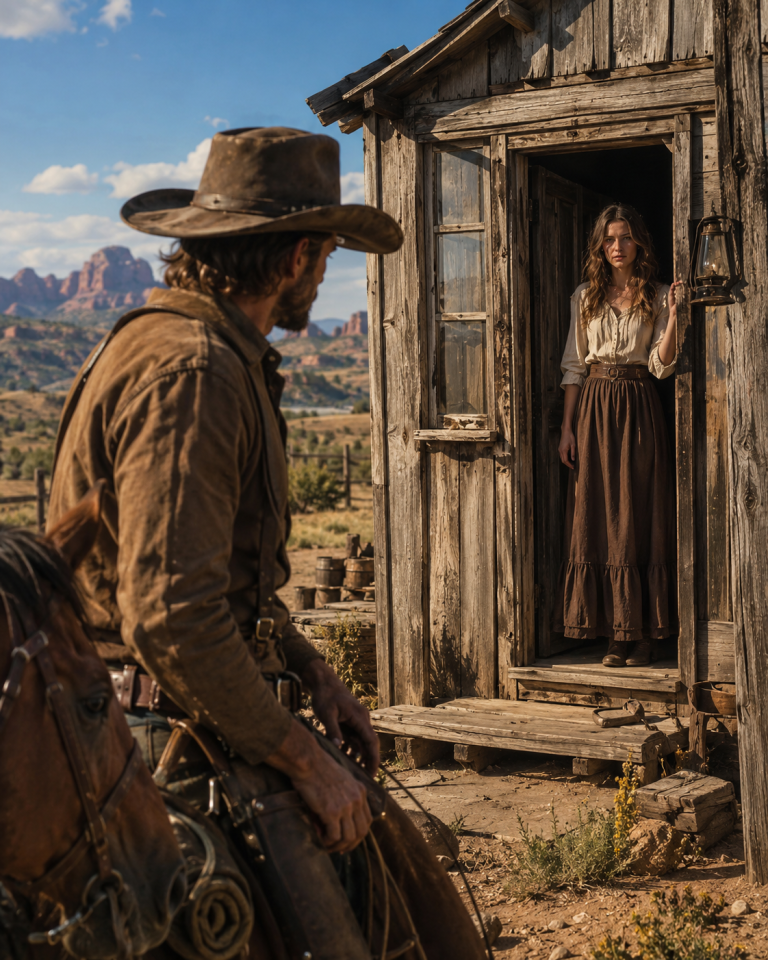
She Found a Bleeding Man in Her Garage—The Mafia Boss Woke Up and Said, “You Saved My Life”

## PART 1
There are two kinds of exhaustion.
The kind sleep fixes, and the kind that settles into the space behind your eyes and lives there until something forces it out.
Nora Callahan had been carrying the second kind since eleven that night, when the retriever on her operating table stopped fighting. She had tried everything — two hours of careful, furious, precise work under surgical lights while the dog’s owner sat in the hallway with both hands pressed against his knees and the specific compressed face of someone who understood that hope had a shelf life and was trying not to check the expiration. By one twenty-seven a.m., the dog’s heart had made its last decision.
She had told the owner herself, because that was the job.
She had driven home in the rain because that was what came after the job.
Seattle in November produced weather like a slow punishment. Not dramatic — no thunderous cinematics, just persistent gray rain that turned every streetlight into a soft orange haze and made the world feel both very close and very far away at once. Her wipers worked continuously and kept almost losing.
She pulled into her driveway at two in the morning and sat in the dark.
The house was her grandmother’s house. Old, well-built, the kind of two-story craftsman that had absorbed decades of weather and family without losing either its bones or its charm. Nora had inherited it three years ago along with three thousand dollars in deferred maintenance, a root cellar her grandmother had called a mud room, and a garage that smelled like tool oil, old paint, and every project her grandfather had started and abandoned with cheerful ambition.
She did not live with anyone.
She did not particularly want to.
After enough years treating animals that could not explain their pain, she had developed a deep and unconditional patience for non-verbal creatures. For people she needed effort and rest, and she currently had neither.
She grabbed her bag and ran for the porch.
Halfway across the driveway, her flashlight caught something near the garage’s side door.
The first thought was oil.
Some equipment had leaked, something routine, something she could deal with in daylight.
Then the second thought arrived about two seconds behind the first and had a different quality entirely.
That color.
That specific darkness.
She turned the flashlight directly on it.
Red. Deep, saturated, not diluted by rain the way water-based mess would be. Moving slowly down the concrete toward the drain.
Not oil.
Not engine fluid.
Blood.
Fresh enough to still be tracking.
Every rational part of her brain presented the same argument immediately and with considerable force: go inside, lock the door, call 911, wait somewhere safe while professionals with actual jurisdiction handled whatever was bleeding against her property.
Her feet did not agree.
Twelve years of practicing medicine on creatures that could not ask for help had built something in her that moved faster than rational argument. She went to her car first — unlocked the glovebox, got the compact flashlight, the emergency kit she kept out of professional habit — and then she followed the blood.
It led to the garage’s side entrance.
The door was ajar. Just enough for a body to have pushed through.
She hesitated with one hand on the door frame.
Then she pushed it open.
The smell hit her first: tool oil, damp cardboard, the garage’s familiar staleness — and underneath all of that, something warm and copper that her body recognized before her mind caught up.
The flashlight found him in the far corner, between a stack of paint cans and her grandfather’s old workbench.
A man. Lying against the wall with his knees partially drawn up, head tilted back against the wood. Dark hair soaked through with rain and sweat. Face the color of old plaster. His suit — and it had been an expensive suit, she registered this the way you register weather, as simple data — was torn open at the side, the white shirt beneath it so saturated it had gone almost black.
One hand was loosely pressed to his abdomen.
A gun lay on the floor beside his thigh.
She did not move for three full seconds.
Everything in her life that was not the clinic and the animals and the house and the grandmother’s coffee mugs and the grief she handled in quiet and the solitude she had built like furniture — all of it pressed on her to choose the rational option.
She was not his doctor.
She did not know him.
She owed him nothing.
She was looking at a gunshot wound, which was a mandatory report, which was a legal obligation, which connected directly to a justice system she could call with one phone call.
All of that was absolutely true.
Then his chest moved.
Barely.
But moved.
She was inside the garage before she finished deciding to move.
She dropped to her knees and checked his pulse at the side of his neck with two fingers: rapid, thread-thin, present.
Present.
“Hey,” she said quietly. “Can you hear me?”
Nothing.
She pulled his hand away from the wound and used the flashlight.
Neat entrance. Left side, below the ribs. The bleeding was slowing now, which could mean clotting — or could mean there was nothing left to lose at that rate.
She did not have time to be afraid.
Fear could have its turn later.
She ran.
Inside the house, she moved through every room that held what she needed: the large-animal emergency kit from the mudroom shelf, the surgical gloves she kept in multiples because paranoia about inventory was a professional virtue, gauze, saline, forceps, sutures, antibiotics that were technically livestock-grade but pharmacologically identical to what mattered here. Towels from the linen closet. Her desk lamp on an extension cord.
She paused at the kitchen counter long enough to take one drink from the whiskey bottle in the cabinet above the microwave.
Her hands were shaking.
She needed them to stop.
One drink.
Then she carried everything back into the rain.
She worked under the extension cord lamp for two hours.
Not because she was slow.
Because she was careful.
She irrigated the wound, ran her gloved fingers along the entry track, checked for the exit that wasn’t there. She found the bullet in the muscle layer with forceps — not deep enough for organs, deep enough for disaster if left — and removed it with the unhurried deliberateness of someone who had learned long ago that impatience killed more patients than injury.
When it came free, she set it in an empty tin can beside the workbench.
The sound it made when it hit the metal was very small.
She sutured in layers: muscle, then fascia, then the subcutaneous tissue, then skin, working in the gray light and the smell of rain and tool oil until the wound was closed and clean.
When she sat back on her heels, her knees were soaked through and her back ached and dawn was beginning to happen outside the small garage window.
He was alive.
She had removed a bullet from a stranger in her garage.
She had not called anyone.
She had practiced medicine on a human being without the appropriate license.
She had saved a life.
She was going to have to figure out in what order those facts mattered.
But not yet.
She dragged him inside first.
—
## PART 2
She used a moving blanket and the low-friction trick she’d developed for moving large, unconscious animals that couldn’t be lifted directly. By the time she had him on the old couch in the living room, she was drenched in sweat despite the cold, and both her shoulders were making opinions known.
She started an IV with the saline from her kit, checked his temperature — fever building, not yet critical — and wrapped the wound properly.
Then she found the gun again.
Still in the garage where it had fallen from his hand.
She used a towel to pick it up, carried it inside, and put it in the hall closet behind her grandmother’s winter coats.
Evidence. Problem. Another decision she had already made.
She went back to the living room and sat in the armchair across from him and looked at the window as the sky went from black to gray to the specific pale nothing of early Seattle morning.
Then she called in sick for the first time in three years.
Her colleague Dr. Adaeze took the call with the careful, thoughtful neutrality of a person who understood that something was wrong and had decided not to make it bigger by pressing.
“Take whatever you need,” she said. “I’ve got it.”
“Thank you.”
“Nora.”
“I’m fine.”
Another careful pause.
“Okay,” Adaeze said.
Nora spent the next day and a half doing what she knew how to do: monitor, adjust, respond. Change the IV. Check the wound. Track the fever. Sit nearby when his breathing changed quality and away when it stabilized. She slept in the armchair twice in ninety-minute stretches, which was not restorative but was enough.
She learned the shape of his face while she kept watch.
Strong jaw. Dark lashes. Old scars running along his forearm and one across the top of his left hand, the kind that come from deliberate force rather than accident. A man who had been injured before and had survived it enough times to carry the record on his skin.
Not a soft life.
She was just beginning her second real sleep cycle when motion detonated the room.
One second: stillness.
Next second: he was on his feet in a single explosive movement, back to the wall, body low, eyes moving across the room with the rapid, assessing quality of someone who had been woken from unconsciousness before and had learned to skip the disoriented middle step.
His gaze found her.
Stopped.
“You’re going to tear the stitches,” she said, from the armchair.
Her voice came out exactly as steady as she needed it to.
He looked at her. At the IV stand. At the equipment on the coffee table. At his own bandaged side. Then back at her face.
“Where am I?”
“My house. You collapsed in my garage forty hours ago. I removed the bullet and closed the wound. You should sit down before the repair work becomes less relevant.”
He stared at her for a long time.
And then — this was the part she had not fully prepared for — he sat down.
“Thank you,” he said. His voice was rough and low and accented in a way she couldn’t immediately place. “And you should have called the police.”
“Probably.”
“Why didn’t you?”
“You hid in a garage rather than going to a hospital,” she said. “That told me official channels might get you killed faster than the blood loss.”
He looked at her again.
A different kind of looking.
Something calculating in it, but also something she hadn’t expected in the face of a man with old scars and a history of getting shot.
Something that looked like surprise.
—
## PART 3
His name was Adrian.
He offered it without hesitation, which meant either it was true or it was the first layer of a more elaborate truth. She filed the question and didn’t pursue it. He called her Dr. Callahan until she told him Nora would do, and he switched with the naturalness of someone used to adapting to preferences quickly.
“Adrian,” she said. “What do you do for work?”
“International trade.”
“People in international trade don’t usually get shot.”
“Most people in international trade make safer choices than I do.”
“That is a very careful answer.”
“It is the safest one.”
She checked his pulse and temperature with the same focus she brought to anything biological. He watched her work without flinching, which was its own kind of data point.
“Will anyone come looking for you?”
“The people who shot me believe I’m dead.”
“And your own people?”
A pause. Longer than the others.
“Four hours after my men lost contact, my location would have been given to—” He stopped. “Yes. My people will be looking.”
“How long do I have before they find you?”
“I’ve already sent a signal.”
She looked up.
His expression was carefully neutral.
“You had a burner phone.”
“Left side jacket pocket. I reached it last night.”
She thought about that.
“You were conscious last night.”
“Briefly.”
“You could have told me.”
“You were asleep in the chair at 3 a.m. after performing surgery on a stranger for two hours. I decided you’d earned the rest.”
Nora looked at him.
He looked back.
“They’ll come to this house,” she said.
“Yes.”
“And then they’ll know about me.”
He held her gaze. He did not soften it with false reassurance. He did not pretend the outcome was different.
“Yes,” he said.
That was how she first understood what he was.
Not from the gun. Not from the scars. From the fact that he told her the truth about her own situation when a lie would have been easier and she would not have known the difference until it was too late to matter.
Men who lied as a first instinct never chose truth when it cost them something.
This one did.
The men arrived six hours later.
Three of them, through the front door after a single knock, dressed the way people dress when they want to convey consequence without yet doing anything consequential. The oldest was perhaps sixty, gray at the temples, a face that had been handsome once and had traded that for something more durable.
He stopped when he saw Nora.
“This is the doctor?” he said, in Italian-inflected English.
“This is Nora Callahan,” Adrian said. “She saved my life. She’s leaving now.”
“I’m not leaving,” Nora said.
Four heads turned.
She set down the mug of coffee she had been holding and looked at the older man steadily.
“If you’re here to discuss what happens because he was in my garage, I’m the relevant party. Don’t talk around me like I’m furniture.”
A silence.
The older man looked at Adrian.
Adrian’s expression had developed something in it that Nora, in a clinical context, would have classified as amusement held under tight control.
“Enzo,” Adrian said, “these are her terms. Adjust.”
Enzo adjusted.
That was the day she learned that Adrian’s terms were followed without visible resentment, which was its own kind of power measure. Not the volume kind. The older, quieter kind that lives in a room before anyone enters it.
Enzo’s name, as she would learn, was Enzo Valeri. Adrian’s right hand. His version of Franco. A man who had survived thirty years in a world that discouraged long careers by being ruthlessly practical about which risks were worth taking.
He did not like her immediately.
That was fine.
She did not need him to.
Security came to the house that night — systems she recognized as designed by people who spent serious money on seriousness. Cameras. Reinforced points. Motion sensors that looked like garden lights. Two men she would come to know as Marcus and Del stationed at intervals she could not figure out, which meant they were probably good at their jobs.
Adrian stayed.
He claimed it was for wound observation.
Then for overseeing the security installation.
Then he stopped giving reasons.
Nora stopped asking.
They built a rhythm that neither of them named.
He cooked, which she had not expected from a man whose life apparently involved being shot at with some regularity. Not elaborate cooking — straightforward, precise, flavored with the specific confidence of someone who had cooked the same things long enough to do them properly without measuring anything. Pasta that smelled like a grandmother’s kitchen. Soup that appeared on the counter when she came home late without discussion.
“Grandmother’s recipe?” she asked one evening.
“She believed feeding people was non-negotiable,” he said. “Regardless of mood or circumstances.”
“Mine believed the same thing.”
“What happened to her?”
“Old age. Peacefully. Three years ago.” A pause. “This was her house.”
He glanced around the kitchen without appearing to — the kind of look that takes in furniture and photographs and the specific way a life has been arranged.
“She would have liked the security cameras,” Nora said.
He almost smiled.
“She sounds practical.”
“She was a nurse. Practical was a professional requirement.”
He looked at her.
“Where do doctors go when they need to grieve?”
The question arrived without warning and was more precise than it had any right to be.
Nora set down her coffee mug.
“How did you know I was grieving?”
“You came home at two in the morning in bloody scrubs,” he said. “Not emergency bloody. End-of-procedure bloody. And you sat in your driveway for four minutes before getting out of the car.”
She looked at him.
“You were already awake.”
“The fever broke around one. I heard the car.”
She thought about the retriever.
About the owner in the hallway with his hands on his knees.
About the particular way a life stops, the sound of a monitor going flat, the specific weight of telling someone that the thing they loved most was gone.
“A dog didn’t make it,” she said.
Adrian said nothing.
She appreciated that.
Some silences were companionable rather than empty.
His sister Marisol called every Sunday at ten.
Nora knew this because Sunday mornings had a different quality in the house — Adrian moved through breakfast slightly ahead of normal and took his phone to the back porch regardless of weather. She could hear the register of his voice through the glass without the words, and it was different from every other voice she had heard from him: less precise, more open, occasionally something that sounded like laughter though she could not confirm it without staring.
He came back in one Sunday with color in his face he hadn’t had before the call.
“Good news?” she asked.
“She’s having a baby.” He set his phone face-down on the counter, which meant he was managing something. “I’m going to be an uncle.”
“That’s— congratulations.”
“She waited a month to tell me.” His voice was very even. “She thought it would upset me.”
Nora looked at him.
He picked up his coffee.
“She thinks my life doesn’t have room for good things,” he said. “She’s been protecting me from happiness since she was eleven years old.”
“Has she been wrong?”
He was quiet for a moment.
“Until recently,” he said.
The look he gave her when he said it made her look away first.
The cartel found her clinic six weeks after the garage.
She knew it the moment she arrived at work: two men at the far end of the parking lot in a car that had been there before they officially opened, which meant they had been waiting. One at the counter fifteen minutes later asking about a dog that didn’t exist in any register system she could locate. The specific texture of people whose interest in your space had nothing to do with what the space was for.
She told Enzo when he called at noon.
He was quiet.
“Tell me exactly what they looked like,” he said.
She told him.
“I’ll contact Adrian.”
“I know. Tell him to come by dinner. I’ll make enough for everyone.”
A longer quiet.
“Doctor Callahan,” Enzo said, “you are either very brave or very strange.”
“I practice emergency medicine on animals that could break my arm without intending to,” she said. “I’ve gotten comfortable with situations that don’t have clean resolution.”
She went back to the floor and treated a cat with an ear infection and a rabbit with a fractured leg and a Labrador who had eaten a remarkable quantity of kitchen sponge, and at no point during any of it did she allow what was happening in the parking lot to enter her hands.
That was the only rule she had for herself.
Keep your hands steady.
The rest can wait.
Adrian arrived at five-thirty with three men she hadn’t seen before and the specific expression of someone who had received information he did not like and was deciding what to do about it without doing it visibly.
She served pasta.
“You made dinner,” he said.
“You said your grandmother believed feeding people was non-negotiable,” she said. “Sit down.”
He sat.
The three men looked at each other.
Enzo, who had arrived with the others, made a short sound that Nora would later decide was the closest he came to laughter.
They ate at her kitchen table.
Then she and Adrian sat in the living room and he told her.
Not everything. But more than she had received before. The organization. The cartel’s interest. Why the parking lot had nothing to do with the clinic and everything to do with him. The specific pressure point: if they could establish leverage over Nora, they could create a channel through her into his world that bypassed every other defense.
“They’ll contact you directly,” he said. “They’ll be polite. They’ll give you a choice that isn’t actually a choice.”
“Information about you.”
“Yes.”
“And if I refuse?”
“They’ll find other ways to apply pressure.” His jaw was tight. “The clinic. Your staff. Civilians they can connect to your name.”
She thought about Adaeze. About the front-desk girl who brought donuts on Fridays and had been talking about her sister’s wedding for three months.
“I won’t give them anything,” she said.
“I know.”
“So what do we do?”
He looked at her.
“I’d like to discuss options,” he said. “Not decide for you.”
She blinked.
That was unexpected enough that she wasn’t certain she’d heard it correctly.
“I have a secure property forty minutes from here,” he continued. “You could move there temporarily while we resolve this. But that’s a significant disruption to your life and I want you to have actual information before we decide anything.”
“Or?” she asked.
“Or we use the clinic. Controlled situation. Cameras, covered positions, monitoring. If they approach you there, it happens on ground we’ve prepared.”
“I’d have to keep working.”
“Yes.”
“That means I’d know the whole time that someone is watching the parking lot and waiting for contact.”
“Yes.”
She thought about it.
“The second option,” she said. “I’m not running away from my own workplace.”
His expression didn’t change.
But something in his posture settled.
“I thought you’d say that.”
“And yet you gave me the option.”
“Yes.”
“Why?”
He looked at her steadily.
“Because the first time I made a decision about your safety without asking you,” he said, “would be the last time you trusted me.”
Nora looked at this man who commanded rooms and was sitting in her living room asking for permission.
She had treated animals that had been broken by the kind of care that forgot to ask what they needed.
This was not that.
The clinic changed without looking like it changed.
Three days later, two men came in with an injured dog.
Nora recognized what they were immediately.
She recognized the dog too: genuinely injured, a Husky with a chemical burn on his leg, someone had hurt him on purpose to make the entry look plausible.
She treated the dog first.
Then she gave the men the only thing she intended to: wrong information delivered with just enough confidence to sound right. Routes Adrian had changed six days ago. Times that no longer applied. Security rotations that had already been replaced. Everything constructed with Marcus and Enzo the night before to sound true and lead nowhere useful.
She wrapped the Husky’s leg with the care she gave every patient.
When the men left, she checked her hands.
Steady.
Then she went to the back office and texted Adrian.
*They came. Gave them the package. The dog was real — chemical burn, treated. I’m keeping him if his owner doesn’t come back.*
A pause.
Then: *Of course you are.*
Then: *Are you all right?*
She looked at the text for a moment.
The simple question of it.
*Yes*, she wrote. *Come for dinner.*
They took her nine days later.
The parking lot. After a late surgery. The team she had moved to different vehicles and positions, but the cartel had waited and watched and eventually found the gap. She registered what was happening — the van, the angle, the speed of the approach — and had approximately two seconds of decision-making available to her.
She memorized the driver’s face.
She noted the van’s mismatched bumper.
She counted: two men visible, probable third in the front.
Then she was inside the van and there was no more data to collect.
The warehouse smelled like industrial cleaner and cold concrete. Her wrists were bound with zip ties, which she recognized as relatively improvised. The man who sat across from her was immaculate in his composure — the cleaner kind of threat, the kind that did not need to appear brutal to feel dangerous.
He asked for information.
She gave him the same package she had given the two men in the clinic. Same wrong routes, same outdated timing, same replaced personnel rotations, different enough in framing that it didn’t sound like she was reading from a script.
He watched her face while she spoke.
She looked back at him the way she looked at aggressive animals that needed to understand she was not afraid even when she was.
“You are very composed,” he said.
“I extract things from living bodies for a living,” she said. “I’m comfortable with situations that require staying calm.”
He studied her.
“If you’re lying—”
“If I were lying,” she said, “I would tell you something you could verify immediately and couldn’t. I’m telling you things that will take you time to test. That’s either honest information or very careful misinformation. Either way, you’re going to keep me alive while you check it.”
He looked at her for a long moment.
“Sit,” he said, to the man in the corner.
The man in the corner sat.
She bought eleven hours.
Adrian came through a roof access point she had not known existed with four men and the specific quality of someone operating at the center of their own urgency rather than the edges. No wasted movement. No noise preceding the door opening.
He was across the warehouse floor before she had fully registered the door.
He crouched in front of her, checked her face with both hands the way you check an animal after an accident — looking for damage before comfort.
“Can you walk?”
“Yes.”
He cut the zip ties.
She stood.
Her knees were solid.
“The driver,” she said. “Dark scar above his left eyebrow. The van has a mismatched rear bumper, silver on charcoal.”
He stared at her.
“I memorized what I could,” she said. “Is it useful?”
“Yes,” he said. Then: “Are you hurt?”
“No.”
He took one breath.
Then he put his coat around her shoulders and walked her to the door.
Three of his men did not come home that night.
She attended their funerals.
Adrian told her she didn’t have to.
She told him she was going regardless.
She stood at all three services in the specific way of someone who understands that grief and accountability are not the same thing but can occupy the same posture. At the second service, one of the men’s sisters — young, maybe nineteen, a face full of controlled devastation — looked at Nora across the graveside and did not say anything.
Nora held her gaze.
She did not look away.
That mattered in ways she could not have explained.
Enzo found her at the third service, standing apart from the gathering.
“You didn’t have to come,” he said.
“I know.”
He stood beside her.
“I was wrong about you,” he said, after a moment.
She looked at him.
His profile was absolutely level. A man not accustomed to saying things like that, saying them precisely because they were owed.
“You weren’t wrong,” she said. “You were careful. That’s different.”
He glanced at her sideways.
“Adrian says you make that distinction about a lot of things.”
“It matters.”
“Yes,” Enzo said. “It does.”
Afterward, Adrian tried to manage distance.
She watched him do it with the clinical attention she brought to difficult cases: the careful politeness, the conversations kept to logistics, the way he stopped appearing in rooms she was in without a specific functional reason.
It lasted four days.
On the fifth, she went to his study.
He was at the table with maps and documents, looking like a man creating work to fill space that would otherwise require him to think about something he was avoiding.
“Adrian.”
He looked up.
“Stop apologizing for existing,” she said.
He looked at her with no visible expression and several visible things underneath it.
“You were taken because of me.”
“I was taken because violent men made a strategic choice,” she said. “That’s their fault, not yours.”
“They targeted you specifically—”
“To reach you. Yes.” She sat down across from him. “I know. I was there for the conversation, you’ll remember.”
His jaw moved.
“Three men—”
“I know,” she said. “I was at their funerals. All three.”
He looked at her.
“And that doesn’t—”
“It hurts,” she said. “It will keep hurting. But making you smaller doesn’t fix it, and that’s what you’re trying to do. Make yourself smaller so I don’t have to look at what this costs.”
“I don’t want you to look at what this costs.”
“I know. But I already see it. I saw it the night I pulled the bullet out of you and figured out what that bullet meant about your life. I’m not new to this. I’ve just been waiting for you to stop trying to protect me from information I already have.”
He was quiet.
The maps spread between them on the table.
“You told me once,” she said, “that you wanted to give me actual information before any decision got made. That you wanted me to have a real choice.”
“Yes.”
“Then here’s my information: I’m not leaving because this is hard. I’m not leaving because you’re dangerous. I’m not leaving because three people died and that was terrible and it will continue to be terrible.” She held his gaze. “I’m here because I choose to be here. And if you make yourself a smaller version of who you are to spare me from the cost, you’re making the choice for me that you said you would never make.”
He looked at her for a long time.
Then he said, “I don’t know how to be loved without managing the terms of it.”
“I know,” she said. “Learn.”
The pause lasted exactly as long as it needed to.
Then he reached across the table and she did not pull away, which was its own kind of answer, and his hand covered hers on the maps with a steadiness that she recognized as the specific weight of someone giving you something they are not entirely certain they should still have.
“I will hurt you,” he said. “Not intentionally. But this world—”
“Worlds don’t hurt people,” she said. “People do. And you’re not that kind.”
He looked at her like the sentence had found something he had been keeping very carefully in the dark.
“You don’t know that.”
“I know you told me the truth about my own risk when a comfortable lie was available,” she said. “I know you gave me the option I actually wanted instead of the one that was safer for you. I know you sat on my grandmother’s couch for six days and never once treated the situation like it entitled you to something.” She paused. “That is a person who knows the difference. Some people never learn it.”
He turned her hand over in his and looked at it.
“I’m going to be wrong,” he said. “About this. About how to do it.”
“So will I,” she said. “That’s the whole arrangement.”
—
A year later, Nora stood in the garage.
The old building. The workbench. The paint cans her grandfather had stacked and never finished using. The extension cord light still hanging from the beam where she had run it on the worst night of the year.
She had come to get the snow tires.
She stood there longer than that required.
The concrete floor was clean. No trace of the night remained except in memory, and memory lived in specific places: the cold smell of tool oil, the weight of forceps in her hand, the specific silence of a garage at three in the morning when what you’re holding in your hands is a life that hasn’t decided yet which direction it wants to go.
She had not planned to save him.
She had not planned any of it.
She had come home exhausted, grieving a dog, wanting a shower and eight hours and nothing that required language, and instead she had found a bloodstain in a beam of light and done what her hands had always known how to do.
The rest of it — Adrian, Enzo, the cartel, the funerals, the clinic, the house, the maps on the table and the Sunday calls and the pasta that appeared on the counter when she came home late — all of it had followed from that first decision. The one she hadn’t made with her head.
She heard steps behind her.
She didn’t turn.
“Snow tires?” Adrian said.
“Snow tires,” she confirmed.
He came to stand beside her.
They looked at the garage together for a moment.
“Do you regret it?” he asked.
She had been waiting for the question and still had to think about the answer.
“No,” she said. “But sometimes I miss not knowing what a year can hold.”
He nodded.
“The woman who lived here before you found me,” he said carefully, “she was very alone.”
“She was fine,” Nora said. “She was just quiet.”
“She was alone in the kind of way that has stopped being deliberate and started being default.”
She looked at him.
He looked back.
“She found a man bleeding in her garage,” she said. “Her life got complicated.”
“Yes.”
“She doesn’t seem to be complaining.”
“No,” he said. “She doesn’t.”
He reached for her hand.
She let him take it.
Outside, Seattle was doing its November thing — steady gray rain, orange streetlights turning soft, the kind of weather that asked nothing of you except not to be somewhere you didn’t want to be.
She was exactly where she wanted to be.
That was still surprising, sometimes.
She intended to keep letting it be.
—