They Mocked the Bankrupt Mafia Boss—Until His Quiet Wife Opened a Folder That Silenced the Entire Room

PART 1
Silence taught me everything I know about power.
Not the kind of silence that comes from having nothing to say. The kind that comes from having more than a room deserves.
I grew up in Houston in a house where my grandmother corrected people’s English at the dinner table and no one thought to object, because she had a particular way of doing it — calm, precise, eyes like she already knew what you were going to say before you opened your mouth. My mother ran payroll for a construction company for twenty-three years. She never raised her voice in a dispute. She simply outlined the numbers until the other person ran out of road.
That was how I learned that the most effective people in a room are almost never the loudest.
That was how I learned to sit very still and remember everything.
My name is Nadia Osei-Reyes.
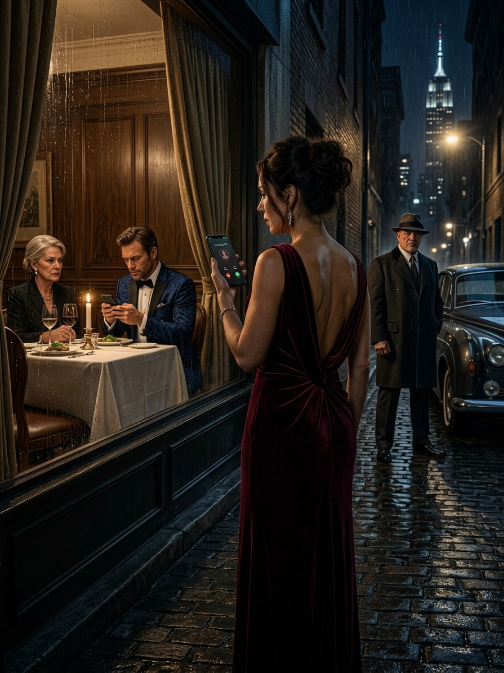
I was working in corporate financial compliance in San Francisco when I met Marcus Reyes. He had walked into the wrong floor of a downtown building, his team’s conference reservation had a suite number nobody could verify, and for eleven minutes it was just the two of us in a glass room on the twenty-fourth floor looking at the same view of the Bay.
He studied me in the way of someone not used to people who didn’t adjust under observation.
“You’re not who I was expecting,” he said.
“No,” I told him. “But most people aren’t expecting me, and that’s generally useful.”
He smiled like the sentence had surprised him.
We talked for almost two hours.
Not about the business that had brought him to the building. About power, about what it cost to build things that lasted, about the difference between being feared and being respected and whether those two things were even compatible in the long run. He was the kind of man who asked questions and then actually listened to the answers, which was rarer than it should have been.
Three days later he called and asked me to dinner.
I said, “Tell me what kind of man you are before I answer.”
There was a long pause.
Then: “The kind with a complicated history. The kind who has made decisions he carries. The kind who would rather be honest with you now than explain himself later.”
I said, “Seven o’clock. You pick the restaurant. I’ll manage the rest.”
That was fifteen years ago.
Marcus Reyes’s family had roots in Los Angeles, San Francisco, and Manila. Publicly, they owned logistics companies, private security contracts, Bay Area real estate, and three technology infrastructure firms. Privately, their influence moved into places where the distinction between law and leverage was more of a gradient than a line.
I did not marry into this world with my eyes shut.
I married into it with a compliance background, a very good memory, and a grandmother who taught me that the most dangerous woman in any room was the one nobody bothered to watch.
The first time Marcus brought me home, his mother looked at me for a full minute before she spoke.
Later, when Marcus asked what she’d said, he translated it as: *She’s elegant.*
I had understood enough to know the actual phrase.
*She sees more than she shows.*
I took that as an invitation.
His cousin Roy poured wine for everyone at dinner that first night except me.
I noticed.
I said nothing.
I filed it.
His wife leaned across the table with a smile cut from the same cloth as the gesture.
“It must feel like quite a distance,” she said, “from where you come from to all of this.”
I met her eyes.
“Distance is a matter of direction,” I said. “Not magnitude.”
She didn’t know what to do with that.
Most of Marcus’s world treated me the way people treat furniture they’ve arranged tastefully — present, decorative, not expected to have opinions. They called me the wife. They called me *Marcus’s wife*. They introduced me without my name and assumed I was grateful.
I let them.
Because a room that doesn’t watch you is a room that shows you everything.
For fifteen years, I learned.
Who genuinely respected Marcus. Who feared him and called it loyalty. Who envied him and called it friendship. I learned which men owed money and which owed silence. Which alliances were real and which were waiting for a better offer. Which sons were patient and which were already positioning.
And I watched Jin Sato.
Jin was sixty-one, silver-haired, unhurried, and groomed in the particular way of men who had spent decades deciding what others saw. He had stood at our wedding. He brought my mother a book of poetry in Twi because someone had told him she loved poetry and he had gone to the effort of finding one in the right language.
She was moved.
I watched him enjoy that.
For years, I tried to believe his warmth was genuine.
Then, twenty months before the collapse, something shifted.
His questions became slightly too specific. His smiles arrived at a fractional delay, the way dubbed audio never quite matches the mouth. Once — just once — I watched him survey exits when he walked into our house, the way a man does when he is rehearsing what comes later.
So I watched more carefully.
And eight weeks before the night everything ended, I found what I had been looking for.
A former colleague from my compliance years, now running financial intelligence for a federal contractor, owed me a professional favor. Through her I confirmed that Jin Sato had been quietly feeding information to investigators for three years.
Not out of conscience.
Because his own exposure had made cooperation his most viable option.
He had decided the most efficient way to protect himself was to accelerate Marcus’s destruction.
I sat with that for two weeks.
Then I started making calls from a phone registered to a business address that had nothing to do with our household.
I moved documents. I built a legal architecture. I spoke to an investigator in Los Angeles, a mediator in Honolulu, an attorney in the Bay Area, and a journalist in Hong Kong who told me, after our third conversation, “You are constructing something, Mrs. Reyes. It is taking a shape.”
I knew.
But I said nothing to Marcus.
Not yet.
Because if Marcus knew what Jin had done, he would confront him.
If he confronted Jin before the structure was complete, Jin would run.
And if Jin ran before I was ready, the last three months of preparation would become nothing.
So when Marcus walked into our bedroom at 2:07 in the morning, still in his coat, and sat on the edge of the mattress like a man whose body had forgotten how to hold itself upright, I let him speak first.
The Shanghai accounts were frozen.
The Oakland port contract was gone.
The Chicago development deal had died overnight.
Three anchor partners had withdrawn before midnight.
He swallowed once, looking at his hands.
“Nadia,” he said, “we have nine days of liquidity.”
I sat up slowly.
Looked at my husband.
Then I said, “I know.”
Marcus turned his head.
“I’ve known for eight weeks,” I said.
The silence that followed was long enough to be its own sentence.
Then I reached for his hand and said the only thing that mattered in that moment.
“Give me two more days.”
—
PART 2
The meeting was arranged under the pretext of consultation.
Fourteen allied partners gathering in a private dining room above a members-only club near the Embarcadero. A strategy session, officially. A place for cooler heads.
That was Jin’s framing.
The reality was a trial with a verdict already written.
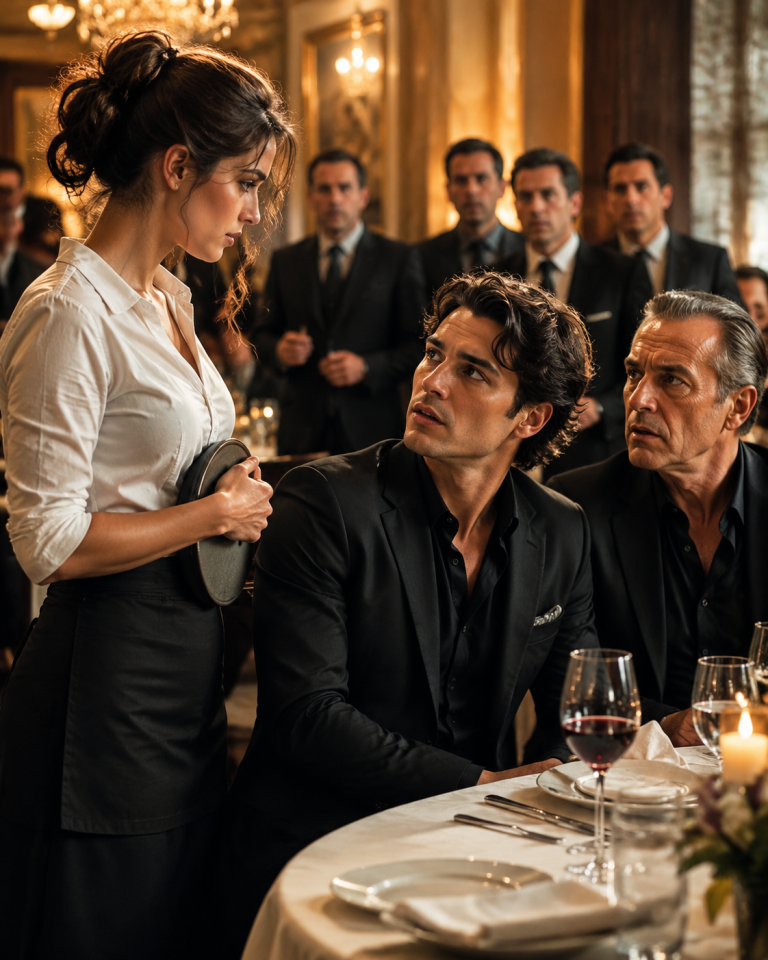
When we arrived, Marcus’s position at the head of the table was occupied.
Jin sat in it.
Marcus saw.
The room saw Marcus see.
No chair had been arranged for me at the table. A single seat sat against the east wall, angled slightly away from the main group, the way you position something you don’t intend to consult.
I took it without comment.
I set my tea on the edge of the chair arm.
I folded my hands.
Jin spoke for twenty-five minutes.
He read Marcus’s collapse like a ledger, line by line. The frozen accounts. The withdrawn partners. The legal pressure. The reputation damage. The operating cash. He made it sound like a natural consequence — weather, geology, entropy — rather than a construction he had built with eighteen months of careful demolition.
“A name that used to open doors,” Jin said, looking directly at Marcus, “now closes them. Anyone standing beside the Reyes operation in thirty days goes down with it.”
The room was quiet for three full seconds.
Then Henry Lim laughed.
Henry Lim had eaten at our table fourteen times. His daughter had borrowed our beach house for her honeymoon. He had shaken Marcus’s hand on three occasions in a way that meant something, or had once.
He laughed with the release of a man who has been waiting to pick the winning side and has just been told which one it is.
Two other men joined him.
Then three more.
Cowards recognize each other. They move in formation.
A man named Thomas Kwon looked at his hands. He did not laugh, but he did not speak.
A man near the window, David Choi, looked at me.
Then a man named Gerald Suh leaned toward Jin.
“What about his wife?” Gerald said.
The room shifted slightly.
Not with cruelty — with practicality, which is sometimes worse.
“She has no position here,” Jin said. He turned to look at me directly for the first time all evening. “She married into this. She can leave it the same way.”
Henry Lim laughed again.
Marcus’s hands went flat on the table.
I could see the tendons.
I held my tea.
I watched Jin Sato look away from me first.
And I thought: *One more day.*
The drive home was silent in the way of silences that hold too much to let anything out.
When we arrived, Marcus stood in the kitchen with both hands on the counter edge, facing the window. The Bay lights moved on the water. He did not take off his coat.
“Twenty years,” he said.
“Yes.”
“He learned my mother’s name in Tagalog to make her feel known.”
“I remember.”
“He stood at our wedding.”
“I know.”
I set my bag on the counter and stood beside him.
“He learned your mother’s name,” I said, “because it cost him nothing and gave him access to a room he wanted. He is very good at low-cost warmth.”
Marcus turned.
Something cracked across his face, not dramatically — just a small collapse in the architecture he usually kept in order.
“You always knew.”
“Not always. Increasingly.”
“Why didn’t you tell me?”
“Because you would have confronted him.”
His jaw moved.
“And if you confronted him before I was ready, he would have moved everything out of reach.” I met his eyes. “I needed him to commit. Publicly. In front of witnesses who would not be able to pretend they hadn’t seen it.”
Marcus stared at me.
“You let him humiliate me,” he said.
It was not an accusation. It was something harder: a man trying to understand something.
“Yes,” I said. “And I am sorry for that part of it. Genuinely. But the alternative was to stop him in private, and private has no witnesses.”
He was quiet for a long time.
Then: “What have you built?”
“A structure. Legal. Complete. I need one meeting to close it.”
“With Jin.”
“With Jin.”
“I’m coming.”
“No.”
His voice went flat. “Nadia.”
“Marcus.” I held his gaze. “You had your meeting with Jin. It was this evening. He took your chair and spoke about you like you were already past tense, and fourteen men watched and chose their sides. That part is finished.” I paused. “What happens tomorrow is mine.”
He looked at me for a very long time.
Then he asked the only question that mattered.
“Are you safe?”
“Yes.”
“Completely?”
“I have been preparing this conversation for eight weeks. I am as certain as a careful woman can be.”
He nodded.
Once.
It cost him.
But he nodded.
—
PART 3
Jin chose a private room in a hotel near Union Square.
Not the most expensive hotel, but the kind where staff didn’t ask questions and elevators had key card access.
He was already seated when I arrived. His lawyer sat beside him with a briefcase and the expression of someone who had been told to expect formality and was now reconsidering the scope of that word.
Thomas Kwon was across from them.
Thomas was the man who had not laughed — who had looked at his hands while the others found their relief in Henry Lim’s volume. I had watched his jaw tighten when Gerald Suh asked about the wife. There was something genuine in his discomfort that the others had moved past too quickly.
I had called him the morning after the tribunal.
He had answered on the second ring.
I sat down.
I did not open a folder.
I placed my hands flat on the table and looked at Jin.
“I underestimated you,” he said.
“Yes.” I didn’t dress it up. “Most people do.”
“What is it you want?”
“I’ll tell you what I have first. Then the second part will make sense.”
His lawyer clicked a pen.
I told Jin what I knew.
Not everything — I had learned enough from compliance work to understand that revealing the full extent of what you hold is a kind of vanity that weakens a position. But enough.
Three years of federal cooperation.
Eleven dated communications with a named contact.
Which documents he had provided and when.
And — this was the part I watched his lawyer’s hand stop writing for — the names of four men from that meeting room whose information had appeared in Jin’s reports to investigators.
Thomas Kwon was one of them.
Thomas had not known.
He knew now.
Jin began adjusting his cuff links.
I let the silence do what silence does best.
Then: “Here is what I want.”
Jin looked up.
“The financial transactions redirected from Marcus’s accounts will be reversed through documented legal process. The characterizations made at last night’s meeting will be corrected in writing, distributed to everyone present. The partners who withdrew under false information will receive the corrected record with documentation.” I paused. “And you will provide full disclosure of the federal contact and the scope of cooperation so Marcus understands exactly what legal exposure exists.”
Jin’s jaw moved.
“In exchange?”
“Quiet.”
He stared at me.
“Quiet,” he repeated.
“I have no interest in theatrical destruction,” I said. “I have no interest in watching your family read your name in headlines. I have no interest in the kind of revenge that requires an audience.” I met his eyes directly. “What I want is my family’s position restored and protected. If that happens, what I know stays where it is.”
His lawyer leaned in. Whispered. Jin listened.
Then: “You could undo me entirely.”
“Yes.”
“Why not?”
“Because destruction is expensive. I have better uses for the energy.”
Thomas Kwon looked at the table.
Jin studied me.
“Your husband agreed to these terms?”
“Marcus doesn’t know the terms.”
That surprised him.
“You came here alone.”
“I came here with my own authority.”
For the first time all evening, Jin Sato looked less like a man in control of a situation and more like a man who had walked into a room and discovered it had been furnished while he wasn’t looking.
“You are a considerable woman,” he said quietly.
“I am my husband’s wife,” I said. “That is the extent of what this room was willing to see. I found it useful.”
Jin looked at the document his lawyer slid toward him.
He picked up the pen.
He signed.
—
The rebuilding did not feel like victory.
Real victory in stories is clean and loud. The kind in real life is more like standing in your house after a serious storm: the roof held, but everything is wet, and the smell of it stays for weeks.
The financial reversals took seven weeks.
There were phone calls, legal reviews, documented transfers, two late nights when I lay awake in the dark and admitted to myself that even careful preparation has edges where certainty runs out.
Marcus changed.
Not in the obvious way. He remained who he was — controlled, disciplined, still the man who could receive difficult news without visible distress. But something altered in how he occupied a room. He began asking questions he should have asked years earlier. He stopped performing certainty in spaces where uncertainty would have been more accurate.
One evening, three weeks after the settlement, we were eating dinner.
Rain on the windows. The house smelled like the ginger soup I had made because Marcus’s mother had sent the recipe and I had been meaning to try it.
He set down his chopsticks.
“What was it like?” he asked.
“What was what like?”
“The meetings. Those rooms. Being treated like you weren’t a participant in your own life.”
I looked at my bowl.
“It was useful,” I said.
“That’s not what I asked.”
He was right. It wasn’t.
So I told him the truth.
“It hurt,” I said. “Not always. Not every day. But yes. It hurt when men spoke around me instead of to me. It hurt when Roy didn’t pour my wine and no one at that table said anything. It hurt when I was introduced without my name, when conversations stopped when I walked in, when I was asked whether I was comfortable rather than whether I had an opinion.” I looked up. “I chose the invisibility. It was strategic. Choosing something does not mean it costs nothing.”
Marcus was quiet for a long time.
“I owe you an apology.”
“For what, specifically?”
He thought before he answered, which I noticed.
“For building rooms where my wife sat against the wall while men I trusted made decisions that affected her life. For accepting that arrangement because it worked for me, even when I didn’t understand what it cost you. For not asking until now.”
I held his gaze.
“I don’t need a dramatic apology,” I said.
“What do you need?”
“Presence,” I said. “I need to sit at the table.”
He didn’t hesitate.
“You sit at the table.”
There are sentences that are promises because of how they are delivered.
That was one.
—
The second meeting of fourteen happened in the same room above the Embarcadero.
Same table.
Same chairs.
Same view of the Bay.
But this time there was a chair for me beside Marcus.
No one objected.
The nature of what men found objectionable had reorganized itself overnight.
Jin was not present. His attorney submitted a signed statement. It was brief, careful, and complete. The information presented at the previous meeting had been materially incomplete. The characterizations of Marcus Reyes’s leadership had been premature and have since been corrected. Certain disruptions had been caused by unauthorized third-party conduct now being remedied through legal channels.
Thomas Kwon spoke first.
“I withdraw my position from the previous meeting,” he said. “The matter was presented under false conditions.”
Others followed.
Not courageously. Practically.
Men like that don’t transform overnight. They adjust their stance when the ground shifts beneath it.
David Choi looked at me twice and then at his hands. Henry Lim, who had laughed loudest, stared at the document with the expression of someone hoping text will spontaneously combust and spare him from accountability.
After the meeting, Choi approached me in the corridor.
“Mrs. Reyes,” he said.
“Mr. Choi.”
“I owe you an apology.”
“A real one?”
His face tightened.
“Yes.”
“Then what I need from you is attendance at the next meeting,” I said. “Consistent. Not forced. That is the apology that matters.”
He swallowed. Nodded. Left.
Marcus appeared at my shoulder.
“You knew he would be first.”
“He was the most uncomfortable.”
“You read every one of them.”
“I’ve been reading them for fifteen years.”
He was quiet.
“From now on,” he said, “you read them with me.”
I looked at him.
“Not you in the corner watching alone. Not me at the table seeing half of what you see. Both of us, same position, same information.”
I touched his hand.
“That is a much better arrangement.”
“I should have arrived at it sooner.”
“Yes,” I said. “But you arrived.”
—
The dining room in our house in Marin had hosted fifteen years of dinners. Birthdays. Strategy meetings. The holiday where my father drove up from Houston and taught Marcus how to make gumbo with what we had, which turned into one of the most memorable evenings of our marriage.
And the night three men had eaten at that table who had laughed in a private room above the city.
Three months after the settlement, I found Marcus in the dining room alone.
Lights off. City glow through the windows. His hand resting on the back of a chair.
“I keep seeing him in it,” he said.
“Jin.”
“In my chair.”
“I know.”
“He knew what that would do.”
“Yes.”
“I hate that it landed the way he intended.”
I walked to him.
“That doesn’t make you weak.”
“No?” The laugh was hollow.
“No. It means you still know the difference between what a chair means and what it doesn’t. That’s not a vulnerability. That’s integrity.”
He looked at the table.
“My father used to say a man’s name was the only property no one could take.”
“Your father was not entirely right,” I said.
He turned.
“A name can be attacked. A seat can be taken. A room full of people can decide to turn against you. If your standing depends entirely on how other men choose to narrate you, then they hold the deed.” I stood beside him. “What remains when the room turns — that’s what belongs to you.”
His face shifted.
“What remains?” he asked.
I took his hand.
“What remains,” I said, “is this.”
That was the night Marcus Reyes cried.
Not loudly.
Not dramatically.
His hand came up to cover his face and his shoulders bent under the weight of things he had been carrying in a posture that didn’t allow for bending. Twenty years of friendship. Fifteen years of a marriage he had understood at a much shallower level than he had believed. A name built by a family line he’d had no say in. A world where respect had been a form of armor, and the armor had cracked in front of an audience.
I held him.
I didn’t tell him to be strong.
I told him he didn’t have to be strong by himself.
That was a different thing.
—
A week later, his mother came to visit.
She arrived with two suitcases, pearl earrings, and the posture of a woman who had decided something on the drive up and was still deciding how to say it.
I made tea.
She sat at my kitchen table with her back straight and her hands folded in her lap.
For twelve minutes, neither of us spoke.
I poured her cup and sat across from her and let the silence be whatever it needed to be.
Then she spoke in Tagalog.
“You saved this family.”
I answered in Tagalog.
She knew I spoke it. I had known she knew for seven years and had chosen not to perform the extent of it until it served a purpose.
“The family held because enough of it was worth holding,” I said.
Her eyes sharpened.
“You are using modest language on purpose.”
“Yes.”
“That irritates me.”
“I know. I have known that about you for a long time.”
Something moved across her face that was not quite amusement but was adjacent.
Then she looked into her cup.
“I was not kind to you when Marcus chose you.”
“No.”
“I had ideas about who he should have chosen.”
“I know.”
“They were not ideas that honored you.”
“No. They weren’t.”
She turned the cup slowly.
“Were you angry?”
I thought about it before I answered.
“I was clear-eyed,” I said. “Anger is expensive. I had other priorities.”
She studied me.
“My son made one decision in his life that was entirely correct,” she said. “He didn’t fully understand what he was doing when he made it. Neither did I.”
I said nothing.
“I thought you were quiet because you didn’t belong,” she said.
The kitchen was very still.
“I was wrong,” she said.
Three words.
From a woman who chose words with the precision of someone who knows their cost.
“Thank you,” I said.
She picked up her tea and looked toward the window.
We were quiet for another twenty minutes.
But the quality of the silence had changed entirely.
—
Jin Sato left the Bay Area before winter.
Officially, he retired.
In practice, he became a man who had been quietly removed from every room that mattered. He sold his Pacific Heights property, resigned from two boards, and relocated to a house near Scottsdale, where powerful men go when they are not punished publicly but simply stopped being invited.
I did not see him again.
Marcus did, once.
He came home from Priya Bose’s office one evening and stood in the kitchen doorway without taking off his jacket.
“I saw Jin today,” he said.
“Outside her building?”
“Parking structure.”
“How did he look?”
“Older. Smaller.”
“Betrayal ages people,” I said.
Marcus moved to pour water.
“He apologized.”
“Did you believe him?”
“No.”
“Did that matter?”
He thought about it.
“No.”
“What did you say?”
He took a drink of water.
“I told him I hoped he eventually understood the difference between being let go and being forgiven.”
I turned off the stove.
“That was fair.”
He looked at me.
“It sounded like something you would say.”
“Then you’ve been listening,” I said.
He came behind me and pressed a kiss to my shoulder.
“I have better teachers now.”
—
One year after the collapse, we hosted dinner at our house.
Not fourteen men proving their loyalty.
Six couples. Chosen carefully. People who had demonstrated over time that their presence in a room improved it.
My mother flew in from Houston. She sat beside Mrs. Reyes and corrected her pronunciation of *y’all* three separate times, which Mrs. Reyes accepted with what I can only describe as grudging delight.
My father arrived at exactly 6:15. He has done this for thirty-one years and has never explained it. He simply believes that when you say you will be somewhere at a time, you be there at the time.
Marcus noticed. He smiled at me across the table.
During the main course, Thomas Kwon’s wife asked me, “How did you stay so composed that night?”
The table quieted.
I took a sip of water.
“I wasn’t composed,” I said.
Marcus looked at me.
“I was disciplined,” I said. “Those are different things. Composure means the thing doesn’t reach you. Discipline means it reaches you and you decide what to do with your hands anyway.”
No one spoke for a moment.
After dessert, Marcus stood.
He didn’t perform this. He simply rose, and the table found quiet because he was Marcus Reyes and that was still how rooms worked.
“For many years,” he said, “I believed leadership meant carrying weight in a way that didn’t show.”
His eyes came to mine.
“I was wrong about what that required. I built spaces where my wife was present but not consulted. Where her work was invisible because I had never done the work of making it visible. She saw everything anyway. She built what needed building before I understood it needed to be built.”
I looked at the table.
“She saved more than the business,” he said. “She saved the truth from people who had decided it was inconvenient.”
He lifted his glass.
“To Nadia.”
The table lifted theirs.
My mother cried.
She was not embarrassed about it.
After the last guest left, Marcus and I stood in the kitchen among the plates and the half-finished wine.
He took off his jacket. Rolled up his sleeves.
I stared.
“What are you doing?” I said.
“Dishes.”
“Marcus.”
“You said presence is what matters.” He picked up a sponge. “This is presence.”
I stood at the sink beside him.
He washed. I dried.
We talked for an hour about things that had nothing to do with betrayal or recovery or the architecture of power.
We talked about my father’s 6:15 precision and whether it was discipline or stubbornness. About Mrs. Reyes’s new interest in learning Twi phrases before visiting my grandmother. About the restaurant Marcus had been told about in the Richmond District that supposedly did the kind of Taiwanese food his father had made on special occasions.
Ordinary things.
The most extraordinary kind.
—
I am writing this from the kitchen table.
Morning light through the window. Marcus is somewhere upstairs. My father’s watch sits on the shelf near the door, running five minutes fast, which is how he kept it for thirty-one years and which I have never changed.
I think sometimes about that room above the Embarcadero.
Not with hatred. Hatred is heavy and I have better uses for the weight.
I think about it with the specific clarity of someone who has looked at a thing from both inside and outside it and understands, finally, all its dimensions.
Those men were not extraordinary villains.
They were ordinary men who looked at a quiet woman sitting against a wall and saw exactly what they expected to see.
That is the danger of expectation.
It feels like perception, but it’s only a mirror you’ve been carrying.
They saw a wife.
They did not see a strategist.
They saw stillness.
They did not see preparation.
They saw the chair at the side of the room and assumed it was the weakest position.
But from that chair, I saw the laugh that came a half-second before it was safe to laugh.
I saw the cuff links adjusted to keep hands occupied.
I saw the man who wouldn’t look at me because he already knew, somewhere, that he would need something from me later.
I saw the moment Jin Sato looked away first.
I saw every person choose their side, and I wrote down what each of them owed and what each of them feared, and I waited until I could use both.
The most effective people in a room are almost never the loudest.
My grandmother taught me that.
She also taught me that when the room finally needs you, you should already know exactly where to put your hands.
I set down the pen.
I go to pour more coffee.
The house is warm and mine and his and ours, and that is the whole of what I need to say.
My name is Nadia Osei-Reyes.
I was the quiet woman in the corner.
And I was never invisible.
I was watching.