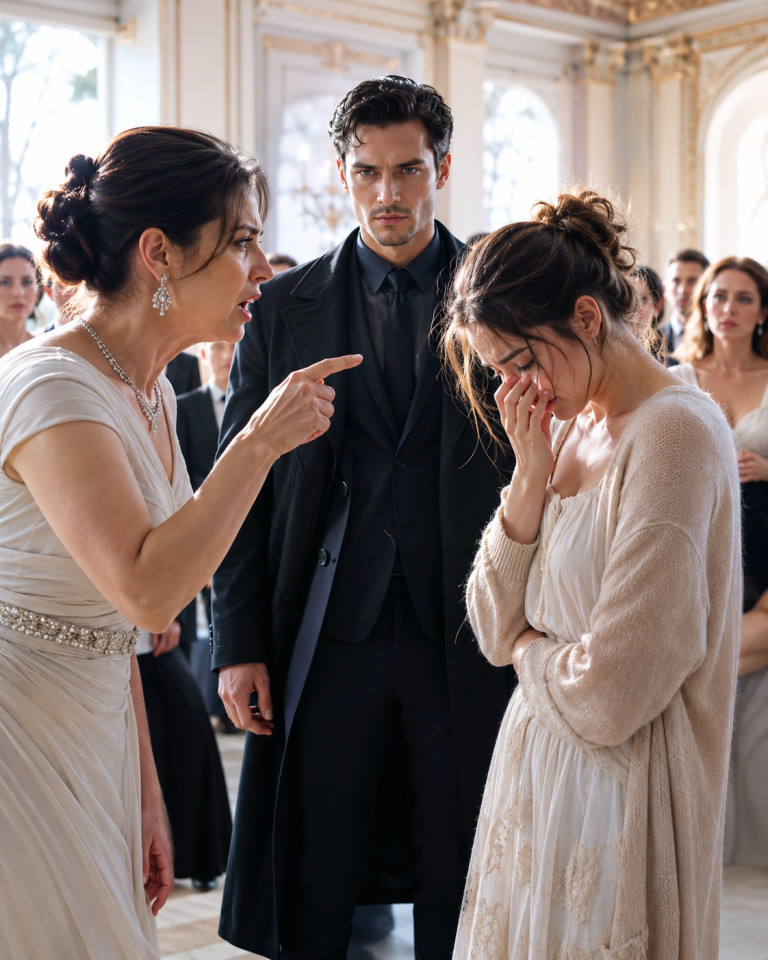
The Stepmother Abandoned the Twins and Boarded a Flight—But the Mafia Boss Was Watching Everything

## PART 1
I have spent fifteen years building a life around one principle: do not stop for things that are not your problem.
It has been efficient. Lucrative. It has produced an empire organized around the reliable truth that most of the world’s complications belong to whoever looked at them first.
The children at Gate 22B were not my problem.
I knew that before I stopped.
O’Hare moves like a river in flood — constant, indifferent, everything in it already headed somewhere else. The Tuesday morning crowd was typical for November: business travelers in dark coats, families dragging too much luggage, airline staff threading between strollers with the practiced ease of people who have learned to move through other people’s urgency without absorbing it. Announcement voices floated overhead in that particular register designed to sound authoritative without being alarming. Coffee steamed. Wheels rattled. Every person in that terminal was already somewhere else in their mind.
I was forty minutes early for a flight I did not particularly want to take.
The New York meetings were the kind that required my physical presence because some things couldn’t be trusted to phones or proxies, and I moved through the terminal with the focus of someone whose days were organized into thirty-minute blocks from which sentiment had been surgically removed.
Fen walked three paces behind me.
Twelve years, and he still defaulted to that exact distance. Not close enough to suggest weakness, not far enough to be useless. The hallmark of a man who had learned to read rooms by reading me first.
I did not intend to look at Gate 22B at all.
But the woman stopped me before I reached it — not by doing anything noticeable, but by the particular quality of her speed. She was moving too fast for someone with children and too deliberate for someone distracted. Designer coat, sunglasses raised into dark hair, the gait of someone who had already finished saying goodbye internally and was now only executing the remaining steps.
Two small children stumbled behind her.
Both blond.
Both around five.
The girl held the boy’s hand. The boy held a stuffed rabbit with the full-arm grip children use for things they cannot afford to lose.
Neither of them cried.
That was what made me look.
Children who feel safe cry loudly about small things. Children who have learned that crying produces nothing useful go quiet instead. These two were quiet with a discipline that had no business living in five-year-old bodies.
The woman reached a row of seats near the gate wall.
She pointed at the bench.
Said something too low for me to catch.
The boy looked up at her.
His face was entirely still — not confused, not braced for argument, not hopeful. Still in the way of someone who already understood that the wrong response would cost more than silence.
He sat.
The girl sat beside him immediately, pressing her shoulder to his.
The woman looked at them for one second.
One.
Then she turned, passed her boarding pass over the scanner, and disappeared through the gate door without touching them. No kiss. No backward glance. No performance of reluctance. She was simply there and then she was not, and the door closed with a soft hydraulic finality, and the plane began to pull away, and the boy watched it through the window with the expression of a man reading a verdict.
The whole crowd kept moving.
Of course it did.
An airport is the most efficient machine humanity has ever built for not seeing each other.
I stopped.
Fen’s footstep caught up and halted behind me, alert.
I looked at the children for twelve seconds, which is long enough to know whether something is going to resolve itself or not.
Then I crossed the polished floor and crouched in front of the bench until my face was level with theirs.
Up close, both had the same eyes — pale gray-blue, the color of winter morning before the sun has properly committed. The girl studied me without flinching, which was unusual. Most adults recalibrate when they encounter me unexpectedly. This child only watched, with the careful intelligence of someone determining whether information was safe to give.
“Where’s the person who was with you?” I asked.
My voice came out lower than intended, flattened down toward something that might not frighten them.
The boy turned from the window.
Looked at me.
Looked at Scout, the rabbit.
“She’s not our mom,” he said.
Not angry. Not sad. The tone of a fact that had been said enough times to lose its edges.
The girl pointed at her brother.
“He’s Eli,” she said. “I’m June.”
“How old are you both?”
“Five,” Eli said. “Same. We’re twins.”
I sat on the bench beside them without asking.
Not crowding. Not performing comfort. Just there, in the way that sometimes matters more than anything said.
“Is someone coming to get you?”
June shook her head once.
“Do you have a phone number for anyone? A grandparent? An uncle?”
“Grandma Nora,” June said. She thought about it with the serious consideration of someone reviewing reliable testimony. “But she lives very far.”
“Do you know her number?”
Eli’s eyes dropped to the patterned floor.
“Dad knew it,” he said.
The word changed both of them immediately. Not dramatically — smaller than that. A reflex. The instinctive tightening around grief that happens when a body has already been doing it long enough to make it automatic.
I noticed.
Filed it.
Did not ask about the father yet.
“Have you eaten anything today?”
Eli glanced at June first. She gave him the smallest nod, the kind of confirmation that had been practiced. Permission granted.
“Not really,” he said.
I stood and held out one hand, palm up.
No grab. No instruction.
Just the offer.
Eli looked at it for a long moment — four seconds, maybe five, which is a long time when you are five and deciding whether an adult’s open hand is safe. Then he shifted Scout under his arm and placed his small hand in mine.
Contact that light should not have hit me the way it did.
June, without ceremony, turned and took Fen’s hand.
Fen looked down at her with the expression of a man who has just had something land on him he has no equipment for. His eyes moved to me. I returned nothing. He closed his hand carefully around hers.
The four of us crossed the terminal.
The private lounge admitted me without question. Inside, the light was softer, the carpet swallowed sound, and the whole world smelled of citrus polish and warm bread and the particular expensive silence that money buys in airports. Platters of food were arranged on a low credenza. Eli saw them and something changed in his posture — a tension releasing, but carefully, the way a hand unclenches after a long time only partway because it no longer trusts full release.
He ate three small sandwiches with methodical, focused speed.
Not greedily.
Efficiently.
No pause long enough to risk the food becoming unavailable again.
That detail went into me like a splinter.
June arranged her grapes by color before she ate any.
Children reveal their interior architecture in the small rituals they use without knowing they’re using them.
I stepped away and made two calls.
The first was to Petra, who ran records requests for me through city systems and had owed me a favor for long enough that the debt had compounded. I needed the children’s full names and family information. She said twenty minutes. I said fifteen.
The second was to Aldous, my attorney.
He answered on the first ring.
“Two children,” I said. “Abandoned at O’Hare, Gate 22B. I need the legal structure before the airport turns them into a caseworker’s inbox.”
“Child services is the standard route.”
“I know the standard. Tell me what exists past it.”
Aldous paused for two seconds, which meant he was already working.
“Call you in twenty.”
When I returned to the table, Eli had fallen asleep sitting upright, forehead resting on his forearm, Scout pinned beneath his chest with both hands even in sleep, as if some part of him was still holding on.
June was drawing on a cocktail napkin with a pen she’d found somewhere — a house, a tree, two small figures, and in the corner, a taller shape she had not explained.
She looked up when I sat.
“Are you police?”
“No.”
She considered that.
“Are you a good man?”
Fen, standing near the door with his arms crossed, looked away immediately, as if offering privacy to a man being opened by a five-year-old.
I sat with the question.
The honest answer was not simple. The dishonest answer would not hold up to those eyes. And the truth, somewhere between the two, was that I was a man who had spent enough time around power and silence and deliberate cruelty that I had stopped asking myself the question at all because answering it incorrectly was too expensive.
I said nothing.
June watched me for one more second.
Then she picked up a strawberry, apparently deciding that silence told her what she needed.
“Eli’s scared of the dark,” she said. “He doesn’t say it. But he holds my hand when the lights go off.”
I looked at the sleeping boy.
“I’ll remember that,” I said.
My phone buzzed.
Petra.
I read the message once.
Then again.
The twins’ last name was Morrow.
Their father was Danny Morrow.
Dead nine weeks ago.
Construction site accident on the North Side. A crane failure. Three workers on the platform. One survived with injuries. Two did not.
Widower. Remarried eighteen months earlier to a woman named Claire Harlow.
And Danny Morrow was a name I had spent seven years trying to figure out how to repay.
—
## PART 2
Seven years earlier, in January, on a night of black ice and bad decisions, my car went through a barrier on the Eisenhower Expressway.
Not an accident.
An arrangement made by people I had angered and not yet finished dealing with. The vehicle rolled down a concrete embankment and came to rest against a retaining wall with the fuel line breached and the driver’s-side frame compressing my legs, and I was conscious enough to smell burning insulation and understand exactly what was happening, and I knew that the professionals who made this arrangement had planned for me not to survive the next eight minutes.
The man who ran toward the wreck instead of away from it was closing up a body shop on a service road fifty meters from the overpass.
Young. Jacket too thin for January. No protective equipment. A welding blanket, a crowbar, and something that did not consult probability before deciding.
He pulled me out through glass and fire and the compressed metal of a door that had no interest in opening. Burned both forearms doing it. Kept going until I was on the embankment in the cold air and the car behind us was fully alight.
Later, in the ER, I tried to send him money.
He refused.
He stood under the fluorescent lights with his forearms bandaged in white gauze and said, “Just do something good sometime. That’s enough.”
I did not know what to do with that sentence.
I had carried it for seven years, like a check that hadn’t cleared.
Danny Morrow.
Who had kept paying rent in a two-bedroom apartment after his first wife died when the twins were two. Who had kept showing up for work. Who had kept going in the quiet, unspectacular way of people for whom goodness is not a performance but a default setting.
Who had died on a platform at 11:40 a.m. on a Tuesday and left two five-year-old children to a woman who had apparently been planning her exit from the moment the life insurance policy was in place.
I sat in the lounge chair with that information and felt something shift that I did not have a word for yet.
Fen appeared beside me.
He had heard nothing of Petra’s message.
He looked at the sleeping boy, then at me.
“You’re not calling airport security,” he said. It wasn’t a question.
“Not yet.”
He nodded, which meant he had already begun adjusting to the shape of whatever this was.
I called Aldous again.
“Father’s dead,” I said. “Danny Morrow. Construction accident. Nine weeks ago.”
A pause.
“That means something to you.”
“Yes. Get me everything on Claire Harlow. And find a Nora Morrow in Seattle — she’s the paternal grandmother.”
The legal outline came back by 11 p.m.
Aldous laid it out flat, the way he delivered every terrible thing — without editorial, because men like me pay him to think, not to manage our reactions.
Claire Harlow had married Danny Morrow eighteen months before his death.
Life insurance policy: $275,000, payable to the spouse on accidental death.
The payout had cleared six weeks ago.
Within ten days of the payout, Claire had settled outstanding debt, terminated her lease on the Lincoln Park apartment, and signed a new lease on a property in Scottsdale.
Moving company booked six weeks before Danny’s accident.
An international relocation consultation, timestamped four months before the accident.
The policy itself had been taken out eleven months before the accident, at Claire’s suggestion, according to the broker’s records.
And a one-way ticket to Scottsdale, booked three weeks ago, for today.
Without dependent-child accommodation.
I read the documents twice and felt a clarity settle that was colder and quieter than anger.
She had not left because she couldn’t cope.
She had not left because grief broke her, or because motherhood overwhelmed her, or because poverty drove her to impossible choices.
She had built the exit before Danny was dead.
The children were not an afterthought.
They were the last item on a checklist.
“She planned this,” I said.
“For months,” Aldous answered. “Possibly from the beginning.”
June was watching me from across the table.
Children read rooms with more accuracy than most adults will admit.
“What does your grandmother Nora look like?” I asked her.
June thought about this seriously.
“She has white hair,” she said. “And she smells like the soap that comes in a green bottle.”
“Does she know your dad’s friends?”
“She knows everyone Dad knew.” June tilted her head. “She keeps their names in a book.”
I looked at Eli, still sleeping.
At Scout, still gripped in both hands even in unconsciousness.
At the napkin on the table with the small house and the tall figure in the corner.
I called Aldous back.
“File for emergency protective guardianship with the grandmother as petitioner. Start tonight.”
“That’s aggressive.”
“It’s correct.”
“Ryker—”
“Aldous.”
He understood the difference.
“I’ll need the grandmother’s consent before morning.”
“You’ll have it.”
Then I made the call I had been turning over since I read the name Morrow on Petra’s message.
Nora Morrow answered on the second ring.
The voice of a woman who had trained herself to be steady because steadiness was what people around her needed. She was already carrying the weight of her son’s death without collapsing, which is not something anyone achieves without cost.
I told her what happened plainly. No cushioning.
She listened without interrupting.
When I finished, the silence had texture in it — grief contained, then compressed, then stored somewhere that wouldn’t interfere with function.
“Are they safe?” she asked.
“Yes.”
“Who are you?”
“Someone who knew their father,” I said. “He did something for me once. I’m trying to return it.”
Another silence.
Then, quiet but unbroken: “Thomas never told me your name. He only ever said he pulled a man from a burning car and the man tried to give him money.”
I looked out the lounge windows at the runway lights.
“He refused it.”
“Yes,” she said. “That was Danny.”
A breath.
Then, clear and immediate: “I’m coming. Get me on the first flight you can.”
“It’s arranged,” I said. “Aldous will reach you in the next hour with the details. There will also be legal documents. Read everything before you sign.”
“I will.” A pause. “Mr.—”
“Cade.”
“Cade. Claire has already filed a report with airport security saying the children were taken without her consent.”
“She did.”
“I want her to answer for this.”
“She will,” I said.
That is the only kind of promise I have never broken.
—
## PART 3
The airport security officers arrived at 7:40 a.m. with a child welfare caseworker named Diane Walsh — compact, alert, with the particular expression of someone who has sorted through enough false presentations of innocence to be immune to performance.
She assessed me once in the doorway. The suit. The jewelry. The body language of a man who had not needed to explain himself in a very long time.
Then she looked at the children.
June and Eli were building a fort from lounge throw pillows with Fen acting as a reluctant but obedient structural engineer, his entire face communicating that this was not in his job description and he was doing it anyway.
Diane approached June first.
Children decide in the first ten seconds whether an adult deserves truth or management.
June answered every question with the measured completeness of someone giving a sworn statement. When Diane asked what their days were like before the airport, June folded her hands in her lap and said, in the quiet voice children use for describing things they have normalized because no one told them it was wrong:
“She made food for herself. We ate what was left.”
Six words.
The room changed around them.
Diane wrote something and did not look up immediately.
When she did, her face was professionally intact. Her eyes were not.
Eli answered fewer questions, not because he was less present, but because he had learned the value of saying only what needed saying. He confirmed what mattered. He kept Scout in his lap throughout.
Aldous arrived at 8:15 carrying a slim portfolio and the expression of a man who had already converted the problem into sequence.
Within ninety minutes, the Gate 22B footage was accessed.
Thirty-eight seconds.
That was all it took.
A woman walking two children through a terminal. Seating them on a bench with a single pointing gesture. Passing through a boarding gate without touching them. No crouch. No explanation. No hesitation at the threshold.
Thirty-eight seconds.
Clean and complete.
Aldous added the documents: the insurance timeline, the Miami lease signed before Danny’s death, the relocation research, the one-way ticket with no child itinerary attached.
When Diane Walsh read the lease date, she stopped and looked at Aldous.
“She planned this before he died?”
“Before the accident,” Aldous said. “By at least two months.”
Diane sat with that for a moment.
Then she began writing again.
Claire Harlow was located in Scottsdale by early afternoon. She denied. Then qualified. Then asked for a lawyer. The abandonment charge would move through the system with the footage and the documentation as its spine. The insurance timeline raised the interest of a financial crimes unit that Aldous declined to name out loud. The law, when it is fed correctly, can move with something close to elegance.
Nora Morrow arrived at 4:45 p.m.
Small woman. White hair, close-cropped. Danny Morrow’s eyes in a smaller, older face — that same gray-blue that Eli and June had both inherited. She carried a single bag and moved with the careful economy of someone holding themselves together through the force of knowing they had to.
She came through the lounge door and June saw her first.
June did not run.
She stood up from the floor where she’d been drawing, put her pen down with precision, and walked across the room at a pace that was almost dignified for a five-year-old, and then at the last three steps abandoned the dignity entirely and went in.
Nora bent over her granddaughter and made a sound that had no equivalent in language.
Eli woke from where he’d been dozing against the couch cushions, processed the scene in two seconds, and crossed the room with Scout under one arm, moving faster than he’d moved all day.
Nora gathered both of them at once.
I stood at the windows on the far side of the room.
Fen joined me, hands in his pockets.
“You’re staying involved,” he said.
Not a question.
I didn’t answer.
That was answer enough.
After a while, Nora came across the room toward me.
Up close, she was less breakable than she’d looked from a distance. Age had not softened her. It had clarified her.
“You’re the one who called.”
“Yes.”
She looked at me with the particular intelligence of a woman who has spent a long life reading people the way some people read weather.
“Danny told me about that night. Not a name — just what happened. He said he pulled a man from a burning car and the man tried to pay him, and Danny said no, and the man asked why, and Danny said—” She stopped. Collected herself. “He said: *because I want to find out if you’re worth it.*”
The sentence went into my chest and stayed.
“Was he wrong?” she asked.
I looked at Eli and June, who had both migrated back toward me in the way children begin to orbit a person once they have decided the orbit is safe.
“I’m still finding out,” I said.
That was the most honest thing I had offered anyone in years.
Nora studied me for one more moment.
Then she nodded once, as if that was the right answer.
The formal guardianship petition was filed that evening. Emergency provisions were approved within forty-eight hours given the circumstances and the footage. Aldous handled the documentation in his efficient, unhurried way, and Nora read every page before signing because she had understood immediately that understanding details was part of surviving this.
A trust was established for the twins in structures Aldous described as clean enough to survive any scrutiny. The source would remain legally nonspecific, which was exactly how I wanted it. Nora’s Seattle house would be modified for safety and the children’s comfort. Schooling covered. Healthcare covered. The logistics required to give two five-year-olds a stable childhood after a destabilizing year, covered.
That night, in the private lounge, June drew for two more hours.
She had moved on from the first napkin. The second one showed more detail: the house now had windows with small crosses in them, the tree had individual leaves, the two small figures had faces, and the tall figure in the corner had arms extending toward the smaller ones.
She folded the second napkin and held it out to me.
I unfolded it carefully.
Over the tall figure, she had added a roof.
“So you remember,” she said.
I folded it again and placed it in my inside jacket pocket, against my chest.
“I’ll keep it,” I said.
She looked at me with the careful, unsentimental assessment she had been using on me since the first moment at the bench.
“You’re a good man,” she said. Then, with the precision that had characterized everything she’d said for the past twelve hours: “Even when it’s complicated.”
I had no response to that.
She returned to her drawing with the air of someone who had rendered a verdict and was now moving on.
The flight to Seattle left the following morning.
I was at the airport at 8:15. Aldous had managed the final documentation. Fen drove without commentary. Eli came through the lounge door wearing a new backpack — navy blue, covered in small iron patches of planes and compasses — and June had a yellow one she wore with the authority of a person who had been issued command of something.
Eli saw me and ran.
No calculation. No checking first. One second I was standing in the lounge doorway and the next I was on one knee with a five-year-old wrapped around my neck and both arms, Scout compressed between us, and one of my hands spread across a back so small I could feel every vertebra.
I held on longer than I planned to.
When he leaned back, his face was open in the way children’s faces go when they have decided that trust is worth the exposure.
“You said you’d visit,” he said.
“Yes.”
“In Seattle.”
“Yes.”
He studied me for three seconds with the gravity of someone confirming a contract.
Then he nodded and returned to his backpack.
June approached last.
Hands clasped in front of her. The posture she used for important things.
She did not say anything for a moment. Then:
“You didn’t leave when you could have.”
“No.”
“That’s different from most people.”
“Yes,” I said. “It is.”
She nodded once, as if recording this for future reference, and walked to stand beside Nora.
At the gate, Nora paused before boarding.
“Danny would have been glad it was you,” she said.
I had no answer for that.
She held my gaze for a moment longer, as if making sure the sentence had fully arrived.
Then they were moving.
Nora first.
Then June, who paused in the doorway and raised one hand — a wave that contained an entire assessment, compressed into a single gesture.
Eli looked back twice.
The door closed.
I stood in the lounge until the plane pushed away from the gate and turned toward the runway and lifted, and then I stood there a little longer, which I could not have explained and did not try to.
Fen waited by the exit. He had said nothing of consequence for fourteen hours and I was grateful for it.
Outside, the November light was flat and pale over the runways. I put my hand in my jacket pocket and felt the folded napkin against my fingers.
The tall figure with the roof drawn above it.
The arms reaching toward the smaller figures.
I had built fifteen years of insulation around the person I used to be, before I understood that insulation could become indistinguishable from disappearance. The empire. The rooms where other people felt off-balance first. The reputation that preceded me through every doorway. I had been very good at all of it.
Then two children with winter-colored eyes sat on a bench in the middle of O’Hare and did not perform their fear, did not appeal to sentiment, did not ask for anything except what they needed — and the need was so straightforward and so old that something in me simply recognized it.
Not money.
Not strategy.
Presence.
A true sentence.
A man who would not leave.
The transformation was not dramatic.
Real transformation rarely is.
It was smaller. Sharper. More expensive than the version people romanticize.
I began visiting Seattle.
At first with the excuse of reviewing guardianship logistics, then without any excuse at all because the excuse had served its purpose and I was done pretending.
I sat at Nora’s kitchen table while Eli explained at length and with complete seriousness why Scout required crackers arranged in specific formations to sleep correctly. I listened to June read aloud from chapter books, with the formal precision of someone who believed books were agreements and intended to honor them. I paid for the ramp Nora needed after a winter surgery and did not mention it, and she knew immediately who had done it and did not mention it either, and that was the understanding.
I learned things about children I had never needed to know before.
That they test love not by asking about it but by noticing whether you return at the hour you said. That they reveal their interior life in the rituals they don’t know they’re performing. That the question *are you a good man?* from a five-year-old contains more rigor than most legal depositions.
The first time Eli fell asleep against my arm on the couch with Scout on his chest and one foot pressed against my thigh as if proximity could be physically measured into safety, I stayed still for nearly an hour. June looked up from her coloring eventually and said, matter-of-factly, “He trusts you now.”
I understood that this was not sentimental.
It was information about what I owed.
Nora once asked me, months later, whether I thought about changing the way things ran.
I was at the kitchen sink rinsing cocoa from a mug that was too small for my hands, and I said, after a moment, “Every day.”
She didn’t push.
People who have buried children understand that change forced too hard becomes theater.
June asked the kinds of questions I had to sit with.
“Why do people become frightening when they want to matter?”
“Did anyone look after you when you were small?”
“Is it hard to say sorry when you’re the one in charge?”
Children don’t interrogate with strategy. They place questions where they belong and wait without urgency for the truth to fill the space.
Eli asked easier ones.
“How fast does your car go?”
“Did you really know my dad?”
“Do people who do bad things think they’re doing bad things, or do they think they’re normal?”
That last one kept me awake for three nights running.
The answer, I decided, was: mostly the second. Which is either a comfort or a warning depending on which side of the question you’re standing on.
The changes I made were not announced.
They did not arrive in any order that could be described as a redemption arc. I did not dissolve my holdings or emerge into moral clarity like a man surfacing from a lake. That is not how power relinquishes its habits.
But I funded certain things with no credit attached, because credit had always been the price and I was testing whether giving without collecting felt different.
It did.
I stepped away from men who had moved too comfortably into cruelty and began to find their company boring in a way I hadn’t before.
I made a donation under Danny Morrow’s name to a construction workers’ safety fund and told no one, and that felt more like a payment than anything I had ever done with money.
I began asking different questions before signing certain things.
None of this was heroic.
But it was different.
And different, when it accumulates in private, eventually becomes true.
The real center of this story is not the abandonment, though that is where it started. It is not the feared man or the dead father’s debt or the documentation that brought Claire Harlow into the legal system she had been so confident she could outwit.
The center is a smaller thing.
Two children were left on a bench in a crowded airport, and an entire terminal moved past them without stopping, because airports are built on the understanding that everyone inside them is already somewhere else in their mind.
The one person who stopped was the last person anyone would have written into that role.
What made him stop was not virtue.
It was that he looked.
He looked when it was inconvenient. He stayed after the looking became complicated. He asked the second question after the first one was answered. And eventually, because he kept returning at the hour he said he would, two five-year-old children updated their working theory of what adults could be relied upon to do.
That is the rarest thing.
Not the dramatic intervention.
The ordinary return.
Years after that November morning, Eli would still sleep better with some part of him in contact with a wall or a person he had decided was safe. June would still fold napkins when she was thinking hard, the corners exact, because precision was how she organized uncertainty. Nora would still pause when Danny’s name entered a room, because grief does not leave when safety arrives — it only learns to share the space.
And June, on a Tuesday afternoon in Seattle when she was nine, showed me a drawing she’d made at school. A house. A tree. Three figures — two small ones and a tall one — and above all of them, a shared roof.
“It’s the same one,” she said.
“I know.”
“I thought you’d want to see it bigger.”
I kept that one too.
In the same jacket pocket.
Against the same side of my chest.
Danny Morrow ran toward a burning car on an icy January overpass because he did not stop to calculate whether the man inside deserved saving.
He just ran.
Years later, in a terminal built for people moving past each other without consequence, that decision came back.
Not as justice.
Not as reward.
As echo.
A good act traveling farther than the person who made it ever got to see.
And the man he pulled from the fire, who had spent fifteen years constructing a life around never being changed by anything, stood in an airport in November and chose, for reasons he couldn’t fully articulate, to sit down beside two children who needed someone to stop.
He kept his word.
He came back at the hour he said.
He returned, and returned, and returned.
That is the whole story.
The rest is just everything that grew from it.