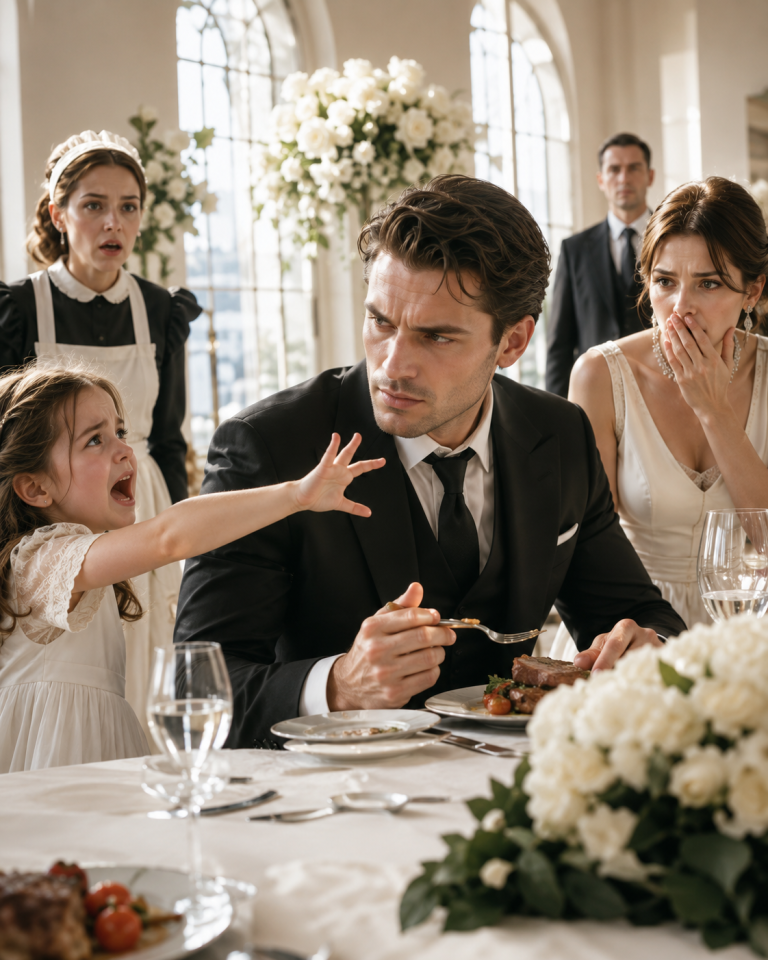
The Nanny Slapped The Most Feared Mafia Boss In Seattle — And The Silence Afterward Changed All Their Lives

**PART 1**
I thought I had signed my own death warrant the night I raised my hand and struck Massimo Ferrara across the face.
He was the most feared man in Seattle, a man grown men lowered their eyes around, and I was only the nanny hired to care for his silent six-year-old son.
But I did not slap him out of anger — I slapped him because Theo was trembling in his grip, and in that moment, protecting that little boy mattered more than surviving the monster in front of me.
I should have known something was wrong the moment the Sterling Domestic Agency called. Nobody from agencies like that called girls like me unless something had gone very wrong for someone wealthier.
I was twenty-two years old, living in Seattle’s Rainier Valley with a stack of medical bills on the kitchen table, a mother whose lupus treatments cost more than we could breathe around, and a future that had quietly started shrinking while I pretended not to notice.
My name is Josephine Callahan. Josie, to anyone who mattered. At twenty-two, I had already learned that hope was expensive.
I had started an early childhood education degree at Emerson University, then paused it when my mother’s illness grew worse. Paused, I called it. Because saying I had dropped out felt too final. Too much like admitting that the life I wanted had been taken and replaced with prescriptions, payment plans, and the sound of my mother coughing behind her bedroom door while trying not to wake me.
I worked wherever I could. Daycare shifts. Private babysitting. Weekend tutoring. Overnight care for families who paid me late but expected me to smile on time.
Then the Sterling Domestic Agency called.
“Miss Callahan,” the woman on the line said, her voice polished enough to belong to another tax bracket. “We have an expedited placement. Immediate start. Live-in nanny position. One child. Exceptional salary.”
“How exceptional?”
She named a number. I actually pulled the phone away from my ear and looked at it, convinced I had misheard.
“That’s monthly?” I asked.
“Weekly.”
I laughed. Not because it was funny. Because when life has been cruel long enough, generosity starts to feel like a trap.
“What’s the catch?”
A pause. “The family values privacy.”
That should have been enough for me to hang up. Instead, I thought of my mother’s infusion appointment. The overdue balance at Presbyterian Memorial. The final notice folded beneath a magnet shaped like a lemon on our refrigerator.
So I asked, “When is the interview?”
The address they sent did not appear on standard GPS. That was the second warning. The third was the gate.
The Ferrara estate sat hidden behind wrought-iron fencing, twelve-foot limestone walls, and enough cameras to make a person feel guilty simply for standing still. It overlooked Lake Washington from Broadmoor, enormous and pale against the gray Seattle sky. It was less a home than a fortress pretending to be a mansion.
I stood at the intercom in my only pressed blazer, tote bag on my shoulder, hair twisted into a knot that I hoped looked professional rather than desperate.
Before I could press the button, the heavy mahogany front door opened. A man in a tailored charcoal suit stepped out. He had the build of someone who did not need to raise his voice because his hands could make the argument for him. Broad shoulders. Cold eyes. A face that had forgotten softness so completely it looked carved.
“Miss Callahan,” he said.
“Yes.”
“I’m Vittorio Bianchi. Follow me. Keep your eyes forward.”
Not welcome. Not good morning. Keep your eyes forward.
I tightened my grip on my tote strap and followed him through the gates.
The inside of the Ferrara estate was breathtaking in the way museums can be breathtaking when you know you are not supposed to touch anything. White marble floors. Minimalist modern art. Glass walls facing the lake. A floating staircase. Tall vases filled with flowers that looked professionally arranged and emotionally dead.
But there was no warmth. No television in the background. No toys left in corners. No small sneakers by the door. No laughter. No ordinary signs that a child lived there.
The mansion was beautiful. And silent.
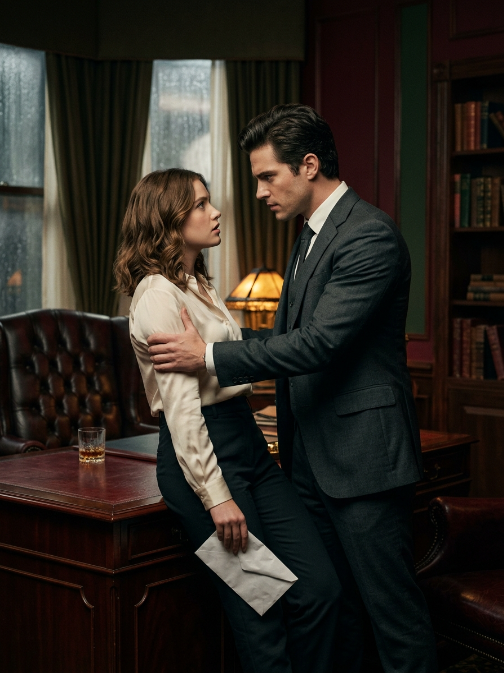
That silence followed us into an expansive library that smelled of old books, leather, and faint bourbon. Behind a massive oak desk sat Massimo Ferrara.
I knew his name before Vittorio said it. Everyone in Seattle knew the Ferrara name, even if most people pretended they did not. It floated through news reports with careful wording. Businessman. Investor. Reputed figure. Alleged connections. Words chosen by lawyers and reporters who knew that some men were safest when described indirectly.
Massimo Ferrara was thirty-four. He wore a black dress shirt with the sleeves rolled to his elbows, exposing dark tattoos climbing both forearms. His jaw looked carved from stone. His hair was black, neat, expensive. But it was his eyes that made my breath catch.
Pale blue. Cold as winter light.
He did not stand when I entered. He looked up from a folder. My folder.
“Josephine Callahan,” he said. Not a question.
I forced myself not to look away. “Twenty-two. Early childhood education, Emerson University, incomplete due to financial hardship. No criminal record. Strong references. Experience with nonverbal children. Desperate enough to accept a position where the first rule is absolute discretion.”
My face warmed. “I’m a professional, Mr. Ferrara. And I’m very good with children.”
He leaned back in his chair, studying me the way someone studies a piece on a chessboard before deciding whether it is useful.
“My son Theo is six. His mother died two years ago. Since then, he does not speak. Not one word.”
Something inside me shifted. “Not at all?”
“No.” His voice hardened. “Your predecessors tried to force him. Fix him. Rush him. They failed. Your job is simple. Keep him safe. Keep him fed. Keep him calm. Keep him out of my business.”
There it was. Not out of my way, exactly. But close enough to hurt on behalf of a child I had not met.
He continued. “You do not ask about my work. You do not bring guests onto the property. You do not speak to reporters. You do not leave the grounds without authorization. Vittorio will explain household protocol.”
I should have walked out. I knew that. Sitting in that chair beneath Massimo Ferrara’s pale, emotionless stare, every sensible part of me knew this job was not normal. It was not safe. The money was too much. The house was too guarded. The rules were too severe.
But then I thought of my mother’s hands shaking as she opened another bill.
So I said, “I understand.”
Massimo’s gaze held mine for another second. “Good. You start immediately.”
**PART 2**
Meeting Theo broke my heart quietly. Not in a dramatic way. Not with tears. Just a small fracture somewhere behind my ribs.
He sat in the corner of a playroom filled with expensive toys that had never been loved. Perfect wooden trains. Imported building blocks. A miniature electric car. Plush animals lined up like museum exhibits. Everything pristine. Everything untouched.
Theo Ferrara was small for six. Dark curls fell over his forehead. His hands clutched a worn plush wolf so tightly that the fabric had thinned at one ear. His eyes were his father’s pale blue, but where Massimo’s were cold and controlled, Theo’s were wide with fear.
He did not look at me directly. I did not make him. That was the first thing most adults got wrong with frightened children. They wanted proof. Eye contact. Words. Gratitude. Progress they could measure and report. I had learned that children who hurt deeply often healed sideways.
So I sat on the floor across from him, not too close, and pulled a picture book from my bag. “Hi, Theo,” I said softly. “I’m Josie. I’m going to read. You don’t have to listen if you don’t want to.”
His fingers tightened around the wolf. I opened the book and began.
For the first two weeks, I simply existed in his space. I built forts out of blankets and did not ask him to enter them. I colored dragons with green wings and left the red crayon near him. I read adventure stories in voices that made the housekeeper pause in the hallway and pretend she had not smiled.
I learned his routines. Oatmeal with brown sugar. No blueberries. Milk in the blue cup. Pajamas folded under the pillow before bath time. Nightlight on the lowest setting. Plush wolf always within reach.
Slowly, Theo moved closer. First by inches. Then by feet. Then one rainy afternoon, while thunder softened over the lake, he crawled into my lap and fell asleep with his face pressed against my sweater.
I sat completely still for forty-three minutes. My arm went numb. My back ached. I cried silently over the top of his dark curls because it felt like being trusted by something fragile and sacred.
**PART 3**
The house remained cold around us. Massimo was rarely home during the day. At night, his presence arrived before he did. Tires on gravel. Low voices. The front door opening at hours when decent people were asleep. Men moving through the foyer with urgency and silence.
My bedroom was down the hall from Theo’s, and I was a light sleeper. I heard things. Arguments muffled beneath marble ceilings. Vittorio’s voice, low and tense. Massimo’s voice, colder than shouting.
Once, near three in the morning, I opened my door a crack and saw Vittorio walking past with a dark stain spreading across the shoulder of his white shirt. His eyes found mine. He stopped. I stopped breathing.
Then he said, “Go back to sleep, Miss Callahan.”
So I did. But sleep did not come.
I knew what Massimo Ferrara was. Not because anyone told me. Because danger has a language. The cameras. The guards. The men who entered through side doors and never gave names. The news alerts I read under my blanket when everyone else slept. Massimo Ferrara, reputed head of the Seattle syndicate, locked in an escalating conflict with the Costa crime family.
Reputed. Alleged. Suspected. Words for people who wanted to say monster but could not prove it in court.
And still, I stayed. Because the first paycheck cleared. Because my mother’s next treatment was scheduled without another humiliating call to billing. Because Theo had begun leaving drawings under my door. Because abandoning that little boy to a house full of silence felt like its own kind of cruelty.
I told myself I was staying for my mother. Then for Theo. Never for Massimo. Not at first.
Massimo did not seem to know what to do with his son. He looked at Theo the way people look at a locked room when they have lost the key and are too proud to ask for help. He provided everything money could buy and almost nothing a child could hold onto. Private doctors. Therapists. Security. Tutors. Chefs. Imported toys. A mansion.
But when Theo entered a room, Massimo’s body went still. Not cold. Terrified.
Only I noticed because I had started watching him the way I watched Theo. Carefully. Not to judge. To understand. When Theo was nearby, Massimo’s eyes carried something deeper than grief. Guilt, perhaps. Helplessness. Rage turned inward so long it had become stone.
He did not know how to be soft. And because he did not know how, he often chose distance. Distance was safer. Distance did not fail. Distance did not break. But children do not understand distance as protection. They understand it as absence.
—
The tension in the house grew worse as November deepened. Massimo’s men came and went at odd hours. Vittorio’s jaw stayed tight. Phones rang and were answered in clipped Italian. Meetings moved behind closed doors. Guards doubled at the gates.
Massimo’s exhaustion became visible. Not to everyone. But to me. The shadows beneath his eyes darkened. His temper, usually controlled and icy, began to crack. A slammed drawer here. A cutting word there. Staff moving a little faster when his footsteps sounded.
The storm finally broke on a Tuesday night. Outside, rain lashed against the windows hard enough to make the lake disappear into darkness. Inside, I had just put Theo to bed.
He had been restless all evening, frightened by thunder, clutching his plush wolf and watching the door as if the storm might enter wearing a suit. To soothe him, I allowed him to hold his mother’s glass music box. It was delicate and beautiful, painted with tiny silver stars. Massimo had once told Mrs. Alcott, in a voice he thought I could not hear, that it had belonged to Theo’s mother, Serena. It played a small, melancholy tune when wound. Theo held it like a piece of her.
At 11:30, the front doors burst open downstairs. Voices exploded through the foyer. Massimo’s voice rose above the others, rough with fury.
“I told you to secure the docks. Three million in merchandise destroyed, two men in the hospital, and you want me to believe this was bad luck?”
I hurried from my room toward Theo’s, praying he had slept through it. He had not. He stood in the hallway in his pajamas, the glass music box clutched against his chest, eyes wide and fixed on the staircase.
“Theo,” I whispered, moving toward him. “Come here, sweetheart.”
Then thunder cracked over the house at the exact moment Massimo kicked a side table downstairs. The combined sound shattered the night. Theo flinched violently. The music box slipped from his hands. It hit the hardwood floor with a high, devastating crack. Glass burst across the landing. The tiny gears inside spilled out, playing one warped note before dying completely.
Downstairs, the shouting stopped. The silence that followed was worse.
Massimo looked up. I saw his face from the landing. The moment he registered Theo. The broken music box. His dead wife’s keepsake in pieces.
“No,” he breathed. Not loud. Worse than loud.
He took the stairs two at a time. The men below stepped back. Hardened, armed men stepped back. That told me enough.
I moved before thinking. I reached Theo first and stepped in front of him just as Massimo arrived at the top of the stairs. Massimo did not even see me. His eyes were wild with grief, fury, adrenaline, and whatever had happened outside the walls that night. He reached around me and gripped Theo’s small arm.
Too hard. Not deliberately cruel. But far too hard.
Theo’s face twisted. A silent gasp of pain escaped him.
“What did you do?” Massimo snarled, towering over him. “Do you know what that was?”
“Let him go,” I said.
Massimo did not hear me. Or did not care. “What did you do?”
“Massimo, let him go.”
“Stay out of this, nanny.”
He shoved my shoulder with his free hand, not enough to throw me down, but enough to knock me off balance. I caught myself on the wall.
Theo was crying now. Not loudly. He did not make noise when he cried. That somehow made it worse. His mouth opened, but no sound came. His small body trembled in Massimo’s grip while the broken glass glittered around his bare feet.
Something in me went white-hot. Not bravery. Not thought. Rage. The clean, sharp kind that arrives when a child is being hurt and the body decides fear can wait.
I planted my feet. Squared my shoulders. And slapped Massimo Ferrara across the face with every ounce of strength I had.
The sound cracked through the hallway. Smack. It echoed like a gunshot. Massimo’s head snapped to the side. Time stopped.
Below us came the metallic sound of weapons being drawn. Three of Massimo’s men had their guns aimed at my chest. I froze, hand still raised, palm stinging fiercely. My breath caught. I thought, *I am dead. I just killed myself.*
Massimo slowly turned back to me. A red handprint bloomed across his cheekbone. His chest rose and fell. The wild rage in his eyes fractured into shock. Absolute shock.
No one touched Massimo Ferrara. Men who insulted him from a distance were rumored to vanish from conversations forever. And I, a twenty-two-year-old nanny in flannel pajamas, had struck him in his own house.
His gaze moved from my face to his hand. Still gripping Theo. He looked down at his son. Really looked. For the first time that night, maybe for the first time in too long, Massimo saw Theo not as a symbol of loss, not as proof of failure, not as the fragile reminder of everything he could not fix.
He saw a terrified six-year-old boy. His terrified six-year-old boy.
Slowly, Massimo released him. Theo stumbled back into me, and I wrapped one arm around him without taking my eyes off Massimo.
A muscle moved in Massimo’s jaw. He lifted one hand toward the men below. The guns lowered. No one spoke. Massimo stepped over the shattered music box, walked down the hallway, and disappeared into his master suite. The door slammed hard enough to shake the walls.
Only then did my knees give out. I dropped to the floor and pulled Theo into my chest, carefully away from the glass.
“I’ve got you,” I whispered into his hair. “I’ve got you, Theo. You’re safe. I’m here.”
He shook against me. I held him until he exhausted himself. Then I carried him back to bed, cleaned his feet, checked his arm, and sat beside him until dawn began to gray the windows.
—
After he finally slept, I packed my suitcase. I knew how stories like mine ended. By sunrise, I would be fired. If I was lucky.
I folded my clothes with shaking hands and wrote a list of Theo’s routine on the notepad beside my bed. *No blueberries. Blue cup. Wolf at bedtime. Music helps, but not the glass box. Do not force speech. Sit on the floor. Wait for him.*
At six in the morning, someone knocked heavily on my door. I took one breath, zipped my suitcase, and opened it. Vittorio stood there, expression unreadable.
“Get your bag,” I said quietly.
He looked at the suitcase. “Leave it. The boss wants you in his study.”
My stomach dropped. This was it. Not a firing. Something worse.
The library doors were open. Massimo sat behind his desk, staring out at the gray lake beyond the windows. He wore a fresh shirt. His hair was damp, as if he had showered but not slept. The red mark on his cheek was faint now, but still visible.
Good. I was terrified enough to be ashamed of the thought, but not enough to take it back.
“Close the door,” he said. I did.
“Mr. Ferrara,” I began. “I’m packed. I’ll leave quietly. I only ask that you find someone patient with Theo. He does not need to be fixed. He needs—”
“Sit down, Ms. Callahan.”
I stopped. He turned his chair toward me. His eyes were not cold now. They were exhausted. So exhausted it looked painful. I sat slowly.
Massimo leaned forward, elbows on the desk, hands clasped together. “Do you know how many men have put their hands on me in the last ten years?”
My fingers tightened around the chair arms. “No.”
“Dozens have tried.” The silence after that was heavy. “They are not here anymore.”
I swallowed.
“Last night,” he continued, voice lower, “I lost control.” I blinked. Those were not the words I expected. “The business has been bleeding into my home. Into my head. I looked at my son, and for a second, I did not see him. I saw failure. My failure. I saw the music box, Serena’s music box, and I let grief make me cruel.”
His jaw tightened. “If you had not stopped me, I might have hurt him. Not because I wanted to. Because I was too blind with rage to understand my own strength.”
I sat frozen. Massimo Ferrara did not look away. “You protected my son from me.” His voice cracked slightly on the last word. Only slightly. But enough.
He opened a desk drawer and pulled out a thick envelope. “I had Vittorio review your mother’s medical accounts. Presbyterian Memorial has been paid in full. Treatments, outstanding balances, next quarter’s appointments. All of it.”
My breath disappeared. “What?”
He slid the envelope across the desk. “This contains next year’s salary in advance. Doubled.”
I stared at it. “I don’t understand.”
“You’re not leaving.”
My eyes snapped up. Massimo stood and walked slowly around the desk until he stood in front of me. He did not touch me. But the space around him seemed to shrink.
“Firing you?” he said, voice low. “Ms. Callahan, you are the only person in this city who was not afraid to put me in my place for Theo.”
He leaned slightly closer. “You stay. Not as a prisoner. Not because of money. You stay because my son trusts you, and because last night you proved you see him more clearly than I do.”
His gaze moved briefly to my mouth, then back to my eyes. “And Josie?”
My pulse jumped at the sound of my first name.
“If you ever slap me again, make sure we are alone.”
Heat rushed to my face. Outrage came first. Then confusion. Then something else I refused to name.
“You are impossible,” I said.
For the first time since I had met him, Massimo Ferrara almost smiled. “Probably.”
—
Everything changed after that morning. Not all at once. Real change rarely enters a house like sunlight. It creeps in. A softened voice. A chair pulled out at breakfast. A father standing awkwardly near the playroom door, not entering, but not leaving either.
Massimo started appearing in daylight. At first, Theo hid behind me whenever his father entered. Massimo noticed. It hurt him. He hid the hurt badly. But he tried. He cancelled morning meetings and sat at the breakfast table while Theo ate oatmeal from the blue bowl. He did not demand words. He did not ask for eye contact. He simply sat there, large hands folded, looking like a man learning how to approach a wounded animal without frightening it.
One morning, Theo pushed a crayon across the table toward him. Massimo stared at it like it was a holy object. “What is this?” he asked quietly.
I touched his arm under the table. “He’s inviting you to color.”
Massimo picked up the crayon. He drew the worst tree I had ever seen. Theo studied it for a long time, then silently handed him the green crayon.
Progress.
The house began to breathe. Mrs. Alcott smiled more. The staff stopped moving like ghosts. Massimo ordered a grand piano moved into the sunroom after learning I used to play for my mother.
The first time I sat at it, my fingers shook. Not because I feared the keys. Because Massimo stood in the doorway watching me.
“Debussy?” he asked.
I looked up. “You know Debussy?”
“I know many things, Ms. Callahan.”
“Do any of them involve smiling?”
His mouth moved. Barely.
I played a hesitant, imperfect piece while rain streaked the glass. When I finished, Massimo was still there.
“So?” I asked.
His voice was quiet. “It sounds like the house remembered it was alive.”
That sentence stayed with me longer than it should have.
But outside the Ferrara estate, Seattle was burning. Lorenzo Costa, the aging head of the rival faction, was losing territory. Massimo’s response to the dock attack had cost Costa power, money, and pride. Men like Lorenzo could survive losing money. Pride was more dangerous.
The security around the estate tightened. No unnecessary trips. No visitors without clearance. No walks beyond the garden. For six weeks, Theo and I did not leave the grounds. I hated it. Theo hated it more.
He had begun drawing brighter pictures now. Not only black shapes and storms. Sunrooms. Wolves. A crooked green tree that looked suspiciously like Massimo’s attempt. A woman at a piano. A tall man standing near a small boy. But he still did not speak.
Dr. Helena Voss, a discreet pediatric trauma specialist downtown, insisted Theo needed an in-person evaluation. Massimo refused.
“He is safer here.”
“He is not safer if he learns the entire world is a threat,” I said.
Massimo’s eyes sharpened. “This is not a debate.”
“It should be.”
The room went still. Vittorio, standing near the door, suddenly became fascinated by the floor. Massimo looked at me like he was deciding whether to be furious or impressed.
I did not wait for him to choose. “Theo needs to know he is not a prisoner in his own home. Vittorio can come. Five guards. Armored SUV. Private garage. Private elevator. We go in, see the doctor, come back.”
“No.”
“Massimo.”
“No.”
I stepped closer. “Are you protecting him, or are you keeping him small because fear feels easier than trust?”
His face hardened. For a second, I thought I had pushed too far. Then his eyes flickered toward the playroom, where Theo sat building towers in silence. The anger left him slowly. Like a tide going out.
“One hour,” he said. “Vittorio stays with you. If anything feels wrong, you leave.”
“Agreed.”
Before we left the next day, Massimo crouched in front of Theo. It looked unnatural, this powerful man lowering himself to his son’s level. But he did it.
“I need you to listen to Josie and Vittorio,” he said quietly. “You are safe with them.”
Theo clutched his plush wolf. Massimo hesitated, then touched the boy’s shoulder with two careful fingers. “If you want to come home early, you come home early.”
Theo did not speak. But he leaned half an inch toward his father. Massimo saw it. So did I.
—
The drive to Riverside Children’s Hospital Annex was uneventful. The appointment was not. It was beautiful.
Dr. Voss was patient, warm, and unhurried. She spoke to Theo without pressing him. She asked him to draw. He drew a wolf beneath a tree. She asked where the wolf lived. He did not answer, but he placed the wolf beside a small house and then added three figures outside. A small boy. A woman. A tall man.
Dr. Voss looked at me. Then at Massimo’s empty space in the room, as if she could sense his presence even in absence. “He is healing,” she said softly.
My eyes filled. Then Theo laughed. A tiny sound at first, surprised out of him when Dr. Voss made the plush wolf pretend to sneeze. But it was there. Bright. Clear. Alive.
I had to press my fingers against my mouth to keep from crying too hard.
The nightmare began in the parking garage. We took the private elevator down to level P4. The garage was dim and concrete, humming with ventilation fans. Vittorio stepped out first, one hand near his jacket. Two other guards flanked me and Theo.
I held Theo’s hand tightly. Something felt wrong before anything happened. The silence was too complete. Not empty. Waiting.
Vittorio stopped. His hand lifted. “Get them in the car,” he said sharply. “Now.”
A gray van shot from the lower ramp and slammed into the side of the armored SUV. The sound exploded through the garage. Metal crunched. Glass burst. Theo’s hand spasmed in mine. Men stepped from behind concrete pillars. The world became noise.
Vittorio shouted. The guards moved. I did not freeze. Maybe I should have. But fear had no time to organize itself.
I grabbed Theo, pulled him down, and rolled behind a concrete support column. My knees hit the pavement hard. Pain shot up my legs.
“Stay down,” I whispered, covering him with my body. “Cover your ears, baby.”
He curled into a ball, trembling. I could hear Vittorio shouting orders. Tires screeching. Men moving. The deep, terrible rhythm of a fight I did not have the luxury to understand.
Then I saw him. Detective Colton. I knew him from the estate. A man with a badge who had visited Massimo’s office twice. Polite. Smiling. Supposedly trusted.
He came through the emergency stairwell. Not toward Vittorio. Toward us. His eyes locked on Theo. My blood went cold.
He had betrayed them. Not for justice. For money. For power. For whatever men sell themselves for when they convince themselves the child at the center of the bargain is not real.
He raised his weapon. “Nothing personal, sweetheart,” he called.
The phrase did something to me. Nothing personal. As if Theo’s life was paperwork. As if my body shielding him was an inconvenience. As if this six-year-old boy had not already lost enough.
My eyes darted wildly. Fire extinguisher. Red steel. Mounted on the wall inches away. I grabbed it. It was heavy, but adrenaline made me stronger than sense.
As Colton rounded the pillar, I swung with everything I had. The extinguisher struck his wrist. His weapon clattered away across the concrete. He shouted. I swung again. Hard enough to stop him. Hard enough to make sure he did not get back up before Vittorio reached us.
Then headlights flooded the garage. Three black SUVs tore down the ramp. Doors flew open before the vehicles fully stopped. Massimo Ferrara stepped out of the lead SUV.
I had seen Massimo angry. I had seen him cold. I had seen him dangerous. I had never seen him afraid. Not like that.
His eyes went straight to the column. To Theo. To me.
Everything ended quickly after that. Not cleanly. Not beautifully. But decisively. Massimo’s men overwhelmed the attackers. Vittorio reached us, bleeding from a cut near his temple but upright. Someone shouted that Colton was alive. Someone else called for medics.
I crawled out from behind the pillar with Theo clutched against me. My knees were scraped. My hands shook. My blazer was torn. I could barely hear over the ringing in my ears.
Massimo ran to us. He dropped to his knees on the filthy concrete and pulled both of us into his arms. Not carefully. Desperately. His face buried against my neck for one second, his breath ragged.
“Josie,” he said. My name broke in his mouth.
“I’ve got him,” I whispered, one hand in his hair before I realized what I was doing. “He’s safe, Massimo. He’s safe.”
Theo moved between us. His small hands touched Massimo’s face. Massimo froze. Theo looked at him. Then at me. Then back at him.
And after two years of silence, his voice came out tiny and rough. “Papa.”
The garage went completely still.
Massimo stared at him. Theo’s lower lip trembled. “Josie saved us.”
Massimo’s face changed. No wall could have survived that moment. He pulled Theo close and pressed his mouth to the boy’s hair, eyes shut tight, shoulders shaking.
The most feared man in Seattle held his son on a dirty garage floor and cried without caring who saw.
Then he looked at me. “You fought for him,” he whispered.
I laughed shakily, half-sobbing. “I told you. I’m very good with children.”
Something like awe moved through his eyes. Not desire. Not possession. Awe.
—
That night, the war ended. Not in the dramatic way rumors later told it. No grand speech. No public victory. Massimo did what powerful men do when they finally understand what they are protecting. He cut off Lorenzo Costa’s resources, exposed the betrayal inside his own network, handed enough evidence to the right federal contacts to make escape impossible, and removed the threat from Theo’s life permanently.
Detective Colton survived long enough to name names. By morning, arrests were moving through the city like thunder. By afternoon, Lorenzo Costa’s empire had collapsed under the weight of its own rot.
Massimo did not celebrate. He came home. That was all.
In the quiet hours before dawn, I stood on the balcony overlooking Lake Washington, wrapped in a blanket, unable to sleep. The cold wind moved through my hair. Below, waves struck the dark shoreline.
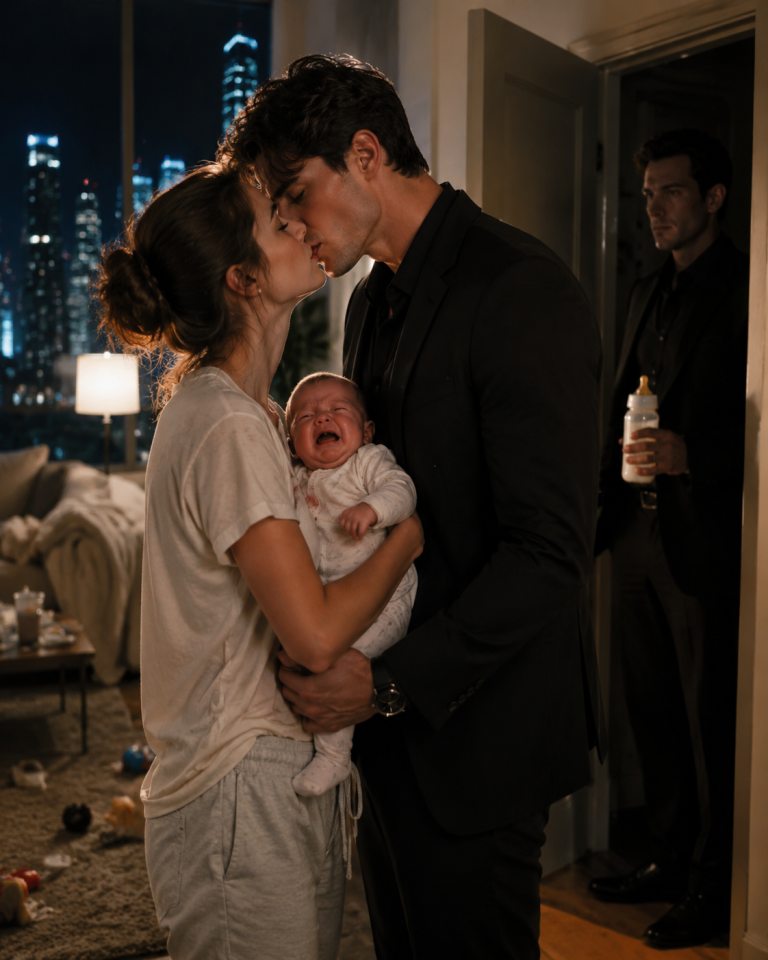
I felt a warm jacket settle over my shoulders. Massimo stepped behind me. Not touching at first. Waiting. I turned slightly, and only then did he wrap his arms around my waist, pulling me back against his chest.
“The debt is gone,” he said quietly.
I closed my eyes.
“Lorenzo is gone. Colton is in custody. Your mother’s medical care is secured permanently. There is money in your name, enough to take her anywhere, enough to finish school, enough to leave this house if that is what you want.”
My hands covered his. “Are you trying to fire me again, Mr. Ferrara?”
His breath moved against my hair. “No.”
“Then what are you doing?”
“Trying not to trap you.”
The honesty hurt. I turned in his arms. The man in front of me was still Massimo Ferrara. Still dangerous. Still marked by violence and power and choices I would never fully understand. But he was also the father who had learned to color badly because his son handed him a crayon. The man who moved a piano into a sunroom because music made a cold house breathe. The man who had looked at his own darkness and not denied it.
“I stayed for my mother at first,” I said.
“I know.”
“Then for Theo.”
“I know.”
I touched his cheek, right where I had slapped him months ago. “But somewhere along the way, I started staying for you too.”
His eyes closed briefly. When they opened, the blue was no longer winter. It was water breaking under light.
“I love you,” he said. No performance. No command. Just the truth, raw and terrifying in his voice. “I love you in a way that makes me afraid of myself. Because I know what I would do to keep you safe. And I know that you would hate me if I confused love with control.”
“I would.”
“I know.”
I smiled through tears. “Good.”
He reached into his jacket and pulled out a small velvet box. My breath stopped.
“I am not asking you because I need a queen for my house,” he said. “I am not asking because Theo loves you, though he does. I am not asking because you saved him, though you did.” He opened the box. The diamond caught the pale morning light. “I am asking because you are the first person who ever looked at me at my worst and demanded I become better. You protected my son from me. You protected him from men who tried to use him. You protected the life in this house when I was too consumed by war to notice it was dying.”
His voice lowered. “Marry me, Josie. Not because you owe me. Not because you need money. Not because you are afraid to leave. Marry me only if staying is what you choose.”
My heart broke open quietly. Not because the ring was beautiful. It was. But because the door was open now. Really open. I could leave. My mother would be safe. My future would be funded. No debt held me. No threat forced me. No contract tied me. For the first time since the agency called, the choice was mine.
I looked past Massimo into the room behind him, where Theo slept safely for the first time in weeks. I thought of the silent boy in the corner of the playroom, the broken music box, the green crayon, his tiny voice on the concrete floor saying Papa.
I thought of my mother, alive because of money I had been ashamed to accept until I realized survival is not shameful.
I thought of myself, the girl who had walked into a fortress to save her family and found another family waiting in pieces.
Then I looked at Massimo. “Yes,” I whispered.
His face changed. Not like a boss winning. Like a man forgiven something he had not known how to ask forgiveness for.
I cupped his jaw. “But if you ever become that man on the staircase again—”
“I won’t.”
“If you ever make Theo afraid of you like that again—”
“I won’t.”
“If you ever mistake my love for obedience—”
His mouth found mine gently. “I won’t,” he whispered against my lips. “And if I do, I trust you to remind me.”
“With words?”
A faint smile. “Preferably.”
I laughed, and he kissed me again.
Behind us, a small voice interrupted. “Josie?”
We both turned. Theo stood in the doorway in his pajamas, clutching his plush wolf. Massimo went still, as if the sound of his son’s voice still felt too sacred to startle.
“Yes, sweetheart?” I said.
Theo looked at the ring box. Then at his father. Then at me. “Are you staying?”
The question nearly undid me. I knelt and opened my arms. He ran into them.
“Yes,” I whispered, holding him close. “I’m staying.”
Massimo knelt beside us, one arm wrapping around Theo, the other around me. The three of us remained there on the balcony floor while dawn slowly turned Seattle silver and gold.
—
Later, people would tell the story differently. They would say Josie Callahan tamed Massimo Ferrara. They would say the nanny became queen of the Seattle syndicate. They would say the most feared man in the city fell in love because a woman had the courage to slap him.
But that was not the real story. The slap did not make him love me. It made him wake up.
Theo did not need a queen. He needed safety. Massimo did not need a woman to save his soul. He needed to choose, every day, not to let grief turn him into the thing he hated. And I did not need a dangerous man to rescue me from poverty. I needed my mother to live, my future to reopen, and a child in pain to know at least one adult would stand between him and fear.
Love came later. Slowly. Carefully. After the apology. After the boundaries. After the choice became real.
That is the part people forget in stories like ours. Danger is not romance. Power is not love. Fear is not respect. A man is not redeemed because he wants a woman. He is redeemed only if he changes when the truth is ugly and no one is clapping for him.
Massimo changed. Not perfectly. Not overnight. But honestly.
He went to therapy with Theo. The first session nearly killed his pride. The second helped. The third made Theo laugh. He limited the business that had bled into the house. He moved meetings away from home. He made the estate less fortress, more shelter. He learned that protection did not have to sound like orders. He learned to ask. *Would you feel safer if I stayed? Do you want space? May I hold you?* Small words. Huge things.
I returned to school. Finished the degree I had paused. Massimo sat in the back row at my graduation with Theo beside him, both looking absurdly serious. When my name was called, Theo stood on his chair and shouted, “That’s Josie!”
Everyone turned. Massimo, the man who once made rooms fall silent with fear, laughed so openly that Vittorio looked at him like he had witnessed a miracle.
My mother got stronger. Not cured. Lupus does not work that way. But stable. Cared for. Safe. She visited the estate often and scolded Massimo within ten minutes of meeting him properly.
“You look like trouble,” she said.
Massimo glanced at me. “She’s perceptive.”
My mother loved Theo instantly. Theo loved her cookies. Vittorio loved them more but denied it.
The house filled with things it had not known in years. Music. Flour on counters. Children’s drawings taped to expensive walls. Arguments about bedtime. The smell of soup. The sound of Theo’s voice.
And sometimes, when the lake turned dark and the wind pressed against the windows, I thought about the night of the broken music box. The sound of glass. The silence after my hand struck Massimo’s face. The guns raised. The certainty that my life had ended.
But my life had not ended there. It had split open. And through that terrifying crack, something impossible had entered. A boy’s healing. A father’s remorse. A woman’s courage. A family built not by blood alone, but by the people who choose to stay when staying is no longer required.
So yes, I married Massimo Ferrara. Not because he was powerful. Not because he was feared. Not because he could pay every bill that had once kept me awake.
I married him because when I drew the line, he learned not to cross it. Because when his son needed tenderness, he chose to learn it. Because when I said I needed freedom, he opened the door.
And because somewhere inside that limestone fortress overlooking Lake Washington, the most dangerous man in Seattle became something far more difficult than feared.
He became safe. Not for everyone. Maybe not even for the world. But for Theo. For me. For the family we built from broken glass, second chances, and one echoing slap that finally woke a sleeping house.
THE END.