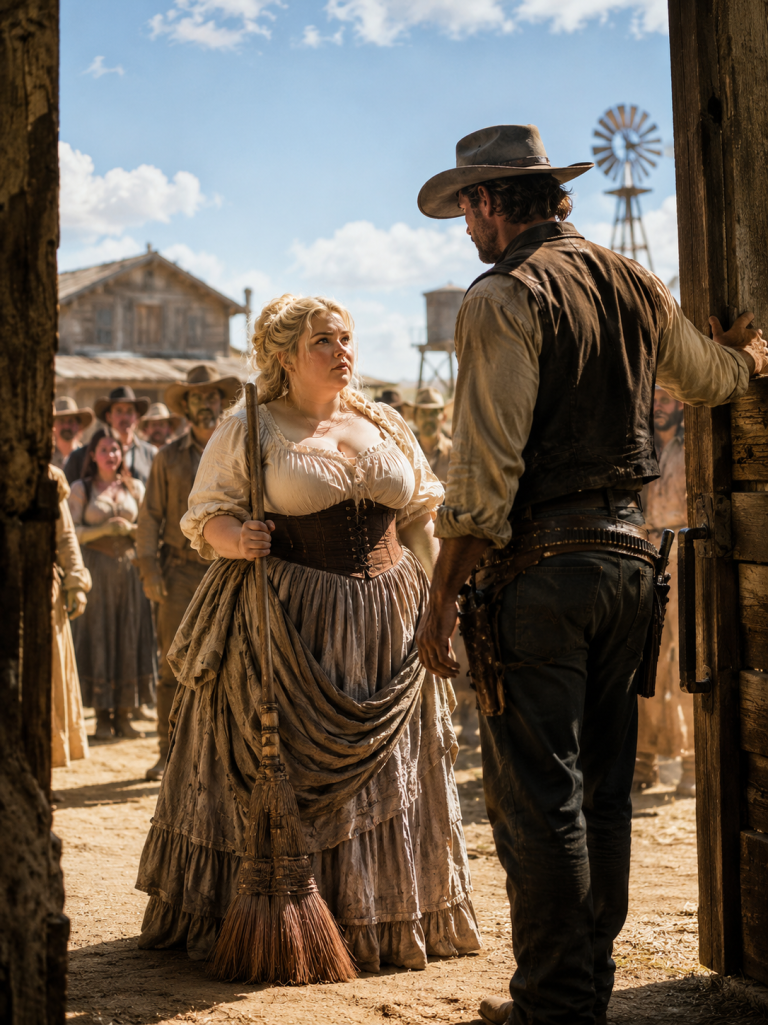
I Tried to Hide My Pregnancy—Then the Mafia Boss Appeared in the Delivery Room

## PART 1
I had been awake for thirty-one hours when I finally understood what the thin blue lines meant.
Not what they said — I had understood the biology since the first test, maybe since before it, since the morning three weeks earlier when I had stood over the diner sink at six a.m. and felt the world tilt sideways in a way that had nothing to do with the night shift. What I understood, standing in my bathroom with the third test still damp in my hand, was what they required.
I had to leave New York tonight.
Not tomorrow.
Not after I thought it through.
Tonight, before the man I had been sleeping next to for eight months had any reason to look for me.
His name was Dante Cavalieri.
I had met him at Finestre — the upscale Italian restaurant in Midtown where I worked wine service four evenings a week. He had sat at the corner table with the kind of stillness that powerful men develop when they have decided the room belongs to them, and I had poured his wine and answered his question about the vintage without performing the flirtation most men in that corner expected, and he had come back the next Tuesday, and the Tuesday after that.
I should have known better.
Everybody in that restaurant knew who the Cavalieri family was.
I knew in the way people know things they have decided not to let matter: a background note, a rumor heard and filed away, an inconvenience of information I had chosen to set aside because the man sitting across from me in the lamplight looked at me as though I was someone worth paying attention to, and I had been underpaid and overlooked for long enough that being seen felt dangerously close to being loved.
I paid for that confusion in that bathroom at two a.m.
The test lay on the edge of the sink.
The line was unmistakable.
Outside the window, New York breathed its ordinary noise — sirens, someone’s music, the particular grinding of a garbage truck on Third Avenue at an hour when most of the city was still pretending it slept. I pressed one hand flat against my stomach and let myself have exactly thirty seconds of something I couldn’t quite name — not joy, not grief, something in between, some wild hybrid of possibility and terror.
Then I opened the closet and started packing.
I did not take much.
One bag. Two changes of clothes. The envelope of emergency cash I kept behind the loose baseboard panel in the bedroom closet, money I had been building for no particular reason except that a woman who grew up without a safety net learns to build one before she needs it. My journal. The photographs of my mother. My nursing license, kept current even though I hadn’t worked clinical in two years. A phone charger.
I did not leave a note.
Notes could be found.
Notes had been used as evidence.
I drove out of the city before four in the morning, the skyline receding in the rearview mirror while my hands stayed at ten and two and my mind catalogued everything I had seen behind Finestre’s service entrance on a Thursday evening nine days earlier that I had been telling myself I could explain away.
There had been a man on his knees in the alleyway.
His hands had been shaking.
Dante had stood over him with the calm of someone who had arrived at a decision before he entered the alley and was simply executing it. He had straightened his cuffs while the man spoke. He had nodded, once, to the larger man standing to his left.
The sound that followed.
Then silence.
Then Dante had turned and walked back inside as if he were returning from a phone call, and his eyes had found mine across the kitchen and he had said, “Are you ready?” because we had theater tickets and the car was waiting — and I had said yes because my body had said yes before my mind could intervene, and we had sat in the fourth row of a Broadway house and I had not heard a single word of the second act.
That was nine days ago.
I had told myself a story about it every day since.
The stories got thinner every morning.
Driving north, I stopped at a gas station in Connecticut to vomit at the edge of the lot while trucks roared past, and then sat in the car for ten minutes with my forehead against the steering wheel before I could drive again. My body was already rewriting its priorities around the life beginning inside it. I could not afford to let that feel tender yet.
I chose Vermont because it was the wrong direction from anywhere Dante would think to look. He knew I had grown up in New Jersey. He knew I had gone to school in Philadelphia. He knew I hated driving in snow. Vermont, in October, had the specific logic of a place chosen to be implausible.
The town of Millhaven appeared around a bend in a two-lane road three hours north of the highway.
Small. Wooded. The kind of town where the buildings were old enough to have accommodated several incarnations of American life and the people were sensible enough to mind their business unless minding yours required them to intervene.
The diner on the main street had a hand-lettered HELP WANTED sign in the window.
The woman who interviewed me across the counter was named Ruth. She had the particular expression of a woman who had seen a great deal and concluded that judgment was not worth the energy.
She hired me on the spot.
“What name?” she asked, pen over her notepad.
I had thought about this during the drive.
“Serena,” I said. “Serena Walsh.”
She wrote it down without looking up.
“You start tomorrow.”
The apartment I found above a bookshop was drafty and tilted slightly toward the east window and the radiator made sounds that suggested ongoing negotiations with the pipes. The landlord was an older man who seemed to consider excessive paperwork a character flaw.
“Cash,” I said.
“Cash,” he agreed, handing me the key.
I set my one bag on the floor and sat at the edge of the bed and placed both hands over my stomach.
“You and me,” I said to the silence.
I had no idea yet whether I was brave enough to mean it.
—
## PART 2
The weeks constructed themselves around small survivable facts.
Morning shifts at the diner. Tips counted carefully, each bill a vote toward a future. The specific rhythm of a small-town restaurant where the regulars knew one another’s coffee orders and a new face was noticed but, after a week or two, absorbed without much ceremony.
Ruth did not ask questions.
That was the most valuable thing she offered.
Strange things began happening in the third month.
My November rent, which I knew I was three days late on, was marked paid when I went to the landlord’s office. He shrugged in the way of a man who had decided it was not his confusion to explain.
A box of groceries appeared outside my door when I had nothing in the kitchen but rice and tinned soup.
The clinic on Birch Street sent me a bill for my first prenatal appointment and then, a week later, sent a revised statement showing a zero balance with no explanation attached.
I thought it was Ruth, at first.
Ruth denied it with such genuine puzzlement that I believed her.
Then I thought it was the town — small communities sometimes organize themselves around a woman on her own, especially a visibly pregnant one. But the assistance was too precise. Too tailored. The groceries contained the specific crackers I had mentioned offhandedly to the clinic nurse for nausea. The paid bill matched exactly the outstanding amount.
Someone knew what I needed before I had to ask for it.
I pushed the thought to the back of my mind, where it lived alongside the things I couldn’t afford to examine while functioning.
By the fifth month, the baby moved for the first time while I was carrying two plates of eggs to a table near the window.
I stopped.
The man at the table looked up.
“All right, honey?”
“Fine,” I managed. “Just a cramp.”
I went to the back of the kitchen and stood against the wall and laughed silently until my eyes blurred. There was a person inside me. Moving on purpose. Already deciding the terms of her arrival.
I started calling her *she* in my mind around that time, though I had no real evidence. Just a feeling. Mothers have those.
At night, I talked to her.
Not about Dante.
About the bookshop downstairs and the way it smelled in early morning before anyone opened it. About Ruth’s excellent pie and terrible coffee. About the way the lake at the edge of town went silver at dusk. About all the places we would live once we were free to choose.
She kicked when I said the word *free*.
I chose to believe that meant something.
Then, twelve days before my due date, my water broke at three in the morning on a Tuesday.
The plan had been to deliver at a hospital two counties over, where no records would connect to my real name. The plan assumed I would have more time, and more calm, and weather that was not flooding the back roads with a November rainstorm hard enough to turn the fields into mirrors.
I drove anyway.
Each contraction arrived faster than the last, stealing my breath and blurring the white lines on the road, and I gripped the steering wheel and told myself to keep going, and I kept going.
At the hospital entrance, a nurse met me with a wheelchair and a form.
I handed her the ID.
“Serena Walsh,” she read.
I nodded.
I was in surgery within four hours.
When I woke from the anesthesia, I could hear crying before I could see anything clearly, and for one terrible suspended second I could not tell if it was mine.
It wasn’t.
The nurse set a small bundled weight against my chest, and I felt dark hair beneath a soft hat, and the crease between two small brows that looked, unmistakably, like his, and she was fierce and loud and absolutely furious with the inconvenience of being born.
I named her Elia.
After the olive tree.
Something that takes years to grow, weathers every season, and outlives everything planted beside it.
That was the last thought I had before I slept.
The thought after, when I woke to a knock on the door at eleven p.m. on the second night, was not a thought at all.
It was cold recognition moving through my body like water finding level.
The knock was not a nurse’s knock.
—
## PART 3
The door opened before I finished saying come in.
Dante Cavalieri stood in the frame.
Not the Dante of dinners and theater tickets and the particular way he had of tilting his head when I said something that surprised him. This was the man I had seen in the alley behind Finestre, the one who had returned to my table afterward and asked if I was ready, the one whose calmness had cost me months of constructed explanations.
He wore a dark coat, no tie. His face was unreadable in the way I now understood was not composure but something older and more deliberate — the expression of a man who has learned that showing nothing is the safest form of armor.
His eyes went to my face, then to Elia in my arms.
Then back to me.
“Hello, Livia,” he said.
My name in his mouth — my real name, not Serena, not Walsh — landed in the room like an accusation.
I pressed Elia closer.
“How.” Not a question. A refusal to absorb it until he said it aloud.
He stepped inside. The door closed behind him. Two figures remained visible through the small window in the door, filling the hallway just by standing in it.
“I found you the first month,” he said.
The air left the room.
“October,” he continued. “The Vermont plates on a car similar to yours were logged at a toll north of Hartford. I had a contact in the DMV run adjacent records.” He paused. “I was in Millhaven by the second week of November.”
The grocery bags.
The rent.
The clinic bill.
The crackers.
My body went cold in a way that had nothing to do with the hospital temperature.
“You’ve been watching me for four months.”
“Yes.”
“And you didn’t come.”
“No.”
I stared at him. “Why?”
“Because I had people looking for you who did not yet know why I was looking. Coming directly would have revealed you.” He looked at Elia with an expression I wasn’t prepared for. It was not ownership. It was not calculation. It was something nakedly, involuntarily tender, and that frightened me more than coldness would have.
“She looks like you,” I said, because I needed to say something and the truth came out before the defense did.
“She has your mouth,” he said quietly.
He moved toward the bed.
I pulled back. “Don’t.”
He stopped. Immediately. That also surprised me.
“What happens now?” I asked.
“That depends partly on what you want.”
The sentence was wrong. It didn’t match what I knew about how the Cavalieri family operated. It didn’t match the man in the alley.
“Don’t perform reasonableness,” I said. “I watched you in that alley. I know what you are.”
His jaw tightened. “Yes.”
“Then say the real version.”
He looked at me for a long moment.
“The real version is that I want you and our daughter with me. Officially. Under my name. Protected.”
“And if I say no?”
He didn’t answer.
He didn’t need to.
“That’s what I thought,” I said.
He checked his watch. “I have until morning before I need to tell my security team where I am. After that—” He paused. “After that the situation becomes harder to contain.”
“Contain,” I repeated. “You mean harder to control how many people know where I am.”
“Yes.”
“So this isn’t an offer. It’s a deadline.”
His mouth tightened. “By morning, a record of your stay here will be adjusted. Serena Walsh will leave no trace. Livia Greco—”
“Livia Greco died in a car accident,” I finished. “Didn’t she. You’ve already had that paperwork drafted.”
He said nothing.
“I want you to say it,” I said. “Out loud. I want you to hear what you’re doing.”
“I am keeping you alive,” he said. “My rivals—”
“Your rivals don’t know I exist because you’ve apparently spent four months making sure of it. So don’t use them as the reason. Use the real reason.”
He looked at Elia.
And something in his expression broke open in a way he clearly hadn’t prepared for — the way a man looks when he has planned thoroughly for every variable except the one where the child is real and present and specifically, undeniably, his.
“I’m afraid,” he said.
It came out stripped of performance.
“Of what?” I asked.
“Of watching something else I love disappear because I was managing it from a distance.”
I filed that away. Not because it forgave anything. Because it was the first true thing he’d said.
“I’ll give you until morning,” he said.
Then he left.
I did not sleep.
At four a.m. I fed Elia in the half-light of the hospital room, her small hands opening and closing against the air, and I catalogued my options with the systematic focus of a person who has learned that panic is a luxury and clarity is survival.
I was eight weeks from full recovery. I had no car here. No phone that hadn’t been potentially tracked. Ninety dollars in cash. A false identity that Dante had just made clear would be unwound by morning. A newborn who needed me completely functional in order to have any future at all.
Running tonight would kill us both.
That was the first calculation.
The second: staying on his terms, the way he had drafted them — silent wife, adjusted records, a life managed inside his walls — was its own form of death. Slower and more comfortable, but the same eventual outcome.
Which meant there was a third option.
Staying on mine.
At dawn, when Dante returned as promised, he found me sitting up in the hospital bed with Elia asleep in the bassinet and a list written in my small, precise handwriting on a sheet of hospital notepad paper.
He looked at it.
Then at me.
“Conditions,” I said. “Not requests. Conditions. Before any conversation about what happens next.”
He sat down in the chair across the room.
He read.
His own attorney. Not one who worked for the Cavalieri family — a separate lawyer, independently hired, accountable only to me. Full access to all accounts that bore my name or my daughter’s. Legal documentation of my identity restored through official channels, not erased. Elia’s birth record under both names, with custody protections that required mutual consent for any modification. My own income, from work of my choosing. Access to every room, every door, every decision that touched my life or hers.
And one more: a conversation, in writing, about what I had seen in that alley. What it meant. What it would and would not mean for the people my daughter would grow up around.
He set the paper down.
“This will take time,” he said.
“I know.”
“Some of these require—”
“I know. I’m not asking for it by tomorrow. I’m asking for it to be real.”
He looked at Elia.
“The alley,” he said finally. “The man I killed was a contractor who had sold information about a family under my protection to people who used it to hurt them. He knew the risk when he took the contract. That does not make the outcome clean.”
“No,” I said. “It doesn’t.”
“It never does.”
“Will it happen again?”
He met my eyes.
“I am trying to move the family into territory where it happens less. I cannot promise never. Anyone who promises never is lying.”
I respected the honesty more than a promise would have been worth.
“Then we build structures that protect Elia from it,” I said. “Not walls around her. Systems that give her a real life outside it if she chooses.”
“Yes,” he said.
“And you don’t get to decide that for her. Not ever.”
“Yes.”
I looked at the list.
“Then the wedding dress can wait indefinitely. And this conversation isn’t finished. Not today and not in six months. It’s ongoing.”
He nodded once.
“I know that.”
The car ride to the Cavalieri estate outside the city was long and quiet. Elia slept in the car seat that had been prepared — highest safety rating available, Dante said when he installed it — and I watched the landscape change outside the window and tried to decide what to call the feeling I was carrying.
Not peace.
Not relief.
Something more functional than either.
The Cavalieri compound was exactly what I had imagined: stone, iron, cameras, the particular silence of a place that expects itself to be respected. An older woman waited in the foyer.
She looked at me and then at Elia with the expression of a woman who has anticipated this moment for a very long time.
“Livia,” she said. “I am Flavia. Dante’s mother.”
She reached for my hand.
I let her take it briefly.
“I gave birth to my daughter,” I said, so it was clear from the beginning. “Whatever else this is, that is mine.”
She looked at me with the faintest shift in her expression — not irritation, something closer to recognition.
“Yes,” she said. “You did.”
A young woman named Vera showed me to a suite upstairs. It was large and beautiful and carefully staged and felt, as I had expected it to feel, like a very elegant version of a room you did not choose.
In the corner, a nursery had been prepared.
Fully, meticulously, anticipatorily prepared.
I stood in the doorway and looked at it for a long time.
Then I went back to the bed and lay down with Elia on my chest and reminded myself that walls and keys were different things, and that what I had negotiated this morning was not a surrender but an entry point.
—
The weeks inside the estate taught me things about endurance I had not expected to need.
The house had a logic, and the logic was power. Red flowers in the entrance hall meant outside guests were present, Vera told me in a murmur one morning. Stay upstairs. I learned which corridors carried voices from the ground floor study. I learned which men were important and which were dangerous. I learned that the difference between the two was not as large as Dante’s public presentation implied.
A doctor named Savini came weekly. He had the careful, downward-cast eyes of a man accustomed to seeing things and saying little.
“Your incision is healing well,” he said one afternoon. Then, while packing his bag with his back turned: “There was an inquiry into your accident. It was closed.”
I looked at his back.
“Meaning my death is official now,” I said.
“Meaning Livia Greco no longer exists on record,” he said, which was not an answer and was exactly an answer.
I filed it.
Flavia came often.
She held Elia with the practiced ease of a woman for whom babies had been both joy and obligation, and she brought small silver things: charms, medals, old family objects with histories she translated from Italian. She was not warm in the easy way. She was warm in the way of someone who had learned that warmth offered too freely becomes leverage, and had become strategic about where she placed it.
“I was married at twenty-one,” she told me one afternoon.
“Arranged?”
“Introduced. Then married. I had met Carlo four times.” She smoothed the edge of Elia’s blanket. “I did not choose it, if that is the question you are not quite asking.”
“Did you stay because you wanted to?”
She looked at me.
“I stayed because I learned the difference between adapting and disappearing. Adaptation has limits. Disappearing has none.” She paused. “I am telling you this so you understand that the women in this family who survived did so by knowing precisely which battles to take to the table and which to fight in private.”
“Are you warning me or advising me?”
“Both,” she said. “You are neither a fool nor a victim. You already know this. I am telling you because I wish someone had told me.”
That was the morning I understood Flavia Cavalieri as something more complicated than an obstacle.
A man named Gio worked the house security.
He had the specific economy of movement that distinguished men who had been trained from men who were simply large. He showed me things without framing them as information: the garden’s eastern boundary, where the camera rotation had a seventeen-second blind patch. The staff entrance, which used a code not registered in the main security system. The timing of the overnight shift.
I watched him show me these things and said nothing.
He said nothing either.
But when he handed me the estate’s master key chart during a “tour of the fire safety procedures,” I understood that some forms of loyalty operated on longer timelines than employment contracts.
The library on the third floor became my refuge.
It had the specific quality of rooms that accumulate other people’s thinking — wall-high shelves, a rolling ladder, the faint dry smell of old paper, corners that had absorbed decades of private reading. Behind a row of legal volumes too dense to be regularly consulted, I found a set of journals bound in dark green cloth.
Flavia’s.
I did not intend to read them.
I read them across four evenings.
Her handwriting changed across the years — precise and controlled at first, gradually loosening into something that looked more like thinking and less like record-keeping. She wrote about arriving in America young. About Carlo. About fear. About learning which rooms to avoid in the first years and which silence was expected of her.
One paragraph stopped me completely.
*The women who disappear in these families do not disappear because they are weak. They disappear because they believe that silence is a form of cooperation, and cooperation is a form of love. I made that mistake for eleven years. You only stop when you understand that his comfort with your silence is not affection. It is convenience.*
I read it twice.
Then I closed the journal and put it back exactly where I found it.
The wedding dress arrived on a Tuesday.
A white box, no note, delivered to my suite by Vera with a look that managed to communicate both apology and neutrality simultaneously.
Inside: ivory silk, beautifully made, a row of small pearl buttons up the back.
*Saturday. Family chapel. Ceremony at two.*
No question.
No conversation preceding it.
Just a decision, delivered to my room in a box.
I stood at the window for a while holding the note.
Then I took the dress from the box and draped it over the chair and pulled the buttons off one by one until they scattered across the marble floor like something small that had decided to stop being attached to something larger.
The note went into the fire in the grate.
At dinner that evening, I was the only one who spoke.
“The dress and the invitation are unacceptable,” I said.
The dining room went still.
Flavia set down her fork. One of the senior men to Dante’s right shifted in his chair.
Dante looked at me from the head of the table with an expression I could not fully read.
“Explain,” he said.
“A wedding arranged without my agreement, delivered to my room like a schedule item, is not a proposal. It is an instruction. I will not follow instructions about my own life.” I met his gaze. “If you want to discuss marriage, we discuss it. With my attorney in the room. With terms I have reviewed. Not with a dress and a date.”
Silence.
“You will embarrass the family,” one of the men said.
“I am not a member of this family yet,” I said. “I am a guest under duress. If you want that to change, change the way you ask.”
I left the table.
My incision pulled with each step.
In my room, I sat on the edge of the bed and breathed carefully.
Then, before anyone could knock, I opened the notebook I had brought from Millhaven and started writing.
Not conditions this time.
Requirements. Structural requirements, for the life I was willing to build inside these walls, drafted in the clear, precise language of someone who had watched Flavia Cavalieri’s journals teach her what disappearing looked like and had decided she would rather be inconvenient.
Dante found me in the garden at midnight.
He came alone. No security visible, though I knew Gio was near the east wall somewhere.
“You made your point publicly,” he said.
“I know.”
“That creates complications for me.”
“I imagine it does.”
He was quiet for a moment.
“The dress was my error,” he said.
I said nothing.
“I operate by making decisions. I constructed this one the same way I construct all decisions. I did not consider—” He stopped.
“That I was a person making them too,” I finished.
“Yes.”
I sat on the stone bench and looked at the pines beyond the garden wall.
“The men in your family watched me leave the table tonight,” I said. “Some of them looked at you to see if you would bring me back. I want you to know: if you had come after me to correct me in front of them, I would have been gone before morning. Gio showed me where.”
He processed that.
“I know,” he said. “He told me.”
I looked at him. “You know your security showed me exit routes.”
“He told me about the tour the following day.” A pause. “I didn’t change his assignment.”
I held that.
“Why?”
“Because if your only reason to stay is that leaving is impossible, then you will find a way and you will go. I have been building walls. Walls are not the same as reasons.”
The garden was quiet except for wind through the pines.
“Then let’s discuss reasons,” I said. “Real ones. Not what you can give me and not what happens to me if I refuse. What would actually make this a life worth choosing.”
He sat down on the opposite bench.
He looked older in the dark. The control that made him difficult to read in the light was less available at midnight in a garden.
“I thought if I controlled enough of the variables,” he said, “nothing could be taken from me again.”
“Who was taken?”
He was quiet for a long time.
“My brother. Three years ago. A situation I thought I had managed.” He looked at his hands. “I had built systems. Security. Protocols. None of it mattered.”
“So you applied more control.”
“Yes.”
“And is that working?”
He looked at me.
“No,” he said. “It is not.”
I took a breath.
“Then hear me. I am not the next variable to control. Neither is Elia. We are not a security problem you can solve by containing. The more tightly you manage this, the more certain it becomes that the day something you can’t manage arrives, there will be no one beside you who chose to be there.”
His jaw moved.
“What do you need?” he asked.
I had the list in my pocket.
Not the hospital notepad version. The expanded one.
I handed it to him.
He read it without speaking.
My attorney — not his. My income. My accounts. My access. Elia’s legal protections built independently of family loyalty. And one more item at the bottom of the list: *I require honesty about what this life actually is. Not the version presented to outsiders. The version I will encounter from the inside.*
He folded the list.
“Some of these will take time to implement properly.”
“I know. I’m not asking for immediate. I’m asking for real.”
“Yes,” he said.
He said it like a man learning the difference between compliance and commitment.
“No wedding until I ask for it,” I said.
“Agreed.”
“Which may be never.”
“Agreed.”
I stood.
“Then we start there.”
—
The weeks became months and the months built a different kind of life than I had planned for in Tennessee.
Not simpler.
More honest.
The attorney Dante arranged — or rather, the attorney I selected from three he proposed, retaining final veto, which he gave me without visible resentment — was a woman named Adaeze Okonkwo who had the specific quality of someone who had defended people against institutions so often she had stopped being impressed by any of them.
She looked at Dante at our first meeting and said, “My client is not a family asset.”
He looked at me.
“Correct,” he said.
I liked Adaeze immediately.
The contracts were real and they held. My accounts. My work in the legitimate side of the Cavalieri holdings — I had identified, within the first three weeks of reviewing the restaurant group financials, a supplier contract structured in a way that served someone’s secondary income more than the actual restaurants. I presented it without announcement.
Dante read the file.
“Who taught you to read financial structures this way?”
“Ten years of watching where money went in other people’s systems,” I said. “Poor people learn to follow money because they feel every gap.”
After that, the men in the business who had initially catalogued me as an inconvenient addition to the household found different ways to orient themselves when I entered meetings.
Elia grew.
She acquired opinions early and expressed them with a directness that made the household staff charmed and nervous in equal measure. She had Dante’s dark hair and my mouth, and she deployed both with startling efficiency from the moment she could control either.
Dante appeared in the nursery at unlikely hours.
I found him once reading shipping manifests aloud to her because she had, he explained, seemed agitated and the rhythmic cadence of logistics language settled her.
“Does it work?” I asked.
“Currently she is asleep.”
I noted that this was also effective with adults.
He looked at me.
“That is not what I meant,” I said.
“I know,” he said. “But the observation stands.”
We built something in pieces, the way things built after damage are built — not seamlessly, not without visible joins, but durably. There were arguments. Real ones, with consequences that required repair and the kind of conversation neither of us found easy. There were evenings when I came close to the calculation that the cost of staying outweighed the benefit, and evenings when I understood that the alternative was not freedom but a different kind of construction project undertaken alone with a child and no foundation.
The difference between those evenings, measured over months, narrowed.
Flavia watched it all with the expression of a woman reviewing a war she had once lost with different equipment.
One morning she found me in the library with Elia on my lap and Adaeze’s latest contract revisions on the table.
She sat down.
“You changed the way the family operates,” she said.
“I changed the terms on which I participate in it,” I said. “That is different.”
She looked at her granddaughter.
“It may be the same outcome.”
“Maybe. But the distinction matters to me.”
She nodded.
Then: “She will grow up inside this family. She will ask questions about it when she is older.”
“I know.”
“Will you tell her the truth?”
“All of it,” I said. “Including the part where her mother ran and her father found her and those first weeks were not romantic and the choice to stay was not simple.”
Flavia was quiet.
“Antonio never told the children anything,” she said. “He believed ignorance protected them.”
“Did it?”
She looked at her hands.
“No,” she said. “It made them feel the gap between what they were told and what they sensed. That kind of gap is where resentment lives.”
I closed the folder on the table.
“Elia will know who she is,” I said. “All the parts. Including the ones that are hard.”
Flavia looked at me for a long moment.
“You are not what I expected,” she said.
“I know,” I said. “I’m trying to make that a permanent condition.”
—
The night I told Dante I loved him happened without ceremony on the back terrace in late spring with Elia asleep inside and the city a soft glow behind the tree line.
He had been sitting beside me, not talking, both of us holding wine we weren’t really drinking, in the companionable quiet that had developed between us over months of shared rooms and difficult conversations and the particular intimacy of watching each other make mistakes and stay anyway.
I turned toward him.
“I love you,” I said.
Not performance. Not concession. Just a true thing said at the moment it was ready to be said.
He was quiet for long enough that I recognized it as the silence of a man who is not searching for words but absorbing the ones already given.
“I know,” he said.
Then: “I love you. I have for longer than was reasonable to say without fixing more of the other things first.”
“That was the right call,” I said.
He looked at the city.
“I am trying to become someone you chose rather than someone you accommodated,” he said.
“I know that,” I said. “I can see it.”
“Is it working?”
I considered the honest answer.
“It is working,” I said. “It is not finished.”
“No,” he agreed. “It isn’t.”
He reached for my hand.
I let him take it.
Later, people would tell a version of the story that made it romantic in all the wrong ways. They would say Dante Cavalieri crossed state lines for the woman he loved. They would say I was softened by the estate and the resources and the family. They would say our daughter was the bridge.
People always simplify what cost too much.
The truth was that I was not softened.
I was changed, which is different.
I came into that estate carrying two things: my daughter and the knowledge that the most dangerous form of captivity is one that provides enough comfort to make resistance feel ungrateful.
I left that version of myself behind not by running again, but by staying on my own terms and refusing every day to confuse what I was given with what I was owed.
Elia grew up in a house that was powerful and complicated and honest about both.
She learned early that some questions had difficult answers and her parents would give her those answers rather than comfortable alternatives. She learned that safety had structure and that structure required ongoing negotiation. She learned that love was not the absence of conflict but the commitment to repair after it.
She also learned that her mother had once packed a single bag in the middle of the night and driven north through rain because freedom, even uncertain and frightening, was worth defending before you needed it.
That was the thing I most wanted her to carry.
Not the name.
Not the resources.
Not the gilded protections of a family whose history was complicated in ways that took years to fully understand.
Just this: the knowledge that a woman is not saved when someone surrounds her with walls.
She is saved when she holds the key in her own hand and chooses every morning, with full information and no coercion, to stay.
That was what I gave Elia.
Not safety.
The right to define it herself.
—