He Threw His Wife Out for His Young Mistress — Then Learned She Had Controlled Everything He Owned


—
## PART 1
The estate sat behind wrought iron gates on the north side of the city, at the end of a driveway lined with magnolia trees — the kind of property that made drivers slow down without meaning to.
Margot Elliston had spent the whole morning in that kitchen, the way she always did when family gathered. Nobody asked her to. She’d roasted a chicken until it turned golden, glazed root vegetables, tossed a salad with herbs cut fresh that morning, and baked cornbread from her grandmother’s recipe, copied onto an index card forty years ago. She’d set the long table herself, folded the napkins into precise triangles, and centered a vase of white and blue hydrangeas — her grandmother’s colors — at the middle of it all.
She’d done every part of it alone, and without being thanked for any of it, because she still believed, even now, eight years in, in the ritual of a home.
She was carrying the last serving dish out of the kitchen when the front door opened.
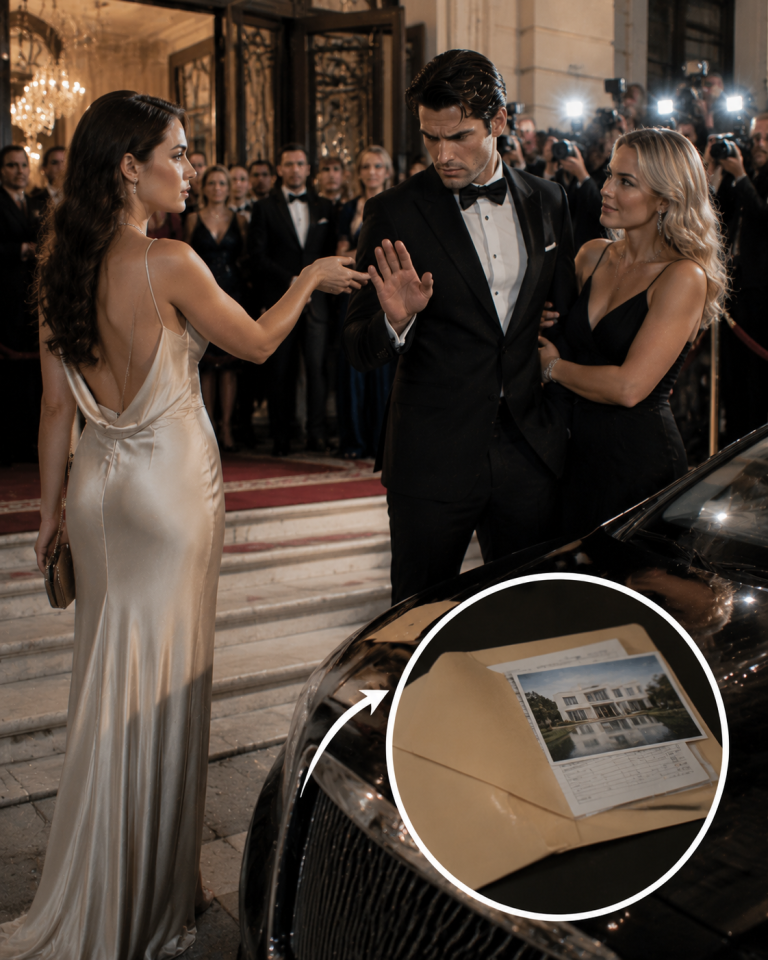
Desmond Callaway walked in with Brooke Vasquez on his arm — openly, without hesitation. Desmond was thirty-nine, tall, broad-shouldered, a former college athlete who carried himself with the ease of a man who’d been told he was impressive since birth and had never once been asked to prove it. Brooke was twenty-six, blonde, polished in the camera-ready way of a woman whose appearance had become a full-time occupation, with the kind of confidence that comes not from having built anything, but from standing close enough to someone else’s power to mistake proximity for ownership.
She was wearing a dress Margot recognized instantly — black silk, draped neckline, delicate cap sleeves, the dress Margot had bought four years earlier for her grandmother’s memorial service, hung in the back of the closet afterward because some clothes carry too much meaning to wear casually. Brooke was wearing it now, tied wrong at the shoulders, loose through the waist. The hand-stitched alteration Margot had done along the hem was visible, if a person knew where to look.
Margot knew exactly where to look.
Brooke walked straight to the head of the table — Margot’s chair, the one that faced the garden window her grandmother had helped design — pulled it out, sat down, crossed her legs, and rested her chin on one hand as though she’d been sitting there for years already.
Margot stopped in the doorway between the kitchen and the dining room, the serving dish held in both hands. She didn’t move.
Desmond’s younger brother, Theo, twenty-nine, was already seated. He had the particular talent of men who never quite manage to succeed on their own but always position themselves close enough to someone else’s success to catch the shade off it. He looked up, saw Brooke in Margot’s chair, saw Margot frozen in the doorway holding food she’d spent the morning preparing, and said nothing. He reached for the bread basket and bit into a piece of her cornbread without looking at her.
Then came Lorraine — Desmond’s mother, sixty-four, small and sharp in the way of a woman whose opinions took up far more room than her body ever did. She walked in from the living room in a cream blazer and pearls, wearing the expression of someone who’d just won an argument she’d been having privately with herself for months. She looked at Brooke in the head chair, and something crossed her face that wasn’t quite a smile but sat nowhere close to disapproval.
She clapped her hands together once — a crisp, deeply satisfied sound in the quiet dining room.
“Now,” Lorraine said, looking directly at Margot as she said it, “*that* is what a real woman of this family looks like.”
The sentence landed like a blade. It wasn’t a comment about Brooke at all. It was a verdict about Margot, delivered in her own home, at a table she’d set with her own hands, over food cooked from her grandmother’s recipes, by the mother of a man who had never once cooked a meal or set a table or done a single thing to make that house feel like anything other than a service he was entitled to receive.
Margot set the serving dish down. Slowly. Carefully. The way a person sets down something precious that they fully intend to come back for.
Desmond crossed the room toward her and lowered his voice — not far enough, because a lowered voice in a house full of family still carries.
“I’ve been meaning to talk to you about the guest house,” he said. “It’s all set up. Comfortable, out there. You’ll be fine.”
Margot looked at him. She looked at the face she’d married eight years ago at a courthouse ceremony his mother had refused to attend — the eyes that had once made her feel seen, now looking at her the way a person looks at furniture they’re deciding whether to keep.
“You want me to sleep in a guest house,” she said. Not a question. A statement, delivered with the flat precision of a woman confirming a fact she’d already worked out for herself.
“It’s not a big deal, Margot. Brooke needs the space. We need the space. You understand.”
Margot looked at him for three more seconds. Then she looked past him — at Brooke in her grandmother’s dress, at Theo eating her cornbread, at Lorraine settling into her seat with the satisfaction of a woman who believed the correct order of the world had finally, at long last, been restored.
Then Margot nodded. Once.
She picked up the glass of water at her own place setting — the place where she would not be sitting tonight — and walked out of the dining room, through the kitchen, through the side door, across the dark lawn toward the small white building at the far end of the property.
Nobody stopped her. Nobody said her name.
Behind her, Brooke laughed at something Theo said. Lorraine unfolded her napkin with ceremonial precision. Desmond pulled out his own chair and began serving himself from the chicken his wife had roasted that morning. The dinner started without the woman who had made every dish on that table.
Margot crossed the lawn in the long golden light of that Sunday evening. She was not crying. She held the water glass in one hand, and with the other pressed her palm flat against her blouse, against something small and warm and metal resting there — a brass key on a worn leather cord, hanging against her collarbone exactly the way it had hung, every single day, for twenty-two years.
She pressed it between her fingers as she walked, and something in her face shifted into a calm so complete it looked almost like peace.
Because Margot knew something none of them had ever bothered to learn. Tonight wasn’t the end of anything. It was simply the last page of the first chapter.
—
## PART 2
To understand what that key meant, you have to go back to a wooden porch in rural Virginia, where the air smelled like pine needles and red clay, and a twelve-year-old girl with bare feet and unusually serious eyes sat beside a woman who carried more wisdom in her quiet hands than most people gather in a lifetime of talking.
Her name was Pearl Elliston — Margot’s grandmother, a retired schoolteacher who had raised three children alone after burying her husband at forty-one. A woman who bought land when people told her she couldn’t afford it, who built savings when people told her she had nothing to save, who did every bit of it without announcing a single move, without asking a single permission, and without letting anyone see her hand until the exact moment she chose to show it.
That evening, sorting coins into a tin jar the way she did every Friday, Pearl said to her granddaughter, without looking up, “The most dangerous person in any room is the one nobody thinks is watching. Remember that, baby girl.”
Margot filed it away the way children file away things that feel important long before they fully understand why. Over the years that followed, she watched her grandmother move through the world — quiet but unignorable, gentle but immovable, never once arguing with the people who underestimated her. Pearl simply let them underestimate her, and then let the results do the arguing for her.
A neighbor named Mrs. Langford lost everything when Margot was fourteen — signed papers she hadn’t fully read, trusted a man who’d seemed trustworthy, and woke up one morning to find the ground had shifted under her without warning. Margot watched what that loss did to a grown woman. It didn’t just take her money. It took something deeper — some inner certainty about her own judgment that Mrs. Langford spent years trying to rebuild.
Sitting on that porch with red Virginia clay beneath her bare feet, fourteen years old, Margot made herself a private promise: she would never sign anything she didn’t fully understand. She would never let her name appear on a document she hadn’t personally measured, end to end. She would never give another human being the power to pull the floor out from under her.
The summer before she left for college, at seventeen, Pearl called her to the porch one final time. She reached into the pocket of her house dress and pulled out a small brass key on a worn leather cord — old, smooth, warm in the particular way metal gets when it’s been held by loving hands for a very long time.
She pressed it into Margot’s palm.
“This key doesn’t open anything yet,” Pearl said. “But everything you build will need a key someday. Keep it close. And don’t ever let them see it coming.”
Margot put the cord around her neck that same evening. She never once took it off — not through law school, not through a second degree in real estate finance, not the day she founded Elliston Ventures out of a studio apartment and a secondhand laptop at twenty-four, investing every dollar she had. Not through the years of deals that turned that first small investment into a holding empire spanning fourteen states and forty-one billion dollars in assets — hotels, commercial real estate, infrastructure, portfolios so layered that the financial press had spent years trying to identify the person behind the initials on the filings, and had never once succeeded.
And she hadn’t taken it off the night, eight years earlier, when she met a confident, laughing man named Desmond Callaway at a charity event and fell for exactly the parts of him that had nothing to do with money — because money was the one thing, after her grandmother, she had never once needed anyone else to give her.
What Margot had never told him was the size of what she’d built. What Desmond had never once thought to ask.
—
## PART 3
She had wanted, more than anything, what her grandmother never got the chance to have again after burying her husband — a partner, a home, a life shared with someone who saw *her*. Not the money. Not the company. Not the empire quietly compounding behind a wall of trusts and holding structures fifty attorneys would need two years just to map. Just her.
So she’d hidden it. She’d lived, for eight years, on a modest salary drawn from a literacy nonprofit she funded anonymously. She drove a sensible car. She dressed simply. She cooked dinners and folded laundry and managed every visible detail of a household while the man she’d married took quiet, casual credit for a life she had built around him, brick by invisible brick.
The estate on Magnolia Drive was the clearest example, though far from the only one. Desmond believed his mortgage on it had been approved five years earlier. It hadn’t. He’d been overleveraged the whole time, drowning in debt from bad investments he’d never told her about, and she’d quietly intervened — an Elliston subsidiary had purchased the property outright, in cash, for $6.8 million, through a proxy leasing arrangement disguised as a standard mortgage. Desmond received a monthly statement that looked, in every visible respect, like a mortgage payment confirmation. He never once questioned it. Never read the fine print. Never asked why the interest rate was so favorable, or why the lender’s name didn’t match any institution he’d ever heard of — because Desmond Callaway had never, in his entire life, read the fine print on anything he was handed.
The cars were the same story. The black Range Rover, the silver Mercedes sedan he drove to every meeting and dinner where he needed to look like a man of substance — both registered under Elliston Fleet Management LLC. And the company he introduced himself with at every party, handing out business cards, referencing it in every conversation about his own success — Callaway Capital Partners — had always operated as a licensed subsidiary under Elliston Ventures. His name on the letterhead had always been exactly what Margot designed it to be. A courtesy. A title with nothing underneath it.
She hadn’t built any of it out of manipulation. She’d built it out of love — a quiet, perhaps foolish, deeply earnest love that believed if she gave him the appearance of success, the feeling of self-worth, the scaffolding of a life he could be proud of, he might eventually grow into the man she’d hoped he could become. Perhaps the appearance would turn, in time, into substance.
It never did.
The brass key had been under her collar at their wedding. It had been under her collar through eight years of marriage. It was still under her collar the Sunday evening Desmond walked Brooke Vasquez through the front door of a house that had, from the first signature to the last property tax payment, always belonged to Margot.
The weeks that followed were weeks of accumulation. Not the dramatic kind. The quiet kind — the kind that damages a foundation the way water does, slowly, invisibly, until the walls give without warning.
Brooke moved deeper into the main house by the day. She redecorated the master bedroom first, taking down the framed photographs of Margot and Desmond’s early years — the trip to Savannah, the afternoon they’d adopted an old dog from the shelter, the black-and-white shot from the courthouse steps on their wedding day, both of them laughing at something neither could ever remember afterward. She replaced them with abstract prints ordered online, the kind of art that costs very little and says even less. She rearranged the living room. She threw away, without asking, a hand-knitted blanket Pearl had made before she passed, a set of ceramic bowls Margot had brought back from Portugal, and a stack of books full of Margot’s own handwriting in the margins — small, careful observations tracking the evolution of a mind across twenty years of reading. Brooke bagged the whole stack and left it at the curb on a Tuesday morning, cheerfully, the way people do things when they’ve convinced themselves they’re building rather than destroying.
One evening Brooke found the brass key’s leather cord hanging on a hook in the bathroom, left behind weeks earlier during a shower before Margot moved fully into the guest house. She held it up between two fingers at the kitchen counter, where Desmond and Theo were drinking bourbon.
“What is this?” Brooke said, already laughing at something she hadn’t yet identified as funny, the way people laugh once they’ve already decided mockery is the plan.
“A key to what — the storage unit she grew up in?” Theo said, and snorted at his own line.
Desmond smiled. Not a full laugh. A smile that permitted the joke. That endorsed it. That said, in his own home, this was acceptable. “That thing,” he said, swirling his glass. “She’s worn it every day since I met her. I asked her once what it opened. She said, *everything.* I said, baby, it doesn’t even open the mailbox.”
Theo laughed. Brooke laughed. Desmond drank.
None of them understood that the key they were laughing at had been pressed into a seventeen-year-old girl’s palm by a woman who had survived more than the three of them combined. None of them understood it wasn’t a key to a lock at all. It was a key to a principle — a way of moving through the world none of them had the depth to recognize even when it was hanging in plain sight, six inches from their own faces.
Margot was already in the guest house by then. She couldn’t hear the laughter. She hadn’t needed their opinions in a very long time.
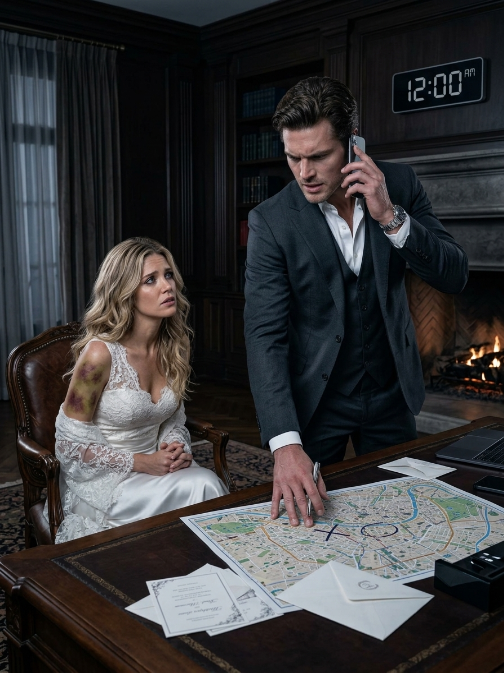
Every night, once the lights in the main house went dark, Margot sat at a small desk in the corner of the guest house — chosen for the good morning light, facing east — and opened an encrypted laptop to review the briefing her chief counsel, Warren Aldrich, sent her at eleven each night. Warren had worked with her for nine years and was, in his own words, quietly terrified of how sharp she was.
The briefings were precise. *Magnolia Drive: purchased 2019 by Elliston Holdings Trust 4 for $6.8 million. No name other than Margot Elliston on any deed or trust document. Vehicles: both registered under Elliston Fleet Management LLC; repossession authorization drafted, awaiting execution order. Callaway Capital Partners: operating under revocable license from Elliston Ventures; revocation documents prepared. Attempted asset transfers: three documents signed by Desmond and Theodore Callaway authorizing movement of $4.7 million from Elliston subsidiary accounts, executed using authorization codes that expired fourteen months ago — legally invalid; reversal filings completed. Additional item: Brooke Vasquez’s personal account received $87,000 in transfers from Callaway Capital operating funds over the previous six weeks — unauthorized use of corporate assets, documentation preserved. Lorraine Callaway’s residence at 412 Dunmore Lane: purchased by Elliston Ventures, property taxes paid by Elliston for twelve consecutive years; sale listing authorization prepared, awaiting execution order.*
Margot read each item. She made notes in a leather-bound notebook, in handwriting so small and precise it looked almost like code. She closed the laptop, looked at the guest house walls — walls she had designed, in a space she had built on land she had purchased years before Desmond had ever proposed — and pressed the brass key against her collarbone.
“Not yet,” she whispered, to no one but the empty room. “But soon.”
Meanwhile Lorraine worked the family the way she worked everything, quietly and thoroughly. She called cousins. She had conversations after church. She told anyone who’d listen that she’d always known Margot wasn’t right for Desmond, that her son had spent years carrying a woman who couldn’t meet him at his level, that Brooke was the kind of woman he actually deserved — warm, beautiful, present. The story moved through the extended family the way smoke moves through a cracked window: quiet enough that no one could point to where it started, thick enough that it changed the room anyway.
One Thursday morning, a cousin named Janelle approached Margot in a grocery store parking lot, genuinely kind, wearing the specific discomfort of someone delivering bad news they hadn’t asked to carry. She touched Margot’s elbow gently.
“People are talking,” Janelle said. “They’re saying you’re out there in that guest house like you lost everything. Like you’ve got nothing left. Why don’t you just go start fresh somewhere? Get away from all of this.”
Margot looked at her for a moment. Considered her. “I’m exactly where I need to be, Janelle,” she said, gently, without a trace of an edge in it.
Janelle searched her face for the distress she’d expected to find and came up with nothing. She walked away confused. What she couldn’t have known — what none of them knew — was that Margot’s stillness wasn’t the stillness of a defeated woman. It was something else entirely. There’s a certain kind of person who has built something so solid, so deep, so quietly reinforced over so many years, that when someone tries to take it from them, the attempt doesn’t feel like destruction. It feels almost like watching someone walk up to a mountain and try to push it over with their bare hands.
She wasn’t afraid of any of them. She was simply waiting, the way a woman waits when she has already decided how a story ends.
The breaking point arrived on a Friday evening in the third week. Desmond hosted a dinner party at the main house for business associates, city officials, a developer from Charlotte he’d been chasing for months. Brooke wore an emerald gown. Candles on every surface. The house looked beautiful in a way that was a precise, unconscious imitation of how Margot had always kept it — every detail borrowed from her eye, her taste, the invisible labor of a woman who’d spent years making a home feel worth walking into.
Margot wasn’t invited. She sat in the guest house with a book she wasn’t really reading, watching warm light spill from the main house windows across the dark lawn, listening to the faint music and low laughter of a party in a house she’d purchased with money she’d earned long before the man hosting it ever learned her name.
Around nine, Desmond stepped out onto the back patio to take a phone call, leaning against the railing, fifteen feet from where Margot sat perfectly still in the darkness of the guest house porch. He didn’t see her. He didn’t know she could hear every word, carried clean across the quiet yard.
“Yeah. Yeah, she’s still out there in the guest house,” he said. “Look, she’s got nothing, man. She never had anything. Whatever she thought she brought to this — it was me. It was always me.” A pause, listening. “Nah, I’m serious. Everything you see — this house, the cars, the company — I built all of that. I made that woman. She was nothing before me, and she’ll be nothing after.”
Another pause. He laughed, low and easy — the laugh of a man so completely convinced of his own story that the truth could have walked up and shaken his hand without him recognizing it. “Honestly, she should be thanking me. I gave her the best years of her life. And all she gave me was that sad little brass key around her neck, like it means something.”
He laughed again and went back inside.
Margot sat in the dark and felt her jaw tighten. One tear formed in the corner of her right eye. She pressed the heel of her hand to her cheek and held it there for three full seconds. Then she took her hand away, and the tear was gone.
She stood. She went inside. She opened the bottom drawer of the wooden dresser in the corner, moved aside a folded scarf and her grandmother’s worn leather Bible, and lifted out a thick sealed folder she’d carried to the desk without turning on more than the one small lamp. Property deeds. Holding company registrations. LLC structures. Trust documents. Investment statements. Development agreements across Atlanta, Houston, Memphis, Charlotte, Birmingham, New Orleans, Nashville, Richmond, and five cities more. Hotel acquisitions, commercial land banks, infrastructure contracts with three separate state governments. Forty-one billion dollars, quietly compounding behind legal walls that would take an army of attorneys and years of litigation to even begin untangling. Every document bearing one name.
Hers.
She picked up her phone and made one call. “Warren. It’s time.”
She could hear the smile in his voice. “I’ll have everything ready by Saturday. The consortium gala — full guest list, every name that matters.”
“Good.”
“Margot?”
“Yes.”
“It’s been an honor watching you wait.”
She closed the folder, set it on the desk, and looked at the walls of the room she’d built with her own hands. Something settled in her chest that felt like the closing of a door — not a painful closing. A final one. That was the night Margot stopped grieving and started finishing.
The gala was held the following Saturday evening at a glass-and-steel event center that occupied an entire city block in downtown Atlanta — every light in the building on, every significant name in southern real estate on the guest list. City council members. State legislators. Developers. Fund managers. The kind of room where business gets done not in boardrooms, but in the quiet seconds between handshakes.
The event belonged, on paper, to the Aldrich Consortium — one of those names that appears quietly on building signage and development permits across an entire metro area, the kind of group that shapes skylines. What the room didn’t know, what the business press had never once confirmed, was that the consortium’s primary financial architect for the past decade had always been Elliston Ventures.
Desmond had received his invitation through a connection of Theo’s. He arrived in a rented navy suit, borrowed cufflinks, and confidence that was entirely his own and entirely unearned, Brooke on his arm in a gold dress that caught the light every time she moved, which was often. He worked the room — big handshake, bigger smile, *Callaway Capital Partners* on his lips before the second sentence of every conversation. To anyone watching who didn’t already know what was coming, he looked exactly like the man he believed himself to be.
At 9:15, the double doors at the far end of the ballroom opened, and the air in the room seemed to reorganize itself around the woman who walked through them. Not because the room went instantly silent — it didn’t — but because Margot Elliston carried the kind of presence that generates its own weather. Floor-length gown in deep burgundy, the color of authority made into fabric. Hair natural and full, the way she wore it when she wasn’t performing for anyone, when she was simply being what she was. And at the center of her neckline, resting visibly against her collarbone for the first time in eight years, hung the brass key on its worn leather cord — polished, deliberately placed, no longer hidden under a collar. Like a period at the end of a very long, very patient sentence.
Warren Aldrich crossed the room to meet her, took both her hands, and said, loud enough for the surrounding circle to hear clearly, “Ms. Elliston. Welcome. Everything is ready for your announcement.”
Heads turned. Desmond, thirty feet away shaking hands with a city council member, heard the name. He turned. He saw Margot across the room. He saw Warren’s posture — deferential, warm, the posture of a man addressing someone above him in every hierarchy that mattered. He saw the room begin to orient toward her the way a room orients toward someone it recognizes as significant.
Something crossed his face — the first crack in a very confident performance. His grip on the councilman’s hand loosened. His smile didn’t disappear, but it stopped reaching his eyes. Beside him, Brooke tightened her fingers on his arm. She felt the shift too. She didn’t yet understand what it meant.
Warren escorted Margot to the podium. She stepped behind it without holding the sides, the way a person stands when they don’t need anything to hold onto, and waited for the room to settle. It settled quickly — these were people who knew how to read a moment.
“My name is Margot Elliston,” she said, clearly, without performance. “I am the sole founder and owner of Elliston Ventures.” She paused, let the name land, watched recognition move face to face across the room like a wave crossing still water. “Over the past seventeen years, Elliston Ventures has developed or acquired assets across fourteen states, with a current portfolio value of approximately forty-one billion dollars. Many of you in this room have done business with us without knowing my name. That was intentional. Tonight, I’d like that to change.”
Four hundred people. Not a single glass raised. Not a single phone checked.
“I’d like to begin by clarifying a few specific matters.” She didn’t look at Desmond. She looked at the room. “The estate on Magnolia Drive — the one with the white columns and the guest house at the far end of the lawn — was purchased by an Elliston subsidiary in 2019 for $6.8 million. It has never carried any name but mine on any deed, trust, or recorded document.” She let the sentence breathe. “The black Range Rover and the silver Mercedes currently parked in that driveway are registered under Elliston Fleet Management LLC. They’ll be collected Monday morning.”
Another breath.
“The company known as Callaway Capital Partners — the firm some of you may have encountered at events like this one — operates as a licensed subsidiary of Elliston Ventures. The individual whose name appears on its letterhead holds no ownership stake, no equity position, and no legal authority over any of its assets. The operating license has been revoked as of this evening.”
The room had passed silence and entered something deeper — the collective recalibration of four hundred sets of assumptions, all at once.
“Over the past three weeks, documents were signed attempting to transfer $4.7 million from Elliston subsidiary accounts, using authorization codes that expired fourteen months ago. They are legally null. My attorneys have already reversed every transaction and filed the appropriate protections.”
She looked at Desmond, once, briefly.
“Before I continue, I’d like this room to hear something.”
She lifted a phone from her clutch and tapped the screen once. Desmond’s own voice filled the ballroom through the sound system, unmistakable. *She’s got nothing, man. She never had anything. I made that woman. She was nothing before me.* Twelve seconds — twelve seconds that contained the entirety of one man’s understanding of the woman he’d shared a life with, an understanding so wrong it would have been funny if it hadn’t also been the reason a woman who owned forty-one billion dollars had spent three weeks sleeping in a guest house on her own land.
Then Lorraine’s voice, pulled from a preserved call. *She has nothing left. That girl, she never had anything to begin with. My son carried her for eight years, and this is what he gets.*
Then a third recording — Brooke and Theo, captured on the home security system Margot had installed and maintained herself, discussing the transfer documents at the kitchen counter. *Just sign them fast, before she figures out something’s happening,* Theo’s voice said. *She won’t figure out anything,* Brooke answered. *She doesn’t even understand how money works.*
The recordings ended. Nobody in the room moved. Margot looked out at four hundred faces without anger — anger would have required caring what the people in those recordings thought of her. She looked at them with something quieter. Something Desmond, if he were ever honest with himself, would eventually have to call pity.
“The woman they described,” Margot said. “The one with nothing. The one who was *made* by someone else. The one who doesn’t understand how money works. Is the woman who built the company whose capital funded this event center, whose investments employ four thousand people in this city, and whose name sits behind half the development permits issued in this metro area over the last decade.” She let it settle. “I didn’t come here tonight to humiliate anyone. I came to correct a record, and to introduce myself properly, for the first time.”
She touched the key at her collarbone.
“My grandmother gave me this key when I was seventeen years old. She told me it didn’t open anything yet. She told me to keep it close. And she told me — don’t ever let them see it coming.” She looked out at the room one final time. “They didn’t.”
She stepped away from the podium, took a glass of water from Warren, and turned her back on the room without turning around again. Behind her, four hundred people began, quietly, to breathe.
Desmond stood in the middle of the most important room in Atlanta real estate and felt the floor of the identity he’d spent eight years performing separate itself from anything solid underneath it. Brooke’s champagne glass hung frozen halfway to her lips, her eyes wide with the specific, clarifying terror of someone who has just understood they bet everything on the wrong number.
She turned on him, voice sharp and loud in the quiet room. “You told me she was *nothing.* You told me *you* built all of this. I left my apartment for you. I moved into her house. I wore her clothes. You told me she was nobody.”
Desmond didn’t answer. He couldn’t.
“You ruined my life,” Brooke said. “You don’t even own the suit you’re standing in.” She set the champagne glass on the nearest table, turned, and walked toward the exit, gold dress catching the light one last time. Nobody followed her. Nobody called her name. She walked out and disappeared from the story completely.
Theo, near the back of the room, felt his phone buzzing over and over in his pocket — a livestream had already made it onto social media, and the color drained from his face fast enough that a stranger nearby asked if he needed a doctor. Lorraine, at home in front of her television, got a call from a family member telling her to find the stream, and found it just in time to hear her own voice played back for four hundred people and an unknown number watching online. She held the phone to her ear long after the call had ended, her hand shaking — not from anger, but from a feeling she wasn’t remotely accustomed to. The sudden, sickening recognition that she had been completely, catastrophically wrong.
What followed took seventy-two hours to finish unfolding.
Monday morning at eight, a flatbed tow truck came through the iron gates of Magnolia Drive, followed by a second. The paperwork was immaculate. The Range Rover went onto the first truck, the Mercedes onto the second, while one neighbor and then another watched from their own driveways. By Monday evening, Callaway Capital Partners’ office suite in Midtown received a courier delivery — formal notice of subsidiary license revocation, effective immediately, all accounts frozen, all employees reassigned. Desmond’s name came off the letterhead, the website, and the building directory before midnight.
Tuesday, the property manager for Magnolia Drive arrived with an eviction notice — a thirty-day courtesy period Margot had offered, more generous than the law required given that Desmond’s name appeared on no document related to the property at all. He read it three times, then a fourth, and sat down at Brooke’s chosen kitchen counter and didn’t get up again for a long while.
That same evening, a certified letter reached 412 Dunmore Lane, the home Lorraine had lived in for twelve years, the home Desmond had always assured her was paid off and secure in her own name. It informed her the property was held by an Elliston subsidiary and would be listed for sale within ninety days. She called Desmond. His phone rang eight times and went to voicemail. She called Theo, who told her he couldn’t talk right now, and hung up quickly. She sat alone in the house she’d hosted family dinners in for twelve years and thought about the Sunday she’d looked Margot dead in the eye and told the whole table what a real woman of the family looked like — and how satisfied, how certain, she’d felt saying it. For the first time in her adult life, Lorraine Callaway felt something she wasn’t accustomed to feeling at all. Small.
Theo’s own commercial development deal in Midtown, two years in the making, collapsed within the week — its lead capital source, it turned out, had always run through an Elliston portfolio account, and once that account was reorganized, the fund’s commitment quietly disappeared along with it. He called the contact number three times. Nobody answered.
Brooke tried reaching Margot once, through a mutual contact — an appeal, an explanation, something close to an apology. Margot’s assistant, Celeste, who’d worked for her five years and was entirely devoted to her, sent back exactly three words: *She is unavailable. Permanently.* Brooke left Atlanta before the month ended. Nobody in Desmond’s circle ever mentioned her name again.
Desmond ended up in a rented apartment in a part of the city he’d previously only driven through with the windows up. He applied to two positions over the following months, listing the professional experience he’d built entirely on Margot’s infrastructure. Both applications stalled the moment anyone looked closely at the company behind his resume. His references had been her contacts. His accomplishments had been her deals. His reputation had been her architecture, and without the scaffolding, there was nothing left standing under him at all.
He called her once. She didn’t answer. He sent one message. She didn’t reply. He sat in the rented apartment and looked at the ceiling, and finally, for the first time in the whole of their marriage, began the long, uncomfortable work of understanding who Margot Elliston had actually been. He thought back over eight years — how calm she’d always stayed, how she’d always seemed to know things he didn’t know she knew, how she’d never once boasted about money or holdings the way he constantly had, how she’d worn that brass key every day like a quiet reminder to herself that she had never, not for one single moment, needed him. He’d called her simple. He’d called her without ambition. He’d stood on his own back patio and told a stranger on the phone that he’d made her.
*I made that woman.*
He turned the sentence over and over in the empty apartment, looking at it from every angle, until he understood, fully, the weight of exactly how wrong a man could be about a woman he’d shared a name and a life with. He hadn’t made her. She had arrived already made, long before he’d ever walked into that charity event and smiled at her across the room — made on a wooden porch in Virginia, by a grandmother with a tin jar and a brass key and more wisdom in her quiet hands than Desmond Callaway had managed to find in an entire lifetime of being loud about himself.
Six months later, Margot drove nine hours from Atlanta to a stretch of county road in rural Virginia. She hadn’t made that drive in nearly four years. She went alone. She didn’t call ahead. The land knew her; that was enough.
The old property had sat empty since Pearl passed, though Margot had kept the taxes paid, the deed clean, the grass cut twice a year by a local man she trusted. She’d been waiting, quietly, until she had something whole to bring back to the place that had given her everything important she’d ever carried — until she could walk up that dirt road as the full, visible, unbothered version of herself, with no one in the world holding a claim on who she was or wasn’t.
She’d bought back the surrounding acreage over the years through an Elliston subsidiary, without fanfare. The creek that used to flood the lower fields had been properly regraded. The porch had been restored that fall, wide and painted the same pale gray it had been in her childhood, a new rocking chair sourced from an antique dealer in Charlottesville after the original had finally, after all those decades, given out.
She pulled up the dirt road, stepped out into the kind of quiet cities only dream about — pine and red clay and the smell of earth after rain, the sky enormous the way it only is in places without buildings to interrupt it. She stood beside the car and breathed it in, let the quiet settle onto her shoulders the way it used to when she was a girl and this land was the whole of the world she knew.
She sat in the rocking chair. Closed her eyes. For a moment she was twelve years old again, and the evening was warm, and someone who loved her was telling her the truth about the world.
She opened her eyes at the sound of footsteps. Her sister’s daughter came running across the yard, twelve years old, all legs and curiosity, a face that reminded Margot of her own at that age in a way that was almost difficult to look at directly — the same serious eyes, the same quiet attention to everything around her. The girl ran up the porch steps and stopped in front of her, slightly out of breath, staring at something at Margot’s collarbone.
“Aunt Margot,” she said, “what is that key for?”
Margot looked down at it. She’d been looking at it differently since the gala — not with the weight of everything it had survived, but with something lighter. Something closer to gratitude. She looked at her niece’s serious young face and felt Pearl standing close behind the rocking chair, one hand resting gently on the wood, the way she always seemed to be, somehow, whenever it mattered most.
“Everything, baby,” Margot said. “Everything I ever needed.”
Then she reached into her pocket and took out a second key — smaller, newly brass, still bright, hung on a leather cord identical to her own. She’d had it made three weeks earlier and had been carrying it since, waiting for exactly this moment. She placed it in the girl’s open palm.
“This one doesn’t open anything yet,” Margot said. “But one day it will. And when it does, remember what your great-grandmother told me.”
The girl studied the key in her hand with an expression of such solemn importance it made Margot’s chest ache. “What did she say?”
Margot smiled — the first full, unguarded smile she’d allowed herself in a very long time.
“Don’t ever let them see it coming.”
The evening came in from the east, warm and unhurried, the way evenings arrive in Virginia when there’s nowhere left to be and nothing left to prove. Somewhere back in Atlanta, a man was learning what it meant to stand on ground that had never once belonged to him. Somewhere else, an older woman sat in a house that had never really been her son’s, rereading a ninety-day notice for the third time. And on a porch her grandmother used to sit on, a woman who had built an empire in complete silence rocked slowly in a chair she’d chosen herself, holding the key to everything she had ever made, listening to the pine trees, and feeling, at last, the full and unhurried weight of having been right all along.
She had never once raised her voice. She had never made a scene. She had never begged for a seat at a table she’d bought with her own money and set with her own hands. She had never chased anyone through a grocery store parking lot, or called a single cousin to spread her own version of events, or shown up at a door demanding to be heard. She had given none of them the satisfaction of watching her come apart, because she understood the thing her grandmother had spent a lifetime trying to teach her — the thing that takes the longest of anything to actually live inside of. Dignity is not something other people give you permission to have. It is something you protect from the inside, carried so deep that no one can reach it, no matter what they do to everything on the surface.
Real power doesn’t announce itself. It doesn’t need to. It builds. It waits. It compounds quietly, year after year, behind walls the careless never think to check. And when it finally decides to speak, it doesn’t reach for anger, or bitterness, or any of the performances people expect from someone who’s been wronged. It simply stands up, says its own name in a room full of people who suddenly understand exactly what that name means, and lets the silence that follows say everything else.
**THE END**