HIS GIRLFRIEND BROKE THE WAX SEAL ON MY DEAD MOTHER’S ROOM AND CALLED IT A TOUR — SHE HAD NO IDEA WHAT THAT SEAL WAS PROTECTING

# Part 1: The Room My Mother Never Let Me Enter Alone
My mother sealed that room four months before she died. Not locked. Sealed. A locked door only means someone forgot where they put a key. A sealed door means someone intended for it to matter.
It sat at the far end of the second-floor hallway at Birchwood, our family house on the Maine coast, in a room built in 1908 as a sewing parlor for a woman who liked good light and better gossip. By the time I was a child, my mother had turned it into something else entirely — her writing room, though calling it that undersells what she actually did in there.
Cedar boxes lined the walls. Envelopes tied with waxed twine sat stacked by year. The whole room smelled faintly of salt air and the particular ink she used, a deep blue-black that never quite matched anything sold in stores anymore.
My mother, Marguerite Ashworth Doyle, had a gift for making ordinary objects feel like inheritance. She never called that room storage. She called it her ledger.
After her diagnosis, she spent whole afternoons at the little writing desk by the window, spine straight, silver hair pinned the way she always wore it, her pen moving steadily across page after page. She wrote to people who had wronged her. She wrote to people who had died. She wrote, though I didn’t understand this until much later, to people who would one day need proof of something.
On her last Thanksgiving, she asked me to sit with her in that room. Wind off the Atlantic rattled the windows. The house smelled like woodsmoke and turkey and the candles my husband complained gave him a headache.
She was wrapped in a gray cardigan that had grown too big for her. Her face had thinned, but her eyes hadn’t lost an ounce of their sharpness.
“Camille,” she said, “when I seal this room, you are not to open it yourself.”
I tried to laugh, because dying people say devastating things so gently that the living will do anything to keep the moment light. “Mom, it’s your room. You can do whatever you want with it.”
“No.” She took my hand, rationing her strength the way she rationed everything by then. “It’s a witness.”
That stopped my laughter cold.
“There will be people,” she went on, “who assume grief makes a woman careless. There will be people who mistake your silence for weakness, and your good manners for surrender.”
I knew exactly who she meant, though neither of us said the names aloud that night.
My husband, Adrian Foss, had been circling my mother’s estate since roughly the third year of our marriage, always with some reasonable-sounding proposal about “modernizing” the trust structure. His business partner’s daughter, a woman named Petra Lindqvist who had somehow become his “creative consultant” over the past year, had begun appearing everywhere assistants shouldn’t — late dinners, gallery openings, once on his phone screen at two in the morning under a contact saved simply as “P.”
My mother had noticed before I let myself. Mothers always do.
She didn’t tell me to leave him. That wasn’t her way. My mother believed a woman should exit a bad situation with her paperwork in order and her spine unbent. She believed in grace, and she made sure I understood grace was not the same thing as softness.
The next morning she called our family attorney, a meticulous, unhurried man named Walter Pruitt who had handled Ashworth matters since before I was born. He wore the same three tweed jackets in rotation and spoke slowly enough that impatient people always underestimated him. That was usually their first mistake.
I watched him press a strip of deep red wax across the seam of the writing-room door. My mother pressed her own signet ring into the center while it was still warm — a small carved birch leaf, the Ashworth family mark since before the house was built. Walter photographed it. So did my mother. So did I.
Then he handed me a sealed copy of a document I wasn’t yet permitted to read.
“Put this in your safe,” he said. “You open it only if that wax is ever broken.”
I asked my mother what, exactly, was in that room besides letters.
She smiled the way she did when she’d already won an argument I hadn’t realized we were having. “Everything they assume is harmless.”
That was the last time I saw her stand without help. She died eleven weeks later, in her sleep, while rain moved in off the water. Adrian sent white lilies to the memorial with a card that read simply *Peace.* Petra posted a moody photograph of the estate gates online with a caption about how *some houses just carry so much history.* She had never once been invited past the front hall.
I didn’t cry when I saw the post. By then I had already learned the particular kind of quiet that grows teeth.
The memorial reception happened on a gray Saturday in early spring, three weeks after the funeral itself. Adrian had behaved beautifully at the funeral — men like him always do, because churches have witnesses and grief photographs well from a respectful distance. He’d held my elbow at the graveside. He’d passed his own handkerchief to my aunt Odile. He’d bowed his head at exactly the right moment.
A reception is different. It’s warmer. Looser. People set down their gloves and accept second glasses of wine and start using phrases like *moving forward* far too soon.
That was the afternoon Adrian chose to bring Petra into my mother’s house wearing cream silk and a string of pearls I was fairly sure I recognized from a locked drawer upstairs.
She arrived twenty-five minutes late — late enough that everyone noticed, early enough to still be offered champagne. She was younger than me by a decade, blonde in the effortless, expensive way, and she touched Adrian’s forearm when she greeted people. Not his sleeve. His skin, through the fabric. A claim disguised as casual affection.
My cousin Renata caught the gesture and looked at me. I shook my head once. *Don’t rescue me,* I meant. *Let them be seen doing it.*
Adrian’s mother, Sylvie Foss, swept in a few steps behind Petra in dove-gray silk, and I watched half the room straighten instinctively, the way people do around a woman who has spent decades training rooms to defer to her. Sylvie had never liked me — not because I was unkind, and not because I lacked money, which would almost have been easier for her to metabolize. She disliked me because my family’s wealth was older than hers and had never once bothered to announce itself. Her fortune had been polished, displayed, insured, discussed at length. My mother’s had been buried quietly in land, trusts, and silence, and Sylvie had always found that unbearably rude.
“Camille,” she said, using my full name the way she always did, since the nickname apparently implied an intimacy she refused to grant me. “You look exhausted.”
“My mother just died.”
“Grief is very aging, dear.” She patted my shoulder the way one brushes lint off a coat.
I looked at Adrian. He looked away. That, by then, was the whole shape of our marriage — a long series of rooms in which he chose to look elsewhere.
The reception filled the garden room with white hydrangeas in silver bowls, lobster rolls, deviled eggs, and small glass cups of clam chowder, because my mother had always believed grief deserved to be fed properly. Guests arrived from Boston, Newport, and as far as New York — old friends, old rivals, women who kissed both cheeks and remembered every scandal since 1975.
Adrian moved through the crowd like a host. That, itself, was the first quiet insult of the day. Birchwood had never been his. It had belonged to Ashworth women for four generations, and yet there he stood beneath my mother’s portrait, telling a state senator’s wife that the west wing “really needed a fresh vision.”
Petra laughed at something beside him. Sylvie told my aunt that “some new energy” would do the old place good. I drank iced tea and said nothing, because silence, held steadily enough, tends to make people pour their true selves into it.
At a little past three, our housekeeper, Ines, found me near the back stairwell. Her face had gone the color of the tablecloths.
“Mrs. Foss,” she whispered, forgetting, in her urgency, that I still went by Doyle in my own head. “You need to come upstairs.”
I already knew, somehow, before she finished the sentence. Maybe old houses change the way they hold their breath when a boundary is crossed. Maybe my mother had simply trained me, over three decades, to hear quiet things before anyone said them aloud.
I followed her up the east stairs. Halfway down the hallway, I heard laughter — not the polite, nervous kind, but the bright, cruel kind people make when someone else’s private grief has just become entertainment.
The red wax seal on the writing-room door had been broken clean through. A small piece of it lay on the runner like a drop of something darker than wax.
The door stood open.
# Part 2: The Tour
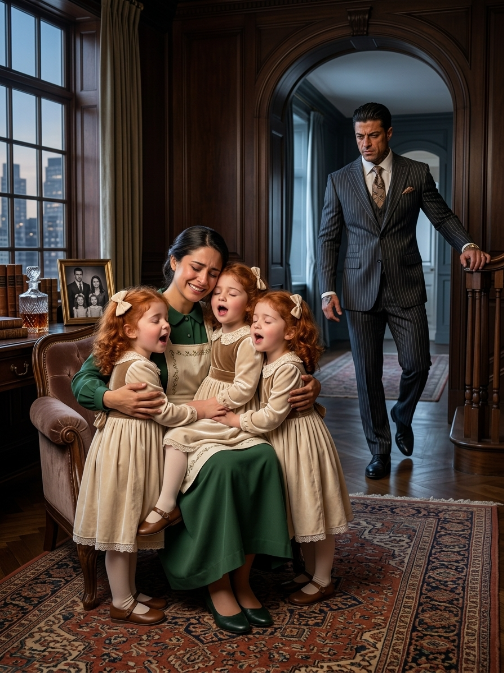
Inside, a dozen guests crowded around my mother’s cedar boxes. Petra stood at the center wearing a pair of my mother’s white cotton archive gloves, pulled straight from the desk drawer. She held a stack of letters in one hand, a champagne flute in the other.
“Honestly,” she was saying, “it’s almost gothic in here. All this paper. Grief really does make women hoard the strangest things.”
A few guests chuckled. She lifted the stack a little higher, like an auctioneer presenting a lot, and then she saw me in the doorway and smiled without a trace of shame.
There is a version of a woman that wants to scream in that moment. I had been raised, instead, in rooms where the china was thin and the knives were sharp and survival meant keeping your wrists perfectly still. So I walked in calmly, stepped over the broken wax, and looked past Petra entirely, straight at Adrian, who was leaning in the doorway with one hand in his pocket, enjoying himself and pretending not to.
“What is this?” I asked. My voice came out almost gentle, which seemed to unsettle him more than shouting would have.
“Before you make a scene, Camille,” he said, “we all agreed this place needed fewer secrets.”
“We all,” I repeated.
His jaw tightened. Sylvie appeared near the window and drew back the heavy curtain herself, flooding the desk with cold spring light. “Light is healthy,” she announced. “Your mother kept this room like a tomb.”
“A beautiful tomb,” Petra offered, and got another laugh for it.
My aunt Odile said quietly, “This room was sealed.”
Petra rolled her eyes with the particular contempt the young reserve for anything they’ve decided is dramatic. “With wax, not a court order.”
That landed a real laugh, and something in me went final. Not because Adrian had brought his girlfriend to my mother’s memorial. Not even because he’d let her put her hands on things that weren’t hers. It was the smile on his face — the belief, plain and unbothered, that my pain was still a leash he could hold whenever it suited him.
I turned to Ines. “Please call Mr. Pruitt.”
Petra blinked. “The lawyer? Is he giving the historical tour next?”
I looked at her hand inside my mother’s glove. “No,” I said. “He’s ending it.”
# Part 3: What My Mother Left Behind the Wax
Walter Pruitt arrived twenty-eight minutes later, and for the entirety of those twenty-eight minutes, not a single guest left the house. That was, in its way, the second mistake of the afternoon. Greedy people are curious. Proud people linger near the line they’ve just crossed, half-hoping it turns out to have been imaginary all along.
Petra kept her tour going while we waited. She read names off envelopes as though calling auction lots — *Odile, private. Oh, this one just says Camille* — until Adrian finally snapped, “Put that down,” in a tone that made half the room turn. Not because he cared about my privacy. Because he recognized my mother’s precision, and it frightened him.
Walter arrived in a gray tweed jacket damp from the coastal drizzle, his reading glasses in one hand and a worn leather satchel in the other. He stopped at the threshold and looked down at the broken wax for a long moment before looking up at me.
“Did you open this room, Camille?”
“No.”
“Did you authorize anyone to?”
“No.”
His eyes moved to Adrian. “Mr. Foss?”
Adrian laughed once, too quick, too dry. “Walter, for God’s sake, it’s a family gathering.”
“It’s a legal matter,” Walter said. “This room was sealed under trust instruction.”
That silenced the hallway entirely.
“Who broke the wax?” Walter asked.
Nobody spoke. Rain ticked against the windows. Finally Ines said, “Ms. Lindqvist did.”
“I opened a door,” Petra said.
“You broke a seal,” Ines corrected.
“Adrian told me it would be part of the house tour,” Petra snapped, turning on him. “You said everyone was being ridiculous about keeping it closed.”
Adrian’s face didn’t move fast enough to hide the truth in it. Men like him don’t lie randomly — they lie according to the room, and the room had just turned against him.
Walter opened his satchel and drew out a folder marked with my mother’s initials: *M.A.D.* Not Foss. Never Foss.
“Your mother anticipated this exact possibility,” he said, and began to read the trust’s conduct clause aloud — that the writing room was to remain sealed until the first anniversary of her death, unless opened by me, or by Walter himself as trustee. That any beneficiary, spouse, guest, or associate who opened, profited from, displayed, or exposed its contents before that date would forfeit any claim, occupancy right, reimbursement demand, or contingent inheritance tied to Birchwood and the Ashworth Doyle trust.
The room went arithmetic-quiet. Adrian’s face didn’t show fear yet. It showed recognition — the particular look of a man realizing the exact clause he’d been counting on had just been read aloud in front of thirty witnesses.
Walter asked everyone but immediate family and trust witnesses to leave, and this time, they obeyed. Nobody wanted fingerprints on what came next.
We reconvened downstairs in the library, rain running down the tall windows behind my mother’s portrait. Walter placed a small recorder on the table.
“I don’t consent to this,” Adrian said.
“You don’t need to,” Walter answered. “This is a trust proceeding regarding trust property. You may leave.”
He didn’t leave. Men like Adrian believe every room belongs to them until the locks actually change.
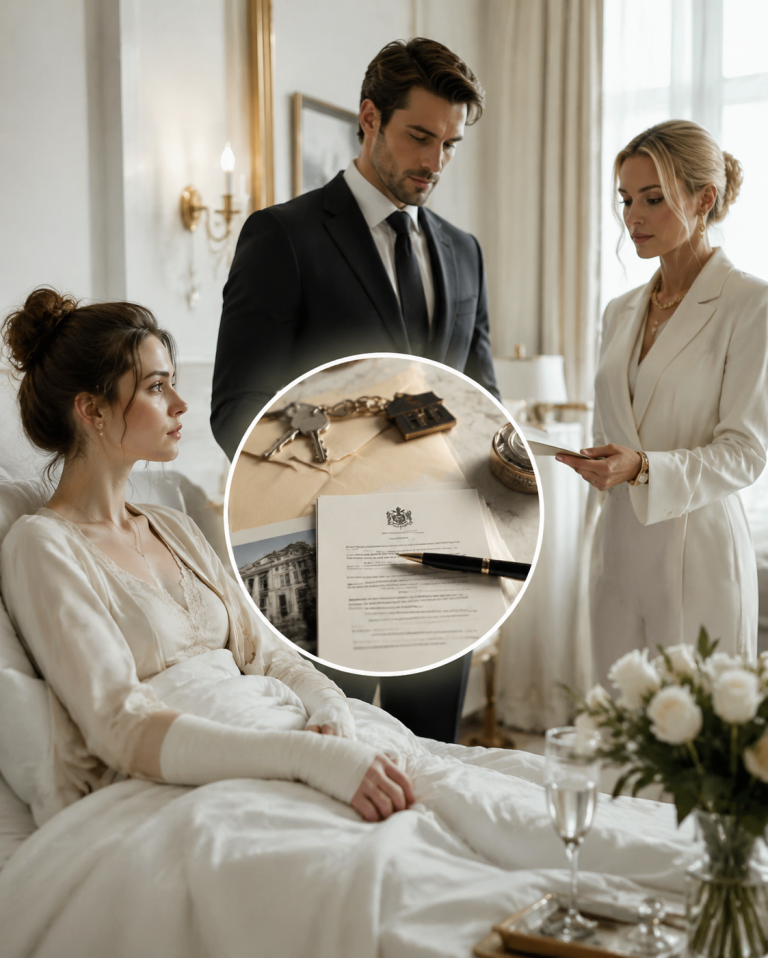
Walter slid an envelope across the table with my name on it in my mother’s hand — *Camille*, not *Mrs. Foss.* Inside was a single page in blue-black ink.
*My darling girl. If you’re reading this, someone has broken the seal. I’m sorry for the pain of it, not for the lesson. A boundary doesn’t fail when it’s crossed — it succeeds by revealing exactly who was willing to cross it. Don’t defend me. Don’t defend yourself. Let the documents speak. You were loved before anyone wanted what came with you. You will be loved again after they lose it. — Mother.*
I read it twice and set it flat on the table. I did not cry. I wanted, instead, to hear every remaining word she’d left for me.
Walter said there was more, and there was. Behind the visible grief in those cedar boxes — the birthday notes, the recipes, the photographs of me missing my front teeth — sat an archive my mother had built with the same precision she brought to everything. Copies of canceled checks. Notarized emails. A handwritten log of every time Adrian had requested money from her while telling me he was “handling repairs.” Invoices for imported stonework billed to Birchwood but delivered to an Adrian Foss Development property forty miles away. A signed statement from her hospice nurse describing pressure Adrian had applied for her to approve a transfer while sedated.
And then, a bank security photograph — Petra behind the wheel of Adrian’s car outside the Ashworth Doyle trust office, dated nine months before my mother’s death.
“I don’t know what that is,” Petra said, staring at it.
“It’s a visitor log entry,” Walter said, sliding a second page beside the photo. “You entered as Mr. Foss’s administrative representative. You notarized a document related to a proposed loan against this house.”
“I didn’t read it.”
“You signed it.”
Her mouth opened and closed without sound. She had arrived at the house that morning as the girlfriend. She was leaving it, quite plainly, as a witness with very good pearls.
Sylvie tried once more. “Surely this is irrelevant to a broken seal, Walter.”
“Not at all,” he said. “The seal protected exactly what your family assumed no one would ever read.” He turned a page. “This addendum also voids your proposed advisory seat on the preservation board, and your foundation’s promised use of the garden pavilion.”
Sylvie’s hand tightened around her handbag, and for the first time all day, I watched shame cross her face — not remorse, just the discomfort of being accurately quoted.
Walter set down one final envelope, still sealed, my mother’s writing across the front: *For the moment he says she knew.*
He broke it. Inside was a short note and a small flash drive. *Walter — if Adrian claims Camille approved any of this, play the recording. If he claims I was confused, play it twice.*
My mother’s voice filled the library a moment later, thin with illness but entirely unmistakable. *”Adrian, I will not sign a loan against this house.”* His voice, smooth and impatient, insisting she didn’t understand the structure. Her answer: *”I understand theft when it wears a good suit.”* Then Petra’s voice, young and nervous, saying Adrian had told her Camille already knew. My mother, quiet and precise: *”Did you ever once speak to Camille yourself?”* A pause. *”No.”* *”Then listen carefully. If you help a man take from his wife’s inheritance, don’t be surprised when he takes your future the same way.”*
The recording ended. Nobody moved. Somewhere in the house, a clock struck four.
Adrian looked, for the first time that day, exactly his true size.
Petra turned on him instantly — he’d told her the seal was performative, that I was building a shrine out of a storage closet, and Walter’s recorder had caught every word of that argument too. Walter began reading the consequences aloud one by one: Adrian’s reimbursement claim, void. His occupancy right, terminated. His development proposal for the east acreage, dead. Sylvie’s advisory seat and pavilion access, revoked. Petra, barred from the property, her notarized signature referred to counsel.
“What do you want?” Adrian finally asked me — the first question all day that admitted I was actually in the room.
I thought of the wedding at the Whitby Hotel, the honeymoon in Nova Scotia, the miscarriage I survived alone while he took a call in the hallway, the anniversary he missed because Petra’s flight was “delayed.” I thought of every morning I’d dressed carefully so no one could see how unloved I felt.
“I want you out of my house,” I said.
“There it is,” he said, almost laughing.
“No,” I told him. “There it goes.”
He left with his mother a few minutes later, carrying a formal notice to vacate and the expression of a man who had mistaken inheritance for marriage. Petra left separately, in tears that may have been real and may simply have been useful — it no longer mattered which. Tears don’t reseal wax.
That evening, after the caterers packed away the silver trays and Ines locked the east hallway, I found one last envelope beneath the blotter on my mother’s desk, weighted by her old brass letter opener. *Camille, when the house is quiet.*
I waited until dusk turned the windows blue before I opened it. Three pages this time. She told me she was proud of me. She told me she knew I’d be tempted to explain myself, to protect even the people who had never protected me. She told me I came from women who’d survived worse men, worse winters, worse silences, and that Birchwood was never meant to be a prize — only shelter. At the bottom, in the same blue-black ink, one line broke something open in my chest:
*You don’t have to become hard to become impossible to harm.*
By autumn, the audit had uncovered enough irregularities to keep two attorneys occupied for months. Petra resigned from Adrian’s firm before anyone could ask why a junior consultant had notarized trust-adjacent paperwork she claimed never to have read. Sylvie sent one note that didn’t apologize so much as hope I wouldn’t “let bitterness define the estate.” I framed nothing of hers.
Adrian fought the forfeiture through mediation, then through court, and lost both times, and lost, worst of all, the story — because people talk, and by winter everyone from Portland to Boston knew exactly what had happened in that upstairs hallway, and exactly why.
On the first anniversary of my mother’s death, Walter came back with Odile, Renata, Ines, and me. No champagne. No cream silk. Just five of us and a door that had already told the truth. He pressed a new strip of red wax beside the old broken scar, not to seal the room shut forever, but to mark that it had survived being opened by the wrong hands. Then he handed me my mother’s signet ring.
“Your turn,” he said.
I pressed the small birch leaf into the wax myself.
We catalogued every letter after that. Preserved every photograph. Kept the recipes, laughed over my grandmother’s terrible spelling, cried over notes scrawled in the margins of old Christmas cards. And in the spring, I turned that writing room into a small reading room for women leaving marriages that had taught them to whisper — soft chairs, good tea, a rotation of volunteer attorneys twice a month, shelves of journals and pens for letters people might never send.
A brass plaque sits by the door now. It reads: *A boundary is not a wall. It is a witness.*
Sometimes women sit in there for an hour and say nothing at all. I tell them that’s allowed. Paper can hold what the body has grown too tired to carry.
And when they ask about the faint scar running through the wax on that door, I tell them the truth. A woman once broke that seal to laugh at someone else’s grief. She thought she was exposing weakness. Instead, she triggered every consequence my mother had written down long before she died — proof that the room was never the secret at all.
Their cruelty was.